
Business
How Spotify Premium Improved the Digital Music Experience


The way people listen to music has changed dramatically over the last decade. From CDs and MP3 downloads to instant streaming on smartphones, digital music has become faster, smarter, and more personalized. Among all music streaming platforms, Spotify has played one of the biggest roles in transforming the listening experience for millions of users worldwide.
With the introduction of Spotify Premium, the platform moved beyond simple music streaming and created a more immersive, ad-free, and highly personalized experience. Today, Spotify Premium is considered one of the most popular subscription-based music services because it offers convenience, flexibility, and superior audio quality that modern listeners expect.
The Rise of Music Streaming
Before music streaming became mainstream, users had to purchase songs individually or download entire albums. This process was time-consuming and often expensive. Music piracy was also a major issue because legal access to songs was limited in many regions.
Spotify changed this model by offering instant access to millions of tracks in one place. Users no longer needed to download music illegally or carry large music libraries on their devices. Instead, they could stream songs instantly from their phones, tablets, laptops, or smart devices.
Spotify Premium further improved this system by removing many of the limitations found in the free version.
Ad-Free Listening Changed Everything
One of the biggest improvements introduced by Spotify Premium was uninterrupted listening. In the free version, advertisements appear between songs, which can break the mood and reduce the overall enjoyment of music.
Spotify Premium eliminated these interruptions completely. Whether someone is working out, studying, driving, or relaxing, they can enjoy continuous music without distractions. This feature alone became one of the strongest reasons why users upgraded to Premium subscriptions.
For music lovers, uninterrupted playback creates a smoother and more enjoyable digital experience.
Offline Downloads Made Music More Accessible
Internet connectivity is not always reliable. Travelers, commuters, and users in remote locations often struggle with unstable mobile networks. Spotify Premium solved this issue through offline downloads.
Premium subscribers can download their favorite songs, albums, and playlists directly to their devices. This means users can enjoy music anytime without depending on Wi-Fi or mobile data.
Offline listening also helps users save internet data, making Spotify Premium a practical option for people who stream music daily.
Better Audio Quality Enhanced the Listening Experience
Audio quality plays an important role in digital music streaming. Casual listeners may not always notice small differences in sound, but music enthusiasts appreciate clearer vocals, deeper bass, and cleaner instrument separation.
Spotify Premium offers higher streaming quality compared to the free version. This enhanced audio creates a richer listening experience, especially when using headphones, speakers, or car audio systems.
The improvement in sound quality helped Spotify Premium attract serious music fans who wanted studio-like clarity while streaming online.
Personalized Recommendations Revolutionized Music Discovery
Spotify Premium is not only about listening to songs; it also helps users discover new music based on their preferences. Spotify’s advanced recommendation algorithms analyze listening habits, favorite artists, skipped tracks, and playlist activity.
Features like Discover Weekly, Daily Mixes, and Release Radar provide users with highly personalized recommendations. This makes music discovery easier and more enjoyable than traditional radio stations or manual searches.
Many users have discovered new artists and genres through Spotify’s recommendation system, which has significantly improved the overall digital music experience.
Cross-Device Compatibility Increased Convenience
Modern users switch between multiple devices throughout the day. Someone may start listening on a smartphone during a commute, continue on a laptop at work, and finish on a smart speaker at home.
Spotify Premium supports seamless syncing across devices. Users can pause music on one device and continue instantly on another without losing progress. This convenience makes the platform highly flexible for modern lifestyles.
The ability to control playback remotely through Spotify Connect also added a new level of user convenience.
Spotify Premium and the Podcast Revolution
Spotify expanded beyond music by investing heavily in podcasts. Premium users now enjoy access to thousands of educational, entertainment, business, and storytelling podcasts from creators worldwide.
The integration of podcasts into the Spotify ecosystem transformed the app into an all-in-one audio entertainment platform. Instead of switching between multiple apps, users can access both music and spoken content from a single interface.
This move strengthened Spotify’s position as a leader in digital audio streaming.
Social Sharing Made Music More Interactive
Music has always been a social experience, and Spotify Premium improved this aspect through collaborative playlists and social sharing features.
Users can create playlists with friends, share favorite songs on social media platforms, and even view what others are currently listening to. These interactive features turned music streaming into a community-driven experience rather than a solo activity.
Spotify Wrapped, the platform’s yearly listening summary, also became a viral internet trend that encourages users to engage with music in a fun and personal way.
Spotify Premium Mod APK
Many internet users search for terms like Spotify Premium Mod APK in an attempt to access Premium features without paying for an official subscription. These modified applications often claim to provide ad-free listening, unlimited skips, and offline playback for free.
However, using unofficial modified apps comes with serious risks. Spotify Premium Mod APK files are not authorized by Spotify and may expose users to malware, privacy threats, account bans, and security vulnerabilities. In many cases, these apps also fail to deliver stable performance or regular updates.
For a secure and reliable experience, using the official Spotify application remains the safest option.
Spotify Mod APK
Another commonly searched keyword is Spotify Mod APK. These modified versions of the app are usually distributed through unofficial websites and third-party sources.
Although some users are attracted by the idea of unlocking premium features for free, Spotify Mod APK versions can compromise user data and device security. Since they bypass official licensing systems, they may also violate Spotify’s terms of service.
Official Spotify Premium subscriptions provide better stability, customer support, legal access to music, and consistent feature updates that unofficial versions cannot guarantee.
The Future of Digital Music Streaming
Spotify Premium continues to evolve as technology changes. Features powered by artificial intelligence, smarter recommendations, high-quality audio improvements, and enhanced personalization are shaping the future of digital entertainment.
As users demand more convenience and customization, Spotify remains at the forefront of innovation in music streaming. Its ability to combine technology, personalization, and accessibility has permanently changed how people experience digital music.
Conclusion
Spotify Premium has significantly improved the digital music experience by offering ad-free listening, offline downloads, better sound quality, personalized recommendations, and seamless cross-device compatibility. It transformed music streaming from a basic convenience into a fully immersive entertainment experience.
By continuously improving its platform and adapting to modern listening habits, Spotify has become one of the most influential names in digital audio. Whether users are discovering new artists, creating playlists, or listening to podcasts, Spotify Premium continues to redefine how the world enjoys music in the digital age.


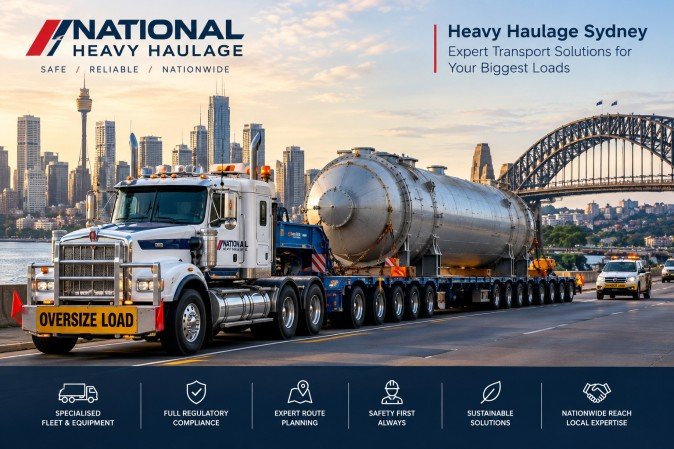
Heavy haulage in Sydney requires precise expertise and reliable solutions to transport oversized and overweight loads safely and efficiently. National Heavy Haulage specialises in providing comprehensive heavy haulage Sydney services, ensuring that large-scale transport projects are managed with professionalism and compliance with all legal requirements.
For clients requiring specialised transport, heavy haulage Sydney services offer custom solutions tailored to the unique specifications of each load. This includes detailed route planning, logistical coordination, and the use of advanced equipment designed for the safe movement of heavy items.
Understanding Heavy Haulage in Sydney
Heavy haulage refers to the transportation of items that exceed standard weight and dimensional limits. Sydney’s infrastructure and urban setting pose specific challenges, necessitating a thorough understanding of the region’s regulations and road conditions. National Heavy Haulage’s expertise in navigating these challenges positions it as a leading provider in the industry.
Regulatory Compliance and Permitting
Transporting heavy loads in Sydney requires obtaining the appropriate permits and adhering to regulations established by local and state authorities. National Heavy Haulage assists clients by facilitating the necessary permit applications, ensuring all transportation activities comply with the Heavy Vehicle National Law and other legislations.
Specialised Equipment and Fleet Capabilities
The company maintains a modern fleet equipped with specialised trailers, including extendable trailers, low loaders, and modular platforms. These vehicles are engineered to support various heavy haulage requirements, offering the flexibility to move items such as industrial machinery, construction components, and large infrastructure elements.
Capacity for Diverse Transport Needs
National Heavy Haulage caters to a broad spectrum of industries, providing tailored solutions that address the complexities of each transport task. Whether dealing with abnormal loads or project cargo, the company delivers end-to-end service from initial consultation through to delivery.
Route Planning and Risk Management
Effective route planning minimises risks and optimises transport times, particularly in densely populated areas like Sydney. National Heavy Haulage utilises advanced planning tools to evaluate routes for load restrictions, overhead clearances, and traffic conditions, ensuring smooth transit and reducing the likelihood of disruptions.
Safety Protocols and Training
Safety is paramount in heavy haulage operations. National Heavy Haulage employs highly trained operators who follow stringent safety protocols designed to protect both the load and the public. Continuous training and adherence to industry best practices ensure that each project is executed without compromise.
Client-Focused Service Approach
Recognising the critical nature of heavy haulage projects, National Heavy Haulage emphasises clear communication and personalised service. Clients receive detailed project updates and can rely on experienced staff to address any concerns promptly and professionally.
Environmental Considerations
In undertaking transport operations, the company also considers environmental impacts, striving to minimise emissions and reduce the overall carbon footprint associated with heavy haulage activities in Sydney.
Nationwide Reach with Local Expertise
Although focused on heavy haulage Sydney, National Heavy Haulage has the capacity to manage projects across Australia. This combination of local knowledge with national experience ensures that clients benefit from comprehensive logistical support regardless of project scale or location.
Comprehensive Customer Support
Clients benefit from an integrated approach to heavy haulage that includes pre-transport planning, real-time monitoring, and post-delivery evaluation. This holistic service model contributes to timely, cost-effective, and efficient project outcomes.
Conclusion
For demanding heavy lift and transport requirements in Sydney, National Heavy Haulage delivers expert solutions backed by extensive experience, a modern fleet, and meticulous attention to regulatory compliance and safety. Companies seeking dependable heavy haulage services in Sydney will find that National Heavy Haulage meets and exceeds industry standards to facilitate the successful completion of complex transport projects.


Construction sites need a dependable way to receive, move and distribute heavy materials without turning every delivery into a manual handling operation. Four-loop super sacks offer a practical solution for transporting sand, gravel, cement and other dry construction materials in bulk. These flexible intermediate bulk containers (FIBCs) can be moved using suitable forklifts or cranes, provided their lifting arrangements and load limits match the equipment and conditions on site.
For site managers, contractors and builders’ merchants, the main advantage is controlled material movement. Instead of handling numerous smaller packages, teams can position a bulk load near its intended point of use. However, safe working load, lifting-loop configuration, moisture protection and eventual disposal or reuse must all be considered before selecting a bag.
How Bulk Bags Fit Into Construction Site Logistics
Material deliveries rarely arrive exactly where construction crews need them. Sand may be required beside a mixing station, gravel near a drainage trench and cement close to a protected batching area. Moving these products efficiently requires coordination between unloading equipment, storage locations and the teams consuming the materials.
Four-loop bulk bags create individual handling units that can be lifted and relocated without manually transferring their entire contents. Their woven polypropylene construction provides the main supporting structure, while the four lifting loops allow compatible equipment to engage the bag at designated lifting points.
Contractors should consider the intended discharge location before accepting a delivery. Positioning a bag directly above a suitable receiving hopper may eliminate an intermediate transfer, but only when the lifting equipment, bag discharge arrangement and work area support that method safely.
Builders’ merchants can also use bulk packaging to organize construction materials by product type and quantity. Keeping individual loads identifiable supports stock control and reduces the likelihood of incompatible materials being mixed during handling.
How Should Four-Loop Bags Be Lifted?
A standard four-loop FIBC is designed to be lifted using its designated lifting loops. The bag and its contents must remain within the rated capacities of the complete lifting arrangement, including the forklift or crane, lifting accessories and bag itself.
When a forklift is used, operators must engage all four loops with an approved arrangement, maintain appropriate fork spacing and prevent the loops from twisting or being pulled sideways. Forklift tines should have suitably rounded contact surfaces to avoid cutting or abrading the lifting material.
Crane handling requires similar attention to load distribution. Properly rated lifting accessories or spreader arrangements can help maintain the intended loop orientation. Gathering all four loops onto a single hook is unsafe unless that specific lifting method has been approved by the bag manufacturer.
Before a lifting operation begins, the responsible team should check:
- Bag condition: Inspect lifting loops, seams and fabric for cuts, abrasion or other visible damage.
- Equipment capacity: Confirm that the equipment and lifting accessories are rated for the total suspended load.
- Loop engagement: Use every designated lifting loop in the approved configuration.
- Travel route: Keep the route clear of personnel, obstacles and overhead hazards.
- Load stability: Avoid sudden acceleration, swinging, dragging and abrupt lowering.
On UK construction sites, lifting operations must be properly planned by a competent person, appropriately supervised and performed safely. Workers must never stand beneath a suspended bulk bag. A forklift should carry the load as low as practicable while maintaining safe ground clearance and visibility.
Why Do Safe Working Load and Safety Factor Matter?
The safe working load (SWL) is the maximum load that an FIBC is certified to carry during its intended service. The safety factor (SF) relates to the bag’s tested lifting performance and is not permission to exceed its rated capacity.
Cegy Plastics manufactures four-loop big bags for loads ranging from 100 to 2500 kg. Its product range is manufactured according to EN ISO 21898:2005, with 5:1 configurations for single use and 6:1 configurations for multiple use.
Consider a bag marked with a 1000 kg SWL and a 5:1 safety factor. The rating does not authorize site personnel to lift 5000 kg. The permitted working load remains 1000 kg. The safety factor reflects a defined testing relationship rather than additional capacity available during routine operations.
Likewise, a 6:1 designation does not automatically make every bag suitable for unlimited reuse. The bag must be specifically designed for multiple use, and subsequent handling must remain within its intended operating conditions.
Site managers should select the SWL using the actual filled weight, not simply the nominal volume of the bag. Sand and gravel can differ considerably in bulk density and moisture content. A partially filled bag of dense material may still approach its maximum permitted load.
Protecting Cement From Moisture During Storage
Cement needs different packaging protection from many coarse aggregates. Exposure to moisture can cause premature hydration, hardening and deterioration of the material before it reaches the mixing process.
Woven polypropylene fabric provides structural support but does not, by itself, guarantee a moisture barrier. A suitably specified inner liner helps separate cement from humid surroundings and accidental moisture exposure.
The Cegy Plastics four-loop bag range can incorporate LDPE, HDPE, MDPE, PA, aluminium and EVOH barrier layers according to the material being packed. These options allow moisture-protection requirements to be considered alongside the bag’s structural design.
Choosing an appropriate liner involves more than selecting a material name. Contractors and merchants should consider storage conditions, expected exposure to humidity, filling and discharge arrangements, and how the liner will be closed. Barrier performance depends on the complete packaging system, including seams and closures.
Even lined cement bags should be stored in a dry, sheltered environment on an appropriate raised surface. A liner is additional protection, not a substitute for sound storage practices. Damaged packaging, open closures and prolonged exposure to standing water can undermine moisture protection.
Matching Bag Design to Construction Materials
Different construction products place different demands on bulk packaging. Selecting a jumbo bag for cement requires particular attention to dust containment and moisture resistance, while aggregates introduce concerns about density, abrasion and discharge behavior.
- Sand: Consider fill weight, particle size, moisture content and the method used to empty the bag.
- Gravel: Check the maximum filled weight and the potential for abrasive or angular particles to damage the packaging.
- Cement: Prioritize a suitable moisture barrier, secure closures and controlled discharge to limit dust release.
- Dry mortar and mineral powders: Review particle characteristics, liner compatibility and the receiving equipment.
A suitable bottom discharge spout can direct material into an approved receiving system. Where the bag has no dedicated discharge opening, unloading arrangements must be assessed separately. Cutting into a suspended bag without a specifically engineered safe system can create an uncontrolled release of material and introduce serious risks.
Planning the Unloading Area
The unloading location should be treated as part of the material-handling system rather than an available patch of ground. It needs sufficient space for lifting equipment, a stable surface and an exclusion zone separating workers from suspended loads.
When fine materials are discharged, dust control also matters. A compatible spout and enclosed receiving arrangement can help reduce uncontrolled release, while appropriate extraction and respiratory protection may be necessary according to the site risk assessment.
The person responsible for the lifting operation should confirm that the discharge method does not require workers to reach beneath an unsupported load. Bags must be supported or suspended using a suitable engineered arrangement, with access and discharge procedures established before opening.
Can Construction Bulk Bags Be Reused?
Reuse should be planned before bags arrive on site. A single-use FIBC is not suitable for another filling cycle merely because it appears undamaged after unloading. Similarly, bags intended for multiple use require inspection, controlled handling and an appropriate system for determining continued suitability.
A controlled return arrangement can work where the manufacturer, supplier and end user establish procedures for collecting, inspecting, cleaning and qualifying reusable bags for the same intended application. Tracking the bag’s use and rejecting damaged or contaminated units are essential parts of that process.
Before adopting a return system, contractors should determine who owns the empty bags, where they will be accumulated and how contamination will be managed. Cement residue, embedded aggregate particles, moisture and damaged lifting loops can affect whether a bag is suitable for further service.
Where reuse is not permitted or practical, separate collection for appropriate recycling or disposal should be considered. Liners and residual construction materials may need to be separated according to the applicable waste-handling arrangements.
Specifying Bags Around the Site Operation
Effective bulk packaging starts with a clear description of the material and its handling route. The information shared with a manufacturer should include product characteristics, intended fill weight, lifting equipment, storage conditions, liner requirements and the planned discharge method.
At its factory in 10th of Ramadan City, Egypt, Cegy Plastics combines in-house polypropylene extrusion, weaving, coating, cutting, sewing, liner welding and laboratory testing as part of its FIBC manufacturing operations. These processes support the development of bag configurations for different industrial packaging requirements.
For construction applications, the correct choice is not necessarily the largest available bag. It is the configuration that fits the material, lifting arrangement and site workflow without exceeding the designated safe working load. Establishing those requirements before procurement helps contractors manage heavy materials more predictably while protecting workers and maintaining the condition of the product being handled.

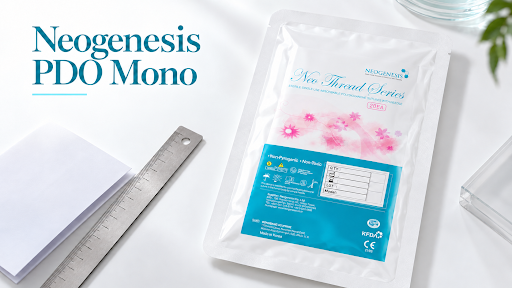
The word “thread” can suggest a miniature cable pulling loose skin upward. That image fits some aesthetic thread designs better than others. A smooth mono thread has no projecting barbs to catch tissue, so its appeal begins with a different idea: introducing a temporary filament that interacts with the surrounding tissue.
Neogenesis PDO mono threads are the smooth, single-filament members of the NEO Thread range. The manufacturer’s brochure describes the mono design as non-fixing and distinguishes it from the company’s screw, multi-thread, and cog formats.[1] That distinction is central to understanding the product. Customers considering skin texture and modest firmness changes need a different explanation from someone expecting visibly displaced tissue to be lifted and held in a new position.
The smooth design defines the product
“Mono” describes a single filament. In the Neogenesis mono series, that filament has a smooth surface rather than the hooks found on cog threads. “PDO” identifies the material: polydioxanone. One term describes construction, while the other describes chemistry. Keeping the two separate explains why a smooth PDO thread and a barbed PDO thread should not be treated as equivalent products.
A smooth filament does not gain a cog’s gripping function simply because it is made from the same polymer. The product discussion therefore centers on tissue support and the response around the filament. Strong claims about repositioning facial tissue need a mechanical explanation that the mono design does not provide in the same way.
Research discussing thread architecture distinguishes reinforcement and scaffold effects from the lifting effect of barbed designs.[2] This is useful vocabulary for customers: smoother-looking texture, firmer-feeling tissue, and a visibly elevated contour describe different changes. Saying “lift” for all three can make a modest improvement sound like a larger structural correction.
The mono format is consequently best understood as its own category, rather than a weaker copy of a cog thread. A professional might discuss it when the aim concerns skin quality or mild laxity. If the principal concern is a substantial change in tissue position, that goal needs a separate assessment rather than an assumption that every thread can provide it.
What PDO contributes
Polydioxanone is a synthetic absorbable polymer also used in surgical sutures. Its material structure provides a temporary filament, and hydrolysis gradually breaks down that structure. Absorbability is a material property; it does not describe how much visible improvement a particular patient will experience.
This distinction helps with a common source of confusion. The thread’s physical presence, its remaining mechanical strength, and the duration of a cosmetic result are three separate timelines. A filament can change mechanically before it has completely disappeared. Tissue response can also continue on a different schedule from material degradation.
In an animal study, Lee and colleagues observed PDO threads in tissue sections for up to six months, with complete absorption by eight months in the studied conditions.[3] Those findings help explain why PDO is considered temporary. They are not a universal calendar for every Neogenesis model, every anatomical setting, or every person’s result.
Hydrolysis breaks bonds within the polymer chains. As those chains become shorter, the material can lose strength while a recognizable filament remains. This is why seeing thread material in a tissue section cannot prove that it retains its original mechanical properties. Complete absorption describes the removal of the material; strength retention describes what that material can still withstand.
Equally, temporary material does not make every change automatically reversible on demand. The biological response around a filament is part of the product concept, not a separate feature that can be switched off by waiting a fixed number of days.
How a filament can influence surrounding tissue
The rationale for smooth threads involves the tissue response to an implanted material. Fibroblasts and other cells participate in the local response, and collagen can develop around the filament. This makes PDO interesting beyond its role as a passive strand, but the location and character of that response matter.
Lee’s rat study found collagen around several absorbable thread types and compared different PDO structures. It observed predominantly type III collagen during the experimental period and did not demonstrate new elastic fibers under its assessment conditions.[3] That is a useful corrective to the idea that all components of youthful skin are automatically restored together.
A separate pig study by Yoon and colleagues followed tissue changes after PDO thread placement across multiple observation points. It documented remodeling processes, including new collagen and changes in surrounding fibrous tissue.[4] These observations explain why researchers consider a biological contribution plausible. They do not measure a specific reduction in a human wrinkle or establish a Neogenesis success rate.
Another pig study, by Su and colleagues, found mild inflammation and collagen production around PDO, with collagen production peaking at 12 weeks in that model.[5] The key idea is that tissue response evolves over time. It should not be represented by an instant “collagen boost” visible in a photograph taken straight after a procedure.
For a customer, collagen stimulation is therefore most useful as an explanation of the product’s rationale. The actual goal remains a visible or functional change that matters to them. Microscopic collagen formation and a satisfying improvement in facial appearance are connected questions, but one is not a substitute for measuring the other.
Mono screw and cog threads are different tools
Thread names become much clearer when they are linked to construction rather than treated as steps on a quality ladder. A smooth strand, a wound strand, and a barbed strand interact with tissue differently even when all three use PDO.
| Thread format | Defining structure | Main product concept | What the design does not establish |
|---|---|---|---|
| Mono | One smooth filament without barbs | Local tissue response and support | The gripping action of a cog thread |
| Screw or twisted format | A wound filament or multiple twisted strands, depending on the model | A different arrangement of material and tissue contact | A guaranteed increase in visible benefit |
| Cog | Projecting barbs or cogs | Mechanical engagement with tissue alongside biological response | Equivalence to surgery or permanent correction |
Neogenesis separates these families within its range.[1] That is useful for product selection because “PDO threads” alone is too broad a description. The material name does not tell a customer whether the discussion concerns a smooth filament or a design intended to engage tissue mechanically.
More elaborate construction is not automatically better. A different arrangement can change how much material contacts tissue, but it also changes the product being considered. Results from one architecture cannot be converted into a simple claim that every additional twist or barb adds a predictable amount of improvement.
The comparison also helps explain why mono threads are not liquid fillers. A gel creates a distributed material volume; a thread is a filament. Even where both are discussed in relation to appearance, they provide different starting structures. Choosing between them should begin with the desired change, rather than assuming that one is a lower-cost version of the other.
Local collagen is different from permanent suspension
Collagen develops around the interface between a filament and surrounding tissue. That local response is different from constructing a new ligament. Hong and colleagues specifically caution against treating the thin tissue capsule around an absorbable thread as a strong, lasting structure capable of maintaining a substantial lift.[2]
The distinction explains why a thread can be biologically active without behaving like a permanent suspension system. Collagen staining shows where tissue has formed; it does not measure how much load the whole treated region can support. For smooth Neogenesis mono threads, the relevant concept remains local reinforcement and skin quality, rather than the creation of a new anatomical anchor. The fine filament’s geometry is part of that distinction, even before considering how PDO gradually breaks down.
The product details need only a short place in that conversation. The Neogenesis brochure lists multiple mono models, with distinct needle and thread dimensions, and describes a standard presentation of 20 units per pouch and five pouches per box.[1] A 20-piece listing is therefore a package quantity, not a treatment plan. Neither the model code nor the number of supplied threads tells a customer how much improvement to expect. Those choices belong to professional assessment, while the defining product features remain the smooth monofilament construction and absorbable PDO material.
Frequently asked questions
Are mono threads the same as a thread lift
The phrase is often used broadly, which can be misleading. Smooth mono threads lack the barbs associated with tissue engagement in cog designs. Their discussion should focus on local support and tissue response. A substantial lifting goal requires a separate explanation of how that repositioning would be achieved.
Are Neogenesis mono threads made from collagen
No. The PDO versions are made from polydioxanone, a synthetic polymer. Collagen is part of the body’s possible response around the implanted filament. The material being supplied and the tissue that may develop around it are different things, and confusing them obscures how the product works.
Will the result disappear as soon as the thread dissolves
There is no single moment that reliably marks the end of a cosmetic result. Polymer breakdown and tissue remodeling occur on different schedules. Animal observations help explain that distinction, but they cannot provide a fixed duration for an individual person’s visible response to a particular Neogenesis model.
Can smooth threads replace lost volume like a filler
They should not be considered interchangeable with a gel filler. A fine filament and a volume of gel create different material structures. If the main concern is lost fullness, the professional discussion should explain which approach addresses that deficit rather than presenting mono threads as an equivalent substitute.
Does a screw thread always work better than a mono thread
No. The names describe different constructions, not a universal ranking. A wound or twisted arrangement changes material geometry and contact with tissue. Whether it offers a meaningful advantage depends on the particular product, the clinical objective, and evidence relevant to that comparison.
What is the most realistic reason to consider the mono format
Its clearest rationale is a smooth, temporary filament intended to interact with and support surrounding tissue, with interest in modest skin-quality changes. It should be evaluated against that goal. Expecting the same gripping and repositioning behavior as a cog thread creates an avoidable mismatch between design and expectation.
Explore the right thread category
Professionals comparing thread options can browse professional aesthetic products from MJS with a clear distinction between smooth mono and barbed lifting designs. For Neogenesis PDO mono threads, begin with the desired skin-quality outcome and the meaning of a worthwhile improvement. The most useful comparison is the one that connects material, construction, and purpose, so that the product’s actual design leads the conversation.
References
[1] Neogenesis Co., Ltd. NEO Thread Series: Product Brochure. Undated; accessed 2026.
[2] Hong GW, Kim SB, Park SY, Wan J, Yi KH. Characteristics of Volumizing, Scaffold, Lifting Cogged Thread, and Monofilament Threads. Dermatologic Therapy. 2024.
[3] Lee CG, Jung J, Hwang S, et al. Histological Evaluation of Bioresorbable Threads in Rats. Korean Journal of Clinical Laboratory Science. 2018.
[4] Yoon JH, Kim SS, Oh SM, Kim BC, Jung W. Tissue Changes over Time after Polydioxanone Thread Insertion: An Animal Study with Pigs. Journal of Cosmetic Dermatology. 2019.
[5] Su D, Wang S, He T, Wang J. Experimental Investigation of Biostimulatory Effects after Polydioxanone Thread Insertion in a Pig Model. Journal of Cosmetic Dermatology. 2024.

Modern Adult Orthodontics: Accelerated Teeth Alignment and Oral Tissue Recovery Protocols

Modern Consumer Snack Trends: Sugar-Free Wholesale Shifts and Emerging Dietary Demands

Property Staging Tips: How to Sell Your House Faster and for More

Planning a Website Redesign? 8 Things to Get Right Before You Start

A Grandparent’s Guide to Choosing Toys They’ll Actually Play With

Heavy Haulage Sydney: Expert Solutions by National Heavy Haulage

How to Ensure Your Home is Valued Correctly for a Quick Sale

Christopher Dare: The Untold Story of Engineer and Former Husband of Angela Rippon

The 15 Highest-Paid Rugby Players in the World

What Is Fanquer? The Digital Creator Platform Transforming Direct-to-Fan Engagement

Dr Jared Ross: Missouri Appeals Court Upholds Protection Order Over Graphic Torture and Murder Threats

Nancy Hallam: The Inspiring Life, Career, and Success Story Behind Ian Wright’s Wife
How to Ensure Your Home is Valued Correctly for a Quick Sale
Christopher Dare: The Untold Story of Engineer and Former Husband of Angela Rippon
The 15 Highest-Paid Rugby Players in the World
What Is Fanquer? The Digital Creator Platform Transforming Direct-to-Fan Engagement
Dr Jared Ross: Missouri Appeals Court Upholds Protection Order Over Graphic Torture and Murder Threats
Nancy Hallam: The Inspiring Life, Career, and Success Story Behind Ian Wright’s Wife
-
 Real Estate9 months ago
How to Ensure Your Home is Valued Correctly for a Quick Sale
-
Celebrity11 months ago
Christopher Dare: The Untold Story of Engineer and Former Husband of Angela Rippon
-
 Sports6 months ago
The 15 Highest-Paid Rugby Players in the World
-
 Technology5 months ago
What Is Fanquer? The Digital Creator Platform Transforming Direct-to-Fan Engagement
-
 Celebrity5 months ago
Dr Jared Ross: Missouri Appeals Court Upholds Protection Order Over Graphic Torture and Murder Threats
-
Celebrity12 months ago
Nancy Hallam: The Inspiring Life, Career, and Success Story Behind Ian Wright’s Wife
-

 Celebrity8 months ago
Who Is Azriel Crews? Inside the Life and Career of Terry Crews’ Daughter
-
 Celebrity12 months ago
Who Is Maisie Mae Roffey? The Private Life, Family Story, and Quiet Success of Julie Walters’ Daughter