
Business
How to Wash an Essentials Hoodie Without Killing the Fleece

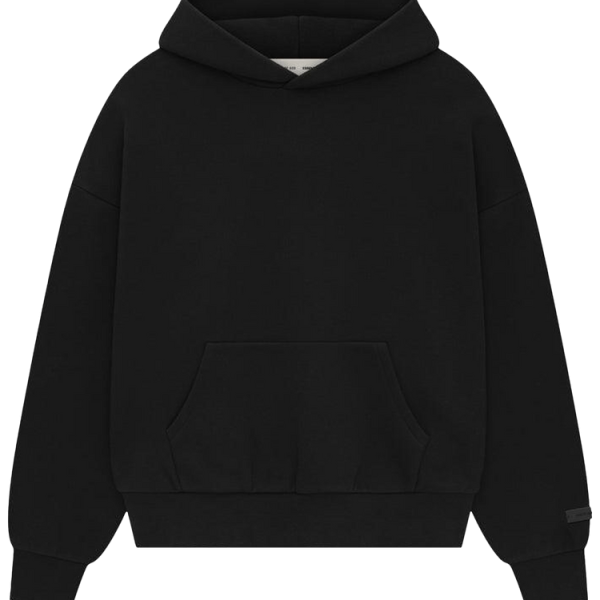
Three washes. That’s sometimes all it takes to turn a soft cotton fleece hoodie into something stiff, pilled and a size shorter in the sleeve. The garment wasn’t badly made — the fleece pieces here sit around €70 to €85, down from €230-odd. It got wrecked at home, in a hot machine, next to a pair of jeans. So spend ten minutes on what the drum does to the inside of an Essentials Hoodie before you buy another one.
None of this is complicated. Cold water, half the detergent, no dryer. But knowing why stops you breaking those rules the next time you’re in a hurry.
The fuzzy side is the part you’re paying for
Cotton fleece — pile di cotone on the Italian product pages — is a knit with one smooth outer face and one brushed inner face. The brushing pulls the yarn into thousands of loose loops, and those loops hold still air against your skin. Air is the insulation. The cotton itself does surprisingly little.
Heat, friction and detergent each attack the loops differently. Hot water relaxes the fibers so they lie flat and never stand back up. Tumbling against something abrasive tangles the loop ends into pills. Too much detergent leaves a residue that mats them together. Once a panel has felted, no wash brings it back.
Six steps, and none of them take long
This is the routine I’d use for any cotton fleece piece in the hoodie category, popover or full-zip, from the matte black ones to the cream and desert taupe.
- Turn it inside out before it goes near the drum, so the brushed face rubs against itself instead of against a zipper or a button.
- Close the zip fully and tie the drawcords loosely. A metal pull bouncing around a steel drum for 40 minutes snags a knit in a dozen places.
- Wash cold. Read your own care label, since weights differ across the range, but 30 °C is the warmest I’d go and 20 °C is better.
- Halve the detergent. Liquid rather than powder, and no fabric softener at all — it coats the loops and flattens the loft.
- Choose a gentle cycle with a low spin. High spin speeds press permanent creases into the shoulders and the hood seam.
- Take it out damp. One sharp shake to open the fibers, then lay it flat or hang it on a wide hanger.
Wash it alongside other soft things — tees, other fleece, nothing with hardware. A load of denim and bath towels is basically a sanding machine for anything brushed.
Skip the dryer. Seriously.
Cotton shrinks along its length when it’s tumbled hot, and on a hoodie that shows up where you notice it most: sleeve ends and hem. Lose two centimeters off each and an oversized cut reads like a normal one. Cuffs go tight, the body rides up over the waistband, and the drape is gone.
Air drying in an Italian apartment takes patience in the wrong season. A Milan winter sits between 0 and 8 °C with real damp in the air, so a heavy hoodie can need eight to twelve hours indoors. Put it where air moves rather than draped over a radiator — direct heat dries one panel unevenly and stiffens that patch. Up in Trentino, where the store itself sits, people accept that fleece takes a day.
If you genuinely have no choice, use the lowest heat, pull it out while it’s still slightly damp, and finish it flat. Never run a full cycle on high and walk away.
Prints crack before fabric fails
The range carries printed graphics — 1977, the Arch Logo, side prints — and ink is always the weakest thing on the garment. It doesn’t fade so much as craze into fine lines, then flake. Heat softens the print, friction lifts the edges, and a hot dryer does both at once. Turning the hoodie inside out protects a print better than any special detergent.
| Pro Tip: Give a new dark piece — matte black, bordeaux, crimson — two solo cold washes before it joins a mixed load. Deep dye bleeds most on the first couple of runs, and a beige or buttercream hoodie sitting next to it will pick that up permanently. |
When a hoodie is actually finished
Pilling and felting get confused, and people give up on hoodies too early because of it. Pills are loose loop ends balled up on the surface, and a fabric shaver or a sweater comb clears them in five minutes. The garment underneath is fine. Felting is different: the panel feels thin, hard and slightly shiny. That one is over. Same with cuffs that no longer spring back.
If you’ve reached that point, the hoodie section runs to roughly 50 pieces — popovers, the full-zip Classic Fleece, cropped fits, nylon and camo. The Felpa Essentials Fear of God pages are also where you compare weights before committing, since felpa just means hoodie or sweatshirt in Italian. Check the size properly on arrival, though. Anything going back has to be unworn, unwashed and still tagged, and the 30-day window covers two situations and nothing else: the parcel held the wrong piece, or the garment came with a fault. One wash and an exchange is off the table.
Plan ahead, too. Standard shipping costs €15 and lands 8 to 12 business days out, and before that the store needs a working day or three to pack the thing. You get 24 hours after ordering to change a size or color. Don’t order a winter hoodie the week the cold arrives.
Frequently Asked Questions
Does denim ruin fleece in the wash?
I wouldn’t risk it. Denim is stiff and abrasive, and rivets and zips catch loops as the load turns. Wash fleece with other knits, or on its own if you’ve only got one or two pieces.
Does cold water really clean it?
Yes, for normal wear. Modern liquid detergents work at 20 to 30 °C, and body oils and everyday dust lift out fine there. Heat only matters for oil stains, and then you spot-treat that patch instead of cooking the whole garment.
How often should it go in the machine?
Less often than most people think. A hoodie worn over a tee has almost no skin contact, so every five or six wears is plenty. Hang it in open air overnight between wears and it stays fresh far longer.
Get the cold-wash habit right and a heavy fleece will still look expensive after two or three Italian winters, which is more than most people ever get out of one. Have a look at the fleece weights and colors on the site when you’re ready for the next one.



Many people associate pawnbrokers with large collections of valuables, expensive watches or investment gold bullion. However, it is also possible to obtain a secured loan using just one piece of gold jewellery.
A ring, bracelet or necklace may be sufficient security for a short-term loan, depending on its value and the lender’s requirements.
For people looking to pawn gold jewellery Brisbane, understanding how individual jewellery items are treated can help set realistic expectations.
Can You Pawn Just One Piece of Jewellery?
You do not necessarily need several items to obtain a pawn loan.
A single gold chain, wedding band or heavy gold bracelet may contain enough precious metal to support a loan.
The amount available depends on the jewellery itself and the lender’s assessment.
For example, a substantial 18-carat gold bracelet will generally contain more valuable gold than a lightweight 9-carat ring of similar design.
However, the size or appearance of an item does not always indicate its actual gold content.
Does Jewellery Need to Be in Perfect Condition?
One advantage of gold jewellery is that its precious metal content remains valuable even when the item is damaged.
A broken clasp, missing earring backing or bent ring does not necessarily prevent jewellery from being accepted as security.
Some pawnbrokers assess jewellery primarily according to its gold content, while others may consider whether the complete item could be resold.
The Gemological Institute of America’s guide to different types of gold jewellery explains how gold purity varies between jewellery pieces and why markings such as 375 and 750 are important.
Can You Continue Wearing the Jewellery?
When jewellery is pawned, it is normally left with the pawnbroker as security for the loan.
This means you cannot continue wearing the ring or necklace while the loan remains outstanding.
For someone who wears a particular piece every day, this may be an important consideration.
A person pawning a wedding ring, for example, should understand that it will remain in the lender’s possession until the loan has been repaid and the jewellery redeemed.
What If You Have Matching Jewellery?
Some jewellery is purchased as a matching set, such as a necklace and bracelet or a pair of earrings.
It may be possible to pawn only one item rather than the entire set.
However, if several items are pledged under one loan agreement, borrowers should ask whether they can recover individual pieces separately.
Some arrangements may require the entire outstanding amount to be repaid before any of the jewellery is released.
Understanding this beforehand can avoid disappointment later.
What Should You Bring to the Pawnbroker?
Anyone planning to pawn gold jewellery Brisbane should bring suitable identification and the jewellery they intend to use as security.
Original receipts, certificates or packaging may be useful for certain items, particularly designer jewellery or pieces containing valuable gemstones.
Before accepting an offer, ask for the total repayment amount, applicable interest and fees, and the date by which the jewellery must be reclaimed.
Think About the Jewellery Before Borrowing
Pawning a single piece of jewellery can provide temporary access to funds without requiring an immediate sale.
However, the jewellery may be sold if the loan is not repaid in accordance with the agreement.
For people considering whether to pawn gold jewellery Brisbane, the most important question is whether they can realistically afford to recover the item.
A short-term loan may be useful, but understanding the repayment obligations is essential when the security is something you would like to keep.

As eCommerce operations grow, the physical experience of receiving an order becomes a more deliberate part of how a brand operates. Packaging decisions that worked at lower volumes often reveal gaps when order frequency increases, product lines expand, or fulfillment is handed off to a third-party logistics partner. One of the most consistent gaps involves the printed materials inside the box — specifically, what accompanies the product and how reliably that content reaches the customer.
For brands operating in the US market, this matters more than it might appear on the surface. Regulatory expectations, return policies, warranty terms, and assembly requirements are increasingly communicated through printed collateral rather than embedded in packaging design. When that content is inconsistent, missing, or poorly produced, the downstream effects are measurable — in customer service volume, return rates, and repeat purchase behavior.
This guide covers how eCommerce brands can approach printed packaging inserts with more operational clarity, from what they actually accomplish to how sourcing decisions affect consistency at scale.
What Product Inserts Actually Are and Why They Matter Operationally
Product inserts are printed documents placed inside product packaging that serve a functional purpose for the end customer. The term covers a wide range of formats — instruction sheets, warranty cards, care guides, safety notices, and registration forms — but the common thread is that they communicate information the customer needs after opening the box. You can find well-produced examples of these materials through specialized suppliers who focus on product inserts as a core offering rather than an add-on service.
What separates inserts from general marketing collateral is that they are operationally load-bearing. A customer who cannot find assembly instructions, or who receives a warranty card that references a product they did not purchase, has an immediate problem that affects their experience of the product itself. In contrast to packaging design, which is evaluated aesthetically, inserts are evaluated for accuracy and usability — often at the moment of highest customer engagement.
The Connection Between Insert Quality and Post-Purchase Outcomes
The relationship between insert quality and post-purchase outcomes is more direct than many brands realize when they are still operating at small scale. When customers cannot understand how to use a product correctly, they often return it — not because the product failed, but because the communication did. This is particularly common in categories like home goods, personal care devices, and assembled furniture, where the gap between “product received” and “product functioning as intended” depends heavily on clear instructions.
Brands that have tracked return reasons carefully often find a category of returns that points not to product defects but to confusion during setup or first use. Printed inserts, when designed with the actual customer journey in mind, address this directly. The insert becomes part of the product’s functionality rather than incidental content inside the box.
Regulatory and Compliance Dimensions
In certain product categories, inserts carry a compliance function that goes beyond customer experience. The US Consumer Product Safety Commission outlines documentation requirements for product categories that carry safety risks, and printed materials inside packaging are often the mechanism for meeting those requirements. For brands selling juvenile products, electrical goods, or items with choking or chemical hazards, the insert is not optional — it is part of the product’s legal presentation.
Brands that source inserts as an afterthought, without attention to how they are produced or whether content matches current regulatory language, create compliance exposure that only becomes visible during audits, recalls, or product liability events. Treating inserts as a compliance document rather than a marketing asset is a foundational shift in how packaging decisions get made.
Scaling Packaging Operations Without Losing Insert Consistency
The most common point of failure for eCommerce brands is not poor design or low-quality printing — it is the breakdown in consistency that happens when volume increases faster than the processes supporting it. An insert that was accurate and well-produced at small run sizes can become a liability when orders triple and production shifts to a fulfillment center that receives pre-printed materials in bulk without a systematic check process.
Consistency in this context means more than matching colors or keeping the same layout. It means that every unit shipped contains the correct version of the insert for that SKU, that the content reflects current product specifications, and that the physical quality of the printed sheet meets the same standard across print runs. Each of those dimensions requires active management rather than assumption.
Version Control Across SKU Expansions
When a brand expands its product line, the number of distinct insert versions multiplies quickly. A single product category might include several variants — each with different specifications, different use cases, or different regulatory requirements. Without a clear version control process, it becomes easy for outdated inserts to remain in circulation alongside new inventory, or for inserts from one SKU to be inadvertently included in another.
Managing this requires a documented workflow that connects insert versions to specific product runs, tracks print quantities against inventory counts, and flags discrepancies before they reach the fulfillment stage. Brands that treat this as a documentation problem — rather than a printing problem — tend to handle SKU expansion more cleanly. The print supplier is one part of the solution, but internal version governance is equally important.
Working with Third-Party Fulfillment Partners
Third-party logistics providers (3PLs) handle packaging on behalf of many eCommerce brands, which introduces a layer of separation between the brand’s standards and what actually ships to customers. Inserts that are not clearly labeled, not matched to specific SKUs, or not delivered in organized quantities create friction at the fulfillment level that often results in the wrong insert reaching the customer.
Brands that manage this relationship well tend to approach their 3PL as a process partner rather than just a shipping vendor. That means providing inserts pre-sorted by SKU where possible, establishing clear protocols for what to do when insert stock runs low, and conducting periodic audits of what is actually going into outbound packages. The investment in that coordination consistently reduces the rate of insert-related errors.
Sourcing Decisions That Affect Long-Term Print Consistency
How a brand sources its printed inserts has a direct effect on whether consistency is achievable over time. Brands that shift between print suppliers frequently, or that source inserts through general-purpose vendors without dedicated experience in packaging applications, tend to encounter variability in paper stock, print registration, and color accuracy from one run to the next. For high-volume operations, that variability compounds across thousands of units.
Working with a supplier who has specific experience in printed packaging materials — and who understands the operational context of fulfillment environments — produces more predictable results. This is not about premium pricing; it is about finding a production partner who treats the insert as a functional component rather than a commodity print job.
Print Specifications and Material Choices
The physical properties of an insert affect how it performs in the packaging environment. A sheet that is too lightweight may wrinkle or fold during transit, arriving in a condition that signals low production quality even when the content is accurate. A sheet printed on material incompatible with the packaging environment — such as a glossy stock in a humid warehouse — may smear or stick to the product itself.
These are not decisions that require deep technical expertise from the brand team, but they do require a conversation with the print supplier that goes beyond artwork approval. Brands that ask about material suitability, folding behavior, and environmental compatibility before placing a large print run tend to encounter fewer surprises when the inserts reach the fulfillment stage.
Reorder Cycles and Inventory Alignment
One of the more disruptive patterns in eCommerce packaging operations is running out of inserts mid-fulfillment cycle. When insert stock runs out unexpectedly, brands face a choice between shipping without the insert — which creates customer experience and compliance gaps — or delaying orders while a reprint is produced. Neither outcome is acceptable at scale.
Building a reorder cadence that is aligned with product inventory rather than managed independently is a practical solution. Inserts should be treated as a consumable component of the product unit, with reorder thresholds set to account for print lead times. Brands that manage this well often work with their print supplier to establish a standing order or blanket purchase arrangement that reduces the risk of stock-outs without requiring excess inventory on hand.
Conclusion: Treating Inserts as Infrastructure, Not an Afterthought
For US eCommerce brands operating at meaningful volume, printed packaging inserts occupy a specific and important role in the product delivery chain. They are not decoration. They carry functional, regulatory, and experiential weight that affects how customers perceive and use what they have purchased. When inserts are produced inconsistently, managed loosely, or sourced without attention to operational fit, the effects show up in return rates, customer service load, and compliance exposure — not in a single visible failure, but in cumulative operational drag that is difficult to trace back to its source.
The path forward is straightforward: treat inserts as infrastructure. That means integrating them into version control workflows, coordinating closely with fulfillment partners, sourcing from suppliers who understand the production context, and building reorder cycles that align with product inventory. None of these steps are complicated individually. The challenge is applying them consistently as volume grows and product lines expand.
Brands that build this discipline early — before insert inconsistencies create visible problems — tend to scale their packaging operations with less friction. Those that address it reactively often spend significant operational time correcting errors that were preventable at the process design stage. The insert is a small document, but the systems around it deserve real attention.

A hoodie hardly ever dies in one piece. Something small goes first — a drawcord that slid out somewhere in the wash, a cuff that stopped springing back, a pocket corner that opened up maybe an inch. The fleece across your chest is usually fine, which is exactly what makes it irritating, and it’s also why a $90 hoodie from Tyler The Creator Merch can see out two winters or five depending on about four habits nobody ever thinks about.
And the places that take nearly all the punishment aren’t the panel people inspect when the parcel opens.
The cord is the first thing you’ll lose
Pull one side to snug the hood and the other side gets shorter. Do that a couple of hundred times over a year and the cord walks through the eyelets until the tips sit wildly uneven, and then one morning the short end disappears into the channel altogether, and you’re standing there holding a single tail.
Fishing it out is a twenty-minute job with a safety pin and some swearing. Leave it, and the hood never sits properly again.
Both of those are avoidable. Tighten the hood by taking both cords together and pulling from the center point under your chin, so nothing travels through the channel. And tie a loose overhand knot about an inch behind each tip — the knot can’t pass the eyelet, so the cord can’t vanish even on the day you forget everything else written here.
Cuffs stretch long before they tear
Ribbing gets knitted under tension and elastane is the thread that pulls it back. Heat is what finishes elastane off. Not in one go — a dryer cycle at a time, 140 °F at a time, until the rib has nothing left to snap back with and the cuff just sits wide on your wrist looking tired while the sleeve above it still has years in it.
Shoving sleeves up to the elbow does its own damage, mostly because people grab the band itself and drag it. Roll the fleece instead.
Most of what keeps a cuff honest costs nothing at all:
- A cold wash, inside out, 85 °F or under, with the hood cords loosely knotted together so they don’t whip around in there.
- A wide hanger taken by the shoulders, or just laid flat on a towel — anything except the dryer, honestly.
- Squeezing the water out of the cuffs and hem instead of twisting them, as most of us do.
- No fabric softener. It coats the cotton and the rib feels slack a lot sooner than it should.
Pocket corners open up where you’d never look
A kangaroo pocket hangs off two short diagonal seams, and whatever you drop in there is carried by about two inches of stitching at each top corner. Phone, keys, a wallet — no problem. Two cold hands jammed in while you’re walking fast pulls sideways on that seam in a direction it was never built to take.
The first sign is one popped stitch right at the top corner. Spot it then and three minutes of hand sewing ends the story. Ignore it for a month, and you’re closing a two-inch gap in fleece that’s already gone out of shape around it.
| Pro Tip: Take a look at both top pocket corners while the hoodie is still damp on the line — a single broken stitch stands out when the fleece is heavy with water, and nearly disappears once it’s dried and been worn again. |
Where the hood joins the body
That seam carries the whole weight of the hood, plus the yank every time you haul the hoodie off over your head — it’s a pullover, so there’s no other way in. More fleece in the hood means more load on the join, which is why the heavier pieces, including a lot of what sits on the Call Me If You Get Lost Hoodie pages, feel wonderful in a Chicago January and are slightly harder on that one line of stitching.
So take it off by the hem, with both hands, lifting straight up — your head comes out last. If you pull a hoodie off by the hood instead, which is what everybody does when they’re in a rush, that seam ends up stretched into a permanent little wave, and no amount of washing settles it back down afterward.
Two winters later
Picture the careless version of a washed black hoodie: cuffs wide, one cord gone, the hem rippled, a pocket mouth sagging open like a letterbox. Nothing on it is actually torn. It just reads finished.
Whereas the looked-after one has faded a bit where the shoulder seams catch the sun, gone softer through the body, and otherwise kept the shape it arrived with — off the same page, at the same price, separated from the other by a knot and a hanger.
So what do you check on day one?
Stretch one cuff and let it go — rib that snaps straight back still has its elastane in it, while rib that drifts back slowly was tired before you ever put the thing on. Then a thumb over both pocket corners, and a peek down the hood channel.
Do it that first evening, rather than two weeks later once you’ve worn it twice and the question gets murky. Returns stretch only to a parcel that shows up broken, or holds the wrong piece, flagged within a week, plus the order number and a photo or two. And nothing gets cancelled after you’ve paid, so read the size chart before you click.
Frequently Asked Questions
My drawcord came out completely. Is it salvageable?
Yes, nearly always. Tape one end of the cord to a long safety pin (a knitting needle works too), push it in at one eyelet and walk it around the channel in short shoves. Most channels run open the whole way across, though they narrow at the back seam, so slow down there.
Does washing it inside out really change anything?
For the front print, yes — the graphic spends the cycle facing away from the drum instead of rubbing against it. For the cuffs it matters less. Temperature is what decides those.
How cold is cold, in practice?
Cold on most American machines lands somewhere around 60 to 80 °F, and that’s plenty. Warm climbs past 100 °F, which is roughly where cotton starts shrinking and the elastane in your cuffs begins giving up on you. Detergent copes fine down there.
Can I iron a stretched cuff back into shape?
Not really. Steam will tighten a rib up for an afternoon, then it relaxes again, because what’s gone is the elastane rather than the shape. Keeping heat away from it in the first place is the only fix that holds.
None of this is really maintenance. A cold wash, a hanger, a knot behind each cord tip, and a glance at two pocket corners now and then. Give it those five minutes and the hoodie you pick out this month is still the one you’re pulling on when the cold comes back around next year.

A Dental Appointment Preparation Checklist for Anxious Patients
Pawn Gold Jewellery Brisbane: Can You Pawn a Single Ring or Necklace?

Product Inserts 101: A Practical Guide for US eCommerce Brands Scaling Their Packaging

How to Get More From an Older Smart TV

How to Check an Overstay Fine in the UAE Online

8 Best Marketing Agencies for Tradesmen in the UK (2026)

How to Ensure Your Home is Valued Correctly for a Quick Sale

Christopher Dare: The Untold Story of Engineer and Former Husband of Angela Rippon

The 15 Highest-Paid Rugby Players in the World

What Is Fanquer? The Digital Creator Platform Transforming Direct-to-Fan Engagement

Dr Jared Ross: Missouri Appeals Court Upholds Protection Order Over Graphic Torture and Murder Threats

Nancy Hallam: The Inspiring Life, Career, and Success Story Behind Ian Wright’s Wife
How to Ensure Your Home is Valued Correctly for a Quick Sale
Christopher Dare: The Untold Story of Engineer and Former Husband of Angela Rippon
The 15 Highest-Paid Rugby Players in the World
What Is Fanquer? The Digital Creator Platform Transforming Direct-to-Fan Engagement
Dr Jared Ross: Missouri Appeals Court Upholds Protection Order Over Graphic Torture and Murder Threats
Nancy Hallam: The Inspiring Life, Career, and Success Story Behind Ian Wright’s Wife
-
 Real Estate10 months ago
How to Ensure Your Home is Valued Correctly for a Quick Sale
-
Celebrity12 months ago
Christopher Dare: The Untold Story of Engineer and Former Husband of Angela Rippon
-
 Sports6 months ago
The 15 Highest-Paid Rugby Players in the World
-
 Technology6 months ago
What Is Fanquer? The Digital Creator Platform Transforming Direct-to-Fan Engagement
-
 Celebrity5 months ago
Dr Jared Ross: Missouri Appeals Court Upholds Protection Order Over Graphic Torture and Murder Threats
-
Celebrity1 year ago
Nancy Hallam: The Inspiring Life, Career, and Success Story Behind Ian Wright’s Wife
-

 Celebrity8 months ago
Who Is Azriel Crews? Inside the Life and Career of Terry Crews’ Daughter
-
 Celebrity12 months ago
Who Is Maisie Mae Roffey? The Private Life, Family Story, and Quiet Success of Julie Walters’ Daughter