
Sports
How Modern Broadcasters Are Overcoming the Infrastructure Challenges of Live Sports Streaming


Live sports streaming isn’t a harder version of VOD delivery. It’s a fundamentally different engineering problem. When a subscriber hits play on a Netflix show, that request arrives as one of millions spread across hours. When a championship kick-off happens, tens of millions of viewers hit play within the same thirty-second window, and they all want the same stream, right now. The entire infrastructure stack has to be built around that reality, not retrofitted to handle it.
The Thundering Herd and Why Origin Architecture Has to be Dynamic
The problem is what happens when a live event starts and a massive concurrent spike in requests slams your origin servers all at once. Unlike a VOD catalog where load spreads pretty evenly, a single live stream can produce request volumes that would overload even well-provisioned infrastructure if it wasn’t ready for it.
Today’s solution is dynamic auto-scaling origin architectures, the cloud-based kind that can fire up extra encoding and packaging capacity almost in real time as viewership increases. But you need something to scale first. Enter origin shielding. It’s a simple enough concept but an absolutely mission-critical component to any large scale video delivery system.
It’s a layer that sits between your origin server and the CDN edge layer; an aggregation point that acts as shock absorber, eating that first wave of requests and keeping the CDN from ever hitting the origin with fetches for content it’s already asked for and not in cache. Overly simplistic maybe but without it, a perfectly healthy origin server can be brought to its knees by simply thousands of CDN edge nodes all asking for the latest manifest file in the same millisecond.
Closing the Latency Gap Before Social Media Ruins the Match
Traditional linear TV broadcast latency typically varies between 5 and 7 seconds (Video Streaming Alliance). Standard HTTP-based HLS streaming used to add 30 to 60 seconds. That gap is a product experience problem, not just a technical curiosity, a viewer watching via OTT will see a goal celebration on social media before they see the goal on their screen. Low-Latency HLS (LL-HLS) and CMAF chunked transfer are the two solutions vying to render that gap moot. LL-HLS first debuted in iOS 12 devices and is now seeing much broader browser support.
It breaks segments into smaller partial segments that the player can begin to decode and display before the full segment finishes downloading, allowing for end-to-end latency around two-and-a-half seconds, three seconds under good conditions. CMAF (Common Media Application Format) standardized the media container so that a single encoded output can be packaged for both HLS and DASH without duplication of work. In practice, that also translates into reduced transcoding work.
For the broadcast engineer, the latency goal posts have just moved. It’s no longer enough to get within shouting distance of the live edge. We need more intimate proximity. LL-HLS can push sync between broadcast TV and stream as low as a single second. WebRTC is already sub-second, and does a great job on interactivity if round-trips remain local. It’s the best choice for things like region-local interactive gaming polling or sync’ing a second screen live sports app. It can’t scale to a million football fans wanting to stream the big game, though. Solutions in the wild are likely to use a bit of both. LL-HLS for the masses so to speak, and WebRTC glue on top to stick the interactivity on.
Multi-CDN Routing and the Mechanics of Stream Stability
Not one CDN is equally good in all geographies, for all ISPs, and at all levels of peak concurrency. The provider with the best performance for European traffic may face congestion along certain US backbone routes during primetime. A single-CDN strategy considers that variance a constant. A multi-CDN strategy considers it a problem to be solved through routing.
For example, latency and loss rate data can be used to dynamically route video traffic based on performance. Recent sports streaming infrastructure research showed how this approach minimizes startup delay and improves overall rebuffering ratio by avoiding choking up the access link of an underperforming CDN. Those metrics come pretty close to actually measuring latency and throughput QoE, which telemetry data approaches even more closely than increasing “bandwidth” measurements.
Real-time telemetry, more than just throughput data, we’re talking actual observed rebuffering and startup performance accessed at a traffic management or player level, paints a highly realistic picture of what viewers are experiencing in a given region on a given CDN. The multi-CDN advantage is that if you determine from this data that a particular node or CDN is underperforming badly enough for viewer QoE to suffer, you can route around poor performance. A congestion-based dynamic multi-CDN system switches viewers away from the slow or failing provider before the buffering becomes apparent to them. The slow provider gets less traffic and recovers.
First-Mile Ingest: Where Streams Die Before They Reach the CDN
The most common streaming failures viewers face are incorrectly attributed to the CDN; a surprising number of those failures are actually first-mile ingest problems, the part of the pipeline between the venue encoder and the cloud transcoder.
RTMP ingest was designed with a different set of constraints in mind. It doesn’t cope well with packet loss, which causes live streams to be dropped, often during the most exciting part of a game or race. And live event venues like stadiums, arenas, and outdoor courses have notoriously bad and unpredictable uplinks. A modern phone can take better video than some stadium cams, but a single burst of lost packets can kill a stream before it ever gets a chance to shine.
SRT (Secure Reliable Transport) is a standard that implements a proposed set of features for flaky networks, including forward error correction and automatic retransmission. This kind of thing is all over the map in terms of hardware support, but hot new gear ships with SRT support. RIST (Reliable Internet Stream Transport) is another set of features designed to do roughly the same thing with a different set of trade-offs in terms of hardware compatibility.
Upgrading from RTMP to SRT at ingest is one of the less amazing upgrades that a lot of broadcasters and streaming services have made in the last couple of years and while it’s not as visible as ultra-low-latency streams, it’s made much more of an impact on everyday stream quality than most people would expect. You can have the best CDN setup in the world, but if the feed that your expensive, powerful caching servers are fetching isn’t stable, all you’re doing is delivering that instability super efficiently.
Edge Computing and What it Actually Changes About Delivery
Edge computing for streaming refers to running processing tasks on servers physically close to the viewer, rather than centralizing everything at an origin or a few regional data centers. In practical terms, the two particularly expensive operations this impacts are DRM decryption and ad insertion.
Firstly, shifting DRM license serving towards the edge reduces the round-trip latency for license requests. For viewers on high-latency connections, or in regions far from the primary origin for whatever reason, this is the difference between a stream that starts in two seconds and one that buffers for six while waiting on license validation.
Ad insertion is more nuanced. The transition from Client-Side Ad Insertion (CSAI) to Server-Side Ad Insertion (SSAI) is well underway across the industry already, and edge-based SSAI takes it further. With Client-Side Ad Insertion, generally delivered by the player SDK downloaded from an ad network, the player’s device requests the ad from the ad network and, on receipt, stitches the ad content into the playback format. With Server-Side Ad Insertion, the service has far more control.
Ads can be stitched directly into the video stream itself at the server level, so the player sees a continuous stream rather than having to wait on a separate ad request to resolve before playback continues. The localized buffering spikes that frequently crop up with CSAI, as the player context-switches to fetch an ad from the third-party ad server, disappear because the stitch happens server-side before the data even reaches the player. Running this at the edge and not in a central origin simply means the stitch happens physically closer to where the stream is consumed, reducing the window for any timing errors further.
4K and HDR: The Bandwidth Problem That Isn’t Going Away
4K HDR delivery is the point in the bitrate ladder where you really start spending money. A well-encoded 1080p stream might sit at 6 to 8 Mbps. 4K HDR with high dynamic range can push to 15 to 25 Mbps using H.264, the trusted workhorse baseline codec most player environments still support. That’s not a sustainable number at scale.
HEVC (H.265) cuts that bitrate roughly in half for equivalent quality, meaning that, suddenly, 4K HDR delivery is costing you a much more reasonable 8 to 12 Mbps. AV1, a next-gen, royalty-free codec supported by most major devices and browsers (with the notable holdout of Safari) reduces that even further, with early hardware and software implementations hitting comparable quality at 6 to 8 Mbps for 4K.
The trade-off for AV1 is that it’s computationally complex to encode, which is to say it’s gluttonously expensive in the cloud in terms of compute power at the transcoding stage. The quality is also an “effective” 6 to 8, AV1 is still so new that many tuning parameters and rate control strategies are likely to be substantially improved in the coming years. For live sports, in particular, you have to throw that bitrate ladder wherever it’s wanted for fast motion in general, and player tracking specifically.
Redundancy Architecture: Building For the Failure That Will Happen
Live sports broadcasts cannot be stopped. If the main encoder fails or a cloud zone is unavailable during a game, the question isn’t whether to fail over, it’s how fast it happens and whether viewers notice.
In an active-active redundancy setup, two identical and parallel systems operate simultaneously. This includes separate encoders, separate cloud regions, and separate CDN configurations, with the traffic management layer switching between them based on health checks. The failover isn’t triggered by a human watching a monitoring dashboard. It’s automated, with switchover times measured in seconds rather than minutes.
The downside of this approach is that two replicas of the whole infrastructure need to be maintained. This architecture also requires more careful planning as two independent systems have to interconnect. Yet the cost of streaming redundancy for a two-hour event is easy to estimate. The cost of a service outage during the deciding match of the championship series is much higher, in viewer churn, in advertising liability, in brand damage. That kind of damage is irreversible and systematically influences customers’ subscription retention and also the service confidence level.
Getting streaming infrastructure right for live sports is an engineering discipline with real consequences. The gap between a broadcaster that handles peak concurrency cleanly and one that doesn’t shows up directly in subscriber retention numbers. Every layer of the stack, ingest, transcoding, origin shielding, CDN routing, edge processing, ad insertion, has to be architected for the worst-case load, not the average one.



The routes on the Vegas In 24™ ultra-cycling circuit cover up to half the length of Great Britain—all in a single 24-hour push across the Mojave. Here is how riders from cold, wet climates can build the engine and heat tolerance to survive it.
For most British cyclists, a big day in the saddle means a 100-mile sportive through the Surrey Hills or the Yorkshire Dales, dodging rain squalls and stopping for a flat white before heading home in time for dinner.
Now imagine riding three to four times that distance—without stopping to sleep, without drafting another wheel, and without a support car handing you fresh bidons—across a desert where summer temperatures routinely top 40°C.
That is the premise behind Vegas In 24™, largely touted as the toughest single-day cycling challenge in existence. The circuit, made up of four single-day, unassisted ultra-cycling routes, is owned and managed by Ho’omau Endurance Co., founded by entrepreneur and endurance athlete Andy Funk. Last month, just two weeks after completing the Ironman World Championship in Kona, Funk rode the circuit’s newest route—the 346-mile ‘Bullet’ from Phoenix, Arizona, to the ‘Welcome to Fabulous Las Vegas’ sign—in 19 hours, 12 minutes, and 18 seconds.
To put the scale of the challenge into British terms, Land’s End to John o’ Groats—the classic end-to-end length of Great Britain—is roughly 874 miles by road, typically tackled over nine to fourteen days. By comparison, the four routes on the Vegas In 24 circuit range from 346 miles up to 448 miles—each requiring completion within a strict 24-hour clock.
For UK riders tempted by the challenge, two obvious roadblocks stand in the way: how do you build the durability for an enormous effort when British weather keeps you off the open road for half the year, and how does someone living in a temperate, damp climate prepare their body for the punishing heat of the American Southwest?
According to Funk—who has completed more than 120 endurance events over the past 15 years, including 30 Ironmans and multiple World Championships—you don’t need year-round desert sunshine to prepare for the Mojave. In fact, modern indoor training gives cold-climate riders a surprising tactical edge.
1. Why the Smart Trainer Beats Endless Winter Miles
When British riders think about preparing for a ride of the magnitude of Vegas In 24, the instinct is to log endless, freezing six-hour winter slogs in full waterproofs. Funk argues that approach may actually work against you.
“Riding outdoors in 4°C rain for hours doesn’t make you tougher for the desert—it just suppresses your immune system and burns energy keeping your core warm,” Funk says. “On a smart trainer indoors, every single pedal stroke counts. There’s no coasting down hills, no traffic lights, and no freewheeling in a group.”
Because Vegas In 24 enforces a strict ‘Desert Code’—prohibiting drafting of any kind—every route is essentially an extended solo time trial. Funk notes that 90 minutes to two hours of focused, uninterrupted pedalling on a smart trainer can deliver nearly the same muscular and aerobic load as a three-hour outdoor club ride.
For UK athletes with limited dry-weather months, Funk recommends splitting the build into two distinct phases:
- The Indoor Engine Phase: During winter, use platforms like Zwift—where the Ho’omau platform also runs dedicated virtual ‘Zwoom’ sessions via Club Ho’omau—to build sustained aerobic efficiency and neuromuscular durability without weather interruptions. Focus on holding steady, disciplined Zone 2 power for several hours at a time without standing up or breaking cadence.
- The Contact-Point Audit: Once the weather turns, you do not need to ride 300 miles in training to prove you can finish one of the entry-level Vegas In 24 routes (the ‘Bullet’ or the ‘Original’). In his own training, Funk caps his longest solo preparation rides around 130 to 140 miles, preferring instead to enter one or two organised 200-mile double centuries beforehand to accustom his body to spending 10-plus hours in the saddle. These longer outdoor days are also critical for stress-testing equipment choices—from kit and shoes to lights and bottle placement. “At the Vegas In 24 distance, fitness isn’t always what fails you,” Funk explains. “It’s nerve pressure in your palms, swollen feet inside tight cycling shoes, neck fatigue, and saddle chafing—just to name the obvious ones. Those long outdoor rides are strictly an ergonomic laboratory to figure out what doesn’t work and fix what hurts before you arrive in the US.”
2. Tricking Your Physiology into Heat Acclimatisation
Even when Funk tackled The Bullet a few weeks ago in late October—the narrow seasonal window when Mojave daytime temperatures drop out of lethal 40°C-plus territory—conditions swung wildly from warm desert afternoon sun to an unexpected post-storm cold front that plunged temperatures under 10°C in the middle of the night. Most Vegas In 24 attempts, however, face relentless daytime heat exceeding 35°C or even warmer, paired with bone-dry desert air that wicks sweat off the skin so fast riders don’t even realise they are dehydrating.
Arriving at the start line in Reno, Phoenix, Los Angeles, or San Diego straight from a mild British spring without heat preparation is a recipe for an early exit. Fortunately, Funk says athletes can trigger full heat adaptation by using a variety of methods before flying out—without ever leaving the UK.
“Your body doesn’t know whether heat comes from the Arizona sun, a sauna room, or a pain cave in Manchester,” Funk says. “What triggers adaptation is elevating your core temperature and keeping it there.”
To prepare for the lava fields in Kona and his Vegas In 24 desert crossings, Funk relies on three practical heat protocols that any UK rider can replicate:
- Turn Off the Fans: On some indoor trainer sessions during the final two months before travel, switch off your cooling fans and shut the windows. Riding at a moderate aerobic pace—usually around Zone 2—in a warm room forces your body to expand blood plasma volume, the primary physiological adaptation that keeps your heart rate from spiralling in hot weather.
- Over-Dressing on Easy Rides: For steady outdoor spins in mild 12°C to 15°C UK weather, wear thermal tights, a base layer, and a windproof jacket. Retaining body heat safely mimics thermal stress and teaches your sweat glands to start cooling earlier with less sodium loss.
- Sauna or Hot Bath Immersion: Sitting in a sauna routinely—or soaking in a hot bath at roughly 40°C—accelerates plasma-volume expansion without adding fatigue to your legs. Funk uses an annual sauna protocol with a monthly one- to two-minute progression until the off-season, usually topping out right around 30 minutes per session right before Kona. The key to using the sauna effectively is consistency: one session per week is a minimum, while Funk himself uses a two-session-per-week protocol.
3. Mastering Self-Sufficiency Under the ‘Desert Code’
The final adjustment for European riders is logistical—and by design. Unlike supported UK sportives with feed stations every 25 miles, Vegas In 24 prohibits outside handoffs, forcing riders to carry their own spares, lighting, and nutrition while resupplying solely at commercial shops or petrol stations along the route. That self-sufficiency isn’t an accident; it is built into the rules to test the complete all-around athlete rather than simply rewarding the best legs and highest w/kg. Conquer one of the four routes, and you haven’t just proved your elite physical durability—you have demonstrated the cognitive composure to manage logistics, mechanicals, and real-time problem-solving across 24 hours in the desert.
During his October FKT ride, Funk carried supplies on a nearly 14 kg bike and relied on late-night stops at remote desert outposts—including purchasing an oversized jumper at a Needles, California petrol station in the middle of the night to stave off hypothermia during a sudden cold snap.
“Whether you live in London, Leeds, or Los Angeles, the desert doesn’t care how fast your 25-mile time trial is,” Funk says. “It rewards riders who respect the preparation, test their kit and equipment until nothing breaks, and stay calm when conditions turn upside down at three in the morning.”
For British cyclists looking beyond the traditional summer sportive calendar, the message is clear: you don’t need desert roads in your backyard to beat the Mojave—just a smart trainer, a willingness to turn off the fan, and the discipline to keep turning the pedals when the sun goes down.


Cricket is a sport that demands skill, precision, and the right equipment. For schools aiming to develop competitive teams and encourage student participation, investing in quality cricket gear is crucial. Buffalo Sports, a trusted supplier in Australia, specialises in providing cricket equipment for schools that meets high standards for safety and performance.
Importance of Proper Cricket Equipment in Schools
Using appropriate cricket equipment not only ensures the safety of young players but also enhances their playing experience. Schools need to prioritise the procurement of essential gear to foster skill development and confidence among students. Proper equipment reduces the risk of injury, allowing students to focus on perfecting their techniques.
Basic Cricket Equipment Every School Should Stock
Bats
A quality cricket bat is indispensable for any cricket-playing school. Bats vary in sizes and weights, which makes it necessary to select options suitable for different age groups. Buffalo Sports offers a range of bats designed specifically for school use, balancing durability and performance.
Balls
The selection of cricket balls depends on the level of play and the age of participants. Schools should have a variety of balls including leather balls for experienced players and softer alternatives like tennis balls or plastic cricket balls for beginners. This variety allows schools to train students effectively while maintaining safety standards.
Protective Gear
Safety equipment is as important as the playing gear itself. Schools must ensure the availability of helmets, gloves, pads, and abdominal guards. These protect players from injuries during fast bowling and batting. Buffalo Sports supplies protective gear that complies with established safety certifications.
Wickets and Stumps
Wickets form the centrepiece of any cricket match. For schools, it is recommended to use lightweight and portable wickets that can be easily set up on various surfaces. Wooden or plastic stumps are appropriate choices, depending on the playing environment.
Additional Equipment to Enhance Training
Training Aids
To improve player skills, schools should consider introducing training aids such as bowling machines, rebound nets, and cones. These tools assist in precision training and help students develop specific skills such as bowling accuracy and fielding agility.
Storage Solutions
Proper storage for cricket equipment helps maintain the quality and longevity of the gear. Schools should invest in suitable storage racks and containers to keep bats, balls, and protective gear organised and secure.
Why Choose Buffalo Sports for School Cricket Needs?
Buffalo Sports specialises in supplying high-quality cricket equipment for schools that caters specifically to the Australian market. Their extensive range includes all the essentials required to equip schools properly, ensuring that each item adheres to the highest safety and quality standards.
With competitive pricing and reliable delivery services, Buffalo Sports offers a practical solution for schools looking to update or expand their cricket equipment inventory. Their expert advice and customer support further enhance the purchasing experience, making sure schools make informed decisions about their equipment.
Guidelines for Selecting Cricket Equipment
When selecting cricket equipment, schools should consider factors such as the age and skill levels of students, the frequency of use, and the suitability of gear for local playing conditions. Engaging with knowledgeable suppliers like Buffalo Sports can help ensure that the equipment purchased is optimal for student use and matches curriculum or training requirements.
Maintaining Cricket Equipment in Schools
Proper maintenance of cricket equipment is essential for safety and durability. Schools should establish regular inspection routines to check for wear and damage, particularly with protective gear and bats. Cleaning and timely repairs prevent equipment from becoming unsafe or unusable.
Encouraging Participation Through Quality Equipment
Providing access to reliable and well-maintained cricket equipment can motivate more students to participate in the sport. This fosters not only physical fitness but also teamwork and sportsmanship. Schools that invest in quality gear demonstrate their commitment to student wellbeing and sporting excellence.
Conclusion
For schools committed to nurturing cricket talent and encouraging active participation, having the right cricket equipment is foundational. From bats to protective gear and training aids, each element plays a vital role in enhancing the sport experience. Buffalo Sports stands out as a reputable supplier, offering comprehensive cricket equipment for schools that meets Australian standards and supports athletic development effectively.
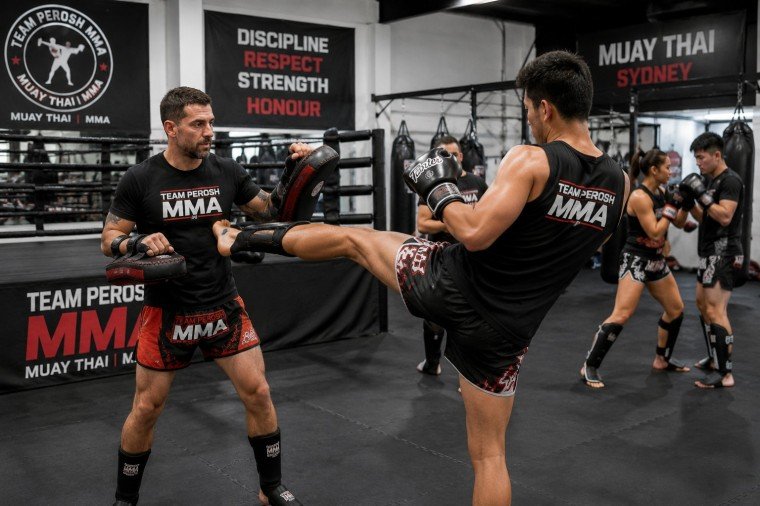
Muay Thai, often referred to as the art of eight limbs, is a distinguished martial art renowned globally for its effectiveness and cultural heritage. For those seeking to learn muay thai in Sydney, Team Perosh MMA offers an exceptional environment to master this formidable discipline. This article provides an in-depth overview of Muay Thai training in Sydney, highlighting its benefits, training techniques, and what makes Team Perosh MMA a prime choice for enthusiasts at all levels.
Understanding Muay Thai: The Art of Eight Limbs
Muay Thai is a striking martial art originating from Thailand that utilises punches, kicks, elbows, and knee strikes, collectively known as the ‘eight limbs’. This versatile use of limbs makes Muay Thai both an effective combat sport and a comprehensive physical workout.
The Popularity of Muay Thai in Sydney
Sydney has witnessed a significant rise in the popularity of Muay Thai. The city boasts a vibrant community of practitioners, which includes competitive fighters, fitness enthusiasts, and those interested in self-defence. This growth can be attributed to the accessibility of high-quality training facilities and experienced instructors.
Why Train Muay Thai in Sydney?
Training Muay Thai in Sydney provides several advantages, including access to certified coaches, modern training equipment, and a supportive community. Moreover, Sydney’s diverse martial arts culture encourages a competitive environment that fosters both personal growth and sporting excellence.
Introducing Team Perosh MMA
Team Perosh MMA is a renowned martial arts academy located in Sydney, specialising in Muay Thai and mixed martial arts. With a focus on professional standards, Team Perosh MMA offers classes tailored to all experience levels, from complete beginners to seasoned fighters.
Expert Instruction
The academy’s coaching staff comprises experienced trainers who have competed professionally. Their expertise ensures that students receive precise technical instruction and effective training regimes aligned with individual goals.
Comprehensive Training Programmes
Team Perosh MMA provides structured training programmes incorporating the fundamental techniques of Muay Thai, conditioning drills, sparring sessions, and tactical fight strategy. This holistic approach aims to develop skill, endurance, and mental discipline.
Key Benefits of Learning Muay Thai at Team Perosh MMA
Physical Fitness
Engaging in Muay Thai training significantly enhances cardiovascular health, strength, and flexibility. The rigorous workouts lead to improved muscle tone and endurance, which benefits overall physical wellness.
Self-Defence Skills
Muay Thai equips practitioners with effective self-defence techniques. Training emphasises practical application of strikes and defensive movements, preparing individuals to protect themselves confidently.
Mental Discipline
Beyond the physical aspects, Muay Thai cultivates mental resilience and focus. Regular practice fosters discipline, stress management, and increased self-confidence.
Classes Offered
Team Perosh MMA offers a diverse range of classes catering to different age groups and skill levels. These include introductory sessions for novices, advanced technique workshops, and competitive fight training for aspiring athletes.
Children and Youth Programmes
Specialised classes for younger participants focus on building fundamental skills, coordination, and respect for martial arts, creating a safe and encouraging learning environment.
Adult Training Sessions
Adult classes are structured to improve technique and fitness, while fostering a community atmosphere amongst practitioners.
Private and Group Sessions
For those seeking personalised attention or training with peers, Team Perosh MMA provides private coaching and small group training options to suit individual preferences.
Training Facilities
The facilities at Team Perosh MMA are equipped with professional-grade mats, heavy bags, pads, and conditioning equipment. This ensures an optimal training experience, enhancing skill development and safety.
Joining Team Perosh MMA
Prospective students interested in mastering Muay Thai in Sydney can easily enrol with Team Perosh MMA. The academy offers flexible membership plans and trial classes to accommodate various commitments.
Community and Events
Being part of Team Perosh MMA means engaging with a community of like-minded individuals passionate about martial arts. The academy frequently hosts seminars, workshops, and competitive events that provide additional learning opportunities and promote camaraderie.
Safety and Injury Prevention
Safety is paramount during Muay Thai training. Team Perosh MMA emphasises proper technique, warm-up routines, and protective gear usage to minimise injury risks and ensure long-term participation.
The Road to Mastery
Mastering Muay Thai requires dedication, consistent practice, and expert guidance. Team Perosh MMA’s structured programmes and supportive environment equip students with the tools necessary to progress effectively and achieve their martial arts objectives.
Conclusion
Muay Thai is a martial art that offers profound benefits, both physically and mentally. Training in Sydney, particularly with a reputable academy like Team Perosh MMA, provides access to expert coaching, excellent facilities, and a vibrant community. Whether one’s goal is fitness, self-defence, or competition, Team Perosh MMA presents the ideal platform for mastering Muay Thai in Sydney.

Best IPTV in the UK for 2026/2027? Here’s Why I’d Pick TrimixIPTV

Who Pays for Your Injuries After an Uber Accident in Richmond?

What to Consider When Ordering Packaging Samples

How Powder Coating Gets Its Tough Finish: A Beginner’s Guide

7 Benefits of Using an Online Meeting Notetaker for Modern Business Teams

All I Need in This Life of Syn – Syna World, Central Cee und Streetwear-Kultur

How to Ensure Your Home is Valued Correctly for a Quick Sale

Christopher Dare: The Untold Story of Engineer and Former Husband of Angela Rippon

The 15 Highest-Paid Rugby Players in the World

What Is Fanquer? The Digital Creator Platform Transforming Direct-to-Fan Engagement

Dr Jared Ross: Missouri Appeals Court Upholds Protection Order Over Graphic Torture and Murder Threats

Who Is Azriel Crews? Inside the Life and Career of Terry Crews’ Daughter
How to Ensure Your Home is Valued Correctly for a Quick Sale
Christopher Dare: The Untold Story of Engineer and Former Husband of Angela Rippon
The 15 Highest-Paid Rugby Players in the World
What Is Fanquer? The Digital Creator Platform Transforming Direct-to-Fan Engagement
Dr Jared Ross: Missouri Appeals Court Upholds Protection Order Over Graphic Torture and Murder Threats
Who Is Azriel Crews? Inside the Life and Career of Terry Crews’ Daughter
-
 Real Estate10 months ago
How to Ensure Your Home is Valued Correctly for a Quick Sale
-
Celebrity12 months ago
Christopher Dare: The Untold Story of Engineer and Former Husband of Angela Rippon
-
 Sports6 months ago
The 15 Highest-Paid Rugby Players in the World
-
 Technology6 months ago
What Is Fanquer? The Digital Creator Platform Transforming Direct-to-Fan Engagement
-
 Celebrity6 months ago
Dr Jared Ross: Missouri Appeals Court Upholds Protection Order Over Graphic Torture and Murder Threats
-
 Celebrity9 months ago
Who Is Azriel Crews? Inside the Life and Career of Terry Crews’ Daughter
-
 Celebrity1 year ago
Nancy Hallam: The Inspiring Life, Career, and Success Story Behind Ian Wright’s Wife
-
 Celebrity1 year ago
Who Is Maisie Mae Roffey? The Private Life, Family Story, and Quiet Success of Julie Walters’ Daughter