
Technology
Google Reviews Widget That Drives 25% More Sales


Customer trust has become one of the most important factors influencing online purchases. People no longer rely only on brand messaging. Before making a buying decision, they actively look for real customer experiences, ratings, and reviews.
This is where a Google Reviews Widget becomes a powerful marketing tool.
Instead of asking visitors to leave your website and search for reviews on Google, you can display authentic Google reviews directly on your website. This helps build trust instantly, reduces purchase hesitation, and increases conversions.
Many businesses using a Google Reviews Widget report significant improvements in customer engagement, lead generation, and sales because visitors can see genuine customer feedback exactly when they are considering a purchase.
In this guide, you’ll learn how a Google Reviews Widget can help drive more sales, why businesses are increasingly using review widgets, and how the Taggbox Google Reviews Widget can help you showcase social proof effectively.
What Is a Google Reviews Widget?
A Google Reviews Widget is a tool that allows businesses to collect, curate, and display Google Business Profile reviews on their websites.
Instead of manually copying reviews, the widget automatically fetches customer reviews and displays them in attractive layouts.
A Google Review Widget typically includes:
- Star ratings
- Customer reviews
- Reviewer names
- Review dates
- Business ratings
- Custom display layouts
The widget updates automatically whenever new reviews are posted, ensuring your website always shows fresh customer feedback.
Why Google Reviews Matter for Sales
Before purchasing a product or hiring a service, most customers want reassurance that others have had a positive experience.
Google reviews provide exactly that reassurance.
Studies consistently show that consumers trust online reviews nearly as much as personal recommendations. Reviews reduce uncertainty and help customers feel confident in their purchasing decisions.
When visitors see positive Google reviews on your website, they are more likely to:
- Trust your brand
- Stay longer on your website
- Explore products and services
- Submit inquiries
- Complete purchases
This direct impact on buyer confidence is one reason why review widgets contribute to higher conversion rates.
How Taggbox Google Reviews Widget Can Increase Sales
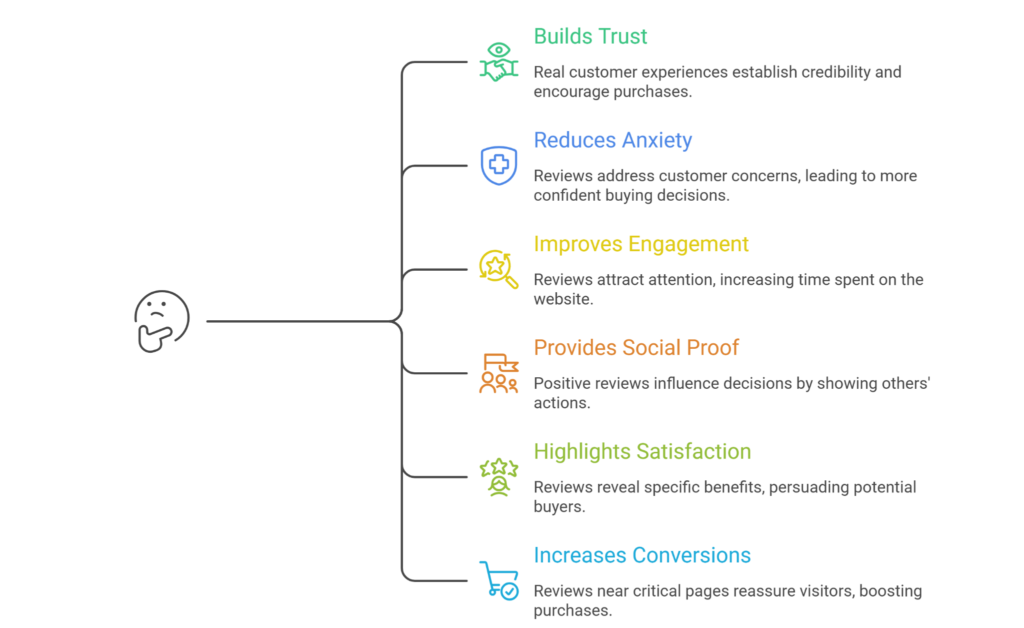
1. Builds Instant Trust
Trust is often the biggest obstacle between a visitor and a purchase.
When visitors land on your website for the first time, they may not know anything about your business.
Displaying Google reviews immediately shows that real customers have interacted with your brand and had positive experiences.
Instead of relying solely on marketing claims, visitors see authentic proof from actual customers.
The result is increased trust and a greater likelihood of conversion.
2. Reduces Purchase Anxiety
Customers often worry about:
- Product quality
- Service reliability
- Delivery experience
- Customer support
Positive reviews help answer these concerns before customers even ask.
For example:
A customer considering a software subscription may see reviews praising customer support and ease of use.
A local business visitor may notice reviews highlighting professionalism and service quality.
These experiences reduce uncertainty and encourage purchases.
3. Improves Website Engagement
Reviews naturally attract attention.
Visitors often spend additional time reading customer experiences because they provide information that marketing pages cannot.
When users spend more time on your website:
- Bounce rates may decrease
- Session duration increases
- User engagement improves
These factors contribute to a stronger website experience and can indirectly support conversion performance.
4. Provides Powerful Social Proof
Social proof is one of the strongest psychological triggers in marketing.
People tend to follow the actions and opinions of others.
When website visitors see dozens or hundreds of positive reviews, they feel more confident making the same decision as previous customers.
A Google Reviews Widget acts as continuous social proof throughout the buyer journey.
5. Highlights Customer Satisfaction
Reviews often reveal specific benefits customers receive from your products or services.
Instead of generic promotional messaging, visitors see real outcomes such as:
- Fast delivery
- Helpful customer support
- Product quality
- Easy implementation
- Excellent user experience
This authentic feedback helps persuade potential buyers more effectively than traditional sales copy.
6. Increases Conversion Rates
Displaying reviews near:
- Product pages
- Pricing pages
- Landing pages
- Checkout pages
can significantly improve conversion rates.
Reviews provide reassurance at critical decision-making moments.
When visitors see positive experiences from previous customers, they are more likely to complete their purchase.
Benefits of Embedding Google Reviews on Your Website
Enhanced Brand Credibility
A website displaying authentic customer feedback appears more trustworthy and transparent.
Businesses that openly showcase reviews often gain a competitive advantage over those that do not.
Fresh and Dynamic Content
Google Reviews Widgets automatically update with new reviews.
This keeps your website content fresh without requiring manual updates.
Fresh content can also improve overall user experience and engagement.
Better User Experience
Visitors can read customer feedback without leaving your website.
This keeps them engaged and reduces the likelihood of abandoning the buying process.
Stronger Local Reputation
For local businesses, displaying Google reviews reinforces local credibility and helps establish authority within the community.
Why Businesses Choose Taggbox Google Reviews Widget
When it comes to displaying reviews professionally, many businesses choose the Taggbox Google Reviews Widget because of its flexibility and ease of use.
The Taggbox Google Reviews Widget helps brands collect, customize, and showcase Google reviews in visually appealing formats.
Key features include:
Easy Review Collection
Import reviews directly from your Google Business Profile without technical complexity.
Multiple Layout Options
Choose from:
- Grid layouts
- Carousel layouts
- Slider layouts
- Masonry layouts
- List views
This allows businesses to match reviews with their website design.
Real-Time Updates
The Taggbox Google Reviews Widget automatically updates whenever new reviews are published.
Visitors always see the latest customer experiences.
Advanced Customization
Businesses can customize:
- Colors
- Themes
- Fonts
- Review cards
- Layout styles
to align with their brand identity.
Mobile Responsive Design
The widget works seamlessly across:
- Desktop devices
- Tablets
- Smartphones
ensuring a consistent experience for all visitors.
Fast Website Integration
The Taggbox Google Reviews Widget can be embedded on:
- WordPress
- Shopify
- Wix
- Squarespace
- Webflow
- HTML websites
- Ecommerce platforms
without coding expertise.
Best Places to Display a Google Reviews Widget
Strategic placement can maximize the impact of reviews.
Consider adding your Google Reviews Widget on:
Homepage
Create trust immediately when visitors arrive.
Product Pages
Help shoppers evaluate products using customer experiences.
Service Pages
Demonstrate expertise and customer satisfaction.
Pricing Pages
Reduce hesitation before purchase decisions.
Landing Pages
Increase lead generation and conversion rates.
Checkout Pages
Provide reassurance during the final stage of the buying process.
Best Practices for Using a Google Reviews Widget
To maximize results:
Display Recent Reviews
Recent reviews appear more trustworthy and relevant.
Highlight Detailed Reviews
Reviews with specific experiences often have a greater impact.
Maintain Visual Consistency
Match widget styling with your website branding.
Showcase Diverse Feedback
Display reviews that discuss different aspects of your business.
Use Reviews Across Multiple Pages
Don’t limit reviews to a single testimonial page.
Spread social proof throughout the customer journey.
Google Reviews Widget SEO Benefits
A Google Reviews Widget can support your SEO strategy by:
- Increasing user engagement
- Improving time on site
- Building trust signals
- Keeping website content fresh
- Supporting local business credibility
While reviews alone do not guarantee higher rankings, they contribute to a stronger overall user experience that search engines value.
Who Should Use a Google Reviews Widget?
A Google Reviews Widget is beneficial for:
- Ecommerce stores
- SaaS companies
- Restaurants
- Hotels
- Healthcare providers
- Agencies
- Educational institutions
- Local businesses
- Service providers
- Professional consultants
Any business that receives customer reviews can benefit from displaying them on its website.
Why Taggbox Google Reviews Widget Stands Out
The Taggbox Google Reviews Widget goes beyond simply displaying reviews.
It helps businesses:
- Build trust faster
- Showcase customer satisfaction
- Improve engagement
- Strengthen social proof
- Increase conversions
- Create a professional website experience
With flexible customization options, automated updates, responsive design, and easy integration, Taggbox makes it simple to turn customer reviews into a sales-driving asset.
Conclusion
Modern customers trust other customers more than they trust advertisements.
A Google Reviews Widget bridges the gap between customer trust and business growth by displaying authentic customer experiences directly on your website.
By showcasing real reviews where purchasing decisions happen, businesses can reduce uncertainty, increase credibility, and improve conversion rates.
Whether you’re a local business, ecommerce brand, SaaS company, or service provider, implementing a review widget can have a measurable impact on customer confidence and sales performance.If you’re looking for an easy and effective solution, the Taggbox Google Reviews Widget provides everything needed to collect, customize, and display Google reviews professionally—helping you transform customer feedback into one of your most valuable sales tools.


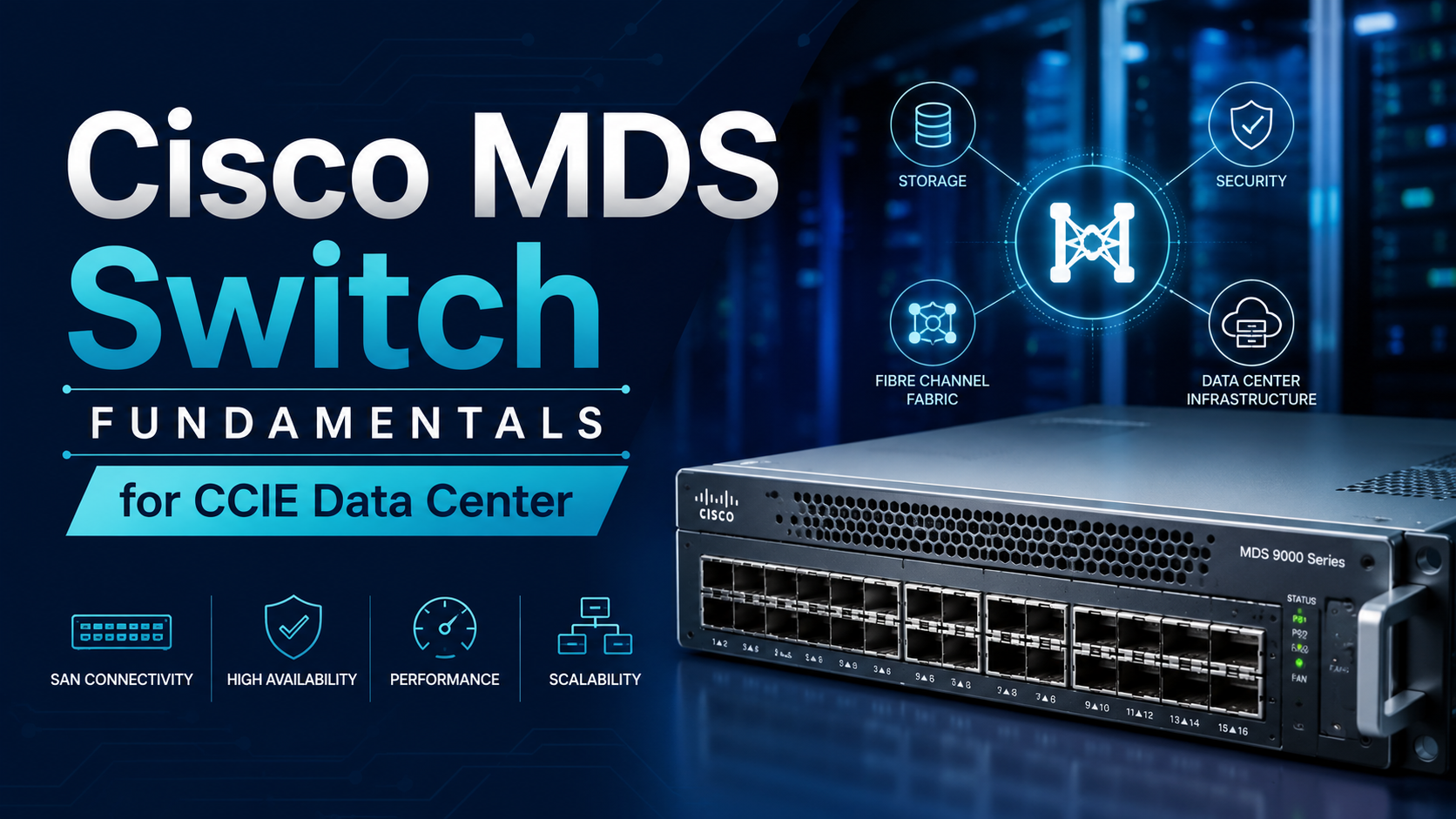
Cisco MDS switch technology is the foundation of modern Storage Area Networks (SANs), delivering high-performance, reliable, and scalable storage connectivity for enterprise data centers. As organizations continue to expand their digital infrastructure, understanding Cisco MDS switches has become an essential skill for network and storage professionals.
For candidates planning to pursue CCIE Data Center training, mastering Cisco MDS fundamentals is a crucial step toward developing the practical knowledge required for the certification lab exam and real-world deployments. From Fibre Channel networking and VSANs to zoning and high availability, Cisco MDS switches provide the core capabilities needed to design, manage, and troubleshoot efficient enterprise storage networks with confidence.
What Is a Cisco MDS Switch?
A Cisco MDS switch is a storage networking switch specifically designed for Fibre Channel SAN environments. Unlike traditional Ethernet switches, Cisco MDS switches optimize communication between servers and storage arrays while maintaining low latency and high availability.
These switches support enterprise-grade features such as:
- High-speed fiber channel connectivity
- Advanced SAN security
- Intelligent traffic management
- Redundant hardware architecture
- Comprehensive monitoring and troubleshooting tools
Because storage traffic requires consistent performance and reliability, Cisco MDS switches are widely deployed in enterprise data centers.
Why Cisco MDS Switches Matter in CCIE Data Center
Cisco includes MDS technologies in the CCIE Data Center blueprint because storage networking remains a critical part of modern infrastructure.
Candidates are expected to understand:
- SAN architecture
- Fibre Channel fundamentals
- VSAN implementation
- Zoning concepts
- Device management
- High availability features
- Troubleshooting storage connectivity
Hands-on practice with these technologies significantly improves both exam readiness and real-world operational skills.
Cisco MDS Switch Architecture
Cisco MDS switches are built specifically for storage area networks.
Their architecture includes:
Control Plane
The control plane manages routing information, switch management, fabric services, and protocol communication.
Data Plane
The data plane is responsible for forwarding Fibre Channel frames with minimal latency between storage devices and hosts.
Management Plane
Administrators use the management plane to configure, monitor, and troubleshoot the SAN through command-line interfaces or graphical management tools.
Understanding how these planes interact helps simplify troubleshooting during enterprise deployments.
Fibre Channel Basics
Fibre Channel is the primary protocol used by Cisco MDS switches.
Some important Fibre Channel concepts include the following:
- Node Port (N_Port)
- Fabric Port (F_Port)
- Expansion Port (E_Port)
- Switch Port (TE_Port)
- Fabric Login (FLOGI)
- Port Login (PLOGI)
These concepts define how storage devices communicate across the SAN.
Understanding VSANs
Virtual Storage Area Networks (VSANs) are one of Cisco MDS’s most powerful features.
A VSAN allows administrators to create multiple isolated SAN fabrics within the same physical switch.
Benefits of VSANs
- Improved security
- Better traffic isolation
- Simplified management
- Reduced operational costs
- Easier scalability
VSANs function similarly to VLANs in Ethernet networking but are specifically designed for Fibre Channel environments.
Understanding Zoning
Zoning controls which devices are permitted to communicate inside a SAN.
Proper zoning improves:
- Security
- Performance
- Fault isolation
- Device management
There are two primary zoning methods:
Port-Based Zoning
Access is controlled based on switch ports.
Advantages include:
- Simple implementation
- Easy administration
- Stable configurations
WWN-Based Zoning
Access is based on the World Wide Name (WWN) of connected devices.
Advantages include:
- Greater flexibility
- Supports device relocation
- Easier long-term management
Most enterprise environments prefer WWN-based zoning because it adapts better to infrastructure changes.
Cisco MDS Features at a Glance
| Feature | Purpose | Benefit |
| VSAN | Logical SAN segmentation | Improved isolation |
| Zoning | Device communication control | Enhanced security |
| NPIV | Multiple virtual identities | Better virtualization support |
| Port Channels | Link aggregation | Higher bandwidth and redundancy |
| FSPF | Fibre Channel routing | Efficient path selection |
| Device Manager | GUI-based administration | Simplified management |
High Availability Features
Enterprise storage cannot tolerate downtime.
Cisco MDS switches provide several high-availability capabilities, including:
Redundant Power Supplies
Power redundancy minimizes service interruptions during hardware failures.
Non-Disruptive Software Upgrades
Administrators can perform software upgrades with minimal impact on storage operations.
Port Channels
Combining multiple Fibre Channel links increases bandwidth while providing redundancy.
Fabric Redundancy
Multiple switches ensure continuous storage access even if one device fails.
Basic Cisco MDS Configuration Steps
Although production deployments vary, the general workflow includes:
- Configure switch hostname.
- Assign management IP address.
- Create VSANs.
- Configure Fibre Channel interfaces.
- Create zoning configuration.
- Activate zonesets.
- Verify connectivity.
- Monitor switch health.
A structured configuration process reduces deployment errors.
Monitoring and Troubleshooting
Effective monitoring is essential for maintaining SAN performance.
Administrators commonly verify:
- Interface status
- VSAN membership
- Zoning configuration
- Device logins
- Fabric status
- Port statistics
- Error counters
Frequent monitoring helps identify issues before they affect production workloads.
Common Cisco MDS Commands
Some frequently used commands include:
- show interface
- show zoneset active
- show flogi database
- show fcns database
- show vsan
- show logging
- show topology
Learning these commands improves troubleshooting speed during both certification labs and real-world operations.
Best Practices for Cisco MDS Administration
Following industry best practices improves SAN reliability.
Some recommendations include:
- Use meaningful naming conventions.
- Document zoning policies.
- Separate workloads using VSANs.
- Enable redundant paths.
- Perform regular configuration backups.
- Monitor switch performance continuously.
- Keep firmware updated.
- Validate changes before production deployment.
These practices reduce operational risks and simplify long-term management.
How Cisco MDS Knowledge Helps Your Career
Storage networking remains a specialized skill that many organizations actively seek.
Professionals who understand Cisco MDS technologies often work as:
- Data Center Engineers
- Storage Engineers
- SAN Administrators
- Infrastructure Engineers
- Cloud Infrastructure Specialists
- Network Architects
Building expertise in Cisco MDS technology also strengthens your preparation for advanced enterprise infrastructure roles.
Conclusion
Cisco MDS switch knowledge is essential for building a strong foundation in enterprise storage networking and understanding how modern Storage Area Networks operate efficiently. As organizations continue to rely on high-performance SAN infrastructures, professionals with expertise in Cisco MDS technologies remain in high demand. For individuals planning to enroll in a CCIE Data Center Course, mastering Fibre Channel, VSANs, zoning, high availability, and troubleshooting are important steps toward certification success and real-world expertise.
These skills enable candidates to confidently design, deploy, manage, and optimize storage networks while preparing for advanced data center roles and developing the practical knowledge needed to excel in enterprise IT environments.


As our lives become increasingly fast-paced and technology-driven, the demand for more efficient and convenient home appliances continues to rise. Among these modern innovations, the cordless vacuum cleaner stands out as a game-changer in the world of household cleaning tools. These devices have revolutionised how we maintain cleanliness in our homes by offering unparalleled flexibility and ease of use.
A Leap from Traditional to Cordless
Historically, vacuum cleaners date back to the early 1900s, evolving from cumbersome, manually operated devices to the advanced, motorised versions of today. Traditional corded vacuum cleaners, although powerful, have inherent limitations owing to their bulkiness and restricted mobility due to the power cord. The advent of the cordless vacuum cleaner addresses these drawbacks, providing a seamless cleaning experience free from the limitations of cord length and power sockets.
Key Features of Cordless Vacuums
Portability and Flexibility
One of the standout features of a cordless vacuum cleaner is its portability. These devices are engineered to be lightweight and compact, making them accessible for all users. The absence of a power cord eradicates the inconvenience of constantly plugging and unplugging, allowing for a smooth transition from room to room and even cleaning in spaces without electrical outlets.
Versatility in Design and Application
Cordless vacuums come in various designs, including handheld models and stick versions, each serving different cleaning needs. Handheld models are perfect for quick clean-ups and reaching tight spaces or specific spots like car interiors. Stick vacuums, on the other hand, often come with attachable extensions and accessories, transforming easily to handle floor-to-ceiling cleaning tasks. This versatility ensures that every corner and crevice of a home can be effectively cleaned.
Technological Advancements Driving Performance
Battery Efficiency and Runtime
Technology has tremendously advanced battery life and efficiency in cordless vacuums. Lithium-ion batteries, commonly used in these devices, offer long-lasting power, reducing the need for frequent recharging. Some models boast impressive runtimes, allowing users to complete thorough cleaning without interruption. The charging process itself has seen improvements, with many models equipped with fast-charge features.
Innovative Suction and Filtration Systems
Despite being cordless, modern vacuums are engineered to rival their corded counterparts in terms of suction power. Advanced motor technology ensures robust suction while maintaining energy efficiency. Furthermore, contemporary cordless vacuums feature sophisticated filtration systems, often incorporating HEPA filters, which effectively trap dust, allergens, and pollutants, thereby promoting a healthier indoor environment.
Economic and Environmental Considerations
Energy Consumption and Cost Efficiency
Cordless vacuums are designed to be energy-efficient, consuming less electricity compared to traditional vacuum cleaners. This translates to lower utility bills over time. While the initial investment might be higher, the long-term savings and convenience offset this.
Environmental Impact and Sustainability
Manufacturers are increasingly designing cordless vacuums with environmental sustainability in mind. Many models feature components made from recycled materials and are built for durability to reduce waste. Moreover, the advancement in battery technology means longer life spans and less frequent replacements, contributing to less environmental impact.
User-Friendly Features
Ease of Maintenance
Maintaining a cordless vacuum cleaner is straightforward. Many models come with features such as easy-to-empty dust bins and washable filters, reducing the need for costly replacements, unlike bagged vacuum systems. Indicator lights for battery status and filter maintenance are common, ensuring users can keep their vacuums in optimal condition without much hassle.
Noise Levels
Cordless vacuum cleaners also tend to operate at lower noise levels compared to traditional models. This is particularly beneficial in households where disruptions need to be minimised, such as in homes with young children or pets.
Emerging Trends in Cordless Vacuums
Integration with Smart Technology
The incorporation of smart technology in household appliances is no exception for vacuum cleaners. Some high-end cordless vacuums are equipped with features such as app connectivity, allowing users to monitor battery levels and maintenance schedules or even schedule cleaning remotely. The future of cordless vacuums looks towards AI integration for adaptive cleaning patterns and personalised user experiences.
Targeted Cleaning Solutions
As technology evolves, so do the specific needs of consumers. Cordless vacuums with targeted solutions for pet hair, allergen control, or even robot-like mapping capabilities are becoming prevalent. These specific functionalities cater to individual household requirements, enhancing the effectiveness of the cleaning process.
The Market Landscape
With an ever-growing market, cordless vacuum cleaner options are abundant, each offering unique features to cater to diverse user preferences. Brands consistently innovate, pushing the boundaries of what these devices can achieve in terms of power, versatility, and user experience.
In conclusion, the transition to cordless vacuums is much more than a trend; it reflects a shift towards smarter, more adaptable, and convenient living spaces. As technology continues to advance, cordless vacuum cleaners are poised to become an indispensable part of modern household cleaning routines, offering both practical and environmental benefits.
Technology
How to Choose the Right Air Compressor for Pharmaceutical Industry: A Procurement Checklist for US Facilities


Pharmaceutical manufacturing operates under conditions where equipment failure carries consequences far beyond production delays. A compromised air supply can contaminate active ingredients, invalidate batch records, or trigger regulatory action from oversight bodies like the FDA. Unlike most industrial environments where air quality is a matter of efficiency, in pharmaceutical facilities it is a matter of compliance and patient safety.
This reality shapes every procurement decision within these facilities. Compressed air systems touch a broad range of processes — from tablet coating and capsule filling to cleanroom pressurization and pneumatic conveying of raw materials. Because so many critical operations depend on a stable, clean air supply, the decision about which compressor system to install deserves structured evaluation rather than price-driven shortcuts.
The following checklist is written for facilities managers, procurement leads, and engineering teams in US pharmaceutical operations who are in the process of specifying, replacing, or expanding their compressed air infrastructure.
Understanding What Makes Pharmaceutical Air Different
Compressed air used in pharmaceutical manufacturing is classified separately from general industrial air because it can come into direct or indirect contact with drug products, packaging, and production equipment. This distinction drives nearly every specification decision a facility will make. An air compressor for pharmaceutical industry applications must be evaluated not just on mechanical performance, but on its ability to consistently deliver air that meets purity standards without introducing oil, moisture, or microbial contamination into the process stream.
The International Society for Pharmaceutical Engineering (ISPE) and standards such as those outlined by the ISO 8573 compressed air quality classification system provide the technical framework facilities use to define acceptable air quality levels. Understanding where your processes fall within these classifications is the starting point for all equipment decisions that follow.
Oil-Free vs. Oil-Lubricated Compressors
One of the most consequential early decisions in pharmaceutical compressor procurement is whether to specify an oil-free or oil-lubricated machine. Oil-lubricated compressors use a film of lubricant to reduce friction between moving parts, and while downstream filtration can remove most of this contamination, residual traces can still reach sensitive processes. In pharmaceutical environments where regulatory auditors examine air quality documentation, the risk of oil carryover — however small — creates ongoing compliance exposure.
Oil-free compressors eliminate this risk at the source. They are designed with alternative materials and coatings that allow dry operation without sacrificing mechanical longevity. For facilities producing sterile injectables, parenteral drugs, or any product with strict contamination thresholds, oil-free equipment is typically the baseline expectation rather than an optional upgrade. For lower-risk applications such as laboratory instrument air or utility air that never contacts product directly, the case for oil-free equipment still holds if the facility operates under a unified quality system.
Defining the Role of Air in Your Process
Not all compressed air within a pharmaceutical facility carries the same risk profile. Instrument air for control valves, breathing air for operators in hazardous environments, process air that contacts drug product directly, and utility air used for equipment cleaning each carry different purity requirements. Before selecting a compressor, a facility must map each air use point and assign it a risk category.
This mapping exercise prevents over-specification in some areas and dangerous under-specification in others. A single compressor supplying multiple use points may require zone separation and point-of-use filtration to meet varying requirements across the distribution system. Alternatively, facilities with space and budget constraints sometimes install dedicated compressor systems for high-purity applications while maintaining a separate utility air supply. Either approach can work, but the decision must be grounded in documented process risk rather than assumed from general industry norms.
Evaluating Compressor Technology and Configuration
Pharmaceutical facilities commonly specify rotary screw compressors because of their continuous-duty capability, stable output, and relatively low maintenance demands in oil-free configurations. Reciprocating compressors, while effective for lower-volume or intermittent demand applications, introduce pulsation into the air supply that can affect sensitive instrumentation and require more frequent maintenance intervals. Centrifugal compressors are used in high-volume settings where constant large-scale output is required, though they are less common in mid-size pharmaceutical operations due to their sensitivity to fluctuating demand.
Redundancy and System Reliability
In pharmaceutical manufacturing, unplanned downtime is not just a production loss — it can result in batch failures, temperature deviations in controlled storage areas, and cascading compliance events that require extensive documentation and investigation. For this reason, most pharmaceutical facilities do not rely on a single compressor without redundancy planning.
A common approach is to install lead-lag configurations, where a primary compressor handles base demand and a secondary unit activates automatically if the primary experiences a fault or scheduled maintenance outage. Some facilities implement full N+1 redundancy across their entire compressed air system, meaning that at any given time, enough backup capacity exists to sustain all critical operations even if one unit is offline. The appropriate level of redundancy depends on how many processes are classified as critical and what the financial and regulatory consequences of an interruption would be.
Moisture Control and Air Drying
Moisture in compressed air creates conditions that support microbial growth, accelerate corrosion in distribution piping, and can introduce water droplets into sensitive process equipment. Pharmaceutical facilities almost universally install refrigerated or desiccant dryers downstream of their compressors to achieve the moisture levels required by their process classifications.
The choice between refrigerated and desiccant drying depends on the dew point requirement for each application. Refrigerated dryers are cost-effective for moderate moisture reduction and work well for utility air and non-critical applications. Desiccant dryers achieve lower dew points and are appropriate for applications where even trace moisture poses a product quality risk. Dryer sizing must account for ambient conditions within the facility, as incoming air temperature and humidity directly affect dryer performance and should be factored into equipment selection.
Compliance, Documentation, and Vendor Qualification
Pharmaceutical procurement differs from general industrial purchasing in that equipment selection is part of the broader validation framework. Compressed air systems used in drug manufacturing are subject to qualification protocols — typically Installation Qualification, Operational Qualification, and Performance Qualification — that verify the equipment performs as intended and consistently meets defined specifications. This means the compressor itself, along with its associated dryers, filters, and distribution components, must be fully documented and traceable.
Vendor Documentation Requirements
When evaluating compressor suppliers, pharmaceutical facilities should assess the vendor’s ability to provide the documentation required for regulatory compliance. This includes equipment design specifications, material certifications, calibration records for instrumentation, and service histories that can be referenced during internal or external audits.
Vendors familiar with pharmaceutical standards understand that documentation is not an afterthought — it is a deliverable on par with the physical equipment. A supplier who cannot provide consistent, organized qualification documentation creates downstream risk for the facility’s quality team. This is worth weighing heavily during vendor evaluation, even when a lower-cost alternative appears mechanically equivalent.
Maintenance Access and Long-Term Service
Compressed air systems in pharmaceutical facilities must be maintained on validated schedules. Any deviation from these schedules requires documentation and justification. This creates an operational dependency on service providers who understand pharmaceutical maintenance protocols, can work within cleanroom or controlled-access environments, and provide calibrated tools and traceable replacement parts.
When selecting an air compressor for pharmaceutical industry use, facilities should assess the supplier’s local service infrastructure alongside the equipment itself. A technically superior machine with poor regional support can become a liability when maintenance windows are tight and documentation requirements are strict. Establishing a service agreement before installation, with clearly defined response times and escalation procedures, reduces the risk of extended downtime during critical production periods.
Energy Efficiency and Total Cost of Ownership
Compressed air is one of the most energy-intensive utilities in manufacturing. In pharmaceutical operations where facilities run continuously and air quality requirements demand robust filtration and drying, energy consumption from compressed air systems can represent a meaningful portion of total utility costs. Variable speed drive compressors, which adjust motor speed to match actual demand rather than cycling between full load and idle, offer measurable efficiency gains in facilities with fluctuating air demand profiles.
Total cost of ownership calculations should include not only energy consumption but also maintenance costs, replacement parts frequency, filter change intervals, and the cost of any unplanned downtime attributable to equipment failure. A compressor that appears cost-effective at the point of purchase may carry higher long-term operational costs than a better-specified alternative. Facilities that perform this analysis consistently make more defensible procurement decisions and experience fewer budget overruns during the equipment’s operational lifespan.
Closing Considerations for Pharmaceutical Procurement Teams
Selecting compressed air equipment for a pharmaceutical facility is not a decision that can be reduced to a single specification sheet or vendor quote. It requires a clear understanding of how air quality affects product integrity, how regulatory frameworks define acceptable performance, and how equipment reliability connects to operational continuity and compliance standing.
The most effective procurement processes begin with a thorough internal assessment: mapping all air use points, assigning risk categories, defining documentation requirements, and establishing redundancy expectations before approaching vendors. This groundwork prevents specification gaps and gives facilities a structured basis for comparing equipment options on criteria that actually matter.
Compressor technology continues to improve in both reliability and energy efficiency, and suppliers with genuine experience in regulated industries bring meaningful value beyond the mechanical product. The facilities that invest time in upfront evaluation — and treat compressed air as the critical utility it is — are better positioned to maintain production continuity, pass regulatory inspections, and reduce the operational friction that comes from equipment decisions made too quickly.
Colorado Pediatric Home Health: Care for Complex Kids at Home
Sculptra for the Body: A Guide to Non-Surgical Skin Firming

Food and Beverage Exhibition: Why Guangzhou Food Expo Is Shaping the Future of the Food Industry

How Can Fire Sprinkler Servicing Help Reduce Fire Safety Risks?

How Dental Equipment Manufacturers Use a Dentists Email List to Generate Sales

BS EN14960 Explained: What Every UK Commercial Inflatable Buyer Should Know

The 15 Highest-Paid Rugby Players in the World

Christopher Dare: The Untold Story of Engineer and Former Husband of Angela Rippon

How to Ensure Your Home is Valued Correctly for a Quick Sale

Nancy Hallam: The Inspiring Life, Career, and Success Story Behind Ian Wright’s Wife

Who Is Maisie Mae Roffey? The Private Life, Family Story, and Quiet Success of Julie Walters’ Daughter

Simon Dixon Biography: Lifestyle, Net Worth, Family, Career and Success Story
The 15 Highest-Paid Rugby Players in the World
Christopher Dare: The Untold Story of Engineer and Former Husband of Angela Rippon
How to Ensure Your Home is Valued Correctly for a Quick Sale
Nancy Hallam: The Inspiring Life, Career, and Success Story Behind Ian Wright’s Wife
Who Is Maisie Mae Roffey? The Private Life, Family Story, and Quiet Success of Julie Walters’ Daughter
Simon Dixon Biography: Lifestyle, Net Worth, Family, Career and Success Story
-
 Sports2 months ago
The 15 Highest-Paid Rugby Players in the World
-
Celebrity8 months ago
Christopher Dare: The Untold Story of Engineer and Former Husband of Angela Rippon
-
 Real Estate6 months ago
How to Ensure Your Home is Valued Correctly for a Quick Sale
-
Celebrity9 months ago
Nancy Hallam: The Inspiring Life, Career, and Success Story Behind Ian Wright’s Wife
-
Celebrity8 months ago
Who Is Maisie Mae Roffey? The Private Life, Family Story, and Quiet Success of Julie Walters’ Daughter
-
Business8 months ago
Simon Dixon Biography: Lifestyle, Net Worth, Family, Career and Success Story
-
 Celebrity9 months ago
Johnny Carell: Inside the Life, Family, and Rising Success of Steve Carell’s Son
-
 Celebrity7 months ago
Draven Duncan: Tim Duncan’s Rising Star Son and His Inspiring Basketball Journey