
Business
What Is a Messeregge? Complete Guide to the Knife Harrow and Soil Preparation

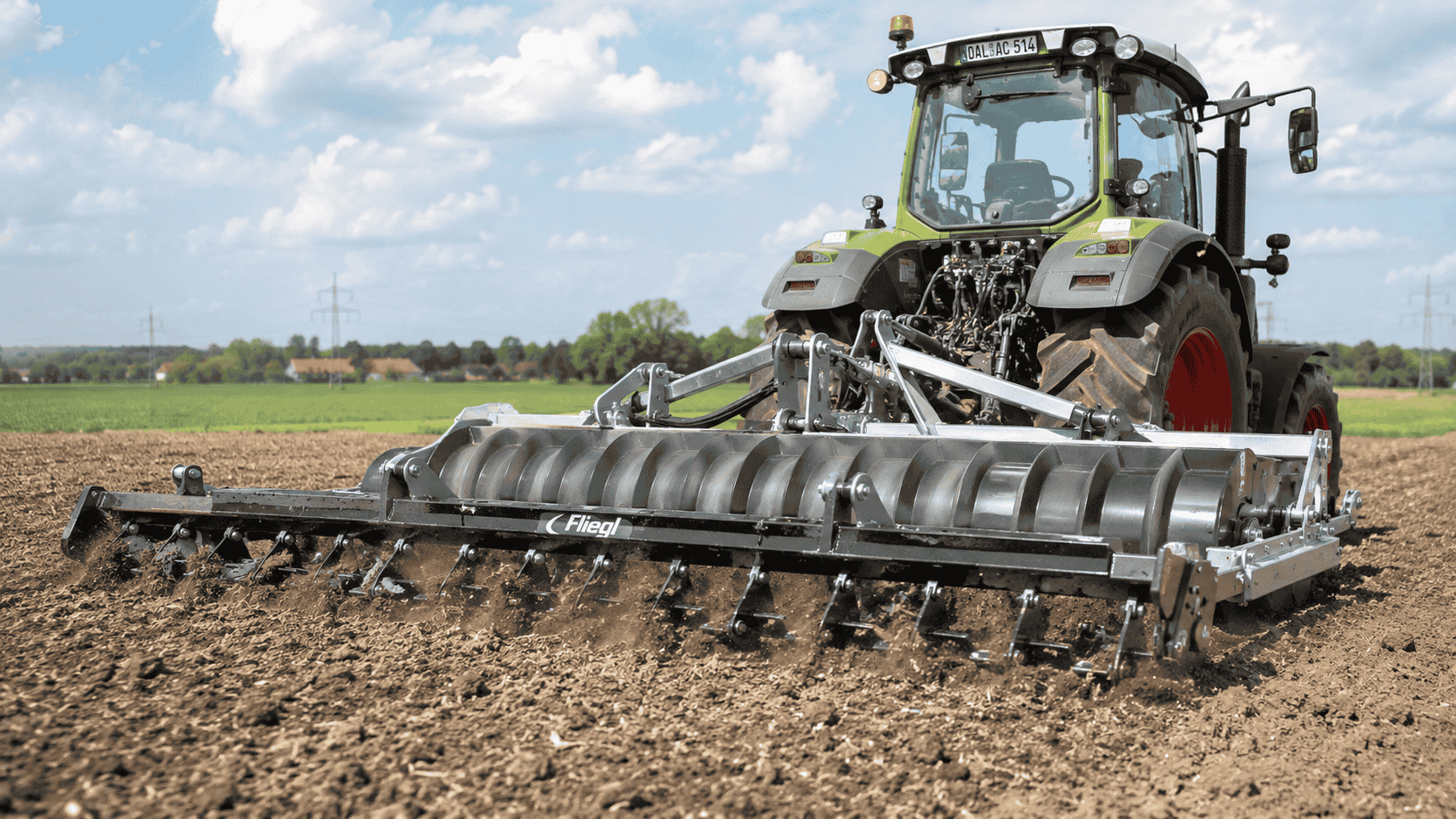
A Messeregge is a specialized agricultural implement designed to prepare soil for planting by breaking apart large clods and creating a smooth, uniform seedbed. The word comes from German and translates to “knife harrow” or “blade harrow.” Unlike conventional harrows that use tines or rotating discs, a Messeregge relies on sharp steel blades positioned across a sturdy frame. These blades slice through the soil surface, improving texture and making fields ready for seeding operations.
Quick Bio
| Detail | Information |
|---|---|
| Equipment Name | Messeregge |
| English Name | Knife Harrow / Blade Harrow |
| Category | Agricultural Soil Cultivation Equipment |
| Primary Purpose | Soil preparation and seedbed creation |
| Origin | Germany |
| Working Method | Sharp steel blades cut and crush soil clods |
| Typical Working Widths | 2.6 meters and 3.0 meters |
| Average Weight | Approximately 250 kg |
| Mounting Type | Front or rear tractor linkage |
| Soil Depth | Shallow cultivation |
| Main Benefit | Uniform seedbed preparation |
| Compatible Equipment | Rollers, seed drills, rotary harrows |
| Fuel Efficiency | High |
| Moisture Preservation | Excellent |
| Erosion Control | Effective |
| Common Users | Grain, corn, and mixed-crop farmers |
The Origin and Evolution of the Messeregge
The development of the Messeregge is closely connected to the evolution of modern farming equipment. In earlier agricultural systems, farmers relied heavily on plows and traditional harrows to prepare land for planting. While these tools were effective, they often required multiple passes and significant fuel consumption to achieve the desired soil condition.
As agricultural technology advanced, equipment manufacturers began searching for solutions that could perform several tasks more efficiently. The Messeregge emerged as a practical answer to this challenge. By using sharp cutting blades instead of passive tines, it became possible to break soil clods more effectively while creating a smoother seedbed in fewer operations.
Over time, the design has continued to improve. Modern versions feature stronger frames, improved blade materials, and better integration with other agricultural implements. Today’s Messeregge is often used as part of sophisticated cultivation systems that combine soil preparation, leveling, and consolidation into a single pass across the field.
How a Messeregge Works?
The operating principle of a Messeregge is simple yet highly effective. The machine uses a series of hardened steel knives mounted across a frame. As the tractor pulls the implement through the field, the blades cut into the upper layer of soil and slice through large clods that remain after plowing or previous cultivation work.
The spacing of the blades is carefully engineered to ensure that every section of the field receives consistent treatment. Large soil chunks are broken apart before they can pass through the implement, resulting in a finer and more uniform surface. This improved soil texture creates favorable conditions for seed placement and early crop development.
Because the Messeregge primarily works on the surface layer, it avoids unnecessary disturbance of deeper soil horizons. This shallow cultivation approach helps maintain soil structure while still achieving excellent seedbed quality. The result is a balanced system that combines productivity with responsible soil management.
Main Components of a Messeregge
The effectiveness of a Messeregge depends on several key components working together. The most important part is the blade system itself. These blades are manufactured from durable steel capable of withstanding constant contact with soil, rocks, and crop residues. Their sharp edges are designed to cut efficiently through compacted earth and large clods.
The frame serves as the backbone of the machine. It provides structural stability and ensures that pressure is distributed evenly across the working width. A strong frame is especially important when operating in heavy soils where resistance can be significant.
Another critical component is the tractor linkage system. Most Messeregge models use standard three-point mounting systems, allowing easy attachment to a wide range of tractors. Many modern units also include adjustment mechanisms that enable operators to modify working depth and blade position according to field conditions and cultivation goals.
Why Farmers Choose a Messeregge?
Farmers invest in a Messeregge because it delivers measurable improvements in field preparation and operational efficiency. One of its greatest advantages is the ability to create a highly uniform seedbed with fewer passes across the field. This reduces labor requirements and lowers machinery operating costs.
Uniform seedbeds play a crucial role in crop establishment. When seeds are planted at consistent depths, germination tends to occur more evenly across the field. This leads to more uniform plant growth and reduces competition among seedlings during early development stages.
Another important benefit is time savings. During busy planting seasons, every hour matters. The ability to prepare fields quickly while maintaining high-quality results allows farmers to take advantage of favorable weather conditions and complete planting operations more efficiently.
The Role of Messeregge in Soil Clod Crushing
One of the primary functions of the Messeregge is crushing large soil clods that can interfere with planting operations. After plowing, fields often contain uneven chunks of earth that create challenges for seed placement and crop establishment. These clods may prevent seeds from achieving proper contact with the soil, reducing germination rates.
The sharp blades of the Messeregge effectively slice through these large soil masses and break them into smaller particles. This process creates a finer texture that is better suited for agricultural production. Smaller soil particles provide a more consistent environment for seed growth and root development.
By improving soil uniformity, the implement also enhances the performance of subsequent equipment such as seed drills and planters. A smoother field surface allows these machines to operate more accurately, resulting in improved planting precision and overall crop performance.
Seedbed Preparation and Crop Establishment
Creating the perfect seedbed is one of the most important steps in crop production, and the Messeregge excels in this area. A properly prepared seedbed provides the ideal balance of soil contact, moisture availability, and aeration needed for successful germination. Farmers who invest time in seedbed preparation often experience better crop emergence and more uniform plant growth.
The sharp blade system of the Messeregge helps create a fine and level surface that allows planting equipment to place seeds at a consistent depth. When seeds are positioned evenly, they germinate at a similar rate and develop stronger root systems. This uniformity is especially important for crops such as wheat, barley, corn, and rapeseed, where consistent emergence can influence final yields.
In modern farming, precision is essential. A high-quality seedbed not only improves crop establishment but also supports efficient use of fertilizers, irrigation, and crop protection products throughout the growing season. This makes the Messeregge a valuable tool for maximizing productivity and profitability.
Technical Specifications of Modern Messeregge Models
Modern Messeregge models are engineered to handle demanding agricultural conditions while maintaining reliability and efficiency. Most commonly available units have working widths ranging from 2.6 meters to 3.0 meters, making them suitable for medium and large-scale farming operations. These dimensions allow operators to cover substantial field areas while maintaining precise soil preparation.
A typical 3.0-meter model weighs approximately 250 kilograms. This weight provides sufficient ground pressure for effective soil penetration while remaining manageable for a wide range of tractors. Manufacturers carefully balance weight and durability to ensure optimal performance under varying field conditions.
The blade system is manufactured from high-strength steel designed to resist wear and maintain sharp cutting edges over extended periods of use. Combined with reinforced frames and durable mounting systems, these features contribute to the long service life expected by professional farmers.
Front-Mounted Messeregge Systems
Many farmers choose to mount the Messeregge on the front of their tractors. This configuration offers several operational advantages, particularly when combined with rear-mounted cultivation equipment. By working the soil before the rear implement reaches it, the front-mounted unit improves overall field preparation efficiency.
The blades break apart clods and level the soil surface before the rear machine performs additional cultivation or planting operations. This sequential approach creates a more refined seedbed and often reduces the workload placed on rear-mounted equipment. As a result, the entire cultivation system operates more smoothly and efficiently.
Front-mounted systems also improve visibility and allow operators to monitor soil conditions more easily. This helps ensure consistent performance across the field and enables quick adjustments when necessary.
Integration with Packer Rollers
One of the most effective uses of a Messeregge is in combination with packer rollers. These systems are commonly used throughout Europe because they allow multiple soil preparation tasks to be completed in a single pass. The Messeregge breaks apart clods and levels the surface, while the roller consolidates and firms the soil afterward.
This combination creates an exceptionally uniform seedbed that supports accurate seed placement and strong germination. The roller also helps preserve moisture by reducing excessive air pockets in the soil. This is particularly beneficial during dry planting conditions when moisture conservation is critical.
By combining several operations into one field pass, farmers save fuel, reduce labor requirements, and minimize soil compaction caused by repeated machinery traffic. These efficiencies contribute to lower production costs and improved sustainability.
Fuel Efficiency and Reduced Operating Costs
Fuel costs represent a significant portion of agricultural expenses, making efficiency an important consideration for every farming operation. One of the major advantages of the Messeregge is its ability to reduce overall fuel consumption during field preparation.
The sharp blades cut through soil efficiently and reduce resistance for equipment working behind the implement. When used in combination systems, the improved soil condition often decreases the power requirements of rotary harrows and other cultivation tools. This reduction in tractor workload translates directly into fuel savings.
Fewer field passes also contribute to lower operating costs. Because the Messeregge performs multiple functions simultaneously, farmers can complete seedbed preparation more quickly. Reduced fuel consumption, lower machinery wear, and decreased labor requirements all contribute to improved farm profitability.
Moisture Preservation Benefits
Soil moisture is one of the most valuable resources available to farmers. Preserving this moisture becomes especially important during dry seasons or in regions where rainfall is limited. The Messeregge supports moisture conservation by working primarily on the upper soil layer rather than disturbing deeper soil horizons.
Traditional deep tillage methods can expose moist soil to the atmosphere, increasing evaporation and reducing water availability for crops. In contrast, the shallow cultivation performed by a Messeregge leaves much of the underlying moisture intact. This creates favorable conditions for seed germination and early plant growth.
Maintaining adequate soil moisture also improves nutrient availability and supports healthy root development. These benefits can have a lasting impact on crop performance throughout the growing season, particularly during periods of environmental stress.
Erosion Control and Soil Protection
Protecting soil from erosion is a major priority in modern agriculture. Wind and water erosion can remove valuable topsoil, reduce fertility, and negatively impact long-term productivity. The Messeregge contributes to soil conservation by creating a balanced soil structure without excessive pulverization.
Its blade system breaks apart large clods while preserving overall soil integrity. This approach helps maintain surface stability and reduces the likelihood of soil particles being carried away by wind or rainfall. Fields prepared with a Messeregge often exhibit improved resistance to erosion compared to heavily tilled surfaces.
By supporting soil conservation, farmers protect one of their most valuable assets. Healthy soil not only improves crop yields but also enhances sustainability and environmental stewardship for future generations.
Applications in Modern Precision Agriculture
Precision agriculture focuses on maximizing efficiency through data-driven decision-making and accurate field management. The Messeregge fits perfectly within this approach because it helps create consistent field conditions that support precision planting and crop management.
A uniform seedbed allows modern planting equipment to operate at peak accuracy. Seeds can be placed at exact depths and spacing, ensuring optimal conditions for growth. This consistency improves the effectiveness of variable-rate seeding, fertilization, and irrigation programs.
As precision agriculture continues to expand, equipment that enhances field uniformity will remain highly valuable. The Messeregge provides the foundation needed for many advanced farming technologies to deliver their full benefits.
Crops That Benefit from Messeregge Use
Many different crops can benefit from fields prepared using a Messeregge. Cereal crops such as wheat, barley, oats, and rye often require finely prepared seedbeds to achieve uniform emergence and strong early growth. The equipment helps create the ideal soil conditions needed for these crops.
Corn production also benefits from well-prepared soil. Consistent seed depth and good soil contact promote even germination, which is critical for maximizing yield potential. Similar advantages apply to oilseed crops such as rapeseed and canola.
Vegetable growers and specialty crop producers may also utilize blade harrow systems when high-quality seedbeds are required. Regardless of the crop, improved soil preparation contributes to stronger plant establishment and more efficient resource utilization.
Maintenance and Care of a Messeregge
Proper maintenance is essential for achieving maximum performance and service life from a Messeregge. Regular inspection of blades should be a priority because sharp cutting edges are critical to effective soil cultivation. Worn or damaged blades should be replaced promptly to maintain consistent field performance.
The frame and mounting points should also be checked periodically for signs of wear or stress. Tightening bolts, inspecting welds, and addressing minor issues before they become major problems can prevent costly repairs later. Lubrication of moving parts helps ensure smooth operation and reduces component wear.
Routine cleaning after field work is another important maintenance practice. Removing soil buildup and crop residues helps prevent corrosion and allows operators to identify potential issues more easily during inspections.
Advantages Over Traditional Harrows
Although traditional harrows remain widely used, the Messeregge offers several advantages that make it attractive to modern farmers. Its sharp blade system provides more aggressive clod crushing compared to many conventional tine harrows. This results in finer soil preparation and improved seedbed quality.
The implement also performs exceptionally well in combination systems where efficiency is a primary objective. By integrating seamlessly with rollers, seed drills, and cultivation equipment, it helps reduce the number of field operations required for successful planting.
Additionally, the shallow cultivation approach promotes moisture conservation and soil protection. These benefits align closely with current agricultural trends focused on sustainability and long-term soil health.
The Future of Messeregge Technology
The future of the Messeregge appears promising as agriculture continues to evolve toward greater efficiency and sustainability. Manufacturers are constantly improving blade materials, frame designs, and integration capabilities to meet the changing needs of farmers.
Advanced precision farming systems may further enhance the value of blade harrows by combining them with automated guidance technologies and smart equipment monitoring. These innovations can help optimize performance while reducing operator workload and input costs.
As global agriculture faces increasing pressure to produce more food while protecting natural resources, tools that improve efficiency and soil conservation will remain in high demand. The Messeregge is well positioned to play an important role in this future.
Conclusion
The Messeregge has become one of the most valuable tools in modern soil cultivation and seedbed preparation. Its unique blade-based design allows farmers to break apart clods, level fields, preserve moisture, and create highly uniform planting conditions. These benefits contribute directly to improved crop establishment and overall farm productivity.
Beyond its performance advantages, the equipment supports sustainable farming practices by reducing fuel consumption, minimizing soil disturbance, and helping prevent erosion. These qualities make it an attractive solution for farmers seeking both economic and environmental benefits.
As agricultural technology continues to advance, the Messeregge is likely to remain an essential component of efficient cultivation systems. Its combination of precision, reliability, and versatility ensures that it will continue helping farmers prepare productive fields for generations to come.
FAQs
What is a Messeregge used for?
A Messeregge is used for soil cultivation, breaking soil clods, leveling fields, and preparing a fine seedbed before planting crops.
How does a Messeregge differ from a traditional harrow?
Unlike traditional harrows that use tines or discs, a Messeregge uses sharp steel blades that slice through soil and crush clods more effectively.
Can a Messeregge help reduce fuel consumption?
Yes. By improving soil conditions and reducing resistance for other implements, a Messeregge can lower overall fuel use during cultivation operations.
What crops benefit most from a Messeregge?
Crops such as wheat, barley, corn, oats, rye, rapeseed, and many vegetables benefit from the uniform seedbeds created by a Messeregge.
Is a Messeregge suitable for modern precision farming?
Absolutely. The implement creates consistent field conditions that support accurate planting, efficient input use, and advanced precision agriculture practices.


Introduction
Fire safety is a critical consideration for every building, regardless of whether it is a commercial premises, an industrial facility, a residential development, an educational establishment, or public sector property. While installing a fire sprinkler system is an important step towards protecting people and property, its effectiveness depends on regular maintenance and ongoing inspections. This is why Fire Sprinkler Servicingplays such an important role in reducing fire safety risks and ensuring that protection systems remain fully operational throughout their service life.
Fire sprinkler systems are designed to respond quickly when a fire occurs, helping to control or suppress flames before they spread throughout a building. However, over time, components may deteriorate, become obstructed, or develop faults that affect system performance. Routine servicing helps identify these issues early, ensuring that fire protection systems continue to provide reliable protection when they are needed most.
Understanding Common Fire Safety Risks
Every building contains potential fire hazards that require careful management.
Electrical faults, heating equipment, machinery, combustible materials, and everyday operational activities can all contribute to the risk of fire if appropriate precautions are not in place. While many of these hazards can be controlled through good housekeeping and regular safety inspections, effective fire protection systems provide an essential additional layer of security.
Common fire risks found within buildings include:
- Faulty electrical installations
- Overloaded power supplies
- Poor storage of combustible materials
- Equipment malfunction
- Inadequate maintenance of fire protection systems
Reducing these risks requires a proactive approach that combines preventative maintenance with reliable fire protection infrastructure.
Why Regular Servicing Is Essential
Installing a sprinkler system is only the beginning of an effective fire protection strategy.
Like any mechanical system, fire sprinklers contain components that experience natural wear over time. Corrosion, blocked sprinkler heads, damaged pipework, pressure fluctuations, or faulty control valves may all reduce the system’s effectiveness if left undetected.
Regular servicing allows qualified engineers to inspect every part of the installation, ensuring that potential issues are identified before they affect system performance.
Professional servicing commonly includes:
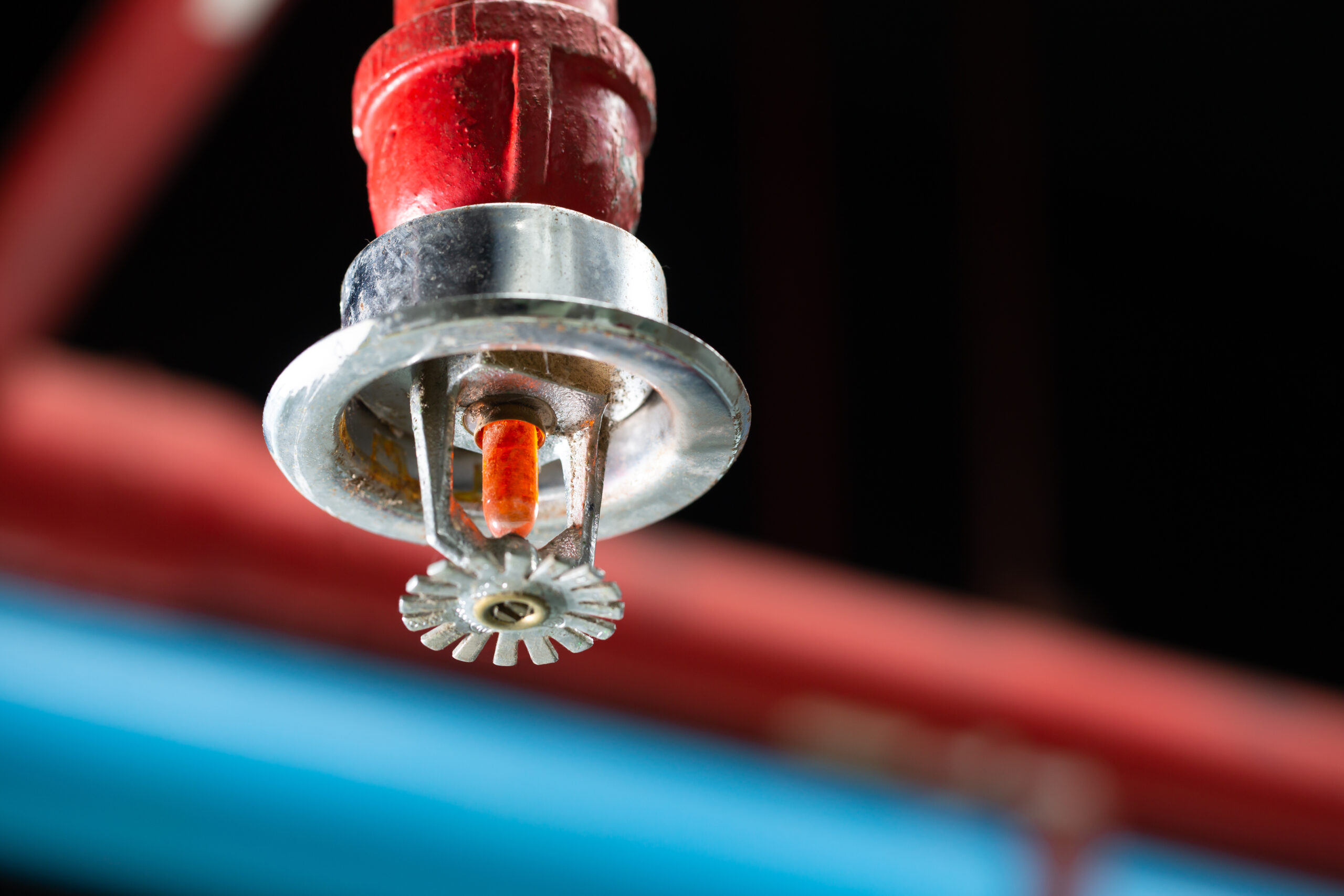
- Inspecting sprinkler heads for corrosion or obstruction
- Testing water flow and pressure
- Checking valves and alarm systems
- Inspecting pipework and fittings
- Verifying overall system operation
These routine inspections help maintain confidence that the system will perform correctly during an emergency.
Reducing the Likelihood of System Failure
A fire sprinkler system can only protect a building if it operates correctly when activated.
Without regular maintenance, relatively small defects can gradually develop into significant operational problems. Blocked sprinkler heads, damaged seals, corrosion within pipework, or incorrect water pressure may all prevent the system from functioning as intended.
Routine servicing reduces these risks by identifying faults before they become critical.
This proactive approach allows repairs to be completed during scheduled maintenance rather than after a system failure or emergency, reducing operational disruption while improving building safety.
Reliable sprinkler systems give building owners greater confidence that fire protection measures remain fully operational year-round.
Supporting Compliance and Legal Responsibilities
Building owners and facilities managers are responsible for maintaining fire protection systems in accordance with current legislation and recognised industry standards.
Regular servicing supports compliance by demonstrating that systems are being maintained correctly and remain operational.
Professional servicing also helps organisations:
- Maintain accurate maintenance records
- Demonstrate system readiness
- Support insurance requirements
- Identify corrective actions promptly
- Meet ongoing regulatory expectations
Maintaining detailed service documentation can also simplify inspections and provide valuable evidence that appropriate fire safety measures are being followed.
Improving Long-Term Building Protection
Fire sprinkler servicing provides benefits that extend well beyond emergency response.
Well-maintained systems are more reliable, require fewer unexpected repairs, and continue operating efficiently throughout their intended lifespan. This contributes to improved long-term building protection while helping reduce operational costs associated with emergency maintenance or major system failures.
Long-term advantages include:
- Improved equipment reliability
- Lower repair costs
- Extended system lifespan
- Better maintenance planning
- Reduced risk of significant fire damage
Protecting fire protection systems through routine servicing ultimately helps safeguard the broader investment in the building itself.
Why Professional Servicing Matters
Fire sprinkler systems are highly specialised life safety systems that require expert knowledge to inspect, test, and maintain correctly.
Professional engineers understand how each component interacts within the wider system and can identify issues that may not be visible during routine visual inspections.
Working with experienced servicing providers helps ensure:
- Thorough system inspections
- Accurate performance testing
- Early identification of developing faults
- Professional maintenance recommendations
- Greater confidence in overall system reliability
This expertise supports stronger fire safety management while helping building owners meet both operational and regulatory responsibilities.
Frequently Asked Questions (FAQs)
How often should fire sprinkler systems be serviced?
The recommended servicing schedule depends on the building type, occupancy, and system design. Most commercial buildings require regular inspections throughout the year alongside comprehensive annual servicing carried out by qualified professionals.
What does professional fire sprinkler servicing include?
Servicing typically includes inspecting sprinkler heads, pipework, valves, pumps, alarm interfaces, and water supplies. Engineers also carry out operational testing to confirm that the system continues to perform correctly.
Can a fire sprinkler system develop faults even if it has never been activated?
Yes. Components can deteriorate naturally over time due to age, corrosion, environmental conditions, or changes in water pressure, even if the system has never been used in a fire.
Does regular servicing help reduce repair costs?
Routine servicing allows developing problems to be identified early before they require more extensive repairs. Preventative maintenance is generally more cost-effective than responding to unexpected system failures.
Why is professional servicing preferable to visual inspections alone?
Visual inspections can identify obvious issues, but professional servicing includes functional testing, pressure checks, and detailed assessments that confirm the entire system remains operational and compliant.
Does fire sprinkler servicing support insurance requirements?
Many insurers expect fire protection systems to be properly maintained. Keeping accurate servicing records demonstrates that systems are being maintained responsibly and can support insurance compliance.
Conclusion
Reducing fire safety risks requires more than installing reliable fire protection equipment. Regular inspection, testing, and maintenance ensure that sprinkler systems continue to operate exactly as intended during an emergency.
Professional Fire Sprinkler Servicing helps building owners improve system reliability, support regulatory compliance, reduce operational risk, and protect both occupants and valuable assets. By proactively maintaining fire protection systems, organisations can strengthen long-term building safety while ensuring reliable protection throughout the property’s life.

If you’re planning to buy commercial inflatable equipment in the UK, you’ve probably come across the term BS EN14960. Whether you’re investing in a bouncy castle, inflatable slide, obstacle course or interactive game, understanding this recognised safety standard can help you make a more informed purchasing decision.
Many buyers naturally compare products based on price, size or appearance. However, experienced rental operators know that long-term value depends on much more than the initial cost. Construction quality, durability and reliable after-sales support all play an important role when choosing commercial inflatable equipment.
This guide explains what BS EN14960 is, why it matters and what buyers should consider before making a purchase.
What Is BS EN14960?
BS EN14960 is the British adoption of the European safety standard for inflatable play equipment intended for commercial use.
Rather than certifying a single product, the standard provides guidance covering the design, manufacture, operation, inspection and maintenance of inflatable play equipment. Its purpose is to improve safety while helping manufacturers and operators follow consistent industry practices.
The standard generally applies to products including:
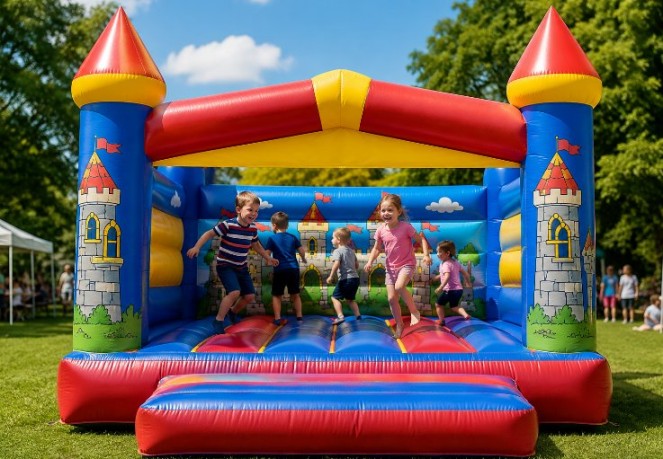
- Commercial bouncy castles
- Inflatable combo units
- Inflatable slides
- Obstacle courses
- Interactive inflatable games
For commercial buyers, it provides a useful benchmark when comparing equipment from different manufacturers.
Why Does BS EN14960 Matter?
Commercial inflatables experience much heavier use than residential products.
A rental inflatable may be transported between venues every weekend, inflated and deflated hundreds of times each year, and used by thousands of children throughout its service life. Because of this demanding environment, durability and construction quality become just as important as appearance.
Commercial inflatables designed with recognised safety standards in mind generally offer several advantages:
- Better structural stability
- More consistent manufacturing quality
- Improved durability
- Easier routine inspections
- Greater confidence for operators and customers
Although no manufacturing standard can eliminate every potential risk, choosing equipment designed for commercial use provides a strong foundation when combined with correct installation, supervision and regular maintenance.
What Should Buyers Look For?
Understanding BS EN14960 is only one part of choosing the right commercial inflatable. Buyers should also evaluate the overall quality of the product and the manufacturer behind it.
Material Quality
Commercial inflatables are typically manufactured using heavy-duty PVC materials designed for frequent transportation and repeated commercial use. Higher-quality materials generally provide better resistance to abrasion, UV exposure and long-term wear.
Reinforced Construction
High-stress areas such as climbing sections, slide entrances, step areas and anchor points should be reinforced to improve durability. Proper reinforcement helps extend the working life of the inflatable while reducing maintenance costs.
Safe Structural Design
Commercial inflatables should feature stable structures, appropriate wall heights, clearly defined play areas and safe entry and exit points. Good structural design contributes to both safety and user experience.
Warranty and After-Sales Support
A commercial inflatable should be viewed as a long-term investment rather than a one-time purchase. Warranty coverage, replacement parts and responsive after-sales service can significantly reduce downtime over the life of the equipment.
Experienced manufacturers such as East Inflatables provide detailed product information and technical support to help commercial buyers compare products with confidence.
Common Buying Mistakes
Many first-time buyers focus mainly on finding the lowest quotation. Experienced rental companies often take a broader approach.
Choosing Price Over Quality
The cheapest inflatable isn’t always the most economical over its lifetime. Lower-quality materials or weaker construction may lead to more repairs, increased downtime and earlier replacement.
Assuming All Commercial Inflatables Are the Same
Two inflatables may look similar online while being manufactured using very different materials and construction methods. Looking beyond appearance helps buyers make better long-term decisions.
Ignoring After-Sales Support
Access to replacement parts, repair advice and responsive customer service becomes increasingly important once equipment enters regular commercial use.
BS EN14960 FAQs
Is BS EN14960 mandatory in the UK?
BS EN14960 is widely recognised as the industry standard for commercial inflatable play equipment and is commonly expected by many rental businesses, event organisers and commercial buyers.
Does BS EN14960 apply to inflatable slides and obstacle courses?
Yes. Commercial inflatable slides, obstacle courses and many other inflatable play structures are generally included within the scope of the standard where applicable.
Can residential inflatables be used commercially?
Residential inflatables are designed for occasional home use and are generally not intended to withstand the demands of commercial rental operations.
Final Thoughts
Choosing commercial inflatable equipment is about much more than selecting the lowest price. Understanding BS EN14960 gives buyers a practical framework for comparing product quality, evaluating suppliers and making informed purchasing decisions.
Alongside recognised safety standards, buyers should also consider manufacturing experience, material quality, construction methods, warranty coverage and after-sales support before placing an order.
Businesses looking for commercial inflatables should always research manufacturers carefully and choose equipment that meets their operational needs.
By asking the right questions before purchasing, buyers can invest with greater confidence and choose equipment that delivers reliable performance for years to come.


Key Takeaways
- Ethical hiring is a defining factor of the best maid agency in Singapore
- Transparent recruitment processes protect both employers and domestic helpers
- Fair wages, proper documentation, and informed consent reduce legal and reputational risks
- Agencies that prioritise welfare tend to deliver more stable and long-term placements
- Compliance with regulations is not enough—ethical standards go beyond minimum requirements
Introduction
Ethical hiring practices have become a critical differentiator for the best maid agency in Singapore. Employers are no longer just comparing fees or placement speed—they are evaluating how agencies treat domestic helpers throughout the recruitment process. Ethical lapses can lead to legal exposure, reputational damage, and unstable employment arrangements. On the other hand, agencies that implement structured, transparent, and humane hiring practices tend to produce better outcomes for both households and workers. Knowing what ethical hiring looks like is essential before engaging any agency.
Transparent Recruitment and Sourcing
The foundation of ethical hiring begins at the sourcing stage. The best maid agencies ensure that all candidates are recruited through licensed and verified partners in their home countries. This approach eliminates risks associated with illegal recruitment, falsified documents, or coercion. Transparent recruitment also means clearly documenting each step—from candidate screening to job matching—so that both the employer and the helper understand how the placement was arranged.
In practice, this involves providing accurate profiles, verified employment histories, and honest assessments of skills. Ethical agencies avoid exaggerating capabilities or withholding critical information just to secure faster placements. This level of transparency reduces mismatches and prevents early contract terminations, which can be costly for both parties.
Fair Fees and Salary Structures
One of the most scrutinised aspects of ethical hiring is the financial arrangement. The best maid agencies will clearly outline all fees upfront, including agency charges, insurance, and any government-related costs. There should be no hidden deductions or unclear payment structures. Ethical agencies for domestic helpers ensure that salary terms are communicated in advance and agreed upon before deployment.
A key issue in unethical hiring is excessive placement debt imposed on helpers. Ethical agencies actively work to minimise or eliminate such burdens. They may structure payment terms in a way that does not trap workers in long repayment cycles. This approach creates a more balanced employment relationship and reduces the likelihood of disputes or early repatriation.
Informed Consent and Proper Documentation
Ethical hiring requires that domestic helpers fully understand the terms of their employment. The best maid agency ensures that contracts are explained in the helper’s native language, covering salary, rest days, job scope, and living conditions. This stage is not just a compliance requirement—it is a safeguard against misunderstandings and future conflicts.
Proper documentation is equally important. This paperwork includes valid work permits, medical clearances, and insurance coverage. Ethical agencies handle these processes meticulously to ensure that all regulatory requirements are met without shortcuts. More importantly, they ensure that helpers are not misled about their job roles or conditions before arrival.
ALSO READ: Hiring a Caregiver: How Families Really Feel About It
Welfare and Post-Placement Support
Ethical hiring does not end once the helper is deployed. The best maid agency in Singapore provides structured post-placement support to both employers and helpers. This support may include regular check-ins, mediation services, and access to counselling or training resources. Such support systems help address issues early before they escalate into disputes.
Agencies that prioritise welfare also educate employers on fair treatment, reasonable expectations, and cultural sensitivity. This approach creates a more stable working environment and reduces turnover. Ethical agencies understand that long-term placement success depends on both sides being supported, not just the initial transaction.
Compliance Beyond Minimum Standards
While regulatory compliance is mandatory, ethical hiring goes further. The best maid agencies adopt internal standards that exceed basic legal requirements. This approach may include stricter vetting processes, enhanced training programmes, and clear ethical guidelines for recruitment partners.
Agencies that operate at this level treat ethical hiring as part of their business model rather than a marketing claim. They invest in systems, staff training, and partnerships that reinforce consistent standards. This approach not only builds trust with employers but also strengthens their reputation in a highly competitive market.
Conclusion
Ethical hiring practices are no longer optional—they are a core expectation when engaging the best maid agency in Singapore. From transparent recruitment and fair financial structures to informed consent and ongoing support, each stage of the process plays a role in ensuring a successful placement. Employers who prioritise these factors are more likely to experience stable, long-term arrangements, while helpers benefit from fair and respectful treatment. Remember, in a market where trust is critical, ethical hiring is the standard that separates reliable agencies from the rest.
Contact JForce Employment Service to speak with a team that prioritises ethical hiring from day one—so you hire with confidence, not uncertainty.

Buggy Ride Dubai: Complete Prices, Types, and Booking Guide

How to Use Nipple Cream for Comfortable Pumping

The Best Moth Treatment Companies in the UK: Our 2026 Picks

Spray Adhesive vs Traditional Glue: Which Is Better for Carpet Installation?

How HDMI RF Modulator Performance Depends on Alumina Density

Apex Answer Bot: Student Guide to Knowing Its Features Before Using It

The 15 Highest-Paid Rugby Players in the World

Christopher Dare: The Untold Story of Engineer and Former Husband of Angela Rippon

How to Ensure Your Home is Valued Correctly for a Quick Sale

Nancy Hallam: The Inspiring Life, Career, and Success Story Behind Ian Wright’s Wife

Who Is Maisie Mae Roffey? The Private Life, Family Story, and Quiet Success of Julie Walters’ Daughter

Simon Dixon Biography: Lifestyle, Net Worth, Family, Career and Success Story
The 15 Highest-Paid Rugby Players in the World
Christopher Dare: The Untold Story of Engineer and Former Husband of Angela Rippon
How to Ensure Your Home is Valued Correctly for a Quick Sale
Nancy Hallam: The Inspiring Life, Career, and Success Story Behind Ian Wright’s Wife
Who Is Maisie Mae Roffey? The Private Life, Family Story, and Quiet Success of Julie Walters’ Daughter
Simon Dixon Biography: Lifestyle, Net Worth, Family, Career and Success Story
-
 Sports2 months ago
The 15 Highest-Paid Rugby Players in the World
-
Celebrity8 months ago
Christopher Dare: The Untold Story of Engineer and Former Husband of Angela Rippon
-
 Real Estate6 months ago
How to Ensure Your Home is Valued Correctly for a Quick Sale
-
Celebrity9 months ago
Nancy Hallam: The Inspiring Life, Career, and Success Story Behind Ian Wright’s Wife
-
Celebrity8 months ago
Who Is Maisie Mae Roffey? The Private Life, Family Story, and Quiet Success of Julie Walters’ Daughter
-
Business8 months ago
Simon Dixon Biography: Lifestyle, Net Worth, Family, Career and Success Story
-
 Celebrity9 months ago
Johnny Carell: Inside the Life, Family, and Rising Success of Steve Carell’s Son
-
 Celebrity7 months ago
Draven Duncan: Tim Duncan’s Rising Star Son and His Inspiring Basketball Journey