
Technology
How to Measure Facebook Ads Performance Using Key Metrics


Running Facebook Ads without measuring performance can make it difficult to understand whether a campaign is achieving its goals. Businesses need to analyse campaign data to determine what is working, what needs adjustment and where advertising budget should be allocated.
Facebook Ads performance should not be judged by one metric alone. A campaign may receive many clicks but generate few enquiries, while another campaign may have fewer clicks but attract higher-quality leads.
Why Facebook Ads Measurement Matters
Tracking performance helps businesses understand:
- Whether ads are reaching the right audience
- Whether users are engaging with the content
- Whether campaigns are generating enquiries or sales
- Whether budget is being used effectively
- Which advertisements perform better
- Which audiences respond positively
Without measurement, businesses may continue spending on campaigns without knowing whether they are contributing to business goals.
1. Impressions
Impressions measure how many times an advertisement is displayed.
This metric helps businesses understand:
- How often ads appear
- How much visibility a campaign receives
- Whether the campaign is reaching enough users
A high number of impressions does not always mean a successful campaign. Businesses should review impressions together with clicks, conversions and cost metrics.
2. Reach
Reach refers to the number of unique people who see an advertisement.
Reach helps businesses understand:
- How many individuals saw the campaign
- Whether the campaign is expanding awareness
- Whether the audience size is appropriate
Reach is useful for awareness campaigns, but conversion-focused campaigns should also consider whether users take action after seeing the ad.
3. Click-Through Rate (CTR)
Click-through rate measures how many people clicked an advertisement compared with the number of times it was shown.
CTR can indicate:
- Whether the creative attracts attention
- Whether the message is relevant
- Whether the audience is interested in the offer
A low CTR may suggest that businesses should review:
- Ad visuals
- Copywriting
- Audience targeting
- Call-to-action
- Offer relevance
4. Cost Per Click (CPC)
Cost per click measures how much businesses pay, on average, for each click generated by an advertisement.
CPC helps businesses understand:
- Traffic acquisition cost
- Ad efficiency
- Audience competitiveness
- Creative performance
However, a low CPC does not automatically mean a campaign is successful. Businesses should also evaluate whether clicks lead to valuable actions.
5. Cost Per Result
Cost per result shows the average amount spent to achieve the campaign objective.
The result depends on the campaign goal, such as:
- Leads
- Purchases
- Website actions
- Messages
- Engagement
- App installs
Businesses should compare cost per result against business goals rather than looking at the number alone.
6. Cost Per Lead (CPL)
For lead generation campaigns, cost per lead is an important measurement.
CPL helps businesses understand:
- How much each enquiry costs
- Whether lead generation is sustainable
- Which campaigns attract enquiries
However, businesses should also review lead quality.
A campaign generating inexpensive leads may not perform well if the enquiries are not relevant.
7. Conversion Rate
Conversion rate measures how many users complete a desired action after clicking an advertisement.
Examples include:
- Filling out a form
- Making a purchase
- Booking an appointment
- Contacting a business
- Downloading a resource
Conversion rate helps businesses evaluate whether the landing page, offer and customer journey are working together.
8. Cost Per Acquisition (CPA)
Cost per acquisition measures the cost of obtaining a customer or completed action.
CPA is useful for businesses focused on:
- Sales
- Bookings
- Registrations
- Customer acquisition
Businesses should compare CPA against customer value to understand campaign profitability.
9. Return on Ad Spend (ROAS)
Return on ad spend measures revenue generated compared with advertising spend.
ROAS is commonly used by businesses that track direct revenue from advertisements.
However, ROAS may not apply to every campaign, especially:
- Awareness campaigns
- Branding campaigns
- Lead generation campaigns
- Long sales cycles
Businesses should choose metrics based on campaign objectives.
10. Frequency
Frequency measures how often the same user sees an advertisement.
High frequency may indicate:
- Audience fatigue
- Repeated exposure
- Need for creative refresh
Businesses should monitor frequency alongside engagement and conversion data.
11. Engagement Metrics
Engagement metrics show how users interact with advertisements.
These may include:
- Likes
- Comments
- Shares
- Saves
- Video views
- Reactions
Engagement can provide insights into audience interest and content relevance.
12. Video Performance Metrics
For video advertisements, businesses should review:
- Video views
- Average watch time
- Video completion rate
- Engagement
- Click actions
These metrics help identify whether videos capture and maintain audience attention.
13. Landing Page Performance
Facebook Ads performance is also affected by what happens after the click.
Businesses should review:
- Page loading speed
- Mobile experience
- Form completion rate
- Bounce rate
- Content relevance
- Call-to-action clarity
A strong advertisement may still underperform if the landing page does not meet user expectations.
14. Audience Performance
Businesses should analyse which audiences generate better results.
Review:
- Age groups
- Locations
- Interests
- Customer segments
- Retargeting audiences
- Lookalike audiences
Audience insights can help businesses refine future campaigns.
15. Ad Creative Performance
Different advertisements may perform differently even when targeting the same audience.
Businesses can compare:
- Images
- Videos
- Headlines
- Copy
- Offers
- Calls-to-action
Testing different creatives helps identify what resonates with the target audience.
How Often Should Businesses Review Facebook Ads?
The review frequency depends on campaign size, budget and objectives.
Businesses may review:
Daily
For:
- Spending issues
- Campaign errors
- Sudden performance changes
Weekly
For:
- Audience performance
- Creative performance
- Cost trends
- Lead quality
Monthly
For:
- Overall strategy
- Budget allocation
- Campaign goals
- Long-term performance
Regular reviews help businesses make informed adjustments.
Common Facebook Ads Reporting Mistakes
Looking Only at Clicks
Clicks do not always translate into business results.
Ignoring Lead Quality
A large number of leads may not help if they are not relevant.
Comparing Different Objectives
Awareness campaigns and conversion campaigns should not be measured using the same expectations.
Ignoring Customer Journey
Some customers need multiple interactions before taking action.
Making Decisions Too Quickly
Campaign data needs enough time before making major decisions.
Facebook Ads Metrics Businesses Should Track by Goal
Brand Awareness
Focus on:
- Reach
- Impressions
- Frequency
- Engagement
Lead Generation
Focus on:
- Cost per lead
- Lead quality
- Conversion rate
- Cost per result
E-commerce Sales
Focus on:
- Purchases
- CPA
- ROAS
- Conversion rate
- Revenue
Website Traffic
Focus on:
- Click-through rate
- CPC
- Landing page behaviour
- Website actions
Measuring Facebook Ads performance requires looking beyond basic engagement numbers. Businesses should analyse a combination of delivery, engagement and conversion metrics to understand whether campaigns are supporting business goals.
Metrics such as CTR, CPC, CPA, ROAS, conversion rate and cost per result provide useful insights, but they should always be evaluated alongside campaign objectives and customer quality.
This article is for general information only and should not replace advice from a qualified digital marketing professional.

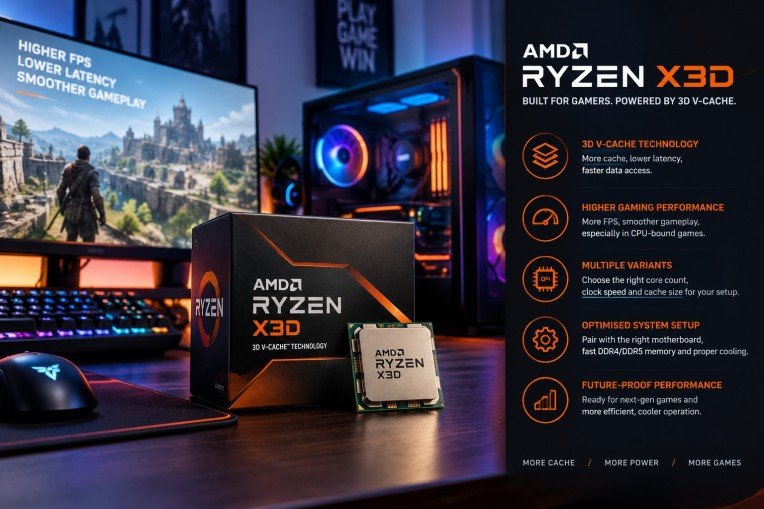
The AMD Ryzen X3D processor series represents a significant advancement in the realm of gaming CPUs, offering enthusiasts a robust combination of speed, efficiency, and enhanced graphics performance. This guide aims to explore the intricacies of the AMD Ryzen X3D, providing gamers with insights on how to harness its full potential for an unparalleled gaming experience.
To start with, the x3d architecture introduces innovative 3D V-Cache technology that substantially increases the amount of L3 cache available on the processor die. This increase in cache results in reduced latency and improved data access times, paramount for the demanding processes involved in modern gaming.
Understanding 3D V-Cache Technology
Traditional CPU designs incorporate cache memory adjacent to processor cores on a single plane. However, the AMD Ryzen X3D series stacks additional cache vertically using 3D V-Cache technology. This vertical integration allows a substantial increase in cache capacity without significantly enlarging the processor’s footprint.
The augmented cache enables quicker retrieval of gaming assets and instructions by minimizing the distance data travels. Consequently, this reduces frame times and leads to smoother gameplay, especially in games that are sensitive to cache size and latency.
Performance Benefits for Gamers
The primary beneficiary of the 3D V-Cache is gaming performance. Benchmarks demonstrate that Ryzen X3D processors achieve higher frame rates and lower latency compared to their non-3D counterparts, particularly in CPU-bound games such as strategy, simulation, and role-playing games.
This performance edge is amplified when paired with high-end graphics cards and fast memory modules, creating a synergistic effect that maximises the hardware capabilities. With the right configuration, gamers can expect a more responsive and immersive experience.
Choosing the Right Ryzen X3D for Your Setup
AMD offers several variants within the Ryzen X3D lineup, each catering to different performance tiers and budgets. Understanding the differences in core count, clock speeds, and cache size is essential when selecting the appropriate processor for a specific gaming rig.
Moreover, compatibility with motherboards and cooling solutions should be carefully considered to ensure optimal thermal management and power delivery, which directly impact the processor’s sustained performance during intensive gaming sessions.
Optimising System Configuration
Beyond the processor itself, achieving peak performance with the AMD Ryzen X3D involves fine-tuning system components and software settings. Updating BIOS and drivers ensures compatibility and stability, while adjusting in-game settings can leverage the processor’s capabilities more effectively.
It is also advisable to employ high-speed DDR4 or DDR5 memory modules, as memory speed can influence the processor’s performance, notably in CPU-bound scenarios. Adequate cooling, through either advanced air coolers or liquid cooling solutions, helps maintain stable frequencies and prevents thermal throttling.
Comparison with Other High-Performance Processors
Compared to previous generation AMD Ryzen processors and competitors in the market, the X3D models stand out for their superior cache design. While raw clock speeds may be comparable, the enlarged cache grants the Ryzen X3D a distinct advantage in gaming workloads.
This advantage translates into more consistent frame times and generally smoother visual output, which are critical metrics for serious gamers and streamers aiming for high-quality content delivery.
Future-Proofing Your Gaming Build
The integration of 3D V-Cache positions the Ryzen X3D series well for upcoming titles that demand heightened computational resources. Investing in this technology ensures a level of preparedness for next-generation games that leverage CPU cache to improve performance.
Additionally, the energy efficiency improvements in the Ryzen X3D series contribute to quieter and cooler operation, factors increasingly valued in modern gaming setups that prioritise comfort and acoustics.
Conclusion
Unlocking peak performance with the AMD Ryzen X3D involves understanding the transformative impact of 3D V-Cache technology and meticulously aligning system components to support its strengths. Gamers seeking to elevate their gameplay quality will find the Ryzen X3D a compelling choice in the current market landscape.
For those interested in exploring the range of AMD Ryzen X3D processors, reputable suppliers such as Scorptec Computers provide access to the latest models, ensuring customers can equip themselves with cutting-edge hardware primed for exceptional gaming performance.

In today’s rapidly evolving business environment, organisations must continuously adapt to stay competitive and efficient. One of the most impactful ways companies can achieve this is through implementing modern workplace solutions. These solutions are designed to enhance collaboration, improve employee productivity, and streamline business operations by leveraging advanced technology and innovative practices.
Understanding Modern Workplace Solutions
Modern workplace solutions refer to a collection of tools, strategies, and technologies that enable organisations to create a more flexible, connected, and efficient work environment. These solutions typically include cloud services, collaboration platforms, communication tools, and remote working capabilities, all focused on supporting both employees and management in achieving business goals effectively.
Key Components of Modern Workplace Solutions
The core elements that constitute modern workplace solutions include digital collaboration tools, mobile device management systems, cloud computing infrastructure, and secure communication channels. Integrating these components equips businesses to operate seamlessly across multiple locations and devices, catering to the growing demand for mobility and flexible work schedules.
Digital Collaboration Tools
Collaboration platforms enable teams to work together in real-time, regardless of their physical locations. Tools such as shared calendars, project management applications, and video conferencing systems foster effective communication and coordination, reducing delays and miscommunication.
Cloud Computing Infrastructure
Embracing cloud technology allows businesses to store and access data securely from any location. This flexibility supports hybrid and remote work models while ensuring that information is consistently available and safe from disruptions.
Mobile Device Management
With the proliferation of mobile devices in the workplace, managing device security and data access is critical. Mobile device management platforms enable IT departments to monitor, secure, and control company data on various devices, reducing the risk of security breaches.
Benefits of Adopting Modern Workplace Solutions
The implementation of modern workplace solutions offers several advantages that directly impact business efficiency and employee satisfaction. These benefits include enhanced productivity, improved collaboration, greater flexibility, and stronger security measures.
Enhanced Productivity
By automating routine tasks and simplifying communication, businesses enable employees to focus on higher-value activities. Access to integrated tools reduces downtime and streamlines workflows, contributing to overall productivity improvements.
Improved Collaboration
Modern solutions foster a culture of collaboration by breaking down silos and encouraging information sharing across departments. This increased transparency leads to better decision-making and faster project completion.
Greater Flexibility
Flexible working arrangements supported by modern workplace tools accommodate diverse employee needs and preferences. This flexibility not only improves morale and engagement but also attracts top talent seeking adaptive work environments.
Stronger Security
By employing robust security protocols and access controls, modern workplace solutions protect sensitive data and company assets. This protection is vital in mitigating risks associated with cyber threats and data breaches.
Challenges to Consider
Despite the substantial benefits, organisations must be mindful of potential challenges when transitioning to modern workplace solutions. These may include resistance to change among employees, the need for comprehensive training, and ensuring compatibility with existing systems.
Addressing these challenges requires thorough planning, clear communication, and ongoing support to ensure a smooth implementation process and maximise the return on investment.
Choosing the Right Modern Workplace Solutions Provider
Selecting an experienced provider with a proven track record is crucial for successful deployment. A reputable partner will assess business needs, recommend tailored solutions, and provide expert support throughout the transition and beyond.
For organisations seeking advanced and reliable options, exploring the range of offerings at modern workplace solutions can serve as a valuable starting point.
Impact on Business Growth
Adopting modern workplace solutions can be a catalyst for business growth by enhancing operational efficiency and enabling innovation. Organisations that leverage these technologies are better equipped to respond to market changes, improve customer satisfaction, and expand their competitive advantage.
Future Trends in Modern Workplace Solutions
The landscape of workplace solutions continues to evolve with advancements in artificial intelligence, machine learning, and automation. These emerging technologies promise to further transform how businesses operate by enabling smarter workflows and predictive analytics.
Remaining informed about these trends allows organisations to continuously upgrade their capabilities and maintain resilience in a dynamic business environment.
Conclusion
Modern workplace solutions represent a significant opportunity for organisations to transform their operational efficiency and employee engagement. By embracing these technologies and practices, businesses can foster a more agile, productive, and secure work environment geared towards sustainable success.
Implementing such solutions requires strategic planning and partnership with experienced providers to ensure alignment with specific business objectives and smooth adoption.
Technology
Streamlining Success: How OmniStar’s Grant Management System Revolutionizes Fund Allocation


In today’s complex funding landscape, organisations require reliable and efficient tools to manage grant allocations effectively. OmniStar’s grant management system stands at the forefront of this transformation, providing streamlined solutions tailored to meet the dynamic needs of grant administrators and recipients alike. This article explores the capabilities of OmniStar’s system and demonstrates how it revolutionises fund allocation with precision and ease.
Understanding the Need for Advanced Grant Management
Grant management involves multiple stages, including application processing, compliance monitoring, fund disbursement, and reporting. Manual methods or outdated systems often lead to inefficiencies, errors, and a lack of transparency. An advanced grant management system is essential to bridge these gaps and enhance operational efficiency.
The Core Features of OmniStar’s Grant Management System
OmniStar’s solution is designed with a comprehensive feature set that addresses the full lifecycle of grant management. Key functionalities include automated application workflows, integrated compliance checks, real-time fund tracking, and detailed reporting capabilities. These features ensure organisations can allocate funds accurately and maintain accountability.
Automated Workflows for Enhanced Efficiency
The system automates numerous repetitive tasks, reducing administrative burdens significantly. Automated workflows facilitate quicker application reviews, approvals, and notifications, resulting in reduced turnaround times and fewer manual errors. This automation supports organisations to focus on strategic aspects of grant distribution.
Ensuring Compliance and Accountability
Compliance with regulatory requirements and fund usage standards is paramount. OmniStar’s system incorporates built-in compliance checks that monitor grant conditions and deadlines, helping organisations avoid penalties and maintain integrity in fund management. Audit trails and documentation features provide a transparent record of all transactions and decisions.
Real-Time Fund Allocation and Tracking
One of the system’s revolutionary capabilities is its real-time fund allocation and tracking. Organisations can monitor the disbursement status of grants instantly, ensuring they remain within budgetary constraints and can quickly identify any discrepancies. This feature supports dynamic decision-making and maximises the impact of allocated funds.
Comprehensive Reporting and Analytics
Data-driven insights are critical for optimising grant programmes. OmniStar’s system offers robust reporting tools that compile financial and operational data into accessible formats. These reports enable stakeholders to evaluate the effectiveness of funding strategies and make informed decisions about future allocations.
User-Friendly Interface and Accessibility
Ease of use is central to the design of OmniStar’s platform. The user interface is intuitive, allowing users with varying technical expertise to navigate the system effortlessly. Additionally, cloud-based accessibility ensures that stakeholders can manage grants from different locations securely and efficiently.
Integration Capabilities
OmniStar’s grant management system supports integration with existing financial and organisational software. This interoperability minimises data silos and enables seamless data exchange across platforms, enhancing overall organisational workflows related to grant administration.
The Benefits of Implementing OmniStar’s System
Adopting this advanced system provides multiple advantages, including improved accuracy in fund allocation, reduced administrative costs, increased transparency, and enhanced compliance adherence. Together, these benefits contribute to the successful management and utilisation of grant funds.
Impact on Stakeholders
Grantors and recipients both gain from the streamlined processes. Grantors can enforce stricter oversight and reporting, while recipients experience faster feedback and fund disbursements. This mutual benefit fosters stronger trust and collaboration between all parties involved.
Case Studies and Industry Adoption
Numerous organisations across various sectors have adopted OmniStar’s grant management system and reported significant improvements in operational efficiency and financial control. These case studies highlight the practical advantages and return on investment achievable through this technology.
Scalability and Customisation
The modular design of the system allows it to scale with organisational growth and adapt to changing grant management requirements. Customisation options ensure the platform meets specific policy frameworks and operational preferences unique to each client.
Security Measures and Data Protection
Protecting sensitive grant information is imperative. OmniStar employs rigorous security protocols, including encryption and multi-factor authentication, to safeguard data integrity. Compliance with data protection regulations is maintained to uphold client and beneficiary confidentiality.
Future Developments and Innovation
OmniStar commits to continuous improvement, integrating emerging technologies such as artificial intelligence and machine learning to enhance predictive capabilities and automate complex analyses within grant management processes.
Conclusion
OmniStar’s grant management system represents a significant advancement in how funds are allocated, monitored, and reported. By leveraging automation, real-time tracking, and comprehensive compliance tools, the system empowers organisations to manage grants with greater efficiency, accuracy, and transparency. As demand for effective grant administration grows, OmniStar’s solution provides a reliable and innovative platform to support success in fund allocation.

From Cluttered to Conversion-Ready: A Framework for Auditing Your B2B SaaS Design

How Professional Guidance Can Make a Difference in Weight Management

Get Smoother Wood Surfaces With the Right Power Belt Sander

Understanding Your Turnitin Report and Similarity Score

Humanize AI: How to Turn AI Text Into Human-Like Writing

Ryne AI Review: How Effective Is It at Humanizing AI?

The 15 Highest-Paid Rugby Players in the World

Christopher Dare: The Untold Story of Engineer and Former Husband of Angela Rippon

How to Ensure Your Home is Valued Correctly for a Quick Sale

What Is Fanquer? The Digital Creator Platform Transforming Direct-to-Fan Engagement

Dr Jared Ross: Missouri Appeals Court Upholds Protection Order Over Graphic Torture and Murder Threats

Nancy Hallam: The Inspiring Life, Career, and Success Story Behind Ian Wright’s Wife
The 15 Highest-Paid Rugby Players in the World
Christopher Dare: The Untold Story of Engineer and Former Husband of Angela Rippon
How to Ensure Your Home is Valued Correctly for a Quick Sale
What Is Fanquer? The Digital Creator Platform Transforming Direct-to-Fan Engagement
Dr Jared Ross: Missouri Appeals Court Upholds Protection Order Over Graphic Torture and Murder Threats
Nancy Hallam: The Inspiring Life, Career, and Success Story Behind Ian Wright’s Wife
-
 Sports5 months ago
The 15 Highest-Paid Rugby Players in the World
-
Celebrity10 months ago
Christopher Dare: The Untold Story of Engineer and Former Husband of Angela Rippon
-
 Real Estate8 months ago
How to Ensure Your Home is Valued Correctly for a Quick Sale
-
 Technology4 months ago
What Is Fanquer? The Digital Creator Platform Transforming Direct-to-Fan Engagement
-
 Celebrity4 months ago
Dr Jared Ross: Missouri Appeals Court Upholds Protection Order Over Graphic Torture and Murder Threats
-
Celebrity11 months ago
Nancy Hallam: The Inspiring Life, Career, and Success Story Behind Ian Wright’s Wife
-

 Health9 months ago
Enclomimed 25 (Enclomiphene) – Effective PCT Protocol
-

 Celebrity7 months ago
Who Is Azriel Crews? Inside the Life and Career of Terry Crews’ Daughter