
Real Estate
The Bucket-List Dare: Why Brits Are Renting America’s Most Famous Haunted Mansions


Forget the predictable chain hotel with its beige walls, identical bedrooms, and uninspiring breakfast buffet. For adventurous British travellers, America’s most notorious haunted houses offer something far more memorable: the chance to spend a night inside a real-life horror story.
From unsolved Victorian murders to Civil War ghosts, these historic properties combine dark tourism, true crime, and the ultimate overnight dare. You don’t have to believe in ghosts to feel the excitement. After all, how many people can say they slept at the scene of one of America’s most infamous crimes?
Lizzie Borden House, Massachusetts: Sleep at the Scene of a Victorian Murder Mystery
In August 1892, Andrew and Abby Borden were brutally murdered inside their Fall River, Massachusetts, home. Their daughter, Lizzie Borden, became the prime suspect in a sensational trial that captivated America. Although she was acquitted, the murders remain officially unsolved.
Today, visitors can actually spend the night inside the original house, now a historic inn and museum. Guests can book rooms associated with the Borden family, including the bedroom where Abby was discovered murdered. For an even bigger adventure, groups can arrange to reserve the entire property, subject to booking conditions.
Ghost stories abound, and visitors have experienced mysterious footsteps, disembodied voices, unexplained movements, and the unsettling sensation of being touched by something unseen. British true-crime enthusiasts, this is a chance to experience an authentic piece of American criminal history rather than simply watching another documentary.
The bucket-list dare: Book the room where Abby Borden was murdered, turn out the lights, and see who can actually sleep through the night.
Villisca Axe Murder House, Iowa: The Ultimate Overnight Horror Challenge

The Villisca Ax Murder House – Copyright Villisca House
If the Lizzie Borden House sounds frightening, the Villisca Axe Murder House takes the overnight challenge to another level.
On the night of 9 June 1912, eight people, including six children, were murdered inside this modest Iowa home. Despite an extensive investigation, the killer was never conclusively identified. The house has been restored to reflect its appearance around the time of the murders, complete with an absence of indoor plumbing and conventional electrical outlets.
Today, adventurous visitors can book individual rooms or reserve the entire house for a private overnight experience. Whole-house rentals are advertised from $599 for five guests, with additional people permitted for a fee.
According to paranormal investigators, the property has produced reports of unexplained voices, moving objects, mysterious shadows, and strange activity during the early morning hours. Unlike a conventional hotel, Villisca is designed around the experience of spending the night in a historically significant and allegedly haunted location.
The bucket-list dare: Gather your bravest friends, book the entire house, and attempt an overnight ghost investigation. Just remember that this is a historic property, not a luxury hotel.
McInteer Villa, Kansas: Spend the Night in a Victorian Mansion of Mysteries
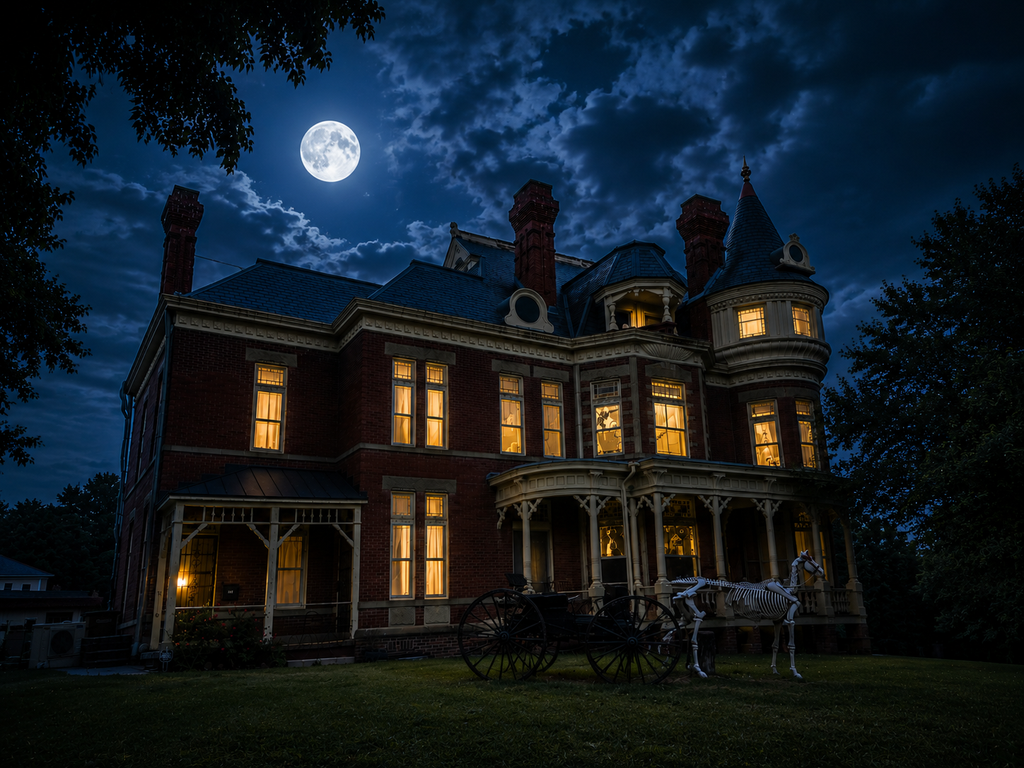
The McInteer Villa – Copyright McInteer Villa
Some travellers prefer gothic grandeur to isolated farmhouses. The McInteer Villa in Atchison, Kansas, delivers an unforgettable Victorian experience. Built in 1889–1890 by Irish immigrant and businessman John McInteer, this imposing brick mansion features a dramatic turret, ornate woodwork, stained-glass windows, and winding staircases.
Over the decades, the property served as a family residence and rooming house, accumulating stories of mysterious deaths and unexplained encounters. Visitors have reported phantom footsteps, disembodied voices, shadowy figures, and the sound of a rocking chair moving when nobody is nearby.
The mansion welcomes visitors for tours and overnight paranormal investigations, allowing groups to explore its historic rooms after dark. For British travellers accustomed to stately homes and castle ghost stories, McInteer Villa offers an American twist on the classic haunted mansion experience.
The bucket-list dare: Gather a group of friends, spend the night exploring the mansion’s creaking corridors, and discover whether your courage survives until sunrise.
Brickhouse Inn, Pennsylvania: Sleep Where the Civil War Raged
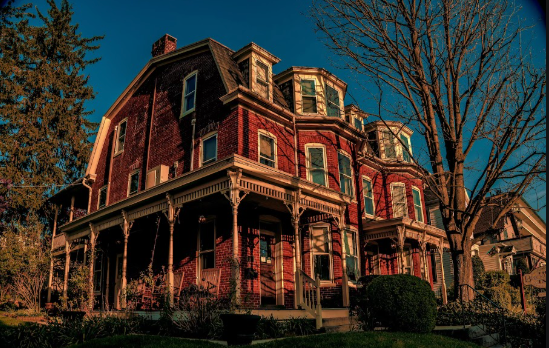
The Brickhouse Inn – Copyright US Ghost Adventures
Not every haunted overnight experience involves a notorious murder. Some properties offer a
n opportunity to sleep where history itself turned violent.
Gettysburg’s Brickhouse Inn includes the historic Welty House, which stood directly in the fighting during the Battle of Gettysburg in July 1863. Confederate sharpshooters occupied the building, while the Welty family and their neighbours sheltered in the basement. Two Confederate soldiers were reportedly killed inside, and dozens of soldiers were temporarily buried on the property.
Today, visitors can stay in beautifully furnished rooms while exploring the history of one of America’s bloodiest battles. Unlike the rustic Villisca House, Brickhouse Inn combines its wartime history with comfortable modern accommodation.
According to local legends, guests have seen phantom soldiers patrolling the property. Others have heard unexplained footsteps, mysterious voices, and sounds resembling distant gunfire. The inn also offers guided ghost-hunting experiences involving hauntings in the historic basement.
The bucket-list dare: Book a room in the Welty House, explore Gettysburg’s battlefield by day, and join an evening ghost hunt where civilians once hid from the fighting.
Swap an Ordinary Hotel Stay for an Extraordinary Story
For adventurous Brits planning an American holiday, these historic properties offer something no ordinary hotel can match: a chance to spend the night surrounded by genuine history and unsettling folklore.
Whether you’re investigating the Lizzie Borden murders, braving Villisca’s isolated farmhouse, exploring McInteer Villa, or sleeping in Gettysburg’s Civil War history, each experience offers an unforgettable story to take home.
Book well in advance, check accommodation arrangements, and respect the real tragedies behind the legends. You might not encounter a ghost, but you’ll certainly return with a better story than another night in a boring, beige hotel room.










Letting property in Peterborough now requires landlords to follow new tenancy rules, review their paperwork and understand their responsibilities under the Renters’ Rights Act 2025. The changes took effect on 1 May 2026, affecting both existing and new private tenancies. For landlords in areas such as Hampton, Bretton, Werrington and the city centre, compliance also means checking local licensing requirements and maintaining safe, well-managed properties.
1. Review Your Tenancy Agreements and Existing Records
The Renters’ Rights Act replaced assured shorthold tenancies with assured periodic tenancies for most private renters in England. Existing eligible tenancies moved to the new system automatically on 1 May 2026.
Landlords should review their tenancy records and make sure their processes reflect the new arrangements.
Use this checklist:
- Check existing agreements: Existing written tenancy agreements generally do not need to be replaced solely because of the reforms. However, review their terms and ensure your management procedures reflect the new rules.
- Provide the required information: Most landlords with existing written agreements were required to give tenants the official Renters’ Rights Act Information Sheet by 31 May 2026. If you missed the deadline, address the omission promptly and seek advice on your position.
- Document verbal agreements: Where an existing tenancy was agreed entirely verbally, landlords were required to provide written information setting out the key tenancy terms by the same deadline.
- Update tenancy templates: Ensure agreements for new tenancies reflect the current periodic tenancy framework rather than relying on outdated assured shorthold tenancy templates.
- Keep accurate records: Retain signed agreements, tenant communications, compliance certificates, repair records and evidence that required information has been provided.
Good record-keeping helps demonstrate compliance and makes it easier to manage questions or disputes. Landlords using a letting agent should confirm who is responsible for each document and deadline.
2. Understand the New Rules on Rent and Possession
The reforms changed how landlords manage rent increases and regain possession of their properties. Processes that were valid under the previous system may no longer be appropriate.
Rent increases
Landlords can generally increase rent only once a year under the new statutory process. A proposed increase must follow the correct procedure, including using Form 4A and giving at least two months’ notice. Tenants can challenge a proposed increase if they believe it exceeds the open-market rent.
Before proposing an increase, review comparable properties in Peterborough and consider the condition, location and facilities of your rental property. Keep evidence supporting the proposed figure and allow sufficient time for the required notice.
Ending a tenancy
Section 21 no-fault evictions have been abolished under the new regime. Landlords must rely on a valid legal ground for possession and follow the correct notice and court procedures where required.
Do not assume that a tenant must leave because a fixed term has ended or because you want to sell the property. Check the applicable possession grounds and requirements before taking action.
Advertising a rental property
Landlords must publish an asking rent when advertising a property and cannot encourage rental bidding or accept offers above the advertised rent.
Make sure advertisements, application processes and communications with prospective tenants follow these requirements. Clear, consistent procedures can reduce disputes and help landlords assess applicants fairly.
3. Check Tenant Selection, Pets and Property Management Policies
The Act introduces important changes to how landlords assess prospective tenants and respond to requests during a tenancy.
Review your current policies against the following points:
- Benefits and children: You must not discriminate against prospective tenants because they receive benefits or have children.
- Pets: Tenants can request permission to keep a pet. Landlords must consider requests properly and can refuse only where there is a valid reason.
- Applications: Use consistent, relevant criteria when assessing prospective tenants. Avoid blanket policies that could conflict with the new rules.
- Communication: Keep written records of important requests, decisions and reasons, particularly where a tenant’s request is refused.
- Property management: Maintain a clear process for reporting repairs, investigating problems and arranging necessary work.
For landlords with several properties, reviewing standard application forms, tenancy templates and staff procedures can help prevent inconsistent decisions.
It is also worth reviewing how your letting agent handles tenant enquiries and applications. Responsibilities should be clearly agreed so that important requests are not overlooked.
4. Check Peterborough’s Local Licensing Requirements
National tenancy reforms are only one part of a landlord’s compliance responsibilities. Peterborough has a selective licensing scheme covering designated streets within specified wards.
The scheme began on 11 March 2024 and is scheduled to run until 10 March 2029. Designated areas include parts of Bretton, Central, East, Fletton and Stanground, Fletton and Woodston, North, Orton Waterville, Park, Paston and Walton, and Stanground South.
A ward name alone does not establish whether your property requires a licence. The scheme applies to specified streets and properties within the designated areas.
Before letting a property or renewing your management arrangements:
- Check the property’s exact address against Peterborough City Council’s current selective licensing information.
- Establish whether a selective licence is required and whether an existing licence remains valid.
- Review whether the property falls under separate Houses in Multiple Occupation licensing requirements.
- Confirm the licence conditions and keep evidence that they are being met.
- Check for any additional local requirements relevant to the property.
Landlords should not assume that a property outside the selective licensing streets is exempt from every other licensing or housing standard requirement.
5. Maintain Safety Standards and Prepare for Further Changes
The Renters’ Rights Act does not replace existing landlord obligations relating to property safety. Gas safety, electrical safety, smoke alarms, carbon monoxide alarms and deposit protection remain important parts of a compliant letting process where applicable.
Use a property-by-property checklist to track certificates, inspection dates, repairs and renewal deadlines. Investigate reports of damp, mould or other hazards promptly, and keep a record of the action taken.
Energy performance should also be considered. Review the property’s Energy Performance Certificate and identify practical improvements that may support efficiency and tenant comfort. Check the rules applicable to your property before planning works or assuming a particular exemption applies.
Further reforms are also being introduced in phases. The government has outlined a regional rollout of the Private Rented Sector Database from late 2026, with mandatory registration planned for private landlords. The wider timetable includes further measures, so landlords should monitor official guidance rather than assume every future requirement is already in force.
For landlords reviewing their local letting strategy, estate agents in Peterborough can provide local property insight to help assess rental options and understand the practical considerations of managing a property in the area.
Frequently Asked Questions
Does the Renters’ Rights Act apply to existing tenancies in Peterborough?
Yes. The main tenancy reforms took effect on 1 May 2026 and apply to most existing and new private tenancies in England. Eligible assured shorthold tenancies became assured periodic tenancies automatically. Landlords should review their existing agreements, provide the required information and update their management procedures to reflect the new rules.
Do Peterborough landlords need a selective licence?
Some do. Peterborough City Council operates a selective licensing scheme covering specified streets in designated wards. Whether a property requires a licence depends on its exact location and the applicable rules. Landlords should check the council’s current street list and mapping information rather than relying on the ward name or postcode alone.
Can a landlord increase rent after the Renters’ Rights Act?
Landlords can generally increase rent no more than once a year using the statutory process. This normally involves serving Form 4A with at least two months’ notice. Tenants can challenge a proposed increase they believe exceeds the open-market rent. Landlords should follow the current procedure and retain records of notices and supporting evidence.
Can a landlord evict a tenant if they want to sell their property?
A landlord can seek possession where a valid statutory ground applies, including the relevant ground for selling a property. However, Section 21 no-fault evictions have been abolished. Landlords must meet the requirements of the applicable possession ground and follow the correct notice and legal process. They should obtain professional advice before serving notice.
What should Peterborough landlords do first to prepare?
Start by reviewing tenancy agreements, checking that required tenant information has been provided, and updating rent and possession procedures. Next, verify local licensing requirements for each property and audit safety certificates, repairs and deposit records. Assign responsibility for each compliance task and monitor official guidance for further reforms as they are introduced.

Selling a property is not just about setting the right asking price. How your home looks and feels can significantly influence buyers’ first impressions. A well-presented property can attract more interest, encourage viewings, and help buyers appreciate its full potential.
Whether you’re preparing to sell a family home or an investment property, effective staging can make a real difference. Working with experienced Estate Agents in Coventry can also help you understand what local buyers are looking for and how to present your property to appeal to them.
What Is Property Staging?
Property staging is the process of preparing and presenting a home to make it more appealing to potential buyers. It involves arranging furniture, improving lighting, decluttering, and highlighting the property’s best features.
The goal is simple: help buyers imagine themselves living in the property.
Unlike major renovations, staging focuses on affordable improvements that enhance the overall appearance of your home without requiring substantial investment.
1. Declutter and Create More Space
One of the easiest ways to improve your property’s appearance is to remove unnecessary belongings.
Cluttered rooms can feel smaller and make it difficult for potential buyers to appreciate the available space. Clear surfaces, organise cupboards, and remove furniture that restricts movement.
Practical decluttering tips:
- Remove unnecessary decorative items and personal belongings.
- Keep kitchen worktops clean and organised.
- Arrange furniture to create clear walking spaces.
- Store excess belongings neatly out of sight.
A clean, spacious environment allows buyers to focus on the property’s layout and features rather than its contents.
2. Make a Strong First Impression
The exterior of your property is the first thing buyers notice, whether they are browsing online listings or arriving for a viewing.
Improving kerb appeal can make your property more inviting before buyers even step inside.
Start by maintaining the garden, trimming overgrown plants, cleaning pathways, and ensuring the front door looks presentable.
If necessary, consider repainting the front door or adding a few attractive outdoor plants.
These relatively inexpensive improvements can create a welcoming atmosphere and encourage buyers to explore further.
3. Use Neutral Colours to Appeal to More Buyers
Bold colours and highly personalised interiors may not appeal to everyone.
Neutral shades such as white, beige, cream, and light grey can make rooms feel brighter, cleaner, and more spacious.
Repainting rooms with strong colour schemes can help create a fresh appearance while allowing buyers to visualise their own furniture and decorations.
However, neutral styling does not mean your property should feel lifeless. Subtle accessories, cushions, artwork, and indoor plants can add warmth without overwhelming the space.
4. Maximise Natural Light
Bright, well-lit homes often appear more inviting in property photographs and during viewings.
Natural light can make rooms feel larger and highlight attractive architectural features.
To improve lighting:
- Open curtains and blinds before viewings.
- Clean windows to allow more natural light inside.
- Position mirrors to reflect daylight.
- Replace faulty bulbs and ensure lighting is consistent.
- Use lamps to brighten darker corners.
For properties with smaller rooms or limited natural light, thoughtful lighting arrangements can make a noticeable difference.
5. Arrange Furniture to Highlight Room Functionality
Furniture placement has a major influence on how buyers perceive a room.
Oversized furniture can make a living area feel cramped, while poorly arranged pieces may make the layout appear awkward.
Consider rearranging furniture to create a natural flow through each room.
For example, position sofas to create a welcoming seating area and ensure dining spaces clearly demonstrate their intended purpose.
If a spare bedroom is currently used for storage, transforming it into a home office or guest bedroom can help buyers understand how the space might be used.
With flexible working arrangements remaining important to many households, a practical home office setup may be particularly appealing to certain buyers.
6. Focus on Kitchens and Bathrooms
Kitchens and bathrooms are important areas for many prospective buyers because updating them can involve considerable expense.
Fortunately, improving their presentation does not always require a complete renovation.
In the kitchen, clean appliances, remove unnecessary items from worktops, and repair damaged cabinet handles.
For bathrooms, focus on spotless surfaces, fresh towels, clean mirrors, and properly maintained fixtures.
Replacing worn sealant, fixing dripping taps, and refreshing tired accessories can make these spaces look better maintained.
The objective is to demonstrate that the property has been cared for and is ready for its next occupants.
7. Complete Minor Repairs Before Viewings
Small maintenance issues can create concerns about the overall condition of a property.
Loose door handles, cracked tiles, peeling paint, and damaged skirting boards may appear minor, but buyers can interpret them as signs of neglect.
Before marketing your home, walk through each room and identify visible issues that need attention.
Addressing straightforward repairs can help create a positive impression and reduce avoidable objections during viewings.
For more substantial defects, obtain appropriate professional advice rather than trying to conceal problems through cosmetic improvements.
8. Create an Inviting Atmosphere for Property Viewings
A successful viewing should allow potential buyers to experience the property comfortably.
Maintain a pleasant indoor temperature, ensure rooms are well ventilated, and eliminate unpleasant odours.
Fresh flowers or subtle decorative touches can create a welcoming atmosphere, but avoid strong fragrances that may overwhelm visitors.
If you have pets, clean pet-related areas thoroughly and consider arranging for pets to be elsewhere during viewings.
The aim is to create a comfortable setting in which buyers can focus on the property.
9. Prepare Your Home for Professional Photography
Many buyers begin their property search online, making listing photographs an essential part of the marketing process.
Even an attractive property can struggle to generate interest if the photographs are poorly lit or show cluttered rooms.
Before the photography appointment, complete the staging process, tidy outdoor spaces, and ensure every room looks its best.
Professional property photography can showcase room proportions, natural lighting, and standout features more effectively.
Good presentation, combined with accurate photographs and compelling property descriptions, can encourage more prospective buyers to arrange viewings.
10. Stage Your Property for the Local Market
Different buyers have different priorities. Families may value practical living spaces, gardens, and storage, while professionals might prioritise home offices, transport connections, and low-maintenance interiors.
Understanding the target audience can help you make better staging decisions.
For example, a family home in Coventry may benefit from clearly presented bedrooms and a functional dining area, while a city-centre flat might benefit from space-saving furniture and contemporary styling.
Local estate agents can provide insight into buyer expectations, competing properties, and the features worth highlighting.
Final Thoughts
Property staging does not need to involve expensive renovations or elaborate interior design. Simple changes such as decluttering, improving lighting, refreshing décor, and completing minor repairs can make your home more appealing to prospective buyers.
Although staging cannot guarantee a faster sale or a higher selling price, effective presentation can help your property stand out in a competitive market.
By combining thoughtful staging with realistic pricing and professional property marketing, homeowners can put themselves in a stronger position to attract interest and achieve a successful sale.


I’ve walked from Emsworth station down to the harbour more times than I can count, and it still surprises me how quickly the platform gives way to boats, mud and that faint smell of salt. It takes a few minutes, not much more. Plenty of locals who’ve outgrown their first place here choose to book a valuation with estate agents in Emsworth rather than leave town, which tells you something about how people feel once they’ve lived here a while.
That loyalty is part of why commuters from elsewhere have started paying attention. The question they’re really asking isn’t whether Emsworth is pretty, because anyone can see that, but whether a small harbour town on the Hampshire and Sussex border can actually work around a job. For a lot of people, it can, though not for everyone, and it’s worth being straight about both sides.
The Commute, Honestly Described
Emsworth sits on the West Coastway line, so Southern trains get you to Chichester in about ten minutes and Portsmouth in roughly twenty. You can get a train towards London Victoria from the station itself. Most regulars don’t bother, though, because it trundles the long way round through Sussex, and the smarter move is usually the short hop to Havant for South Western Railway’s Portsmouth Direct line into Waterloo.
Is that a bit of a faff? On paper, yes. In reality people stop noticing the change within a fortnight, and for anyone going into the office two or three days a week rather than five, the whole thing feels far less punishing than the old season ticket years did.
If you drive, the A27 skirts the top of the town. It joins the A3 at Havant and becomes the M27 heading west towards Southampton, which opens up most of the Solent without much fuss. I won’t pretend the stretch near Chichester is fun at rush hour, because it isn’t, but I’ve sat in worse queues on the M25 for a fraction of the scenery.
You Might Not Need London at All
Here’s something people moving from further afield often miss. There are a lot of decent jobs within half an hour, and Portsmouth alone accounts for a good share of them, from the naval base and the university to Queen Alexandra Hospital up at Cosham.
Go east instead and Chichester gives you St Richard’s Hospital, the University of Chichester and the Rolls-Royce plant at Goodwood. Havant has Langstone Technology Park and its own business estates a few minutes along the A27. So couples with one person working locally and the other travelling further tend to find Emsworth lands in a sensible middle spot, which is harder to come by than you’d think.
What Your Evenings Turn Into
Honestly, this is the bit that sells it. The two millponds, Slipper Mill Pond and the Town Millpond, sit on the southern edge of town with a sea wall walk between them, and you’ll see people out there after work in all weathers, dogs in tow, not really going anywhere in particular.
Past them is Chichester Harbour itself, protected and sprawling, all creeks and saltmarsh and mudflats that fill with wading birds over winter. Curlews are a fairly regular sight. Sailing clubs line the waterfront, the Solent Way path runs straight through, and Brook Meadow, a little nature reserve beside the River Ems, is close enough to the centre that you’d walk it in your slippers if nobody was looking.
The centre is small. Most of what you need sits around The Square, where independent cafés, a proper butcher, galleries and a handful of good pubs do the heavy lifting, and there’s a farmers’ market that turns up regularly enough to plan a Saturday around.
Then there’s the history, which isn’t laid on thick. Emsworth was once known for oysters, and P.G. Wodehouse lived here for a time and lent the town’s name to Lord Emsworth. Newcomers tend to enjoy discovering that sort of thing. But the more practical point is that you can do your errands on foot, so the time you claw back on home working days doesn’t get swallowed by the car.
The Houses People Go For
There’s a fair spread. Down near the water and in the older streets you get period cottages and Victorian terraces with low ceilings and lovely proportions. North of the centre it’s mostly interwar semis, post-war family homes and quite a few bungalows, with newer builds out on the edges for anyone who doesn’t fancy taking on a project.
Because so many buyers split their week between home and office now, a spare room that works as a study has gone from nice to essential. A garden with space for a cabin gets asked about a lot too. Families look at Emsworth Primary and then at secondary schools, usually Bourne Community College over in Southbourne or one of the options in Havant.
And where’s the competition fiercest? Generally speaking, anywhere you can walk to both the station and the harbour. Some buyers sidestep that by looking at Southbourne or Westbourne instead, giving up a few minutes on foot for a bigger garden, which seems a fair swap to me.
The Bits Nobody Puts in the Brochure
It would be daft to pretend it’s perfect. A five-day London commute from here wears people down, however nice the walk home is, and I’ve known a couple of families move back closer to town after a year of it. Prices aren’t cheap either, so if you’re coming from a more affordable corner of Hampshire, expect your budget to shrink a bit.
But if your work is hybrid, or sits anywhere between Portsmouth and Chichester, the sums tend to come out in Emsworth’s favour. You get a manageable journey, evenings you actually want to be home for, and weekends that don’t need organising around getting away from where you live, and that last one counts for more than it sounds.
Final Thoughts
What strikes me is that Emsworth’s appeal has very little to do with anything the town itself has changed. The trains are much the same as they were ten years ago. What’s shifted is how people work, and if flexible patterns stick, places like this stop being the compromise option and become somewhere people pick first, with the job arranged around it.
That could squeeze the supply of homes near the water, and some streets will probably feel a bit different as new households arrive. Still, this is a town that weathered the railway coming in and its oyster trade collapsing, and it came out of both looking recognisably like itself. I’d be surprised if a wave of commuters managed what those couldn’t.

Why Your Face Wash Matters Just as Much as Your Moisturiser

The Bucket-List Dare: Why Brits Are Renting America’s Most Famous Haunted Mansions

Core Events Group Delivers Corporate Hospitality in the UK and F1 Belgian Grand Prix Packages

Letting Property in Peterborough After the Renters’ Rights Act: A Landlord Checklist

How to Set Up a Robot Lawn Mower in a Weekend: Mapping, Zones and App Control Basics

Devoted to Quality: Why Silk Is the Ultimate Expression of a Considered Life

How to Ensure Your Home is Valued Correctly for a Quick Sale

Christopher Dare: The Untold Story of Engineer and Former Husband of Angela Rippon

The 15 Highest-Paid Rugby Players in the World

What Is Fanquer? The Digital Creator Platform Transforming Direct-to-Fan Engagement

Dr Jared Ross: Missouri Appeals Court Upholds Protection Order Over Graphic Torture and Murder Threats

Nancy Hallam: The Inspiring Life, Career, and Success Story Behind Ian Wright’s Wife
How to Ensure Your Home is Valued Correctly for a Quick Sale
Christopher Dare: The Untold Story of Engineer and Former Husband of Angela Rippon
The 15 Highest-Paid Rugby Players in the World
What Is Fanquer? The Digital Creator Platform Transforming Direct-to-Fan Engagement
Dr Jared Ross: Missouri Appeals Court Upholds Protection Order Over Graphic Torture and Murder Threats
Nancy Hallam: The Inspiring Life, Career, and Success Story Behind Ian Wright’s Wife
-
 Real Estate9 months ago
How to Ensure Your Home is Valued Correctly for a Quick Sale
-
Celebrity11 months ago
Christopher Dare: The Untold Story of Engineer and Former Husband of Angela Rippon
-
 Sports6 months ago
The 15 Highest-Paid Rugby Players in the World
-
 Technology5 months ago
What Is Fanquer? The Digital Creator Platform Transforming Direct-to-Fan Engagement
-
 Celebrity5 months ago
Dr Jared Ross: Missouri Appeals Court Upholds Protection Order Over Graphic Torture and Murder Threats
-
Celebrity12 months ago
Nancy Hallam: The Inspiring Life, Career, and Success Story Behind Ian Wright’s Wife
-

 Celebrity8 months ago
Who Is Azriel Crews? Inside the Life and Career of Terry Crews’ Daughter
-
 Celebrity12 months ago
Who Is Maisie Mae Roffey? The Private Life, Family Story, and Quiet Success of Julie Walters’ Daughter