
Business
From Cost Center to Profit Driver: The ROI of Smart Resource Management

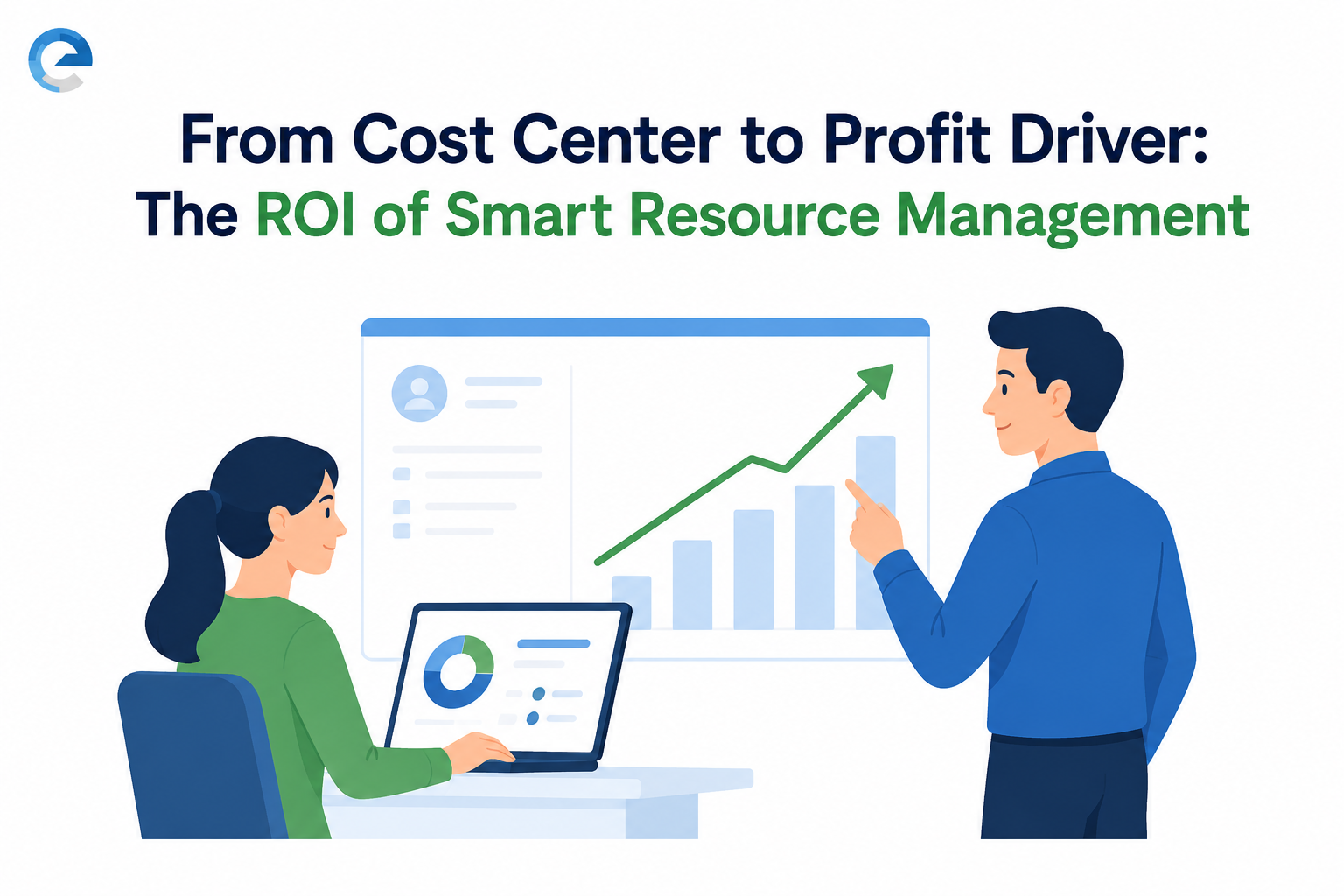
Most leadership teams don’t lose sleep over how resources are allocated. They lose sleep over missed deadlines, cost overruns, and the nagging feeling that the team isn’t operating at full capacity. What they often don’t realise is that all three of these problems trace back to the same root. How work is planned, assigned, and tracked at the resource level.
Resource management has a long-standing reputation as administrative overhead. Scheduling tools, capacity spreadsheets, utilization reports, it all sounds like back-office busywork. But here’s what the framing misses: every hour of bench time, every misaligned hire, and every project delay is a financial event. When you add it all up, the cost of poor resource management software decisions isn’t a line item. It’s a drag on your entire delivery engine.
This piece is about reframing that conversation. Resource management isn’t overhead. When it’s done well, it’s one of the cleverest levers you have for improving profitability, accelerating delivery, and making smarter workforce decisions.
Why is Resource Management Mislabeled as a Cost Center?
The cost-center label didn’t come from nowhere. For a long time, resource planning meant maintaining spreadsheets, sending weekly status emails, and reacting to whoever was loudest in the scheduling queue. It was manual, fragmented, and almost entirely backward-looking. You’d find out a team was overloaded when someone burned out, not before.
Many organizations are still running their planning on disconnected tools, with no single view of who’s available, what skills are in demand, or where the next bottleneck is forming. When the tooling hasn’t changed, the perception hasn’t changed either.
But perception and reality are two different things. The question worth asking isn’t whether your current resource management process looks like overhead. It’s whether it could be doing more. To answer that, you first need to see what unmanaged resources are actually costing you.
The Hidden Costs of Unmanaged Resources
The financial case against poor resource management is not abstract. It shows up in specific, measurable ways across your project portfolio.
Underutilization is the most obvious one. When skilled people sit on the bench between projects, you’re paying for capacity you are not deploying. At the same time, over-allocation on the other end of the spectrum leads to burnout, lower-quality output, and eventual attrition. Both problems often exist in the same organization, in the same quarter, sometimes on the same team.
Then there’s project delay. According to PMI, organizations waste an average of 11.4% of every dollar invested in projects due to poor performance. For a company running a $5 million project portfolio, that’s over $570,000 a year in avoidable loss. Delays caused by resource gaps are a primary driver of that waste.
There’s also the cost of bad hiring decisions. When you can’t see your capacity clearly, you either hire too early (carrying headcount before you need it) or too late (scrambling to fill gaps when projects are already at risk). Both are expensive.
None of this is inevitable. It’s the predictable outcome of running resource decisions on incomplete data. The good news is that a smarter approach changes this picture significantly, and it starts with understanding what ‘smart’ actually means.
What does ‘Smart’ Resource Management Mean in Practice?
Smart resource management is not about adding another layer of reporting. It’s about giving managers the visibility to make better decisions before those decisions become problems. In practice, this means four things:
1. Real-time capacity visibility: You can see, at any point, who is available, when, and at what percentage of their time. Not next week’s estimate. Now.
2. Skill-based allocation: Work gets assigned based on who has the right skills, not just who has an open calendar slot. This matters because utilization without skill-match still produces poor project outcomes.
3. Demand forecasting: You can look ahead at the pipeline and model what resources you’ll need before the need becomes urgent. This is what separates reactive from proactive.
4. Utilization tracking: You can measure, over time, whether your team’s capacity is being used well or whether there are persistent gaps that need addressing.
Resource management software like eResource Scheduler is built around exactly these capabilities. Instead of toggling between spreadsheets to answer basic questions like ‘who is available in Q3 for a mid-sized engagement,’ managers get a consolidated view that makes the question answerable in minutes. The value isn’t the software itself. It’s the decision quality that comes from having the right information at the right time.
Once you have that visibility, the question becomes…
Where the ROI Shows Up: Measurable Returns Leaders Can Track
This is where resource management stops being an operational topic and starts being a financial one. The returns are real, and they show up across several dimensions.
Improved Billable Utilization
For any professional services or consulting-type organization, billable utilization is a direct revenue lever. A 10% improvement in billable utilization across a 50-person team, assuming an average fully-loaded cost of $100,000 per person, translates to recovering roughly $500,000 in previously lost revenue capacity. This math works whether your team is internal or client-facing.
Fewer Project Delays
Project delays cost money in two directions: internal cost overruns and external penalties or client dissatisfaction. When you can match the right people to projects before gaps form, you eliminate a major source of schedule risk. Resource management is one of the hardest processes to embed in an organization. The ones who crack it ship faster.
Better Workforce Decisions
When you have demand forecasting built into your planning processes, you hire based on what the pipeline actually requires, not what you think you might need. This prevents both premature headcount additions and the costly scramble for hiring contractors during emergencies. It also gives you a factual basis for the conversation when a permanent hire makes more sense than a contract role.
Leadership Confidence from Data
Reporting and visibility aren’t just operational conveniences. They change the quality of decisions made in leadership conversations. When a project sponsor asks about delivery risk, a resource manager with real utilization data can give a grounded answer instead of a wild guess. This kind of credibility builds trust and enables faster decision-making at the top.
Knowing ROI is one thing. The harder part comes next.
Making the Case Internally: Shifting the Conversation with Leadership
If you’re the person responsible for resource management, you’ve probably sat in a budget conversation where the discussion was about cutting costs, not investing in visibility tools. Here’s a framework that tends to move that conversation:
1. Start with a number, not a feature. Don’t open with what the tool does. Open with what poor resource visibility is costing the organization right now. Make the cost of the status quo visible before you propose anything.
2. Then reframe the investment. You’re not asking for a scheduling tool. You’re asking for the ability to make workforce decisions with data. A CFO knows the difference between a decision based on information and one made without it.
3. Finally, tie it to the revenue. If your team’s capacity translates to delivered projects, and it does, then better capacity management is a revenue conversation, not just a cost one.
This reframe is the heart of everything covered here.
Conclusion
Resource management is not a cost center; it never was. The overhead reputation came from a version of the practice that was reactive, manual, and disconnected. What it can be, with the right approach and the right tooling, is a multiplier for delivery capacity and margin.
Organizations that treat resource visibility as a strategic input, not an administrative task, make better hiring decisions, deliver projects with fewer delays, and enter leadership conversations with data instead of approximations. That’s not a competitive edge. It’s a structural advantage that compounds over time.
The question isn’t whether smart resource management produces returns. The data is clear that it does. The question is whether you’re capturing these returns or leaving them on the table.


Image Source: Optisearch.co.uk (client website)
The most expensive PPC problem is not always a high cost per click. It is paying for activity that never had a realistic chance of becoming good business. A Bristol company can generate plenty of traffic and still struggle if its campaigns attract the wrong service requests, low-value searches or customers outside the intended area.
Lead quality improves when paid search is designed around intent and operational fit. That means deciding which jobs or customers are worth pursuing, how far the company is prepared to travel, which searches indicate genuine buying intent and what information the landing page must provide before someone contacts the business.
Start with profitable search intent
Paid search in Bristol works best when campaigns are built around the jobs, customers or purchases the business actually wants. High-intent queries should be separated from research terms so budgets can be directed toward searches with a realistic path to revenue.
Search-volume estimates are useful, but they should not overrule commercial judgement. A smaller group of precise queries can outperform a larger set of broad terms when lead quality matters.
Control geography carefully
Location settings should reflect where the business can genuinely serve customers in and around Bristol. Broad radius targeting can spend money on areas that are technically nearby but operationally inconvenient.
Review location reports regularly and exclude regions that repeatedly create unsuitable leads. Local wording on landing pages should also match the areas being targeted.
Use negative keywords as a quality filter
Negative keywords are one of the simplest ways to protect a budget. They remove searches for jobs, training, free information, unrelated products or other patterns that repeatedly fail to create value.
This list should grow from real search-term data. A campaign is stronger when exclusions are based on evidence rather than assumptions made before launch.
Match ads to the landing page
The promise in the ad should be visible immediately after the click. If the ad focuses on a specific service, the landing page should explain that service rather than sending visitors to a generic homepage.
Clarity is especially important on mobile. Contact details, service coverage, trust signals and the primary action should be easy to find without excessive scrolling.
Track the actions that matter
Conversion tracking should capture calls, forms, bookings or other meaningful actions, not just page views. Where possible, the business should also record whether each enquiry was qualified and whether it became revenue.
That extra layer turns campaign optimisation from a cost-per-lead exercise into a lead-quality exercise.
Ask how the campaign will be managed
Businesses comparing a Optisearch should ask how search terms, bids, budgets, locations, landing pages and conversion data will be reviewed. The management process matters more than the label on the service.
There should be a clear rhythm for account changes, testing and reporting rather than random adjustments made only when performance drops.
Protect budget during learning
Early campaign data is valuable, but it can also be noisy. Budgets should be large enough to learn while still being controlled tightly enough that poor search themes do not consume disproportionate spend.
Test one meaningful change at a time when possible. If targeting, bidding, ads and landing pages all change together, the team loses the ability to learn which change helped.
Connect marketing with sales feedback
The people answering calls or reviewing forms often know more about lead quality than the advertising dashboard. Their feedback should be incorporated into campaign decisions.
If a certain keyword produces many contacts but few suitable opportunities, that information should influence bids, exclusions and landing-page messaging.
Review the provider, not just the account
A specialist such as PPC agency Bristol should be evaluated on access, transparency and the quality of its decision-making. Businesses should know who controls the account, who owns the data and how recommendations are justified.
Good management should become easier to understand over time, not more mysterious.
Build a repeatable monthly review
A monthly review should cover spend, search terms, qualified leads, cost per suitable enquiry, geographic performance and landing-page issues. It should end with a short list of actions and owners.
This keeps paid search focused on continuous improvement rather than chasing every short-term fluctuation.
Choosing the right partner
When comparing providers, review Optisearch alongside the wider service model, then assess PPC agency Bristol on transparency, measurement, access to data and the quality of the improvement process.
Practical checklist before investing
- Define the services and locations in Bristol that matter most commercially.
- Confirm which calls, forms, bookings or sales will count as meaningful conversions.
- Make sure the website explains the offer clearly on mobile as well as desktop.
- Keep access to core analytics, advertising and tracking accounts wherever possible.
- Review lead quality with the people who handle enquiries, not only with marketing dashboards.
- Agree a regular review rhythm and record the reason behind major campaign changes.
Final perspective
For Bristol businesses, PPC performs best when lead quality is visible and every major account decision can be linked to evidence. Better results usually come from sharper targeting, stronger landing pages, disciplined exclusions and faster feedback from the sales team.
Prepared as original editorial content for the listed publication.
Score leads after the click
PPC optimisation becomes much stronger when the business assigns a simple quality score to enquiries. A three-level system—strong fit, possible fit and poor fit—is often enough. The score can reflect service type, location, urgency, budget or any other factor that genuinely affects commercial value.
Over several weeks, compare those scores with the search terms and campaigns that created them. This can expose cases where a low-cost keyword is actually expensive because most of its leads are unsuitable, while a higher-cost term produces fewer but much stronger opportunities.
Keep account structure understandable
Complex account structures can make analysis harder without improving results. Separate campaigns when there is a clear reason, such as different service categories, locations, budgets or conversion goals. Avoid splitting activity so finely that each campaign receives too little data to learn from.
A clean structure also makes reporting easier for non-specialists. Managers should be able to see where budget went, what type of demand it produced and which actions are planned next without having to interpret dozens of tiny campaign segments.

Exercise makes your muscles feel exhausted, but that’s not all it does. Strength Training has a variety of changes happening within the muscles that last long after the workout is done. Knowing the changes that occur during this recovery period can aid you in training better, promoting muscle development, and ensuring that your workout routine is more sustainable.
Recovery is a biological process that continues to be active from fatigue to muscle protein repair. Let’s take a look at what happens in your muscles after exercise and how you can help them in each phase.
1-Your Msucle Experience Temporary Stress
Resistance training involves repeatedly contracting muscles against resistance. This results in metabolic stress and mechanical tension, especially when doing challenging sets, or exercises your body has never performed.
The body will start to repair and remodel. Evidence suggests that challenging resistance training may lead to a decrease in muscle power shortly after exercise and cause their muscles to become sore for several hours or days after training.
2-Muscle Protein Synthesis (MPS) switches on
Your muscles are more responsive to the nutrients, especially amino acids from dietary protein, after training. Resistance exercise promotes growth/repair of muscle proteins through muscle protein synthesis.
Imagine the exercise is the signal and rebuilding is construction. Training is the stimulus and good nutrition and rest are the resources which are provided for the body to respond to the stimulus.
It’s not always necessary to eat protein after your last rep. Available evidence indicate that total daily protein intake and regular nutrition are significant but the exact timings of nutrition around exercise do not seem to be as significant as previously believed.
3-Soreness May Appear Later
Delayed muscle soreness is one of the most obvious components to recovery. You might feel fairly normal right after exercise, but the following day or day after exercise you might feel more uncomfortable.
This is because the body’s reaction to a new or challenging physical activity is not immediate, but gradually builds over time. Soreness is not a good indicator of muscle development or training session effectiveness. In fact, research on protein supplementation has shown that protein can be beneficial in some ways to muscle recovery without the need to completely remove the muscle soreness from the exercise.
4-Your Muscles Rebuild and Adapt
Recovery is more of a process to get back to the normal muscle state. When you exercise with proper training, nutrition and rest, your body adjusts and accommodates the exercise session that will allow you to handle future sessions more efficiently.
These changes may lead to a greater strength, muscular endurance and muscle size with repeated training sessions. This is why more exercise is not necessarily good. The muscle requires sufficient recovery periods in order to be able to react to the training stimulus.
5-Nutrition Provides the Building Blocks
Eggs, dairy products, fish, poultry, legumes, soy, nuts and seeds are all a good source of protein.
Muscle Recovery Supplements may be convenient for those who can’t get all the nutrition they need from food. But supplements should be used in addition to a well-balanced diet.
There is also recent evidence that properly designed plant-protein preparations can aid in muscle recovery if the proportion and the composition of amino acids are sufficient and optimal.
6- Hydration and Sleep Matter too
Nutrition alone is not enough to promote recovery of the muscle. Fluids are necessary to maintain normal body function during and after exercise, and sleep is a necessary and important time for recovery.
Rather than a single “perfect” recovery technique, think about the whole package: plenty of eating, good fluid intake, proper rest, smart training volume and rest days.
A recent study from 2026 on hydration and recovery after heavy resistance training reiterates the interest in the possible interactions between hydration status and sleep and recovery after high-intensity resistance training.
7. Recovery Supports Your Overall Wellness
Great muscles can help you in so many ways other than the gym! By incorporating regular physical activity into a healthy lifestyle, which may include healthy eating, rest, stress management and taking care of your heart, you can improve your heart health.
Final Thoughts
Following exercise, your muscles are in a recovery, rebuilding and adaptation phase. Fatigue and soreness may be experienced temporarily, and the body’s response to training is increased muscle protein synthesis. All of these—protein, water, sleep and proper rest—play a role in this process.
Knowing what recovery is can alter your approach to exercising. Don’t think of rest as time not spent advancing, think of rest as a part of the training process. If you’ve found that some exercises are more difficult than others, there’s a good chance that your muscles will get stronger and more resilient over time if you do them all with the right recovery techniques.
Business
Cotswold Landlords Face a New Compliance Test: What the Council’s Civil Penalty Policy Means in 2026


For landlords working with letting agents in Tetbury, the focus on compliance has moved beyond simply understanding the Renters’ Rights Act. With the main tenancy reforms now in force, local enforcement is becoming an increasingly important consideration. Cotswold District Council is updating its Private Sector Housing Civil Penalties Policy to reflect the new powers and duties introduced by the Act.
The change matters because the new rules are not just about giving tenants additional rights. They also give councils a stronger framework for enforcement, making it increasingly important for landlords to understand what is expected of them and how breaches could be dealt with.
Why Cotswold landlords are paying attention
Cotswold District Council’s Cabinet has been considering an updated Private Sector Housing Civil Penalty Policy, specifically to reflect changes introduced by the Renters’ Rights Act 2025. The item was scheduled for Cabinet determination on 10 September 2026.
The council’s own information confirms that Phase 1 of the Renters’ Rights Act began on 1 May 2026, bringing the core tenancy reforms into effect. Further measures, including the private rented sector database and landlord ombudsman, are expected from late 2026.
For landlords, this creates a clear shift: compliance needs to be considered as an ongoing management responsibility rather than something dealt with only when a tenancy begins.
Section 21 is no longer a fallback option
One of the most significant changes is the end of Section 21 “no-fault” evictions under the new tenancy regime.
Previously, Section 21 allowed landlords to recover possession without having to establish a specific fault by the tenant. With the reforms now in effect, landlords must rely on the appropriate legal grounds and follow the correct possession process.
That means decisions such as selling a property, moving back into it or dealing with serious tenancy issues need to be approached through the relevant legal route.
The practical lesson is simple: landlords should not treat possession as an informal process.
Before taking action, it is worth checking:
- Whether a valid possession ground applies.
- Whether the required evidence is available.
- Whether the correct notice has been used.
- Whether all relevant tenancy and property requirements have been met.
- Whether the correct procedure has been followed.
Errors can create delays, additional costs and potential disputes.
What does the civil penalty policy mean?
A civil penalty policy provides the council with a framework for determining how certain housing law breaches may be dealt with.
Cotswold District Council already publishes information on civil penalties and enforcement relating to private rented housing. Its guidance also highlights the council’s responsibilities around housing standards, property safety and landlord obligations.
The policy update is therefore significant because it brings the council’s enforcement approach into line with the new legal framework.
For landlords, this reinforces the need to keep accurate records and demonstrate that reasonable steps have been taken to comply with their obligations.
Compliance is about more than evictions
It would be a mistake to view the changes solely through the lens of Section 21.
Cotswold landlords also need to keep areas such as the following under review:
- Property safety and housing standards.
- Gas and electrical safety requirements.
- Smoke and carbon monoxide alarm requirements.
- EPC obligations.
- Right to Rent checks.
- HMO licensing where applicable.
- Required notices and tenancy documentation.
- Repairs, maintenance and property condition.
Cotswold District Council states that private landlords are responsible for ensuring their properties are safe and free from health hazards.
How landlords can reduce compliance risks
The best response to increased enforcement is preparation.
Landlords should consider carrying out a compliance health check across their portfolio rather than waiting for an issue to arise. Reviewing property documentation, safety certificates, tenancy records, inspection histories and notice procedures can identify problems before they become more expensive.
This is also where experienced local management can add value. A professional letting agent can help landlords keep documentation organised, monitor tenancy obligations and provide practical support when legislation changes.
For landlords in Tetbury and across the Cotswolds, the message from the latest council activity is clear: understanding the rules is only the starting point. Being able to demonstrate compliance is becoming just as important.
As enforcement policies develop alongside the Renters’ Rights Act, landlords who review their processes now can put themselves in a stronger position to manage tenancies confidently and reduce avoidable legal and financial risks.

A Practical PPC Framework for Bristol Companies That Want Better Lead Quality

6 Best Lodges For Sale: Find Your Perfect Retreat

Unlocking the Best Deals with Rayslocker: Your Ultimate Guide to Affordable Shopping

Maximizing Utility and Security: The Ultimate Guide to UTE Tool Boxes

How to Read a Property Report Like a Pro

What Happenes to Your Muscles After a Workout? Understanding the Recovery Process

The 15 Highest-Paid Rugby Players in the World

Christopher Dare: The Untold Story of Engineer and Former Husband of Angela Rippon

How to Ensure Your Home is Valued Correctly for a Quick Sale

What Is Fanquer? The Digital Creator Platform Transforming Direct-to-Fan Engagement

Dr Jared Ross: Missouri Appeals Court Upholds Protection Order Over Graphic Torture and Murder Threats

Nancy Hallam: The Inspiring Life, Career, and Success Story Behind Ian Wright’s Wife
The 15 Highest-Paid Rugby Players in the World
Christopher Dare: The Untold Story of Engineer and Former Husband of Angela Rippon
How to Ensure Your Home is Valued Correctly for a Quick Sale
What Is Fanquer? The Digital Creator Platform Transforming Direct-to-Fan Engagement
Dr Jared Ross: Missouri Appeals Court Upholds Protection Order Over Graphic Torture and Murder Threats
Nancy Hallam: The Inspiring Life, Career, and Success Story Behind Ian Wright’s Wife
-
 Sports4 months ago
The 15 Highest-Paid Rugby Players in the World
-
Celebrity10 months ago
Christopher Dare: The Untold Story of Engineer and Former Husband of Angela Rippon
-
 Real Estate8 months ago
How to Ensure Your Home is Valued Correctly for a Quick Sale
-
 Technology4 months ago
What Is Fanquer? The Digital Creator Platform Transforming Direct-to-Fan Engagement
-
 Celebrity4 months ago
Dr Jared Ross: Missouri Appeals Court Upholds Protection Order Over Graphic Torture and Murder Threats
-
Celebrity11 months ago
Nancy Hallam: The Inspiring Life, Career, and Success Story Behind Ian Wright’s Wife
-

 Health8 months ago
Enclomimed 25 (Enclomiphene) – Effective PCT Protocol
-
 Celebrity10 months ago
Who Is Maisie Mae Roffey? The Private Life, Family Story, and Quiet Success of Julie Walters’ Daughter