
Business
How to Start a DTF Printing Business?

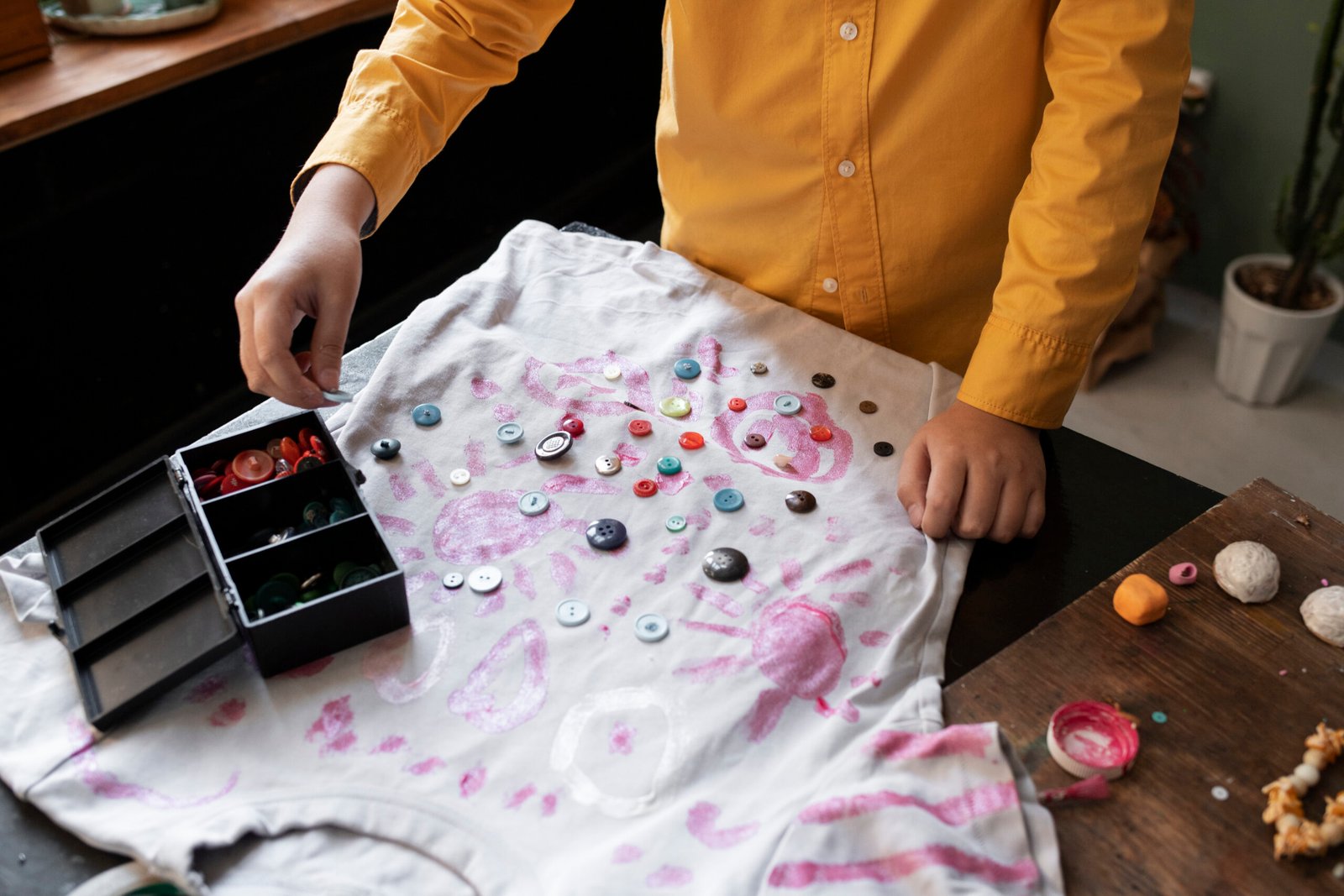
DTF printing is becoming popular in the custom clothing market. It’s used to print designs on T-shirts, hoodies, bags, uniforms, and other cloth products. DTF printing is easy to understand and may be a great enterprise for a novice.
To begin a DTF printing business, one should have the appropriate printing machine, quality printing materials, and a basic business plan. What your customers want has to be understood as well. This guide will help you step-by-step get started with your own DIY DTF printing business.
Learn About DTF Printing
The first thing you need to do is to understand the process of DTF printing. Direct to Film (DTF) is a printing method. This technique involves printing a design on a specially designed film. DTF ink is used to print the design.
A special powder is applied to the film after printing. This powder aids the design in adhering to the fabric. The design is then heated and transferred to the shirt or other product.
The positive side of DTF printing is that it can be used on various types of fabric. It can be applied to cotton, polyester, and mixed fabrics. This provides you with numerous products to sell.
Choose Your Products
If you’re considering a purchase, determine what you’ll be selling. A popular product for DTF printing is T-shirts. Hooded sweatshirts, hoodies, bags, work clothes, sports clothes – all can be printed on these.
Consider your customers! You may want to sell custom shirts to individuals. You can also collaborate with small fashion brands, schools, restaurants, sports teams, and local businesses.
Don’t sell everything; start with a few products.
Choose a Good DTF Printer
One of the most crucial elements of a DTF company is its printer. If a printer is good, it can provide you with clear designs and bright colors.
Consider the printer’s speed, size, ink type, and maintenance requirements when selecting a printer. Make sure that there is an easy supply of spare parts and support.
You can check the equipment of companies like DTF LINKO. Research various machines and select the appropriate machine for the business.
When starting, it is not always necessary to have the largest machine. A smaller machine will work for a new business.
Compare DTF Printers for Sale
When it comes to DTF printers for sale, there are numerous choices available in the market. Don’t purchase a printer for a low cost. First, see what the machine can do.
Check the quality and speed of printing. Confirm its ease of cleaning and maintenance. Don’t forget to consider the price of ink, as well as other components.
Consider your future business too! If more orders are expected later, make sure that the machine is capable of more work.
With the right printer, you can save time and improve the quality of your products.
Buy the Basic Equipment
Having a DTF printer is not all that is needed to begin a business. Other tools and materials will be required, too.
A DTF transfer sheet, DTF ink, DTF powder, a DTF heat press, and a computer might be required. There is also software that you are going to need to create your designs prior to printing.
There are also some businesses that use a powder shaker and curing machine. Your printing process and the size of your company will determine your equipment needs.
Compile a list of all of the items you need before you begin purchasing. This will give you an idea of your overall expense.
Learn How to Make Designs
No one needs to be a professional designer to get into the DTF industry. However, design skills can be of great help.
Understand how to resize an image and extract the background. It’s also important to know how to create a design for printing.
There are numerous simple design tools that can be found on the web. Begin with easy designs and practice frequently.
Well-designed products can make your products more appealing to customers.
Practice Before Taking Orders
Wait a while before placing large orders. Make some test prints first.
Print various designs on various pieces of cloth. Look at the colours and information. Next, stamp the designs onto T-shirts or other products.
Wash the printed products and see how they look after washing. A well-produced DFTS print should be free of peeling and cracking.
Using it will help you familiarise yourself with your equipment and help you prevent any errors when you begin to receive orders from customers.
Make Sample Products
A newer printing company will find samples to be extremely handy. Produce several T-shirts and other articles.
Make use of various designs and colors. Take photographs of the finished products.
These photos may be posted on social media. You can also display them for businesses and clothing brands in your locality.
Consumers are more inclined to place orders when they can see your work.
Set Simple and Fair Prices
Before deciding on the price, add up your expenses. Add the price of the shirt, the ink, film, powder, electricity, packaging, etc.
Subtract your cost and then add your profit.
Never simply duplicate a competitor’s price without taking the time to compare your price. The cost of running a business is different for all businesses.
Discounts are also available for bulk orders. For instance, if a customer orders 50 shirts, he may receive a reduced per-shirt rate than if he orders just one shirt.
Promote Your Business Online
Marketing plays an essential role in a new DTF printing company. Using social media is a great way to connect with new customers without breaking the bank.
Make pages on sites where your customers hang out. Post pictures and short videos of your products.
The printing process, the design before printing, and the final piece of the T-shirt after pressing can be displayed. These videos may assist individuals in understanding your service.
Try to reach local shops, schools, restaurants, sports teams, and small businesses. There are many businesses that require uniforms and promotional garments to be printed.
Give Good Customer Service
Providing good customer service can ensure that you receive repeat orders. Be sure to listen to your customer and verify order information.
Review design, size, colour, and quantity prior to printing. This can be a method to prevent errors.
Make an effort to fulfill orders promptly. Notify the Customer early if there is a delay.
If they’re happy, they’ll order again, and they may even tell others.
Keep Your Printer Clean
Smooth running of DTF printing is of great importance. Follow the manufacturer’s instructions for printer cleaning.
Maintain an ink system. Regularly inspect the print head and other critical components.
Printing problems can occur due to poor maintenance. It can also add to your expenses in case of machine repair.
A clean and well-maintained printer will perform better and produce consistent results.
Start Small and Grow
To start a DTF printing business, no big factory is required. You can start with a basic system and a number of starter products.
The more customers you obtain, the better equipment you can purchase and the more you can produce.
Additional products can be added at any time. For instance, one can begin with a T-shirt and then move on to hoodies, bags, uniforms, and even other custom products.
You start small, so you don’t risk your life too much.
Final Thoughts
A DTF printing enterprise might be a great option for those seeking to dive into the world of custom apparel. When you learn the process step by step, it’s easy to watch how it works.
First and foremost, understand how DTF printing works. Select your products and purchase your gear. Research DTF printers and find the one that meets your budget and the number of orders you are expecting.
You can establish a thriving DTF Printing Company over time with the appropriate materials, clean printing, easy designs, fair prices, and excellent customer support.



A hoodie hardly ever dies in one piece. Something small goes first — a drawcord that slid out somewhere in the wash, a cuff that stopped springing back, a pocket corner that opened up maybe an inch. The fleece across your chest is usually fine, which is exactly what makes it irritating, and it’s also why a $90 hoodie from Tyler The Creator Merch can see out two winters or five depending on about four habits nobody ever thinks about.
And the places that take nearly all the punishment aren’t the panel people inspect when the parcel opens.
The cord is the first thing you’ll lose
Pull one side to snug the hood and the other side gets shorter. Do that a couple of hundred times over a year and the cord walks through the eyelets until the tips sit wildly uneven, and then one morning the short end disappears into the channel altogether, and you’re standing there holding a single tail.
Fishing it out is a twenty-minute job with a safety pin and some swearing. Leave it, and the hood never sits properly again.
Both of those are avoidable. Tighten the hood by taking both cords together and pulling from the center point under your chin, so nothing travels through the channel. And tie a loose overhand knot about an inch behind each tip — the knot can’t pass the eyelet, so the cord can’t vanish even on the day you forget everything else written here.
Cuffs stretch long before they tear
Ribbing gets knitted under tension and elastane is the thread that pulls it back. Heat is what finishes elastane off. Not in one go — a dryer cycle at a time, 140 °F at a time, until the rib has nothing left to snap back with and the cuff just sits wide on your wrist looking tired while the sleeve above it still has years in it.
Shoving sleeves up to the elbow does its own damage, mostly because people grab the band itself and drag it. Roll the fleece instead.
Most of what keeps a cuff honest costs nothing at all:
- A cold wash, inside out, 85 °F or under, with the hood cords loosely knotted together so they don’t whip around in there.
- A wide hanger taken by the shoulders, or just laid flat on a towel — anything except the dryer, honestly.
- Squeezing the water out of the cuffs and hem instead of twisting them, as most of us do.
- No fabric softener. It coats the cotton and the rib feels slack a lot sooner than it should.
Pocket corners open up where you’d never look
A kangaroo pocket hangs off two short diagonal seams, and whatever you drop in there is carried by about two inches of stitching at each top corner. Phone, keys, a wallet — no problem. Two cold hands jammed in while you’re walking fast pulls sideways on that seam in a direction it was never built to take.
The first sign is one popped stitch right at the top corner. Spot it then and three minutes of hand sewing ends the story. Ignore it for a month, and you’re closing a two-inch gap in fleece that’s already gone out of shape around it.
| Pro Tip: Take a look at both top pocket corners while the hoodie is still damp on the line — a single broken stitch stands out when the fleece is heavy with water, and nearly disappears once it’s dried and been worn again. |
Where the hood joins the body
That seam carries the whole weight of the hood, plus the yank every time you haul the hoodie off over your head — it’s a pullover, so there’s no other way in. More fleece in the hood means more load on the join, which is why the heavier pieces, including a lot of what sits on the Call Me If You Get Lost Hoodie pages, feel wonderful in a Chicago January and are slightly harder on that one line of stitching.
So take it off by the hem, with both hands, lifting straight up — your head comes out last. If you pull a hoodie off by the hood instead, which is what everybody does when they’re in a rush, that seam ends up stretched into a permanent little wave, and no amount of washing settles it back down afterward.
Two winters later
Picture the careless version of a washed black hoodie: cuffs wide, one cord gone, the hem rippled, a pocket mouth sagging open like a letterbox. Nothing on it is actually torn. It just reads finished.
Whereas the looked-after one has faded a bit where the shoulder seams catch the sun, gone softer through the body, and otherwise kept the shape it arrived with — off the same page, at the same price, separated from the other by a knot and a hanger.
So what do you check on day one?
Stretch one cuff and let it go — rib that snaps straight back still has its elastane in it, while rib that drifts back slowly was tired before you ever put the thing on. Then a thumb over both pocket corners, and a peek down the hood channel.
Do it that first evening, rather than two weeks later once you’ve worn it twice and the question gets murky. Returns stretch only to a parcel that shows up broken, or holds the wrong piece, flagged within a week, plus the order number and a photo or two. And nothing gets cancelled after you’ve paid, so read the size chart before you click.
Frequently Asked Questions
My drawcord came out completely. Is it salvageable?
Yes, nearly always. Tape one end of the cord to a long safety pin (a knitting needle works too), push it in at one eyelet and walk it around the channel in short shoves. Most channels run open the whole way across, though they narrow at the back seam, so slow down there.
Does washing it inside out really change anything?
For the front print, yes — the graphic spends the cycle facing away from the drum instead of rubbing against it. For the cuffs it matters less. Temperature is what decides those.
How cold is cold, in practice?
Cold on most American machines lands somewhere around 60 to 80 °F, and that’s plenty. Warm climbs past 100 °F, which is roughly where cotton starts shrinking and the elastane in your cuffs begins giving up on you. Detergent copes fine down there.
Can I iron a stretched cuff back into shape?
Not really. Steam will tighten a rib up for an afternoon, then it relaxes again, because what’s gone is the elastane rather than the shape. Keeping heat away from it in the first place is the only fix that holds.
None of this is really maintenance. A cold wash, a hanger, a knot behind each cord tip, and a glance at two pocket corners now and then. Give it those five minutes and the hoodie you pick out this month is still the one you’re pulling on when the cold comes back around next year.


Most of us know exactly which moisturiser we use. It’s the one we read reviews for, compare prices on, and maybe even treat ourselves to. The face wash is often whatever happens to be on offer in the supermarket.
It’s easy to see why. A moisturiser stays on your skin all day, so it feels like the product is doing the real work. A face wash lasts less than a minute before you rinse it down the sink. But you use it twice a day, every day, and it decides what kind of skin your moisturiser has to work with. Get the two working together, and they both perform better.
What Your Moisturiser Does Best
A moisturiser is a leave-on product, and that’s its great strength. It stays on for hours, so its ingredients have time to work. Humectants like glycerin draw water into the skin, while richer ingredients such as shea butter and plant oils help hold it there, keeping skin soft, smooth and comfortable.
It works best on a healthy skin barrier. That’s the outermost layer of your skin, made of flattened cells held together by natural lipids, a bit like bricks and mortar. On top sits the acid mantle, a fine film that keeps the surface slightly acidic. A well-known 2006 study found that healthy skin’s surface pH is, on average, just below 5, and the enzymes that keep the barrier in good repair work best at that level.
When the barrier is happy, your moisturiser simply tops it up. When it’s been stressed, your moisturiser spends its time playing catch-up.
Why the Wash-Off Step Counts
Cleansing is a short step with a big job. It needs to lift away sunscreen, make-up, oil and the grime of the day, while leaving your skin’s own lipids and that slightly acidic surface where they belong.
The nicest face washes use mild cleansers such as coco-glucoside and lauryl glucoside, made from coconut or palm oil and plant sugars, often paired with coconut-derived cocamidopropyl betaine. They clean thoroughly but softly, which is why you’ll also find them in baby care. Add glycerin and light plant oils like jojoba or argan, and a gentle face wash gives back some of the moisture it lifts away.
Your tap water plays a part too. Much of the UK, including London and the South East, has hard water, the same calcium and magnesium you see as limescale in the kettle. Researchers at the University of Sheffield and King’s College London found that hard water makes some cleansing ingredients harder to rinse off, which can leave skin feeling dry and irritated. A gentle wash and a really thorough rinse go a long way.
Try the Ten-Minute Test
Curious whether your face wash and your skin are getting on? Tonight, cleanse as normal, pat dry and put nothing on. Wait ten minutes.
If your skin feels soft, calm and comfortable, you’ve found a good match. If it feels tight or a little flaky around the nose, it may simply prefer something more hydrating.
| What to look for | Signs of a good match |
| Cleansers | Mild and plant-derived: coco-glucoside, lauryl glucoside, cocamidopropyl betaine |
| Moisture | Glycerin plus plant oils such as jojoba, argan or babassu |
| pH | Close to your skin’s own, slightly acidic |
| Ten minutes later | Comfortable and calm, never tight |
| Moisturiser needed | A normal amount feels just right |
What Ayurveda Brings to the Basin
Ayurvedic skincare has always treated cleansing as care, not a scrub-down. For centuries, it has relied on gentle botanicals such as turmeric, neem, sandalwood, and rose water, chosen to cleanse and soothe at the same time, leaving skin soft rather than squeaky. Ayurveda also matches the cleanse to the person, roughly by dosha:
| Dosha | Skin tends to be | What suits it |
| Vata | Dry, tight in winter | Sesame or almond oil, rose water |
| Pitta | Sensitive, quick to flush | Sandalwood, aloe vera, cucumber |
| Kapha | Oily, easily congested | Neem, multani mitti (Fuller’s earth), tulsi |
Modern science is catching up with plenty of this. Neem and turmeric both show antibacterial and anti-inflammatory activity in lab studies, which is why they show up in so many cleansers for oily, blemish-prone skin. The principle is lovely and simple: choose a face wash for your skin type and keep it gentle.
Choose Your Wash and Moisturiser as a Pair
The easiest way to make your cleanser and moisturiser work together is to choose a set made for the same skin type.
Ayumi Naturals is a good example. Its Ayurvedic face washes are dermatologically tested, vegan and made in the UK, and each one has a matching face cream:
- Dry and sensitive skin: the Hydrating Gentle Face Wash blends jojoba, babassu and sandalwood with glycerin, so skin feels soft rather than tight. It’s a lovely face wash for dry skin.
- Oily and blemish-prone skin: the Oil Control Face Wash combines neem, tea tree, witch hazel and nettle to clear away excess oil, with moringa to keep skin balanced.
- Dull, tired-looking skin: the Turmeric & Vitamin C Brightening Face Wash uses clinically evaluated turmeric with vitamin C, amla and papaya for a fresher, brighter look.
A Few Easy Habits
- Use lukewarm water. Hot water washes away your skin’s natural oils more quickly.
- Thirty to sixty seconds of gentle massage is plenty. Rinse well and pat dry.
- Apply your moisturiser while your skin is still slightly damp to help lock the water in.
- Cleanse in the morning and evening to keep your routine consistent.
Better Together
Your moisturiser stays with your skin all day, so it deserves a good choice. But it can only build on the skin your face wash leaves behind. Choose a gentle, well-matched wash, and your moisturiser gets a head start in the morning and at night.
If your skin often feels tight or never quite comfortable, start with your cleanser. It’s usually the simplest change to make, and your moisturiser will thank you for it.
Business
Core Events Group Delivers Corporate Hospitality in the UK and F1 Belgian Grand Prix Packages


Corporate hospitality gives businesses an opportunity to build professional relationships through memorable shared experiences. From major sporting occasions in Britain to iconic Formula 1 races across Europe, carefully planned events can help companies entertain clients, reward employees and strengthen business connections. For organisations exploring corporate hospitality in the UK or considering F1 Belgian Grand Prix packages, choosing the right experience starts with understanding the audience, objectives and available options.
Corporate Hospitality in the UK Creates Valuable Business Opportunities
Corporate hospitality has become an important part of how businesses engage clients and manage relationships. Sporting events, live entertainment and exclusive experiences provide settings where conversations can develop naturally beyond the usual office environment.
Across the UK, businesses can explore a wide range of hospitality opportunities, including Premier League football, international rugby, horse racing, cricket, tennis and major motorsport events. Each offers a different atmosphere, allowing organisations to choose experiences that suit their clients’ interests and their own business objectives.
Corporate hospitality in the UK can include premium seating, dedicated hospitality areas, dining experiences and access to selected event facilities, depending on the venue and package. These additional elements can make an occasion feel more considered and give guests time to connect before, during or after the main event.
The most effective approach is to match the experience to the guest list. A relaxed sporting occasion may suit long-standing clients, while a premium event with carefully planned hospitality may suit senior stakeholders or important prospective partners.
Formula 1 Offers an Exciting Setting for Corporate Entertainment
Formula 1 combines international competition, advanced engineering and a distinctive live-event atmosphere. Its global calendar gives businesses opportunities to entertain guests at some of the world’s most recognisable circuits, each offering its own character and experience.
The Belgian Grand Prix is held at Circuit de Spa-Francorchamps, a circuit renowned for its forest setting, elevation changes and challenging corners. Its location in the Ardennes region of Belgium provides a different backdrop from many city-based sporting events, making it an appealing option for motorsport enthusiasts.
For businesses whose clients have an interest in racing, engineering, technology or international sport, attending a Grand Prix can provide a shared experience that encourages conversation and engagement. The weekend format also allows organisers to plan a wider itinerary around practice sessions, qualifying and the race itself, depending on the event schedule and ticket package.
F1 Belgian Grand Prix Packages Provide Different Ways to Experience Race Weekend
The experience available at a Grand Prix depends on the type of ticket or hospitality arrangement selected. Standard admission can provide access to designated viewing areas, while premium packages may include additional facilities and services.
Businesses researching F1 Belgian Grand Prix packages should compare the precise inclusions rather than relying on package names alone. Options may vary by provider and could include reserved seating, hospitality lounges, food and drink, dedicated viewing areas or other event-related benefits.
Before making a booking, organisers should confirm:
- The exact dates and duration of access.
- Whether the package includes race-day admission only or access across the weekend.
- The location of seating or hospitality facilities.
- Food, drink and other services included in the price.
- Transport, accommodation and transfer arrangements, if offered.
- Booking conditions, cancellation terms and any age or access restrictions.
These checks help businesses choose a suitable experience and understand what guests can expect. Availability and inclusions can change between events and providers, so current details should always be confirmed before committing to a package.
International Motorsport Hospitality Supports Stronger Client Relationships
Taking clients to an international sporting event can create a different dynamic from a conventional business meeting. The shared interest in the competition offers a natural starting point for conversation, while time spent travelling or attending the event together can provide further opportunities to strengthen relationships.
However, successful corporate entertainment involves more than selecting a prestigious event. Businesses should consider travel times, guest preferences, accessibility and the overall schedule. A well-organised itinerary helps guests focus on the experience rather than the practical arrangements.
For international events, planning should also account for accommodation, local transport and the distance between hotels, hospitality facilities and the circuit. Spa-Francorchamps is located outside major Belgian city centres, so travel arrangements deserve particular attention.
Organisers should also consider whether guests would benefit from additional activities before or after the race. Any extended itinerary should be planned around confirmed event timings and the services actually included in the booking.
Core Events Group Helps Businesses Explore Premium Sporting Hospitality
Core Events Group specialises in corporate hospitality and sporting experiences, helping businesses explore opportunities to entertain clients and create memorable occasions. Its focus on tailored experiences and access to sporting events makes it relevant to organisations looking beyond standard admission when planning corporate entertainment.
Businesses considering corporate hospitality in the UK can compare different sports and events according to their objectives, audience and budget. Those interested in international motorsport can also investigate F1 Belgian Grand Prix packages to understand which options may be suitable for their guests.
As package availability and inclusions vary, businesses should confirm current event access, hospitality facilities and booking terms directly with the provider before making arrangements. This helps ensure the selected experience aligns with the expectations communicated to invited guests.
Careful Planning Makes Corporate Hospitality More Effective
A clear objective helps businesses make better hospitality decisions. Whether the priority is strengthening existing relationships, welcoming new clients or recognising employees, the event should provide an experience that feels appropriate for its audience.
Budgeting should include the full cost of attendance, not just the ticket price. Depending on the arrangement, transport, accommodation, meals and other expenses may need to be considered separately. Businesses should also allow time to coordinate invitations and confirm guest requirements.
For major sporting occasions, researching options early can help organisers understand the range of experiences available. It is equally important to verify official event dates, package details and access arrangements before confirming plans.
Memorable Sporting Experiences Add Value to Business Engagement
Corporate hospitality in the UK gives businesses access to a varied calendar of sporting and entertainment experiences. International events such as the Belgian Grand Prix can extend those opportunities, particularly for companies whose clients appreciate motorsport and premium live experiences.
With a clear purpose, suitable arrangements and attention to detail, hospitality can help businesses create memorable occasions that support meaningful professional relationships. Core Events Group provides a starting point for exploring corporate hospitality and sporting experiences, while checking current availability and package terms ensures each booking is based on confirmed information.

A Better Weekend Viewing Plan Starts Before You Pick Up the Remote

How to Choose a Divan Bed for a Stylish, Clutter-Free Bedroom

London in November: Where to Go When the City Feels Like It’s Waking Up

Drawcords, Cuffs and the Parts That Go First

How Mobile Apps Are Changing Entertainment for People on the Move

9 Best Christmas Party Venues In Durham And Best Way To Book Them For 2026 & 2027

How to Ensure Your Home is Valued Correctly for a Quick Sale

Christopher Dare: The Untold Story of Engineer and Former Husband of Angela Rippon

The 15 Highest-Paid Rugby Players in the World

What Is Fanquer? The Digital Creator Platform Transforming Direct-to-Fan Engagement

Dr Jared Ross: Missouri Appeals Court Upholds Protection Order Over Graphic Torture and Murder Threats

Nancy Hallam: The Inspiring Life, Career, and Success Story Behind Ian Wright’s Wife
How to Ensure Your Home is Valued Correctly for a Quick Sale
Christopher Dare: The Untold Story of Engineer and Former Husband of Angela Rippon
The 15 Highest-Paid Rugby Players in the World
What Is Fanquer? The Digital Creator Platform Transforming Direct-to-Fan Engagement
Dr Jared Ross: Missouri Appeals Court Upholds Protection Order Over Graphic Torture and Murder Threats
Nancy Hallam: The Inspiring Life, Career, and Success Story Behind Ian Wright’s Wife
-
 Real Estate9 months ago
How to Ensure Your Home is Valued Correctly for a Quick Sale
-
Celebrity12 months ago
Christopher Dare: The Untold Story of Engineer and Former Husband of Angela Rippon
-
 Sports6 months ago
The 15 Highest-Paid Rugby Players in the World
-
 Technology5 months ago
What Is Fanquer? The Digital Creator Platform Transforming Direct-to-Fan Engagement
-
 Celebrity5 months ago
Dr Jared Ross: Missouri Appeals Court Upholds Protection Order Over Graphic Torture and Murder Threats
-
Celebrity12 months ago
Nancy Hallam: The Inspiring Life, Career, and Success Story Behind Ian Wright’s Wife
-

 Celebrity8 months ago
Who Is Azriel Crews? Inside the Life and Career of Terry Crews’ Daughter
-
 Celebrity12 months ago
Who Is Maisie Mae Roffey? The Private Life, Family Story, and Quiet Success of Julie Walters’ Daughter