
Tech
Best Transaction Monitoring for Payment Service Providers


Payment service providers need a transaction monitoring platform that can hold up under high, uneven transaction volume without slowing settlement, give compliance teams direct control over rules and scenarios, and produce alerts and investigations that stay defensible as volume grows. Flagright’s real-time monitoring, no-code rule and scenario configuration, AI-assisted investigation workflow, and explainability architecture are built around this exact combination. This guide breaks down the specific risk and scaling pressures PSPs face and evaluates what to look for in monitoring speed, rule configurability, alert quality, investigation workflow, and explainability.
Why PSPs Face a Different Monitoring Problem Than Banks
Payment service providers sit in a structurally different position than a bank or a single-product fintech. A PSP typically processes transactions across multiple products at once, card processing, open banking rails, bank transfers, digital wallets, and payout orchestration, often for many underlying merchants or platform customers rather than a single retail customer base. Volume is uneven by nature: a PSP’s transaction count can spike sharply around a merchant’s promotional event, a payout cycle, or a seasonal surge, with no advance warning to the compliance team.
This creates three specific pressures that a generic AML buying checklist does not capture well.
Volume without margin for delay. PSPs operate on thin per-transaction margins at high volume, so a monitoring system that adds latency to the payment flow is not just an inconvenience, it is a direct cost. Monitoring has to happen at the speed of the transaction, not after it.
Alert volume that scales faster than headcount. As a PSP’s merchant base and transaction count grow, alert volume from a poorly tuned system grows with it, often faster than the compliance team can hire. Rules-based systems generic across industries frequently produce false-positive rates over 90%, and for a PSP running that ratio at high transaction volume, the resulting queue overwhelms any reasonably staffed team.
Explainability that satisfies more than one audience. A PSP’s monitoring decisions get scrutinized by bank regulators, but also by card networks, sponsor banks, and sometimes acquiring partners conducting their own due diligence. “The model flagged it” is not sufficient in any of these reviews. Every alert disposition needs a reasoning chain that a non-technical reviewer can follow.
What to Evaluate: Monitoring Speed
Real-time detection is now the baseline expectation for a PSP, not a differentiator, because payment rails increasingly settle in seconds and there is no batch window to catch problems after the fact. Flagright reports sub-second API response times maintained during peak transaction volume, positioned specifically for payment gateways and PSPs handling large transaction volumes under regulatory scrutiny. Industry-wide framing from ComplyAdvantage’s own PSP-focused guidance echoes this same requirement, describing infrastructure that needs to scale to millions of transactions per second so that compliance monitoring never becomes the bottleneck in the payment flow. When evaluating a vendor, ask for documented response-time figures under the specific transaction volume your business runs, not just an average across all customers.
What to Evaluate: Rules and Scenario Configuration
For a PSP running multiple products and merchant types, rule configuration needs to happen fast and without a permanent engineering dependency, because new fraud patterns and new merchant categories appear faster than a development sprint cycle allows.
➡️ Pre-built scenario libraries matter more for PSPs than for single-product businesses. Flagright ships over 100 pre-configured, typology-tagged scenarios covering structuring, rapid fund layering, high-risk geography flags, dormancy-triggered activity spikes, and cross-border anomalies, letting a PSP activate meaningful coverage immediately rather than starting from a blank rule canvas for every product line it monitors.
➡️ No-code configuration removes the engineering bottleneck. Flagright’s rule builder lets a compliance team describe a pattern in natural language, which pre-fills rule logic that the team can adjust and deploy without an engineer at any step. One Flagright customer described implementing new detection rules in minutes instead of weeks. Unit21 offers a comparable no-code rule builder with customizable variables, and G2 reviewers specifically credit its ability to create custom rules and its shadow-mode testing capability, so this is a genuinely contested area between the two platforms rather than a clear Flagright advantage.
➡️ Testing before deployment reduces the risk of a bad rule reaching production. Flagright’s workflow includes backtesting a new rule against 90 days of historical transactions to see projected alert volume and false-positive rate before it goes live, followed by an optional shadow-mode period where the rule runs against live transactions without generating analyst-facing alerts, so performance can be validated with zero disruption before go-live.
What to Evaluate: Alert Quality
Alert quality, not raw detection sensitivity, is usually the deciding factor for a PSP’s day-to-day operations, because a system that flags everything is functionally the same as a system that flags nothing useful. Flagright’s platform includes rule-performance analytics that flag both under-triggering rules, a red flag if a known typology in your business never generates an alert, and over-triggering rules, where a sudden spike may indicate either an emerging trend or a misconfiguration. The system’s recommendations draw on transaction data trends, historical alert-to-SAR conversion rates, and industry-wide patterns observed across its client base, aimed at keeping alert volume proportional to actual risk as a PSP scales rather than proportional to raw transaction count.
What to Evaluate: Investigation Workflow
For a PSP with a growing alert queue, how efficiently an alert becomes a resolved, documented case determines whether compliance headcount can keep pace with volume growth.
Flagright’s AI Forensics operates natively inside case management, beginning an investigation automatically with evidence, typology matches, and a recommendation before an analyst even opens the case. One named customer, Ieva Staskeviciute, Head of Financial Crime Monitoring, credited the case management workflow with giving clear visibility over actions taken, supporting collaboration between team members, and maintaining a comprehensive audit trail. Flagright’s own materials cite investigations moving up to 90% faster with AI Forensics support, and a separate customer quote describes having nearly eliminated the time spent writing narratives manually, since the system generates them in seconds for analyst review. SAR narratives are generated from live case data and jurisdiction-appropriate templates, with the analyst reviewing and filing rather than drafting from scratch.
What to Evaluate: Explainability
Explainability is the criterion most likely to be treated as a checkbox rather than examined closely, and for a PSP facing scrutiny from regulators, card networks, and sponsor banks simultaneously, that is a mistake. Flagright’s architecture logs every action an AI agent takes, including data retrieved and analysis performed, directly into the case timeline, with any conclusion or risk score accompanied by supporting evidence. AI-generated narratives and recommendations are reviewable and editable by a human investigator before anything is finalized, keeping the ultimate decision under compliance team control. Flagright’s own public framing of this, from its CEO, argues that financial institutions need audit-ready infrastructure combining deterministic systems with generative AI, because every compliance decision must remain traceable and defensible to an examiner. ComplyAdvantage uses comparable language for the PSP segment specifically, describing a “glass box” approach where every decision carries an immutable, full-reasoning audit log, which suggests this bar is becoming standard across serious platforms in this space rather than a unique claim, and a PSP evaluating vendors should ask each one to demonstrate the actual audit trail on a real alert, not just describe the concept.
What to Evaluate: Integration and Scalability
A PSP’s monitoring platform has to sit across multiple payment rails and product types without requiring a separate integration effort for each one. Flagright’s evidence here includes B4B Payments, a payment processor case study describing improved fraud detection and AML monitoring capability alongside a structured onboarding process that included rule migration, enabling the compliance team to manage investigations confidently from the start. Flagright positions its platform as managing AML compliance and risk across card processing, open banking, bank transfers, digital wallets, and payout orchestration on one system, avoiding the fragmentation of running separate tools per product line. On the competitor side, Unit21 has been named a Category Leader in Chartis’s 2026 RiskTech Quadrant for both Enterprise Fraud Solutions and Payment Fraud Solutions, an independent analyst signal worth weighing, and ComplyAdvantage’s Mesh platform, launched in late 2025, unifies customer screening, risk scoring, transaction monitoring, and payment screening in one system, a genuinely comparable consolidation move.
Recommendation
For a PSP prioritizing scalability specifically, meaning the ability to absorb volume growth, new products, and new merchant categories without a monitoring re-platform, the deciding factors are speed under load, how much rule and scenario control sits with the compliance team rather than engineering, and whether the investigation and explainability layer can keep pace with a growing alert queue without proportional headcount growth. Flagright’s combination of sub-second response times, no-code scenario configuration with pre-built typology coverage, and AI Forensics investigation support addresses each of these directly, with the B4B Payments case study as PSP-specific evidence. Unit21 is a legitimate alternative where a PSP’s compliance team specifically values a longer-established no-code rule builder and independent analyst recognition for payment fraud specifically. ComplyAdvantage is worth evaluating where screening data depth and a newly unified Mesh platform matter more to a PSP than transaction monitoring configurability. Any PSP should request a demonstration using its own historical transaction volume and alert data rather than relying on vendor-published averages, since performance at scale is the actual question being answered.
Material Considerations
- Flagright cites uptime figures of both 99.99% and 99.998% in different materials; confirm the current figure directly with the vendor before relying on it in an SLA discussion.
- The 90% faster investigation and 93% false-positive reduction figures cited above are self-reported by Flagright without a publicly disclosed baseline or methodology; ask for the underlying calculation before using these numbers in an internal business case.
- Rules-based systems commonly cited as producing 90%+ false-positive rates is an industry-wide figure, not specific to any single vendor, and actual performance depends heavily on a PSP’s own configuration and tuning.
- Implementation timelines and rule-migration scope for PSPs specifically will vary by how many products and rails are in scope; confirm the scope behind any timeline a vendor quotes.
FAQ
Does a PSP need real-time monitoring, or is near real-time sufficient? This depends on the payment rails a PSP supports. Any rail that settles in seconds, such as instant transfers or many card transactions, effectively requires real-time monitoring, since there is no batch window afterward to catch a problem before funds move.
How many pre-built scenarios does a PSP actually need at launch? This varies by product mix, but a PSP running multiple products, such as card processing alongside bank transfers, typically needs broader scenario coverage than a single-product fintech. Look for a vendor with typology-tagged scenarios specific to each rail or product type you support, rather than one generic scenario set.
What is the difference between shadow-mode testing and backtesting a rule? Backtesting runs a new rule against historical transaction data to estimate what alert volume and false-positive rate it would have produced. Shadow mode runs the rule against live, current transactions without generating analyst-facing alerts, so its real-world performance can be validated before it affects the live queue.
How should a PSP evaluate a vendor’s explainability claims? Ask to see the actual audit trail behind a specific alert disposition during a demo, not just a description of the capability. A credible platform should be able to show what data was reviewed, what reasoning led to a conclusion, and where a human reviewed or adjusted that conclusion.
Can a PSP switch monitoring vendors without disrupting operations? It depends heavily on the migration support offered. Look for vendors with a documented rule-migration process and structured onboarding, since re-creating detection logic from scratch during a vendor switch is one of the more common sources of a coverage gap.



When dust, dirt, grease, and other contaminants are allowed to gather on electrical and electronic devices and equipment over time, this can adversely impact on their performance and reliability.
This helps draw attention to the usefulness of residue-free contact cleaners as a means of removing such deposits without leaving behind unwanted cleaning agents. These cleaners evaporate fast, help bring back conductivity, and help guard against intermittent faults or component failure.
It is also true, however, that contact cleaners aren’t all equally suitable for every application. This guide, then, will take a closer look at how residue-free formulations work, the components they can be used on, and the circumstances in which the use of residue-free contact cleaner tends to make most sense.
A Quick Introduction to Residue-Free Contact Cleaners
Residue-free contact cleaners are specialised solvent-based cleaning products designed to remove dirt, dust, and other contaminants from electrical contacts and electronic components without leaving any film, oily deposit, or sticky residue behind.
A key issue with some general-purpose degreasers or lubricants is that they may leave a protective film on the treated surface. This might not be desirable for certain applications, such as the cleaning of electrical contacts, given that such oily films or other residues may interfere with electrical conductivity, attract further dirt, or affect the operation of sensitive components.
Residue-free contact cleaners are typically non-conductive, offering high dielectric strength. Products in this category also tend to evaporate rapidly, in addition to being compatible with most plastics, rubber, metals, and coatings in modern equipment.
4 Circumstances in Which Residue-Free Contact Cleaners May Be Used
It is typically most appropriate to use residue-free contact cleaners whenever there is a need to clean electrical or electronic components without attracting new dirt, causing electrical shorts, or altering sensitive electrical signals.
This encompasses such applications and circumstances as:
- The Cleaning of Sensitive and Precision Electronics
Film left on the surface of an appliance or component after cleaning can act as an insulator or alter electrical resistance. As a result, data corruption or even device failure may occur.
On printed circuit boards (PCBs), for instance, a residue-free contact cleaner may be used to clear away dust, light oils, or leftover soldering flux without leaving a conductive path.
Such a cleaner can be greatly useful, too, for use on airflow meters, optical sensors, or medical equipment where even a microscopic film might skew readings.
- High-Dust or Industrial Environments
The wet and oily films that traditional sprays leave behind can behave like a magnet for airborne particles.
This is why residue-free cleaners are routinely used on control panels and switchgear, in acknowledgement of the sawdust, metal shavings, or concrete dust that can often be present across factories, workshops, or construction sites.
Power tools can also benefit from residue-free contact cleaners being used on them, given the triggers and battery terminal interfaces on such devices that are often exposed to outdoor dirt and grime.
- High-Voltage or Arc-Prone Components
The residue from standard cleaners can be highly flammable or carbonise in the event of an electrical arc. These can be major causes of concern when it comes to the cleaning of certain vulnerable components.
Relays and switches, for instance, are mechanical pieces that physically open and close, creating tiny sparks in the process. Depending on the specific product chosen, the use of a residue-free cleaner on these items can allow for the removal of oxidation and soot without potentially flammable oils being left behind.
However, it is critical to note that the exact electrical properties and flammability characteristics of contact cleaners vary, with some residue-free formulas being highly flammable. So, users must always check the manufacturer’s technical and safety instructions before use.
Circuit breakers and fuse blocks are further examples of components potentially well-suited to being cleaned with residue-free products. As far as this particular task is concerned, the maintenance of strict dielectric strength and the prevention of voltage leakage are critical priorities.
- Working Around Plastics and Rubber Housing
The tendency for many electrical contacts to be tightly encased in plastic bodies, or sealed with rubber gaskets, highlights another common application for residue-free cleaning products.
However, it is crucial to check first whether the can is explicitly labelled “plastic-safe” or “safe on rubber and plastics”. A contact cleaner being “residue-free” doesn’t automatically mean it won’t react with polymers; it simply means the liquid evaporates quickly without leaving an oily film.
Conclusion: In Certain Contexts, Residue-Free Options Can Be Indispensable
Residue-free contact cleaners can play a valuable role in the maintenance of electrical and electronic equipment. With no significant cleaning film being left behind, the user of residue-free cleaners can trust them to help deliver a clean and dry finish.
A cleaner that leaves no residue can be key to restoring conductivity while minimising the risk of future contamination buildup. Such a combination of qualities can go a long way to reducing the likelihood of recurring malfunctions, extending component life, and supporting the reliable operation of all manner of devices and systems.
Tech
Beyond the Homepage: How Web Development and Business Automation Build a Stronger Online Presence

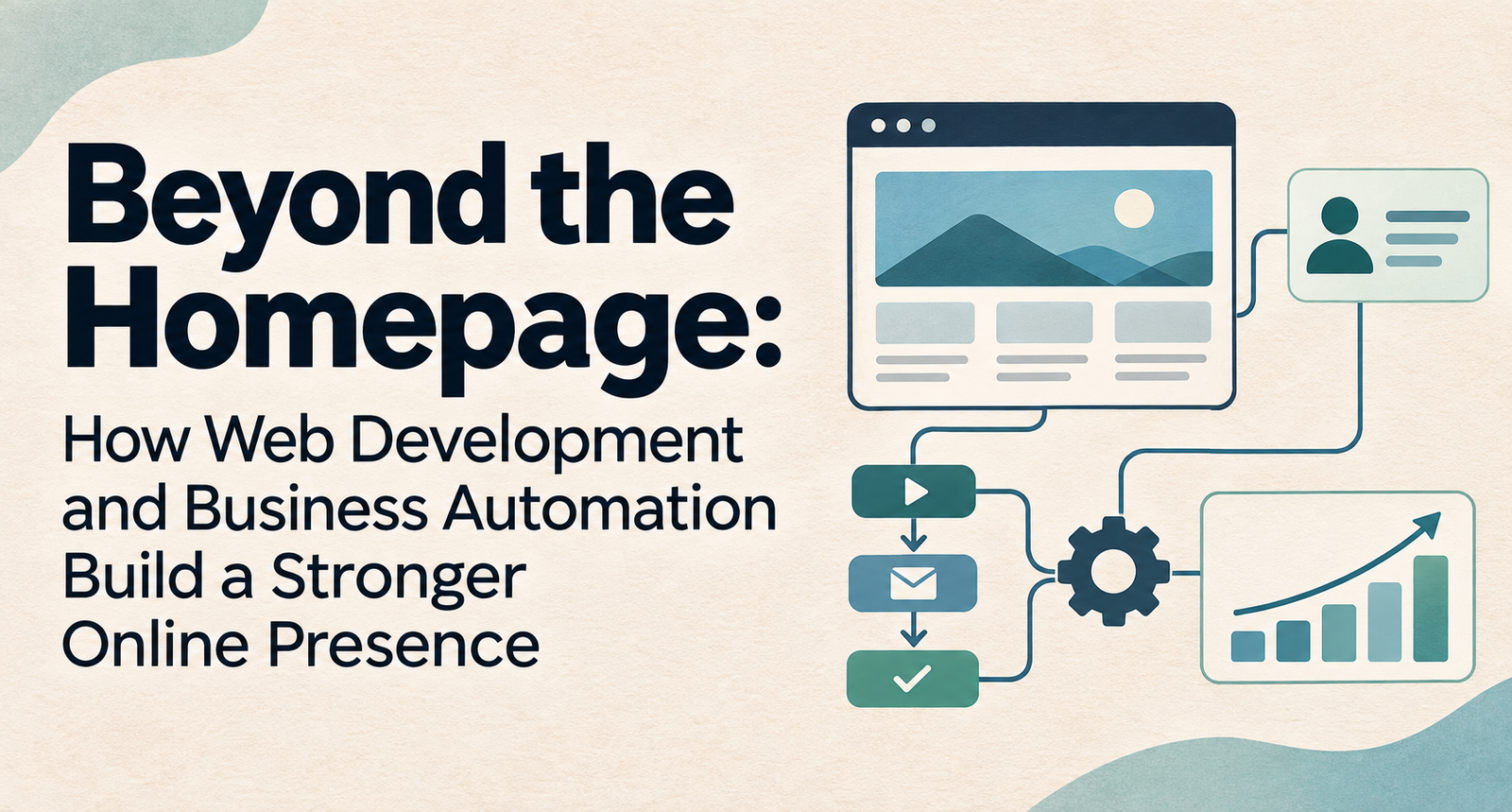
Most businesses judge their online presence by what they can see: the homepage design, the logo, the follower count. Customers judge it by what happens next. Does the page load on their phone in a busy parking lot? Can they find a price, book a slot, or get an answer at 9 p.m. on a Sunday? Or does their inquiry sit in an inbox until Tuesday?
That gap between first impression and follow-through is where many small and mid-sized businesses quietly lose customers. A strong online presence is really two things working together: a well-built website that earns attention and trust, and automated processes behind it that keep the promises the website makes.
This is why more owners are moving away from treating their site as a one-time design project. Working with a website development and digital marketing agency that looks at search visibility, site performance and lead handling as one connected job usually beats hiring separate vendors who never talk to each other.
The same thinking is spreading into industry-specific operations. A driving school, for example, can pair a fast, locally optimized website with driving school management software shaped around its own scheduling, instructor and student workflows. A parent who finds the school on Google can then book a lesson in minutes instead of waiting for a callback.
Below, we look at what each side contributes, where businesses commonly stumble, and a practical way to bring the two together.
Online Presence Is Now a Chain, Not a Page
A decade ago, being online mostly meant having a website. Today, a customer might first meet your business in a Google Maps listing, a review site, a social post, or an answer written by an AI assistant. Each of those touchpoints pulls information from somewhere, and much of it traces back to your website and the systems connected to it.
That makes your presence less like a storefront and more like a chain. Its links include:
- Discoverability: showing up in search results, map packs and AI-generated answers.
- Credibility: consistent business details, genuine reviews and clear service information.
- Responsiveness: how quickly someone gets a reply, a quote or a confirmation.
- Follow-through: reminders, updates and communication after the sale.
Good web development strengthens the first two links. Automation strengthens the last two. A weak link anywhere breaks the whole experience.
What Web Development Actually Contributes
Web development is often confused with web design. Design decides how a site looks. Development decides how it works, and that is what search engines, AI tools and impatient visitors notice first.
A few foundations matter more than any visual flourish.
Speed and mobile performance. Most local searches happen on phones. If a page drags, many visitors leave before they see your offer. Clean code, compressed images and reliable hosting do more for conversions than a clever animation.
Clear structure. Search engines and AI assistants reward sites that are easy to read. That means one clear topic per page, logical headings, descriptive page titles, and structured data, the behind-the-scenes labels that tell Google your hours, location and services.
Trust signals. Secure connections, working privacy policies, visible contact details and real customer stories reassure both people and algorithms that your business is legitimate.
Room to connect. This is the one owners overlook. A site built with forms, booking tools and integrations in mind can pass information straight into your other systems. A site that only displays brochure text becomes a dead end the moment a visitor wants to act.
The Moment After the Click
Plenty of businesses spend heavily to win a visitor’s attention, then hand that visitor to a manual process. A contact form lands in a shared inbox. Someone eventually copies the details into a spreadsheet, calls back, plays phone tag, and finally confirms by text.
Every step in that routine is a chance for the customer to go elsewhere. Business automation closes those gaps by letting routine work happen on its own:
- Inquiries get an instant, useful acknowledgment instead of silence.
- Bookings and payments happen in one sitting.
- Reminders go out without anyone having to remember them.
- Customer details flow into one record instead of five scattered files.
Automation is not about replacing people. It clears away the repetitive tasks that keep your team from the conversations that genuinely need a human, like a hesitant first-time buyer or an unhappy customer.
One Customer Journey, Two Systems Working Together
Picture a homeowner whose air conditioner fails on a hot July afternoon. Here is how a connected setup handles the next twenty minutes and beyond:
- They search for AC repair nearby and find a local HVAC company whose fast, mobile-friendly service page ranks well and answers common questions upfront.
- They tap “Book a visit,” choose a time slot pulled live from the technician calendar, and pay a small diagnostic fee.
- A confirmation arrives by text and email with the technician’s name and arrival window.
- On the morning of the visit, a reminder goes out. After the job, a short message asks for a review.
- That review appears on the company’s profile, strengthening its visibility for the next homeowner who searches.
Notice the loop. The website wins the visit, automation delivers the experience, and the experience feeds back into visibility. Neither half works nearly as well alone.
Where Businesses Commonly Get Stuck
If the combination works so well, why don’t more businesses have it? A few patterns come up again and again.
Tool sprawl. A booking app here, an email platform there, a payment processor somewhere else. Each solves a small problem, but together they create data islands and double entry. Map your customer journey first, then choose tools that connect, rather than adding apps one emergency at a time.
Off-the-shelf mismatch. Generic software often forces a business to bend its process around the tool. That is fine for standard tasks but frustrating for teams with unique workflows. In those cases, custom-built or highly configurable solutions usually pay off over time.
Automating a broken process. Software speeds up whatever you give it, including bad habits. Fix the workflow before you automate it.
Losing the human tone. Robotic messages feel cold. Write automated emails and texts the way your best employee would say them out loud.
This is where an experienced technology partner earns its keep. NewAgeSysIT, for example, builds custom software, mobile apps and AI-driven solutions for businesses, which gives it a practical view of how a public-facing website and internal operations should share data instead of living in separate worlds. The real value of a partner like that is seeing the full chain, not selling a single tool.
A Practical 90-Day Plan
You don’t need a full rebuild to get started. A phased approach keeps costs manageable and shows results early.
Days 1 to 30: Audit. Test your site on a phone, check page speed, and confirm your business name, address and phone number match everywhere online. Then list every manual step between a new inquiry and a completed sale.
Days 31 to 60: Fix the foundation. Tackle the biggest technical issues, sharpen your key service pages, and add a booking or quote form that feeds a calendar or CRM instead of an inbox.
Days 61 to 90: Automate the obvious. Set up instant inquiry replies, appointment reminders and review requests. Track response time and booking rate before and after, so you can see what actually changed.
Once these basics run smoothly, move on to deeper integrations such as online payments, customer portals or reporting dashboards.
Trends Shaping the Next Few Years
AI search is changing discovery. More people now ask AI assistants for recommendations. These tools favor businesses with clear, well-structured and consistent information, which makes solid development work more important than ever.
Customers expect self-service. Booking, rescheduling and paying without a phone call is fast becoming the norm rather than a perk.
Owned systems are gaining ground. Some businesses are rethinking stacks of monthly subscriptions and investing in platforms tailored to their workflow that they control for the long term.
Privacy expectations are rising. Collecting data responsibly, with clear policies and secure handling, is now part of earning trust online.
The Bottom Line
Your online presence is the sum of every interaction a customer has with you, not just the page they land on. Web development makes you easy to find and easy to trust. Automation makes you easy to do business with.
Start with the weakest link in your own chain, fix it, measure the difference, and build from there. The businesses that win online are rarely the flashiest. They are the ones that respond fastest and follow through every single time.


An AI PDF summarizer with flashcards and practice tests still has upload limits, so check them first. Adobe Acrobat’s flashcard maker accepts files up to 100MB and 600 pages, builds flashcards from key terms, definitions, and formulas, and links to quizzes, with no sign-up or credit card required to start.
Students who need to summarize long readings and turn them into study aids often hit a limit before they hit a result. Some limits count pages, some count megabytes, and some count words or sources. Knowing which one applies saves a failed upload and a lost evening. The sections below compare what several tools publish, using each tool’s own pages where possible, and explain how to plan around them. Limits change, so confirm them before you rely on one. Prices and caps change often, so check the tool’s own page.
File Upload Size Limit for a PDF: What Do Tools Allow?
It varies, and the unit differs. Adobe Acrobat’s flashcard maker accepts files that are 100MB or smaller and 600 pages or fewer, tells users to upload a smaller PDF when a file is too large, and limits prompts to 1,000 characters. Its page also lists errors for empty files and unsupported formats, so check that the file opens normally first. Its Student Spaces page also includes an AI Assistant for chatting through course material. Gemini Notebook, formerly NotebookLM, allows each source up to 500,000 words or 200MB for uploaded files, with up to 50 sources on the free plan, and Google’s help page says it offers two modes for summarizing sources. Quizlet says you can paste up to 100,000 characters in one session. The table compares the published limits. Split a very long PDF by chapter before uploading, and keep a copy of the original. If you only need a short section, copy the key pages into a new file so the AI has less to read and you stay far below any cap.
| Tool | Published limit | Count | Outputs |
| Adobe Acrobat flashcard maker | 100MB and 600 pages per file; prompts up to 1,000 characters | Per file | Flashcards; links to quizzes, study guides, mind maps, AI Assistant |
| Gemini Notebook | 500,000 words or 200MB per source; 50 sources on the free plan | Per source | Summaries, flashcards, quizzes, study guides |
| Quizlet | 100,000 characters of pasted text per session | Per session | Study guides, flashcards, quizzes |
Source Limit: How Do 200 MB and 500,000 Words Work Together?
Gemini Notebook’s help page lists both numbers for each source: up to 500,000 words or up to 200MB for uploaded files, so whichever you reach first is the real limit. A scanned PDF full of images tends to reach the megabyte cap first, while a text-heavy file reaches the word cap first. Free users can include up to 50 sources, and inactive sources still count toward the limit, so remove ones you no longer need. The help page also says PDFs added through URLs are treated as PDF sources. For planning, assume a page holds about 500 words, which makes 500,000 words roughly a thousand pages, an estimate that varies with formatting. Check the word count in a document editor if you are unsure. Most course readings fit easily, but a full textbook with figures may not. Ask for a summary of one section first, then check how well it matches before you commit a whole book.
Frequently Asked Questions
How should I summarize a very long PDF?
Work in stages. Summarize one chapter at a time, check each summary against the page it came from, and then combine the chapter summaries into a study guide or flashcard set. Tools that offer more than one summary mode, such as Gemini Notebook, let you pick a shorter or longer version. Keep your own notes for anything the summary misses. Save each chapter summary in one document so you can review them in order. Rewrite any sentence you do not understand.
Can I make flashcards and practice tests from the same PDF?
Often. Adobe Acrobat’s page links to quizzes, study guides, and mind maps built from your materials, Gemini Notebook generates flashcards and quizzes from uploaded sources, and Quizlet says one upload can produce a study guide, flashcards, and quizzes. Use the flashcards to learn terms and the practice tests after a gap to check recall. Keep one set per chapter so tests stay focused. Mix question types if the tool offers them. Retry missed items on a later day.
What if my PDF is over the limit?
Reduce it. Split the file by chapter, remove blank pages and long reference lists, and upload the sections you need. If a file is large because of images, export a text-focused version when your course allows it. Adobe Acrobat’s page suggests uploading a smaller PDF, and Google’s limits count both words and megabytes. Tell the tool which pages matter so it does not spend effort on appendices. Check the result against the page before you study from it.

Wet Room vs Bathroom: Which Is Better For Your Home?

How to Choose Wholesale Dresses That Sell in a BoutiqueImage alt text: Boutique owner selecting wholesale dresses in different styles and colours for her clothing store

Renting in Portugal: What Foreigners Need to Know

The Records You Can Only Buy in America, and How UK Collectors Get Them Home

The Importance of Patient Advocacy in Modern Healthcare

Is Your Business Ready for Its Next Stage of Growth?

How to Ensure Your Home is Valued Correctly for a Quick Sale

Christopher Dare: The Untold Story of Engineer and Former Husband of Angela Rippon

The 15 Highest-Paid Rugby Players in the World

What Is Fanquer? The Digital Creator Platform Transforming Direct-to-Fan Engagement

Dr Jared Ross: Missouri Appeals Court Upholds Protection Order Over Graphic Torture and Murder Threats

Who Is Azriel Crews? Inside the Life and Career of Terry Crews’ Daughter
How to Ensure Your Home is Valued Correctly for a Quick Sale
Christopher Dare: The Untold Story of Engineer and Former Husband of Angela Rippon
The 15 Highest-Paid Rugby Players in the World
What Is Fanquer? The Digital Creator Platform Transforming Direct-to-Fan Engagement
Dr Jared Ross: Missouri Appeals Court Upholds Protection Order Over Graphic Torture and Murder Threats
Who Is Azriel Crews? Inside the Life and Career of Terry Crews’ Daughter
-
 Real Estate10 months ago
How to Ensure Your Home is Valued Correctly for a Quick Sale
-
Celebrity12 months ago
Christopher Dare: The Untold Story of Engineer and Former Husband of Angela Rippon
-
 Sports6 months ago
The 15 Highest-Paid Rugby Players in the World
-
 Technology6 months ago
What Is Fanquer? The Digital Creator Platform Transforming Direct-to-Fan Engagement
-
 Celebrity6 months ago
Dr Jared Ross: Missouri Appeals Court Upholds Protection Order Over Graphic Torture and Murder Threats
-
 Celebrity9 months ago
Who Is Azriel Crews? Inside the Life and Career of Terry Crews’ Daughter
-
 Celebrity1 year ago
Nancy Hallam: The Inspiring Life, Career, and Success Story Behind Ian Wright’s Wife
-
 Celebrity1 year ago
Who Is Maisie Mae Roffey? The Private Life, Family Story, and Quiet Success of Julie Walters’ Daughter