
Business
Your Guide to Choosing the Perfect Above-Ground Spa


An above-ground spa offers a convenient way to relax and socialize, turning your backyard into a personal retreat. With bubbling water and soothing jets, it’s perfect for unwinding after a long day. Before purchasing, consider different options to ensure the spa suits your lifestyle, space, and budget.
Understanding Your Needs
The first step in choosing an above-ground spa is to think about how you plan to use it. Your personal needs and lifestyle will directly influence the size, features, and even the location of your new spa.
Start by asking yourself a few key questions:
- Who will be using the spa? Will it be just for you and a partner, or do you plan on hosting friends and family? The number of users will determine the size you need. Spas can range from intimate two-person models to larger versions that accommodate eight or more people.
- What is the primary purpose? Are you seeking hydrotherapy to soothe sore muscles, a quiet place for relaxation, or a social hub for entertaining? If hydrotherapy is a priority, you’ll want to focus on spas with powerful, targeted jets. If entertainment is the goal, features like built-in speakers and LED lighting might be more important.
- Where will it go? Measure the space you have available in your backyard or on your patio. Remember to leave enough room around the spa for easy access, a cover lifter, and any steps. The location will also impact installation requirements, such as the need for a level foundation and access to electricity.
Thinking through these factors will help you narrow down your options and focus on the spas that are genuinely right for you.
Types of Above-Ground Spas
Above-ground spas come in several varieties, each with its own set of advantages and disadvantages. The main categories are portable, inflatable, and custom-built spas.
Portable Spas
Portable spas, often called hot tubs, are the most common type of above-ground spa. They feature a hard, acrylic shell and are self-contained units with all the plumbing and electrical components housed within the cabinet.
- Pros: They are durable, well-insulated, and come with a wide range of features like advanced jet systems, comfortable seating, and sophisticated controls. They are considered “portable” because they can be drained and moved if you relocate.
- Cons: These spas represent a significant investment and require a dedicated, level foundation and a 220V electrical connection.
Inflatable Spas
Inflatable spas are a budget-friendly and flexible option. Made from durable vinyl or PVC, these spas can be set up almost anywhere and deflated for storage when not in use.
- Pros: They are highly affordable and easy to install without professional help. Their portability makes them ideal for renters or those who don’t want a permanent fixture.
- Cons: Inflatable spas lack the powerful jets and contoured seating of portable models. They are also less durable and have lower insulation, leading to higher energy costs to maintain water temperature.
Custom-Built Spas
For those with a specific vision, custom-built spas offer endless possibilities. These are typically integrated into a deck or landscape design for a seamless, high-end look. If you’re looking for custom hot tubs in Utah, for example, you can work with a specialized dealer to design a spa that fits your exact specifications.
- Pros: You can choose the exact size, shape, materials, and features. They can be beautifully integrated into your outdoor living space.
- Cons: This is the most expensive option, requiring professional design and construction. The installation process is also more complex and permanent.
Key Features to Consider
The features of your spa will define your experience. Here are some of the most important ones to evaluate:
Jets
Jets are the heart of the hydrotherapy experience. Look at the number, type, and placement of the jets. High-quality spas offer a variety of jets that can be adjusted for pressure and direction, targeting different muscle groups for a therapeutic massage.
Heating System
An efficient heating system is crucial for keeping your energy bills in check. Look for spas with high-quality insulation in both the shell and the cover. Some models also feature advanced energy-saving modes that help maintain the water temperature with minimal power consumption.
Water Filtration System
A good filtration system keeps your water clean and clear with less effort. Modern spas often use a combination of filters and an ozone or UV sanitizing system to reduce the need for chemical treatments like chlorine or bromine. This results in cleaner water that is also gentler on your skin and eyes.
Lighting and Entertainment
Features like multi-colored LED lighting, built-in sound systems, and even waterproof TV screens can enhance your spa experience. While not essential, these extras can transform your spa into a true entertainment hub.
Installation and Maintenance
Proper installation and regular maintenance are key to the longevity of your spa.
Site Preparation
Your spa needs a solid, level foundation to support its weight when filled with water and people. A concrete slab or a reinforced deck is often required. You’ll also need a licensed electrician to install the necessary wiring, which is typically a 220V, 50-amp GFCI-protected circuit for most portable spas.
Routine Maintenance
Ongoing care involves a few simple tasks:
- Water Chemistry: Regularly test and balance the water’s pH, alkalinity, and sanitizer levels. This prevents bacteria growth and protects the spa’s components.
- Cleaning Filters: Clean the filters every few weeks and replace them annually to ensure the filtration system runs efficiently.
- Draining and Refilling: Drain and refill your spa every three to four months to maintain fresh, clean water.
Budget and Financing Options
The cost of an above-ground spa can vary widely.
- Inflatable Spas: $500 – $2,000
- Portable Spas: $5,000 – $20,000+
- Custom-Built Spas: $20,000 and up
When budgeting, don’t forget to account for installation costs, delivery fees, and ongoing operational expenses like electricity and chemicals. Many dealers offer financing options to help make the purchase more manageable.
Choosing the Right Dealer
Where you buy your spa is almost as important as which spa you buy. A reputable dealer will guide you through the selection process and provide support long after the sale. When visiting a dealer and consider the following:
- Reputation: Look for dealers with positive customer reviews and a long history in the community.
- Customer Service: Do they take the time to answer your questions without pressure?
- Warranties and Service: Ask about the warranty on the shell, components, and labor. A good dealer will also have a dedicated service team to handle any repairs or maintenance needs.
Conclusion
Choosing the right above-ground spa is a decision that involves balancing your desires with practical considerations. By understanding your needs, exploring different types and features, and planning for installation and maintenance, you can confidently select a spa that will bring you relaxation and joy for years.



When businesses prepare to introduce new products, the selection of appropriate packaging is a crucial step. Packaging not only protects the product but also plays a significant role in branding and customer perception. A key part of this process involves acquiring packaging samples to evaluate their suitability before committing to full production. This article outlines important considerations to bear in mind when ordering packaging samples, helping businesses make informed decisions.
Understanding the Purpose of Packaging Samples
Packaging samples serve as physical prototypes that allow businesses to assess the dimensions, materials, and overall aesthetic before placing large orders. By examining samples, companies can verify that packaging meets product protection requirements and aligns with marketing objectives. Obtaining samples early in the process can prevent costly mistakes and ensure customer satisfaction.
Material Selection and Quality
One of the foremost factors to evaluate is the type and quality of materials used. Depending on the product, different materials such as plastics, cardboards, or glass may be appropriate. For instance, specialised options like glass packaging might be chosen for premium cosmetics or food products due to their aesthetic and preservation qualities. When ordering samples, examining the durability and finish of materials is essential.
Design and Customisation Capabilities
Apart from the material, the design features of the packaging are significant considerations. Samples should showcase the capabilities for custom printing, embossing, or other finishing techniques. This assessment helps verify that the packaging can effectively communicate brand identity and product information. Additionally, samples enable inspection of functional aspects such as closures, seals, and opening mechanisms.
Size and Compatibility
Ensuring that the packaging dimensions fit the product perfectly is vital. Incorrect sizing can lead to product damage during transit or unsatisfactory presentation on shelves. Ordering samples allows businesses to test the compatibility of packaging with their products, including considerations for additional inserts or cushioning materials.
Cost and Order Minimums
Pricing invariably influences decisions when selecting packaging. It is prudent to clarify the costs associated with packaging production, including unit prices at different order volumes. Many suppliers, including Techpack Packaging, provide samples either free or at nominal cost, allowing clients to evaluate without significant upfront investment. Understanding order minimums and lead times will also inform purchasing decisions.
Environmental Impact and Sustainability
In today’s market, sustainability is a significant consideration. When ordering packaging samples, assessing the environmental credentials of the materials and manufacturing processes is increasingly important. Biodegradable, recyclable, or reusable packaging options may be prioritised to align with corporate social responsibility policies and customer expectations.
Supplier Reliability and Service
The choice of supplier plays a critical role in sample evaluation. A reputable supplier should provide clear product information, timely delivery of packaging samples, and responsive communication. Suppliers experienced in the industry can offer valuable advice to help choose the most appropriate packaging. Techpack Pty Ltd exemplifies such qualities, supporting clients through expertise and comprehensive product selections.
Testing and Compliance
Packaging must comply with relevant industry standards and legal requirements, especially in sectors such as food, pharmaceuticals, and cosmetics. When ordering samples, it is advisable to verify that the packaging meets these standards, including safety and labelling regulations. Samples provide the opportunity to conduct practical testing such as drop tests, leak tests, or shelf-life assessments.
Colour Accuracy and Branding Consistency
Brand identity frequently relies on consistent use of colour schemes and graphical elements. Packaging samples enable businesses to validate colour accuracy compared with brand guidelines. Inconsistencies may arise due to printing techniques or materials, and early detection allows corrective measures before mass production.
Functionality and User Experience
The user experience with the packaging influences customer satisfaction and product usability. Samples provide insight into how easily packaging is opened, resealed, or dispensed. Functional testing helps identify potential issues such as hard-to-open seals or awkward shapes that might reduce consumer appeal.
Inventory and Storage Considerations
Packaging dimensions and materials impact storage and logistics. Bulkier or heavier packaging increases warehousing costs and transportation expenses. Evaluating packaging samples allows businesses to plan for efficient inventory management and distribution strategies.
Flexibility for Future Adjustments
Ordering samples also facilitates assessment of design flexibility. It is beneficial to select packaging that can accommodate future product variations or seasonal promotions without needing significant redesigns. Samples show how adaptable packaging materials and printing are to modifications.
Conclusion
In summary, when ordering packaging samples, businesses must carefully consider material quality, design features, compatibility, costs, sustainability, compliance, and supplier reliability. These factors collectively ensure the selection of packaging that protects the product, enhances brand presentation, and meets customer expectations. Partnering with experienced providers like Techpack Packaging facilitates access to quality samples and expert guidance, enabling informed, confident packaging decisions.


Meetings help teams solve problems, make decisions, and coordinate work. But important details can disappear when nobody records them. Employees may leave with different interpretations, forget commitments, or ask colleagues to repeat what happened.
An online meeting notetaker for business helps preserve key points, decisions, and follow-up tasks. These tools support collaboration across distributed workplaces, while reliable documentation also matters when employees meet customers or colleagues in person.
1. Keeps Employees Focused on the Discussion
Taking notes while participating is difficult. Employees must listen, ask questions, interpret information, and write key points at once. Too much focus on typing can make them miss concerns or hesitate to contribute.
A notetaker reduces this divided attention by creating a transcript or summary for later review. Participants can engage more fully during customer discussions, planning sessions, and collaborative meetings. It supports active listening rather than replacing it.
2. Creates a Consistent Record of Decisions
People can remember the same discussion differently. One employee may recall an agreed deadline, while another remembers only a possible date. These gaps create confusion once work begins.
A structured record separates confirmed decisions from suggestions and open questions. Teams can review what they approved and which issues still need attention. A common summary format also helps employees locate decisions and understand project history across departments.
3. Makes Follow-Up Faster and Clearer
A productive meeting should lead to action, but employees often spend time organizing notes and identifying tasks afterward. Delays can weaken commitments.
Automated summaries provide a starting point. A reviewer can confirm details, assign responsibilities, and share the record while the conversation remains fresh.
Useful meeting outputs often include:
- Action items: The task each participant agreed to complete.
- Owners and deadlines: The person responsible and the expected completion date.
- Decisions: The choices the group confirmed during the discussion.
- Open questions: Issues that need more information or another decision.
Clear follow-up helps employees understand what happens next instead of relying on memory or scattered messages.
4. Helps Absent Employees Catch Up
Modern teams rarely share one location or schedule. Employees may miss meetings because of time zones, customer commitments, leave, or urgent work. Without a record, they may need a colleague to explain the discussion or watch a full recording.
A concise summary helps absent employees catch up on topics, decisions, and responsibilities. A transcript can provide more detail when needed. This reduces repeated explanations and keeps projects moving when stakeholders cannot attend.
5. Improves Collaboration Across Departments
Projects often involve sales, operations, finance, product, support, and leadership. Each group has different priorities, so a shared record gives everyone the same account of the discussion.
For example, a product team may investigate a feature request while customer support gathers examples. A summary records both responsibilities and how the tasks connect. It also supports handoffs when another employee takes ownership, preserving context without restarting earlier conversations.
6. Makes Organizational Knowledge Easier to Find
Important information often remains buried in notebooks, chats, emails, or employees’ memories. When similar issues return, teams may repeat research because they cannot find the original discussion.
Searchable transcripts and summaries help employees retrieve a project name, customer requirement, decision, or recurring issue without asking several colleagues. Organized records can also support onboarding by helping new employees understand project background and previous decisions. Teams should label records clearly and distinguish official guidance from informal comments.
7. Supports Better Accountability and Project Visibility
When a record identifies tasks and owners, teams can check progress, revisit unresolved issues, and spot blockers before they affect a project.
This shared reference supports regular check-ins without requiring managers to monitor every conversation. Employees can update changed priorities so everyone understands the current plan. Customer-facing colleagues can also review previous requirements and commitments before a later discussion.
Choosing a Notetaker That Fits the Team
The benefits depend on choosing a tool that suits the organization’s meeting habits and information policies. Consider what details employees need and where notes should go.
Check for readable transcripts, useful summaries, speaker labels, and action items. Test different accents, speaking speeds, background noise, and industry terminology. If employees meet customers in person, check whether the tool supports those conversations too.
Privacy matters. Records may contain customer details, employee information, or confidential plans. Set rules for notification, consent, access, storage, retention, and deletion. Follow applicable laws and internal policies.
Finally, make the review simple. Assign someone to verify decisions, names, figures, and deadlines before sharing notes as an official record. An inaccurate summary can create more confusion than no summary at all.
Before making a decision, involve employees who will use the notes every day. Ask which details they need after a meeting and what currently slows their follow-up. A team that manages complex projects may value searchable transcripts, while a field team may need a simple way to capture conversations away from a desk. Run a short trial with representative meetings and collect feedback from attendees. Measure whether employees can find decisions faster, complete follow-ups more consistently, and avoid repeat discussions. These practical checks help distinguish a useful workflow improvement from another tool that adds work.
Teams exploring how connected workflows coordinate information and tasks can also read about AI agent orchestration across business workflows. The central principle is to make useful information available where employees can act on it, rather than leaving it isolated in a document.
Making Meeting Documentation Part of Everyday Work
An online meeting notetaker delivers value when teams build it into a sensible process. Organizers should set an agenda and identify the decisions needed. Participants should clarify responsibilities, and a reviewer should correct the generated record.
Not every conversation needs detailed documentation. A brief catch-up may need only action points, while a project review may require a fuller record. Choose the right level of capture and avoid recording sensitive discussions without a clear purpose and proper consent.
When employees trust the record, they spend less time reconstructing conversations and more time completing work. Clear decisions, shared context, and visible responsibilities strengthen collaboration.
Frequently Asked Questions
1. What is an online meeting notetaker?
An online meeting notetaker is a tool that captures meeting conversations and turns them into written records. Depending on its capabilities, it may create transcripts, summaries, speaker labels, decisions, and action items that participants can review after the meeting.
2. How does a meeting notetaker help remote teams?
It gives remote employees a shared record of discussions, decisions, and responsibilities. Team members who cannot attend can review the summary, while participants in different locations can refer to the same information and reduce misunderstandings.
3. Can an online meeting notetaker identify action items?
Many tools can identify potential tasks, owners, and deadlines from a conversation. However, participants should verify the extracted details before treating them as confirmed commitments, especially when speakers discuss options or tentative plans.
4. Are meeting transcripts safe to share?
That depends on the information captured and the organization’s privacy controls. Businesses should limit access to authorized people, follow consent and notification requirements, set retention rules, and remove records when policy or law requires it.

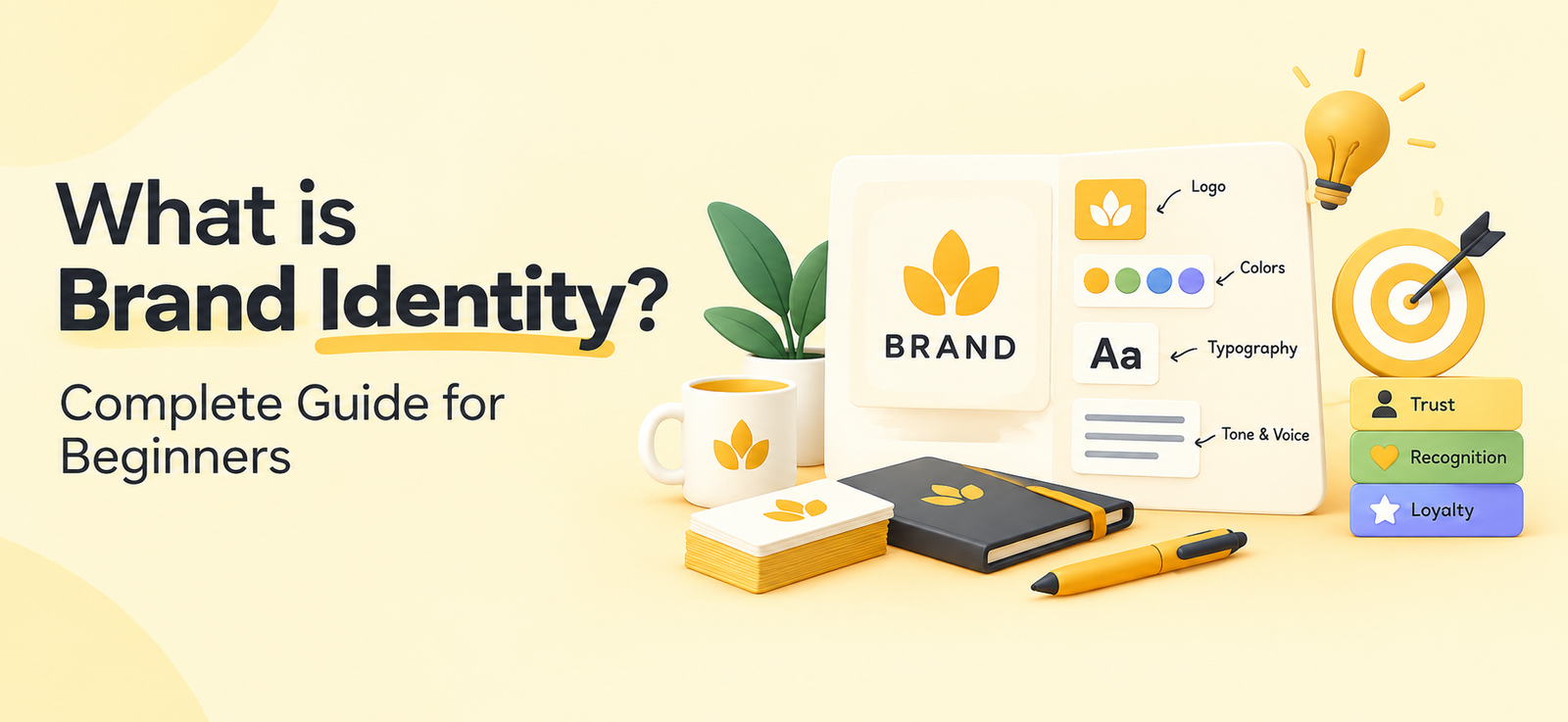
You know that feeling when you see a specific shade of red and immediately think of Coca-Cola? That’s brand identity doing its job. And if you’ve ever asked yourself “what is brand identity,” you’re already thinking like someone who takes their business seriously.
Here’s the thing. Brand identity isn’t your logo. It’s not your color palette. It’s not even your tagline. It’s the complete system of visual, verbal, and emotional signals your brand puts out into the world. It’s how people recognize you, remember you, and (ideally) choose you over the competition.
If you’re building a brand from scratch or rethinking your company branding, the smartest move is getting the identity right before you spend a single dollar on ads. A team that specializes in Creative Services can speed that up considerably, but let’s first make sure you understand what you’re building.
What is Brand Identity vs. Brand Image?
People mix these up all the time. Brand identity is what you put out. Brand image is what people take away.
Think of it this way. You choose your outfit in the morning (identity). But other people form their own opinion about how you look (image). You control one. You influence the other.
Your brand identity includes your logo, typography, colors, photography style, tone of voice, and messaging framework. Brand image lives in customer perception, reviews, word of mouth, and gut feelings.
The goal? Make your identity so clear and consistent that the image people form matches exactly what you intended.
Quick summary: Brand identity is the collection of visual and verbal elements a company creates to present itself. Brand image is how the audience actually perceives the brand. One is designed. The other is earned.
How to Create a Brand Identity That Actually Sticks
So how do you go from a blank canvas to a brand people recognize? Let’s break it down.
Start with Strategy, Not Design
Most beginners jump straight into designing a logo. That’s backwards.
Before you touch a single font or color swatch, answer these questions:
- Who exactly is your audience?
- What problem do you solve better than anyone?
- What do you want people to feel when they interact with your brand?
- Who are your top three competitors, and how do they position themselves?
Your answers become the foundation for everything that follows. Skip this step, and you’ll end up redesigning everything six months later.
Build Your Visual System
This is where most people think branding design starts (and ends). But it’s really just one layer. Your visual system typically includes:
- Logo and logo variations (wordmark, icon, horizontal, stacked)
- Color palette (primary, secondary, accent colors with hex codes)
- Typography (headline fonts, body fonts, size hierarchy)
- Photography and illustration style
- Iconography and graphic elements
Every piece should feel like it belongs to the same family. If your logo says “modern and minimal” but your Instagram posts look like a 2009 Myspace page, something’s off.
Note: When designing a brand identity, consistency beats creativity. A simple, repeatable system will always outperform a flashy one-off design that can’t scale across channels.
Define Your Voice and Messaging
Visual identity gets all the attention. But how you sound matters just as much.
Your brand voice is the personality behind the words. Are you witty and informal? Authoritative and polished? Friendly and educational? Pick a lane and stay in it.
Then build a messaging framework:
- Tagline or brand promise (one sentence that captures your value)
- Elevator pitch (30 seconds, clear and compelling)
- Key messages (3-5 points you want every piece of content to reinforce)
- Tone guidelines (how your voice shifts across contexts, like social vs. email vs. sales decks)
This is what separates forgettable company branding from brands that feel like they have a real personality.
Good Brand Identity Examples Worth Studying
You don’t have to look far for inspiration. Here are a few brands that absolutely nail it.
Mailchimp went all in on quirky illustrations, a banana-yellow palette, and a playful voice. Every touchpoint feels unmistakably Mailchimp, from their landing pages to their error messages.
Stripe took the opposite route. Clean, developer-focused, with gradient-heavy visuals and precise, no-fluff copy. Their identity signals “we’re built for serious builders.”
Notion found a sweet spot between minimal and warm. Simple black-and-white design with hand-drawn illustrations that make a productivity tool feel approachable.
What do all three have in common? Consistency. You could strip the logos off their websites, and you’d still know who they are. That’s the benchmark.
Mistakes to Avoid When Developing a Brand Identity
Beginners tend to fall into the same traps. Dodge these:
- Copying competitors. Getting inspired is fine. Cloning someone else’s look means you’ll always be the knockoff version.
- Designing by committee. Too many opinions water everything down. Set a clear decision-maker early.
- Ignoring your audience. Your brand identity is for your customers, not for you. Test it with real people before you commit.
- Skipping brand guidelines. If your team doesn’t have a documented guide, your brand will drift within months. Every freelancer, new hire, and agency partner needs the same playbook.
- Chasing trends. A gradient logo might look fresh now, but will it hold up in three years? Build for longevity.
Important: A brand identity isn’t a one-time project. It’s a living system. Plan to revisit and refine it at least annually as your company and market evolve.
FAQs
1. What is brand identity in simple terms?
Brand identity is the set of visual and verbal elements a business uses to present itself to the world. It includes your logo, colors, fonts, voice, and messaging. Together, they shape how people recognize and remember your brand across every channel.
2. How long does it take to design a brand identity?
For most small to mid-size businesses, developing a brand identity takes four to eight weeks. That covers research, strategy, visual design, and documentation. Rushing the process usually leads to rework, so it’s worth taking the time to get it right.
3. Can a small business build a strong brand identity on a budget?
Absolutely. Start with the basics: a clean logo, a two-to-three color palette, one or two fonts, and a clear brand voice. You don’t need a massive budget. You need clarity and consistency across the few channels you actually use.
4. When should a company rebrand or refresh its identity?
Consider a refresh when your brand no longer reflects what you do, when you’re entering new markets, or when your visual system feels dated compared to competitors. A full rebrand makes sense after a merger, a major pivot, or when customer perception has drifted significantly from your intended positioning.

Who Pays for Your Injuries After an Uber Accident in Richmond?

What to Consider When Ordering Packaging Samples

How Powder Coating Gets Its Tough Finish: A Beginner’s Guide

7 Benefits of Using an Online Meeting Notetaker for Modern Business Teams

All I Need in This Life of Syn – Syna World, Central Cee und Streetwear-Kultur

The Metadata and Cataloging Layer Most Enterprises Forget When Preparing Data for AI

How to Ensure Your Home is Valued Correctly for a Quick Sale

Christopher Dare: The Untold Story of Engineer and Former Husband of Angela Rippon

The 15 Highest-Paid Rugby Players in the World

What Is Fanquer? The Digital Creator Platform Transforming Direct-to-Fan Engagement

Dr Jared Ross: Missouri Appeals Court Upholds Protection Order Over Graphic Torture and Murder Threats

Who Is Azriel Crews? Inside the Life and Career of Terry Crews’ Daughter
How to Ensure Your Home is Valued Correctly for a Quick Sale
Christopher Dare: The Untold Story of Engineer and Former Husband of Angela Rippon
The 15 Highest-Paid Rugby Players in the World
What Is Fanquer? The Digital Creator Platform Transforming Direct-to-Fan Engagement
Dr Jared Ross: Missouri Appeals Court Upholds Protection Order Over Graphic Torture and Murder Threats
Who Is Azriel Crews? Inside the Life and Career of Terry Crews’ Daughter
-
 Real Estate10 months ago
How to Ensure Your Home is Valued Correctly for a Quick Sale
-
Celebrity12 months ago
Christopher Dare: The Untold Story of Engineer and Former Husband of Angela Rippon
-
 Sports6 months ago
The 15 Highest-Paid Rugby Players in the World
-
 Technology6 months ago
What Is Fanquer? The Digital Creator Platform Transforming Direct-to-Fan Engagement
-
 Celebrity6 months ago
Dr Jared Ross: Missouri Appeals Court Upholds Protection Order Over Graphic Torture and Murder Threats
-
 Celebrity9 months ago
Who Is Azriel Crews? Inside the Life and Career of Terry Crews’ Daughter
-
 Celebrity1 year ago
Nancy Hallam: The Inspiring Life, Career, and Success Story Behind Ian Wright’s Wife
-
 Celebrity1 year ago
Who Is Maisie Mae Roffey? The Private Life, Family Story, and Quiet Success of Julie Walters’ Daughter