
Health
The All-on-4 Benefits Every Patient Should Know


All-on-4 replaces a full arch of missing teeth using just four implants, giving you fixed teeth in as little as one day. For anyone facing significant tooth loss, it’s often the difference between a removable denture and a permanent, natural-feeling smile. The benefits go well beyond appearance, and most patients are surprised by how much their daily lives improve.
We want to walk through those benefits honestly. If you’re weighing up the All-On-4 treatment Warriewood clinics offer, these are the things worth knowing before you decide.
What Makes All-on-4 Different From Other Options?
Before the benefits, it helps to understand the basics. All-on-4 uses four titanium posts to anchor a full set of teeth.
The clever part is the angle. The two back implants are tilted, which lets them grip more bone and often avoids the need for grafting. That single design choice is why All-on-4 dental implants suit people who were once told implants weren’t possible for them. Now, onto why patients actually love it.
Why Do Patients Choose All-on-4?
The reasons stack up quickly once you look past the surface. Here are the benefits that keep coming up.
1. You Get Fixed Teeth Fast
Speed is the first thing people notice. Traditional implants can mean months of waiting before you have working teeth.
All-on-4 flips that. In many cases, the implants go in, and a fixed set of teeth is attached within a day or two. You walk out with a smile, not a promise to come back later. That’s a genuine relief for anyone who’s lived with a failing set of teeth.
2. It Protects Your Jawbone
This is the benefit almost nobody mentions upfront. When you lose teeth, the jawbone beneath them starts to shrink.
That bone loss is what gives long-term denture wearers a sunken look around the mouth. Implants stop it. The posts stimulate the bone the way natural roots do, keeping it active and healthy. So, All-on-4 teeth replacement doesn’t just replace teeth; it protects the shape of your face over time.
3. Your Teeth Stay Put
Anyone who’s worn a denture knows the anxiety of it slipping. All-on-4 removes that worry entirely.
The teeth are fixed to the implants and never move. You don’t take them out at night, and you don’t soak them in a glass. There’s no adhesive, no clicking, no shifting mid-sentence. For many patients, that stability alone justifies the whole procedure.
4. You Can Eat Properly Again
Food is where the difference becomes real. Dentures limit what you can comfortably chew, and many people quietly give up on foods they love.
With full-arch dental implants, that restriction lifts. The bite strength is closer to natural teeth, so steak, apples, and crusty bread are back on the table. Eating stops being a calculation and goes back to being a pleasure.
5. It Feels and Looks Natural
Comfort and appearance go hand in hand here. The teeth are shaped and colour-matched to look like your own.
Because they’re fixed and stable, they feel like part of you rather than something you’re wearing. A skilled dental implant specialist Warriewood will match the shape and shade of your original teeth. The result is a smile that looks like it belongs, not one that announces itself.
6. It’s Easier to Care For Than You’d Think
People assume a full-arch restoration must be high-maintenance. In practice, it’s simple.
You brush your fixed teeth daily, just like you do your natural ones. You keep your regular dental check-ups so the gums and fit stay healthy. There’s no fiddly removal routine and no special cleaning solutions. Good habits are all it takes to keep them in great shape for years.
7. It Lasts for the Long-Term
Longevity is where All-on-4 earns its keep. The titanium implants can last decades, and often a lifetime.
The teeth on top may need refreshing eventually with normal wear. But the foundation stays solid. As a permanent teeth replacement, it offers a stability and lifespan that removable options simply can’t match. For many, that makes the upfront cost worthwhile.
Who Is All-on-4 Right For?
It suits more people than you might expect. The tilted-implant design significantly widens the pool of candidates.
It’s often ideal for those who:
- Have lost most or all of the teeth in an arch
- Are tired of ill-fitting or slipping dentures
- Were told they lacked the bone for traditional implants
- Want a fixed, long-term solution rather than a removable one
The only way to know for sure is an assessment. A consultation with a dental implant specialist Warriewood locals rely on will confirm whether your jaw and overall health suit the treatment. If they don’t, a good clinician will tell you honestly and suggest alternatives.
A Quick Word on What to Expect
I want to be balanced here. All-on-4 is a real procedure, not a quick fix, and it involves surgery.
There’s a healing period, and some patients need minor groundwork first. The upfront cost is higher than a denture, though the lifespan offsets it. Knowing this going in makes the decision clearer, not scarier. Weighing up full mouth dental implants honestly is the best way to feel confident about your choice.
Ready to See If All-on-4 Suits You?
The benefits of All-on-4 are hard to ignore. Fixed teeth in a day, protected bone, natural function, and a solution built to last for decades. For the right patient, it genuinely changes daily life.
If any of this sounds like what you’ve been missing, the next step is simple. Book a consultation for All-On-4 treatment in Warriewood and get an honest assessment of your options. One conversation could be the start of eating, smiling, and living without a second thought.
FAQs
How long does the All-on-4 treatment take?
Your new teeth can often be fixed in place within one to two days. A short healing period follows while the implants fuse with the jawbone.
Is All-on-4 a permanent solution?
The titanium implants can last decades, often a lifetime. As a permanent teeth replacement, the foundation stays fixed, though the teeth on top may need refreshing over the years.
Does All-on-4 hurt?
Not during the procedure, since the area is fully numbed. Some tenderness afterward is normal and settles within a few days with simple aftercare.
Can I eat normally with All-on-4?
Yes. The teeth are fixed and stable, giving you bite strength close to natural teeth. Most foods, including firmer ones, are back on the menu.


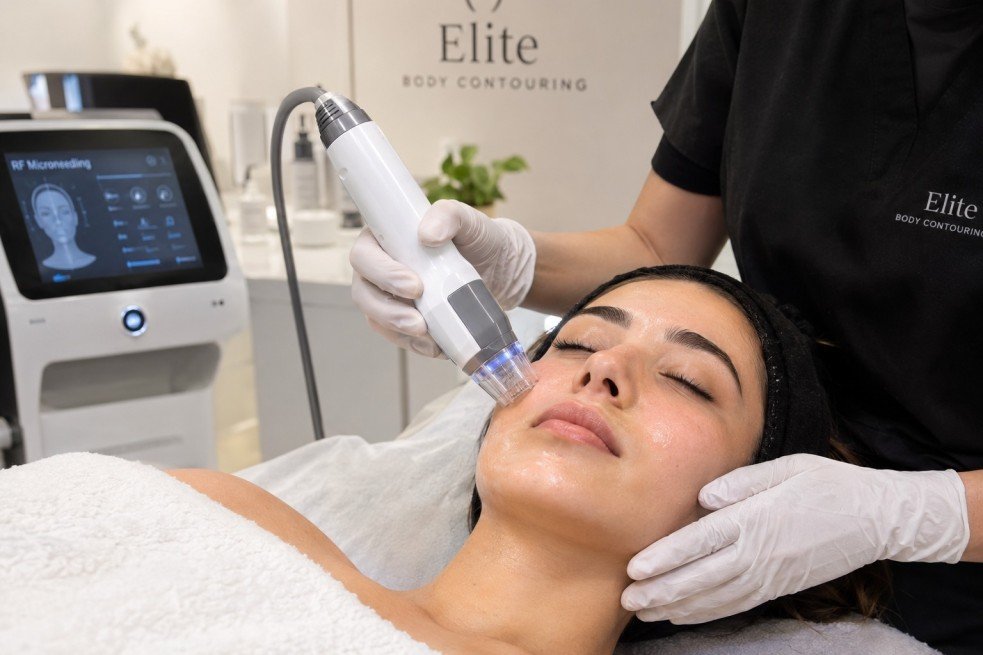
RF microneedling is a revolutionary skin treatment that has gained widespread acclaim for its ability to refresh and rejuvenate the skin. Elite Body Contouring specialises in this advanced procedure, offering clients an opportunity to achieve smoother, firmer, and healthier skin with minimal downtime. This article explores the benefits of RF microneedling and why it is an excellent choice for those seeking effective skin revitalisation.
Elite Body Contouring employs the latest technology to deliver precise RF microneedling treatments. Unlike traditional methods, RF microneedling combines microneedling with radiofrequency energy, targeting the deeper layers of the skin. This dual-action approach stimulates collagen production and elastin formation, crucial proteins that maintain skin elasticity and youthful appearance.
Understanding RF Microneedling
RF microneedling involves the use of fine needles that create microscopic punctures on the skin’s surface. Simultaneously, radiofrequency energy is delivered into the dermis, generating heat that promotes tissue tightening and regeneration. The controlled injury triggers the body’s natural healing process, leading to cell renewal and improved skin texture.
This procedure is effective for a range of skin concerns, including fine lines, wrinkles, acne scars, enlarged pores, and uneven skin tone. It is suitable for most skin types and tones, offering a safe option for those who may not tolerate more aggressive treatments.
The Advantages of RF Microneedling
One of the primary benefits of RF microneedling is its ability to address multiple skin issues in a single session. Clients often report noticeable improvements after just one treatment, with results continuing to enhance over successive sessions.
Compared to other skin rejuvenation methods, RF microneedling presents fewer risks and a reduced recovery period. The minimally invasive nature minimises discomfort and the likelihood of adverse effects, making it an attractive alternative to laser resurfacing and chemical peels.
Improved Skin Texture and Tone
The stimulation of collagen and elastin helps restore skin firmness and smoothness. Uneven skin texture, rough patches, and dullness are visibly diminished. This leads to an overall healthier complexion, restoring a youthful glow.
Reduction of Scars and Fine Lines
RF microneedling effectively reduces the appearance of acne scars and fine lines by encouraging skin remodelling. The new tissue generated fills in depressed scars and softens wrinkles, enhancing skin uniformity.
Minimised Pore Size
Enlarged pores can be a source of concern for many, but RF microneedling can reduce their appearance by tightening the skin around the pores, resulting in a smoother surface.
Enhanced Product Absorption
Following treatment, the skin is more receptive to skincare products, allowing active ingredients to penetrate deeper and deliver better results.
Safety and Suitability
Elite Body Contouring ensures all RF microneedling treatments are performed by trained professionals who assess each client’s suitability comprehensively. The procedure is generally considered safe, but contraindications such as active skin infections or certain medical conditions will be evaluated during consultation.
Proper aftercare is essential to achieve optimal outcomes. Clients receive guidance on sun protection and skin hydration to support healing and prevent complications.
What to Expect During the Procedure
Treatment sessions typically last between 30 to 60 minutes, depending on the area treated. A topical anaesthetic is applied beforehand to minimise discomfort. During the procedure, clients may experience a warming sensation along with mild pricking.
Post-treatment redness and slight swelling are common but generally subside within a few days. Most individuals can resume daily activities promptly, although it is advisable to avoid direct sun exposure immediately after.
Long-term Benefits and Maintenance
The collagen-boosting effects of RF microneedling continue for weeks after the procedure, resulting in progressive skin improvement. To maintain the rejuvenated appearance, periodic maintenance sessions are recommended, typically every six to twelve months.
Elite Body Contouring offers personalised treatment plans tailored to individual skin goals, ensuring sustained results and client satisfaction.
Conclusion
RF microneedling at Elite Body Contouring represents a significant advancement in non-surgical skin rejuvenation. Combining innovative technology with professional expertise, this treatment offers a safe and effective solution for a variety of skin concerns. Clients seeking to transform their skin can benefit from the proven ability of RF microneedling to enhance texture, reduce signs of ageing, and promote a youthful complexion.
Consultations at Elite Body Contouring provide a thorough evaluation and bespoke recommendations to help clients achieve their desired outcomes confidently. By choosing RF microneedling, individuals invest in their skin’s health and appearance with a scientifically supported method.

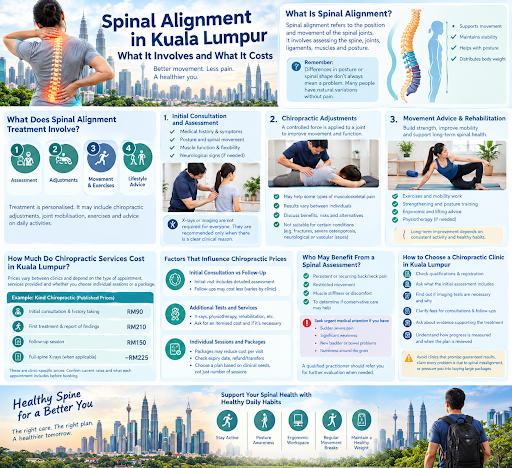
Spinal health plays an important role in everyday movement, comfort, and physical function. Whether someone spends long hours sitting at a desk, performs physically demanding work, or regularly participates in sports, discomfort in the back and neck can affect daily activities. For people experiencing persistent stiffness or musculoskeletal pain, spinal alignment is one approach they may explore when considering chiropractic care.
In Kuala Lumpur, chiropractic clinics offer different assessment methods, treatment techniques, and pricing structures. Understanding what spinal alignment involves, when it may be appropriate, and how much a session might cost can help individuals make informed decisions about their care.
What Is Spinal Alignment?
The spine consists of vertebrae separated by cushioning discs, with joints, ligaments, and muscles supporting movement and stability. Its natural curves help distribute loads and allow the body to bend, turn, and maintain balance.
The term spinal alignment is commonly used in chiropractic care to describe the position and movement of spinal joints. However, it is important to understand that differences in posture or spinal shape do not automatically indicate a medical problem. Many people have natural variations in spinal structure without experiencing pain.
Chiropractic care may involve assessing spinal movement, joint function, muscle tension, and posture to understand factors that could contribute to a person’s symptoms. Treatment recommendations should be based on the individual’s history and examination rather than an assumption that every spinal variation needs correction.
What Does Spinal Alignment Treatment Involve?
People researching spinal alignment treatment in KL may encounter several approaches, including chiropractic adjustments, joint mobilisation, movement exercises, and advice about everyday activities.
The treatment process usually begins with an assessment. A chiropractor may ask about the location and duration of symptoms, previous injuries, medical conditions, work habits, and activities that make the discomfort better or worse.
1. Initial Consultation and Assessment
The first appointment generally involves reviewing medical history and evaluating the symptoms that brought the patient to the clinic. Depending on the situation, the practitioner may assess posture, spinal movement, flexibility, muscle function, and relevant neurological signs.
The purpose is to determine whether chiropractic care may be suitable or whether another healthcare professional should evaluate the problem first.
X-rays or other imaging tests are not necessary for every patient. They should be recommended when there is a clear clinical reason, such as suspected structural injury or a condition requiring further investigation.
2. Chiropractic Adjustments
A chiropractic adjustment involves applying a controlled force to a joint, often in the spine, with the aim of influencing its movement and function. Techniques differ between practitioners and may be adapted according to the patient’s condition, comfort, and preferences.
Some people experience temporary improvement in certain types of musculoskeletal pain after manual therapy. However, results vary, and spinal adjustments are not a guaranteed solution for every condition.
Patients should discuss potential benefits, risks, and alternatives before treatment. Forceful manipulation may be unsuitable for people with certain medical conditions, including fractures, severe osteoporosis, or specific neurological or vascular problems.
3. Movement Advice and Rehabilitation
Spinal health involves more than the position of individual joints. Muscle strength, physical activity, movement habits, and recovery from injury can all influence how comfortably a person moves.
Depending on the assessment, a care plan may include exercises, mobility work, strengthening, and practical advice about desk ergonomics or lifting techniques. Physiotherapy may also be appropriate, either independently or alongside other conservative treatments.
These measures can help patients build physical capacity and manage everyday demands. Long-term improvement often depends on consistent activity and addressing relevant lifestyle factors rather than relying exclusively on passive treatment.
How Much Do Chiropractic Services Cost in Kuala Lumpur?
The cost of spinal alignment treatment varies between clinics and depends on the type of appointment, the services provided, and whether the patient chooses individual sessions or a package.
For example, Kind Chiropractic in Kuala Lumpur publishes a price list that separates its initial consultation, first treatment, follow-up sessions, and optional imaging.
Its listed fees include:
- Initial consultation and history taking: RM90.
- First treatment and report of findings: RM210.
- Follow-up session: RM150.
- Full-spine X-rays: approximately RM225, when applicable.
These are clinic-specific published prices, not a universal fee schedule for every chiropractic clinic in Kuala Lumpur. Patients should confirm current rates and clarify what each appointment includes before booking.
Factors That Influence Chiropractic Prices
When comparing chiropractic prices in KL, it helps to look beyond the advertised cost of a single adjustment. The total expense may depend on several factors.
Initial Consultation Versus Follow-Up Visits
An initial consultation often includes a detailed discussion of symptoms, medical history, and examination findings. If treatment is provided during a separate or combined appointment, the overall fee may differ from a consultation-only price.
Follow-up sessions may be less expensive than an initial visit, although this depends on the clinic’s pricing structure and the services involved.
Additional Tests and Services
Some patients may require imaging or further assessment, while others may not need these services. X-rays, physiotherapy, rehabilitation exercises, and other interventions may be charged separately.
Ask for an itemised explanation of any additional costs and whether a recommended service is necessary for your particular situation.
Individual Sessions and Care Packages
Some clinics offer discounted packages for patients who purchase multiple follow-up sessions. These packages can reduce the cost per visit, but they also require a larger upfront payment.
Before committing, ask whether the package has an expiry date, whether unused sessions are refundable or transferable, and what happens if treatment does not produce the expected improvement.
A treatment plan should reflect clinical needs and measurable progress, not simply the number of sessions included in a package.
Who May Benefit From a Spinal Assessment?
A professional assessment may be helpful for people experiencing certain types of back or neck discomfort, restricted movement, or recurring musculoskeletal symptoms. It can also help determine whether the symptoms are likely to respond to conservative care.
However, spinal alignment treatment is not necessary for everyone. Occasional stiffness may improve with movement, appropriate exercise, and adjustments to daily routines.
People with persistent or worsening symptoms should seek medical advice to establish the cause. Sudden severe back or neck pain, significant weakness, new bladder or bowel problems, or numbness around the groin requires urgent medical assessment.
A qualified practitioner should recognise when symptoms fall outside the scope of chiropractic care and refer the patient for appropriate evaluation.
How to Choose a Chiropractic Clinic in Kuala Lumpur
Choosing a clinic involves considering professional qualifications, communication, treatment methods, and pricing transparency.
Before booking, consider asking the following questions:
- What qualifications and professional registration does the practitioner hold?
- What will the initial assessment include?
- Are imaging tests necessary, and why?
- What are the fees for consultations and follow-up sessions?
- What evidence supports the recommended treatment?
- How will progress be evaluated, and when will the plan be reviewed?
Avoid clinics that promise guaranteed results, claim that every health problem originates from spinal misalignment, or pressure patients into purchasing extensive packages before an appropriate assessment.
A trustworthy practitioner should explain the expected benefits and limitations of care, discuss alternatives, and adjust recommendations according to the patient’s response.
Conclusion
Spinal alignment treatment in Kuala Lumpur may be an option for some people seeking conservative management of musculoskeletal discomfort. Depending on the individual’s condition, care may involve chiropractic adjustments, mobility exercises, rehabilitation, and advice about daily movement habits.
Costs vary according to the clinic, the appointment type, and any additional services required. Reviewing the fee structure in advance can help patients compare options and avoid unexpected expenses.
Ultimately, the most suitable approach begins with an appropriate assessment, realistic expectations, and a personalised plan. By prioritising professional qualifications, transparent pricing, and evidence-informed recommendations, individuals can make better decisions about their spinal health and long-term physical well-being.


The Familiar Tools and the Gaps They Leave
Ask most people to picture a walking aid, and they will describe a wooden cane or a metal walking frame. Both have kept millions of older adults on their feet, yet the range of equipment has grown a great deal, and some of the most useful options look nothing like a traditional mobility aid. A rollator with a built-in seat, a perching stool by the kitchen counter, or a walking chair that lets the user move around the home while seated can each solve problems a cane was never designed to handle.
That matters because mobility after 70 is rarely about one single difficulty. A walking stick works well for someone with mild unsteadiness or a sore knee on one side. It takes some weight off the weaker leg and gives the brain an extra point of contact with the floor, which improves balance. What it cannot do is offer much support when legs are tired, and it keeps one hand permanently occupied.
A walking frame, often called a Zimmer frame in the UK, provides far more stability. The trade-off is that it needs both hands, has to be lifted with every step and can be awkward in narrow hallways or small bathrooms. Many people quietly develop a risky habit of leaving the frame behind so they can carry a cup of tea or a plate, which is exactly the moment a fall is most likely.
Rollators sit somewhere in between. With three or four wheels, hand brakes and usually a seat and basket, they are excellent for the high street, the park or a trip to the shops. Indoors they can feel bulky, and they demand enough grip strength to operate the brakes reliably.
The real gap appears in everyday household tasks. Cooking, washing up, unpacking shopping and reaching into low cupboards all require free hands and the ability to stay upright for several minutes. For many people over 70, fatigue rather than balance is what limits these jobs, and that is where newer types of equipment have started to fill in.
Matching the Aid to the Task, Not Just the Person
A helpful way to think about mobility equipment is to start with the activity rather than the diagnosis. Instead of asking “what walking aid do I need?”, it is often more productive to ask what happens in each room of the house and where things become difficult. The answers tend to point towards a small collection of aids, each suited to a particular setting.
In the kitchen, the challenge is usually standing still for long periods while using both hands. A perching stool lets someone lean rather than stand, and seated mobility solutions allow a person to move between the hob, the sink and the fridge without getting up each time. In the bathroom, grab rails, a shower stool and a raised toilet seat do more for safety than any walking aid could. On the stairs, a second banister or a stairlift removes the need to carry anything at all. Outside the home, a lightweight folding rollator or, for longer distances, a mobility scooter may be the better choice.
Ending up with two or three different aids is normal and sensible. The most capable manufacturers acknowledge this openly. The walking aids guide from VELA, written by one of the company’s occupational therapists, states plainly that its chair may not fully replace a rollator for trips outside the home. Instead, it presents the chair as an indoor aid that lets users move around with their feet while seated, lock the wheels with a handbrake and use an electric seat lift to reach both high shelves and low drawers. That kind of candour is useful for buyers, because it shows where a product genuinely fits instead of promising that one device will do everything.
Before buying anything, a few practical questions are worth asking. Will it fit through every doorway in the house, including the bathroom? How does it cope with rugs, thresholds and different floor surfaces? Are the brakes easy to use with stiff or arthritic hands? How much does it weigh if it ever needs to be lifted into a car? Is there a trial period or a returns policy? Testing equipment in the actual home, rather than in a showroom with smooth floors and wide aisles, often reveals problems that a product description never mentions.
Keeping Strength and Confidence While the Aids Do Their Part
A walking aid should support activity, not replace it. One of the quiet risks in later life is that equipment makes things so easy that muscles gradually weaken from lack of use. The aim is to use aids for the moments when they genuinely reduce risk or save energy, while still giving the legs regular work to do.
UK physical activity guidelines advise older adults to include activities that improve strength, balance and flexibility on at least two days a week. This does not need to mean a gym membership. Standing up from a chair several times in a row, heel raises while holding the kitchen worktop and slow side steps along a hallway all build the strength that keeps walking safe. Local councils, community centres and charities often run gentle exercise classes designed specifically for older people, and these have the added benefit of getting people out of the house and talking to others.
Professional advice makes a real difference here. A GP can refer someone to a physiotherapist for a walking and balance assessment, and the local council’s adult social care team can usually arrange a visit from an occupational therapist who looks at the home itself. These assessments often lead to simple equipment being loaned or fitted, and they help avoid buying the wrong product. A physiotherapist will also check that a walking stick is set to the right height, which is typically level with the crease of the wrist when the arm hangs loosely.
Equipment needs looking after too. Rubber ferrules on sticks and frames wear down and lose grip, brake cables on rollators can loosen, and wheels collect hair and dust that make them stiff. A quick check every few months keeps everything working as intended.
Finally, it pays to review the whole setup regularly, and always after a fall, an illness or a hospital stay. Needs change, sometimes for the better as strength returns and sometimes as energy dips. Fear of falling can lead people to move less, which in turn makes falls more likely. The right combination of aids, combined with regular movement, breaks that cycle and allows people to stay active, independent and confident in their own homes for longer.

Why Your Headphones Pick Up the Whole Office on Calls

Transform Your Skin with RF Microneedling: Discover the Benefits at Elite Body Contouring

Revolutionizing Precision: The Advantages of Fiber Optic Laser Cutting with Macro Weld

Stunning Spring Carnival Dresses to Elevate Your Style This Season

Top Cricket Equipment Essentials Every School Should Have

Innovative Architects in Sydney: Designing Your Dream Space with Shore Architects

How to Ensure Your Home is Valued Correctly for a Quick Sale

Christopher Dare: The Untold Story of Engineer and Former Husband of Angela Rippon

The 15 Highest-Paid Rugby Players in the World

What Is Fanquer? The Digital Creator Platform Transforming Direct-to-Fan Engagement

Dr Jared Ross: Missouri Appeals Court Upholds Protection Order Over Graphic Torture and Murder Threats

Nancy Hallam: The Inspiring Life, Career, and Success Story Behind Ian Wright’s Wife
How to Ensure Your Home is Valued Correctly for a Quick Sale
Christopher Dare: The Untold Story of Engineer and Former Husband of Angela Rippon
The 15 Highest-Paid Rugby Players in the World
What Is Fanquer? The Digital Creator Platform Transforming Direct-to-Fan Engagement
Dr Jared Ross: Missouri Appeals Court Upholds Protection Order Over Graphic Torture and Murder Threats
Nancy Hallam: The Inspiring Life, Career, and Success Story Behind Ian Wright’s Wife
-
 Real Estate9 months ago
How to Ensure Your Home is Valued Correctly for a Quick Sale
-
Celebrity11 months ago
Christopher Dare: The Untold Story of Engineer and Former Husband of Angela Rippon
-
 Sports5 months ago
The 15 Highest-Paid Rugby Players in the World
-
 Technology5 months ago
What Is Fanquer? The Digital Creator Platform Transforming Direct-to-Fan Engagement
-
 Celebrity5 months ago
Dr Jared Ross: Missouri Appeals Court Upholds Protection Order Over Graphic Torture and Murder Threats
-
Celebrity12 months ago
Nancy Hallam: The Inspiring Life, Career, and Success Story Behind Ian Wright’s Wife
-

 Celebrity8 months ago
Who Is Azriel Crews? Inside the Life and Career of Terry Crews’ Daughter
-
 Celebrity11 months ago
Who Is Maisie Mae Roffey? The Private Life, Family Story, and Quiet Success of Julie Walters’ Daughter