
Business
Deciding Whether to Buy Another Guest Post: A Practical Marketing Checklist

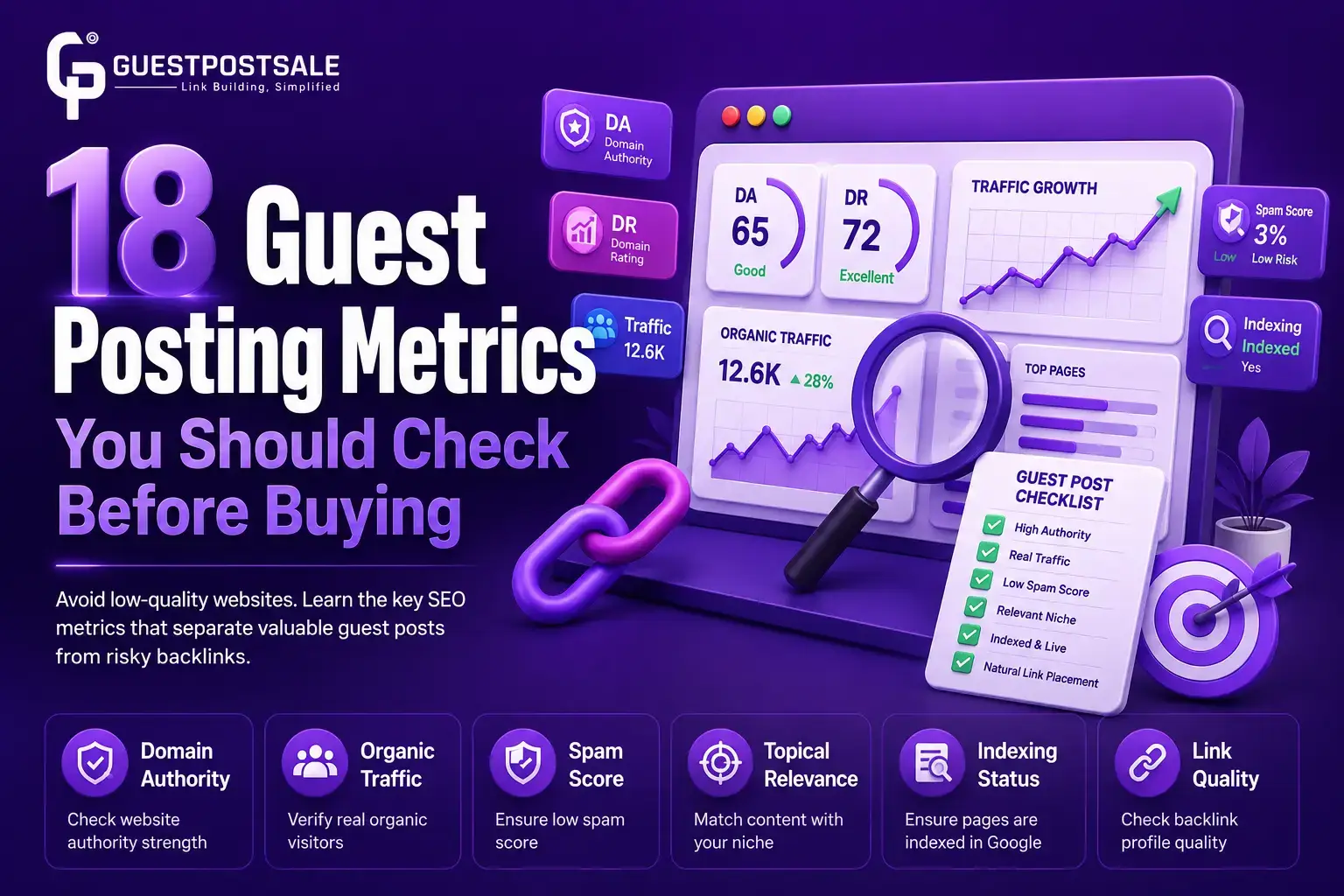
Deciding whether to buy another guest post is easier when you treat each placement as a marketing investment rather than a box to tick. A published article may bring referral visits, introduce your business to a relevant audience or support your wider search strategy. But buying placements without checking what they achieve can consume budget without creating meaningful value.
The useful question is not simply whether guest posting works. It is whether a particular website, topic and campaign are helping you reach your goals—and whether another placement is likely to improve on what you have already learned.
Start with the purpose of the campaign
Before commissioning another post, be clear about the job it should do. A campaign might aim to reach potential customers, build recognition in a specialist industry, earn relevant referral traffic or strengthen your brand’s authority around a topic. These goals can overlap, but they are not interchangeable.
For example, a site with a large audience may offer visibility, yet its readers might have little interest in your services. A smaller publication could be more valuable if its audience closely matches the people you want to reach. Decide which outcome matters most, then use it to assess the opportunity.
This also helps set realistic expectations. A guest article may contribute to visibility over time, but one placement is unlikely to transform a business overnight. Consider it one part of a broader marketing plan, alongside your website, email activity, social channels and other forms of outreach.
Look beyond headline metrics
Numbers such as domain authority or domain rating can help you compare websites, but they do not tell the whole story. A publication’s relevance, editorial standards and real audience are just as important. Check whether it regularly covers subjects related to your business and whether its articles appear to serve readers rather than exist mainly to host links.
Look at recent posts, the quality of their writing and the conversations they generate. If the site has an identifiable audience, ask whether those readers are likely to care about your expertise. Also check that the proposed article will make sense in its editorial setting. A natural, useful contribution is more credible than a generic piece that feels disconnected from the publication.
For a more complete planning framework, this marketing guest posting guide covers choosing suitable publishers, developing content angles, setting budgets and reviewing results. Those decisions are worth making before a campaign scales, not after the budget has been spent.
Judge the content opportunity as well as the site
A relevant website still needs a strong article idea. Ask what the publication’s readers might learn from your contribution that they cannot easily find in another basic overview. Useful angles often come from practical questions, common mistakes, comparisons, or lessons drawn from real work.
Agree on the topic, format, audience and link placement before work begins. The article should answer a genuine reader need, with any mention of your business fitting naturally into the discussion. If the only reason for the piece is to insert a link, reconsider the placement. Thin or awkward content can undermine trust even if the publisher’s headline metrics look impressive.
Set a budget and define what success means
Guest posting costs can include publisher fees, writing, editing and the time spent managing the campaign. Work out the full cost of a placement and compare it with the value you hope to gain. A lower price is not automatically better if the site is a poor fit or the article needs extensive rework.
Before publishing, choose a small set of measures that reflect your objective. Depending on the campaign, these could include referral visits, engagement with the article, enquiries, branded searches or the quality of the audience reached. Record a baseline and review results after a suitable period. Do not rely on a single short-term metric: some benefits, such as familiarity and brand recognition, are harder to attribute directly.
Use results to decide what to repeat
After a placement goes live, note what happened and what you would change next time. Did the publisher share the article? Did visitors spend time on the page or continue to your site? Was the audience relevant? Did the content support a wider campaign? Even a placement with limited measurable traffic may offer useful learning about a topic or publication, but repeated weak results should prompt a rethink.
When the work involves several contributors, make the process manageable. Freelancers can help with research, writing, editing or campaign support, particularly when your team lacks time. For broader advice on finding clients and developing a repeatable outreach routine, Osdire’s guide to freelance cold outreach is relevant to independent professionals building their own pipeline. Osdire is a freelance marketplace where businesses can hire across categories including writing, marketing and design, which can be useful when a campaign needs specialist support.
A simple decision checklist
Before approving another placement, consider these questions:
- Does the publisher reach an audience that matters to your business?
- Can you offer a genuinely useful and distinctive article idea?
- Are the total costs clear and proportionate to the likely value?
- Do you know how you will track the placement’s performance?
- Have previous placements shown enough promise to justify repeating the approach?
If the answers are uncertain, pause and investigate rather than committing automatically. You might test a different audience, improve the content angle or redirect the budget towards another channel. If the answers are strong, another guest post can be a considered next step—not simply another item on a publishing schedule.
Conclusion
Deciding whether to buy another guest post comes down to fit, usefulness and evidence. Choose publishers for their readers and editorial relevance, create material that earns attention, and track results against clear goals. A thoughtful campaign will not guarantee a particular outcome, but it gives you a sound basis for learning what deserves more investment—and what should change before you spend again.



Shipping freight on pallets looks straightforward from the outside. A pallet gets picked up, it moves through a carrier network, and it arrives at a destination. But anyone who has managed freight operations at any scale knows that the process involves a chain of decisions, dependencies, and timing requirements that can break down at several points. When they do, the consequences extend beyond a delayed shipment. They affect production schedules, customer commitments, inventory planning, and in some cases, contractual obligations.
Choosing a pallet delivery provider is not a procurement exercise that ends with the lowest quote. It is an operational decision that shapes how reliably your supply chain functions under normal conditions and how it holds up when something goes wrong. The questions below are designed to help shippers, operations managers, and logistics coordinators think through that decision carefully before making a commitment.
1. What Types of Freight Does the Provider Regularly Handle?
Not every pallet delivery operation is built to handle the same categories of freight. Some providers are optimized for retail replenishment shipments moving between distribution centers and storefronts. Others focus on industrial goods, manufacturing components, or time-sensitive commercial deliveries. The distinction matters because handling requirements, equipment, and network design differ significantly depending on the type of freight involved.
When you evaluate a provider for pallet delivery, it is worth asking whether the provider regularly moves freight similar to yours, not just whether they are capable of doing so in principle. A carrier that primarily moves light consumer goods may not be well-equipped to handle dense industrial skids, machinery components, or products that require careful loading sequencing. The reverse is also true. A heavy-freight specialist may not have the network density needed for high-frequency, multi-stop commercial deliveries.
Understanding Freight Classification and Its Impact
Freight classification in the United States is governed by the National Motor Freight Classification system, which assigns categories to shipments based on density, handling difficulty, liability, and stowability. How a provider understands and applies these classifications directly affects how your shipment is handled, what rates you are quoted, and whether your freight arrives in the condition it left. Providers who are unfamiliar with the classification of your freight type may mismatch equipment, mispack loads, or quote inaccurate rates that result in billing adjustments after delivery.
2. What Is the Provider’s Coverage Area and Network Depth?
Coverage area is not the same as network depth. A provider may claim to serve the entire continental United States while relying heavily on third-party partners or brokered capacity for regions outside their core operating zone. That kind of patchwork coverage can introduce inconsistency, longer transit times, and reduced accountability when something goes wrong in a leg of the journey they do not directly control.
Direct Haul Versus Relay Networks
Some freight moves point-to-point on a direct haul, while other shipments pass through relay terminals, cross-docks, or partner facilities. Each hand-off introduces a new opportunity for damage, delay, or miscommunication. Understanding how many times your freight will be touched between origin and destination, and who is responsible at each stage, gives you a clearer picture of actual transit reliability rather than an optimistic estimate based on ideal conditions.
3. How Does the Provider Handle Time-Sensitive Shipments?
Delivery windows matter in a wide range of commercial contexts. Retail buyers expect product on specific dates to align with promotional cycles or shelf-reset schedules. Manufacturers depend on component arrivals to avoid line shutdowns. Distributors coordinate inbound freight with warehouse staffing and dock availability. When a provider cannot meet a committed delivery window consistently, those downstream operations absorb the disruption.
The Difference Between Estimated and Guaranteed Delivery
There is a meaningful operational difference between a provider who offers estimated delivery times and one who offers committed or guaranteed windows with defined consequences for failure. Estimated delivery is a projection based on typical conditions. A guaranteed window is a contractual commitment backed by accountability. For shipments where timing directly affects your operations or your customer relationships, understanding which type of commitment you are receiving is essential before you book.
4. What Tracking and Visibility Tools Are Available?
Real-time visibility into freight movement has become a baseline expectation in modern logistics, but the quality of tracking systems varies considerably between providers. Some offer granular, event-based updates at every scan point. Others provide only broad status updates that tell you little more than whether the shipment is in transit or has been delivered.
How Visibility Affects Operational Planning
When tracking data is reliable and timely, operations teams can adjust receiving schedules, coordinate labor, and respond proactively to delays before they cascade. When visibility is poor, teams are left reacting to problems after the fact, which is almost always more costly and disruptive. Asking a provider to walk you through exactly what their tracking system shows, and at what intervals, gives you a realistic sense of what you will be working with day-to-day.
5. What Is the Provider’s Claims Process for Damaged or Lost Freight?
Freight damage and loss happen across the industry. A provider’s claims process reveals more about their operational accountability than their marketing materials ever will. The ease of filing a claim, the documentation required, the turnaround time for resolution, and the coverage limits for different freight types are all worth understanding before damage occurs, not after.
Liability Limits and Declared Value
Standard carrier liability is frequently limited to a per-pound rate that may fall well short of the actual value of your freight. Shippers who do not understand this often discover the gap only after submitting a claim. Asking a provider directly about their liability limits, and whether additional coverage options are available, is a basic step that many shippers overlook when comparing quotes.
6. How Does the Provider Manage Pickup Scheduling and Dock Requirements?
Pickup logistics are often treated as an afterthought, but they have a real impact on how smoothly freight moves from your facility into the carrier’s network. Providers who offer flexible pickup windows, accommodate facility-specific requirements, and communicate proactively about arrival times create far fewer disruptions than those who operate on rigid schedules with limited communication.
Dock-to-Door Coordination
Facilities with limited dock space, appointment-only receiving windows, or specific equipment requirements need providers who can work within those constraints without treating them as exceptions. When a provider’s standard operating model does not align with your facility’s requirements, that friction shows up as missed pickups, rescheduling delays, and strained working relationships over time.
7. What Are the Provider’s Accessorial Charges and How Are They Applied?
Base freight rates rarely reflect the full cost of a shipment. Accessorial charges, which cover services like liftgate pickup or delivery, residential stops, inside delivery, redelivery attempts, and fuel surcharges, can add meaningfully to the final invoice. Providers differ considerably in how they define, apply, and communicate these charges.
Getting a Complete Cost Picture Before You Commit
Requesting a clear explanation of all potential accessorial charges before booking, rather than discovering them on the invoice, allows for accurate cost comparisons between providers and prevents budget surprises. The Federal Motor Carrier Safety Administration requires carriers to maintain transparency around their rates and charges, but the practical application of that requirement varies. Asking providers to walk through a sample invoice based on your typical shipment profile is one of the most effective ways to understand total cost before you commit.
8. What Is the Provider’s Safety Record and Compliance Standing?
Carrier safety records are publicly verifiable and reflect operational discipline in a way that no sales conversation can replicate. A provider with a strong safety record is typically one that manages their equipment, trains their drivers consistently, and maintains internal standards that go beyond minimum regulatory requirements. Those same internal standards tend to correlate with better freight handling, more predictable transit, and fewer claims.
Compliance as a Proxy for Operational Maturity
Compliance with hours-of-service regulations, vehicle maintenance requirements, and driver qualification standards is not just a legal matter. It reflects how a carrier runs their operation day-to-day. Providers who cut corners on compliance tend to cut corners in other areas as well. Checking publicly available safety data before selecting a provider is a reasonable step that requires minimal effort and can prevent significant problems.
9. How Does the Provider Communicate When Problems Arise?
Delays, missed pickups, and damaged freight are not primarily logistics failures. They become operational failures when the provider’s communication breaks down alongside them. The providers who cause the least disruption are often not the ones with perfect delivery records, but the ones who communicate early, accurately, and with a clear path to resolution when something goes wrong.
Proactive Notification Versus Reactive Response
There is a meaningful difference between a provider who contacts you as soon as a delay is identified and one who waits for you to call them when a shipment does not arrive. Proactive communication gives you time to adjust. Reactive communication leaves you managing consequences with no warning. Asking a provider directly how they handle exception notifications, and what their process is for keeping shippers informed during disruptions, tells you a great deal about how they will perform when conditions are not ideal.
10. Can the Provider Scale With Your Volume and Frequency Requirements?
A provider that performs well for occasional, low-volume shipments may not have the capacity or infrastructure to maintain that performance when your shipping volume increases, your frequency changes, or your delivery geography expands. Building a relationship with a provider who cannot grow alongside your operation means starting the evaluation process over again at a point when your operational needs are more demanding, not less.
Capacity Planning and Seasonal Demand
Many industries experience seasonal volume fluctuations that place sudden pressure on freight capacity. Providers who do not maintain adequate capacity reserves or who rely entirely on spot market access during peak periods may not be able to service your freight on the same terms you received during quieter periods. Understanding how a provider manages capacity during high-demand windows before signing an agreement protects you from discovering that limitation when it is most inconvenient.
Closing Thoughts
Selecting a pallet delivery provider is a decision that plays out over time. The real measure of a provider is not how they perform on a single, uncomplicated shipment, but how consistently they deliver across varying conditions, freight types, and operational demands. The ten questions outlined here are not a checklist designed to disqualify providers on technical grounds. They are a framework for having grounded, practical conversations that give you enough information to make a decision you can rely on.
A provider who can answer these questions clearly, without deflection or vague reassurance, is one who understands their own operation well enough to be accountable for it. That kind of operational clarity is worth more, in the long run, than any pricing concession or promotional offer. Take the time to ask the questions before the relationship begins, and you will be in a much stronger position to build a supply chain that holds up when it needs to most.


Running a successful fashion boutique is about far more than picking pieces you like. It means thinking carefully about quality, pricing, sizing, seasonality and, above all, where your stock comes from. For retailers exploring wholesale women’s clothing UK suppliers, the right sourcing strategy can open up a wide range of styles without the cost and complexity of manufacturing garments independently – but it does require planning.
Know Your Customer First
Before approaching any women’s clothing wholesaler, get clear on who you’re actually buying for. Your customer profile should shape almost every decision you make, from the garments you stock to the price points and sizes you offer.
Ask yourself:
– What age group do you serve, and what styles do they gravitate towards?
– Are they shopping for everyday wear, workwear, occasionwear or seasonal pieces?
– What price range feels comfortable to them?
– What’s already selling well, and are there colours, fits or fabrics they consistently prefer?
A boutique built around affordable everyday fashion will have very different wholesale needs from one specialising in premium occasionwear. A strong customer profile also helps you avoid a common trap: buying stock because it looks fashionable, rather than because it actually suits your audience.
Choosing the Right Wholesale Supplier
Price matters, but it shouldn’t be the deciding factor. A cheap wholesale price means little if quality is inconsistent or the style misses the mark with your customers. When comparing suppliers, weigh up:
Product quality – check fabrics, stitching and construction, since your reputation is tied directly to what you sell.
Range – a good supplier should offer enough variety (dresses, tops, denim, outerwear, loungewear) to build a cohesive collection.
Pricing and margins – work backwards from your intended retail price to ensure healthy margins.
Sizing and availability – confirm the supplier covers your customers’ expected size range and can restock bestsellers.
Reliability – consistent communication and dependable fulfilment matter enormously when you’re running a busy retail operation.
Build a Balanced Collection
The strongest boutiques rarely rely on a single garment type. Combine womenswear wholesale staples with seasonal, trend-led pieces – think everyday tops, dresses, denim, lightweight jackets, coats and loungewear alongside fashion-forward items. This gives customers the chance to build full outfits rather than buy in isolation, and creates natural cross-selling opportunities.
Don’t underestimate the value of dependable basics, either. Leggings, essential tops, denim and comfortable loungewear keep customers coming back, even as seasonal trends shift around them.
Plan for Seasonal Demand
Think several months ahead rather than reacting once a season arrives. For spring and summer, that might mean lightweight dresses, short-sleeved tops, denim jackets and brighter colours. For autumn and winter, focus shifts to coats, knitwear, shackets and richer, warmer tones. Planning early gives you time to select, photograph and market products before customer demand peaks.
Get Your Price Points Right
Wholesale buying only works alongside a solid retail pricing strategy. A tempting wholesale price is meaningless if your intended retail price is out of reach for your customers – the product will simply sit in stock. Equally, pricing too low erodes your margin. Before ordering, factor in wholesale cost, intended retail price, desired margin, shipping, competitor pricing and potential markdowns.
Start Focused, Then Expand
It’s tempting to order broadly when you find a supplier with an extensive range, but a focused, cohesive selection is easier to manage – especially for newer boutiques. Choose pieces that work together: tops that pair with the same denim, dresses that coordinate with jackets from the same seasonal drop. This makes merchandising simpler and helps you learn what performs best before scaling up.
Partner With an Established UK Supplier
A dependable supplier makes the entire buying process easier. StyleWise Direct offers a broad range of women’s wholesale fashion – including dresses, tops, denim, outerwear and loungewear – making it a strong option for boutiques building seasonal collections, including retailers specifically after wholesale ladies dresses. When evaluating any UK women’s clothing wholesaler, look beyond individual products and consider whether their overall range fits your boutique’s long-term needs.
Keep Reviewing What Sells
Wholesale buying isn’t a one-off decision – it’s ongoing. Track your bestsellers, slow-moving stock, popular sizes and colours, average selling prices, and seasonal trends. If certain dresses consistently sell out while others linger, let that data guide your next order.
Final Thoughts
The cheapest supplier isn’t always the best one. Successful wholesale buying comes from balancing quality, range, pricing, reliability and seasonal timing with genuine knowledge of your customers. Get that balance right, and you’ll build a collection that keeps people coming back.


Nobody sets out to tear their software stack apart after six months. But it happens constantly. A founder grabs a free tool early on because it does one job well enough, and then the team doubles, the sales process completely changes, customers start expecting more, and suddenly that same tool becomes the bottleneck holding everyone back.
Startups don’t grow in straight lines. Software picked when the company was three people won’t hold up once there are fifteen, with proper sales channels, active marketing campaigns, revenue targets to hit and new hires to onboard. So what causes the mismatch, and how do you pick something you won’t need to bin within twelve months?
Your Processes Will Change Faster Than You Think
Early on, process doesn’t exist. Leads trickle in from emails, LinkedIn, referrals and maybe the odd event, and someone tracks everything in a spreadsheet that works fine because one person is doing all the selling.
Things change fast though. A second hire joins, marketing kicks off campaigns, and the spreadsheet can’t tell you who last spoke to a lead or how long deals have gone untouched. So the team grabs a CRM, but they pick one that fits the current workflow instead of what they’ll actually need in a few months when the whole operation looks different.
Most startups move from total disorder to a rough system and then to a proper repeatable playbook within about twelve months. That journey breaks tools. Whatever CRM worked during the messy early days will almost certainly buckle once processes get tighter and the team starts demanding more from it.
Pick for Flexibility, Not Just Features
Founders love a long feature list. It’s natural to compare platforms by counting what they offer and going with the one that ticks the most boxes, but that logic falls apart the moment your workflow changes and the tool can’t bend with it.
What actually matters is flexibility. Can you customise fields, rework pipeline stages, add automations and plug in other tools as your stack grows? Reviews comparing the top CRMs for early stage startups now rate platforms on scaling pain points and exit strategies alongside the usual pricing breakdowns, which tells you how common this problem really is. So before you commit, ask yourself whether you can reshape the tool in six months without having to rebuild everything from scratch.
Check the Exit Before You Enter
Before you put anything into a new platform, check how easy it is to get your data back out. This step gets skipped constantly. Export options, API access, data portability and migration support aren’t exciting things to evaluate during a free trial, but they’ll save you weeks of pain when you eventually need to switch.
Don’t overlook this part. If a platform makes it difficult to pull out contacts, deal history, pipeline data and communication logs, you’re handing your most valuable business information to a vendor that could effectively trap you, and you won’t spot the problem until it’s already too late.
Every Tool Is Temporary
That sounds dramatic. But it’s a much healthier way to think about software when you’re running a startup, and it changes the way you set things up from day one. You’ll keep data cleaner because you know it’ll need exporting eventually. You’ll document workflows properly because someone new will need to understand them when the platform changes. And you’ll stop building your entire operation around one vendor’s quirks, because you’ve accepted that the tool serving you well right now probably won’t be the one serving you well in eighteen months.
Startups that handle transitions well planned for change from the very beginning. They picked platforms with decent APIs and clean export options, they kept their data structured, and when the time came to move, the migration took days instead of months. Getting lucky with your first platform pick is rare. Being ready to move when you outgrow it is something you can actually control.
What This Means for Your Next Software Decision
Cycling through tools in a young company isn’t a sign that someone made a bad call. It happens naturally when a business grows fast and works things out along the way. The founders who waste the most time and money are the ones who either cling to a tool long past the point where it stopped working, or who panic-switch to something new without checking whether it’ll last any longer than the last one did.
Test the export options before you test the features. Push the flexibility during the trial, not after you’ve committed. Ask about migration paths and what happens to your data if you leave. And don’t get attached to any platform just because it works right now, because what your startup needs at three months old will look nothing like what it needs at eighteen, and the only real mistake is being surprised when that day arrives.

Deciding Whether to Buy Another Guest Post: A Practical Marketing Checklist

The Afternoon Energy Fix That Does Not Involve Another Cup of Coffee

10 Questions to Ask Before Booking Any Pallet Delivery Service in the United States

Innovative Engineering Solutions for Compliance Plates in Australia

Why Synthetic Grass Works Well for Sporting Facilities in Brisbane

A Family Guide to Discussing, Planning, and Executing a Move to Residential Care

How to Ensure Your Home is Valued Correctly for a Quick Sale

Christopher Dare: The Untold Story of Engineer and Former Husband of Angela Rippon

The 15 Highest-Paid Rugby Players in the World

What Is Fanquer? The Digital Creator Platform Transforming Direct-to-Fan Engagement

Dr Jared Ross: Missouri Appeals Court Upholds Protection Order Over Graphic Torture and Murder Threats

Nancy Hallam: The Inspiring Life, Career, and Success Story Behind Ian Wright’s Wife
How to Ensure Your Home is Valued Correctly for a Quick Sale
Christopher Dare: The Untold Story of Engineer and Former Husband of Angela Rippon
The 15 Highest-Paid Rugby Players in the World
What Is Fanquer? The Digital Creator Platform Transforming Direct-to-Fan Engagement
Dr Jared Ross: Missouri Appeals Court Upholds Protection Order Over Graphic Torture and Murder Threats
Nancy Hallam: The Inspiring Life, Career, and Success Story Behind Ian Wright’s Wife
-
 Real Estate9 months ago
How to Ensure Your Home is Valued Correctly for a Quick Sale
-
Celebrity11 months ago
Christopher Dare: The Untold Story of Engineer and Former Husband of Angela Rippon
-
 Sports5 months ago
The 15 Highest-Paid Rugby Players in the World
-
 Technology5 months ago
What Is Fanquer? The Digital Creator Platform Transforming Direct-to-Fan Engagement
-
 Celebrity5 months ago
Dr Jared Ross: Missouri Appeals Court Upholds Protection Order Over Graphic Torture and Murder Threats
-
Celebrity12 months ago
Nancy Hallam: The Inspiring Life, Career, and Success Story Behind Ian Wright’s Wife
-

 Celebrity8 months ago
Who Is Azriel Crews? Inside the Life and Career of Terry Crews’ Daughter
-

 Health9 months ago
Enclomimed 25 (Enclomiphene) – Effective PCT Protocol