
Technology
Poor Invoices Costs and How to Fix It


Running a limousine business is not only about managing bookings, chauffeurs, and delivering premium customer service. One of the biggest financial problems often starts after the ride is completed: invoicing.
A completed trip does not become revenue until it is billed correctly, approved, and paid on time.
Many limo companies still depend on spreadsheets, manual calculations, delayed follow-ups, and disconnected systems to manage billing. This creates silent revenue leakage that often goes unnoticed for months.
Corporate clients question invoices, affiliate partners dispute payments, and airport transfers miss extra charges like waiting time, tolls, or parking fees. These small issues slowly turn into major profit loss and affect both cash flow and customer trust.
If you are scaling your chauffeur or limousine business, fixing invoicing becomes an operational priority, not just a finance task.
In this blog, you will learn where revenue leakage starts and how to fix it with smarter invoicing systems.
Let’s get started.
Why Poor Invoicing Hurts Limo Businesses More Than You Think
Before solving the issue, you need to understand how poor invoicing quietly damages your business every single day.
Completed Trips Without Proper Billing Create Revenue Leakage
A ride completed successfully does not mean the revenue is secured.
If an invoice is delayed, missed, or sent with errors, payment gets delayed too. In some cases, it never arrives.
This is common in airport transfers, hourly bookings, and corporate rides where billing depends on multiple trip details. Missing one update can mean missing the final charge completely.
When this happens repeatedly, your business starts losing thousands without realizing where the problem began.
This is one reason many operators start looking for better limo invoicing software instead of relying on manual processes.
Corporate Clients Expect Fast and Accurate Billing
Corporate accounts bring recurring revenue, but they also demand accuracy.
These clients expect:
- Monthly statements
- Department-wise billing
- Approval-friendly invoices
- Exact trip details
- Clear tax calculations
One billing mistake creates friction. Repeated mistakes damage trust.
If your invoicing process is slow or inconsistent, corporate clients may delay payments or move to a more reliable provider.
Affiliate and Partner Trips Make Billing Harder
Many limo businesses work with affiliate partners and subcontracted chauffeurs.
This creates extra complexity:
- Split payments
- Commission calculations
- Partner settlements
- Invoice matching
- Service verification
Without proper system control, disputes become common and payments slow down.
Common Invoicing Problems Limo Companies Face Daily
Most revenue loss does not come from one major failure. It comes from repeated small problems happening every day.
Manual Spreadsheet Invoicing Creates Expensive Errors
Spreadsheets work in the beginning, but they quickly become risky as bookings grow.
Common problems include:
- Wrong fare entries
- Duplicate invoices
- Missing trip charges
- Incorrect taxes
- Payment mismatches
Even experienced teams make mistakes when the system depends on manual updates.
As bookings increase, the risk grows faster than the business.
Airport Transfers Often Leave Money Unbilled
Airport operations create more billing complexity than standard city transfers.
Charges often include:
- Waiting time
- Parking fees
- Tolls
- Flight delay adjustments
- Last-minute schedule changes
If these details are not captured immediately, they are often forgotten.
That means completed work without complete revenue.
This is one of the biggest hidden losses in chauffeur businesses.
Chauffeur and Dispatcher Communication Gaps Cause Billing Problems
Invoicing depends on accurate trip information.
If chauffeurs do not update trip completion properly, or dispatchers miss service changes, the invoice becomes incomplete.
This includes:
- Extra stops
- Waiting time
- Customer changes
- Return trips
- Special VIP requests
Poor communication turns operational gaps into financial losses.
Why Traditional Billing Methods Stop Working as You Scale
What works for a small team often breaks the moment your booking volume starts growing.
More Trips Mean More Billing Complexity
At 10 bookings a day, manual invoicing may feel manageable.
At 100 bookings a day, it becomes a serious operational risk.
Now you are managing:
- Multiple chauffeurs
- Airport pickups
- Corporate clients
- Partner bookings
- Different pricing models
- Recurring invoices
Manual billing cannot scale safely at this level.
Growth without process improvement creates chaos.
Disconnected Systems Create Financial Blind Spots
Many businesses still manage dispatch, invoicing, and finance in separate tools.
For example:
- Bookings in one platform
- Dispatch updates on calls or WhatsApp
- Invoices in spreadsheets
- Finance tracking in accounting software
This creates delays, missing information, and poor visibility.
You cannot control profit if your operations and billing do not work together.
How Smart Limo Operators Fix the Problem
The goal is not only faster invoicing. The real goal is complete revenue control from booking to payment.
Automate Trip-to-Invoice Workflows
Every completed ride should trigger accurate billing automatically.
This means:
- Booking details sync directly to invoices
- Fare rules apply automatically
- Trip completion updates billing instantly
- Fewer missed invoices
This removes dependency on manual follow-up and protects revenue consistently.
It is one of the biggest advantages of modern limo dispatch software.
Standardize Corporate and Monthly Billing
Corporate billing should be predictable, simple, and professional.
Strong systems help you manage:
- Account-level billing
- Monthly statements
- Approval workflows
- Payment reminders
- Recurring invoice schedules
This improves payment speed and strengthens long-term client relationships.
Use Integrated Payments and Accounting Connections
Billing should not stop at invoice generation.
Payment links, automated reminders, and accounting integrations improve collections and reduce manual work for finance teams.
This helps with:
- Faster payments
- Easier reconciliation
- Better reporting
- Fewer disputes
It also gives leadership clearer financial visibility.
What Modern Limo Dispatch Software Changes
The biggest improvement happens when invoicing stops being separate from your daily operations.
Dispatch, Billing, and Payments Work Together
When your system connects dispatch with billing, completed rides turn into revenue faster.
Driver updates sync automatically. Dispatch changes reflect in invoices. Payment tracking becomes easier.
This reduces missed charges and improves overall control.
Instead of chasing invoices, your team focuses on service quality and growth.
Better Visibility Creates Better Profit Control
You need visibility to protect margins.
A modern system helps track:
- Unpaid invoices
- Corporate account balances
- Affiliate settlements
- Trip profitability
- Driver-level revenue performance
This gives you better decision-making, not just better billing.
And that is where real business improvement begins.
Conclusion
Poor invoicing is not a small back-office issue. It directly affects cash flow, client trust, and long-term profitability.
Every delayed invoice, missed airport charge, or unresolved affiliate payment creates silent revenue loss. As your limousine business grows, these problems become more expensive and harder to control.
The solution is not working harder with spreadsheets. It is building a better system.
The right limo dispatch software should help you manage bookings, dispatch chauffeurs, handle corporate billing, and protect revenue after every completed trip.
When operations and invoicing work together, growth becomes easier to manage and far more profitable.



I used to brief creators too early. I would have a product, a few rough ideas, and a list of possible hooks. Then I would send the brief to creators, wait for the videos, review the edits, ask for changes, and only after all of that would I find out whether the angle was actually worth testing.
Sometimes the video was good, but the hook was weak. Sometimes the creator did exactly what I asked, but the concept was wrong. Sometimes the product looked fine, but the message did not land. Sometimes we spend our budget just to learn that the idea should never have left the script stage.
That is when I started using a digital person differently. Not as a replacement for human creators. Not as a fake customer. Not as a shortcut for pretending someone had a real experience with a product.
I use a digital person as a pre-production testing layer. Before I pay for creator production, I want to know which hooks, product angles, and short scripts are actually worth developing. A consistent digital person helps me test those ideas faster, with fewer moving parts. For UGC ads, that has become one of the most useful ways I use AI video.
The Real Problem with UGC Ads
UGC ads look simple from the outside. But anyone who has worked on performance creative knows the hard part is not making one UGC ad. The hard part is finding the message that works. A product may have ten possible angles:
- save time
- solve a daily problem
- replace an old habit
- make a routine easier
- help beginners get started
- explain one feature clearly
- show a before-and-after situation
- compare the product to the old way
Most of those angles will not become winning ads. That is normal. The problem is when you discover that too late, after you have already hired creators, shipped products, waited for filming, edited the footage, and launched the campaign.
I would rather test the idea earlier. That is where a digital person fits into my workflow.
What I Actually Test with a Digital Person
I do not use a digital person to test everything.I use it for three things: hooks, product angles, and script structure.
1. Hooks
The first three seconds decide whether the rest of the ad even matters. So before I build a full campaign, I often test several hooks with the same digital person.
For example:
“If your product videos take too long to make, try this.”
“Most brands test UGC ideas too late.”
“Here is a faster way to find your best product angle.”
“Before you hire another creator, test the message first.”
The product is the same. The presenter is the same. The visual style is the same. Only the opening changes. That gives me a cleaner test.
2. Product Angles
The same product can be explained in different ways. A mobile app might be positioned as a productivity tool, a time-saver, a team workflow helper, or a beginner-friendly solution. A skincare product might be positioned around texture, routine, ingredients, convenience, or visible results. A digital person lets me test those angles quickly before deciding which direction deserves a real creator brief. This matters because creator production works best when the brief is already sharp.
3. Script Flow
Some scripts sound good on paper but feel slow in video. When I use a digital person, I can quickly see whether the script moves naturally:
- Is the opening too vague?
- Does the product appear early enough?
- Is the benefit clear?
- Is there too much explanation?
- Does the CTA feel forced?
If the structure feels weak with a digital person, it will probably still feel weak with a human creator.
My Basic Workflow
My process is simple. I start with five hooks for one product angle. Then I create five short video variations using the same digital person. I keep the background, presenter style, camera framing, and product setup as consistent as possible. That part is important. If every variation looks different, the test becomes messy. I do not know whether the hook worked because of the line, the face, the lighting, or the scene.
When I use APOB AI, this is the main reason: I need the same digital person to stay recognizable across variations. If the presenter changes every time, the test loses value. After that, I review the videos like performance creative, not like final brand films.
I ask:
- Would this stop someone in the feed?
- Is the product visible early?
- Is the message clear without much context?
- Does the first line create curiosity?
- Would I send this concept to a real creator?
Usually, I am not looking for perfection. I am looking for direction. A digital person test helps me decide what to do next.
A Simple Example
Let’s say I am testing a productivity app. Instead of hiring three creators immediately, I might first test these five hooks with one digital person:
- “Your to-do list is not the problem. Your workflow is.”
- “I stopped using five apps and moved everything into one place.”
- “If your day feels busy but nothing gets done, try this.”
- “This is how I organize my tasks in under two minutes.”
- “Most productivity apps are too complicated. This one is not.”
Each version can use the same scene: a digital person sitting at a clean desk with a phone or laptop, speaking directly to camera in a casual UGC style.
The videos do not need to be final campaign assets. They need to help me decide which message is strongest.
If hook number four gets the most attention, I can build the real creator brief around that angle:
Show your actual daily planning routine. Open with how quickly you organize your day. Keep the video practical, not motivational.
That is a much better brief than “make a video about our productivity app.”
Where APOB AI Fits Naturally
I do not think the tool should replace the strategy. The thinking still has to come first: the product angle, the hook, the audience, the offer, and the reason someone should care. But once I have those pieces, APOB AI helps me move from script to video faster. The part I care about most is consistency. For AI UGC ad testing, I do not want a different-looking presenter in every version. I want one digital person that can appear across several variations, so I can focus on the message. That is the difference between generating random AI videos and building a useful creative testing system.
When I Still Use Human Creators
I still use human creators when the campaign needs real experience. A real creator is better for:
- personal stories
- emotional proof
- true product usage
- community trust
- founder-style content
- customer testimonials
A digital person is better for:
- early hook testing
- script testing
- product angle testing
- quick demo concepts
- controlled visual consistency
- pre-production validation
I do not see these as competing options. For me, the digital person comes first when I need to learn fast. Human creators come next when I already know which direction is worth investing in.That makes the entire creative process cleaner.
Final Thoughts
I do not use a digital person because I want to replace creators. I use it because I do not want to waste creator production on weak ideas. UGC ads depend on speed, testing, and iteration. The faster I can find the right hook and product angle, the better the final creator brief becomes.
A digital person gives me a practical way to test ideas before the expensive part of production begins. With APOB AI, I can keep one digital person consistent across multiple ad variations, which makes the test more useful. I can change the hook, script, or product angle without changing the entire visual setup.
Technology
Face Swap Technology: How Multiple Face Swap and Face Swap Video Are Shaping Creative Content

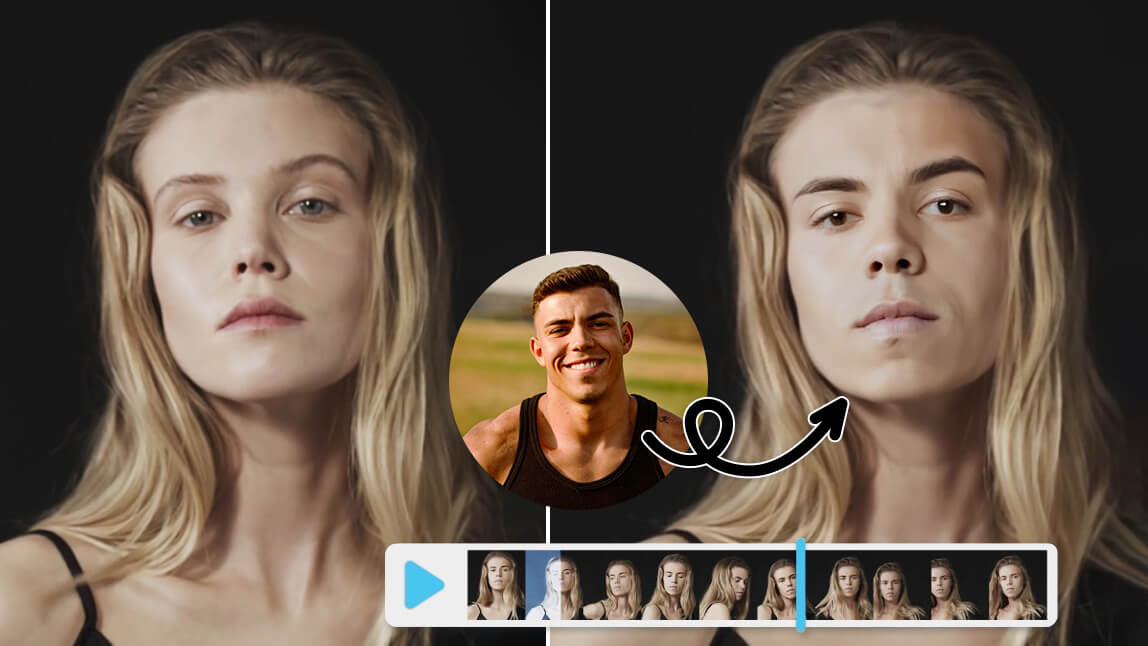
Artificial intelligence is continuously changing the way people edit photos and videos. Tasks that once demanded expensive software and professional editing skills are now easier than ever. One of the most exciting developments is face swap technology, which allows users to replace faces in digital content quickly and realistically.
As AI tools continue to improve, features like multiple face swap and face swap video are becoming increasingly popular. These technologies are helping creators, marketers, and casual users produce engaging content with minimal effort.
What Is Face Swap?
Face swap is an AI-based process that replaces one person’s face with another in an image or video. The software analyzes facial details to ensure the replacement blends naturally into the original content.
The technology works by:
- Detecting facial features
- Matching expressions and positioning
- Adjusting lighting and angles
- Creating smooth visual blending
The result is a realistic transformation that often looks professionally edited.
Why Multiple Face Swap Is Becoming Popular
Traditional face swap tools focus on changing one face at a time. However, multiple face swap allows users to replace several faces within the same image.
This feature is useful for:
Group Pictures
Swap multiple faces without editing each person separately.
Social Media Content
Create entertaining and engaging visuals.
Team Projects
Generate unique creative content quickly.
Fun Personal Edits
Experiment with different ideas among friends and family.
Instead of spending hours editing manually, AI handles everything automatically.
Understanding Face Swap Video
One of the biggest advancements in this field is face swap video technology. Unlike photos, videos require AI to track movement and changing expressions continuously.
This process involves:
- Monitoring facial movements frame by frame
- Adjusting for changing expressions
- Maintaining natural transitions
- Keeping visual consistency throughout the video
The outcome is smooth and realistic video content with swapped faces.
Why AI Face Editing Is Growing Fast
Face swap tools are becoming more popular because they offer several advantages.
Simple for Beginners
Most tools are easy to understand and require no technical expertise.
Time-Saving Technology
Editing that once took hours can now be completed much faster.
Creative Freedom
Users can explore different concepts easily.
Engaging Content Creation
Swapped images and videos attract attention online.
These benefits make AI editing tools accessible to everyone.
Popular Uses of Face Swap Technology
Today, face swap technology is used for many purposes.
Entertainment
People create funny and engaging content.
Social Media Marketing
Brands use unique visuals to increase engagement.
Creative Storytelling
Content creators experiment with different characters and ideas.
Personal Memories
Users make fun edits for special moments and events.
Tips to Improve Face Swap Quality
To get better results, follow these recommendations:
Use High-Quality Images
Sharp visuals improve accuracy.
Choose Good Lighting
Balanced lighting helps create realistic effects.
Keep Faces Clearly Visible
AI performs better when facial details are easy to detect.
Avoid Excessive Motion in Videos
Stable footage usually creates smoother edits.
These small steps can improve the final output significantly.
Challenges of Face Swap Technology
Even though AI tools are highly advanced, there are still some challenges.
- Poor image quality may affect realism
- Fast-moving videos can reduce accuracy
- Complex backgrounds sometimes create inconsistencies
However, improvements in AI continue making these issues less noticeable.
Responsible Use of Face Swap Tools
Using face swap technology responsibly is important.
Users should:
- Respect privacy
- Avoid misleading content
- Get permission before editing someone’s image
Ethical usage helps maintain trust and positive creativity.
The Future of Face Swap Technology
AI-powered editing tools continue evolving rapidly.
In the future, we may see:
- More realistic transformations
- Faster video processing
- Improved multiple-person editing
- Better customization features
These improvements will make face swap video and multiple face swap tools even more powerful.
Final Thoughts
Artificial intelligence is transforming digital creativity, and face swap technology is leading the way. From simple edits to advanced multiple face swap and face swap video features, users now have endless opportunities to create unique and engaging content.
Whether for fun, marketing, or creative projects, these tools provide a fast and effective way to bring ideas to life. As technology advances, face swap solutions will continue to shape the future of digital content creation.


Most conversations about drone progress end up in the same places — better cameras, longer battery life, smarter software. All valid, all worth talking about. What tends to get skipped over is the drone motor, which is a bit odd given how much it has actually changed over the past ten years. The motor is what makes the aircraft move, and its transformation has quietly reshaped what flying actually feels like. Understanding what changed, and when, turns out to be more useful than it might initially seem.
Where It All Started
The first wave of hobby drones ran on brushed motors. Cheap, simple, easy to find — they were a logical choice for aircraft that were not being asked to do very much. The way a brushed motor works involves direct contact between internal components, and that contact generates friction and heat from the moment the thing starts spinning. When drones were light and slow, and nobody was flying them for more than a few minutes at a time, the wear from that contact was not a serious problem.
Then drones started getting more ambitious. Bigger cameras, faster speeds, longer flight sessions — and the brushed motor showed its limits pretty quickly. Pilots were replacing motors more often than they had budgeted for, performance dropped in ways that became noticeable after a handful of hours, and the energy wasted through friction was eating into flight times that were already short enough.
The Shift to Brushless
Moving to brushless was not just an improvement on the same idea — it was a fundamentally different way of doing things. A brushless motor removes the physical contact entirely. The current is managed electronically by an external controller, which means no brushes wearing down, no friction building heat, and no gradual degradation eating away at consistency. The motor runs cleaner from the first flight to the hundredth.
Pilots who made that transition noticed it immediately. The aircraft felt tighter, more alive, and far less likely to let them down mid-session. Flight times got longer. The slow fade in performance that used to come with brushed motors just stopped being a factor. Looking back, brushless technology was not a refinement of what came before — it was what made serious drone flying possible in the first place.
The Numbers That Matter
Once brushless motors became standard, choosing one got more complicated. The specs started meaning something, and two figures in particular became the ones worth actually understanding. They are not the whole picture, but they are the most direct indicators of whether a motor belongs in a given build. Getting them wrong is a common mistake, and it is an entirely avoidable one once the logic clicks.
KV Rating
KV tells you how fast the motor spins per volt of input, measured with nothing attached to it. High KV means more rotational speed but less torque — that is the range for smaller propellers, racing setups, and freestyle flying where snappy response matters more than raw lift. Low KV means the motor turns more slowly but pulls harder, which is what you want for larger props and builds where efficiency and carrying capacity are the priority. It sounds like a simple trade-off, but getting the KV right for a specific build is one of those things that takes more consideration than it appears to at first.
Stator Size
The stator is the stationary core inside the motor — the part the rotor spins around. Its size, expressed as diameter and height in millimeters, determines how much copper can be wound inside it and, by extension, how much power the motor can produce and how well it handles heat. Bigger stator, more power, better thermal performance — but also more weight. Every build involves that trade-off somewhere, and the right stator size is always a function of what the frame can carry and how the drone is going to be used.
Recent Developments Worth Knowing
The brushless transition was not the last word. Motor technology has kept moving, and a few of the more recent developments have made a real practical difference.
- Improved winding techniques — More precise copper winding inside the stator has pushed efficiency up and heat down, letting motors run harder for longer before thermal limits become a problem.
- Better materials — Higher-grade magnets and lighter alloys have shifted the power-to-weight ratio in ways that actually show up in the air. Builds that needed heavier motors a few years ago can now get the same output from something noticeably lighter.
- Integrated telemetry — Some motors now feed live data — temperature, RPM, current draw — directly to the flight controller and in some cases to the pilot. That kind of real-time feedback was not available before and changes how quickly problems get caught.
- Tighter manufacturing tolerances — Build quality has improved across the board, which means less variation between units and fewer motors failing earlier than they should.
What This Means in Practice
The short version is that the baseline is higher than it has ever been. A decent mid-range brushless motor today does things that qualified as premium performance not long ago. For anyone getting into drones now, that is a genuinely good position to be starting from.
The longer version is that motor selection matters more than it used to. A wider range of options across a wider range of prices means the gap between a considered choice and a careless one is visible in the air. For those working through that decision, r5d5.com is worth a look — a solid range of drones and components with filters that make it easier to narrow down by specs and use case. How the drone handles, how long it lasts, how it manages heat on a hard session, all of that connects back to the motor decision. Knowing the history of how the technology got here does not just make for interesting reading. It makes it easier to understand why some of those choices carry as much weight as they do.

Best Budget Laser Engraver in the UK: Top Picks for DIYers and Small Businesses

The 15 Highest-Paid Rugby Players in the World

Best Custom Layout Tips for mrpd mlo fivem Police Roleplay Builds

Switzerland Travel eSIM: Why More Travelers Are Choosing eSIMs Instead of Roaming

Ophthalmic Instruments Names and Uses (Complete Guide for Ophthalmology Instrument Buyers)

Ownership Transparency Is Reshaping How Businesses Build Trust Across Borders

Nancy Hallam: The Inspiring Life, Career, and Success Story Behind Ian Wright’s Wife

Johnny Carell: Inside the Life, Family, and Rising Success of Steve Carell’s Son

Who Is Maisie Mae Roffey? The Private Life, Family Story, and Quiet Success of Julie Walters’ Daughter

Enclomimed 25 (Enclomiphene) – Effective PCT Protocol
Who Is Cameron Kade Hickenbottom? Shawn Michaels’ Son and His Independent Creative Legacy

Simon Dixon Biography: Lifestyle, Net Worth, Family, Career and Success Story
Nancy Hallam: The Inspiring Life, Career, and Success Story Behind Ian Wright’s Wife
Johnny Carell: Inside the Life, Family, and Rising Success of Steve Carell’s Son
Who Is Maisie Mae Roffey? The Private Life, Family Story, and Quiet Success of Julie Walters’ Daughter
Enclomimed 25 (Enclomiphene) – Effective PCT Protocol
Who Is Cameron Kade Hickenbottom? Shawn Michaels’ Son and His Independent Creative Legacy
Simon Dixon Biography: Lifestyle, Net Worth, Family, Career and Success Story
-
Celebrity6 months ago
Nancy Hallam: The Inspiring Life, Career, and Success Story Behind Ian Wright’s Wife
-
Celebrity7 months ago
Johnny Carell: Inside the Life, Family, and Rising Success of Steve Carell’s Son
-
Celebrity6 months ago
Who Is Maisie Mae Roffey? The Private Life, Family Story, and Quiet Success of Julie Walters’ Daughter
-
 Health4 months ago
Enclomimed 25 (Enclomiphene) – Effective PCT Protocol
-
Celebrity4 months ago
Who Is Cameron Kade Hickenbottom? Shawn Michaels’ Son and His Independent Creative Legacy
-
Business5 months ago
Simon Dixon Biography: Lifestyle, Net Worth, Family, Career and Success Story
-

 Celebrity4 months ago
Who Is Mark Gero? Inside the Life, Art, and Quiet Legacy of an American Creative
-
 Celebrity4 months ago
Draven Duncan: Tim Duncan’s Rising Star Son and His Inspiring Basketball Journey