
Business
Why Atlanta Drivers Are Losing Their Strongest Crash Evidence Without Realizing It


A car crash in Atlanta can flip your day upside down in seconds. One moment you’re driving down Peachtree Street, and the next you’re pulling over, checking for injuries, and calling for help. Most people focus on the police report and the insurance call that follows. However, there’s a quieter problem that many drivers never think about until it’s too late. The strongest proof of what actually happened at the scene often disappears within days, sometimes hours, and almost nobody realizes it’s happening.
The Evidence Clock Starts the Moment the Crash Happens
Traffic signals, gas stations, and nearby businesses in Atlanta often have cameras pointed at the road. So do the doorbells and porches of homes near busy intersections. These systems seem like a safety net. Yet most of them use loop recording, which means new footage automatically records over the old. A camera that captured your crash on Monday might erase it by Thursday, simply because nobody asked the owner to save it first.
This is exactly why speed matters so much after a wreck. Reaching out to an experienced Atlanta car accident lawyer early can make a real difference, because a lawyer can send a preservation letter to businesses and city agencies right away, asking them to hold onto footage before it gets wiped. Waiting even a week can mean the difference between having solid proof of fault and having nothing but two conflicting stories.
The same principle applies to witness accounts. People forget details surprisingly quickly, especially after a stressful collision. Getting names and contact information while memories are fresh gives you another piece of evidence that can support your version of events if the other driver later disputes what happened.
Why Atlanta’s Roads Make This Problem Worse
Atlanta isn’t a quiet town with a handful of intersections. It’s one of the busiest metro areas in the Southeast, with heavy traffic on I-285, the Downtown Connector, and dozens of high volume intersections. Because so many cameras are recording constant activity, storage limits fill up faster. In a quieter city, footage might sit untouched for weeks. In Atlanta, it can be gone in a fraction of that time simply because the system cycles through so much video every single day.
This becomes even more important in serious crashes involving major injuries. When someone suffers a life changing injury, proving exactly how the collision unfolded can affect far more than the initial claim. It can shape whether a victim recovers enough to cover years of treatment down the road. Cases involving long-term medical costs after a catastrophic injury show just how much is riding on solid, early evidence, since ongoing care, therapy, and future procedures all depend on a clear record of fault from day one.
That evidence can also help establish whether the crash caused a permanent change in someone’s ability to work, move, or live independently. The sooner those details are documented, the easier it becomes to connect today’s accident with tomorrow’s financial and personal consequences.
What You Can Actually Do Right After a Crash
You don’t need to be a lawyer to protect yourself. A few simple habits go a long way.
First, take photos immediately if it’s safe to do so. Capture the vehicles, the road, any skid marks, and nearby buildings that might have cameras. Second, look around for businesses or homes with visible cameras and jot down their addresses. You don’t have to contact them yourself, but this list becomes gold for anyone trying to track down footage later. Third, write down what you remember while it’s fresh, including the time, the weather, and which direction each car was traveling.
On top of that, consider a personal dashcam if you don’t already have one. Unlike public cameras that overwrite in days, a dashcam gives you your own permanent copy the moment it happens. Many insurers now recognize this value too. Progressive’s own guidance on the insurance benefits of installing a dashcam points out that this kind of footage can help resolve disputes faster and prove you weren’t at fault, since it captures the moment of impact without relying on memory or guesswork.
Keep your dashcam footage backed up, too. If the device is damaged or stolen in the crash, having a copy stored elsewhere ensures the recording remains available when you need it most during an insurance dispute or legal claim.
Small Steps That Protect Your Claim
None of this requires expensive equipment or legal training. It just requires acting fast, because evidence in Atlanta doesn’t wait around. Cameras erase footage, memories fade, and insurance companies move quickly to build their own version of events.
If you’re ever in a crash, treat the first 48 hours as a small window rather than a slow process. Document what you can, ask around about nearby cameras, and don’t be afraid to get legal guidance sooner rather than later. The people who protect their evidence early are usually the ones who end up with a fair outcome, not because they got lucky, but because they didn’t let the clock run out on the proof that mattered most.


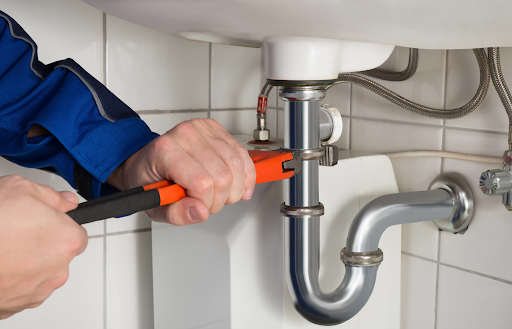
Plumbers have always been highly dependent on phone contact. In urgent cases such as pipe bursting or a leak, people are often in need of immediate direct contact. However, these are not all of the requests that plumbing businesses handle. Many are not as crucial, but those require careful consideration on the customer’s side. If all they find online about the plumber is their phone number, it can make it harder for them to decide whether they are worth contacting.
That’s why modern plumbing businesses should consider two particular tasks for their to-do lists: providing information for online clients before the first conversation takes place and introducing other contact methods. As we’ll learn, a professional online presence makes it easier for your customers to take the next step.
Customers Want More Information Before Calling
For plumbing jobs that do not require immediate response, customers may spend considerable time comparing businesses before deciding who to contact. It starts with a simple service check — does the business specialize in installations, renovations, maintenance, larger repairs, etc.?
A phone number alone does little to help with that comparison. A plumbing business website, on the other hand, can provide a full list of the offered services, along with details such as what areas the company covers, and price range.
This information can also prevent unnecessary calls. With the website describing such specifics, clients are more likely to contact the business to book a service straight away rather than to ask about service availability.
A Website Can Demonstrate Professionalism
Plumbing work involves customers giving a professional access to their homes or businesses, sometimes during stressful situations. It is to be expected that they want to ensure that the person they’re letting into their property is reliable and trustworthy.
A website provides space to demonstrate this before the first appointment in multiple ways. One such method is a team section, where each plumber is introduced along with their experience, qualifications, and certifications. An example of this is membership in the WaterSafe scheme, which proves that the plumber has undergone training in Water Fittings Regulations as mentioned by the Drinking Water Inspectorate.
Customer reviews and testimonials are another form of reassurance, especially for people who have never used the company before and are looking for social proof. This, along with relevant qualifications and insurance information, gives potential customers concrete reasons to trust the company, showcasing its professionalism.
Service Requests Can Be Made Much Easier
Another limitation of relying primarily on phone calls is that every inquiry requires an employee to collect the necessary information manually.
A website can add structure to this process. Instead of displaying a phone number, a plumbing company can include forms for requesting a quote, booking an appointment, or describing a problem. This lets customers leave clearly categorized data such as location, type of service needed, preferred appointment times, and photographs showing the issue.
The plumber then receives organized, useful information needed to assess whether they can take the requested job. It can also reduce unnecessary back-and-forth and make it easier to determine whether the request is suitable for the business.
A Website Can Become a Business Tool
One distinctive trait of the most useful plumbing websites is their presence not only during the decision stage of the customer journey but across all stages. From discovery all the way to service delivery and payment, a professional business website can support both clients and employees.
While customers can schedule appointments, communicate through the same digital system and complete online payments, business owners can use their website to collect leads, dispatch tasks among team members, track progress for each request, and send invoices. In other words, a website’s functionality can vastly surpass the opportunities that phone calls alone can create.
Does the Phone Still Matter?
Absolutely! Plumbing companies should not stop encouraging their customers to call. For emergencies and complicated problems, direct and instant communication via phone remains the most appropriate option.
The difference is that the phone should be one part of the online customer experience rather than the entire experience.
It’s true that customers are increasingly relying on online solutions, which highlights the advantages of a strong digital presence. Nevertheless, the best approach is to consider as many contact methods as possible and build a website that still supports phone contact instead of replacing it altogether. That way plumbers can cover a much wider range of job requests.
Business
Going Back to College While Working Full-Time: What Your Weekly Schedule Actually Looks Like

Most articles about adult learners talk about why you should go back to school. They rarely talk about how you actually fit it into a week that already feels full. If you are working a job, raising kids, or both, the real question is not whether online learning is flexible. It is whether you can make it fit between school pickup, a full inbox, and dinner.
Let’s talk about that part honestly.
The Schedule Problem Nobody Warns You About
When adults sign up for an online degree, they usually imagine studying in quiet evening hours. Then real life shows up. A meeting runs late. A child gets sick. Laundry piles up. Suddenly, that plan to “study every night at 8pm” falls apart by week two.
This is not a discipline problem. It is a planning problem. Online coursework works differently than a fixed classroom schedule, so it needs a different kind of weekly structure, not just good intentions.
A good place to start is choosing a school built for this exact situation. For instance, a renowned public college, Miami Dade College (at https://online.mdc.edu/online-programs/) offers flexible, accredited online degree programs designed around working adults rather than traditional full-time students. Programs like this matter because the coursework itself is structured with real jobs and real families in mind, with clear weekly deadlines instead of rigid class times you must log in for.
But picking the right program only solves half the puzzle. The other half is your calendar.
Build Your Week around Anchors, Not Free Time
Waiting for “free time” to study almost never works, because free time rarely shows up on its own. Instead, successful adult students usually build their study time around fixed anchors already in their week. This could be the 30 minutes before the kids wake up, a lunch break, or the commute home if you take public transport.
Think of these anchors as non-negotiable appointments with yourself. Put them on your calendar the same way you would a doctor’s visit or a work meeting. This one shift, treating study time as a real event, makes an enormous difference over a semester.
If you are also weighing whether this is the right season of life for a bigger academic step, it helps to think it through the same way professionals consider a career-boosting degree. This is where reading about the right next step for your career can be genuinely useful before you commit hours each week to coursework. It gives you a framework for deciding if now is the right time, or if a shorter certificate might serve you better first.
The Three-Bucket Method That Actually Works
Adult learners juggling work and school tend to do best when they split their available hours into three simple buckets instead of one long, vague “study time” block.
First is reading and lecture time, when your brain is fresh, ideally morning or early afternoon. Second is writing and assignments, which need longer, quieter stretches, often at night after everyone else is asleep. Third is quick review, five or ten minutes here and there, perfect for waiting rooms or a lunch break.
This kind of structured time-blocking approach is not unique to students. It is a well-documented productivity method used by busy professionals everywhere, and Todoist’s guide on time blocking breaks down exactly how to map tasks onto a calendar so nothing quietly falls through the cracks. Applying the same logic to coursework turns a scary 15-hour weekly workload into small, doable chunks instead of one overwhelming mountain.
What to Do When the Week Falls Apart Anyway
Even with a perfect plan, some weeks will still go sideways. A work deadline collides with a paper due date. A kid stays home sick. This is normal, not failure.
The trick is building a small buffer into your schedule every week, even just one extra hour with nothing planned. That buffer becomes your safety net when life interrupts your plan, which it will. Adult students who build in this slack tend to finish courses far less stressed than those who plan every single hour down to the minute.
It also helps to be honest early with your instructors if things get tight. Most online programs, especially those built for working adults, have support systems and flexible deadlines precisely because they expect real life to happen.
The Bottom Line
Going back to school as an adult is not really about finding more hours in the day. It is about rearranging the hours you already have. Pick a program that respects your schedule, anchor your study time to things that already happen every day, and build in a little breathing room. Do that, and a degree stops feeling impossible and starts feeling like just another part of your week.


Luxury brands live and die by first impressions. Their business flourishes on the basis of how they present their products in the market. But, they also have to take care of the fact that stores and warehouses have a cap on the space they have. This is why many high-end brands are turning to collapsible rigid boxes without sacrificing the elegance their customers have come to know and love.
Collapsible Doesn’t Mean Substandard
Foldable packaging looks cheap? Absolutely not. That worry has no place once the design is right. A good collapsible box can look just as practical and pronounced as a hardboard counterpart when it stands up.
Collapsible packaging made from thick cardboard and a quality finish maintains its solidity to ensure that the customer gets the same look and feel as they would expect from traditional premium packaging.
Saving Space Without Losing the Look
Worry about storage is something that is constant with luxury brands. With the help of collapsible packaging, they can afford to store a large number of packaging supply and also optimize whatever storage space they have to the fullest. This thing can also result in a positive impact on their profits.
Finishes That Keep the Premium Feel
Luxury customers notice texture and detail. A matte finish provides the boxes with a soft rich feel to the touch. Gloss coats immediately highlight the box’ graphics. The images on a packaging box immediately come into attention when they have a gloss coating. Logos with foil stamps, patterns with embossing and ribbon style closures can all add into the design of a collapsible box just as easily and effectively as on a standard box. Luxury packaging needs no solid build to include these elements. The finish does most of the work in setting the tone.
A Smoother Experience for Customers
Consumers like to buy things that are not complicated to work with. The same goes with the packaging of the products that they buy. When it comes to ease of use, the collapsible style of packaging is the undisputed topper of all. Due to its easy to store and manage characteristics people like it and also keep it with them for long. This may be for the sake of reuse, or to show them off with some modifications or other displayables in them.
Consequently the value of the brand that supplicated them with this packaging automatically upscales. That is, without adding any extra costs on their part.
Better for Shipping High Value Items
Courier costs and handling risks matter more with expensive items. Collapsible packaging cuts down on the space needed to move stock between supplier and store. High value items generally weigh more than regular products. This means that if their packaging is also weighty on its own, shipping costs may quickly run out of hand. Since collapsible boxes are not so bulky themself, they may add up your profits on this side too.
Green Practices For Luxury Shoppers
Luxury consumers are becoming more conscious of what happens to a product’s packaging after they purchase it.
Luxury packaging that is in a way that it can come into use again with the help of recycling is the best option. Collapsible and easily reformed luxury packaging would leave a positive impression on the consumer while providing the quality that the product demands.
Getting the Balance Right
Not every luxury item suits a collapsible box straight away. Hefty or more breakable products may require additional internal supports to maintain the same level of protection as a rigid design.
It is best to test your style in the market if you are trying out a new style of packaging, or making any sort of modification to your current regular. If you’re trying collapsible packaging, don’t order a huge batch right away. Test it first. See how it holds up, how customers react, and whether it actually saves you money in day-to-day sales.
Luxury brands can benefit from such technology as it allows for creating storage-efficient yet high-end packing, providing the best value for both sides of the sale. Thus, it can be recommended for upscale retailers that are interested in lowering their overheads without sacrificing the quality of their goods’ presentation.

Why Plumbing Businesses Need More Than a Phone Number Online

Why Atlanta Drivers Are Losing Their Strongest Crash Evidence Without Realizing It

Going Back to College While Working Full-Time: What Your Weekly Schedule Actually Looks Like

Specifying self-levelling compounds for commercial projects: where it goes wrong

When Is It Time to Consider Memory Care for a Loved One?

Premium Collapsible Packaging for Luxury Brands

The 15 Highest-Paid Rugby Players in the World

Christopher Dare: The Untold Story of Engineer and Former Husband of Angela Rippon

How to Ensure Your Home is Valued Correctly for a Quick Sale

What Is Fanquer? The Digital Creator Platform Transforming Direct-to-Fan Engagement

Nancy Hallam: The Inspiring Life, Career, and Success Story Behind Ian Wright’s Wife

Enclomimed 25 (Enclomiphene) – Effective PCT Protocol
The 15 Highest-Paid Rugby Players in the World
Christopher Dare: The Untold Story of Engineer and Former Husband of Angela Rippon
How to Ensure Your Home is Valued Correctly for a Quick Sale
What Is Fanquer? The Digital Creator Platform Transforming Direct-to-Fan Engagement
Nancy Hallam: The Inspiring Life, Career, and Success Story Behind Ian Wright’s Wife
Enclomimed 25 (Enclomiphene) – Effective PCT Protocol
-
 Sports4 months ago
The 15 Highest-Paid Rugby Players in the World
-
Celebrity9 months ago
Christopher Dare: The Untold Story of Engineer and Former Husband of Angela Rippon
-
 Real Estate7 months ago
How to Ensure Your Home is Valued Correctly for a Quick Sale
-
 Technology3 months ago
What Is Fanquer? The Digital Creator Platform Transforming Direct-to-Fan Engagement
-
Celebrity10 months ago
Nancy Hallam: The Inspiring Life, Career, and Success Story Behind Ian Wright’s Wife
-
 Health8 months ago
Enclomimed 25 (Enclomiphene) – Effective PCT Protocol
-

 Celebrity3 months ago
Dr Jared Ross: Missouri Appeals Court Upholds Protection Order Over Graphic Torture and Murder Threats
-
 Celebrity10 months ago
Who Is Maisie Mae Roffey? The Private Life, Family Story, and Quiet Success of Julie Walters’ Daughter