
Technology
The OWASP API Security Top 10 Explained: How Professional API Pentest Services Address Each Risk


Application Programming Interfaces have become the connective tissue of modern software infrastructure. They allow systems to communicate, data to move between platforms, and services to operate in real time. As organizations have expanded their API footprint, security teams have faced a corresponding increase in risk exposure. APIs are not just technical endpoints — they are access points to business logic, sensitive data, and customer-facing functionality.
The challenge is that API vulnerabilities are structurally different from traditional web application flaws. Standard security scans often miss them. Automated tools may flag surface-level issues while overlooking how authentication flows, authorization checks, or data exposure behave under real-world conditions. This is why structured evaluation frameworks exist, and why testing methodology matters as much as the tools used.
The OWASP API Security Top 10 is the most widely referenced framework for understanding where APIs fail in practice. Published by the Open Web Application Security Project, it reflects patterns observed across real-world breaches and responsible disclosure reports. Each category represents a class of failure — not a hypothetical threat, but a documented way that APIs have been compromised in production environments. Understanding each category, and how professional testing addresses it, helps organizations make better decisions about where their risk actually lives.
Why Structured API Testing Matters Before Deployment
When an API moves from development into production, the window for finding structural security problems narrows significantly. Post-deployment testing is possible, but changes become more constrained, remediation more expensive, and the risk of exposure more immediate. Structured security testing conducted before release — or as part of a recurring security program — gives teams the opportunity to identify how their API behaves under adversarial conditions, not just functional ones.
Professional api pentest services apply manual and methodology-driven testing against live or staging API environments, using the OWASP API Security Top 10 as a framework to ensure systematic coverage. This kind of testing is not a checkbox activity. It involves understanding how the API was designed, what business operations it supports, and where authorization decisions are made — then probing those areas with deliberate, structured techniques.
The OWASP framework is valuable precisely because it reflects how APIs fail in the real world. It moves beyond generic vulnerability classes and addresses the specific ways that API design decisions create exploitable conditions. Testers who understand this framework approach each engagement with a clear map of where risk is most likely to concentrate.
Broken Object Level Authorization
Broken Object Level Authorization, or BOLA, sits at the top of the OWASP list because it is the most consistently observed API vulnerability class. It occurs when an API endpoint accepts a user-supplied identifier — such as an object ID in a URL or request body — without verifying whether the requesting user actually has permission to access that object.
How This Plays Out in Real Systems
In practice, BOLA means that a user authenticated as one account can modify the identifier in a request and receive data belonging to a different account. The API authenticates the user correctly, but it does not enforce that the resource being requested belongs to that user. This is an authorization failure at the object level, not an authentication failure, and it is frequently missed by automated scanners that confirm authentication is working without testing what happens after access is granted.
Testing for BOLA involves creating multiple test accounts, performing operations under each, and then attempting to access resources owned by one account while authenticated as another. This requires deliberate test planning, not automated fuzzing.
Broken Authentication
Authentication failures in APIs differ from those in web applications because APIs often use token-based systems, API keys, or OAuth flows that behave differently depending on how they are implemented. Weak token generation, improper session expiry, missing rate limiting on login endpoints, and insecure transmission of credentials are all documented failure patterns.
Token Validation and Session Behavior
Testing authentication in an API context means examining how tokens are issued, how they expire, whether they can be reused after logout, and how the system responds to malformed or manipulated tokens. JWT (JSON Web Token) implementations, for example, have a documented history of misconfiguration that allows signature verification to be bypassed. A structured pentest will examine these flows directly, not assume that because authentication exists, it has been implemented correctly.
Broken Object Property Level Authorization
This category addresses situations where an API exposes more object properties than the requesting user should be able to see or modify. In some cases, a user can send additional properties in a request body and the API will process them — including properties they were never intended to control. In other cases, the response returns fields that contain sensitive information the user has no business need to access.
Mass Assignment and Excessive Data Exposure
Mass assignment vulnerabilities allow users to supply values for internal fields — such as account roles or billing status — that the API then applies without validation. Excessive data exposure occurs when response payloads include sensitive attributes that the client-side application simply does not display, but which remain accessible to anyone reading the raw API response. Both are testing areas that require manual review of API schemas and response structures.
Unrestricted Resource Consumption
APIs that do not enforce limits on request frequency, payload size, or processing cost can be pushed into states that degrade service for all users or generate unexpected infrastructure costs. This is not only a denial-of-service concern — in some billing or usage-metered environments, unrestricted consumption can have direct financial consequences.
Practical Implications for API Stability
Testing in this area involves examining whether rate limiting is enforced at the API layer, whether large payloads or complex queries cause disproportionate resource usage, and whether the system responds gracefully when consumption limits are reached. Organizations operating APIs that support business-critical workflows need to understand how their APIs behave under load stress, not just functional correctness.
Broken Function Level Authorization
Where BOLA is about accessing specific records, Broken Function Level Authorization is about accessing administrative or privileged API functions. Some APIs expose administrative endpoints that are protected only by convention — they are not listed in documentation, but they are discoverable through directory enumeration or API specification analysis. If these endpoints do not enforce role-based access controls, any authenticated user may be able to invoke them.
Endpoint Discovery and Privilege Testing
Pentesters examine API documentation, OpenAPI specifications, and HTTP response patterns to identify undocumented or administrative endpoints. They then test whether those endpoints enforce appropriate access controls when called by lower-privilege accounts. This is a straightforward but important class of testing that organizations with layered user roles should not skip.
Unrestricted Access to Sensitive Business Flows
Some API vulnerabilities are not about bypassing security controls but about using legitimate API functionality in ways that cause business harm. Automated bots that exploit purchase flows, loyalty redemption endpoints, or referral systems are examples of this category. The API functions exactly as designed — it is the volume and pattern of use that creates the problem.
Identifying Abuse-Prone Endpoints
Addressing this risk requires understanding the business logic behind each endpoint, not just its technical behavior. Testers familiar with industry-specific abuse patterns can identify which flows are vulnerable to automated exploitation and recommend controls such as behavioral rate limiting, CAPTCHA integration, or anomaly detection at the API gateway layer.
Server-Side Request Forgery
Server-Side Request Forgery, or SSRF, occurs when an API accepts a URL or network location as input and makes a server-side request to that location without validation. An attacker can supply an internal network address, causing the server to make requests to internal services that are not directly accessible from the internet. According to the OWASP API Security Project, SSRF has increased in prevalence as APIs increasingly fetch remote resources or integrate with external services.
Internal Network Exposure Risks
Testing for SSRF involves supplying controlled external URLs and observing whether the server initiates outbound requests. Testers then attempt to redirect requests toward internal addresses to determine whether the API can be used as a proxy into otherwise protected infrastructure. In cloud environments, this can include requests to metadata endpoints that expose instance credentials.
Security Misconfiguration
Security misconfiguration encompasses a broad range of implementation failures: permissive CORS policies, verbose error messages that expose stack traces, default credentials on supporting infrastructure, missing HTTP security headers, and unnecessary HTTP methods enabled on endpoints. These are individually small issues, but in combination they create a significantly larger attack surface.
Configuration Review as Part of Testing
A thorough API pentest includes reviewing the API’s supporting configuration, not just its code paths. This means examining how the API gateway, web server, and hosting environment are configured, and whether default settings have been hardened appropriately before the API was exposed to external users.
Improper Inventory Management
Organizations with mature API ecosystems often have older API versions still accessible in production alongside current versions. Deprecated endpoints may lack the security controls applied to newer versions. If an API version is not actively maintained or monitored, it becomes a blind spot in the organization’s security posture — accessible to attackers but invisible to defenders.
Version Control and API Lifecycle Governance
Testing for this category involves enumerating API versions, identifying deprecated endpoints, and testing whether older versions enforce the same controls as current ones. This requires an inventory of what exists, which is something many organizations do not maintain with sufficient rigor. The testing process itself often surfaces API versions the security team did not know were still active.
Unsafe Consumption of APIs
The final OWASP category addresses how an API trusts and processes data from third-party APIs it consumes. When an application integrates with external services, it may process responses from those services without adequate validation or sanitization. If a third-party service is compromised or returns unexpected data, the consuming application can be affected in ways the development team never anticipated.
Third-Party Integration Risk
Testing in this area examines how the API handles responses from integrated services, whether validation is applied to third-party data, and whether the application is resilient to unexpected or malformed external responses. This is increasingly relevant as APIs become more dependent on external services for core functionality.
Bringing the Framework Together: What Structured Testing Delivers
The OWASP API Security Top 10 is most useful not as a checklist but as a framework for understanding where API risk concentrates and why. Each category reflects a structural pattern — a way that design decisions, implementation choices, or operational practices create conditions that can be exploited. Addressing these risks requires more than automated scanning. It requires testers who understand API architecture, business logic, and how the categories interact in real environments.
Organizations that treat API security as a recurring, structured practice — rather than a one-time pre-launch activity — tend to develop clearer internal processes around security review, more consistent developer awareness, and faster remediation cycles. The OWASP framework gives both security teams and development teams a shared vocabulary for discussing where risk lives and what needs to change.
The value of professional api pentest services in this context is not simply the identification of vulnerabilities. It is the structured, repeatable process of examining APIs through an adversarial lens, using a documented framework to ensure that the most common and consequential failure modes are covered in every engagement. For organizations whose operations depend on API availability and integrity, that kind of systematic assurance is not optional — it is a baseline operational requirement.

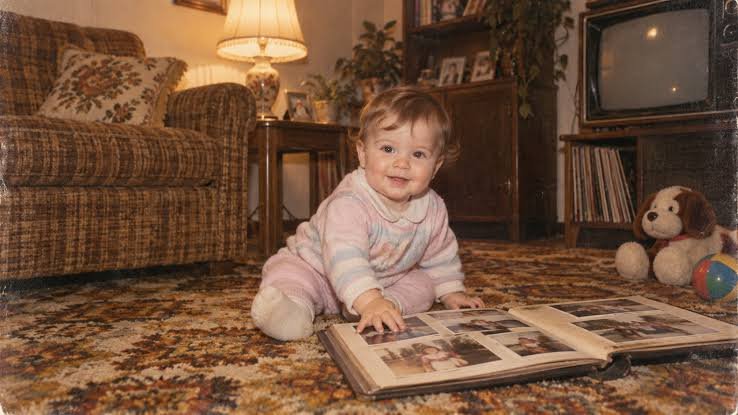
Parents planning a retro birthday theme or setting up a custom holiday card for their children often face an immediate bottleneck. Booking a specialized studio session for vintage-styled artistic portraits sounds ideal on paper, but the reality involves rigid scheduling, high costs, and stressed toddlers forced into unfamiliar costumes under heavy lights. When traditional methods fail, turning to a reliable 80s photo generator offers an effortless alternative. When final studio proofs arrive weeks later, the photos frequently look stiff and overly staged, whereas an AI 80s photo generator captures the warm, candid nostalgia parents originally envisioned.
The underlying conflict is not a lack of creative vision, but the operational friction of traditional portrait photography. Achieving the iconic aesthetic of the 1980s—soft film blur, vibrant laser backdrops, side-swept hair volume, and direct flash highlights—does not require dragging a four-year-old into a commercial studio. Modern generative AI workflows powered by a dedicated 80s photo generator have fundamentally shifted how artistic portraits are produced. By using a specialized 80s photo generator, parents can convert ordinary candid smartphone shots into high-fidelity vintage artistic portraits while preserving their child’s genuine expressions.
The Myth That Retro 80s Photo Generator Portraits Require Professional Studios
A widespread belief among parents is that stylized vintage photography requires high-end camera gear, physical props, and professional studio lighting setups. Many assume that recreating authentic 1980s studio portraits demands period-accurate velvet blazers, physical neon backdrops, and analog medium-format film backends instead of using an intuitive 80s photo generator. This assumption leads families to spend hundreds of dollars on specialized photography packages, only to end up with constrained, unnatural photos that an 80s photo generator could generate seamlessly at home.
The reality is that traditional studio setups excel at static lighting control, but struggle with the spontaneous nature of childhood. Recreating 1980s aesthetic elements physically—such as double-exposure laser grids or specialized film grain filters—requires complex analog post-processing or retro studio sets that few modern commercial studios maintain, whereas an 80s photo generator handles these effects automatically. Attempting to replicate these vintage looks physically often yields inconsistent results, while an online 80s photo generator ensures true-to-era texture and lighting every single time.
Instead of relying on physical set construction, an advanced 80s photo generator shifts the styling process into a digital diffusion pipeline. Rather than forcing a child to stand still in front of a synthetic background, AI-powered generation accepts a quick, unposed candid snapshot taken at home. The model analyzes the underlying facial geometry, preserving identity features while re-synthesizing clothing textures, hair volume, ambient studio lighting, and vintage color science in a single workflow.
Using an 80s photo generator eliminates the physical setup constraints that previously restricted vintage artistic portraits to high-end photography studios. Parents gain complete creative control over aesthetic themes—ranging from classic yearbook portraits to synthwave arcade styles—without subjecting their child to a high-stress studio setting.
Why Traditional Studio Shoots Fail to Capture Natural Childhood Expressions
Traditional photography studios operate on structured time blocks and controlled physical environments. For adult portraits, this environment works reasonably well. However, when applied to young children, the mechanical nature of a studio shoot directly undermines image quality.
| Studio Factors | Traditional Physical Shoot | AI-Driven Vintage Generation |
| Child Comfort | High stress under hot lights and rigid poses | Zero stress; uses comfortable home candid photos |
| Posing Flexibility | Limited to static studio props and seated marks | Infinite variation built from natural facial expressions |
| Aesthetic Texture | Modern digital sharpness mixed with artificial props | Authentic 1980s film grain, direct flash, and soft lens glow |
| Turnaround Time | 2 to 3 weeks for studio proofing and retouching | Real-time generation in seconds per variation |
The core failure mechanism of traditional studio photography lies in environmental pressure, which is why parents increasingly rely on an 80s photo generator instead. Hot studio strobe flashes, giant softboxes, and unfamiliar photographers create sensory overload for toddlers and young children. When forced to sit on a prop box and hold a fake smile for twenty minutes, children naturally contract their facial muscles, resulting in forced smiles, tense shoulders, and uncomfortable body language.
Furthermore, traditional photographers must constantly adjust camera focus and lighting strobes, missing the fleeting split-second expressions that reveal a child’s true personality. Attempting to apply complex retro styling—such as heavy 80s hair or structured shoulder pads—on an uncomfortable child further increases distress, whereas an 80s photo generator easily adds these period stylings digitally. The resulting physical portraits may technically feature retro elements, but they lack warmth, whereas an 80s photo generator preserves genuine emotional warmth and authenticity.
In contrast, an 80s photo generator decouples expression capture from aesthetic transformation. Parents can capture a quiet moment when their child is laughing naturally in their living room. Using a modern 80s photo generator, the AI model extracts this authentic emotional energy, applying period-specific lighting, analog film grain, and vintage apparel around the child’s true facial expression.
Real-World Limitations: When Static Posing Meets 80s Aesthetic Requirements
Achieving an authentic 1980s photographic look involves specific optical characteristics that are difficult to reproduce using standard modern DSLR or mirrorless cameras without an 80s photo generator. During the 1980s, portrait studios relied on specific film stocks like Kodak Gold or Fuji Color, paired with direct tungsten flash photography, soft-focus diffusion filters, and physical painted canvases.
When parents attempt to fix modern digital photos with standard filters or color LUTs instead of an 80s photo generator, the results fall short. Basic filters merely apply a superficial color tint over flat modern images without modifying structural depth, optical bloom, or period clothing textures that an 80s photo generator constructs effortlessly.
An 80s photo generator resolves these specific optical limitations through generative reconstruction rather than superficial filtering. Rather than applying a top-layer mask, the underlying model rebuilds the scene in latent space—synthesizing authentic direct-flash highlights, soft diffusion glow, and era-correct studio textures while keeping the child’s core facial identity completely intact.
The Efficiency of an 80s Photo Generator for Artistic Results
The true value of an 80s photo generator is not merely generating a novelty image; it is establishing a fast, reliable workflow for producing high-quality vintage artistic portraits across multiple media formats. Whether parents need a high-resolution print for a framed nursery canvas, a tailored image for a family holiday card, or digital assets for an online memory book, a dedicated 80s photo generator streamlines production.
Using platforms like Pikvee, parents can instantly test multiple vintage visual directions without booking separate photography packages. An effective 80s photo generator handles identity preservation automatically via specialized latent adapters, ensuring the child’s face does not warp or morph during style transfer while delivering authentic 80s photo generator output quality.
Consider a practical comparison of production workflows for a children’s retro photo album:
[Traditional Studio Workflow]
Schedule Appointment -> Travel to Studio -> Child Costume Changes -> Forced Posing Session -> 14-Day Wait -> Single Fixed Style
[Pikvee AI Generation Workflow]
Snap Casual Home Photo -> Upload to Pikvee -> Select 80s Style Preset -> Render Variations -> Instant High-Res Export
By switching to a digital-first approach, parents can explore diverse 1980s sub-genres in seconds. A single reference photo can yield a formal 1985 mall studio portrait, a neon disco theme, or a cozy 80s home family snapshot. Pikvee processes these variations while retaining fine facial detail, providing consistent identity matching across an entire collection of artistic portraits.
To maintain strict visual quality, parents can address occasional AI rendering artifacts—such as minor edge softening or background inconsistencies—by generating multiple iterations in Pikvee or making minor parameter adjustments. Running a quick multi-prompt batch allows families to select the cleanest render while preserving complete character consistency.
This efficiency allows parents to generate full photo series for special occasions—such as milestone birthdays or annual holiday cards—at a fraction of traditional photography costs, without sacrificing visual fidelity or rigor.
Practical Rules for Creating Authentic Children’s Portraits with Pikvee
To achieve optimal results when generating vintage children’s artistic portraits using an 80s photo generator, parents should follow a structured input and evaluation checklist. High-quality AI generation with an 80s photo generator depends on providing clear reference images and understanding how style modifiers interact with facial preservation models.
Follow these practical guidelines when using Pikvee for vintage portrait generation:
1. Source Image Selection Criteria
- Lighting: Choose a snapshot taken under bright, ambient natural light. Avoid images with severe side shadows or deep under-eye cast lighting.
- Angle: Use eye-level camera angles. Extreme high-angle or low-angle shots can distort facial proportions during 80s style rendering.
- Facial Expression: Select photos with relaxed, candid expressions. Closed-mouth smiles or natural laughs render more authentically than forced open-mouth poses.
- Obstructions: Ensure the face is free from obstructions like pacifiers, large sunglasses, or hands covering the chin.
2. Style Prompt and Preset Optimization
When configuring your generation parameters in Pikvee, structure your style hints to balance retro aesthetics with facial realism. Use concrete visual descriptors rather than generic terms.
[Recommended Style Parameters]
Subject: Young child portrait, authentic identity preservation
Setting: 1980s vintage photo studio, laser grid background, soft blue studio backlighting
Apparel: Denim jacket, retro striped collar shirt, 80s haircut styling
Lighting: Vintage direct flash, subtle lens flare, soft focus diffusion
Texture: Kodachrome film grain, warm tone shift, 1985 portrait aesthetic
3. Post-Generation Audit Checklist
Before exporting portraits for physical printing or social sharing, review the output against key visual criteria:
- Facial Identity Check: Compare pupil shape, nose structure, and smile lines against the original snapshot to ensure natural recognition.
- Proportions: Verify that shoulder width and clothing scale match the child’s age group without unnatural exaggeration.
- Grain and Texture Balance: Ensure the vintage film noise and laser backdrop blend smoothly into the hair edges without blurring facial details. If edges appear blurry, running a second generation with a lower denoising strength parameter often clarifies the detail.
- Color Accuracy: Check that skin tones retain natural warmth under the simulated 80s studio flash lighting.
By substituting rigid physical studio shoots with an advanced 80s photo generator like Pikvee, parents can easily turn casual childhood moments into timeless vintage artistic portraits. Choosing a versatile 80s photo generator eliminates the stress of traditional photo sessions, offering a flexible, cost-effective way to preserve cherished childhood memories with authentic retro style.
Technology
AI-Generated Nano Banana 2.1 Visuals: What Shopify Beauty Ecommerce Brands Should Check Before Publishing


Launching a skincare collection on Shopify under tight marketing deadlines often tempts creative teams to rush generative assets straight from prompt outputs to live product detail pages. When an autumn serum launch is forty-eight hours away, producing lifestyle scenes on demand feels like a massive relief compared to booking studio shoots and hiring retouchers. Yet in cosmetics merchandising, photorealism is not an aesthetic bonus—it is the baseline of consumer trust. A shopper scrutinizing an amber dropper bottle will abandon checkout the moment a glass reflection bends unnaturally, an active ingredient label turns into illegible glyphs, or a model’s cheek exhibits the plastic, airbrushed sheen typical of uncurated machine outputs. The fundamental trap in nano banana 2.1 generative workflows is confusing rendering speed with production viability; an asset that looks stunning at a thumbnail glance can easily destroy brand credibility once zoomed on a high-resolution mobile display.
Deploying newer generative engines like nano banana 2.1 provides digital merchandisers with remarkable control over lighting and multi-reference fidelity, but tool precision cannot replace editorial judgment. Beauty buyers assess product safety, texture feel, and ingredient efficacy through visual cues alone. If your Shopify store presents synthetic artifacts as commercial reality, return rates and ad acquisition costs rise immediately. Establishing an uncompromising visual gatekeeping protocol ensures your creative department leverages nano banana 2.1 capabilities without eroding customer confidence.
The Core Quality Standard for Nano Banana 2.1 in Beauty Ecommerce
The commercial threshold for visual content in beauty ecommerce differs fundamentally from apparel or home goods. In fashion, minor drape variations or ambient styling liberties rarely trigger doubts about fabric authenticity. In prestige skincare, however, visual artifacts immediately signal counterfeit goods or deceptive advertising. When configuring production pipelines with nano banana 2.1, visual teams must evaluate output assets against three foundational parameters: material truth, functional plausibility, and consumer expectation.
Material truth requires that packaging substances rendered in nano banana 2.1 behave according to real-world physics. Amber glass must refract light with appropriate density; frosted acrylic jars must diffuse backlight rather than creating metallic glares; and cosmetic liquids must exhibit realistic viscosity. When rendering an anti-aging cream, the emulsion surface inside an open jar must display authentic surface tension rather than generic digital gloss. Functional plausibility demands that primary packaging elements generated by nano banana 2.1—dropper bulbs, airless pump nozzles, dropper pipettes, and cap threading—show precise industrial logic. If a pump dispenser lacks a realistic dispensing seam or sits off-center on the bottle neck, discerning skincare shoppers sense an amateur presentation.
Teams integrating nano banana 2.1 via Defapi into automated asset pipelines frequently discover that while the underlying Gemini 3.6 Flash multimodal engine handles text and scene composition with high fidelity, visual standards must be codified programmatically. Rather than measuring nano banana 2.1 success by subjective artistic flair, beauty brands must define visual quality as the absence of friction between what the shopper sees on a Shopify collection page and what arrives inside the unboxing package.
Non-Negotiable Visual Elements in Skincare and Cosmetics Assets
To prevent costly post-launch rollbacks when evaluating nano banana 2.1 renders, creative directors must separate minor stylistic nuances from catastrophic failure modes. The following three visual elements are strictly non-negotiable across every digital touchpoint:
- Packaging Geometry and Component Integrity: In any nano banana 2.1 render, cylindrical bottles must not taper irregularly, pump collars must align flush with container shoulders, and dropper pipettes immersed in liquid must demonstrate proper optical index refraction. Any asset showing skewed cap seams or melted nozzle tips must be rejected instantly.
- Primary Label Readability and Typographic Fidelity: The primary display panel (PDP) of a cosmetic container in nano banana 2.1 assets is legally regulated and emotionally reassuring. Active ingredient names (such as “2% Hyaluronic Acid” or “Niacinamide Serum”), volumetric callouts, and brand wordmarks must remain crisp and perfectly planar to the container contour. Synthetic smudging across typography in nano banana 2.1 visuals destroys customer confidence faster than poor background staging.
- Organic Skin Topography and Authentic Texture: Beauty shoppers reject images where human skin generated by nano banana 2.1 appears completely poreless, rubberized, or airbrushed into a uniform tonal blur. Natural skin contains fine micro-creases, subtle vascular undertones, and microscopic follicle details. If an asset displays waxy highlights on cheekbones or blurred jawlines, it violates commercial standards.
| Quality Inspection Parameter | Commercial Non-Negotiable Standard | Critical Failure Trigger |
| Container Structural Geometry | Precise 90-degree base alignments, symmetrical neck rings, uniform wall thickness | Warped glass walls, asymmetrical dispenser nozzles, melted pump collars |
| Typography and Label Architecture | Legible formulation names, sharp typography alignment, accurate tracking | Warped letterforms, gibberish characters, curved text breaking container perspective |
| Model Facial & Cuticular Anatomy | Authentic epidermal grain, natural follicular pores, distinct nail margins | Plasticized skin finish, merged finger joints, hyper-glossy artificial highlights |
| Liquid & Emulsion Mechanics | Correct meniscus curve, authentic opacity, realistic surface refraction | Floating fluid droplets, cloudiness in clear solutions, disconnected dropper drops |
When generating seasonal variations, teams operating nano banana 2.1 must prioritize these non-negotiables over background atmosphere. A gorgeous Parisian marble bathroom scene means nothing if the bottle label resting on the vanity is blurred or warped.
Acceptable Production Trade-Offs for Fast Creative Iteration
While product containers and human textures demand absolute fidelity in nano banana 2.1 outputs, insisting on absolute perfection across secondary scene elements paralyzes creative velocity. Merchandising teams producing dozens of localized ad variations or seasonal promotional headers with nano banana 2.1 must identify where artistic trade-offs are safe and commercially harmless.
Background foliage, atmospheric depth, and auxiliary lifestyle props do not represent your commercial offer in nano banana 2.1 lifestyle scenes. If an autumn botanicals campaign features slightly stylized eucalyptus leaves or abstract marble vein patterns in soft focus, these simplifications do not undermine the authenticity of the featured moisturizer. In lifestyle compositions rendered via nano banana 2.1, shallow depth of field (bokeh) is an effective tool: blurring background bathroom tiles or morning window sunlight directs customer attention toward the sharp, uncompromised product packaging.
Similarly, secondary lighting reflections on peripheral background mirrors or non-branded vanity trays can carry minor generative stylizations without consequence. When running high-throughput creative tests via Defapi developer endpoints, beauty operators can tolerate mild abstraction in ambient environmental textures while enforcing strict mask-based preservation on the product bottle itself. Nano banana 2.1 supports up to fourteen multi-reference inputs, enabling teams to lock primary SKU dimensions while letting background environments flex dynamically across spring, summer, and holiday merchandising themes.
A Practical Verification Routine Before Publishing to Shopify
Before pushing newly generated visual assets from nano banana 2.1 into a live Shopify theme, performance teams should apply a structured four-step inspection routine:
[Master Render Output]
│
▼
[Step 1: 400% Zoom Typography & Seam Audit] ──► Failed ──► Mask-Edit / Reject
│
Passed
▼
[Step 2: Pantone & Formula Color Calibration] ──► Failed ──► Color-Grade / Re-prompt
│
Passed
▼
[Step 3: Multi-Device Contrast & Scale Check] ──► Failed ──► Re-crop / Re-balance
│
Passed
▼
[Step 4: Contextual Channel Cohesion Review] ──► Approved for Storefront Publishing
- Step 1: The 400% Zoom Audit: Open the rendered asset in a calibrated viewer and zoom directly into the typography, pump dispenser nozzle, and cap threading. Confirm that letters remain legible without generative distortion. If the label displays synthetic artifacts, deploy targeted mask editing in nano banana 2.1 to replace only the text region rather than regenerating the entire image.
- Step 2: Pantone and Formula Color Calibration: Skincare brands rely heavily on proprietary pastels, amber tints, and tinted serum hues. Compare the liquid tone rendered by nano banana 2.1 against your physical lab standard. A vitamin C formulation rendered in nano banana 2.1 with excessive neon yellow instead of an authentic pale amber finish misleads shoppers regarding product freshness and oxidation.
- Step 3: Multi-Device Scale and Contrast Check: Inspect the image at standard desktop dimensions (1600px width) and scaled down to a 375px mobile viewport. Ensure high contrast between the product silhouette and the lifestyle backdrop so the container stands out clearly on mobile feeds.
- Step 4: Contextual Placement Alignment: Verify that the asset fits its exact store placement. A hero banner requires negative space for typography overlays, while a square collection card demands centered visual gravity with zero edge cropping on the bottle cap.
Establishing this routine eliminates guesswork and prevents flawed visual experiments from reaching high-intent store visitors.
Building a Multi-Asset Consistency System Across the Catalog
The true test of generative image workflows with nano banana 2.1 is not producing a single heroic product shot, but scaling visual cohesion across twenty distinct SKUs. If your brightening cleanser appears under crisp Scandinavian daylight while the matching night cream looks bathed in warm editorial studio tungsten, your Shopify collection page will appear disjointed and unprofessional.
To build systemic harmony, beauty ecommerce brands must construct unified lighting and perspective templates. Standardize key lighting angles (such as 45-degree top-left key lights with gentle bounce fill) and lock camera elevation across all product listing images. When referencing multiple products in an evening routine bundle, leverage the multi-object coherence features of nano banana 2.1 to guarantee that container scales remain proportional. A 30ml eye cream bottle must never appear larger than a 100ml facial toner sitting beside it on the same digital shelf.
Furthermore, centralized API architecture via Defapi enables marketing teams to automate reference prompt conditioning and asset tagging across seasonal catalogs. By linking your Shopify product taxonomy directly to standardized reference profiles, creative teams can refresh hero visuals across multiple product categories simultaneously without losing brand uniformity. Generative visual production is no longer an experimental novelty for beauty brands; managed under rigorous quality standards and structured review systems, it becomes a dependable engine for commercial growth.

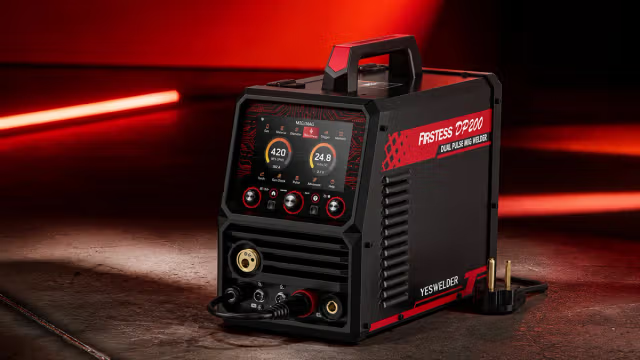
A workshop can get crowded quickly. A MIG welder here, a TIG machine there, and a plasma cutter that only comes out when a project needs one. Add gas cylinders, cables, torches, and consumables, and a garage can run out of usable space sooner than expected.
For DIYers and home fabricators, an all-in-one machine can be a practical alternative, especially when different projects call for different processes.
A Closer Look at the YESWELDER FIRSTESS MP200 PRO
The YESWELDER FIRSTESS MP200 PRO is a multi-process welder that combines MIG, TIG, stick welding, plasma cutting, and metal cleaning in one machine.
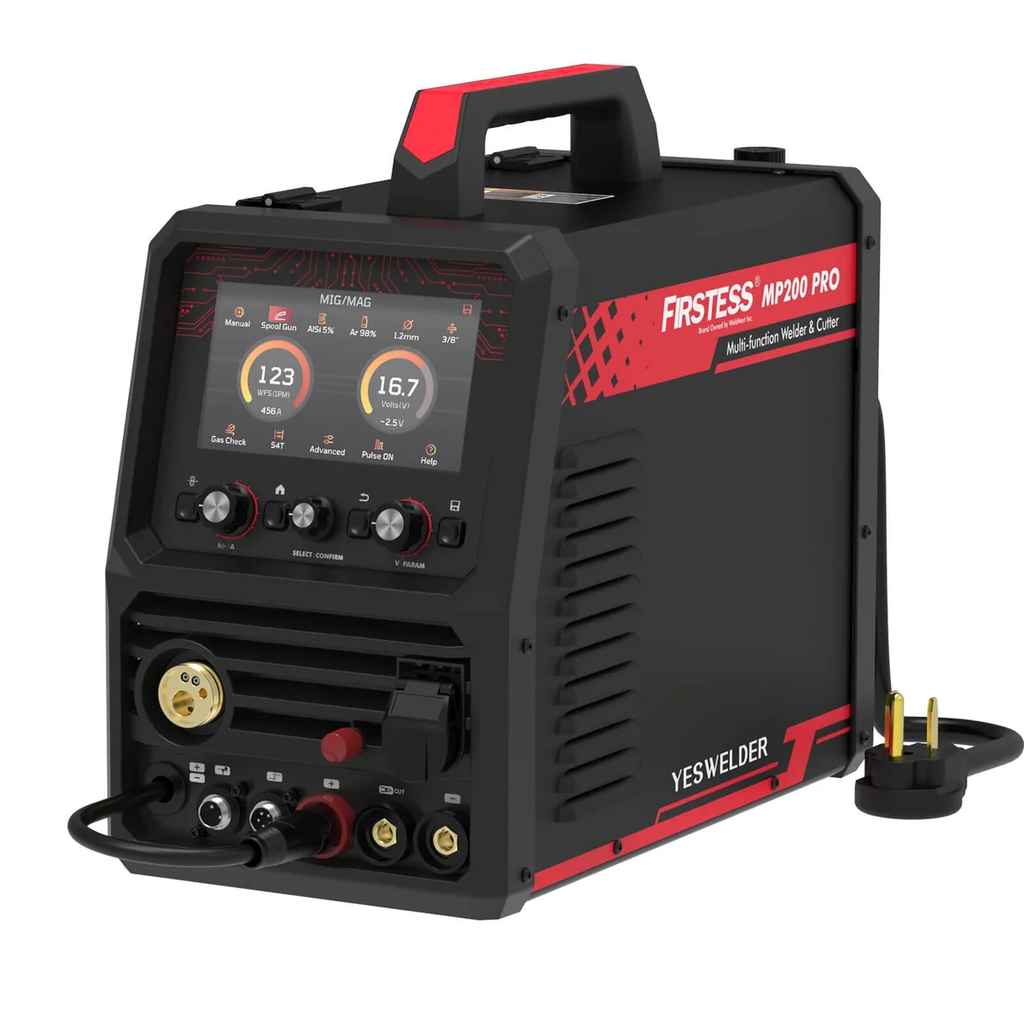
With 120V/240V input, it is designed for a wide range of projects, from repairing brackets and cutting sheet metal to building custom frames and tackling more demanding garage fabrication.
The machine supports:
- MIG and Pulse MIG
- Flux-cored welding
- HF/Lift TIG and Pulse TIG
- Stick and Pulse Stick
- Plasma cutting
- Metal cleaning
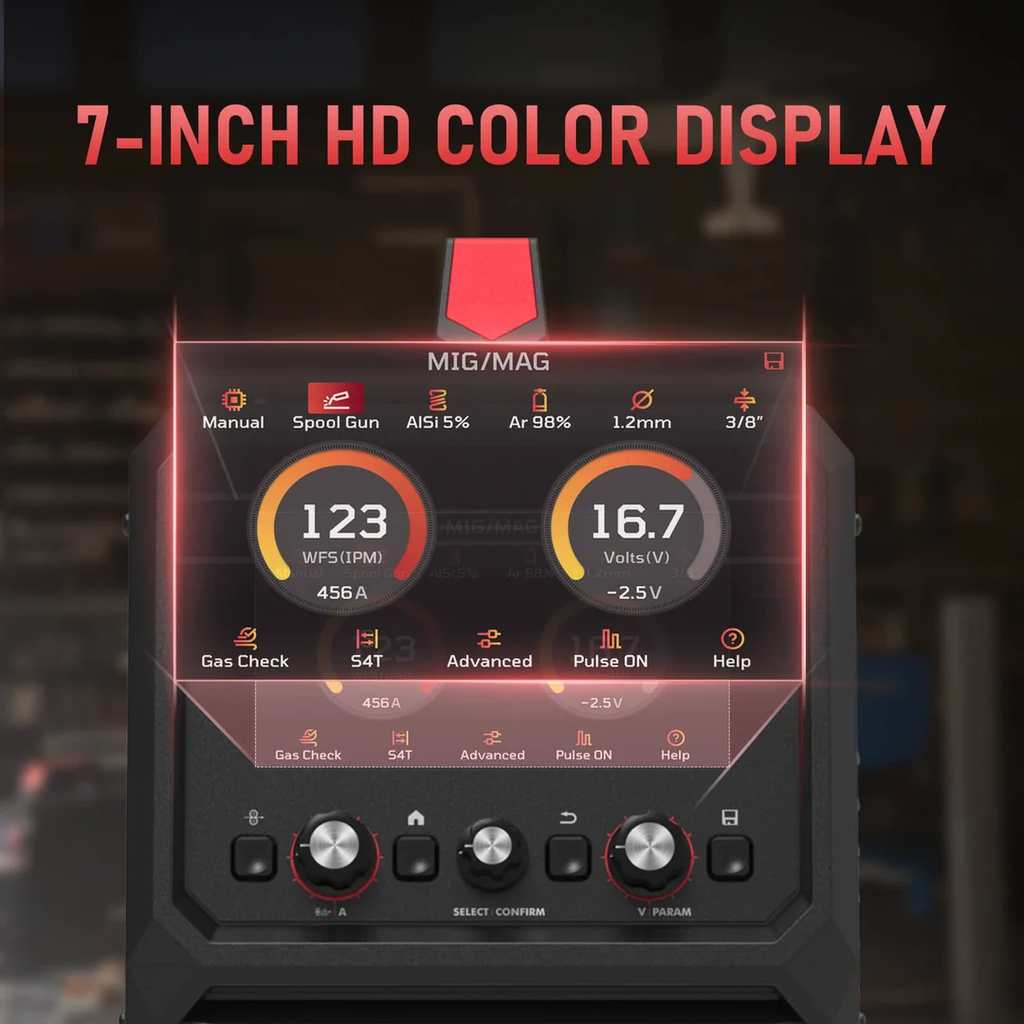
A 7-inch full-color HD display puts the main welding parameters and settings in one place. For users switching between processes, this is more convenient than working through a small, basic display.
One Machine for Different Welding Jobs
The advantage of a multi-process machine becomes clearer when a project involves more than one type of work.

MIG and Pulse MIG
MIG is a practical choice for brackets, frames, workbenches, repairs, and general fabrication. The MP200 PRO also offers Pulse MIG for greater control over the arc and weld pool, with less spatter.
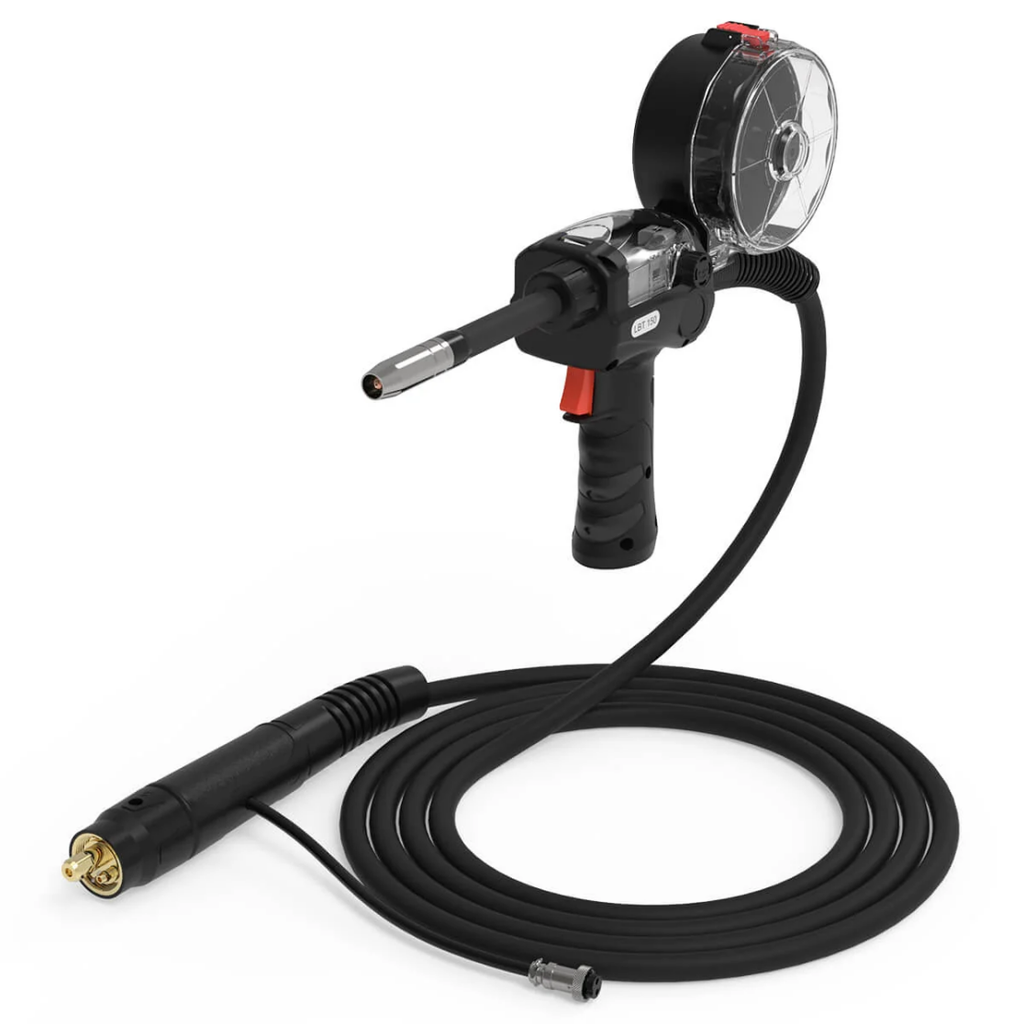
It supports steel, stainless steel, and aluminum. For aluminum MIG welding, it works with compatible AlSi5 or AlMg5 wire and can be paired with the optional LBT150 spool gun.
TIG and Pulse TIG
TIG is useful when you need more control over the weld. The MP200 PRO provides HF and Lift TIG, along with Pulse TIG.
These modes are suited to steel and stainless steel projects where heat control and weld appearance matter, particularly on smaller or more detailed parts.
Stick Welding
Stick welding remains useful for repairs and outdoor work, especially when using shielding gas is inconvenient. The MP200 PRO supports standard and pulse stick welding and is E6010 capable.
Plasma Cutting and Cleaning
The built-in plasma cutter can handle steel, stainless steel, and aluminum, making it useful for cutting plate and sheet metal during fabrication.
At 240V, the rated clean-cut thickness is up to 3/8 inch, with a severance capacity of up to 1/2 inch.
The machine also includes a cleaning function for post-weld metal surface treatment. While it may not be needed for every project, having it available can eliminate the need for another piece of equipment.
Made for Real-World Workshops
Not every welder has a dedicated fabrication shop. Many projects happen in garages, home workshops, or shared spaces where storage and floor space are limited.
The MP200 PRO is built around that reality. Its 120V/240V dual-voltage input allows users to work with the power available in their workshop. On 120V, MIG, TIG, and stick output go up to 120A. On 240V, MIG and TIG output reach 200A.
At 240V, MIG, TIG, and stick welding can handle recommended material thicknesses up to 3/8 inch, depending on the process and material.
The machine also offers both synergic and manual modes. Synergic mode helps simplify initial setup, while Manual mode gives experienced users more control over individual parameters.
What Can You Build With It?
The most useful way to look at a multi-process welder is by the projects it can support.
A home workshop might use it to build a steel workbench, repair a frame, fabricate brackets, make storage racks, or work on outdoor metal projects.
Automotive fabrication is another natural application. A single project may involve cutting plate, fitting components, tack welding, and finishing smaller joints with TIG. Being able to switch between processes on the same machine can make that workflow more straightforward.

The same applies to creative projects such as metal furniture, sculptures, garden structures, and other custom pieces.
Features That Make a Difference
The MP200 PRO includes several features aimed at making everyday operation simpler.
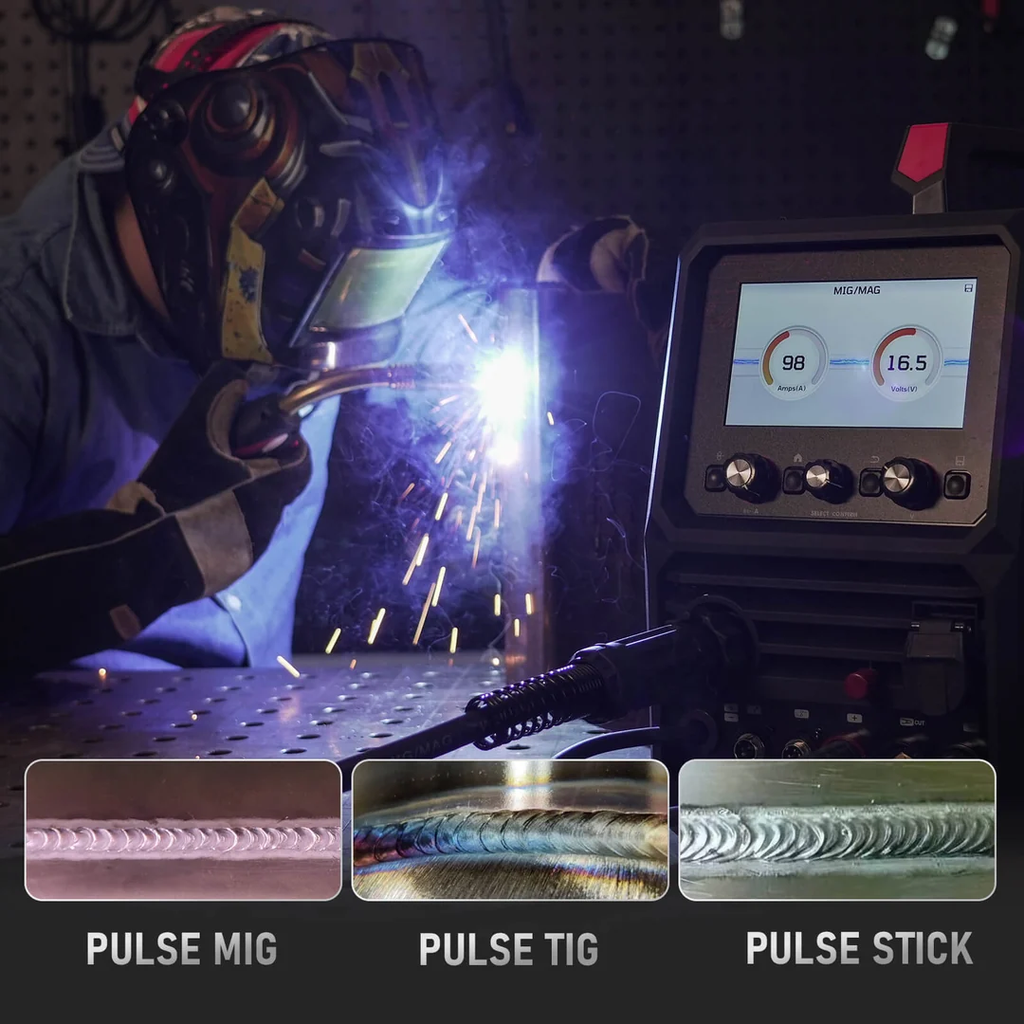
Triple Pulse Modes
Pulse is available in MIG, TIG, and stick welding. Depending on the material and settings, pulse operation can help with arc stability, puddle control, and spatter reduction.
Synergic and Manual Modes
Synergic mode provides a quicker starting point for setup, while Manual mode lets experienced welders fine-tune the machine to suit a particular material or project.
Upgradeable Firmware
The firmware can be updated to add features, improve performance, and introduce new welding parameters. For a machine intended to stay in a workshop for years, upgradeability is a useful feature.
Aluminum-Ready Setup
The MP200 PRO can handle aluminum MIG applications with compatible wire and can be used with the optional LBT150 spool gun. This gives users another option when a project goes beyond steel and stainless steel.
Who Is the MP200 PRO For?
An all-in-one welder is not necessarily the right choice for every workshop.
It can make sense for:
- DIY makers
- Garage fabricators
- Home workshop owners
- Users with limited workspace
- People who regularly switch between welding and cutting
- Beginners who want simpler setup options
A dedicated machine may be more appropriate for highly specialized work. For example, someone focused mainly on AC TIG aluminum welding may need capabilities beyond those offered by this type of multi-process platform. Similarly, high-volume industrial production calls for equipment designed specifically for that environment.
A Practical All-in-One Workshop Setup
Metalworking projects rarely stick to one process. A single job might involve cutting, fitting, welding, and cleaning before it is finished.
That is where the FIRSTESS MP200 PRO fits. By combining several welding processes with plasma cutting and cleaning, it gives DIYers and garage fabricators a practical way to handle different stages of a project with one machine.
For users who value flexibility but don’t have unlimited space, an all-in-one setup can be a straightforward way to keep projects moving while keeping the workshop a little less crowded.
To learn more, visit the YesWelder Official Store to explore a range of welders, welding helmets, consumables, and accessories for different projects and workshop needs.

The Ultimate Guide to Women’s Sandals for Style and Comfort

Essential Guide to Hire Furniture in Sydney for Stylish Home Makeovers

Publishing AI-Assisted Drafts as PDFs: A Free Markdown Workflow with iBoomto

Spinal Alignment in Kuala Lumpur: What It Involves and What It Costs

When Weeks Turn Into Months: Planning Car Hire for a Longer Stay

Top 10 Best Minicab Companies in London & Surrounding Counties

The 15 Highest-Paid Rugby Players in the World

Christopher Dare: The Untold Story of Engineer and Former Husband of Angela Rippon

How to Ensure Your Home is Valued Correctly for a Quick Sale

What Is Fanquer? The Digital Creator Platform Transforming Direct-to-Fan Engagement

Dr Jared Ross: Missouri Appeals Court Upholds Protection Order Over Graphic Torture and Murder Threats

Nancy Hallam: The Inspiring Life, Career, and Success Story Behind Ian Wright’s Wife
The 15 Highest-Paid Rugby Players in the World
Christopher Dare: The Untold Story of Engineer and Former Husband of Angela Rippon
How to Ensure Your Home is Valued Correctly for a Quick Sale
What Is Fanquer? The Digital Creator Platform Transforming Direct-to-Fan Engagement
Dr Jared Ross: Missouri Appeals Court Upholds Protection Order Over Graphic Torture and Murder Threats
Nancy Hallam: The Inspiring Life, Career, and Success Story Behind Ian Wright’s Wife
-
 Sports5 months ago
The 15 Highest-Paid Rugby Players in the World
-
Celebrity11 months ago
Christopher Dare: The Untold Story of Engineer and Former Husband of Angela Rippon
-
 Real Estate9 months ago
How to Ensure Your Home is Valued Correctly for a Quick Sale
-
 Technology5 months ago
What Is Fanquer? The Digital Creator Platform Transforming Direct-to-Fan Engagement
-
 Celebrity5 months ago
Dr Jared Ross: Missouri Appeals Court Upholds Protection Order Over Graphic Torture and Murder Threats
-
Celebrity11 months ago
Nancy Hallam: The Inspiring Life, Career, and Success Story Behind Ian Wright’s Wife
-

 Celebrity8 months ago
Who Is Azriel Crews? Inside the Life and Career of Terry Crews’ Daughter
-

 Health9 months ago
Enclomimed 25 (Enclomiphene) – Effective PCT Protocol