
Blog
7 Essential Ways SecOps Improves Threat Detection and Response

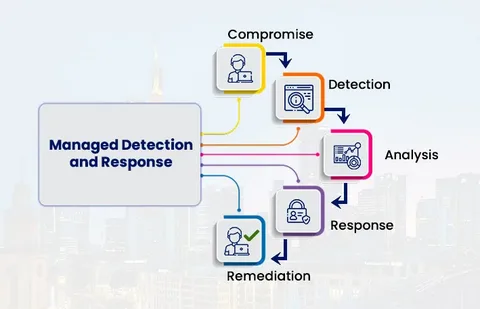
Cloud services, remote workforces, interconnected systems — the modern enterprise generates all sorts of signals that security teams are expected to make sense of in real time. The environment keeps growing. The threats keep changing.
Without coordinated security operations, the alert exists but nobody with the right context sees it fast enough. Investigations run long. Response teams reconstruct what happened after the fact — and by that point, the window for clean containment is usually gone.
SecOps is what changes that. Security monitoring connects with how IT operations actually run, which means the context that would otherwise take hours to assemble is already in the same picture. Faster detection follows. So does better decision-making when something needs to be contained.
How SecOps Strengthens Threat Detection
How SecOps improves threat detection starts with breaking the silos between security and IT operations. Security alerts don’t exist in isolation — they sit inside an operational environment where IT understands the systems, applications, and network activity. When both teams work from the same picture, they can interpret signals more accurately and identify potential threats sooner.
Continuous monitoring, structured investigation, automation, and coordination across teams — these are the capabilities that move a security program from reactive to functional. The seven ways below show where the difference shows up in practice.
1. Provides Greater Visibility Across Business Environments
Security teams can’t detect threats they can’t see. That sounds obvious. But most enterprise environments use different monitoring tools for endpoints, cloud platforms, applications, and network infrastructure — and those tools don’t naturally talk to each other.
SecOps brings those information sources into a shared view. An unusual login attempt doesn’t clear the bar on its own. Add unexpected file access from the same account, then an outbound connection that account has never made before — at that point the incident is already in progress. The visibility to see that sequence in real time is what most monitoring setups are missing.
Frankly, most monitoring gaps aren’t about missing alerts — they’re about missing the connection between alerts that already exist. Is better visibility enough on its own? Not without the investigation process to act on what it surfaces.
2. Improves Alert Prioritization and Reduces Security Noise
A security monitoring system that generates thousands of alerts a day isn’t automatically useful. Volume without prioritization just moves the problem — instead of missing threats, analysts spend their time working through noise. What does the queue actually look like for most teams running without structured triage? Mostly low-risk alerts that shouldn’t have required human review at all.
SecOps introduces structured alert triage. Each alert gets assessed by what it’s actually touching — a flagged privileged account moves up the queue faster than a routine policy violation from a low-risk system. The queue stops being first-in, first-out. Routine notifications get handled at appropriate priority without blocking the work that actually matters. Honestly, the programs that run this well don’t have faster analysts — they have better-organized queues.
3. Accelerates Threat Investigation Through Contextual Analysis
Investigating a threat means pulling information from all sorts of places — authentication records, endpoint activity, network connections, application logs. The challenge isn’t access to those sources. It’s assembling them fast enough before the situation moves forward.
SecOps connects that information into a shared investigation picture. Related activities surface together. An analyst gets context — not a stack of independent events to reconcile on the fly. Attack patterns become visible. The question of whether two alerts belong to the same incident gets answered much earlier.
That picture has to form fast. Knowing which systems are involved and what containment looks like four hours into an incident isn’t worth much — by that point the window for clean action is usually already gone. Accuracy matters. So does getting there before the incident moves on.
4. Enables Faster Incident Response and Containment
Detection is only the first part. Once something is confirmed, the window for clean containment starts closing. Attackers don’t stop moving because an alert fires — they keep working while the response team figures out the next step.
SecOps establishes clear incident response procedures before any of that happens. Responsibilities are defined. Escalation paths exist. When suspicious activity is confirmed, the team knows whether to isolate the affected device, disable the account that was used, block the connection, or restrict access to the affected application — and who makes each of those calls.
But automation isn’t a substitute for that clarity. It can help reduce the manual overhead on routine containment steps. The speed benefit is real. What it can’t do is create the coordination that hasn’t been established — between security, IT, and whoever on the business side has authority to approve a major action. That part has to exist on paper before it’s needed.
5. Supports Proactive Threat Hunting
Alert-based detection has a ceiling. Something has to trigger a rule before anyone looks. Some attackers know that and deliberately stay below detection thresholds — moving slowly, using legitimate tools, avoiding anything that would fire a known rule.
Threat hunting addresses the gap. SecOps teams can investigate suspicious patterns proactively — unusual account activity, unexpected system behavior, abnormal network connections — without waiting for an automated alert to tell them something’s worth investigating. How often does proactive hunting find things that alert-based monitoring missed? More often than most programs expect.
Research on security detection techniques covers how analytical methods are evolving to support this kind of investigation. Most teams find that proactive hunting surfaces things that standard alert-based monitoring consistently misses.
6. Improves Automation and Operational Efficiency
What does automation actually change in day-to-day security operations? Honestly, more than most programs realize until they start measuring it. Alert enrichment, evidence collection, incident documentation — all sorts of work that fills analyst time without requiring analyst judgment. Automated workflows handle that end of it. The team gets to focus on the investigations that actually need them.
And the efficiency gain isn’t just speed. Consistent documentation, structured incident records, alert triage that runs the same way every time — those things improve the quality of investigations too, not just how quickly the queue clears.
Automation has to stay carefully controlled. Clear approval requirements, testing procedures, and safeguards are necessary before any automated action runs against production systems. Getting that wrong creates all sorts of downstream problems that are harder to unpick than the original incident.
7. Strengthens Continuous Improvement and Security Readiness
Attack techniques change. Business systems evolve. Security controls that worked last year may not hold up against what the threat landscape looks like now. What separates a security program that keeps improving from one that just keeps running? The ones that improve treat post-incident reviews as an input — detection rules get updated, response procedures get rewritten. Frankly, most programs that drift are ones that run the reviews but don’t change anything as a result.
SecOps supports that through structured incident reviews, threat intelligence, proactive hunting, and performance measurement. Mean time to detect, mean time to respond, alert accuracy, incident resolution — these are the numbers that surface which parts of the program are performing and which aren’t.
The integration of CTEM into SOC processes demonstrates how organizations can improve threat visibility, prioritize security exposures, and strengthen proactive threat detection. This approach also helps security teams make better use of their existing people, processes, and technology.
Final Thoughts
SecOps improves threat detection and response by putting security information, operational context, and coordinated workflows in the same place. Visibility improves. Alert triage gets organized. Investigations move faster because the context is already assembled. The seven ways above aren’t a checklist — they’re how those improvements actually show up in practice.
But continuous improvement has to be part of the operating model for the security program to hold up over time. Running the monitoring and hoping the detection catches everything is a different posture entirely — and it doesn’t hold up under pressure.
FAQs
What is SecOps in cybersecurity?
It’s the approach that brings security and IT operations together — shared monitoring, coordinated investigation, defined response procedures. Not a tool. Not a team structure change. A way of working where both sides are looking at the same information and can act on it without waiting for a formal hand-off between separate teams.
How does SecOps improve threat detection?
By connecting security information across systems and giving analysts the context to interpret what they’re seeing. An alert in isolation isn’t worth much. The same alert alongside unusual network traffic and an account behavior change — that’s worth investigating. SecOps is what makes that connection visible fast enough to matter. Honestly, most detection improvements don’t come from better tools. They come from better-connected data.
Can SecOps reduce incident response time?
Yes — though the reduction comes from coordination, not speed alone. When the process is already defined, the handoff between who spots the alert and who acts on it stops being a bottleneck. Ambiguity gets removed before the incident, not during it. Automation handles the repetitive parts — which frees the people making actual calls to focus on what requires judgment. That’s where the time actually gets recovered.
Why is continuous monitoring important in SecOps?
Because threats don’t wait for scheduled review cycles. Continuous monitoring gives security teams a chance to catch suspicious activity before it develops into something that’s genuinely hard to contain. The alternative — periodic reviews, batch log analysis — creates windows that attackers can and do operate inside. And the gap isn’t worth much as an excuse after the fact.


Most new records are easy to buy in the UK. Every so often, though, the version you want turns out to be sold only in America, in a colour or edition that never reaches British shelves, by a shop that won’t post here. This guide covers where those records come from, whether you really need a US order, and how to get one home without paying over the odds.
Why some records stay in America
Big American retailers commission their own editions of new albums, usually a different colour of vinyl, sometimes with extra artwork or a print. The US bookshop chain Barnes & Noble sells a whole range of them, and its own help pages list the United Kingdom among the countries it won’t ship to.
Independent US record shops have their own exclusive versions too, and some can’t send new stock abroad at all, because their contracts with major labels don’t allow it.
Record Store Day adds a third source. Its Black Friday edition falls on Friday 27 November in 2026 in both countries, but the two lists of special releases aren’t the same.
A few American exclusives on sale now
Four Barnes & Noble exclusives in stock this month show the kind of thing that never crosses the Atlantic:
- Moon Music, Coldplay, on translucent yellow vinyl. The album is in every UK shop, but this version isn’t.
- Chronicles of a Diamond, Black Pumas, in red and gold, with a postcard that only comes with this edition.
- Blade, Mark Isham’s score for the 1998 vampire film, as a deluxe edition the chain calls “Bloodbath” vinyl.
- Bad Self Portraits, Lake Street Dive, in cloudy pink with a recoloured cover.
Record Store Day’s American list adds titles such as Miles Davis’s Copenhagen Live 1969 and Empire of the Sun’s Ask That God (Afterlife Tour Edition), neither of which is on the British list. Exclusives like these sell out and get replaced, so treat them as a guide to what to look for rather than a shopping list.
Check whether you need America at all
Plenty of US labels post to the UK themselves, including Waxwork Records, known for horror soundtracks, and Light in the Attic, the Seattle reissue label. Search for the exact edition too, because a UK shop sometimes has a coloured version of its own. A US order is for the record you can’t get any other way.
Getting a US-only record to a UK address
When a shop won’t post to the UK, the fix is an American address. A company offering parcel forwarding US to UK gives you one to type in at checkout, takes delivery there and sends the parcel on to your home.
Forwarders can usually hold parcels for a while and send several together, which helps when records from different shops arrive days apart. Record Store Day titles fit the same pattern: many US shops put their leftover stock online the morning after the day itself.
One limit is worth knowing before release day. Some artist and label webstores cancel orders sent to forwarding addresses on limited editions, so read the store’s terms first rather than finding out from a cancellation email.
What you’ll pay when it lands
Every parcel that arrives from outside the UK can bring its own bill. According to GOV.UK, VAT is charged on goods sent from abroad, worked out on the price plus postage. The exemption for gifts worth £39 or less only covers presents sent by someone else, not things you’ve bought for yourself. Customs duty only comes into it once the goods in a parcel are worth more than £135, and the rate then depends on what’s inside, which the government’s Trade Tariff lists.
Royal Mail, Parcelforce or the courier collects those charges before handing the parcel over, and usually adds a handling fee of its own. Three records arriving separately means three bills and three fees, while one combined box means one of each. Keep an eye on the £135 line, though, because a big combined order can cross it where three small parcels wouldn’t.
Packing and timing
Records travel badly in loose packaging. Ask for them to be packed with stiff board and protected corners, and kept away from anything heavy in the same box.
For timing, allow around a week for the US leg and a few days for packing, then anything from a few days by express to a couple of weeks by economy post. If a Black Friday title is meant to be a Christmas present, order it the day it goes on sale.
Once they’re home
A coloured edition is made to be looked at, so it seems a shame to file it away. A favourite sleeve can go on the wall instead, kept out of direct sun, and a professional picture framer can add UV-protective glazing so the print doesn’t fade.
Most of a collection will keep coming from the shop down the road, and that’s how it should be. For the few records that only exist on the other side of the Atlantic, a US address and a little patience will get them onto your shelf.


Growing a business is a form of cultivation that requires much more than your time and your money. There are so many factors that influence the potential success of a growing business, from consumers to competitors, to talent and far, far beyond. What the market can’t tell you is that those factors are different, and weighed differently, from business to business.
So, how can a business know if it’s ready to grow? By asking the right questions. Growth can bring new opportunities, but also greater complexity with them; growth also expands the scope of existing relationships and processes, which may not be prepared for the resulting strain. Here, we will ask some of the key questions that dictate your business’ growth readiness, and approach some helpful methods of answering them.
Can Your Finances Support Your Growth Plans?
Money is the prevailing reason for which any of us approach anything entrepreneurial; even if you have a powerful affinity with an idea you want to bring to market, it’s not that affinity that’s impelling you to do so. Money governs everything – and, naturally, it has something to say about your growth plan.
Before you can consider business expansion of any kind, you need first understand cash flow and how it indicates business health. You also need to have a serious grasp on the budgetary requirements behind your growth ideas, and whether they’re enough to mitigate the risk of potential financial pressures.
Do Your Current Systems Have Room to Scale?
Your monetary position is one thing, but your business’ makeup is another altogether. You already have a cohesive, comprehensive environment in which your business achieves its goals in its present form and scale; what happens when you scale up? Do your existing processes remain as effective as they currently are when workload increases? You may need to overhaul internal routings, pipelines and technologies before you can meaningfully expand.
Do You Have Strong Enough Oversight?
As a small business, much of your present stature is with thanks to the supremely diligent work of a dedicated team – but with growth, that kind of multifariousness is no longer strictly possible. And even if it is, the risk of costly errors grows considerably. Accountability cannot be forsaken, but neither can accuracy of reporting; it may be necessary to welcome independent scrutiny in the form of external audit services, to ensure that your business continues to operate within crucial legal and regulatory guidelines.
Can You Grow Without Compromising Customer Experience?
Lastly, but perhaps most importantly of all: what do you envision happening to the customer experience when your business expands? Will it improve, or will it suffer? What will dictate improvement? It’s on you to drill down to what makes your present business successful with respect to customer service, and to protect that quality in the name of preserving customer relationships throughout your expansion.

Payday in the UAE used to follow a familiar routine. Workers would collect their salary, head to the nearest exchange house after their shift, wait in a queue and hand over cash to send money home to India, Pakistan, the Philippines, Bangladesh or Egypt. For millions of families abroad, that weekly or monthly visit was a lifeline.
That routine is changing fast. A growing number of UAE expats now send money from a phone in a few taps, often late at night and without leaving the house. This article looks at why digital remittances are winning over expatriates, what is driving the shift, and how the market could evolve from here.
Why Exchange Houses Became the Default Choice for UAE Expats
To understand the shift, it helps to understand why exchange houses earned such loyalty in the first place. With expatriates making up close to nine in ten residents, the UAE is one of the largest sources of outward remittances in the world, and exchange houses grew up to serve exactly that need.
Brands such as Al Ansari Exchange, LuLu Exchange and Al Fardan Exchange built dense branch networks in malls, labour accommodation areas and busy commercial streets. Several practical reasons kept customers coming back:
- Cash friendly service: Many lower income workers were paid in cash or did not hold a bank account, so a counter that accepted notes was essential.
- Trust and familiarity: Customers knew the staff, often spoke the same language and could ask questions face to face.
- Wide payout networks: Exchange houses partnered with banks and cash pickup agents in home countries, including rural areas.
- Competitive rates: Exchange houses often beat traditional banks on exchange rates and fees for popular corridors.
For a long time, this model worked well. But it also came with queues on payday weekends, limited opening hours and a lot of time spent travelling to and from a branch.
The Shift to Digital Transfers and Mobile Money Apps
The turning point came with near universal smartphone ownership and the UAE’s push toward a cashless economy. The Wage Protection System moved more salaries into bank accounts and payroll cards, which made it easier for workers to access digital financial services.
At the same time, the choice of apps exploded. Exchange houses launched their own apps, banks improved their international transfer features, and fintech players entered the market. Today expats can send money through exchange house apps, banking apps, digital wallets such as payit, e& money and Botim, and global services like Wise, Remitly and Western Union’s mobile platform.
The pandemic accelerated everything. When branches had restrictions and people avoided crowded spaces, many expats sent money digitally for the first time. Once they experienced how simple it was, a large share never went back to the counter.
Why UAE Expats Prefer Digital Remittance Solutions
Digital transfers are not winning simply because they are new. They solve real everyday problems for people who work long hours and support families thousands of kilometres away.
Convenience and 24/7 Access
A remittance app is open whenever the user is. A nurse finishing a night shift or a construction worker with one day off a week no longer has to plan around branch hours. Transfers can be sent from home, from the bus or during a lunch break.
Speed of Delivery
Many digital services now deliver funds to bank accounts or mobile wallets in the receiving country within minutes. For families facing urgent medical bills or school fees, that speed matters a great deal.
Transparent Fees and Exchange Rates
Apps show the exchange rate, transfer fee and the exact amount the recipient will receive before the user confirms. This transparency makes it easy to compare providers and helps expats avoid hidden margins.
Tracking and Peace of Mind
Real time notifications tell both the sender and the recipient when money has been sent and received. Digital receipts also make it easier to keep records for budgeting or for proof of support when needed.
Changing Consumer Behaviour Among UAE Residents
The data points in the same direction. The shift toward mobile money transfers is becoming increasingly visible among UAE expatriates, and research on digital remittance trends in the UAE highlights how convenience, speed and accessibility are shaping the way residents send money abroad.
Industry surveys and provider reports consistently show that younger expats, especially those under 35, are the fastest adopters. They are comfortable managing money on their phones and expect the same experience from remittance services that they get from food delivery or ride hailing apps.
Behaviour is also changing among older and lower income workers. Simplified apps in Hindi, Urdu, Tagalog and other languages, along with wallet based accounts that only need an Emirates ID, have opened digital remittances to people who were once excluded from banking. Many still visit a branch occasionally, but they increasingly use apps for routine monthly transfers.
Loyalty is shifting too. Instead of sticking with one exchange house for years, many users now compare two or three apps before each transfer and pick the one with the best rate that day.
Do Exchange Houses Still Have a Role?
Despite the momentum behind digital, exchange houses are far from disappearing. They still serve customers who prefer cash, people sending large amounts who want personal service, and anyone who needs help resolving a problem in person.
The smartest exchange houses are adapting rather than resisting. Many now run a hybrid model, where customers can register and verify their identity at a branch, then send money through an app afterwards. Some offer cash deposit kiosks, rate alerts and loyalty rewards inside their apps to keep customers engaged.
The Future of UAE Remittances
Competition between banks, exchange houses and fintech companies is likely to be the biggest driver of better services in the coming years. Here are the trends to watch:
- Instant payment infrastructure: The Central Bank of the UAE’s Financial Infrastructure Transformation programme, including the Aani instant payments platform, is laying the groundwork for faster and cheaper transfers.
- Cross border links: Connections between national payment systems, such as links with India’s UPI, could make sending money as easy as a domestic transfer.
- Lower costs: As more providers compete for the same customers, fees and exchange rate margins are under pressure, which benefits senders.
- Stronger security: Biometric login, digital identity checks through UAE Pass and real time fraud monitoring are making apps safer to use.
- More financial services: Remittance apps are evolving into full financial platforms with savings tools, bill payments and microloans for expat users.
What Expats Should Look for in a Remittance App
With so many choices, it pays to be selective. Before switching, expats should check that the provider is licensed by the Central Bank of the UAE, compare the total cost including the exchange rate margin, confirm delivery times for their specific corridor and read recent user reviews. It is also worth testing customer support with a small first transfer.
Conclusion
The move from exchange house counters to mobile screens is one of the clearest examples of how technology is changing daily life in the UAE. UAE expats are embracing digital remittances because they save time, deliver money faster, show costs clearly and work around demanding schedules. Exchange houses still matter, especially for cash users and complex transfers, but the future clearly belongs to providers that combine trust with digital convenience. As banks, exchange houses and fintech companies compete harder, the families who depend on this money stand to benefit the most.

How Do You Train and Prepare in British Weather for a Mojave Desert Ultra-Cycling Ride?

Wet Room vs Bathroom: Which Is Better For Your Home?

How to Choose Wholesale Dresses That Sell in a BoutiqueImage alt text: Boutique owner selecting wholesale dresses in different styles and colours for her clothing store

Renting in Portugal: What Foreigners Need to Know

The Records You Can Only Buy in America, and How UK Collectors Get Them Home

The Importance of Patient Advocacy in Modern Healthcare

How to Ensure Your Home is Valued Correctly for a Quick Sale

Christopher Dare: The Untold Story of Engineer and Former Husband of Angela Rippon

The 15 Highest-Paid Rugby Players in the World

What Is Fanquer? The Digital Creator Platform Transforming Direct-to-Fan Engagement

Dr Jared Ross: Missouri Appeals Court Upholds Protection Order Over Graphic Torture and Murder Threats

Who Is Azriel Crews? Inside the Life and Career of Terry Crews’ Daughter
How to Ensure Your Home is Valued Correctly for a Quick Sale
Christopher Dare: The Untold Story of Engineer and Former Husband of Angela Rippon
The 15 Highest-Paid Rugby Players in the World
What Is Fanquer? The Digital Creator Platform Transforming Direct-to-Fan Engagement
Dr Jared Ross: Missouri Appeals Court Upholds Protection Order Over Graphic Torture and Murder Threats
Who Is Azriel Crews? Inside the Life and Career of Terry Crews’ Daughter
-
 Real Estate10 months ago
How to Ensure Your Home is Valued Correctly for a Quick Sale
-
Celebrity12 months ago
Christopher Dare: The Untold Story of Engineer and Former Husband of Angela Rippon
-
 Sports6 months ago
The 15 Highest-Paid Rugby Players in the World
-
 Technology6 months ago
What Is Fanquer? The Digital Creator Platform Transforming Direct-to-Fan Engagement
-
 Celebrity6 months ago
Dr Jared Ross: Missouri Appeals Court Upholds Protection Order Over Graphic Torture and Murder Threats
-
 Celebrity9 months ago
Who Is Azriel Crews? Inside the Life and Career of Terry Crews’ Daughter
-
 Celebrity1 year ago
Nancy Hallam: The Inspiring Life, Career, and Success Story Behind Ian Wright’s Wife
-
 Celebrity1 year ago
Who Is Maisie Mae Roffey? The Private Life, Family Story, and Quiet Success of Julie Walters’ Daughter