
Business
Top 6 OEM Lighting Manufacturers for Custom Lighting Projects


A successful lighting project starts with choosing the right OEM lighting manufacturer. While price is often the first thing buyers compare, it shouldn’t be the only factor. The right manufacturing partner can deliver consistent quality, support custom requirements, and help prevent costly delays or maintenance issues long after installation.
To make your search easier, we’ve compared six leading OEM lighting manufacturers based on the criteria that matter most, including customization, product quality, engineering support, certifications, delivery reliability, and project experience. Whether you’re sourcing lighting for commercial, architectural, or landscape applications, this guide will help you identify a supplier that fits your project’s needs.
Top 6 OEM Lighting Manufacturers
Each manufacturer offers different strengths, so the best choice depends on the type of project you’re planning. Here’s a closer look at six companies worth considering.
1. Elation Professional
If your project involves stage productions, concerts, or broadcast environments, Elation Professional is a trusted name. The U.S.-based manufacturer develops advanced moving heads, LED wash lights, and professional lighting systems used in theaters, television studios, and live entertainment venues worldwide. Its strong reputation for performance and reliability makes it a popular choice for entertainment integrators, production companies, and venue operators.
2. Straits Lighting
For commercial and industrial applications, Straits Lighting offers practical and energy-efficient LED solutions. Its product range includes lighting designed for warehouses, offices, factories, retail stores, and other commercial facilities. The company also works closely with distributors and contractors, making it a dependable option for buyers who value reliable supply, consistent product quality, and straightforward installation.
3. GCZICO
GCZICO is a factory-direct outdoor lighting manufacturer specializing in architectural, landscape, and municipal lighting projects. Its portfolio includes LED linear lights, wall washers, floodlights, and inground fixtures engineered for demanding outdoor conditions. Beyond OEM and ODM manufacturing, the company also provides lighting simulations, CAD installation drawings, and technical guidance throughout the project. These capabilities make GCZICO well suited for projects that require customized lighting solutions and engineering support from design through installation.
4. OSRAM
With more than a century of lighting expertise, OSRAM has built a strong reputation for premium LED technology and smart lighting solutions. The company develops high-quality LED components, luminaires, and intelligent lighting systems used across commercial, industrial, and infrastructure projects worldwide. Its commitment to research and development makes it a reliable choice for buyers looking for proven technology and internationally recognized quality.
5. L&L Luce&Light
L&L Luce&Light is an Italian manufacturer best known for luxury architectural lighting. Its outdoor fixtures combine refined design with precise optical performance, making them suitable for building facades, landscapes, walkways, and other premium outdoor spaces. Architects and lighting designers often choose the company for projects where visual impact is just as important as lighting performance.
6. PUK
PUK focuses on outdoor architectural lighting for urban developments, public spaces, and landscape projects. Its product range includes bollard lights, inground fixtures, wall lights, and floodlights designed for long-term outdoor use. With durable construction and a broad selection of architectural lighting products, the company is a practical choice for municipal, commercial, and large-scale outdoor installations.
How to Choose the Right OEM Lighting Manufacturer
While every manufacturer has its own strengths, the right choice ultimately depends on your project’s requirements. Start by looking for a supplier with experience in your specific application, whether that’s commercial, architectural, entertainment, or outdoor lighting. If your project requires unique specifications, make sure the manufacturer can provide customization and technical support.
It’s also worth reviewing their certifications, quality control process, delivery reliability, and after-sales service. A manufacturer that consistently delivers high-quality products and responsive support can help reduce project risks, minimize maintenance, and keep your installation on schedule.
Conclusion
There isn’t a single OEM lighting manufacturer that’s the best fit for every project. The right choice depends on your application, customization needs, and the level of quality and support you expect. Comparing these factors carefully can help you find a partner that delivers reliable results over the long term.
If your project focuses on outdoor architectural, landscape, or municipal lighting, GCZICO is worth considering. Along with engineering-grade outdoor fixtures, the company offers OEM/ODM customization, technical support, and engineering services that help simplify even the most demanding lighting projects.



Fast VPS performance depends on balance. CPU power matters. But so do memory pressure, storage I/O, network capacity, and the way an application uses each resource.
A server can have spare processor time and still feel slow because the database is waiting on disk. Good optimization therefore starts by finding the bottleneck.
Read the Workload Before Adding Resources
A VPS hosting plan should be sized around what the application actually does. Dynamic websites may need short bursts of CPU; databases often depend heavily on RAM and storage response. Background jobs create another pattern, especially when several tasks start at the same time.
Look at usage during the busiest period. If the CPU stays near its limit, more cores may help. When memory runs short, the system can spend time moving data between RAM and disk, which increases latency even when processor usage looks normal.
Virtualization also changes how capacity should be read. A virtual machine receives assigned resources, yet the application still decides how efficiently those resources are used. Two servers with the same CPU and RAM can produce different response times when one runs heavier database queries, more background workers, or a larger cache. Capacity figures describe the available base; workload behavior determines how much of it becomes useful performance.
For a VPS server, those signals deserve attention first:
- Sustained CPU load;
- Available RAM and paging or swap activity;
- Disk latency and I/O throughput;
- Network traffic against available bandwidth.
One graph rarely tells the whole story. The useful question is what happened immediately before users noticed the slowdown.
Storage Can Become the Hidden Limit
Application speed often depends on many small reads and writes rather than raw disk capacity. Databases, logs, caches, and content systems may touch storage thousands of times while serving a single workload cycle. Slow I/O then becomes visible as longer queries or queues that keep growing.
This is where a benchmark helps. Test the operation that resembles production: database transactions for a data-heavy service, file operations for a repository, or mixed reads and writes for an application server. A large sequential-transfer number alone says little about those workloads.
Configuration is important too. Enough RAM can keep frequently used data in cache, reducing repeated storage access. The result comes from the system working as a whole, not from one specification in isolation.
Network Speed Matters When Data Has to Move
A cloud VPS may process requests quickly and still respond slowly when the network path is saturated. Large downloads, backups, API traffic, media delivery, and synchronization can all compete for bandwidth.
Check throughput at peak usage and compare it with the port limit. Latency deserves separate attention: it affects interactive applications and frequent small requests even when total traffic volume is modest. For virtual servers used for hosting distributed services, network behavior can therefore matter as much as compute capacity.
Benchmark, Monitor, Then Adjust
Measure before and after every meaningful change. A benchmark creates a repeatable baseline; monitoring shows whether the same behavior appears under real traffic. Together they make optimization measurable.
If response time rises while CPU, RAM, and I/O remain comfortable, inspect the application itself. Slow queries, inefficient code, excessive logging, or a badly timed scheduled job can waste a strong configuration. Adding resources without checking these causes only moves the diagnosis further away.
Fiberax runs its VPS infrastructure on AMD EPYC compute nodes with DDR5 memory, mirrored NVMe storage, defined resource tiers, and 500 Mbps ports across current Linux and Windows plans. The platform also includes 24/7 monitoring; service information is available at https://fiberax.com/en/

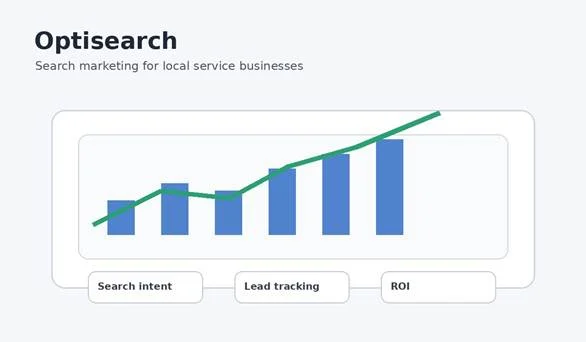
Image Source: Optisearch.co.uk (client website)
The most expensive PPC problem is not always a high cost per click. It is paying for activity that never had a realistic chance of becoming good business. A Bristol company can generate plenty of traffic and still struggle if its campaigns attract the wrong service requests, low-value searches or customers outside the intended area.
Lead quality improves when paid search is designed around intent and operational fit. That means deciding which jobs or customers are worth pursuing, how far the company is prepared to travel, which searches indicate genuine buying intent and what information the landing page must provide before someone contacts the business.
Start with profitable search intent
Paid search in Bristol works best when campaigns are built around the jobs, customers or purchases the business actually wants. High-intent queries should be separated from research terms so budgets can be directed toward searches with a realistic path to revenue.
Search-volume estimates are useful, but they should not overrule commercial judgement. A smaller group of precise queries can outperform a larger set of broad terms when lead quality matters.
Control geography carefully
Location settings should reflect where the business can genuinely serve customers in and around Bristol. Broad radius targeting can spend money on areas that are technically nearby but operationally inconvenient.
Review location reports regularly and exclude regions that repeatedly create unsuitable leads. Local wording on landing pages should also match the areas being targeted.
Use negative keywords as a quality filter
Negative keywords are one of the simplest ways to protect a budget. They remove searches for jobs, training, free information, unrelated products or other patterns that repeatedly fail to create value.
This list should grow from real search-term data. A campaign is stronger when exclusions are based on evidence rather than assumptions made before launch.
Match ads to the landing page
The promise in the ad should be visible immediately after the click. If the ad focuses on a specific service, the landing page should explain that service rather than sending visitors to a generic homepage.
Clarity is especially important on mobile. Contact details, service coverage, trust signals and the primary action should be easy to find without excessive scrolling.
Track the actions that matter
Conversion tracking should capture calls, forms, bookings or other meaningful actions, not just page views. Where possible, the business should also record whether each enquiry was qualified and whether it became revenue.
That extra layer turns campaign optimisation from a cost-per-lead exercise into a lead-quality exercise.
Ask how the campaign will be managed
Businesses comparing a Optisearch should ask how search terms, bids, budgets, locations, landing pages and conversion data will be reviewed. The management process matters more than the label on the service.
There should be a clear rhythm for account changes, testing and reporting rather than random adjustments made only when performance drops.
Protect budget during learning
Early campaign data is valuable, but it can also be noisy. Budgets should be large enough to learn while still being controlled tightly enough that poor search themes do not consume disproportionate spend.
Test one meaningful change at a time when possible. If targeting, bidding, ads and landing pages all change together, the team loses the ability to learn which change helped.
Connect marketing with sales feedback
The people answering calls or reviewing forms often know more about lead quality than the advertising dashboard. Their feedback should be incorporated into campaign decisions.
If a certain keyword produces many contacts but few suitable opportunities, that information should influence bids, exclusions and landing-page messaging.
Review the provider, not just the account
A specialist such as PPC agency Bristol should be evaluated on access, transparency and the quality of its decision-making. Businesses should know who controls the account, who owns the data and how recommendations are justified.
Good management should become easier to understand over time, not more mysterious.
Build a repeatable monthly review
A monthly review should cover spend, search terms, qualified leads, cost per suitable enquiry, geographic performance and landing-page issues. It should end with a short list of actions and owners.
This keeps paid search focused on continuous improvement rather than chasing every short-term fluctuation.
Choosing the right partner
When comparing providers, review Optisearch alongside the wider service model, then assess PPC agency Bristol on transparency, measurement, access to data and the quality of the improvement process.
Practical checklist before investing
- Define the services and locations in Bristol that matter most commercially.
- Confirm which calls, forms, bookings or sales will count as meaningful conversions.
- Make sure the website explains the offer clearly on mobile as well as desktop.
- Keep access to core analytics, advertising and tracking accounts wherever possible.
- Review lead quality with the people who handle enquiries, not only with marketing dashboards.
- Agree a regular review rhythm and record the reason behind major campaign changes.
Final perspective
For Bristol businesses, PPC performs best when lead quality is visible and every major account decision can be linked to evidence. Better results usually come from sharper targeting, stronger landing pages, disciplined exclusions and faster feedback from the sales team.
Prepared as original editorial content for the listed publication.
Score leads after the click
PPC optimisation becomes much stronger when the business assigns a simple quality score to enquiries. A three-level system—strong fit, possible fit and poor fit—is often enough. The score can reflect service type, location, urgency, budget or any other factor that genuinely affects commercial value.
Over several weeks, compare those scores with the search terms and campaigns that created them. This can expose cases where a low-cost keyword is actually expensive because most of its leads are unsuitable, while a higher-cost term produces fewer but much stronger opportunities.
Keep account structure understandable
Complex account structures can make analysis harder without improving results. Separate campaigns when there is a clear reason, such as different service categories, locations, budgets or conversion goals. Avoid splitting activity so finely that each campaign receives too little data to learn from.
A clean structure also makes reporting easier for non-specialists. Managers should be able to see where budget went, what type of demand it produced and which actions are planned next without having to interpret dozens of tiny campaign segments.


Exercise makes your muscles feel exhausted, but that’s not all it does. Strength Training has a variety of changes happening within the muscles that last long after the workout is done. Knowing the changes that occur during this recovery period can aid you in training better, promoting muscle development, and ensuring that your workout routine is more sustainable.
Recovery is a biological process that continues to be active from fatigue to muscle protein repair. Let’s take a look at what happens in your muscles after exercise and how you can help them in each phase.
1-Your Msucle Experience Temporary Stress
Resistance training involves repeatedly contracting muscles against resistance. This results in metabolic stress and mechanical tension, especially when doing challenging sets, or exercises your body has never performed.
The body will start to repair and remodel. Evidence suggests that challenging resistance training may lead to a decrease in muscle power shortly after exercise and cause their muscles to become sore for several hours or days after training.
2-Muscle Protein Synthesis (MPS) switches on
Your muscles are more responsive to the nutrients, especially amino acids from dietary protein, after training. Resistance exercise promotes growth/repair of muscle proteins through muscle protein synthesis.
Imagine the exercise is the signal and rebuilding is construction. Training is the stimulus and good nutrition and rest are the resources which are provided for the body to respond to the stimulus.
It’s not always necessary to eat protein after your last rep. Available evidence indicate that total daily protein intake and regular nutrition are significant but the exact timings of nutrition around exercise do not seem to be as significant as previously believed.
3-Soreness May Appear Later
Delayed muscle soreness is one of the most obvious components to recovery. You might feel fairly normal right after exercise, but the following day or day after exercise you might feel more uncomfortable.
This is because the body’s reaction to a new or challenging physical activity is not immediate, but gradually builds over time. Soreness is not a good indicator of muscle development or training session effectiveness. In fact, research on protein supplementation has shown that protein can be beneficial in some ways to muscle recovery without the need to completely remove the muscle soreness from the exercise.
4-Your Muscles Rebuild and Adapt
Recovery is more of a process to get back to the normal muscle state. When you exercise with proper training, nutrition and rest, your body adjusts and accommodates the exercise session that will allow you to handle future sessions more efficiently.
These changes may lead to a greater strength, muscular endurance and muscle size with repeated training sessions. This is why more exercise is not necessarily good. The muscle requires sufficient recovery periods in order to be able to react to the training stimulus.
5-Nutrition Provides the Building Blocks
Eggs, dairy products, fish, poultry, legumes, soy, nuts and seeds are all a good source of protein.
Muscle Recovery Supplements may be convenient for those who can’t get all the nutrition they need from food. But supplements should be used in addition to a well-balanced diet.
There is also recent evidence that properly designed plant-protein preparations can aid in muscle recovery if the proportion and the composition of amino acids are sufficient and optimal.
6- Hydration and Sleep Matter too
Nutrition alone is not enough to promote recovery of the muscle. Fluids are necessary to maintain normal body function during and after exercise, and sleep is a necessary and important time for recovery.
Rather than a single “perfect” recovery technique, think about the whole package: plenty of eating, good fluid intake, proper rest, smart training volume and rest days.
A recent study from 2026 on hydration and recovery after heavy resistance training reiterates the interest in the possible interactions between hydration status and sleep and recovery after high-intensity resistance training.
7. Recovery Supports Your Overall Wellness
Great muscles can help you in so many ways other than the gym! By incorporating regular physical activity into a healthy lifestyle, which may include healthy eating, rest, stress management and taking care of your heart, you can improve your heart health.
Final Thoughts
Following exercise, your muscles are in a recovery, rebuilding and adaptation phase. Fatigue and soreness may be experienced temporarily, and the body’s response to training is increased muscle protein synthesis. All of these—protein, water, sleep and proper rest—play a role in this process.
Knowing what recovery is can alter your approach to exercising. Don’t think of rest as time not spent advancing, think of rest as a part of the training process. If you’ve found that some exercises are more difficult than others, there’s a good chance that your muscles will get stronger and more resilient over time if you do them all with the right recovery techniques.

VPS Performance: The Factors That Affect Server Speed

A Practical Look at Choosing and Using a Tri-Mode 3D Scanner

How to Choose the Perfect Diamond Engagement Ring: A Complete Buyer’s Guide

A Practical PPC Framework for Bristol Companies That Want Better Lead Quality

6 Best Lodges For Sale: Find Your Perfect Retreat

Unlocking the Best Deals with Rayslocker: Your Ultimate Guide to Affordable Shopping

The 15 Highest-Paid Rugby Players in the World

Christopher Dare: The Untold Story of Engineer and Former Husband of Angela Rippon

How to Ensure Your Home is Valued Correctly for a Quick Sale

What Is Fanquer? The Digital Creator Platform Transforming Direct-to-Fan Engagement

Dr Jared Ross: Missouri Appeals Court Upholds Protection Order Over Graphic Torture and Murder Threats

Nancy Hallam: The Inspiring Life, Career, and Success Story Behind Ian Wright’s Wife
The 15 Highest-Paid Rugby Players in the World
Christopher Dare: The Untold Story of Engineer and Former Husband of Angela Rippon
How to Ensure Your Home is Valued Correctly for a Quick Sale
What Is Fanquer? The Digital Creator Platform Transforming Direct-to-Fan Engagement
Dr Jared Ross: Missouri Appeals Court Upholds Protection Order Over Graphic Torture and Murder Threats
Nancy Hallam: The Inspiring Life, Career, and Success Story Behind Ian Wright’s Wife
-
 Sports4 months ago
The 15 Highest-Paid Rugby Players in the World
-
Celebrity10 months ago
Christopher Dare: The Untold Story of Engineer and Former Husband of Angela Rippon
-
 Real Estate8 months ago
How to Ensure Your Home is Valued Correctly for a Quick Sale
-
 Technology4 months ago
What Is Fanquer? The Digital Creator Platform Transforming Direct-to-Fan Engagement
-
 Celebrity4 months ago
Dr Jared Ross: Missouri Appeals Court Upholds Protection Order Over Graphic Torture and Murder Threats
-
Celebrity11 months ago
Nancy Hallam: The Inspiring Life, Career, and Success Story Behind Ian Wright’s Wife
-

 Health8 months ago
Enclomimed 25 (Enclomiphene) – Effective PCT Protocol
-
 Celebrity10 months ago
Who Is Maisie Mae Roffey? The Private Life, Family Story, and Quiet Success of Julie Walters’ Daughter