
Entertainment
Mumbai Like a Local: A Neighbourhood Guide for Cafés, Art, Coastal Walks and Day Trips


Mumbai can feel like a city that refuses to pause. It is loud, fast, and forever in motion, the kind of place where you can leave your hotel for a coffee and somehow end up at a gallery opening, a street snack stall, and the sea all before sunset. The trick is not trying to “do Mumbai” in one heroic sweep. The trick is picking neighbourhoods that match your mood and letting the city reveal itself in layers.
If you have just landed after sorting your tickets to India, Mumbai is also a surprisingly good first stop because it is built for short bursts. You can do a slow morning in a café, a cultural afternoon, and a coastal sunset without long transfers, as long as you base yourself well and stick to one pocket at a time.
This guide is neighbourhood-led and experience-heavy. Think cafés you will actually want to sit in, art you can reach without a full-day mission, coastal walks for when you need air, and day trips that feel like a reset rather than another exhausting itinerary.
How to use this guide without burning out
Mumbai rewards pace. Plan one main neighbourhood a day. Do one anchor activity, one food moment, and one walk. The city is not designed for constant cross-town commuting, and traffic can turn a “quick hop” into an hour of staring at a flyover.
A practical rhythm that works
Morning is for cafés and quieter streets. Afternoon is for galleries and museums. Late afternoon and evening are for the sea, markets, and food.
Now, the neighbourhoods.
South Mumbai, the classic city with the best walking
If you like heritage streets, bookstores, old cafés, and the feeling that you can walk from one scene to another, start here. South Mumbai is compact by Mumbai standards, and it gives you a strong sense of place quickly.
Colaba, Kala Ghoda, and Fort
This is where modern Mumbai culture and old architecture overlap. Kala Ghoda is the art pocket. Fort has the office bustle and the bookshops. Colaba carries the energy, especially later in the day.
What to do
Spend time in the galleries around Kala Ghoda. Even if you are not an art person, this area is easy to enjoy because you are never far from a coffee, a shaded street, or an interesting shopfront. Pair it with a slow wander through Fort’s lanes. If you want a classic moment, pass by the Gateway of India, but treat it as a quick look rather than your whole plan.
Café style
South Mumbai cafés can be old-school or sharply modern depending on the street. The best approach is to pick one you want to actually sit in, then build your walk around it rather than trying to hit five.
Local-feeling add on
End your day with a sea-facing walk at Marine Drive. Go close to sunset when the city light softens and people come out just to sit. It is not a “thing to do” so much as a Mumbai habit you can borrow for an evening.
Marine Drive to Chowpatty, for air and evening energy
This strip is Mumbai’s reset button. It is where you go when the city feels too intense. It is also where you can join the city’s evening rhythm without needing to plan anything.
What to do
Walk Marine Drive at golden hour. If you want something more lively, drift towards Chowpatty for snacks and people-watching. Keep your expectations realistic. It is busy, it is a bit chaotic, and that is part of the point.
How to make it feel local
Do not rush. Buy something small. Sit. Watch families, couples, cricket games on the sand, and the constant movement of the promenade. Mumbai is a city that performs, and the coastline is one of its stages.
Bandra, the modern Mumbai most travellers want
Bandra is where Mumbai feels young, creative, and slightly restless in a fun way. It is full of cafés, design shops, street art, and places that turn into evening hangouts without warning.
Bandra West
This is the version people picture when they say “Mumbai like a local”. It is walkable in pockets, especially around the village lanes and the café clusters.
What to do
Start with a café morning and do it properly. Then go looking for street art, independent shops, and small galleries. Later, head towards Bandstand for a coastal walk. The sea here has a different feel than Marine Drive. It is less postcard, more “everyday escape”.
Coastal walk
Bandstand is ideal for a late afternoon stroll. You will see joggers, families, and groups hanging out on the edges of the promenade. It feels lived in.
Food mood
Bandra is a great place for a modern dinner. If you want a night that feels current without being a club night, this is where you do it.
Juhu, for beach time that is more “stroll” than “swim”
Juhu is not a tropical beach day. Think of it as a long urban beach where you walk, snack, and watch the city unwind.
What to do
Go in the evening. Walk the sand, then eat something casual nearby. Juhu’s charm is the mix of sea air and city noise. It is a good night if you want something easy.
Tip that saves you effort
If you are expecting quiet, you will be disappointed. If you treat it as a social coastline, it is perfect.
Lower Parel and Worli, for galleries and a sharper city edge
This is the part of Mumbai that feels like it is constantly upgrading. Old mill areas turned into modern neighbourhoods, with galleries, newer cafés, and plenty of energy.
Worli Sea Face
Worli has one of the best sea-facing stretches in the city for a brisk walk when you want something less touristy than Marine Drive, but still very Mumbai.
What to do
Pair a gallery or museum visit with a Worli walk. Then find a café where you can sit and cool down. This is a great area for a “modern Mumbai” day that still ends with the ocean.
Art and culture, without making it a formal day
Mumbai’s art scene can be accessible if you keep it light. You do not need to block out a full day and march through museums. Pick one strong cultural stop, then let the rest of the day be streets, cafés, and sea.
Neighbourhood combinations that work
Kala Ghoda plus Marine Drive is a classic pairing.
Bandra cafés plus Bandstand is the easiest “good day” in the city.
Lower Parel galleries plus Worli Sea Face gives you a modern edge.
Day trips that actually feel like a break
Mumbai day trips work best when they change the scenery. Not “more city”, but a shift in pace and texture.
Elephanta Caves
A strong option if you want history and you like the idea of taking a boat. Do it early to avoid heat and crowds. It is a half-day trip that feels like you left Mumbai without losing the entire day.
Alibaug
If you want sea air and a quieter coastal feel, Alibaug is the popular reset. It is not “secret” and it will not feel empty, but it does feel like a step away from the city’s intensity. Start early, keep expectations calm, and treat it as a change of pace rather than a perfect beach fantasy.
Sanjay Gandhi National Park
This is the most surprising day trip because it is green and genuinely feels like you are not in a megacity. If you want nature without leaving Mumbai properly, this is the move.
A very workable 3 day Mumbai plan
Day 1: South Mumbai
Kala Ghoda and Fort in the morning, café break, Marine Drive at sunset.
Day 2: Bandra
Café morning, street art and shops, Bandstand walk, modern dinner.
Day 3: Choose your reset
Elephanta for culture, Alibaug for a change of coast, or the National Park for green space.
This is enough to feel Mumbai without feeling crushed by it.
A few practical habits that make Mumbai easier
Use ride-hailing apps when you need them, but try to cluster your day so you are not constantly in a car.
Carry water, especially if you are walking coastal stretches.
Dress for heat and humidity, and do not underestimate how tiring that can be.
Plan your biggest walk in the late afternoon, not at midday.
Let one evening be unplanned. Pick a neighbourhood, pick a place to eat, and see where the night goes.
Mumbai, lived rather than completed
Mumbai is not a city you “finish”. It is a city you sample, then you come back with better instincts. If you keep your days neighbourhood-led, you will spend less time in traffic and more time in the moments that make the city feel real. The café where you sit longer than planned. The gallery you step into on a whim. The coastal walk where the whole city seems to exhale at once.
That is Mumbai like a local. Not secret spots or rigid lists. Just good pacing, good pockets, and enough openness for the city to surprise you.



Whenever two options feel equally good—and equally defended—“fair” can start to look impossible. That’s when random choice steps in, not as a lazy shortcut, but as a clear rule everyone can see and verify.
From deciding who goes first in a game to breaking a deadlock in a committee, randomness can reduce bias, protect relationships, and keep decisions moving. For small, low-stakes choices, it can even feel more respectful than arguing someone into submission.
In practice, many people use a simple ritual to make it tangible: flip a coin. It’s fast, transparent, and—crucially—doesn’t pretend one person’s preference matters more when the situation doesn’t justify it.
When “fair” means “no one gets an advantage”
Fairness isn’t always about getting the “best” outcome; sometimes it’s about using a process that treats each side equally. Random selection is powerful because it removes hidden advantages like louder voices, higher status, or better negotiation skills.
This is why lotteries and random draws show up in real-world systems: they can create procedural fairness when objective ranking is impossible or would invite favoritism.
Why random decisions often feel more acceptable
People tend to accept outcomes more readily when the process is impartial. If both parties agree ahead of time that the decision will be random, the result feels less personal—even when it’s disappointing.
- It reduces resentment: No one “beat” the other.
- It prevents endless debate: The rule is agreed, then executed.
- It protects relationships: Especially useful with friends, siblings, or coworkers.
- It’s easy to explain: The logic is clear and repeatable.
Good situations for random choice (and when to avoid it)
Random choice shines when options are genuinely similar in value, or when a decision rule matters more than the decision itself.
Use randomness when:
These are common “tie-breaker” moments where random selection is often the fairest way to decide.
- Two restaurants you both like equally
- Who presents first when both volunteers are equally prepared
- Picking teams or determining draft order
- Breaking a vote tie in a small group
- Choosing between equivalent vendors after they meet the same criteria
Avoid randomness when:
If the stakes are high or the options aren’t truly equivalent, randomness can feel careless rather than fair.
- Health, safety, or legal decisions
- Hiring or admissions without clear criteria and oversight
- Situations where one option has materially higher risk
- When important information is missing and can be gathered
How to use random choice without feeling arbitrary
The key is to be intentional: randomness should be the last step after you’ve defined what “equal” means. That’s what separates a fair random decision from a shrug.
- Confirm it’s truly a tie: List criteria (cost, time, impact) and check they’re comparable.
- Agree on the method: Coin toss, random number generator, drawing lots—pick one both accept.
- Set boundaries: Decide what the winner actually gets (choice, priority, first turn).
- Commit in advance: The fairness comes from accepting the outcome before you know it.
Randomness is fairest when it’s used to resolve equality—not to replace judgment.
FAQ
Q: Is random choice really fair if someone “needs” the outcome more?
A: If needs are meaningfully different, the options aren’t equal—so randomness may not be appropriate. A fairer approach is to acknowledge the need explicitly and decide based on that criterion.
Q: Does a coin toss guarantee a 50/50 result?
A: Over many flips, it trends toward 50/50, but any single outcome can go either way. For everyday tie-breakers, the perceived and practical fairness is usually what matters most.
Q: What’s the best “random” method for a group decision?
A: Use a method everyone can observe (drawing names, visible randomization) and confirm the list is correct first. Transparency builds trust in the process.
Conclusion
Random choice can be the fairest way to decide when the real problem isn’t finding the “best” option, but preventing bias and ending a deadlock. It works because it creates an impartial rule both sides can agree to—one that values the relationship and the process as much as the outcome.
Used thoughtfully, randomness becomes a clean, respectful tie-breaker: define what makes the options equal, choose a transparent method, and commit to the result. That’s how a simple random decision can deliver surprisingly strong fairness.
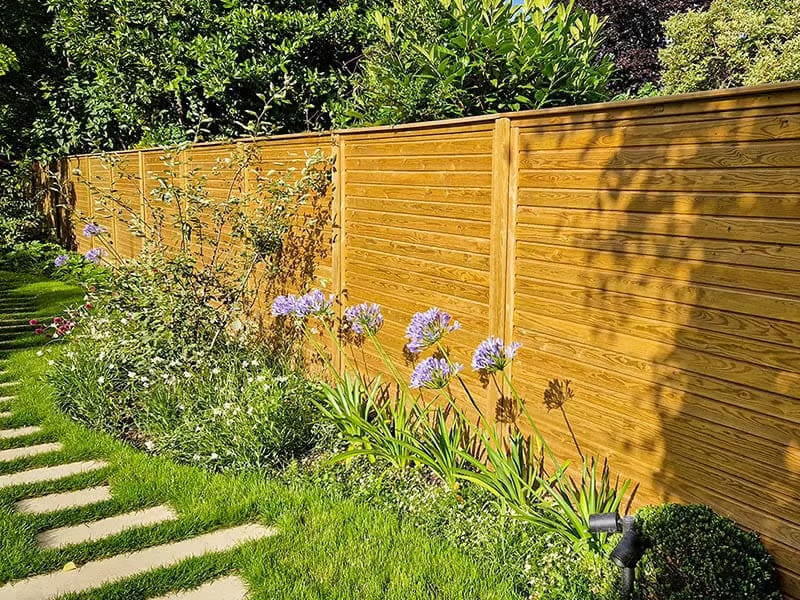
When upgrading your outdoor space, Garden Fence Panels are often the first feature homeowners consider. They define boundaries, enhance privacy, and instantly improve curb appeal. Choosing the right supplier is just as important as choosing the right style; and that’s where G&G Fencing stands out. With the right panels and expert craftsmanship, your garden can feel more secure, stylish, and complete.
Why Garden Fence Panels Are Essential
Fence panels do more than simply mark property lines. They provide privacy from neighbors, reduce outside noise, and create a safe enclosure for children and pets. A well-installed fence can also increase property value, making it both a practical and visual investment.
Beyond function, fence panels play a major role in the overall design of your garden. Whether your outdoor space is modern and minimal or rustic and traditional, the right fencing style helps tie everything together.
Choosing the Right Style
There are several popular types of garden fence panels, each offering a different look and level of privacy:
- Closeboard Panels – Durable and strong, ideal for windy areas.
- Overlap Panels – Budget-friendly and practical.
- Slatted Panels – Contemporary design with partial privacy.
- Decorative Panels – Add personality with lattice or patterned tops.
Before making a decision, consider your priorities. Are you looking for maximum privacy? A decorative statement? Something low-maintenance? Your choice should balance appearance, durability, and budget.
Material Matters
Most garden fence panels are made from timber, but not all timber is created equal. Pressure-treated wood offers longer-lasting protection against rot and weather damage. Some homeowners also explore composite materials for lower maintenance and extended durability.
High-quality materials mean fewer repairs and replacements over time. Investing in strong, treated panels saves money in the long run while maintaining your garden’s polished look.
Installation: DIY or Professional?
While installing fence panels might seem like a straightforward DIY project, proper installation is key to longevity. Uneven ground, poor post placement, or incorrect spacing can reduce stability. Professional installers ensure posts are secure, panels are aligned, and the structure can withstand changing weather conditions.
A trusted fencing provider can also advise on local regulations, boundary lines, and height restrictions — helping you avoid unnecessary complications.
Maintenance Tips
To keep your garden fence panels looking their best:
- Apply wood treatment or stain every few years.
- Check for loose posts or panels after storms.
- Clear debris and plant growth that may trap moisture.
- Repair small damages early before they spread.
Regular upkeep extends the life of your fencing and preserves its appearance.
Why Quality Suppliers Make the Difference
Working with a reputable fencing supplier ensures consistent craftsmanship, durable materials, and proper guidance. Companies like G&G Fencing focus on delivering reliable products designed to withstand varying weather conditions while maintaining visual appeal.
A professional supplier also offers a wider range of styles and finishes, giving homeowners more freedom to customize their outdoor space. Instead of settling for generic options, you gain access to tailored solutions that fit your garden’s unique layout and design goals.
Boosting Your Outdoor Appeal
Garden fence panels frame your entire outdoor environment. They provide structure for landscaping, create a backdrop for plants and décor, and help define zones for relaxation or entertaining. When chosen carefully, fencing becomes more than a boundary — it becomes part of your home’s personality.
If you’re planning a garden upgrade, start with your fencing. Prioritize durability, choose a style that complements your property, and partner with a supplier known for quality workmanship. With the right garden fence panels and a trusted provider behind them, your outdoor space can transform into a private, polished retreat that lasts for years to come.

Strain names can dominate the conversation when it comes to medical cannabis, but they are not what frames treatment in practice. In the UK, cannabis treatments fall inside a medical system built on caution, review and accountability. Once you see how that system works, a lot of the noise around cannabis starts to fall away.
Medical cannabis still carries baggage. For a lot of people, it brings back memories of bad choices, worse people and teenage years best forgotten. That makes it hard to take seriously when it shows up in a doctor’s office. In the UK, medical cannabis does not work on reputation or folklore. It works because it sits inside the same clinical systems as other prescribed medicines, with rules and checks, and people responsible for decisions.
Strain Language Is Where Confusion Usually Starts
The first thing many people hear about medical cannabis is strain names. Indica weed gets talked about as if it has a fixed personality; something calming, something predictable. That idea stuck because it sounds simple and familiar. In practice, it does not carry much weight on its own. Doctors are not working from labels or old stereotypes. They are looking at symptoms, tolerance, previous treatments and how a patient responds once treatment begins. The strain name is a reference point, not a decision-maker.
This is where the gap opens between public language and medical reality. Indica weed means different things depending on dose and formulation, and the person taking it. In a clinical setting, those details shape treatment far more than the word on the label. The takeaway here is to not get hung up on what something should be, but rather on how it actually works at the end of the day.
Medical Cannabis Sits Inside the Same Rules as Other Medicines
In the UK, medical cannabis does not sit outside the healthcare system. It follows the same basic rules as ‘normal’ prescribed medication. That includes specialist oversight in limits on who can prescribe it, and regular review once treatment starts. This structure is set out clearly in NHS guidance on medical cannabis, which places it alongside other controlled treatments rather than lifestyle products.
That framework changes how decisions are made. Prescribing is cautious by design. Adjustments happen slowly and are based on how a patient responds, not on expectations or reputation. The system is there to reduce risk ant to spot problems early, and keep responsibility with trained clinicians instead of leaving patients to figure things out alone. It’s a conservative approach, but one that has the best chance of success.
Patient Experience Reflects Process More Than Product
When patients talk about their experience, they rarely focus on plant types or labels. What comes up instead is how the clinic handled them. Public opinions of cannabis clinics and Curaleaf clinic reviews show these patient experiences in bright daylight. People talk about whether they felt listened to, how follow-ups were handled and how clearly the next steps were explained. Those details drive confidence far more than any strain name ever could.
That feedback points back to process. A clinic that explains decisions and follows a methodological approach leaves a different impression than one that rushes appointments or glosses over concerns. For patients, trust is built through structure and consistency. That is what they remember when they talk about care, not the label attached to the prescription.
Evidence Does Not Support Simple Cannabis Categories
Medical research has never backed the idea that strain labels can predict outcomes on their own. Reviews published in the BMJ make that clear. Effects vary widely between individuals, even when the same product is used. Dose, delivery method, existing conditions and other medications all play a role that strain names do not capture.
This is why clinicians stay careful. Labels may sound reassuring, but they do not replace monitoring and review. In a medical setting, uncertainty is handled through follow-up and adjustment, not confidence in a category. The evidence points away from neat groupings and toward individual response, which is exactly why the system is built around oversight rather than assumptions.
The System Includes People Patients Never Meet
Behind every prescription sits a wider network of healthcare professionals. Pharmacists are part of that structure, even when patients never see them directly. Their role sits inside medicines governance, safety checks, and handling controlled treatments within UK law. The scale and responsibility of that work shows up clearly in pharmacist jobs in the UK, which reflects how tightly regulated medicines are managed.
That matters for medical cannabis because it removes the idea that this is informal or improvised care. Prescribing decisions are supported by systems designed to catch errors and protect patients. Even when the focus feels personal inside a consultation, the treatment still moves through a framework built for accountability, not shortcuts.
Why the System Ends Up Doing the Heavy Lifting
UK medical cannabis only makes sense when you stop treating it like a category and start seeing it as care. The words people recognise tend to come from the street, not the clinic.
What actually shapes outcomes is slower and less glamorous. It is the checks, the follow-ups, the caution, the regulations. When the system works, patients are not asked to rely on guesswork or reputation. They are supported by a process designed to handle uncertainty without pretending it does not exist.

Who Is Wendy Edgar-Jones? Everything About Daisy Edgar-Jones’s Mother

Who Is Jarnette Olsen? Everything About Ashley Olsen’s Mother

Edith Sarfati Profile — Her Lifestyle, Net Worth, Family Story, and the Mother Behind Lea Michele’s Success

Who Is Karen Brailsford? Everything About Amandla Stenberg’s Mother

Who Is Kathy Sudeikis? Everything About Jason Sudeikis’s Mother

Amazing Facts About Paula Gosselaar: The Strong Woman Behind Mark-Paul Gosselaar

Roy Hodges: Biography, Lifestyle, Net Worth, Family & Success Story (2025)

Enclomimed 25 (Enclomiphene) – Effective PCT Protocol

Draven Duncan: Tim Duncan’s Rising Star Son and His Inspiring Basketball Journey

Who Is Maisie Mae Roffey? The Private Life, Family Story, and Quiet Success of Julie Walters’ Daughter

Nancy Hallam: The Inspiring Life, Career, and Success Story Behind Ian Wright’s Wife

Who Is Daniel Clifton Pratt? Inside the Life, Family Values, and Legacy Behind Chris Pratt’s Father
Roy Hodges: Biography, Lifestyle, Net Worth, Family & Success Story (2025)
Enclomimed 25 (Enclomiphene) – Effective PCT Protocol
Draven Duncan: Tim Duncan’s Rising Star Son and His Inspiring Basketball Journey
Who Is Maisie Mae Roffey? The Private Life, Family Story, and Quiet Success of Julie Walters’ Daughter
Nancy Hallam: The Inspiring Life, Career, and Success Story Behind Ian Wright’s Wife
Who Is Daniel Clifton Pratt? Inside the Life, Family Values, and Legacy Behind Chris Pratt’s Father
-
Celebrity3 months ago
Roy Hodges: Biography, Lifestyle, Net Worth, Family & Success Story (2025)
-
 Health1 month ago
Enclomimed 25 (Enclomiphene) – Effective PCT Protocol
-
Celebrity2 months ago
Draven Duncan: Tim Duncan’s Rising Star Son and His Inspiring Basketball Journey
-
Celebrity3 months ago
Who Is Maisie Mae Roffey? The Private Life, Family Story, and Quiet Success of Julie Walters’ Daughter
-
Celebrity4 months ago
Nancy Hallam: The Inspiring Life, Career, and Success Story Behind Ian Wright’s Wife
-
Celebrity2 months ago
Who Is Daniel Clifton Pratt? Inside the Life, Family Values, and Legacy Behind Chris Pratt’s Father
-
 Celebrity3 months ago
Geoffrey Planer: Lifestyle, Net Worth, Family, and Success Story of Jane Seymour’s Ex-Husband
-
 Celebrity2 months ago
Who is Sheila Page?All About Nick Nolte’s First Wife, Her Story Behind the Spotlight