
Blog
Is Your Snoring Dangerous? Warning Signs You Shouldn’t Ignore


Snoring is a common issue that affects many adults and may sometimes be dismissed as a harmless sleeping habit. Occasional snoring can happen due to factors such as tiredness, sleeping position, nasal congestion or alcohol intake.
However, loud and frequent snoring may sometimes be a sign of an underlying sleep-related breathing problem, particularly obstructive sleep apnea (OSA). This condition occurs when the upper airway becomes partially or completely blocked during sleep, causing repeated interruptions to breathing.
Not everyone who snores has sleep apnea, but certain warning signs may suggest that snoring requires medical assessment.
Recognising these signs early can help patients seek appropriate treatment and improve sleep quality, daytime energy and overall health.
Why Do People Snore?
Snoring happens when airflow through the upper airway becomes restricted during sleep. As air passes through narrowed areas, surrounding tissues may vibrate and produce the sound associated with snoring.
Airway narrowing may occur due to factors affecting the:
- Nose
- Soft palate
- Throat
- Tongue
- Upper airway muscles
Common reasons why people snore include:
- Nasal blockage
- Allergies
- Enlarged tonsils
- Enlarged adenoids in children
- Deviated nasal septum
- Sleeping on the back
- Weight gain
- Alcohol consumption before sleep
- Age-related changes affecting airway tissues
Occasional snoring may not indicate a serious problem. However, persistent loud snoring with other symptoms may require further assessment.
When Is Snoring Considered Concerning?
Snoring may require medical attention when it is:
- Loud and frequent
- Happening almost every night
- Becoming worse over time
- Affecting sleep quality
- Associated with breathing interruptions
- Causing daytime tiredness
- Affecting concentration or mood
A person who snores may not always realise their sleep is disrupted. Often, a partner or family member may notice warning signs first.
Warning Signs Your Snoring Should Not Be Ignored
1. Breathing Pauses During Sleep
One of the most important warning signs is when someone notices that you stop breathing during sleep.
These pauses may happen because the airway becomes blocked temporarily. After the pause, the body may respond by briefly waking up or gasping to restore breathing.
Signs may include:
- Breathing pauses noticed by a partner
- Loud snoring followed by silence
- Sudden choking or gasping sounds
- Restless sleep
Repeated breathing interruptions may be a sign of obstructive sleep apnea and should be assessed.
2. Waking Up Gasping or Choking
Some people with sleep apnea wake up suddenly because their breathing has been interrupted.
You may experience:
- Waking up feeling unable to breathe
- Choking sensations
- Sudden awakenings during the night
- Feeling panicked upon waking
These episodes should not be ignored, especially if they occur regularly.
3. Feeling Tired Despite Getting Enough Sleep
A person with sleep apnea may spend enough hours in bed but still feel exhausted during the day.
This happens because repeated breathing interruptions prevent the body from achieving good-quality sleep.
Daytime symptoms may include:
- Excessive tiredness
- Low energy
- Difficulty staying awake
- Poor concentration
- Reduced productivity
- Feeling unrefreshed after waking
Persistent daytime fatigue combined with loud snoring may require assessment.
4. Morning Headaches
Morning headaches can occur when sleep apnea affects oxygen levels and sleep quality during the night.
Patients may notice:
- Waking up with headaches
- Head pressure in the morning
- Headaches that improve later in the day
While morning headaches can have many causes, they may be a sign of disrupted breathing during sleep when combined with other symptoms.
5. Poor Concentration and Memory Problems
Poor sleep quality can affect how the brain functions during the day.
Patients with sleep-related breathing problems may experience:
- Difficulty focusing
- Forgetfulness
- Slower reaction times
- Reduced attention span
- Difficulty completing tasks
These symptoms may affect work performance, learning and daily activities.
6. High Blood Pressure or Heart-Related Concerns
Sleep apnea has been associated with increased strain on the cardiovascular system because repeated breathing interruptions can affect oxygen levels and increase stress responses in the body.
Patients with snoring and conditions such as:
- High blood pressure
- Heart rhythm problems
- Heart disease
- Previous stroke
may benefit from discussing their symptoms with a healthcare professional.
7. Loud Snoring That Gets Worse Over Time
Snoring patterns can change. A person who previously snored occasionally may begin snoring more frequently or more loudly.
Worsening snoring may be linked to:
- Weight changes
- Increasing nasal blockage
- Age-related airway changes
- Enlarged throat tissues
- Development of sleep apnea
A sudden change in snoring patterns should be assessed, especially if other symptoms are present.
8. Snoring With Nasal Blockage
Nasal problems can contribute to snoring by making it harder to breathe through the nose.
Possible causes include:
- Allergic rhinitis
- Chronic sinusitis
- Deviated nasal septum
- Nasal polyps
- Enlarged nasal tissues
Patients may notice:
- Mouth breathing during sleep
- Dry mouth upon waking
- Difficulty breathing through the nose
- Worse snoring during allergy flare-ups
An ENT doctor can assess whether nasal obstruction is contributing to snoring.
9. Snoring With Excessive Daytime Sleepiness
Feeling sleepy during the day may be a sign that nighttime sleep is not restorative.
You should consider medical assessment if you:
- Fall asleep unintentionally
- Feel sleepy while working
- Struggle to stay awake during the day
- Feel tired despite adequate sleep
This is especially important for people who drive, operate machinery or have safety-sensitive jobs.
10. Snoring in Children
Snoring is not only an adult problem. Children who snore regularly may also need assessment.
Parents should consider seeing a doctor if their child has:
- Frequent snoring
- Mouth breathing
- Pauses in breathing during sleep
- Restless sleep
- Daytime behavioural changes
- Difficulty concentrating
- Poor sleep quality
In children, enlarged tonsils and adenoids are common causes of sleep-disordered breathing.
Is Snoring Always Sleep Apnea?
No. Many people snore without having sleep apnea.
Simple snoring may occur due to:
- Sleeping position
- Nasal congestion
- Temporary illness
- Lifestyle factors
However, snoring is more concerning when it occurs together with symptoms such as:
- Breathing pauses
- Gasping during sleep
- Daytime sleepiness
- Morning headaches
- Poor concentration
- High blood pressure
A proper assessment can help determine whether sleep apnea is present.
How Is Sleep Apnea Diagnosed?
If sleep apnea is suspected, a doctor may recommend further evaluation.
Assessment may include:
Medical History Review
The doctor may ask about:
- Snoring frequency
- Sleep quality
- Daytime symptoms
- Breathing pauses
- Medical history
- Lifestyle factors
Physical Examination
An ENT specialist may examine:
- Nasal passages
- Tonsils
- Throat structures
- Airway anatomy
Sleep Study
A sleep study records body functions during sleep, including:
- Breathing patterns
- Oxygen levels
- Heart rate
- Sleep stages
- Body movements
The results help determine whether sleep apnea is present and how severe it may be.
When Should You See an ENT Specialist for Snoring?
You may consider seeing an ENT specialist if:
- You snore loudly every night
- Your snoring is worsening
- Someone notices breathing pauses
- You wake up choking or gasping
- You have persistent nasal blockage
- You feel tired despite sleeping
- Snoring affects your relationship or daily life
- You suspect sleep apnea
An ENT specialist can assess whether physical factors affecting the airway may be contributing to snoring.
Treatment Options for Dangerous Snoring and Sleep Apnea
Treatment depends on the cause and severity of symptoms.
Lifestyle Changes
Some patients may benefit from:
- Maintaining a healthy weight
- Sleeping on the side
- Avoiding alcohol before bedtime
- Improving sleep habits
Treating Nasal Problems
If nasal obstruction contributes to snoring, treatment may include:
- Allergy management
- Nasal medication
- Treatment for sinus conditions
- Nasal procedures in selected cases
CPAP Therapy
Continuous positive airway pressure (CPAP) uses gentle air pressure to help keep the airway open during sleep.
It is commonly used for moderate to severe obstructive sleep apnea.
Oral Appliances
Some patients may benefit from devices that adjust jaw or tongue position to improve airflow.
Surgery
Surgery may be considered for selected patients when there is a structural cause of airway obstruction.
Possible procedures may include:
- Tonsil surgery
- Nasal surgery
- Palate procedures
- Other airway procedures
The suitable treatment depends on the location of airway blockage and individual factors.
Snoring is common, but loud and persistent snoring should not always be dismissed as harmless. When snoring is accompanied by breathing pauses, gasping during sleep, daytime fatigue, morning headaches or difficulty concentrating, it may indicate an underlying sleep-related breathing problem.
An ENT specialist can assess the possible causes of snoring, including nasal blockage, throat anatomy and obstructive sleep apnea, and recommend appropriate treatment options.
Seeking medical advice early can help improve sleep quality, reduce symptoms and address potential health concerns associated with untreated sleep apnea.
This article is for general information only and should not replace medical advice from a qualified healthcare professional.



Clothes look like the easy part of a move until you actually start. A closet that seemed small holds an astonishing amount, and most of it is soft, which means it can be squashed into any container and so it will be. Then somebody has to carry that container down five flights of stairs.
The goal is not getting everything into as few boxes as possible. It is arriving with your clothes still wearable and enough of them findable that you can dress for work on Monday without opening nine cartons. That takes a plan rather than speed, and the plan starts before you buy any tape.
Thin the Closet Before You Buy a Single Box
Every box of clothing you move is a box you have to unpack again, and a good third of most closets never gets worn at all. Start three weeks out, on an evening when you are not already tired, and go through it once properly. The pieces you hesitate over twice are the pieces to let go.
Donation bins and secondhand shops around the city fill up at the end of the month for obvious reasons, so plan the drop off before the last week. Anything genuinely worn out belongs in textile recycling rather than a donation bag, since charities have to dispose of what they cannot sell and that helps nobody.
The hanger test and the honest pile
Turn every hanger backwards at the start. Whatever is still backwards a few weeks later has not been worn, which settles most of the arguments you would otherwise have with yourself. In a prewar apartment where the closet is 24 inches deep and shared with a vacuum cleaner, that test is more useful than it sounds.
Make a pile you are honestly not keeping and get it out of the apartment that same week. Bags of clothes destined for donation have a way of living by the door for a month and then getting loaded onto the truck anyway, because nobody wants to be the person deciding on moving day.
Hanging Clothes Without Wrecking the Shoulders
Wardrobe boxes with a bar across the top are the clean solution for anything tailored. A standard one is roughly two feet wide and just over three feet tall, which takes a run of hanging clothes straight off the rod. Suits and structured coats keep their shape that way and arrive ready to hang up.
They are also bulky and they eat truck space, so use them for the pieces that need it and not for jersey shirts. The simpler trick is to leave clothes on their hangers in groups of eight or ten, pull a heavy duty trash bag up over them from the bottom, then tie the bag around the hooks.
Hangers are the hidden bulk
Wire hangers from the dry cleaner tangle into one solid mass in transit and bend under any real weight. Pull them out and recycle them before you pack, then move the wooden and velvet ones in a separate carton laid flat. A tangle of forty hangers takes twenty minutes to separate at the other end.
Count how many you will actually need in the new place. A prewar closet with a single rod at shoulder height holds far less than a modern reach-in, and the surplus becomes clutter on the floor. Leave the extras behind or pass them to whoever is taking over your old apartment.
Footwear, Bags and Anything That Loses Its Shape
Shoes are heavy and they crush easily, which is a bad combination inside a carton. Keep the boxes small. A book box packed with shoes is already at the limit of what somebody wants to carry down a fifth floor walk-up, and a large carton loaded the same way becomes a two person job for no reason.
Boots and anything leather want to travel upright. Heat is the enemy, so keep them away from a truck wall that has been sitting in the sun, and out of the sealed plastic they came home from the store in. Leather needs air, and a week in an airtight bag in August leaves a smell behind.
Stuffing beats squeezing
Fill the toe of every boot with a rolled t-shirt or a sheet of packing paper before it goes into a box. It holds the shape, it uses space that would otherwise be air, and it gives your socks somewhere to live. Newspaper works but the ink transfers, so keep that well away from anything pale.
Structured handbags get the same treatment, then a dust bag or an old pillowcase, then a spot on top of the carton rather than the bottom. Never stack anything heavy on a leather bag. A crease pressed into one over four days in a box is usually permanent, and no amount of steaming brings it back.
Coats, Boots and the Stuff at the Back of the Closet
Seasonal gear is what everyone leaves until the last night, and it always takes longer than expected. If you have booked Dynamic Movers NYC or another crew for an early start, get that material into cartons the day before, because nobody wants to be taping boxes at seven in the morning while a truck sits in a loading zone.
Vacuum bags are excellent for down and synthetic fill and poor for almost everything else. Compressing wool and cashmere for weeks flattens the fibers, and natural fabrics need to breathe. Use the bags for a puffer jacket and a duvet, then put the sweaters in a regular carton with a cedar block and some room.

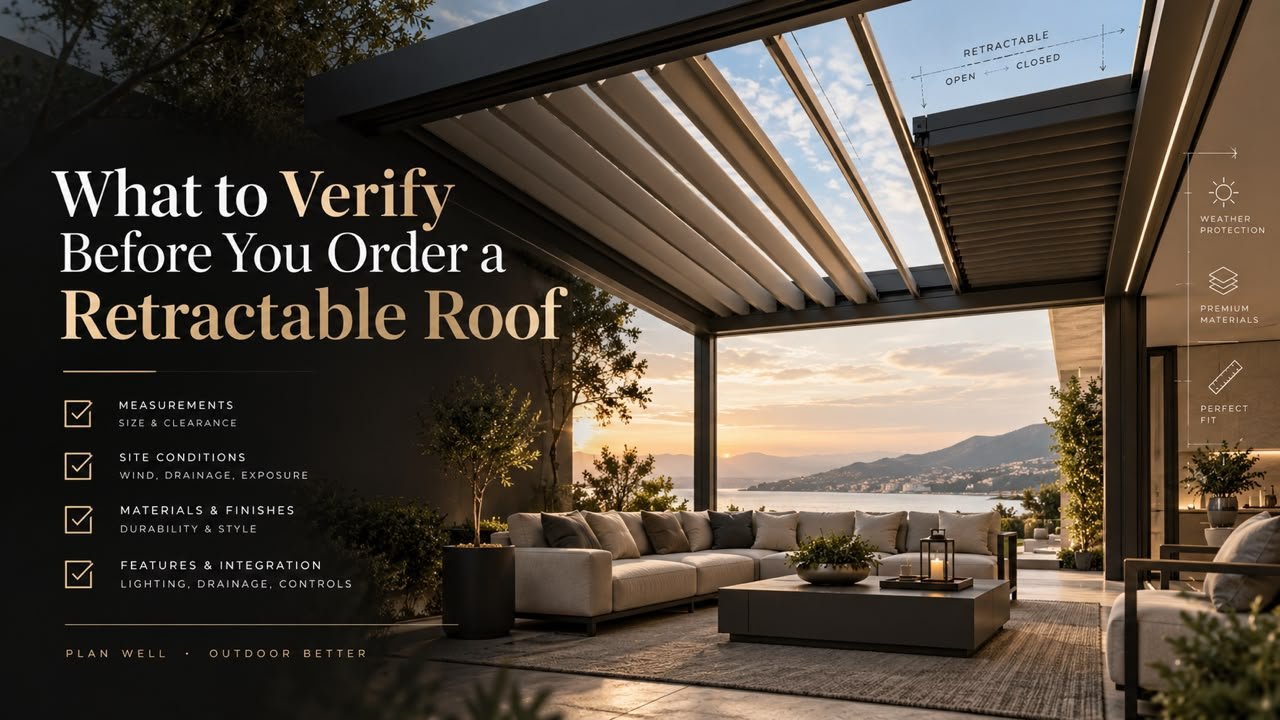
A sales demonstration answers exactly one question: the cover opens and it closes again. Almost everything that decides whether you still like the structure four winters from now sits outside that thirty second demo. How the membrane behaves when water sits on it, where that water goes once it leaves the roof, what the motor does if power drops mid cycle, and how much hardware stays in your sightline when the cover is parked are all knowable before you sign anything.
Anyone shopping for a retractable pergola in NJ or anywhere else with real winters is buying two products fused together: a tensioned fabric cover and an aluminium frame stiff enough to hold that cover square. Ask about them separately. Sellers who talk only about one of the two are usually weaker on the other.
Start with the fabric because it sets every other limit
The cover on a retractable roof system is a tensioned membrane, typically a coated polyester, and it is doing two jobs that pull against each other. Shedding water needs slope and tension. Blocking sun is mostly a question of coating, weave and color. Ask which of those the quoted fabric is built for, and ask for a physical sample rather than a photograph. A pale panel filters more daylight in. A darker one kills glare harder and hides dust longer.
Two details belong in writing. The first is whether the fabric is called waterproof or water resistant, because those are different promises and the gap between them shows up during a long steady rain rather than a shower. The second is how much pitch the frame builds in when the roof is extended. A membrane running close to flat will pond, ponding stretches the fabric, and a stretched panel ponds more easily next time. UV exposure does the same damage slowly, degrading coatings and fading color. Vision Art Aluminium specifies UV resistant cover fabric on its SkyFlow system partly to cut the solar heat reaching the space below, so ask what your own quoted fabric resists and what the warranty treats as normal aging.
Winter is a retraction question before it is a strength question
Wet snow is heavy and it clings. A fabric cover is not a roof deck, and most retractable systems are meant to be pulled back before snow accumulates. The useful question is not how much snow the membrane holds. It is what the manufacturer requires you to do, and what the warranty says if you fail while you are away for a week in February.
Then ask the structural question, because an aluminium frame standing open all winter still resists wind and ice on its own members. Heavier reinforced profiles, the sort named individually in Vision Art Aluminium’s SkyFlow specification as Gold Pillar, Gold Rail, Diamond Rail and Diamond Pillar sections, exist to hold geometry under that loading rather than to carry the cover. Whatever brand you look at, ask for the profile detail, not just a frame color.
Follow the water all the way to the ground
Ask the installer to draw the whole path on the plan: off the fabric, into the perimeter beam, through the gutter profile, down a named post, and out at a named point. Integrated drainage running internally through beam and post is the tidy solution, and keeping runoff clear of the covered area is what it is sold to do. The part worth arguing about is the last two feet. An outlet that discharges at a post base tight against your foundation, or onto a path that will glaze over in January, has moved the problem rather than solved it.
Motors fail in predictable ways so ask about the failures
Five questions cover most of the risk:
- What position does the cover hold if power is lost halfway through a cycle
- Is there a manual override, where is it, and can one person reach it from the ground
- Can the motor be serviced or swapped without dismantling the beam
- If a wind sensor is fitted, what does it do during an outage
- Who carries spare motors and controls locally, and what is the typical wait
Remote handsets are pleasant. A wall switch that still works when the handset is lost matters more over ten years.
Permits and site prep own the calendar
Assembly is the short part. The SkyFlow installation sequence, for example, is defined in five steps, with a standard six by four metre unit typically going up in around eight hours once site inspection, drawings and permits are complete. That last clause is the real schedule. Setbacks, whether the structure counts as attached or freestanding, footing requirements and slab condition all get settled before anyone brings aluminium to the yard. Ask for the timeline split into approvals and build days.
Look at the system closed before you look at it open
Sales photographs show the cover extended, but you will spend much of the year looking at a retractable pergola in its parked state. Ask how bulky the closed cassette is, where it sits, and whether it blocks a window or the view from the room behind it. If perimeter zip screens are on the quote, they run in vertical tracks down the posts for privacy, glare control and insect screening, and those tracks are permanent lines in the elevation.
None of these answers costs a seller anything. A pergola with a retractable roof engineered properly arrives with the drainage path, winter instruction, profile schedule and override location already documented. When several questions come back vague, that vagueness is the finding.

For factory and warehouse workers who wear corrective lenses, the best prescription safety glasses in 2026 share three things: a genuine ANSI Z87.1 (ideally Z87+ High Impact) rating, impact-resistant lens materials, and the toughness to take debris, dust, and knocks on an industrial floor. Eye injuries remain among the most common – and most preventable – workplace injuries in the United States, and prescription wearers face an added wrinkle: ordinary Rx glasses aren’t rated for impact, and clip-over goggles are clumsy, fog-prone, and frustrating to wear through a full shift. The seven providers below were chosen and ranked for the industrial buyer who needs compliant, comfortable, durable eye protection – whether that’s a single warehouse operative or a safety manager equipping a whole crew.
Our top pick is RX Safety for factory and warehouse workers who need ANSI Z87.1/Z87+ certified prescription eyewear. It’s the only provider on this list that designs and manufactures its frames in-house in the USA using CNC and robotic machining – a process that delivers the kind of consistency and quality control imported frames rarely match. Its entire range carries ANSI Z87.1 and Z87+ High Impact certification, including military-rated ballistic options for the highest-hazard environments, and pricing sits at the premium tier that in-house American manufacturing implies. For workers who specifically need wraparound frames with side-impact coverage in active, high-debris settings, ArmorX is the strongest alternative. For budget-conscious buyers who still need genuine ANSI compliance, Pyramex is the go-to.
This guide evaluates each provider on ANSI certification level, lens material and optical clarity, frame durability, industrial fit, and value relative to the protection delivered. It’s written for hourly workers, supervisors, and occupational health and safety staff across manufacturing, warehousing, construction, labs, and adjacent settings like the oil and gas industry – anyone whose environment demands compliant prescription eyewear rather than sport or fashion frames.
At a glance: the 7 ranked providers
| RX Safety | Factory and warehouse workers needing USA-made, ANSI Z87.1/Z87+ certified prescription glasses |
| SafeVision | Shoppers wanting a specialist catalog focused exclusively on Rx safety frames |
| Safety Gear Pro | Industrial buyers seeking a wide ANSI-rated selection across frame categories |
| ArmorX | Wraparound occupational frames prioritizing side-impact coverage |
| Pyramex | Budget-conscious buyers who still need ANSI-compliant options |
| OnGuard | Affordable prescription safety frames with a broad range of sizes and styles |
| Titmus | Buyers who prefer established, long-tenured occupational frame lines |
How we chose
We ranked these providers against the five factors that actually determine whether a pair of prescription safety glasses protects a worker on an industrial floor. First, ANSI certification level – every entry had to offer frames meeting ANSI Z87.1, with credit given for Z87+ High Impact ratings, since eye protection is only meaningful when tested against a recognized standard (OSHA references ANSI Z87.1 in 29 CFR 1910.133 as the accepted benchmark for occupational eye protection). Second, lens material and optical clarity: polycarbonate is the most common impact-resistant thermoplastic used in safety lenses, while Trivex offers comparable protection with slightly sharper clarity. Third, frame durability and material – nylon, metal, and wrap-around construction that survives daily industrial use. Fourth, style variety and industrial fit, including side shields, wraparound designs, and goggle options that seal against particles. Fifth, value relative to protection, because compliance shouldn’t require overspending. Certified frames carry Z87 or Z87+ markings on the frame and lens; we verified that each provider offers genuinely marked, standards-compliant products rather than fashion frames marketed loosely as “safety” eyewear.
The 7 best prescription safety glasses for factory and warehouse workers
With those criteria in mind, here are the seven providers that best serve factory and warehouse workers who need ANSI-compliant prescription eyewear in 2026 – ranked from our top overall pick down to strong specialist alternatives. Each entry is assessed on how effectively it helps workers achieve compliant, durable, comfortable eye protection, and #1 is our top recommendation for most industrial buyers.
#1. RX Safety – Best for factory and warehouse workers who need USA-made, ANSI Z87.1/Z87+ certified prescription safety glasses
RX Safety takes the top spot because it solves the industrial buyer’s core problem more completely than any other provider here: it makes compliant prescription eyewear in the USA, in-house, and certifies the entire catalog to ANSI standards. If you’re comparing options for Prescription Safety Glasses that will hold up across a large facility, this is the reference point the other six are measured against.
The differentiator is manufacturing control. RX Safety designs and produces its frames using CNC and robotic machining, which delivers measurable consistency from one pair to the next – something retailers reselling imported stock simply can’t promise. Every product in the range carries ANSI Z87.1 and Z87+ High Impact certification, and the catalog includes military-rated ballistic eyewear options for the most demanding hazard profiles. The breadth of frame styles – wrap-around, goggles, rimless, metal, and plastic – means one supplier can equip a mixed workforce facing different risks, and the same catalog serves construction, manufacturing, research laboratory, and military markets.
Key specifications
- In-house USA manufacturing via CNC and robotic machining
- Full ANSI Z87.1 and Z87+ High Impact certification across the entire range
- Military-rated ballistic lens options available
- Frame styles: wrap-around, goggles, rimless, metal, plastic
- Lens options including polycarbonate for impact resistance
Pros
- The only provider here manufacturing in-house in the USA, ensuring tight quality control
- Entire range is ANSI Z87.1/Z87+ certified – no guesswork on compliance
- Ballistic-rated choices for the highest-hazard environments
- Widest frame-style variety in a single catalog
- Serves multiple industrial markets from one supplier
Cons
- Premium USA manufacturing means it isn’t the cheapest option on this list
- Online-only ordering – no in-person try-before-you-buy
- The large catalog can feel overwhelming to first-time buyers without frame-selection guidance
Who it’s best for: Factory, warehouse, and manufacturing workers – and the safety managers equipping them – who prioritize verified compliance, durability, and quality control over rock-bottom price, and who want one supplier that can cover everything from a rimless bench frame to a ballistic-rated wraparound.
#2. SafeVision – Best for dedicated prescription safety eyewear shoppers who want a specialist catalog
SafeVision earns second place as the specialist’s choice. Rather than bundling safety eyewear into a broad PPE catalog, it focuses on prescription safety frames – which gives it a deeper, more considered selection for buyers who know they want Rx protection and want to compare options within that niche.
The catalog spans a useful range of frame styles for different face shapes, with ANSI-rated options suited to workplace compliance and a variety of prescription lens choices. For a worker who already knows their prescription and simply wants a focused set of compliant frames to choose from, the specialist framing cuts through the noise.
Pros
- Specialist focus produces a deep prescription safety catalog
- ANSI-rated options for workplace compliance
- Range of frame styles for different face shapes and fits
- Established presence in the prescription safety space
Cons
- Less overall frame-style breadth than RX Safety
- Not manufactured in-house in the USA
- No military or ballistic-rated options indicated
Best for: Buyers who want a dedicated prescription safety eyewear specialist rather than a general industrial retailer, and who value a focused catalog over one-stop breadth.
#3. Safety Gear Pro – Best for industrial buyers seeking a wide ANSI-rated selection across multiple frame categories
Safety Gear Pro is the one-stop storefront on this list. Where SafeVision narrows, Safety Gear Pro broadens: it carries a wide selection of ANSI Z87+ rated frames across multiple categories, including a prescription safety section, which makes it convenient for procurement staff sourcing several frame types in a single transaction.
Because it operates as a retailer rather than a manufacturer, it can offer accessible pricing and a broad shelf – but it also has less direct control over quality consistency than an in-house maker, and specialist prescription fitting support is thinner than what a dedicated Rx provider offers. Catalog depth also varies noticeably from one frame category to the next.
Pros
- Broad ANSI-rated catalog spanning multiple frame categories
- Prescription safety options available
- Convenient single-purchase sourcing for mixed needs
- Accessible pricing across the range
Cons
- Retailer model means less control over quality consistency
- Limited specialist prescription fitting support
- Catalog depth is uneven across categories
Best for: Safety managers and procurement buyers who need to source several frame types – safety glasses, goggles, prescription frames – from one storefront with accessible pricing.
#4. ArmorX – Best for wraparound and occupational prescription frames prioritizing side-impact coverage
ArmorX is the pick when side-impact protection is the priority. Its wraparound designs are built for occupational use, curving to shield the periphery and close the gap where flying particles and debris tend to reach the eye in high-movement factory settings. In warehouses with forklift traffic or machining floors throwing chips, that peripheral coverage is a genuine safety advantage – not a cosmetic one.
The frames are prescription-compatible and offer ANSI-rated options, and the wraparound geometry pairs well with a snug nose bridge and temple arms that stay put during active work. The trade-off is focus: the catalog skews heavily toward wraparound styles, so workers who prefer a traditional frame shape will find fewer choices, and overall breadth is narrower than what the larger providers offer.
Pros
- Wraparound designs deliver superior peripheral and side protection
- Prescription-compatible occupational frames
- Built specifically for active, high-debris industrial environments
- ANSI-rated options available
Cons
- Narrower overall catalog than larger providers
- Style range skews toward wraparound – less variety for traditional shapes
- Lower brand recognition than some competitors
Best for: Workers in high-debris, high-movement environments – machining, material handling, construction-adjacent factory work – where side-impact coverage is the deciding factor.
#5. Pyramex – Best for budget-conscious industrial safety buyers who need ANSI-compliant prescription-ready options
Pyramex is the value entry. For employers outfitting a large workforce, or workers watching the cost of compliance, it offers the lowest price point on this list while still delivering ANSI Z87+ rated options and a wide range of styles and sizes. It’s widely distributed through occupational supply channels, so availability is rarely an issue.
The compromise is durability and specialization. Budget pricing can translate to frames that show wear sooner under sustained industrial use. The products aren’t USA-manufactured, and prescription integration is less specialized than what a dedicated Rx safety house provides. High-impact and ballistic-rated choices are also limited. But for baseline ANSI compliance at scale, it’s hard to beat on cost.
Pros
- Lowest price point on this list for ANSI-compliant options
- Wide style and size range
- Broadly available through occupational supply channels
- ANSI Z87+ rated options available
Cons
- Budget pricing may mean lower frame durability over time
- Not manufactured in the USA
- Prescription safety integration is less specialized
- Limited high-impact or ballistic-rated options
Best for: Budget-conscious buyers and employers equipping large workforces who need genuine ANSI compliance without a premium spend.
#6. OnGuard – Best for workers looking for affordable prescription safety frames with a broad range of sizes and styles
OnGuard sits close to Pyramex on price but distinguishes itself on fit variety. Its affordable prescription safety frames come in a broad size range, which matters more than buyers often expect: a compliant frame that doesn’t seal properly around the nose bridge or slips down the temple arms won’t protect reliably. The wider size spread helps accommodate more face shapes across a diverse crew.
ANSI-rated options cover workplace compliance, and the lineup includes several style formats – full-frame and semi-rimless among them. As with the other value entries, it’s not a premium or USA-made product, high-impact and ballistic lens options are limited, and brand recognition trails the category leaders.
Pros
- Affordable entry point for prescription safety compliance
- Wide size range accommodates more face shapes
- ANSI-rated options for workplace compliance
- Multiple style formats (full-frame, semi-rimless)
Cons
- Not a premium or USA-manufactured product
- Less breadth in high-impact or specialized lens options
- Brand recognition lower than category leaders
- Limited ballistic or military-rated choices
Best for: Workers and employers on a tight budget who value size and style variety to fit a diverse workforce comfortably.
#7. Titmus – Best for industrial buyers who prefer established, long-tenured prescription safety frame lines
Titmus rounds out the list on the strength of longevity. It’s a long-established name in occupational safety eyewear with a decades-long track record, and for many safety managers that institutional familiarity is itself a selection factor – a known vendor with reliable, predictable frame quality reduces procurement risk.
Its prescription safety frames are ANSI-rated and dependable, and the brand is trusted across industrial markets where it has operated for years. The trade-offs are modernity and access: frame design is more conservative than newer entrants, the catalog isn’t as broad as what multi-category retailers offer, it isn’t USA-manufactured, and direct-to-consumer online purchasing is limited compared with the e-commerce-first providers above.
Pros
- Decades-long track record in occupational safety eyewear
- ANSI-rated prescription safety frames
- Trusted by safety managers familiar with the brand
- Reliable, consistent frame quality
Cons
- Less design innovation than newer entrants
- Catalog narrower than large multi-category providers
- Not manufactured in the USA
- Limited direct-to-consumer online purchasing
Best for: Safety managers who prioritize vendor reliability and institutional familiarity over the newest features or the broadest online catalog.
Frequently asked questions
What’s the difference between ANSI Z87.1 and ANSI Z87+ on prescription safety glasses?
ANSI Z87.1 is the base U.S. standard for occupational eye protection, covering optical quality and basic impact resistance. The “+” in Z87+ (or Z87.1+) denotes a High Impact rating, meaning the frame and lens passed more demanding high-velocity and high-mass impact tests. For factory and warehouse work involving flying particles or debris, look for Z87+ marked frames rather than base Z87.1 alone.
Which is better for factory work – polycarbonate or Trivex prescription lenses?
Both are impact-resistant and suitable for ANSI-rated safety glasses. Polycarbonate is the most common thermoplastic used in safety lenses, valued for its high impact resistance and lower cost. Trivex offers comparable impact protection with slightly sharper optical clarity and lighter weight, at a higher price. For most factory and warehouse workers, polycarbonate delivers the best value; Trivex suits those prioritizing clarity and comfort.
Are prescription safety glasses required by OSHA in factory and warehouse settings?
OSHA requires employers to provide eye protection where workers face hazards like flying particles, and it references ANSI Z87.1 as the accepted standard in 29 CFR 1910.133. Workers who need corrective lenses must have eye protection that either incorporates the prescription or fits properly over it. In practice, that means ANSI Z87.1-compliant prescription safety glasses in most industrial environments.
What’s the difference between wraparound prescription frames and standard safety glasses?
Standard safety frames sit flat across the face and rely on separate side shields for peripheral coverage. Wraparound frames – ArmorX’s specialty – curve around the face to shield the sides directly, closing the gap where debris can reach the eye. For high-debris or high-movement factory work, wraparound designs generally offer stronger side protection; for lighter tasks, a standard ANSI-rated frame may suffice.
Which provider is best for equipping a large workforce on a budget?
For budget-conscious buyers equipping many workers, Pyramex offers the lowest price point on this list while still providing ANSI Z87+ rated options, and OnGuard is a close alternative with a broad size range. Both trade some durability and specialization for affordability. Employers who can spend more for USA-made consistency and ballistic options should compare against RX Safety.
What’s the difference between buying from a manufacturer versus a retailer?
A manufacturer like RX Safety produces frames in-house, giving it direct control over quality consistency and the ability to certify the whole range. A retailer like Safety Gear Pro resells frames from various sources, offering breadth and convenience but less control over consistency and thinner specialist fitting support. Manufacturers suit quality-critical buyers; retailers suit one-stop sourcing across categories.
Are USA-made prescription safety glasses better quality than imported options?
Not automatically – but in-house USA manufacturing does allow tighter quality control. RX Safety’s CNC and robotic machining produces measurable consistency from pair to pair, which imported stock resold through retailers can’t guarantee. That control tends to show up in durability and finish. The trade-off is price: USA-made frames sit at a premium tier, so buyers weigh consistency against cost for their specific hazard profile.
Which provider wins for your scenario
The right choice comes down to matching your hazard profile and budget to the provider that serves it best. If you need verified compliance, durability, and the reassurance of in-house quality control across a mixed facility – and can invest at the premium tier – RX Safety is our top recommendation, and the only option here that manufactures in the USA with ballistic-rated choices available. If side-impact coverage is critical in a high-debris, high-movement environment, ArmorX’s wraparound frames win. For a specialist Rx-only catalog, SafeVision is the focused pick, while Safety Gear Pro suits procurement buyers sourcing multiple frame types at once. When cost drives the decision for a large workforce, Pyramex offers the lowest entry price and OnGuard adds the widest size range, both still ANSI-compliant. And if institutional familiarity and vendor reliability matter most, Titmus brings a proven, long-tenured track record. Whatever the setting – manufacturing, warehousing, labs, or the oil and gas industry – start by identifying your ANSI requirement and your dominant hazard, then match it to the provider that protects against it best.

What Hospital Grade Breast Pump Means Before You Choose

How to see central Milan without wasting time between stops

Is Your Snoring Dangerous? Warning Signs You Shouldn’t Ignore

How Long Does It Take to Walk Normally After Hip Replacement?

Packing a Wardrobe: Clothes, Shoes and Seasonal Gear

Cotswold Landlords Face a New Compliance Test: What the Council’s Civil Penalty Policy Means in 2026

The 15 Highest-Paid Rugby Players in the World

Christopher Dare: The Untold Story of Engineer and Former Husband of Angela Rippon

How to Ensure Your Home is Valued Correctly for a Quick Sale

What Is Fanquer? The Digital Creator Platform Transforming Direct-to-Fan Engagement

Dr Jared Ross: Missouri Appeals Court Upholds Protection Order Over Graphic Torture and Murder Threats

Nancy Hallam: The Inspiring Life, Career, and Success Story Behind Ian Wright’s Wife
The 15 Highest-Paid Rugby Players in the World
Christopher Dare: The Untold Story of Engineer and Former Husband of Angela Rippon
How to Ensure Your Home is Valued Correctly for a Quick Sale
What Is Fanquer? The Digital Creator Platform Transforming Direct-to-Fan Engagement
Dr Jared Ross: Missouri Appeals Court Upholds Protection Order Over Graphic Torture and Murder Threats
Nancy Hallam: The Inspiring Life, Career, and Success Story Behind Ian Wright’s Wife
-
 Sports4 months ago
The 15 Highest-Paid Rugby Players in the World
-
Celebrity10 months ago
Christopher Dare: The Untold Story of Engineer and Former Husband of Angela Rippon
-
 Real Estate8 months ago
How to Ensure Your Home is Valued Correctly for a Quick Sale
-
 Technology4 months ago
What Is Fanquer? The Digital Creator Platform Transforming Direct-to-Fan Engagement
-
 Celebrity4 months ago
Dr Jared Ross: Missouri Appeals Court Upholds Protection Order Over Graphic Torture and Murder Threats
-
Celebrity11 months ago
Nancy Hallam: The Inspiring Life, Career, and Success Story Behind Ian Wright’s Wife
-

 Health8 months ago
Enclomimed 25 (Enclomiphene) – Effective PCT Protocol
-
 Celebrity10 months ago
Who Is Maisie Mae Roffey? The Private Life, Family Story, and Quiet Success of Julie Walters’ Daughter