
Technology
How to Tell Your Pivot Story in a Way That Builds Rather Than Destroys Trust


Every company that has changed direction significantly at some point has to answer for it. The question comes from investors who want to understand what it means about the team’s judgment. It comes from team members who need to understand why the work they did in the previous direction still matters. It comes from customers who trusted you once and are deciding whether to trust you again. And it comes from the founder’s own internal reckoning with what changed and why.
The pivot story is one of the most delicate narratives in the startup world. Told well, it demonstrates learning, adaptability, and a willingness to let evidence shape decisions rather than defending an original idea at the expense of a better one. Told poorly, it raises questions about judgment, conviction, and whether the next direction will also be abandoned when things get hard.
The Structure That Works
The pivot stories that land well share a consistent structure. They begin with a clear explanation of what the original hypothesis was and why it was a reasonable one given the information available at the time. They describe what was done to test it and what the evidence produced. They explain what specifically in the evidence pointed toward a better direction. And they connect the new direction back to what was learned in the first chapter rather than treating the original direction as a mistake to move past as quickly as possible.
This structure accomplishes something important. It makes the original direction part of the discovery process rather than a failure to be apologized for. You were not wrong to pursue the first direction. You gathered information that was not available before you started. That information pointed somewhere better. And now you are going there with more knowledge than you had when you began.
The Evidence Requirement
A pivot story only holds together if it is grounded in actual evidence. If the change in direction was driven by investor pressure, competitive anxiety, or simply boredom with the original approach, the story will ring hollow because it is hollow. People who have heard many pivot stories develop a good sense for when the stated rationale reflects real learning and when it is a post-hoc narrative constructed around a decision made for different reasons.
This is one of the concrete reasons why running evidence-gathering experiments before committing to a pivot matters so much. Platforms like Enter Pro make it possible to test a new direction at low cost before going all in. When you can point to actual user data, actual behavior, actual revenue signals from the new direction, the story of why you went there is credibly grounded. When you cannot, it is not.

The Continuity Thread
The most effective pivot narratives draw a clear line between the original direction and the new one. Something remains consistent even as the surface-level direction changes. It might be the problem domain you are focused on. It might be the type of customer you are serving. It might be a core technology or a specific insight about how a market works.
Identifying and emphasizing this thread does more than make the story coherent. It maintains the sense of mission continuity that allows everyone who has been on the journey to feel that the journey has been worth something. The team member who worked on the original product needs to understand how what they built and learned contributed to the current direction. The customer who trusted you with early feedback needs to understand why the company they bet on is still fundamentally the company they thought it was.
Moving Quickly Through the Pivot
Using an AI app builder accelerates the practical work of a pivot. Instead of a long planning phase followed by a long rebuild, you can have a working version of the new direction in front of real users within weeks. That speed matters beyond the obvious efficiency benefit: the faster you can generate evidence from the new direction, the faster you can build the narrative around what you are learning and why it is working.
Pivots that drag on for months without producing clear evidence in the new direction tend to erode confidence across every audience. Pivots that produce visible momentum quickly tend to restore confidence in a way that makes the original change seem like exactly the right call.

Tailoring the Story for Different Audiences
Different audiences need different versions of the pivot story. Investors need to understand the market logic: why the new direction has better economics, a larger or more accessible customer base, or a clearer path to scale. Team members need the mission continuity story: why the work they did still matters and how it connects to what comes next. Customers need the value continuity story: why the relationship they built with the company is still worth maintaining and what they can expect going forward.
Developing all three of these before you need them is worth doing. Founders who are surprised by a pivot often scramble to explain it on the fly, and the inconsistencies across those conversations create uncertainty that costs trust at exactly the moment you can least afford to lose it.
Conclusion
The companies that manage pivots most gracefully are also the ones that communicate proactively rather than reactively. Telling customers about a change before they discover it themselves, and explaining the reasoning clearly, produces a very different reaction than having customers feel surprised by a direction they were not consulted about. Proactive communication is harder because it requires you to have the story ready before the natural moment of exposure. But the trust it preserves is worth the additional preparation.
The founders who tell their pivot stories most effectively are also the ones who have done the internal processing before the external communication. They have genuinely made peace with what the first direction taught them and what it did not accomplish. They can talk about it without defensiveness because they have worked through the emotions of it privately. That internal clarity shows up in how they speak publicly, and audiences, whether investors, team members, or customers, can feel the difference between a story that has been processed and one that is still being justified.

Technology
AI-Generated Nano Banana 2.1 Visuals: What Shopify Beauty Ecommerce Brands Should Check Before Publishing


Launching a skincare collection on Shopify under tight marketing deadlines often tempts creative teams to rush generative assets straight from prompt outputs to live product detail pages. When an autumn serum launch is forty-eight hours away, producing lifestyle scenes on demand feels like a massive relief compared to booking studio shoots and hiring retouchers. Yet in cosmetics merchandising, photorealism is not an aesthetic bonus—it is the baseline of consumer trust. A shopper scrutinizing an amber dropper bottle will abandon checkout the moment a glass reflection bends unnaturally, an active ingredient label turns into illegible glyphs, or a model’s cheek exhibits the plastic, airbrushed sheen typical of uncurated machine outputs. The fundamental trap in nano banana 2.1 generative workflows is confusing rendering speed with production viability; an asset that looks stunning at a thumbnail glance can easily destroy brand credibility once zoomed on a high-resolution mobile display.
Deploying newer generative engines like nano banana 2.1 provides digital merchandisers with remarkable control over lighting and multi-reference fidelity, but tool precision cannot replace editorial judgment. Beauty buyers assess product safety, texture feel, and ingredient efficacy through visual cues alone. If your Shopify store presents synthetic artifacts as commercial reality, return rates and ad acquisition costs rise immediately. Establishing an uncompromising visual gatekeeping protocol ensures your creative department leverages nano banana 2.1 capabilities without eroding customer confidence.
The Core Quality Standard for Nano Banana 2.1 in Beauty Ecommerce
The commercial threshold for visual content in beauty ecommerce differs fundamentally from apparel or home goods. In fashion, minor drape variations or ambient styling liberties rarely trigger doubts about fabric authenticity. In prestige skincare, however, visual artifacts immediately signal counterfeit goods or deceptive advertising. When configuring production pipelines with nano banana 2.1, visual teams must evaluate output assets against three foundational parameters: material truth, functional plausibility, and consumer expectation.
Material truth requires that packaging substances rendered in nano banana 2.1 behave according to real-world physics. Amber glass must refract light with appropriate density; frosted acrylic jars must diffuse backlight rather than creating metallic glares; and cosmetic liquids must exhibit realistic viscosity. When rendering an anti-aging cream, the emulsion surface inside an open jar must display authentic surface tension rather than generic digital gloss. Functional plausibility demands that primary packaging elements generated by nano banana 2.1—dropper bulbs, airless pump nozzles, dropper pipettes, and cap threading—show precise industrial logic. If a pump dispenser lacks a realistic dispensing seam or sits off-center on the bottle neck, discerning skincare shoppers sense an amateur presentation.
Teams integrating nano banana 2.1 via Defapi into automated asset pipelines frequently discover that while the underlying Gemini 3.6 Flash multimodal engine handles text and scene composition with high fidelity, visual standards must be codified programmatically. Rather than measuring nano banana 2.1 success by subjective artistic flair, beauty brands must define visual quality as the absence of friction between what the shopper sees on a Shopify collection page and what arrives inside the unboxing package.
Non-Negotiable Visual Elements in Skincare and Cosmetics Assets
To prevent costly post-launch rollbacks when evaluating nano banana 2.1 renders, creative directors must separate minor stylistic nuances from catastrophic failure modes. The following three visual elements are strictly non-negotiable across every digital touchpoint:
- Packaging Geometry and Component Integrity: In any nano banana 2.1 render, cylindrical bottles must not taper irregularly, pump collars must align flush with container shoulders, and dropper pipettes immersed in liquid must demonstrate proper optical index refraction. Any asset showing skewed cap seams or melted nozzle tips must be rejected instantly.
- Primary Label Readability and Typographic Fidelity: The primary display panel (PDP) of a cosmetic container in nano banana 2.1 assets is legally regulated and emotionally reassuring. Active ingredient names (such as “2% Hyaluronic Acid” or “Niacinamide Serum”), volumetric callouts, and brand wordmarks must remain crisp and perfectly planar to the container contour. Synthetic smudging across typography in nano banana 2.1 visuals destroys customer confidence faster than poor background staging.
- Organic Skin Topography and Authentic Texture: Beauty shoppers reject images where human skin generated by nano banana 2.1 appears completely poreless, rubberized, or airbrushed into a uniform tonal blur. Natural skin contains fine micro-creases, subtle vascular undertones, and microscopic follicle details. If an asset displays waxy highlights on cheekbones or blurred jawlines, it violates commercial standards.
| Quality Inspection Parameter | Commercial Non-Negotiable Standard | Critical Failure Trigger |
| Container Structural Geometry | Precise 90-degree base alignments, symmetrical neck rings, uniform wall thickness | Warped glass walls, asymmetrical dispenser nozzles, melted pump collars |
| Typography and Label Architecture | Legible formulation names, sharp typography alignment, accurate tracking | Warped letterforms, gibberish characters, curved text breaking container perspective |
| Model Facial & Cuticular Anatomy | Authentic epidermal grain, natural follicular pores, distinct nail margins | Plasticized skin finish, merged finger joints, hyper-glossy artificial highlights |
| Liquid & Emulsion Mechanics | Correct meniscus curve, authentic opacity, realistic surface refraction | Floating fluid droplets, cloudiness in clear solutions, disconnected dropper drops |
When generating seasonal variations, teams operating nano banana 2.1 must prioritize these non-negotiables over background atmosphere. A gorgeous Parisian marble bathroom scene means nothing if the bottle label resting on the vanity is blurred or warped.
Acceptable Production Trade-Offs for Fast Creative Iteration
While product containers and human textures demand absolute fidelity in nano banana 2.1 outputs, insisting on absolute perfection across secondary scene elements paralyzes creative velocity. Merchandising teams producing dozens of localized ad variations or seasonal promotional headers with nano banana 2.1 must identify where artistic trade-offs are safe and commercially harmless.
Background foliage, atmospheric depth, and auxiliary lifestyle props do not represent your commercial offer in nano banana 2.1 lifestyle scenes. If an autumn botanicals campaign features slightly stylized eucalyptus leaves or abstract marble vein patterns in soft focus, these simplifications do not undermine the authenticity of the featured moisturizer. In lifestyle compositions rendered via nano banana 2.1, shallow depth of field (bokeh) is an effective tool: blurring background bathroom tiles or morning window sunlight directs customer attention toward the sharp, uncompromised product packaging.
Similarly, secondary lighting reflections on peripheral background mirrors or non-branded vanity trays can carry minor generative stylizations without consequence. When running high-throughput creative tests via Defapi developer endpoints, beauty operators can tolerate mild abstraction in ambient environmental textures while enforcing strict mask-based preservation on the product bottle itself. Nano banana 2.1 supports up to fourteen multi-reference inputs, enabling teams to lock primary SKU dimensions while letting background environments flex dynamically across spring, summer, and holiday merchandising themes.
A Practical Verification Routine Before Publishing to Shopify
Before pushing newly generated visual assets from nano banana 2.1 into a live Shopify theme, performance teams should apply a structured four-step inspection routine:
[Master Render Output]
│
▼
[Step 1: 400% Zoom Typography & Seam Audit] ──► Failed ──► Mask-Edit / Reject
│
Passed
▼
[Step 2: Pantone & Formula Color Calibration] ──► Failed ──► Color-Grade / Re-prompt
│
Passed
▼
[Step 3: Multi-Device Contrast & Scale Check] ──► Failed ──► Re-crop / Re-balance
│
Passed
▼
[Step 4: Contextual Channel Cohesion Review] ──► Approved for Storefront Publishing
- Step 1: The 400% Zoom Audit: Open the rendered asset in a calibrated viewer and zoom directly into the typography, pump dispenser nozzle, and cap threading. Confirm that letters remain legible without generative distortion. If the label displays synthetic artifacts, deploy targeted mask editing in nano banana 2.1 to replace only the text region rather than regenerating the entire image.
- Step 2: Pantone and Formula Color Calibration: Skincare brands rely heavily on proprietary pastels, amber tints, and tinted serum hues. Compare the liquid tone rendered by nano banana 2.1 against your physical lab standard. A vitamin C formulation rendered in nano banana 2.1 with excessive neon yellow instead of an authentic pale amber finish misleads shoppers regarding product freshness and oxidation.
- Step 3: Multi-Device Scale and Contrast Check: Inspect the image at standard desktop dimensions (1600px width) and scaled down to a 375px mobile viewport. Ensure high contrast between the product silhouette and the lifestyle backdrop so the container stands out clearly on mobile feeds.
- Step 4: Contextual Placement Alignment: Verify that the asset fits its exact store placement. A hero banner requires negative space for typography overlays, while a square collection card demands centered visual gravity with zero edge cropping on the bottle cap.
Establishing this routine eliminates guesswork and prevents flawed visual experiments from reaching high-intent store visitors.
Building a Multi-Asset Consistency System Across the Catalog
The true test of generative image workflows with nano banana 2.1 is not producing a single heroic product shot, but scaling visual cohesion across twenty distinct SKUs. If your brightening cleanser appears under crisp Scandinavian daylight while the matching night cream looks bathed in warm editorial studio tungsten, your Shopify collection page will appear disjointed and unprofessional.
To build systemic harmony, beauty ecommerce brands must construct unified lighting and perspective templates. Standardize key lighting angles (such as 45-degree top-left key lights with gentle bounce fill) and lock camera elevation across all product listing images. When referencing multiple products in an evening routine bundle, leverage the multi-object coherence features of nano banana 2.1 to guarantee that container scales remain proportional. A 30ml eye cream bottle must never appear larger than a 100ml facial toner sitting beside it on the same digital shelf.
Furthermore, centralized API architecture via Defapi enables marketing teams to automate reference prompt conditioning and asset tagging across seasonal catalogs. By linking your Shopify product taxonomy directly to standardized reference profiles, creative teams can refresh hero visuals across multiple product categories simultaneously without losing brand uniformity. Generative visual production is no longer an experimental novelty for beauty brands; managed under rigorous quality standards and structured review systems, it becomes a dependable engine for commercial growth.

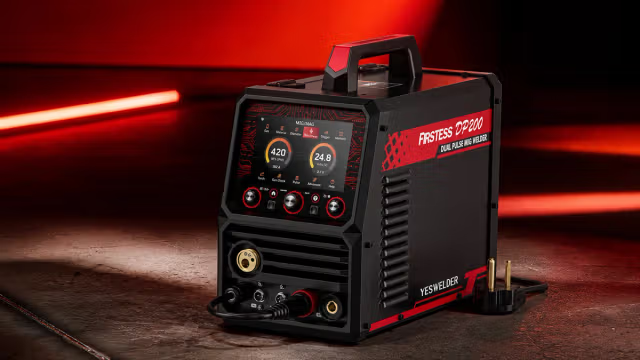
A workshop can get crowded quickly. A MIG welder here, a TIG machine there, and a plasma cutter that only comes out when a project needs one. Add gas cylinders, cables, torches, and consumables, and a garage can run out of usable space sooner than expected.
For DIYers and home fabricators, an all-in-one machine can be a practical alternative, especially when different projects call for different processes.
A Closer Look at the YESWELDER FIRSTESS MP200 PRO
The YESWELDER FIRSTESS MP200 PRO is a multi-process welder that combines MIG, TIG, stick welding, plasma cutting, and metal cleaning in one machine.
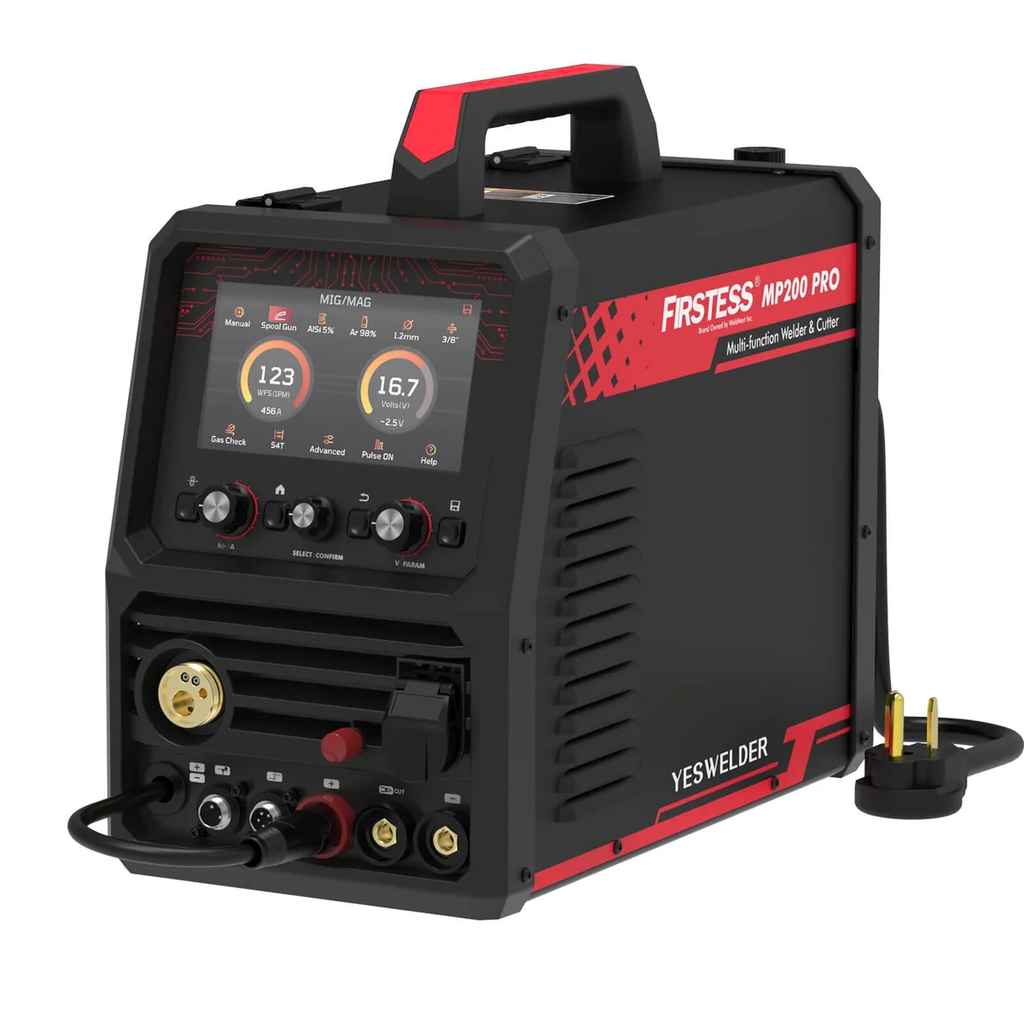
With 120V/240V input, it is designed for a wide range of projects, from repairing brackets and cutting sheet metal to building custom frames and tackling more demanding garage fabrication.
The machine supports:
- MIG and Pulse MIG
- Flux-cored welding
- HF/Lift TIG and Pulse TIG
- Stick and Pulse Stick
- Plasma cutting
- Metal cleaning
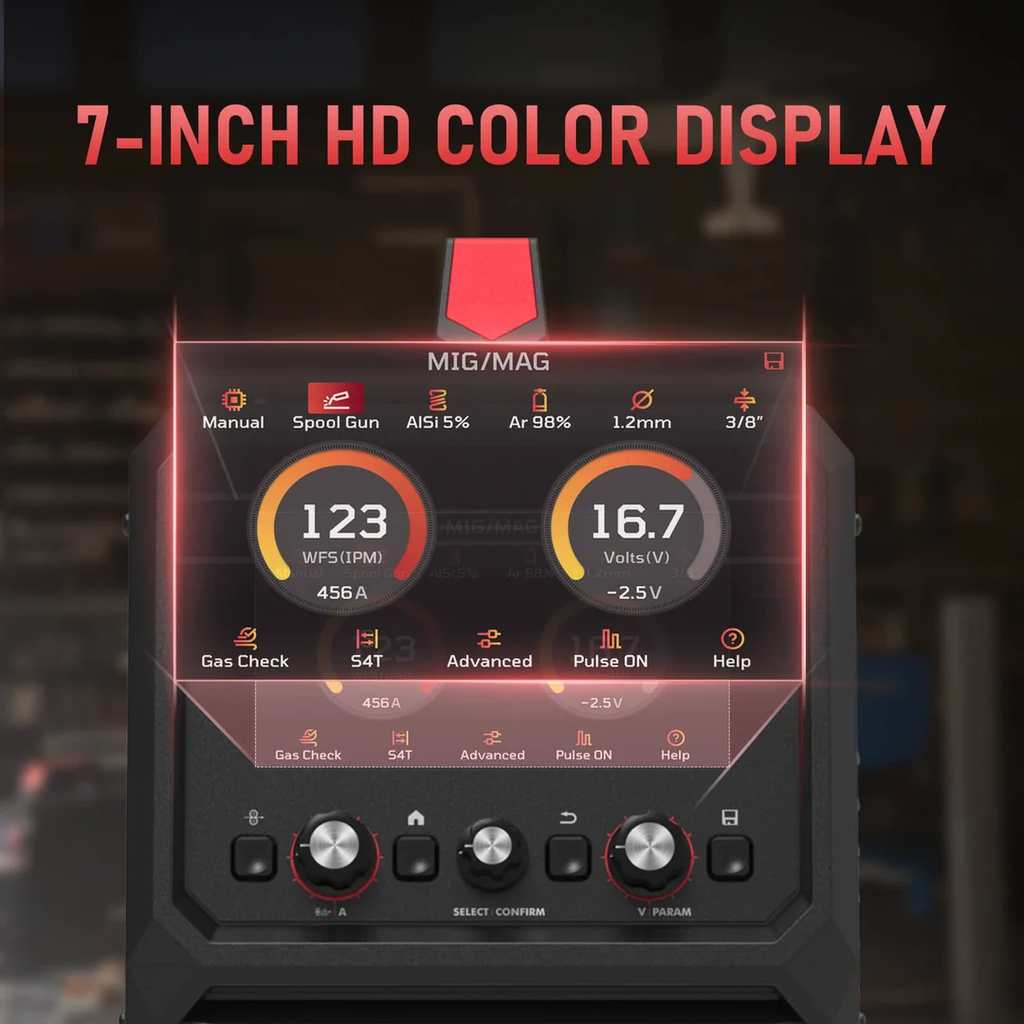
A 7-inch full-color HD display puts the main welding parameters and settings in one place. For users switching between processes, this is more convenient than working through a small, basic display.
One Machine for Different Welding Jobs
The advantage of a multi-process machine becomes clearer when a project involves more than one type of work.

MIG and Pulse MIG
MIG is a practical choice for brackets, frames, workbenches, repairs, and general fabrication. The MP200 PRO also offers Pulse MIG for greater control over the arc and weld pool, with less spatter.
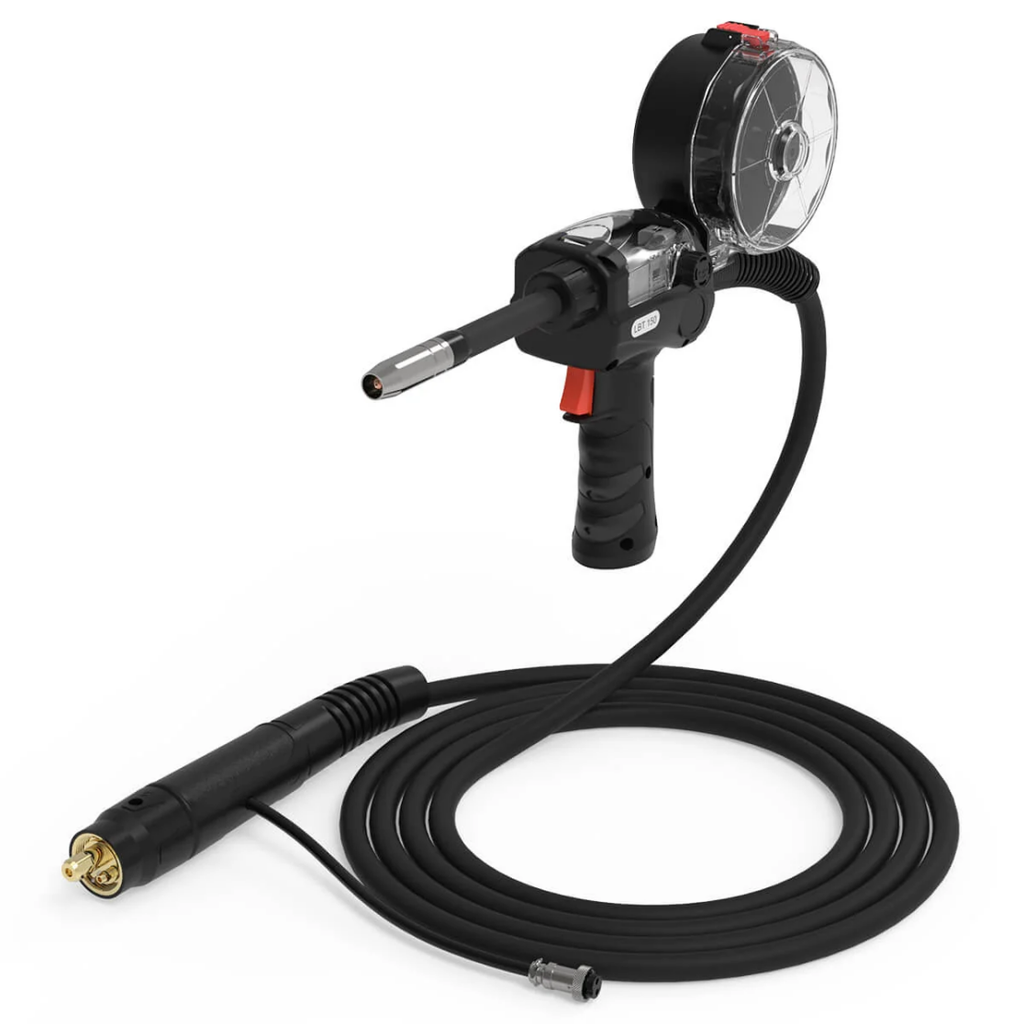
It supports steel, stainless steel, and aluminum. For aluminum MIG welding, it works with compatible AlSi5 or AlMg5 wire and can be paired with the optional LBT150 spool gun.
TIG and Pulse TIG
TIG is useful when you need more control over the weld. The MP200 PRO provides HF and Lift TIG, along with Pulse TIG.
These modes are suited to steel and stainless steel projects where heat control and weld appearance matter, particularly on smaller or more detailed parts.
Stick Welding
Stick welding remains useful for repairs and outdoor work, especially when using shielding gas is inconvenient. The MP200 PRO supports standard and pulse stick welding and is E6010 capable.
Plasma Cutting and Cleaning
The built-in plasma cutter can handle steel, stainless steel, and aluminum, making it useful for cutting plate and sheet metal during fabrication.
At 240V, the rated clean-cut thickness is up to 3/8 inch, with a severance capacity of up to 1/2 inch.
The machine also includes a cleaning function for post-weld metal surface treatment. While it may not be needed for every project, having it available can eliminate the need for another piece of equipment.
Made for Real-World Workshops
Not every welder has a dedicated fabrication shop. Many projects happen in garages, home workshops, or shared spaces where storage and floor space are limited.
The MP200 PRO is built around that reality. Its 120V/240V dual-voltage input allows users to work with the power available in their workshop. On 120V, MIG, TIG, and stick output go up to 120A. On 240V, MIG and TIG output reach 200A.
At 240V, MIG, TIG, and stick welding can handle recommended material thicknesses up to 3/8 inch, depending on the process and material.
The machine also offers both synergic and manual modes. Synergic mode helps simplify initial setup, while Manual mode gives experienced users more control over individual parameters.
What Can You Build With It?
The most useful way to look at a multi-process welder is by the projects it can support.
A home workshop might use it to build a steel workbench, repair a frame, fabricate brackets, make storage racks, or work on outdoor metal projects.
Automotive fabrication is another natural application. A single project may involve cutting plate, fitting components, tack welding, and finishing smaller joints with TIG. Being able to switch between processes on the same machine can make that workflow more straightforward.

The same applies to creative projects such as metal furniture, sculptures, garden structures, and other custom pieces.
Features That Make a Difference
The MP200 PRO includes several features aimed at making everyday operation simpler.
Triple Pulse Modes
Pulse is available in MIG, TIG, and stick welding. Depending on the material and settings, pulse operation can help with arc stability, puddle control, and spatter reduction.

Synergic and Manual Modes
Synergic mode provides a quicker starting point for setup, while Manual mode lets experienced welders fine-tune the machine to suit a particular material or project.
Upgradeable Firmware
The firmware can be updated to add features, improve performance, and introduce new welding parameters. For a machine intended to stay in a workshop for years, upgradeability is a useful feature.
Aluminum-Ready Setup
The MP200 PRO can handle aluminum MIG applications with compatible wire and can be used with the optional LBT150 spool gun. This gives users another option when a project goes beyond steel and stainless steel.
Who Is the MP200 PRO For?
An all-in-one welder is not necessarily the right choice for every workshop.
It can make sense for:
- DIY makers
- Garage fabricators
- Home workshop owners
- Users with limited workspace
- People who regularly switch between welding and cutting
- Beginners who want simpler setup options
A dedicated machine may be more appropriate for highly specialized work. For example, someone focused mainly on AC TIG aluminum welding may need capabilities beyond those offered by this type of multi-process platform. Similarly, high-volume industrial production calls for equipment designed specifically for that environment.
A Practical All-in-One Workshop Setup
Metalworking projects rarely stick to one process. A single job might involve cutting, fitting, welding, and cleaning before it is finished.
That is where the FIRSTESS MP200 PRO fits. By combining several welding processes with plasma cutting and cleaning, it gives DIYers and garage fabricators a practical way to handle different stages of a project with one machine.
For users who value flexibility but don’t have unlimited space, an all-in-one setup can be a straightforward way to keep projects moving while keeping the workshop a little less crowded.
To learn more, visit the YesWelder Official Store to explore a range of welders, welding helmets, consumables, and accessories for different projects and workshop needs.


The AMD Ryzen X3D processor series represents a significant advancement in the realm of gaming CPUs, offering enthusiasts a robust combination of speed, efficiency, and enhanced graphics performance. This guide aims to explore the intricacies of the AMD Ryzen X3D, providing gamers with insights on how to harness its full potential for an unparalleled gaming experience.
To start with, the x3d architecture introduces innovative 3D V-Cache technology that substantially increases the amount of L3 cache available on the processor die. This increase in cache results in reduced latency and improved data access times, paramount for the demanding processes involved in modern gaming.
Understanding 3D V-Cache Technology
Traditional CPU designs incorporate cache memory adjacent to processor cores on a single plane. However, the AMD Ryzen X3D series stacks additional cache vertically using 3D V-Cache technology. This vertical integration allows a substantial increase in cache capacity without significantly enlarging the processor’s footprint.
The augmented cache enables quicker retrieval of gaming assets and instructions by minimizing the distance data travels. Consequently, this reduces frame times and leads to smoother gameplay, especially in games that are sensitive to cache size and latency.
Performance Benefits for Gamers
The primary beneficiary of the 3D V-Cache is gaming performance. Benchmarks demonstrate that Ryzen X3D processors achieve higher frame rates and lower latency compared to their non-3D counterparts, particularly in CPU-bound games such as strategy, simulation, and role-playing games.
This performance edge is amplified when paired with high-end graphics cards and fast memory modules, creating a synergistic effect that maximises the hardware capabilities. With the right configuration, gamers can expect a more responsive and immersive experience.
Choosing the Right Ryzen X3D for Your Setup
AMD offers several variants within the Ryzen X3D lineup, each catering to different performance tiers and budgets. Understanding the differences in core count, clock speeds, and cache size is essential when selecting the appropriate processor for a specific gaming rig.
Moreover, compatibility with motherboards and cooling solutions should be carefully considered to ensure optimal thermal management and power delivery, which directly impact the processor’s sustained performance during intensive gaming sessions.
Optimising System Configuration
Beyond the processor itself, achieving peak performance with the AMD Ryzen X3D involves fine-tuning system components and software settings. Updating BIOS and drivers ensures compatibility and stability, while adjusting in-game settings can leverage the processor’s capabilities more effectively.
It is also advisable to employ high-speed DDR4 or DDR5 memory modules, as memory speed can influence the processor’s performance, notably in CPU-bound scenarios. Adequate cooling, through either advanced air coolers or liquid cooling solutions, helps maintain stable frequencies and prevents thermal throttling.
Comparison with Other High-Performance Processors
Compared to previous generation AMD Ryzen processors and competitors in the market, the X3D models stand out for their superior cache design. While raw clock speeds may be comparable, the enlarged cache grants the Ryzen X3D a distinct advantage in gaming workloads.
This advantage translates into more consistent frame times and generally smoother visual output, which are critical metrics for serious gamers and streamers aiming for high-quality content delivery.
Future-Proofing Your Gaming Build
The integration of 3D V-Cache positions the Ryzen X3D series well for upcoming titles that demand heightened computational resources. Investing in this technology ensures a level of preparedness for next-generation games that leverage CPU cache to improve performance.
Additionally, the energy efficiency improvements in the Ryzen X3D series contribute to quieter and cooler operation, factors increasingly valued in modern gaming setups that prioritise comfort and acoustics.
Conclusion
Unlocking peak performance with the AMD Ryzen X3D involves understanding the transformative impact of 3D V-Cache technology and meticulously aligning system components to support its strengths. Gamers seeking to elevate their gameplay quality will find the Ryzen X3D a compelling choice in the current market landscape.
For those interested in exploring the range of AMD Ryzen X3D processors, reputable suppliers such as Scorptec Computers provide access to the latest models, ensuring customers can equip themselves with cutting-edge hardware primed for exceptional gaming performance.

Drain Unblocking London: How to Clear Problems Properly and Prevent Repeat Blockages

Top 13 CRM Software Development Companies in California

Staying in Chora With Little Venice at Your Door

AI-Generated Nano Banana 2.1 Visuals: What Shopify Beauty Ecommerce Brands Should Check Before Publishing

YesWelder FIRSTESS MP200 Pro: One Machine for Welding, Cutting, and More


The 15 Highest-Paid Rugby Players in the World

Christopher Dare: The Untold Story of Engineer and Former Husband of Angela Rippon

How to Ensure Your Home is Valued Correctly for a Quick Sale

What Is Fanquer? The Digital Creator Platform Transforming Direct-to-Fan Engagement

Dr Jared Ross: Missouri Appeals Court Upholds Protection Order Over Graphic Torture and Murder Threats

Nancy Hallam: The Inspiring Life, Career, and Success Story Behind Ian Wright’s Wife
The 15 Highest-Paid Rugby Players in the World
Christopher Dare: The Untold Story of Engineer and Former Husband of Angela Rippon
How to Ensure Your Home is Valued Correctly for a Quick Sale
What Is Fanquer? The Digital Creator Platform Transforming Direct-to-Fan Engagement
Dr Jared Ross: Missouri Appeals Court Upholds Protection Order Over Graphic Torture and Murder Threats
Nancy Hallam: The Inspiring Life, Career, and Success Story Behind Ian Wright’s Wife
-
 Sports5 months ago
The 15 Highest-Paid Rugby Players in the World
-
Celebrity11 months ago
Christopher Dare: The Untold Story of Engineer and Former Husband of Angela Rippon
-
 Real Estate8 months ago
How to Ensure Your Home is Valued Correctly for a Quick Sale
-
 Technology5 months ago
What Is Fanquer? The Digital Creator Platform Transforming Direct-to-Fan Engagement
-
 Celebrity4 months ago
Dr Jared Ross: Missouri Appeals Court Upholds Protection Order Over Graphic Torture and Murder Threats
-
Celebrity11 months ago
Nancy Hallam: The Inspiring Life, Career, and Success Story Behind Ian Wright’s Wife
-

 Celebrity7 months ago
Who Is Azriel Crews? Inside the Life and Career of Terry Crews’ Daughter
-

 Health9 months ago
Enclomimed 25 (Enclomiphene) – Effective PCT Protocol