
Technology
How 3D Cartoon Animation Boosts Engagement in Social Media


Social media users scroll fast. Ads have only seconds to grab attention. Static visuals often fail. Brands need animation to stand out.
Cartoon animation achieves this with personality, movement, and humor. It can turn a simple product into a memorable story.
Why Animation Works Better Than Static Content
Humans are wired to notice motion. Videos get three times more engagement on social platforms than static posts. Cartoon animation lets brands exaggerate emotions. Faces, gestures, and colors become tools for connection.
A happy character can make a product feel joyful. A quirky animation can make a brand memorable. Viewers respond to personality more than information. This is crucial when social media is crowded with competing messages.
Different Types of Cartoon Animation
Cartoon animation comes in several formats.
- 2D Animation: Traditional, flat, and simple. Works for short stories and explainer content. Best for brands with limited budgets.
- Motion Graphics: Focuses on shapes, icons, and typography. Ideal for data visualization and educational content.
- Stop Motion: Uses real objects moved frame by frame. Feels tangible and crafty but requires significant production time.
- 3D Cartoon Animation: Creates depth and realism. Characters and products look lifelike but still playful. Brands can showcase products from multiple angles while keeping the fun tone of cartoons.
Not all animation types serve every purpose. For brands aiming for social engagement and conversions, 3D cartoon animation stands out.
How 3D Cartoon Animation Improves Social Ads
3D cartoon animation combines visual appeal with storytelling. It allows brands to present products in unexpected ways. For example, a sneaker can literally bounce off the screen. A coffee mug can spin and reveal features dynamically.
It also increases viewer retention. Social media algorithms favor content that keeps users watching. A moving, colorful character holds attention longer than static content. This improves reach organically.
Brands using 3D cartoon animation can highlight their value clearly. Complex products become simple. Features become tangible. Benefits become visible. Viewers understand the message quickly without reading long text blocks.
How to Choose the Right 3D Animation Partner
Quality matters. A poorly executed animation can confuse viewers or damage credibility. Brands often look for a 3d product animation company or a 3d animation company to deliver professional results.
These companies bring technical skills and storytelling expertise. They handle lighting, modeling, and rigging so that characters move naturally. They also adapt content for each platform. Instagram reels, Facebook ads, and YouTube shorts each require different formats and durations.
Working with a professional 3D animation team ensures consistency. Colors, brand elements, and character designs remain true to the brand identity. This matters for recognition and trust.
How to Maximize Engagement with Cartoon Ads
Focus on storytelling. Even a 10-second clip should have a clear beginning, middle, and end. Characters should reflect brand personality. Humor and surprise work well on social platforms.
Keep messages simple. Overloading animation with text or features can confuse viewers. Highlight one benefit or use case per clip. Use sound strategically. Music and sound effects increase emotional impact.
Test variations. Social media ads allow A/B testing. Try different character designs, colors, and movements. Measure engagement and retention. Adjust content based on performance data.
Avoiding Common Mistakes
Poor pacing can ruin an animation. Fast cuts or overly complicated visuals confuse viewers. Simple, smooth animations perform better.
Ignoring brand voice is another mistake. Characters and animation style should match the brand’s tone. Otherwise, content feels disconnected and inauthentic.
Relying solely on animation is risky. Social campaigns perform best when animation complements other media, like influencer partnerships, product photography, or customer testimonials.
Avoiding Common Mistakes
- Poor pacing can ruin an animation. Fast cuts or complicated visuals confuse viewers. Simple, smooth animations perform better.
- Ignoring brand voice is a mistake. Characters and animation style should reflect the brand’s tone to avoid disconnection.
- Relying only on animation is risky. Best results come when animation complements other media like influencer content, product photography, or customer testimonials.
Conclusion
Cartoon animation grabs attention, improves engagement, and simplifies messaging. 2D and motion graphics work for basic storytelling. Stop motion provides tactile charm. 3D cartoon animation combines realism and playfulness for maximum social impact.
Professional 3d product animation company ensures quality and consistency. They adapt content for multiple platforms and optimize engagement. Brands that invest in well-executed cartoon animation see measurable improvements in watch time, shares, and conversions.
Animation is more than a trend. It is a strategic tool that transforms social media ads into engaging, memorable content. Brands that leverage 3D cartoon animation gain a visual advantage and communicate their value clearly.

Technology
Resilient Urban Infrastructure: Maximizing Energy Efficiency with Solar LED Street Lighting in Extreme Climates

Rapid urbanization across arid, tropical, and desert environments is pushing conventional municipal infrastructure to its operational limits. Municipalities in high-irradiance zones—most notably across the Middle East and North Africa (MENA)—face the dual challenge of expanding urban corridors while curbing peak electrical grid demand.
In municipal utilities, roadway and public realm illumination can account for up to 40% of a city’s total municipal energy budget. Under sustained ambient temperatures exceeding 50°C, legacy grid-tied infrastructure suffers from transmission degradation, cable thermal stress, and elevated failure rates.
Transitioning to decentralized, off-grid solid-state lighting has therefore shifted from a simple sustainability goal to a primary requirement for municipal operational resilience and energy security.
The Evolution of Smart Urban Lighting
Historically, municipal lighting systems relied on high-pressure sodium (HPS) or metal halide (MH) luminaires tied directly into centralized distribution networks. These legacy installations require continuous alternating current (AC) supply, deep underground cable networks, and step-down transformer stations.
As municipalities rapidly expand, reliance on traditional grid-tied infrastructure is becoming economically and logistically unviable. Urban planners are now prioritizing off-grid, high-efficiency lighting systems that offer both energy independence and extreme durability. Specifically in high-demand regions like the Middle East, advanced solar street light systems from global manufacturers like WOSEN illustrate how integrating thermal-resistant housings with high-capacity batteries can deliver reliable, continuous illumination even in the harshest climates.
By decoupling municipal lighting from centralized grids, civil engineers can accelerate suburban development while shielding city centers from rolling blackouts and localized line surges.
Energy Security and Grid Independence
Modern municipal planning prioritizes decentralized infrastructure to protect public transit corridors and arterial roadways during regional power disruptions:
- Complete Grid Independence: Autonomous solar LED installations generate and store direct current (DC) energy locally, bypassing the 8% to 15% electrical transmission and inversion losses inherent to central grid distribution.
- Peak Shaving and Load Shedding Protection: Streetlights operate during peak evening demand hours. Off-grid systems remove thousands of megawatts from the municipal grid precisely when domestic cooling systems drive demand to critical thresholds.
- Continuous Operational Readiness: Integrated lithium-based energy storage ensures municipal roadways remain fully illuminated during grid blackouts, sandstorms, or emergency power curtailments, safeguarding public transit arteries.
- Integration with Master Planning: Modern civil developers incorporate stand-alone luminaires directly into long-termresilient urban infrastructure and city planning programs to systematically lower municipal carbon liabilities.
Engineering for Extreme Climates: Key Specifications
Deploying solar LED luminaires in desert and hyper-arid climates introduces extreme environmental stressors that quickly degrade standard commercial-grade luminaires. Ambient temperatures routinely surpass 50°C (122°F), with ground-level solar radiation driving surface temperatures on metal fixture housings well beyond 80°C (176°F).
Engineering high-reliability luminaires for these operational conditions requires purpose-built thermal architectures, specialized battery chemistries, and robust environmental seals.
Thermal Management in High-Temperature Environments
Excessive junction temperature is the primary driver of catastrophic LED failure and rapid lumen depreciation. For every 10°C increase in diode operating temperature above its design threshold, semiconductor life expectancy drops by roughly 50%.
Industrial-grade solar streetlights engineered for desert climates use specialized thermal management techniques to maintain long-term optical output:
- Die-Cast Aluminum Heat Sinks: Heavy-gauge die-cast aluminum alloys (such as ADC12 or A380) deliver superior thermal conductivity. Multi-fin aerodynamic heat sinks maximize passive convection currents, preventing heat accumulation behind the LED circuit board.
- Junction Temperature Regulation: Advanced passive thermal management keeps diode junction temperatures safely below $75 even under peak solar exposure, ensuring the fixture preserves its rated luminous output.
- Lithium Iron Phosphate (LiFePO4) Battery Chemistries: Unlike conventional Lithium Nickel Manganese Cobalt (NMC) cells that suffer thermal runaway risks above 60°C, high-grade LiFePO4 batteries operate reliably up to 65°C to 70°C. They offer a deep-cycle lifespan of 3,000 to 5,000 cycles at 80% Depth of Discharge (DoD).
- Underground or Shaded Battery Compartments: Fixture architects house energy storage cells in double-walled, ventilated chambers beneath the photovoltaic panel or sub-surface at the pole base to isolate them from direct solar radiation.
IP Ratings and Dust/Sand Resistance
Severe weather events—such as haboobs, high-velocity sandstorms, and coastal saltwater humidity—threaten delicate electronic drivers, optical arrays, and photovoltaic surfaces:
- Ingress Protection (IP65 and IP66): Fixtures must feature certified IP65 or IP66 ingress protection, using silicone gaskets and precision-machined joints to completely block micro-fine silica dust and pressurized moisture.
- Mechanical Shock and Impact Resistance: Optics and housings must achieve IK08 to IK10 mechanical impact ratings to withstand the scouring effect of continuous windborne sand and mechanical impacts during transport.
- Electrostatic and Hydrophobic Glass Coatings: High-efficiency monocrystalline photovoltaic panels incorporate self-cleaning, anti-soiling surface treatments. These coatings minimize particulate adhesion, reducing solar efficiency drops between maintenance cleanings.
- Breathable Pressure Equalization Valves: Specialized ePTFE vent membranes allow pressure equalization inside the optical chamber during rapid desert day-to-night temperature swings, preventing internal condensation.
Total Cost of Ownership (TCO) and Lifecycle ROI
Capital allocation for municipal infrastructure requires rigorous evaluation of total expenditure over the system’s operational lifecycle. While solar LED luminaires carry a higher initial unit cost than simple grid-tied fixtures, eliminating civil engineering works yields a significantly lower Total Cost of Ownership (TCO).
Trenching Costs vs. Plug-and-Play Installation
The civil works required to deploy traditional grid-connected streetlights represent the single largest expense in municipal roadway illumination:
- Civil Groundworks Elimination: Trenching, backfilling, running PVC conduits, and pulling copper cabling in hard, rocky, or sandy soils costs between $40 and $120 per linear meter. Autonomous solar luminaires completely eliminate these expenses.
- No Transformer or Switchgear CapEx: Eliminating step-down substations, distribution switchgear, and complex trenching permits cuts initial infrastructure deployment timelines by up to 70%.
- Rapid Deployment Cycles: Plug-and-play modular solar poles require only a concrete foundation pad or earth anchor, allowing engineering crews to install and commission 20 to 30 poles per day per team.
- Zero Utility Invoicing: Eliminating monthly kilowatt-hour utility charges provides immediate operating budget relief, shielding municipalities from rising regional fuel tariffs.
Integrating Smart Grids and IoT Capabilities
Modern urban planning treats streetlights as distributed nodes within broader smart city architectures. Rather than operating on static dawn-to-dusk timers, intelligent solar luminaires adjust power consumption in real time based on environmental demand and energy reserves.
Centralized lighting management platforms communicate with field units through low-power wireless mesh protocols—such as LoRaWAN, Zigbee, or NB-IoT—enabling remote adjustments across entire city networks.
Adaptive Dimming and Remote Diagnostics
Dynamic power management optimizes energy reserves, ensuring continuous illumination even through extended periods of sandstorms or overcast weather:
- PIR and Microwave Motion Profiling: Integrated microwave radar sensors detect oncoming vehicles and pedestrians from up to 15 meters away. Luminaires run at an energy-saving 20% to 30% standby mode when streets are empty, ramping to 100% full illumination within milliseconds of detected motion.
- Multi-Stage Programmable Night Schedules: Lighting output adjusts automatically throughout the night (e.g., 100% during evening rush hours, 50% between midnight and 4:00 AM, and 70% during morning commutes) to preserve battery health.
- Proactive Remote Diagnostics: Centralized IoT dashboards monitor battery voltage, photovoltaic current, diode temperatures, and charging efficiency in real time, automatically dispatching maintenance crews before failures occur.
- Deepening Sustainability Mandates: Transitioning to smart-controlled, stand-alone solar street lighting acts as an immediate driver for accelerated renewable energy adoption across public infrastructure portfolios.
The integration of advanced energy management technology into municipal infrastructure is no longer an optional upgrade, but a fundamental requirement for modern city planning. According to the International Energy Agency (IEA), the deployment of smart lighting grids and energy-efficient infrastructure is projected to drastically reduce municipal electricity demand globally, playing a critical role in achieving international net-zero emission targets by 2050.
Conclusion
Maximizing urban resilience in extreme climates requires replacing fragile, centralized infrastructure with durable, self-contained systems.
High-performance solar LED street lighting eliminates the heavy capital expenditures of civil trenching, insulates municipal budgets from volatile utility rates, and guarantees continuous illumination in high-temperature, sand-swept environments.
For municipal engineers, urban planners, and infrastructure developers, deploying solid-state, solar-powered illumination establishes a reliable foundation for sustainable, climate-resilient cities.


A website redesign is rarely just a cosmetic facelift. At its core, an effective overhaul is a strategic realignment that connects your brand’s digital presence to measurable business goals. Whether your site looks dated, struggles to convert visitors, or fails to support new service offerings, jumping straight into wireframes and color palettes is a recipe for missed deadlines, scope creep, and underwhelming results.
Before committing resources or bringing in an outside partner, taking time to establish foundational clarity will protect your budget and ensure meaningful outcomes. Here are eight critical steps to get right before starting your website redesign.
1. Define Clear, Measurable Business Objectives
“We want a fresh look” is an aesthetic preference, not a business strategy. Start by clarifying what problem the redesign must solve. Are you looking to increase demo requests, improve checkout conversion rates, lower bounce rates on product pages, or establish credibility in an enterprise market?
Set quantifiable benchmarks using the SMART framework (Specific, Measurable, Achievable, Relevant, and Time-bound). For example, aim to “increase qualified inbound leads by 25% within six months of launch” rather than “generate more interest.” Clear targets keep stakeholders aligned and provide design teams with a north star for user experience decisions.
2. Run a Comprehensive Audit of What Already Works
A common mistake during a overhaul is discarding valuable assets alongside outdated design elements. Before modifying a single page, run an exhaustive content, performance, and SEO audit.
Identify your top-performing organic landing pages, high-converting blog posts, and core user pathways using Google Analytics and Search Console. You will want to document:
- High-traffic URLs: These require preservation or strict 301 redirection.
- Top converting offers: Messaging and layouts that currently drive sales.
- Content gaps: Outdated product specifications, dead links, or weak calls-to-action that need revision or removal.
Understanding your existing baseline ensures you improve upon your strengths rather than accidentally deleting your best revenue drivers.
3. Build Detailed Audience Personas and User Journeys
Your new site should not be built for your internal executive team; it must serve your prospective customers. Re-examine your target personas: What specific challenges bring them to your site? What objections prevent them from reaching out? What information do they need to see before making a buying decision?
Map out primary user pathways for each key persona. A prospective enterprise client evaluating compliance certifications has very different navigation needs than an individual consumer looking for pricing tiers. Designing user flows before finalizing layouts ensures navigation is intuitive and frictionless.
4. Decide on Content Strategy and Platform Architecture
Content dictates design, not the other way around. Creating intricate page templates only to realize your team lacks the copy, photography, or case studies to fill them causes severe development bottlenecks.
Outline your content requirements early:
- Copywriting: Will messaging be refreshed internally or drafted by professional copywriters?
- Assets: Do you need original product photography, custom video explainers, or updated customer testimonials?
- CMS Requirements: Does your team need an intuitive, no-code visual builder, a robust platform like WordPress or Webflow, or a headless architecture capable of scaling across multiple digital touchpoints?
5. Prioritize Technical SEO and Redirection Planning
A redesigned site that launches to plummeting organic search traffic is an all-too-common disaster. Technical search engine optimization (SEO) must be baked into the project scope from day one, not treated as an afterthought during QA testing.
Create an exhaustive URL inventory of your existing site. Any page that changes location, structure, or hierarchy must have a mapped, permanent 301 redirect ready at launch. In addition, establish requirements for clean URL structures, mobile responsiveness, semantic HTML markup, Core Web Vitals performance, and schema metadata.
6. Map Technical Integrations and Tech Stack Compatibility
Modern websites do not operate in a vacuum. They interface with CRM systems, marketing automation platforms, email service providers, analytics suites, payment gateways, and custom customer portals.
Document every single third-party script, tool, and integration currently active on your site. Confirm whether these tools need to carry over to the new build, whether API endpoints are up to date, and whether any outdated plugins can be retired to improve overall site load times and security.
7. Determine Budget, Resources, and Partner Requirements
Assess your internal bandwidth realistically. A redesign requires substantial cross-departmental coordination, review cycles, and project management. Determine whether your in-house marketing and engineering teams have the specialized capacity to handle discovery, UI/UX design, custom frontend development, and quality assurance.
If internal resources are constrained, partnering with an experienced web design agency can provide the necessary multidisciplinary talent—spanning brand strategy, technical development, and conversion rate optimization—to deliver the project smoothly and on schedule.
8. Establish a Realistic Timeline and Launch Plan
Quality website redesigns take time. From initial brand discovery, information architecture, and UI prototypes to full-stack development, cross-browser QA testing, and team training, mid-to-large redesigns often span three to six months.
Build buffer into your schedule for feedback consolidation and user testing. Establish clear sign-off milestones so phases are formally approved before development begins, minimizing expensive late-stage revisions.
Final Thoughts
A successful website redesign is built long before the first wireframe is drafted. By defining precise goals, auditing your data, understanding your audience, and building a sound technical plan, you transform a potentially stressful overhaul into a structured, high-ROI business investment.
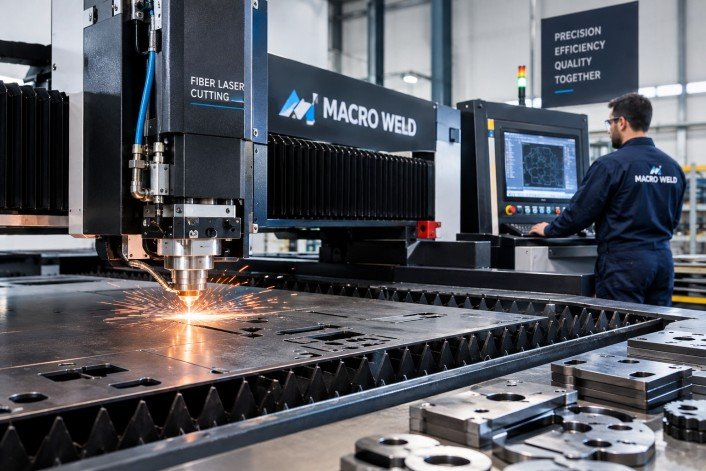
In the industrial sector, precision and efficiency are paramount, especially when it comes to metal fabrication and sheet cutting. Macro Weld Pty Ltd, operating through fiber optic laser cutting machine technology, offers state-of-the-art solutions that demonstrate how fibre optic laser cutting is revolutionising the industry. This article explores the intrinsic benefits of fibre optic laser cutting and why Macro Weld is at the forefront of this technological advancement.
Understanding Fibre Optic Laser Cutting
Fibre optic laser cutting involves the use of a fibre laser to cut metals and other materials with unparalleled accuracy. Unlike traditional cutting methods, fibre optic lasers use light fibres to generate a high-powered laser beam that can precisely slice through materials with minimal waste. This technology leverages the unique properties of fibre optics to produce a highly focused beam that maintains consistency and intensity over long distances.
Superior Precision and Accuracy
The precision achieved by fibre optic laser cutting machines is remarkable. Thanks to the focused laser beam, cuts are made with extreme exactitude, producing smooth edges and intricate shapes without the need for secondary finishing processes. Macro Weld’s laser cutting systems ensure that even the most complex designs are faithfully reproduced, enhancing the quality and consistency of the finished products.
Enhanced Cutting Speed and Efficiency
One of the primary advantages of fibre optic laser cutting is the speed at which the process operates. Compared to conventional cutting techniques, fibre lasers deliver faster cutting times while maintaining superior quality. This rapid processing capability allows businesses to increase throughput and reduce turnaround times, resulting in higher productivity and cost savings.
Material Versatility
Fibre optic laser cutting is compatible with a wide range of materials including various types of steel, aluminium, copper, brass, and other metals. This versatility makes it an ideal choice for industries requiring multi-material processing, such as automotive, aerospace, and construction sectors. Macro Weld supplies equipment that accommodates diverse material requirements, providing clients with flexible solutions for their production needs.
Reduced Operational Costs
The operational costs associated with fibre optic laser cutting are notably lower than other laser types. Since fibre lasers have high electrical efficiency, they consume less power and require minimal maintenance. Additionally, the long service life of fibre optic sources reduces downtime and replacement expenses. Macro Weld’s solutions help clients achieve lower total cost of ownership through energy efficiency and reliable system performance.
Environmentally Friendly Technology
The fibre optic laser cutting process is inherently clean, generating less waste and reducing the need for consumables such as cutting gases and abrasive materials. This environmentally friendly characteristic aligns with sustainable manufacturing practices. Macro Weld promotes green technology by offering machinery that minimises environmental impact while maximising operational efficiency.
Consistent Quality with Automation
Integrating automation in fibre optic laser cutting ensures repeatability and consistency across large production runs. Macro Weld’s equipment includes advanced CNC controls which facilitate automated cutting processes, reducing human error and increasing output reliability. Automated fibre optic laser cutting systems enable manufacturers to meet stringent quality standards reliably.
Improved Safety Features
Fibre optic laser cutters are designed with numerous built-in safety features to protect operators. Enclosed systems with interlocks and emergency stops help prevent accidents related to laser exposure or mechanical components. Macro Weld prioritises operator safety through robust machine designs and comprehensive training support.
Applications of Fibre Optic Laser Cutting
Due to its precision and versatility, fibre optic laser cutting is widely used in automotive component manufacturing, electronics, medical device fabrication, architectural metalwork, and tool making. Macro Weld’s machines support these varied applications by offering customised laser cutting solutions tailored to specific industry demands.
Technological Advancements with Macro Weld
Macro Weld continually invests in research and development to enhance the capabilities of fibre optic laser cutting machines. Their focus on integrating the latest laser technology with user-friendly interfaces and robust construction ensures clients receive advanced tools that improve production quality and efficiency. Through Macro Weld, businesses gain access to cutting-edge fibre optic laser technology backed by expert service and technical support.
Conclusion
Fibre optic laser cutting represents a significant leap forward in precision manufacturing. With benefits including unparalleled accuracy, speed, material versatility, cost-effectiveness, and sustainability, it is clear why this technology is transforming fabrication processes. Macro Weld Pty Ltd stands as a leader in supplying and supporting fibre optic laser cutting machines that empower businesses to elevate their production standards. Investing in fibre optic laser cutting technology via Macro Weld is therefore a strategic decision that fosters innovation and competitive advantage in numerous industrial sectors.

Exploring the Benefits of Kivecube AI & AR for Marketing & Business

What Affects Car Repair Costs and How to Budget for Them

Lift, Implant or Both? How the Degree of Sagging Shapes Your Breast Surgery

Sustainable Store Operations: How Smart Shelving Cuts Retail Waste and Labor Overhead

Resilient Urban Infrastructure: Maximizing Energy Efficiency with Solar LED Street Lighting in Extreme Climates

Best IPTV Subscription UK: Plans, Trials and Buying Checklist

How to Ensure Your Home is Valued Correctly for a Quick Sale

Christopher Dare: The Untold Story of Engineer and Former Husband of Angela Rippon

The 15 Highest-Paid Rugby Players in the World

What Is Fanquer? The Digital Creator Platform Transforming Direct-to-Fan Engagement

Dr Jared Ross: Missouri Appeals Court Upholds Protection Order Over Graphic Torture and Murder Threats

Nancy Hallam: The Inspiring Life, Career, and Success Story Behind Ian Wright’s Wife
How to Ensure Your Home is Valued Correctly for a Quick Sale
Christopher Dare: The Untold Story of Engineer and Former Husband of Angela Rippon
The 15 Highest-Paid Rugby Players in the World
What Is Fanquer? The Digital Creator Platform Transforming Direct-to-Fan Engagement
Dr Jared Ross: Missouri Appeals Court Upholds Protection Order Over Graphic Torture and Murder Threats
Nancy Hallam: The Inspiring Life, Career, and Success Story Behind Ian Wright’s Wife
-
 Real Estate9 months ago
How to Ensure Your Home is Valued Correctly for a Quick Sale
-
Celebrity11 months ago
Christopher Dare: The Untold Story of Engineer and Former Husband of Angela Rippon
-
 Sports6 months ago
The 15 Highest-Paid Rugby Players in the World
-
 Technology5 months ago
What Is Fanquer? The Digital Creator Platform Transforming Direct-to-Fan Engagement
-
 Celebrity5 months ago
Dr Jared Ross: Missouri Appeals Court Upholds Protection Order Over Graphic Torture and Murder Threats
-
Celebrity12 months ago
Nancy Hallam: The Inspiring Life, Career, and Success Story Behind Ian Wright’s Wife
-

 Celebrity8 months ago
Who Is Azriel Crews? Inside the Life and Career of Terry Crews’ Daughter
-
 Celebrity12 months ago
Who Is Maisie Mae Roffey? The Private Life, Family Story, and Quiet Success of Julie Walters’ Daughter