
Business
The Ultimate Restoration Tool: How a Portable Laser Rust Remover is Bringing Heritage Back to Life

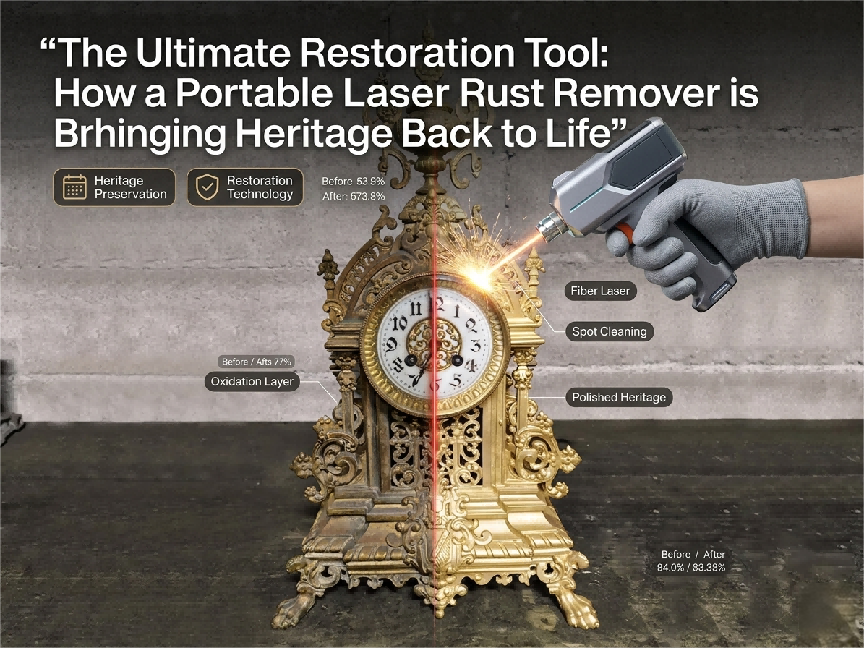
You stand before a historic wrought iron gate, a centuries-old cast iron fountain, or a rusted steel railroad bridge that once carried steam locomotives. The rust is thick, the details are delicate, and the thought of using sandblasting or wire brushes makes you cringe. You know those methods will remove the original surface, round off sharp edges, and possibly destroy the very history you are trying to save. You need a tool that removes only the rust and leaves everything else untouched.
The direct answer: a portable laser rust remover – a pulsed fiber laser that fits in a rolling case and runs on standard household electricity – is bringing heritage objects back to life without damaging them. Unlike abrasive blasting or chemical stripping, a laser rust remover is non-contact, non-destructive, and selective. It removes rust, paint, and biological growth from iron, steel, bronze, and even stone, while preserving the original patina, tool marks, and fine details. Portable units (100-500W) can be carried up scaffolding, taken to remote sites, or used indoors with minimal setup. In the hands of trained conservators, these machines have restored countless historic bridges, statues, railings, and architectural elements – often in places where traditional methods were impossible.
This article explains how portable laser rust removers work for heritage restoration, shows specific applications and settings, shares real success stories, and compares them to conventional methods on safety and effectiveness.
What makes a portable laser rust remover ideal for heritage work

Heritage objects are irreplaceable. The goal of restoration is not to make them look new, but to remove harmful corrosion and contaminants while preserving the original material, including its age-appropriate patina and surface texture.
A portable laser rust remover achieves this through two physical principles.
First, selectivity. Rust (iron oxide) absorbs the 1064nm fiber laser wavelength much more strongly than the underlying metal or stable patina. The laser can be tuned to remove only the red, active rust while leaving the dark, stable magnetite patina that conservators want to keep.
Second, minimal heat. The pulses last only nanoseconds – the rust vaporizes before heat can travel into the substrate. The base metal barely gets warm to the touch. No thermal expansion, no micro-cracking, no discoloration.
Portability adds another dimension. Many heritage objects are not in workshops – they are on site, up high, or in cramped spaces. A portable laser rust remover typically consists of a main unit (20-50 kg) on wheels, a fiber cable (5-15 meters), and a handheld cleaning head (1-2 kg). The operator walks around the object, pointing the laser at rusted areas. A built-in fume extractor with HEPA filter captures the dust. No scaffolding for media containment, no tarps, no endless cleanup.
What heritage materials and objects can be treated
The table below shows common heritage applications for portable laser rust removers, based on published conservation projects and our own field experience.
| Object type | Material | Common contaminants | Typical laser power | Result |
|---|---|---|---|---|
| Wrought iron gates | Wrought iron (low carbon) | Light rust, old paint | 200-300W | Original black finish preserved |
| Cast iron fountains | Cast iron | Heavy rust, biological growth | 300-500W | Removes rust, leaves casting texture |
| Steel railway bridges | Structural steel | Thick rust, loose scale | 500-1000W (portable) | Clean to bare metal for repainting |
| Bronze statues | Bronze | Green corrosion, dark patina | 200-300W (low fluence) | Removes chlorides, keeps brown patina |
| Historic armor | Steel, iron | Active rust, old grease | 100-200W | Gentle, no surface loss |
| Industrial machinery | Cast iron, steel | Oil, rust, old paint | 300-500W | Ready for display or repainting |
| Stone walls (metal elements) | Iron anchors, railings | Rust staining on stone | 200W (defocused) | Removes rust from stone as well |
| Ship anchors / chains | Steel | Thick marine rust | 500-1000W | Cleans without pitting |
Portable laser rust removers are not limited to metal. They can also clean graffiti from stone, remove biological growth from marble, and strip overpaint from wooden artifacts – but the primary heritage use remains ferrous metals.
Case study 1: Restoring a 19th century cast iron fountain
A public park in Melbourne, Australia, had a cast iron fountain from 1888. Over a century of exposure left it covered in thick, scaly rust. Some decorative elements – lily pads, water flowers, and cherubs – were losing definition. The park’s budget did not allow for complete disassembly and sandblasting, and sandblasting would have eroded the fine details anyway.
A conservation team brought in a 500W portable laser rust remover. Over five days, they cleaned the entire fountain in situ. The operator adjusted power between 40-70% depending on the thickness of rust. On the delicate cherub faces, they used lower power and a defocused beam to avoid any risk. The laser removed all active rust, leaving a dark, stable patina underneath. The fine details emerged as sharp as the day the fountain was cast.
The conservator noted: “We could see tool marks from the original foundry – something we never would have seen after sandblasting. The laser saved the history of the piece.”
The fountain was then waxed to protect the patina. Total cleaning cost was about 40% less than the quoted price for chemical stripping and hand scraping, and the result was infinitely better.
Case study 2: Cleaning wrought iron railings on a historic bridge
A 1920s bascule bridge in Florida had ornate wrought iron railings running half a mile along both sides. The railings had been painted multiple times, and rust was bleeding through. The city wanted to repaint, but removing the old paint and rust by sandblasting was impossible – the railings were too close to the water, and containment would have been a nightmare.
A contractor used a 300W portable laser rust remover, walking along the bridge with the unit in a small cart. Two operators worked in tandem: one lasering, one vacuuming. They cleaned a linear foot of railing in about 90 seconds. The laser removed six layers of old paint and all surface rust down to bare wrought iron. The original decorative scrollwork was completely unharmed.
The city repainted with a modern two-part epoxy. The project was completed in three weeks instead of the estimated eight weeks for chemical stripping. The laser also eliminated hazardous waste disposal from paint chips and chemical residue.
The project manager said: “Without the portable laser, we would have had to replace the railings – they were too fragile for sandblasting and too costly to remove and dip. The laser saved a historic asset.”
Case study 3: Treating a bronze statue in a public square
A bronze statue of a Civil War general in a small New England town had developed unsightly green corrosion (basic copper chlorides) in some areas, while other areas still had the desired dark brown patina. Traditional cleaning with wire brushes or glass bead blasting would have stripped both the corrosion and the good patina, leaving a uniform, unnatural pink bronze.
A conservator used a 200W portable laser rust remover with a 532nm green wavelength attachment (frequency-doubled). The green laser is absorbed more strongly by the green corrosion than by the brown patina. With fluence set to 0.8 J/cm², the laser removed the corrosion layer by layer, stopping automatically when it hit the stable patina. The result was a statue with its original, aged appearance intact, only the harmful corrosion removed.
The local historical society was thrilled. The treatment cost 8,000–farlessthanthe8,000–farlessthanthe25,000 quote for disassembly and chemical stripping. The entire job was done in one day, with the statue still in place.
Portable vs stationary laser rust removers for heritage
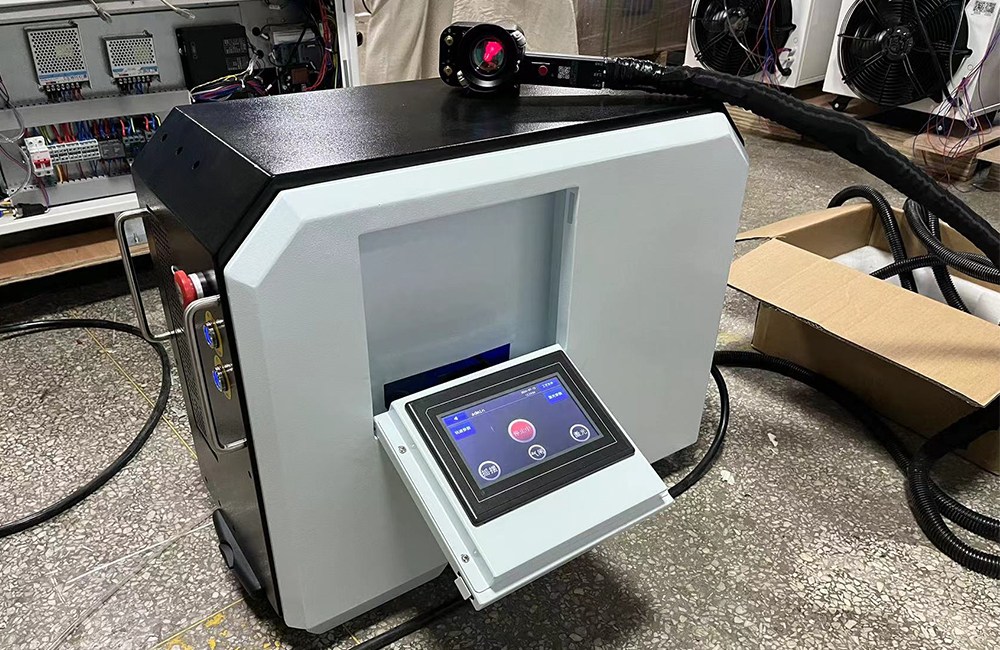
For heritage work, portability is often essential. However, there are trade-offs.
| Feature | Portable (100-500W) | Stationary (1000-3000W) |
|---|---|---|
| Weight of main unit | 20-50 kg (wheeled) | 200-1000 kg |
| Mobility | Can be carried, rolled, or lifted | Fixed installation |
| Power requirement | Standard 110-240V outlet | Three-phase or high current |
| Cleaning speed (rust) | 0.5-2.5 m²/h | 3-10 m²/h |
| Best for | On-site, delicate, small to medium objects | Large industrial parts, shop use |
| Cost (approx) | $8,000-25,000 | $30,000-100,000+ |
For most heritage projects – gates, statues, railings, small bridges, architectural details – a portable unit is the right choice. It can be taken to the object, set up in minutes, and does not require the object to be moved. Stationary lasers are better for high-volume industrial work, not one-of-a-kind heritage pieces.
Safety and environmental advantages for heritage sites
Heritage sites often have strict environmental and safety regulations. Laser cleaning excels in both.
No abrasive media means no dust storm of silica or garnet. The only dust is the rust and paint being removed, which is captured by a HEPA vacuum. That dust volume is tiny – a few grams per square meter – and can be disposed of as solid waste (or hazardous waste if lead is present, but still far less volume).
No chemical runoff. Chemical strippers can seep into soil, stain stone, or harm nearby plants. Lasers use no liquids.
Low noise. A portable laser rust remover produces a clicking sound, about 70-80 dB – quieter than a vacuum cleaner. Sandblasting is 100-110 dB, requiring hearing protection for everyone nearby.
No fire hazard from sparks. The laser creates a plasma plume but very few hot particles. On a properly cleaned surface, the fire risk is near zero. This allows laser cleaning in areas where hot work permits are difficult to obtain.
For heritage sites in urban parks, near museums, or in residential areas, these advantages are decisive.
Training and skill requirements for heritage conservators
A portable laser rust remover is not a point-and-shoot tool for amateurs. Operated incorrectly, it can damage the object – over-cleaning, leaving stripes, or causing discoloration. However, with proper training, it is safe and effective.
Conservators typically receive:
Basic laser safety (Class 4 laser) – half day
Parameter setting for different materials and corrosion types – one day
Hands-on practice on scrap and then on test pieces – one to two days
Optional certification from organizations like AIC (American Institute for Conservation) or LIA (Laser Institute of America)
Many laser suppliers offer on-site training. Some heritage institutions have developed their own protocols. The learning curve is steep but manageable. After a week of practice, a conservator can confidently treat most ferrous objects.
The key skill is knowing when to stop. The operator watches the surface through a camera or safety glasses. When the red rust disappears and a dark patina appears, they move on. Experience teaches how to distinguish between active rust and stable patina under laser illumination.
Final verdict
The portable laser rust remover is not a futuristic prototype. It is a practical, proven tool that is already bringing heritage back to life around the world. It cleans rust and paint from wrought iron gates, cast iron fountains, bronze statues, and steel bridges without damaging the original surface. It is safer for the operator, cleaner for the environment, and often more cost-effective than traditional methods. For any conservator, heritage contractor, or museum professional dealing with rusted metal artifacts, a portable laser rust remover is the ultimate restoration tool.
If you have a heritage object in need of rust removal, find a conservator with laser experience. If you are a professional considering adding laser cleaning to your services, start with a portable unit and proper training. The objects you save will thank you.
Have a specific heritage rust problem? Send me photos, material details, and location. I will advise on feasibility and connect you with trained operators in your area – free of charge.
Frequently Asked Questions
Can a portable laser rust remover be used on gold or silver artifacts?
Yes, but with extreme caution. Gold and silver are highly reflective. The laser energy will reflect off, potentially damaging the laser head or causing uneven cleaning. For precious metals, use very low power (10-20%) and a defocused beam. Better yet, use a different wavelength (532nm green) which is absorbed more safely. Test on a hidden area first.
Will the laser remove the original blacksmith’s patina on wrought iron?
No, if you use the correct low fluence. Wrought iron often has a dark, stable patina that conservators wish to preserve. The laser can be tuned to remove only the red, powdery rust while leaving the black oxide intact. Test on a small area to confirm.
How do I clean intricate crevices with a portable laser?
The handheld head can be moved at different angles. For very tight crevices, you can use a mirror attachment or a smaller spot size by moving the head closer. In some cases, you may need to accept that the bottom of a deep crevice will remain uncleaned – but that is often acceptable for heritage objects where only visible surfaces matter.
Is laser cleaning approved by heritage conservation bodies?
Yes. The American Institute for Conservation (AIC), English Heritage, and ICOM-CC (International Council of Museums – Committee for Conservation) have all published guidelines and case studies on laser cleaning. It is considered an accepted technique for appropriate materials and objects.
What about laser cleaning of stone alongside metal?
If a metal object is attached to stone (e.g., an iron railing bolted into a stone wall), the laser can be used on both. For stone, use lower power and a defocused beam to avoid spalling. The laser will remove rust stains from the stone as well as biological growth. Test first.
How much does a portable laser rust remover cost for heritage use?
A 200-300W portable unit suitable for most heritage work costs between 10,000and10,000and25,000, depending on brand and features (fume extractor, safety interlocks, training included). For a professional conservator or a heritage contractor, the payback is typically 6-12 months based on billable hours and reduced consumable costs.
References
1.American Institute for Conservation (AIC). (2021). Laser Cleaning of Metal Cultural Heritage. AIC Wiki, Laser Cleaning Chapter.
2.Cooper, M. & Larson, J. (2018). Portable Laser Cleaning for Outdoor Sculpture and Architectural Metal. Getty Conservation Institute Reader.
3.Siano, S., et al. (2022). Portable pulsed laser systems for on-site restoration of ferrous heritage. Journal of Cultural Heritage, 55, 34-42.
4.English Heritage. (2020). Technical Advice Note: Laser Cleaning of Historic Ironwork. EH-TAN-2020-06.
5.International Council of Museums – Committee for Conservation (ICOM-CC). (2023). Lasers in Conservation: State of the Art and Guidelines. ICOM-CC Working Group.
6.Our internal heritage restoration case studies (2021-2025). Available on request.



How Media Businesses Can Improve Payroll Efficiency With Payroll Outsourcing Services
Media businesses operate in a fast-paced environment where projects, deadlines, staffing requirements, and payment arrangements can change frequently. Production teams, editors, creative professionals, contractors, freelancers, and permanent employees can all form part of the workforce. Managing payroll for such a varied workforce involves more than calculating salaries.
This is where payroll outsourcing services can help media businesses establish a structured payroll process. This blog explains how outsourcing payroll services can improve payroll accuracy, support compliance, and help media businesses manage changing workforce requirements.
Why Payroll Efficiency Matters for Media Businesses
Media businesses often manage multiple projects with different staffing requirements. A production may require additional employees for a limited period, while freelancers and contractors may support specific assignments.
New starters, leavers, changes in working arrangements, and varying payment requirements can add further complexity. Managing these changes manually can make every payroll cycle more demanding. Businesses may also need to collect information from different managers and departments before processing payments.
Payroll outsourcing services provide a defined process for collecting, checking, processing, and reporting payroll information. This can help media businesses maintain consistency and reduce unnecessary administrative work.
7 Ways Outsourcing Payroll Services Can Improve Efficiency for Media Businesses
Here are some practical ways outsourcing payroll services can improve efficiency for media businesses:
- Bring Employee Payroll Information Into One Process
Accurate payroll starts with reliable employee information. Media businesses may receive payroll data from managers, departments, HR systems, and project teams. Using multiple spreadsheets, emails, and manual updates can increase the risk of inconsistent or incomplete information.
A structured payroll process creates a clear route for submitting and validating information. Payroll specialists can review data before processing and identify missing details or discrepancies earlier.
Payroll outsourcing services can also standardise recurring payroll activities. A consistent process makes it easier to manage employee changes and reduces the time spent gathering information from different sources.
- Keep Reporting on Track
Media businesses must manage Pay As You Earn (PAYE) deductions and report employee pay information to HM Revenue and Customs (HMRC) through Real Time Information (RTI). These requirements require accurate calculations and timely submissions.
Regular payroll reporting can become challenging when businesses manage multiple employees, changing work arrangements, and different payment requirements. Manual calculations can also increase the possibility of errors.
Using payroll outsourcing services can help media businesses manage PAYE calculations and RTI submissions through an organised payroll process. Specialist support can reduce administrative workloads while helping businesses maintain accurate payroll records.
- Make Workplace Pension Management Easier
Workplace pension administration forms an important part of payroll. Media businesses need to manage pension deductions, employee records, contribution calculations, and relevant reporting. Managing pension information separately from payroll can create duplicated work and increase the risk of discrepancies.
Payroll outsourcing services can integrate pension administration with regular payroll processing. This approach can help keep employee pay and pension records aligned while reducing repetitive administrative tasks.
A consistent process also makes it easier to manage changes when employees join, leave, or alter their pension arrangements.
- Process Statutory Pay With Greater Accuracy
Employee circumstances can change during the year, requiring businesses to process statutory payments correctly. These can include Statutory Sick Pay (SSP), Statutory Maternity Pay (SMP), Statutory Paternity Pay (SPP), and other applicable statutory entitlements.
Calculating these payments manually can add complexity to regular payroll activities, particularly when businesses manage a large or changing workforce.
Payroll outsourcing services can help media businesses process statutory payments consistently and incorporate them into regular payroll calculations. This can reduce manual administration and help maintain accurate employee records.
- Prepare for Smoother Payroll Year-end Activities
Payroll responsibilities continue beyond monthly or weekly salary processing. Year-end activities require businesses to maintain accurate records and prepare relevant employee documentation.
A disorganised process can lead to last-minute administration, particularly when payroll information comes from multiple systems or departments.
With payroll outsourcing services, media businesses can follow a defined process for year-end payroll activities. Specialist providers can support relevant documentation, record management, and reporting requirements.
This can make year-end administration more organised and reduce the pressure associated with completing payroll tasks within tight deadlines.
- Gain Clearer Insights From Payroll Data
Payroll information can provide useful insight into workforce costs, employee numbers, payment patterns, and changes in staffing requirements. However, businesses may struggle to obtain clear information when payroll data sits across spreadsheets and disconnected systems.
Payroll outsourcing services can provide structured payroll reports that make relevant information easier to access and review. Better reporting can help media businesses monitor payroll activity and identify changes in workforce costs.
Clearer payroll information can also support workforce planning as businesses prepare for new productions, projects, or changes in staffing requirements.
- Cut Down on Repetitive Payroll Tasks
Payroll involves several recurring activities, including collecting employee information, checking changes, calculating payments, processing deductions, generating payslips, and completing required submissions. Handling every activity internally can consume significant time, particularly for growing media businesses.
Payroll outsourcing services allow specialists to manage recurring administrative tasks, reducing manual work and giving internal teams more time for core business operations. A streamlined process can also reduce repetitive data entry and create clearer responsibilities across payroll-related activities.
Create a Payroll Process That Supports Growth
Payroll efficiency depends on accurate information, consistent processes, timely reporting, and the ability to manage workforce changes. These requirements can become increasingly difficult to handle manually as media businesses expand their teams and projects.
The right payroll outsourcing services can support the complete payroll process. For media businesses, outsourcing payroll can provide a practical way to reduce repetitive administration while creating a more organised and scalable payroll function.
By working with specialist outsourcing partners like Befree, media businesses can improve payroll efficiency, strengthen processes, and focus more effectively on their day-to-day operations and growth.


Preparing for future property auctions in London requires more than simply finding a property you like and deciding how much you are willing to pay. Whether you are a first-time auction buyer, an investor or an experienced property owner, understanding the process, researching the property and arranging your finances in advance can help you approach auction day with greater confidence.
Research the Property and Its Location
Start by researching the property itself and the area where it is located. Review the property’s description, photographs, floor plans and any available planning information. Consider its current condition, potential refurbishment requirements and how it compares with similar properties nearby.
Location is particularly important in London, where property values and demand can vary considerably between neighbourhoods. Look at transport connections, local amenities, development activity and comparable properties to build a clearer picture of the opportunity.
If possible, attend a viewing before bidding. Photographs and descriptions cannot always provide a complete understanding of a property’s condition, layout or surroundings.
Read the Legal Pack Carefully
One of the most important steps before bidding is reviewing the auction legal pack. This can contain essential information about the property and the terms of the sale, including the title, special conditions of sale, leases, searches and other relevant documentation.
Do not leave this until auction day. Give yourself enough time to read the documents carefully and identify anything that may require further investigation.
For more complex properties, it can be sensible to ask a solicitor or conveyancer with relevant property experience to review the legal documentation. They can help you understand any restrictions, obligations or unusual conditions that could affect the purchase.
Arrange Your Finance in Advance
Auction purchases usually require buyers to be financially prepared before they place a bid. Establish your budget early and consider not only the amount you intend to bid, but also additional costs associated with the purchase.
Depending on the property and terms of sale, these may include:
- Stamp Duty Land Tax
- Legal fees
- Survey costs
- Auction-related fees
- Refurbishment or renovation costs
- Financing costs
- Insurance and ongoing property expenses
If you require a mortgage, speak to your lender or mortgage adviser well before the auction. Remember that winning the bidding does not necessarily mean you have unlimited time to arrange finance. Check the auction terms carefully so you understand the required completion timescale.
Set a Realistic Maximum Bid
It can be easy to become caught up in competitive bidding, particularly when you have spent time researching a property and can see its potential. Setting a maximum budget before the auction can help you maintain discipline.
Base your limit on your overall budget, the property’s condition, comparable values and any additional costs you have identified. Once you have reached your predetermined limit, be prepared to stop bidding.
The guide price should not automatically be treated as the final purchase price. The eventual sale price will depend on bidding activity and the specific circumstances of the auction.
Understand the Auction Terms
Before registering to bid, make sure you understand how the auction works. Check the bidding method, registration requirements, deposit arrangements, completion deadline and any additional charges specified in the legal pack or auction conditions.
Online auctions may have different procedures from traditional room auctions, so familiarise yourself with the platform beforehand if you are bidding online. Make sure your account is registered and that you know how to place a bid before the auction begins.
Consider the Property’s Potential
For investors and developers, the current condition of a property may only be part of the decision. Consider what improvements could realistically be made and whether there is potential to increase its value or rental appeal.
However, potential should be assessed carefully. Obtain estimates for significant works where possible and investigate whether planning permission or other approvals may be required. A property that appears inexpensive at auction can require substantial additional investment.
Be Ready for Auction Day
Complete your research and due diligence before the auction starts. Have your identification, finance arrangements and registration details ready, and make sure you understand the bidding process.
If you are successful, follow the instructions provided by the auctioneer promptly. Depending on the auction terms, you may need to pay a deposit or complete other formalities immediately after the sale.
Final Thoughts
A successful auction purchase starts well before bidding begins. By researching the property and location, reviewing the legal pack, arranging finance, setting a maximum budget and understanding the auction conditions, you can make a more informed decision when the opportunity arises.
For buyers considering property at auction in London, taking the time to prepare properly can help ensure that the focus remains on the property itself rather than last-minute administration or unexpected costs.

Deadline day has a shape to it. Quiet morning, messy lunchtime, then somewhere around four o’clock someone works out that a signed set of accounts is still sitting on a desk and needs to be two hundred miles away by tomorrow.
Finance Hasn’t Gone Paperless, It Just Talks Like It Has
Making Tax Digital moved a lot of it online. Client portals handle most of the back and forth now, e-signatures cover far more than they did five years ago, and most firms genuinely do run leaner on paper than they used to.
But not all of it. Original ID documents for AML checks, trust deeds, wet-signed lender paperwork, probate forms, anything a third party flatly refuses to accept as a scan. It’s a smaller pile than it was. It’s also the pile where a mistake actually costs you something.
Where Deadline Day Tends to Fall Apart
The Collection Already Went
Standard post gets collected mid-afternoon. That’s fine until a partner signs something at half four. The document then sits in a tray overnight and arrives the next day if nothing goes wrong. On a Friday it’s Monday, and Monday might already be too late.
Nobody Can Say Where It Is
A client rings and asks whether their paperwork got there. “It’s in the post” isn’t an answer that helps anyone, and it’s usually the moment a minor delay turns into an awkward phone call. Booking same day document delivery gives you a name, a time and a signature on receipt, which is a much easier thing to say out loud.
Somebody Drives It Themselves
This happens more than firms will admit. A junior gets handed an envelope and told to get the train. That’s half a day of chargeable time gone, plus the ticket, plus no tracking and no cover if it goes missing at Piccadilly.
What Changes When the Option Is Just There
Nothing dramatic, honestly. What shifts is the maths you’re doing at four o’clock.
If you know a document can leave the office late and still be somewhere by nine the next morning, or across the city inside two hours, deadlines stop feeling like a cliff edge. The signing meeting can run over a bit. A client can take an extra hour to get their paperwork back to you. Things that used to blow up a whole afternoon become mildly annoying instead.
Firms that book a few urgent jobs a month usually set up an account with Drift Couriers rather than registering from scratch every time something’s on fire. It’s a five minute job when you’re calm and a genuine problem when you’re not.
Worth Asking Before You Commit to Anyone
How quickly can they actually collect? Some couriers will have a driver with you inside the hour. Others say same day and mean a pickup at three, which doesn’t help if you’re signing at four.
What’s the cover if something goes missing? For a set of accounts it’s an inconvenience. For original ID documents or an executed deed it’s a client relationship and possibly a compliance problem, so check the limits rather than assuming.
And do they understand what they’re carrying? You shouldn’t have to explain that a document with a wet signature can’t be replaced by printing another one.
January Is the Real Test
Everyone’s fine in June. Self assessment season is where a courier setup either holds or it doesn’t, because everybody in your area is under the same pressure at the same time and capacity gets thin.
It’s worth asking directly how they handle their busiest weeks. Not what the website says. What happens in practice when six firms all ring at half four on the 30th of January. A vague answer there tells you plenty.
It’s a Small Fix for a Recurring Problem
None of this is a big operational change. Nobody’s restructuring anything.
It’s just that most accountancy and finance firms lose a bit of time and a bit of goodwill every single month to the same avoidable thing, which is a piece of paper that needed to be somewhere and wasn’t. Sorting that out quietly, before the busy period rather than during it, takes about ten minutes and stops the four o’clock panic being a monthly event.

Drain Unblocking London: How to Clear Problems Properly and Prevent Repeat Blockages

Top 13 CRM Software Development Companies in California

Staying in Chora With Little Venice at Your Door

AI-Generated Nano Banana 2.1 Visuals: What Shopify Beauty Ecommerce Brands Should Check Before Publishing

YesWelder FIRSTESS MP200 Pro: One Machine for Welding, Cutting, and More


The 15 Highest-Paid Rugby Players in the World

How to Ensure Your Home is Valued Correctly for a Quick Sale

Christopher Dare: The Untold Story of Engineer and Former Husband of Angela Rippon

What Is Fanquer? The Digital Creator Platform Transforming Direct-to-Fan Engagement

Dr Jared Ross: Missouri Appeals Court Upholds Protection Order Over Graphic Torture and Murder Threats

Nancy Hallam: The Inspiring Life, Career, and Success Story Behind Ian Wright’s Wife
The 15 Highest-Paid Rugby Players in the World
How to Ensure Your Home is Valued Correctly for a Quick Sale
Christopher Dare: The Untold Story of Engineer and Former Husband of Angela Rippon
What Is Fanquer? The Digital Creator Platform Transforming Direct-to-Fan Engagement
Dr Jared Ross: Missouri Appeals Court Upholds Protection Order Over Graphic Torture and Murder Threats
Nancy Hallam: The Inspiring Life, Career, and Success Story Behind Ian Wright’s Wife
-
 Sports5 months ago
The 15 Highest-Paid Rugby Players in the World
-
 Real Estate8 months ago
How to Ensure Your Home is Valued Correctly for a Quick Sale
-
Celebrity11 months ago
Christopher Dare: The Untold Story of Engineer and Former Husband of Angela Rippon
-
 Technology5 months ago
What Is Fanquer? The Digital Creator Platform Transforming Direct-to-Fan Engagement
-
 Celebrity4 months ago
Dr Jared Ross: Missouri Appeals Court Upholds Protection Order Over Graphic Torture and Murder Threats
-
Celebrity11 months ago
Nancy Hallam: The Inspiring Life, Career, and Success Story Behind Ian Wright’s Wife
-

 Celebrity7 months ago
Who Is Azriel Crews? Inside the Life and Career of Terry Crews’ Daughter
-

 Health9 months ago
Enclomimed 25 (Enclomiphene) – Effective PCT Protocol