
Business
How to Wash an Essentials Hoodie Without Killing the Fleece

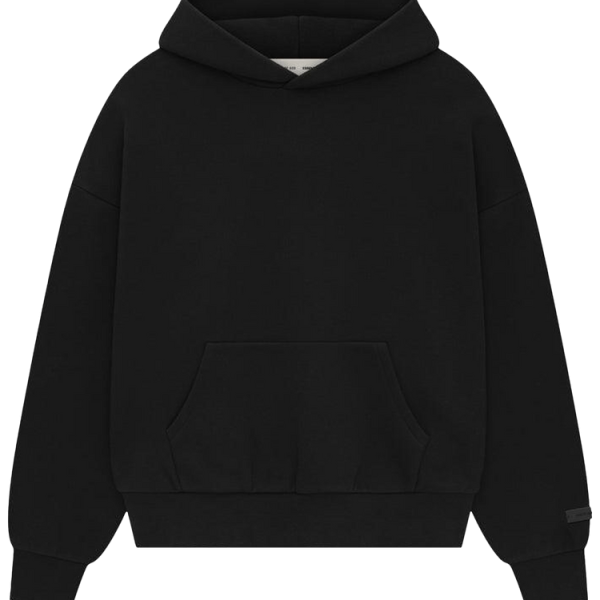
Three washes. That’s sometimes all it takes to turn a soft cotton fleece hoodie into something stiff, pilled and a size shorter in the sleeve. The garment wasn’t badly made — the fleece pieces here sit around €70 to €85, down from €230-odd. It got wrecked at home, in a hot machine, next to a pair of jeans. So spend ten minutes on what the drum does to the inside of an Essentials Hoodie before you buy another one.
None of this is complicated. Cold water, half the detergent, no dryer. But knowing why stops you breaking those rules the next time you’re in a hurry.
The fuzzy side is the part you’re paying for
Cotton fleece — pile di cotone on the Italian product pages — is a knit with one smooth outer face and one brushed inner face. The brushing pulls the yarn into thousands of loose loops, and those loops hold still air against your skin. Air is the insulation. The cotton itself does surprisingly little.
Heat, friction and detergent each attack the loops differently. Hot water relaxes the fibers so they lie flat and never stand back up. Tumbling against something abrasive tangles the loop ends into pills. Too much detergent leaves a residue that mats them together. Once a panel has felted, no wash brings it back.
Six steps, and none of them take long
This is the routine I’d use for any cotton fleece piece in the hoodie category, popover or full-zip, from the matte black ones to the cream and desert taupe.
- Turn it inside out before it goes near the drum, so the brushed face rubs against itself instead of against a zipper or a button.
- Close the zip fully and tie the drawcords loosely. A metal pull bouncing around a steel drum for 40 minutes snags a knit in a dozen places.
- Wash cold. Read your own care label, since weights differ across the range, but 30 °C is the warmest I’d go and 20 °C is better.
- Halve the detergent. Liquid rather than powder, and no fabric softener at all — it coats the loops and flattens the loft.
- Choose a gentle cycle with a low spin. High spin speeds press permanent creases into the shoulders and the hood seam.
- Take it out damp. One sharp shake to open the fibers, then lay it flat or hang it on a wide hanger.
Wash it alongside other soft things — tees, other fleece, nothing with hardware. A load of denim and bath towels is basically a sanding machine for anything brushed.
Skip the dryer. Seriously.
Cotton shrinks along its length when it’s tumbled hot, and on a hoodie that shows up where you notice it most: sleeve ends and hem. Lose two centimeters off each and an oversized cut reads like a normal one. Cuffs go tight, the body rides up over the waistband, and the drape is gone.
Air drying in an Italian apartment takes patience in the wrong season. A Milan winter sits between 0 and 8 °C with real damp in the air, so a heavy hoodie can need eight to twelve hours indoors. Put it where air moves rather than draped over a radiator — direct heat dries one panel unevenly and stiffens that patch. Up in Trentino, where the store itself sits, people accept that fleece takes a day.
If you genuinely have no choice, use the lowest heat, pull it out while it’s still slightly damp, and finish it flat. Never run a full cycle on high and walk away.
Prints crack before fabric fails
The range carries printed graphics — 1977, the Arch Logo, side prints — and ink is always the weakest thing on the garment. It doesn’t fade so much as craze into fine lines, then flake. Heat softens the print, friction lifts the edges, and a hot dryer does both at once. Turning the hoodie inside out protects a print better than any special detergent.
| Pro Tip: Give a new dark piece — matte black, bordeaux, crimson — two solo cold washes before it joins a mixed load. Deep dye bleeds most on the first couple of runs, and a beige or buttercream hoodie sitting next to it will pick that up permanently. |
When a hoodie is actually finished
Pilling and felting get confused, and people give up on hoodies too early because of it. Pills are loose loop ends balled up on the surface, and a fabric shaver or a sweater comb clears them in five minutes. The garment underneath is fine. Felting is different: the panel feels thin, hard and slightly shiny. That one is over. Same with cuffs that no longer spring back.
If you’ve reached that point, the hoodie section runs to roughly 50 pieces — popovers, the full-zip Classic Fleece, cropped fits, nylon and camo. The Felpa Essentials Fear of God pages are also where you compare weights before committing, since felpa just means hoodie or sweatshirt in Italian. Check the size properly on arrival, though. Anything going back has to be unworn, unwashed and still tagged, and the 30-day window covers two situations and nothing else: the parcel held the wrong piece, or the garment came with a fault. One wash and an exchange is off the table.
Plan ahead, too. Standard shipping costs €15 and lands 8 to 12 business days out, and before that the store needs a working day or three to pack the thing. You get 24 hours after ordering to change a size or color. Don’t order a winter hoodie the week the cold arrives.
Frequently Asked Questions
Does denim ruin fleece in the wash?
I wouldn’t risk it. Denim is stiff and abrasive, and rivets and zips catch loops as the load turns. Wash fleece with other knits, or on its own if you’ve only got one or two pieces.
Does cold water really clean it?
Yes, for normal wear. Modern liquid detergents work at 20 to 30 °C, and body oils and everyday dust lift out fine there. Heat only matters for oil stains, and then you spot-treat that patch instead of cooking the whole garment.
How often should it go in the machine?
Less often than most people think. A hoodie worn over a tee has almost no skin contact, so every five or six wears is plenty. Hang it in open air overnight between wears and it stays fresh far longer.
Get the cold-wash habit right and a heavy fleece will still look expensive after two or three Italian winters, which is more than most people ever get out of one. Have a look at the fleece weights and colors on the site when you’re ready for the next one.


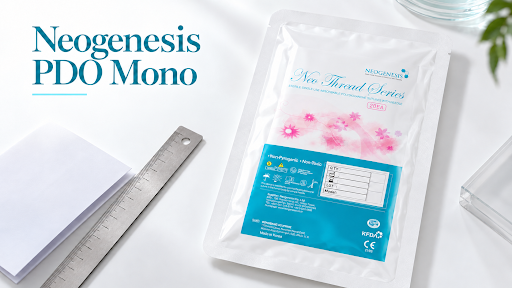
The word “thread” can suggest a miniature cable pulling loose skin upward. That image fits some aesthetic thread designs better than others. A smooth mono thread has no projecting barbs to catch tissue, so its appeal begins with a different idea: introducing a temporary filament that interacts with the surrounding tissue.
Neogenesis PDO mono threads are the smooth, single-filament members of the NEO Thread range. The manufacturer’s brochure describes the mono design as non-fixing and distinguishes it from the company’s screw, multi-thread, and cog formats.[1] That distinction is central to understanding the product. Customers considering skin texture and modest firmness changes need a different explanation from someone expecting visibly displaced tissue to be lifted and held in a new position.
The smooth design defines the product
“Mono” describes a single filament. In the Neogenesis mono series, that filament has a smooth surface rather than the hooks found on cog threads. “PDO” identifies the material: polydioxanone. One term describes construction, while the other describes chemistry. Keeping the two separate explains why a smooth PDO thread and a barbed PDO thread should not be treated as equivalent products.
A smooth filament does not gain a cog’s gripping function simply because it is made from the same polymer. The product discussion therefore centers on tissue support and the response around the filament. Strong claims about repositioning facial tissue need a mechanical explanation that the mono design does not provide in the same way.
Research discussing thread architecture distinguishes reinforcement and scaffold effects from the lifting effect of barbed designs.[2] This is useful vocabulary for customers: smoother-looking texture, firmer-feeling tissue, and a visibly elevated contour describe different changes. Saying “lift” for all three can make a modest improvement sound like a larger structural correction.
The mono format is consequently best understood as its own category, rather than a weaker copy of a cog thread. A professional might discuss it when the aim concerns skin quality or mild laxity. If the principal concern is a substantial change in tissue position, that goal needs a separate assessment rather than an assumption that every thread can provide it.
What PDO contributes
Polydioxanone is a synthetic absorbable polymer also used in surgical sutures. Its material structure provides a temporary filament, and hydrolysis gradually breaks down that structure. Absorbability is a material property; it does not describe how much visible improvement a particular patient will experience.
This distinction helps with a common source of confusion. The thread’s physical presence, its remaining mechanical strength, and the duration of a cosmetic result are three separate timelines. A filament can change mechanically before it has completely disappeared. Tissue response can also continue on a different schedule from material degradation.
In an animal study, Lee and colleagues observed PDO threads in tissue sections for up to six months, with complete absorption by eight months in the studied conditions.[3] Those findings help explain why PDO is considered temporary. They are not a universal calendar for every Neogenesis model, every anatomical setting, or every person’s result.
Hydrolysis breaks bonds within the polymer chains. As those chains become shorter, the material can lose strength while a recognizable filament remains. This is why seeing thread material in a tissue section cannot prove that it retains its original mechanical properties. Complete absorption describes the removal of the material; strength retention describes what that material can still withstand.
Equally, temporary material does not make every change automatically reversible on demand. The biological response around a filament is part of the product concept, not a separate feature that can be switched off by waiting a fixed number of days.
How a filament can influence surrounding tissue
The rationale for smooth threads involves the tissue response to an implanted material. Fibroblasts and other cells participate in the local response, and collagen can develop around the filament. This makes PDO interesting beyond its role as a passive strand, but the location and character of that response matter.
Lee’s rat study found collagen around several absorbable thread types and compared different PDO structures. It observed predominantly type III collagen during the experimental period and did not demonstrate new elastic fibers under its assessment conditions.[3] That is a useful corrective to the idea that all components of youthful skin are automatically restored together.
A separate pig study by Yoon and colleagues followed tissue changes after PDO thread placement across multiple observation points. It documented remodeling processes, including new collagen and changes in surrounding fibrous tissue.[4] These observations explain why researchers consider a biological contribution plausible. They do not measure a specific reduction in a human wrinkle or establish a Neogenesis success rate.
Another pig study, by Su and colleagues, found mild inflammation and collagen production around PDO, with collagen production peaking at 12 weeks in that model.[5] The key idea is that tissue response evolves over time. It should not be represented by an instant “collagen boost” visible in a photograph taken straight after a procedure.
For a customer, collagen stimulation is therefore most useful as an explanation of the product’s rationale. The actual goal remains a visible or functional change that matters to them. Microscopic collagen formation and a satisfying improvement in facial appearance are connected questions, but one is not a substitute for measuring the other.
Mono screw and cog threads are different tools
Thread names become much clearer when they are linked to construction rather than treated as steps on a quality ladder. A smooth strand, a wound strand, and a barbed strand interact with tissue differently even when all three use PDO.
| Thread format | Defining structure | Main product concept | What the design does not establish |
|---|---|---|---|
| Mono | One smooth filament without barbs | Local tissue response and support | The gripping action of a cog thread |
| Screw or twisted format | A wound filament or multiple twisted strands, depending on the model | A different arrangement of material and tissue contact | A guaranteed increase in visible benefit |
| Cog | Projecting barbs or cogs | Mechanical engagement with tissue alongside biological response | Equivalence to surgery or permanent correction |
Neogenesis separates these families within its range.[1] That is useful for product selection because “PDO threads” alone is too broad a description. The material name does not tell a customer whether the discussion concerns a smooth filament or a design intended to engage tissue mechanically.
More elaborate construction is not automatically better. A different arrangement can change how much material contacts tissue, but it also changes the product being considered. Results from one architecture cannot be converted into a simple claim that every additional twist or barb adds a predictable amount of improvement.
The comparison also helps explain why mono threads are not liquid fillers. A gel creates a distributed material volume; a thread is a filament. Even where both are discussed in relation to appearance, they provide different starting structures. Choosing between them should begin with the desired change, rather than assuming that one is a lower-cost version of the other.
Local collagen is different from permanent suspension
Collagen develops around the interface between a filament and surrounding tissue. That local response is different from constructing a new ligament. Hong and colleagues specifically caution against treating the thin tissue capsule around an absorbable thread as a strong, lasting structure capable of maintaining a substantial lift.[2]
The distinction explains why a thread can be biologically active without behaving like a permanent suspension system. Collagen staining shows where tissue has formed; it does not measure how much load the whole treated region can support. For smooth Neogenesis mono threads, the relevant concept remains local reinforcement and skin quality, rather than the creation of a new anatomical anchor. The fine filament’s geometry is part of that distinction, even before considering how PDO gradually breaks down.
The product details need only a short place in that conversation. The Neogenesis brochure lists multiple mono models, with distinct needle and thread dimensions, and describes a standard presentation of 20 units per pouch and five pouches per box.[1] A 20-piece listing is therefore a package quantity, not a treatment plan. Neither the model code nor the number of supplied threads tells a customer how much improvement to expect. Those choices belong to professional assessment, while the defining product features remain the smooth monofilament construction and absorbable PDO material.
Frequently asked questions
Are mono threads the same as a thread lift
The phrase is often used broadly, which can be misleading. Smooth mono threads lack the barbs associated with tissue engagement in cog designs. Their discussion should focus on local support and tissue response. A substantial lifting goal requires a separate explanation of how that repositioning would be achieved.
Are Neogenesis mono threads made from collagen
No. The PDO versions are made from polydioxanone, a synthetic polymer. Collagen is part of the body’s possible response around the implanted filament. The material being supplied and the tissue that may develop around it are different things, and confusing them obscures how the product works.
Will the result disappear as soon as the thread dissolves
There is no single moment that reliably marks the end of a cosmetic result. Polymer breakdown and tissue remodeling occur on different schedules. Animal observations help explain that distinction, but they cannot provide a fixed duration for an individual person’s visible response to a particular Neogenesis model.
Can smooth threads replace lost volume like a filler
They should not be considered interchangeable with a gel filler. A fine filament and a volume of gel create different material structures. If the main concern is lost fullness, the professional discussion should explain which approach addresses that deficit rather than presenting mono threads as an equivalent substitute.
Does a screw thread always work better than a mono thread
No. The names describe different constructions, not a universal ranking. A wound or twisted arrangement changes material geometry and contact with tissue. Whether it offers a meaningful advantage depends on the particular product, the clinical objective, and evidence relevant to that comparison.
What is the most realistic reason to consider the mono format
Its clearest rationale is a smooth, temporary filament intended to interact with and support surrounding tissue, with interest in modest skin-quality changes. It should be evaluated against that goal. Expecting the same gripping and repositioning behavior as a cog thread creates an avoidable mismatch between design and expectation.
Explore the right thread category
Professionals comparing thread options can browse professional aesthetic products from MJS with a clear distinction between smooth mono and barbed lifting designs. For Neogenesis PDO mono threads, begin with the desired skin-quality outcome and the meaning of a worthwhile improvement. The most useful comparison is the one that connects material, construction, and purpose, so that the product’s actual design leads the conversation.
References
[1] Neogenesis Co., Ltd. NEO Thread Series: Product Brochure. Undated; accessed 2026.
[2] Hong GW, Kim SB, Park SY, Wan J, Yi KH. Characteristics of Volumizing, Scaffold, Lifting Cogged Thread, and Monofilament Threads. Dermatologic Therapy. 2024.
[3] Lee CG, Jung J, Hwang S, et al. Histological Evaluation of Bioresorbable Threads in Rats. Korean Journal of Clinical Laboratory Science. 2018.
[4] Yoon JH, Kim SS, Oh SM, Kim BC, Jung W. Tissue Changes over Time after Polydioxanone Thread Insertion: An Animal Study with Pigs. Journal of Cosmetic Dermatology. 2019.
[5] Su D, Wang S, He T, Wang J. Experimental Investigation of Biostimulatory Effects after Polydioxanone Thread Insertion in a Pig Model. Journal of Cosmetic Dermatology. 2024.


The most efficient ecommerce businesses in the US utilize reliable logistics systems to ensure orders reach customers accurately, affordably, and on time. Managing inventory, packing orders, shipping products, and handling returns can become increasingly complicated for growing online retail stores. These responsibilities can consume valuable time and resources that business owners could otherwise invest in marketing, product development, and customer retention. Leveraging outsourced third-party logistics (3PL) services becomes increasingly valuable. A 3PL provider helps ecommerce businesses manage essential supply chain operations, including warehousing, inventory management, order fulfilment, packaging, shipping coordination, and returns processing.
Top 4 Ecommerce Businesses That Need to Invest in Outsourced 3PL Logistics
Here are some examples of a few types of ecommerce businesses that can benefit significantly from outsourcing logistics services to 3PLs.
1. Fashion and Clothing Ecommerce Stores
Online clothing retailers must manage different sizes, colors, styles, and stock levels while ensuring that orders are shipped promptly. Storing products, locating individual items, packaging garments, and processing exchanges can become overwhelming when your ecommerce business starts gaining ground. Outsourced 3PL services help fashion retailers organize inventory, pick and pack orders, and coordinate deliveries. Some providers also offer branded packaging and returns processing, helping businesses deliver a consistent shopping experience.
2. Beauty, Skincare, and Cosmetics Brands
Beauty and skincare brands frequently sell multiple product variations, including moisturisers, serums, makeup, haircare products, and gift sets. Successful brands may receive hundreds or even thousands of orders during promotional campaigns, influencer collaborations, and holiday shopping periods. A qualified 3PL provider can help beauty brands track stock, fulfil orders efficiently, and coordinate shipping. Businesses should confirm that their logistics partner can meet any applicable product-specific storage and handling requirements.
3. Health, Wellness, and Personal Care Stores
Online stores selling personal care products, fitness accessories, non-prescription wellness goods, and everyday hygiene supplies often benefit from repeat purchases.
Outsourced 3PL services can help these businesses manage inventory, prepare recurring orders, and coordinate deliveries across different US regions. Efficient fulfilment is especially useful for stores offering subscription boxes or monthly product bundles.
Choosing the right logistics partner can make a significant difference in an ecommerce business’s ability to grow. Online retailers need reliable 3PL providers like Packageman that can manage order fulfilment, maintain accurate inventory records, coordinate shipping, and handle returns without creating unnecessary operational complications. Packageman offers efficient ecommerce fulfillment and 3PL logistics services designed to support growing online retailers across the United States.
4. Subscription Box and Product Bundle Businesses
Subscription ecommerce businesses deliver products to customers on a recurring schedule. Examples include monthly beauty boxes, coffee subscriptions, snack packages, hobby kits, and curated lifestyle collections.
Unlike ordinary ecommerce stores, subscription businesses must coordinate recurring fulfilment cycles and ensure that each box contains the correct products. An outsourced 3PL partner can manage inventory, assemble product bundles, prepare recurring shipments, and coordinate dispatch schedules.
Outsourced third-party logistics can help ecommerce businesses move beyond the limitations of handling every order themselves. Fashion stores, beauty brands, electronics retailers, wellness businesses, home decor shops, subscription box companies, and pet supply stores can all benefit from professional fulfillment support when their logistics demands begin to grow.
The key is choosing a 3PL provider whose capabilities, pricing, technology, and warehouse locations match the business’s needs.

Accessories play an important role in modern clothing trends. A well-chosen cap can add character to a simple outfit while providing practical coverage for outdoor activities. From relaxed weekend looks to contemporary streetwear, hats are a versatile accessory for people with different fashion preferences.
For clothing retailers and fashion businesses, offering a variety of cap styles can also help attract customers looking for both classic and modern designs.
Trucker Caps for a Casual Look
Trucker caps are a popular choice for people who appreciate relaxed, sporty fashion. Their distinctive construction and versatile designs make them suitable for everyday outfits. They can be worn with graphic T-shirts, denim jackets, hoodies, or casual shorts.
Retailers interested in expanding their accessory collections can explore wholesale Trucker Hats to find styles that suit different customer preferences. Offering a range of colors and designs can help businesses create a collection that works with various clothing trends.
Camouflage Caps for a Distinctive Style
Camouflage patterns provide a different look for people who want their accessories to stand out. Inspired by outdoor clothing, these patterns have also become a recognizable feature of casual and streetwear fashion.
Adding wholesale Camo Hats to a product collection can give retailers another option for customers who prefer bold prints and distinctive accessories. These caps can be paired with plain shirts, denim, cargo pants, and neutral-colored outerwear to create a coordinated appearance.
What to Consider When Selecting Caps
Choosing the right headwear involves more than following current trends. Product quality, comfort, and design all contribute to a satisfying purchase.
Here are a few factors worth considering:
- Comfortable materials: Select fabrics that feel good during regular use.
- Reliable construction: Examine stitching, panel structure, and overall finishing.
- Practical designs: Consider adjustable closures and suitable fits.
- Color variety: Offer classic shades alongside more eye-catching options.
- Customer preferences: Choose products that match the interests of your intended audience.
Building a Versatile Headwear Collection
For apparel businesses, a balanced selection of accessories can complement existing clothing products. Combining traditional designs with more distinctive patterns allows retailers to serve customers with different tastes.
Understanding seasonal demand, reviewing product quality, and monitoring fashion trends can help businesses make informed purchasing decisions. It is also useful to choose designs that coordinate easily with popular casual clothing.
Conclusion
Caps remain a practical and fashionable accessory for everyday wear. Trucker styles offer a relaxed, sporty appearance, while camouflage designs provide a more distinctive alternative. By focusing on comfort, quality, and variety, individuals and retailers can find headwear options that complement modern fashion and meet different needs.

Neogenesis PDO Mono Threads and Their Role in Skin Support

How to Wash an Essentials Hoodie Without Killing the Fleece

Top Property Law Solicitors in London for Legal Advice

How to make an older commercial property work for a modern business

Why Your Beauty Clinic in Bali Matters for Filler Results

4 Ecommerce Businesses That Need to Invest in Outsourced 3PL Logistics Services

How to Ensure Your Home is Valued Correctly for a Quick Sale

Christopher Dare: The Untold Story of Engineer and Former Husband of Angela Rippon

The 15 Highest-Paid Rugby Players in the World

What Is Fanquer? The Digital Creator Platform Transforming Direct-to-Fan Engagement

Dr Jared Ross: Missouri Appeals Court Upholds Protection Order Over Graphic Torture and Murder Threats

Nancy Hallam: The Inspiring Life, Career, and Success Story Behind Ian Wright’s Wife
How to Ensure Your Home is Valued Correctly for a Quick Sale
Christopher Dare: The Untold Story of Engineer and Former Husband of Angela Rippon
The 15 Highest-Paid Rugby Players in the World
What Is Fanquer? The Digital Creator Platform Transforming Direct-to-Fan Engagement
Dr Jared Ross: Missouri Appeals Court Upholds Protection Order Over Graphic Torture and Murder Threats
Nancy Hallam: The Inspiring Life, Career, and Success Story Behind Ian Wright’s Wife
-
 Real Estate9 months ago
How to Ensure Your Home is Valued Correctly for a Quick Sale
-
Celebrity11 months ago
Christopher Dare: The Untold Story of Engineer and Former Husband of Angela Rippon
-
 Sports5 months ago
The 15 Highest-Paid Rugby Players in the World
-
 Technology5 months ago
What Is Fanquer? The Digital Creator Platform Transforming Direct-to-Fan Engagement
-
 Celebrity5 months ago
Dr Jared Ross: Missouri Appeals Court Upholds Protection Order Over Graphic Torture and Murder Threats
-
Celebrity12 months ago
Nancy Hallam: The Inspiring Life, Career, and Success Story Behind Ian Wright’s Wife
-

 Celebrity8 months ago
Who Is Azriel Crews? Inside the Life and Career of Terry Crews’ Daughter
-
 Celebrity11 months ago
Who Is Maisie Mae Roffey? The Private Life, Family Story, and Quiet Success of Julie Walters’ Daughter