
Education
Your Guide to the Best Student Accommodation at Sheffield Hallam University


According to the NatWest Student Living Index 2026 and other national student cost surveys, Sheffield remains one of the UK’s lower-cost student cities. Most students choose student accommodation at Sheffield Hallam University between university halls, purpose-built student accommodation, and private shared housing. Each option involves different contract terms, pricing structures, and living environments. Accommodation choice affects commuting time, monthly expenditure, social life, and study routines during the first year at Sheffield Hallam University. This guide explains different options of student accommodation near Sheffield Hallam University, rental prices, application procedures, and support available to both domestic and international students. The aim is to help new students understand where to live, when to apply, and which accommodation type best suits their budget and lifestyle.
Sheffield Hallam University Accommodation Types
University-managed accommodation
University-managed accommodation comprises multiple halls across Sheffield, mainly near City Campus and Collegiate Campus. Sheffield Hallam University guarantees accommodation for eligible first-year full-time undergraduate students who apply before the published deadline. Allocation is handled through the university accommodation portal after students receive an offer.
Rent includes utilities, internet access, and basic contents insurance. Contracts are fixed for the academic year, and pricing is standardised across room categories. Residential support teams operate throughout the accommodation network and provide welfare support and community activities during the academic year.
University accommodation is usually selected by students who want predictable costs, university support services, and the opportunity to live with other first-year students.
Private accommodation at Sheffield Hallam University
Private accommodation is often chosen by students who want more independent living or shared housing outside university-managed residences. Compared with on-campus accommodation, private Hallam housing usually offers greater flexibility in location, room types, and contract length, as well as a wider range of price options. However, private contracts require careful review of tenancy length, deposit protection, and payment structure before signing, as agreements become legally binding once confirmed. This type of housing is particularly popular among second-year and postgraduate students, as well as those who prefer greater control over their living arrangements and budget.
Sheffield Hallam University Accommodation Prices
| Accommodation type | Weekly rent | Bills included | Contract length | Suitable for |
| University halls | £81–£185 | Yes | 44 weeks | First-year students |
| PBSA | £140–£220 | Yes | 44–51 weeks | Students seeking private rooms and facilities |
| Private shared housing | £90–£160 | Sometimes | 48–52 weeks | Second and third-year students |
| Private studio apartments | £180–£280 | Varies | 48–52 weeks | Postgraduate and independent students |
Best Living Areas near Sheffield Hallam University
Student housing in Sheffield is concentrated in four main residential areas. Each area offers different rent levels, commuting times, and housing styles.
Sheffield City Centre
City Centre is the closest residential area to Sheffield Hallam City Campus. Most PBSA developments are located here, including Hollis Croft, New Era Square, and several privately managed student buildings. Weekly rent usually ranges from £140 to £220, depending on room type. Students living in the city centre can walk to lectures, supermarkets, restaurants, and transport hubs without relying on buses or trams.
Ecclesall Road
Ecclesall Road is the main student corridor near Collegiate Campus. The area contains cafés, restaurants, supermarkets, and independent shops. Housing mainly consists of shared student houses and smaller apartment buildings. Cheap student accommodation in Sheffield is available in this area, with weekly rents generally ranging from £110 to £180. Weekly rents generally range from £110 to £180. Many second- and third-year students choose Ecclesall Road for its social atmosphere and direct access to Collegiate Campus.
Broomhill
Broomhill sits between the city centre and western residential districts. The area contains traditional student houses, local shops, and bus connections to both campuses. Weekly rent usually ranges from £100 to £160. The area attracts students looking for quieter residential streets while remaining connected to university facilities.
Crookes
Crookes offers some of the lowest student rents in Sheffield. Most housing consists of terraced shared houses with lower weekly costs ranging from approximately £90 to £150. Students living in Crookes typically use buses or walk longer distances to reach campus, but lower rental costs make the area attractive to students managing tighter budgets.
Best Student Accommodation near Sheffield Hallam University
Purpose-built student accommodation provides managed housing designed specifically for students and has become increasingly popular among Sheffield Hallam students. All the PBSAs feature all-inclusive bills and managed services, rent normally includes utilities, internet, contents insurance, and facilities.

Hollis Croft
Hollis Croft is located in Sheffield city centre and provides direct access to shopping areas, transport links, and Sheffield Hallam University buildings. The building offers en-suite rooms and studio apartments with all bills included. Dual-occupancy options are available in selected studios, which appeal to postgraduate students and couples.
Students choose Hollis Croft also because it offers a range of communal facilities, including a gym, cinema room, study spaces, games room, communal lounges, outdoor courtyard areas, karaoke rooms, laundry facilities, and secure cycle storage.
Archways Sheffield
Archways Sheffield is situated close to Sheffield railway station and the city centre. The property near Sheffield Hallam University provides en-suite bedrooms in shared flats and offers a smaller residential community than larger PBSA buildings. Students who regularly travel by train often choose Archways because of its proximity to the station.
The building appeals to students who prefer smaller accommodation communities rather than larger student complexes. Shared kitchens and communal areas encourage social interaction while maintaining relatively moderate rental costs compared with some premium developments.
New Era Square
New Era Square is a mixed-use building located south of Sheffield city centre, just a short 10-minute walk to Sheffield Hallam University. The accommodation sits above retail units, restaurants, and other commercial spaces, creating a residential environment distinct from traditional student housing.
New Era Square provides studio apartments and en-suite rooms with modern interiors and private study areas. The surrounding area contains Asian supermarkets, cafés, restaurants, and convenience stores, making it particularly attractive to international students.
The Forge
The Forge is one of the largest student accommodation sites used by Sheffield Hallam students. The development contains more than 1,000 rooms and is located approximately 15 minutes from both City Campus and Collegiate Campus.
The accommodation offers en-suite bedrooms within shared flats accommodating between three and six students. Facilities include a gym, cinema room, study spaces, games areas, outdoor basketball court, communal lounges, and create a social atmosphere.
How to Apply for Sheffield Hallam University Student Accommodation
Applying for on-campus accommodation
Students can apply for university accommodation after receiving an offer from Sheffield Hallam University. Applications are completed through the university accommodation portal using an eight-digit student ID number. Applicants rank up to four accommodation preferences. Allocation is based on availability and application timing. Specific buildings and flatmates cannot be guaranteed.
Students wishing to live together must submit separate applications and include group information within the application notes. Changes after submission require direct contact with the accommodation office.
Applying for off-campus accommodation
Private Sheffield Hallam accommodation applications usually begin after students receive an unconditional offer. Students compare locations, room types, and contract lengths before arranging viewings or virtual tours.
Contracts should be reviewed carefully before signing. Deposit protection, utility bills, guarantor requirements, and cancellation policies are particularly important for first-time renters.
International students often use video viewings and online booking systems before arrival.
How Does uhomes.com Help Students Find Accommodation at Sheffield Hallam?
uhomes.com helps students find housing outside university halls. The rental platform covers student accommodation near Sheffield Hallam University. PBSA developments include Hollis Croft, Archways, New Era Square, and The Forge. Private rentals are also available in popular student areas like Ecclesall Road, Broomhill, and Crookes.
Students can compare rooms, studios, and shared flats by price, contract length, facilities, and campus distance. All options are visible in one place. No need to check multiple sites or contact providers separately. International students get specific benefits while booking with uhomes.com. Those without a UK guarantor can filter properties that accept advance rent or alternative guarantor arrangements. Most UK property portals do not offer this. All the Sheffield Hallam University student accommodation on the site allows online booking and digital contract signing. Students can secure a room before they arrive in the UK. Video viewings are available for overseas students to check accommodation quality in advance. In addition, foundation and short-course students can also find contracts that match their study dates. No need to commit to the standard 44 weeks if that does not fit their schedule. uhomes shows contract terms and cancellation conditions during booking. Students know their obligations before confirming. This matters for international students, as visa decisions can affect arrival dates.
For Sheffield Hallam students, it offers a practical alternative to university halls, especially for those who want more choice, shorter contracts, or a room before they land in the UK.
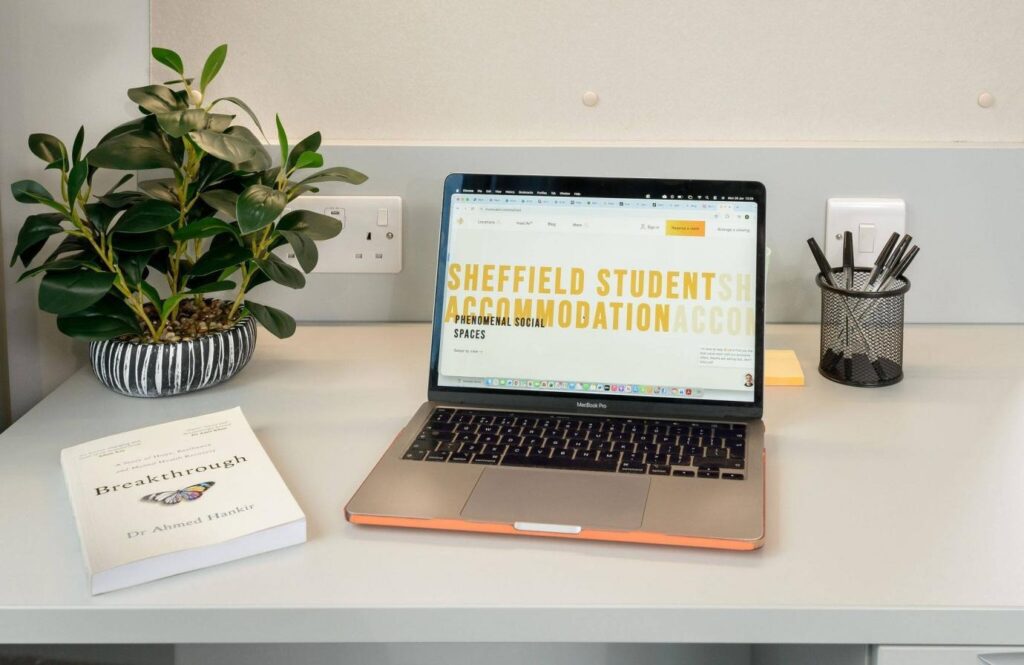
How to choose your accommodation as a Sheffield Hallam student
- University halls suit students who want fixed costs, university support, and a first-year community environment.
- Purpose-built student accommodation suits students who want private bedrooms, modern facilities, and city-centre locations.
- Private shared housing suits students who prioritise lower rent and greater independence.
- International students often choose PBSA during their first year, then move into shared housing after becoming familiar with Sheffield.
Conclusion
Sheffield Hallam University accommodation falls into three categories: university halls, purpose-built student accommodation, and private rented housing. Each option differs in price, location, and level of independence.
Sheffield continues to offer lower living costs than many larger UK student cities. Early applications, realistic budgeting, and understanding the differences between accommodation types remain the most important factors when choosing housing for the 2026 academic year.



Choosing the right preschool is a significant step in every child’s early development journey. Among the various options available, Singleton Preschool stands out as a premier choice that offers a comprehensive early learning experience. This institution is dedicated to fostering growth, creativity, and social skills in young children within a nurturing environment.
Introduction to Singleton Preschool
Singleton Preschool specialises in providing early childhood education that aligns with national quality standards. The preschool puts a strong emphasis on developing foundational skills that children will build upon throughout their education. Its curriculum is thoughtfully designed to balance structured learning with play-based activities, encouraging exploration and curiosity.
Curriculum and Learning Approach
The curriculum at Singleton Preschool follows the Early Years Learning Framework, which emphasises holistic development. Activities cover cognitive, emotional, physical, and social areas, ensuring children develop in a well-rounded manner. Learning experiences are tailored to be age-appropriate, promoting engagement through hands-on learning, storytelling, and creative arts.
Focus on Individual Needs
Recognising that every child is unique, Singleton Preschool adopts personalised learning strategies. Educators conduct observations and assessments to understand each child’s interests and abilities, enabling the design of customised learning pathways. This approach helps in supporting children’s strengths and addressing challenges effectively.
Qualified and Caring Educators
The team of educators at Singleton Preschool are highly qualified professionals with expertise in early childhood education. They are passionate about creating a safe and inclusive environment where children feel valued and encouraged to express themselves. Continuous professional development ensures they stay updated with best practices and innovative teaching methods.
Facilities and Learning Environment
Singleton Preschool boasts well-equipped facilities that stimulate learning and play. Classrooms are designed to be bright and welcoming, with resources that cater to various developmental activities. Outdoor play areas provide opportunities for physical exercise and interaction with nature, contributing to children’s overall well-being.
Safety and Health Measures
Safety is a top priority at Singleton Preschool. The premises adhere strictly to health and safety regulations. Regular sanitation, secure access controls, and emergency preparedness plans are in place to protect children at all times. Healthy meals and snacks are also provided to support nutritional needs.
Parental Involvement and Communication
Singleton Preschool believes in building strong partnerships with parents and caregivers. Open communication channels keep families informed about their child’s progress and upcoming activities. Parent meetings, newsletters, and digital platforms facilitate active participation, ensuring transparency and collaboration.
Benefits of Enrolling at Singleton Preschool
Enrolling a child at Singleton Preschool offers numerous advantages. Children develop social skills through group interactions and collaborative projects. The program helps build confidence and independence, preparing them effectively for the transition into primary school. The supportive environment also fosters emotional resilience and a lifelong love for learning.
Community Engagement and Cultural Diversity
The preschool actively promotes cultural awareness and inclusivity. Celebrations of various cultural events enrich children’s understanding and appreciation of diversity. Community involvement initiatives help children develop a sense of belonging and responsibility towards the broader society.
How to Enrol at Singleton Preschool
Prospective families interested in enrolling their children at Singleton Preschool can access detailed information and application procedures through the official website. Early application is encouraged due to limited spaces. The staff is available to provide tours and answer any queries to assist parents in making informed decisions.
Conclusion
Singleton Preschool offers an exemplary early childhood education experience focused on holistic development, safety, and community involvement. Its dedicated educators, comprehensive curriculum, and quality facilities make it an excellent choice for parents seeking the best educational foundation for their children. This preschool is committed to nurturing every child’s potential in a supportive and enriching environment.

The National Disability Insurance Scheme (NDIS) plays a crucial role in fostering inclusivity and providing comprehensive support for students with disabilities. Schools and families benefit significantly from tailored services designed to address individual needs, enabling students to maximise their potential in academic and social environments. Utilising an NDIS student support online finder can assist caregivers and educators in identifying appropriate resources and professionals to support students effectively.
Understanding NDIS Student Support
NDIS student support encompasses a variety of services aimed at enhancing the educational experience for students with disabilities. These services include therapy sessions, specialised learning aids, behavioural support, and assistance with mobility and communication. The goal is to promote independence, confidence, and engagement in the school setting.
Key Components of NDIS Support for Students
One of the fundamental aspects of NDIS student support is the personalised approach. Each student’s plan is developed based on an assessment of their unique needs, aspirations, and environment. Areas commonly addressed include:
- Occupational therapy to improve fine motor skills and daily living activities
- Speech therapy for communication challenges
- Physiotherapy to enhance mobility and physical function
- Psychological support for emotional and behavioural well-being
These services are coordinated to ensure consistency and integration within the student’s educational journey.
Accessing NDIS Support in Educational Settings
Schools play an integral role in the delivery of NDIS supports. Collaboration between educators, allied health professionals, and families ensures that students receive comprehensive care aligned with their Individualised Education Plans (IEPs). Accessing the appropriate supports begins with understanding eligibility and navigating the NDIS processes effectively.
Role of Allied Health Services
Allied health professionals, including therapists and psychologists, provide essential services under the NDIS framework. Their expertise contributes to devising strategies that support learning and development. Schools may facilitate on-site services or coordinate external providers to complement classroom activities.
Benefits of Comprehensive NDIS Student Support
Comprehensive support under the NDIS framework offers multifaceted benefits for students. These include improved academic outcomes, enhanced social interaction skills, and greater autonomy. Early intervention and consistent support contribute to long-term success and wellbeing.
Promoting Inclusion and Participation
NDIS student support fosters inclusion by enabling students with disabilities to participate fully in school activities alongside their peers. Adjustments and targeted interventions reduce barriers, making education more accessible and equitable.
Planning and Implementing Support Services
Effective planning is essential to align NDIS supports with the educational goals of students. Collaboration among families, schools, and NDIS planners ensures that funds are allocated appropriately to services and resources that will maximise benefit.
Monitoring Progress and Making Adjustments
The dynamic nature of student needs necessitates regular monitoring of progress. Adjustments to support services might be required to respond to developmental changes or evolving educational objectives. Schools and families should maintain open communication to adapt plans effectively.
Challenges and Considerations
While NDIS student support offers significant advantages, certain challenges exist. Navigating the NDIS system can be complex, and resource availability may vary geographically. Ensuring timely and adequate services requires proactive engagement and advocacy.
Addressing Systemic Barriers
Barriers such as funding limitations, wait times for assessment or service, and lack of specialised providers can impact service delivery. Stakeholders must work collaboratively to identify solutions and improve accessibility.
Future Directions in NDIS Student Support
Ongoing development within NDIS student support focuses on enhancing service integration and expanding access. Technological advancements and increased awareness contribute to the evolution of support models that are more responsive and efficient.
Digital Tools and Resources
Innovative digital platforms, including online support finders and virtual therapy options, expand the reach of services. Utilising resources such as the NDIS student support online finder enables easier navigation of available supports.
Conclusion
Empowering students with disabilities through comprehensive NDIS support services is fundamental to their academic achievement and personal development. Through personalised planning, collaboration, and leveraging available resources, schools and families can create an inclusive learning environment that promotes success for every student.


A few years ago, quantum computing felt like a research problem that security teams could safely file under “future concern.” That comfort is fading. Governments, standards bodies, and enterprise security leaders are already discussing what happens when quantum systems become capable enough to weaken cryptographic assumptions that have held for decades.
That’s where Grover’s algorithm in cybersecurity enters the conversation. It isn’t as disruptive to encryption as Shor’s algorithm, but it still changes the math defenders rely on, particularly when it comes to brute-force resistance and cryptographic key strength.
Why Grover’s Algorithm Matters
Quantum threats-related discussions often jump straight to something related to public-key cryptography. That’s fair, and that’s typically where headlines land.
But Grover’s algorithm is about solving an entirely different problem.
This algorithm was proposed in 1996 by Lov Grover. The algorithm speeds up searches through unstructured data sets. Also, if applied to cryptography, it can reduce the time needed to perform brute-force attacks against symmetric encryption and hashing functions.
Here’s the key distinction:
- Classical brute-force attacks scale linearly with the size of the search space.
- Grover’s algorithm provides a quadratic speedup.
- That means a key with n bits of security effectively offers about n/2 bits of resistance against a sufficiently capable quantum attacker.
The result isn’t a complete break. But it does change risk calculations.
The Difference Between Shor’s and Grover’s Algorithms
Security teams often lump quantum threats together, yet they affect cryptography in very different ways.
Shor’s Algorithm
Shor’s algorithm targets mathematical problems that underpin many public-key systems, including integer factorization and discrete logarithms. If large-scale fault-tolerant quantum computers arrive, commonly used public-key schemes could become vulnerable.
Grover’s Algorithm
Grover’s algorithm doesn’t directly break symmetric encryption.
Instead, it accelerates key searches.
For example, a classical attack against AES-128 requires testing an extremely large number of possible keys. A quantum attacker running Grover’s algorithm could reduce the effective security level, making AES-128 behave more like a 64-bit security system from a resistance perspective.
That’s still difficult. Just not difficult in the same way.
Readers must go through this explanation of grover’s algorithm in cybersecurity and its relationship to quantum computing to get a much better grasp of the core idea.
Where the Real Enterprise Risk Appears
It’s tempting to think Grover’s algorithm is only relevant once powerful quantum computers exist.
That misses an important point.
Cybersecurity planning often works on timelines measured in years. Sometimes decades.
Consider a financial institution storing transaction records that must remain confidential for extended periods. Or a healthcare provider maintaining protected patient data. Information stolen today could potentially be decrypted years from now if cryptographic protections become insufficient.
Security leaders frequently describe this as a “harvest now, decrypt later” concern.
This isn’t speculation from vendors. Organizations such as the U.S. National Institute of Standards and Technology (NIST) have been actively driving post-quantum cryptography initiatives because long-term cryptographic resilience has become a strategic issue, not just a research topic.
What Grover’s Algorithm Means for Symmetric Encryption
The good news is that symmetric cryptography holds up better against quantum advances than many public-key approaches.
Still, adjustments matter.
AES-128
AES-128 remains widely deployed and secure against classical attacks. Under a Grover-style quantum scenario, however, its effective security margin is reduced.
For some organizations, that reduction may become uncomfortable over the long term.
AES-256
AES-256 is generally viewed as a stronger option in a quantum-aware security strategy because even after the theoretical quadratic speedup, the remaining security level remains substantial.
That’s one reason many security architects are already standardizing on larger key sizes where operationally practical.
Hash Functions
Hashing isn’t immune either.
Grover’s algorithm can speed up preimage searches against cryptographic hashes. As a result, organizations should evaluate whether current hash and key-length selections align with future security requirements rather than only present-day threats.
Practical Questions CISOs Should Ask Now
Here’s the question I often hear in enterprise security discussions:
“If large quantum computers aren’t here yet, why spend time on this now?”
Because cryptographic transitions are rarely quick.
Few organizations can inventory every certificate, key, protocol, application dependency, and third-party integration overnight. Most can’t do it in a year.
A practical review should include:
Cryptographic Asset Discovery
You can’t modernize what you haven’t identified.
Map:
- Symmetric encryption usage
- Public-key implementations
- Digital certificates
- VPN and network security dependencies
- Long-term data repositories
Data Longevity Assessment
Not all information needs protection for the same duration.
Ask:
- Which data must remain confidential for 5 years?
- Which records require protection for 10 years or longer?
- What information would create legal, financial, or operational consequences if exposed in the future?
Crypto Agility
This term gets used frequently, sometimes too casually.
At its core, crypto agility means being able to replace cryptographic algorithms without rebuilding entire systems. Organizations that design for flexibility today will face fewer disruptions when standards evolve.
Network Security Considerations
Quantum readiness isn’t solely an encryption issue.
It’s also a visibility and governance issue.
Many enterprises discover that cryptographic controls are scattered across cloud services, branch infrastructure, applications, operational technology environments, and remote-access platforms. Different teams often manage each segment.
That fragmentation creates blind spots.
A security architecture that centralizes policy management, visibility, and risk assessment places organizations in a stronger position when cryptographic updates become necessary. The goal isn’t predicting every future standard. It’s knowing where changes will be required and how they can be implemented without disrupting business operations.
For broader enterprise security perspectives and technology coverage, readers can also explore resources published on Today’s Magazine.
Looking Beyond the Quantum Headlines
Quantum computing still hasn’t matured, and most conversations around it swing between hype and dismissal. But neither view is especially helpful.
Grover’s algorithm doesn’t signal the immediate collapse of modern encryption. What it does signal is that key length, cryptographic planning, and long-term data protection deserve closer attention than they received a decade ago.
For CISOs, network architects, and SOC leaders, the challenge isn’t guessing exactly when quantum capabilities will mature. It’s preparing for a future where cryptographic assumptions may shift faster than infrastructure can.
That makes Grover’s algorithm in cybersecurity more than an academic topic. It’s a reminder that security isn’t just about stopping today’s attacks. It’s about understanding which controls might age poorly, then making measured decisions before that risk becomes operational reality.

The Realities of Electric Scooter Ownership: Battery Care, Maintenance and Everyday Running Costs

The Ultimate Guide to Women’s Sandals for Style and Comfort

Essential Guide to Hire Furniture in Sydney for Stylish Home Makeovers

Publishing AI-Assisted Drafts as PDFs: A Free Markdown Workflow with iBoomto

Spinal Alignment in Kuala Lumpur: What It Involves and What It Costs

When Weeks Turn Into Months: Planning Car Hire for a Longer Stay

The 15 Highest-Paid Rugby Players in the World

How to Ensure Your Home is Valued Correctly for a Quick Sale

Christopher Dare: The Untold Story of Engineer and Former Husband of Angela Rippon

What Is Fanquer? The Digital Creator Platform Transforming Direct-to-Fan Engagement

Dr Jared Ross: Missouri Appeals Court Upholds Protection Order Over Graphic Torture and Murder Threats

Nancy Hallam: The Inspiring Life, Career, and Success Story Behind Ian Wright’s Wife
The 15 Highest-Paid Rugby Players in the World
How to Ensure Your Home is Valued Correctly for a Quick Sale
Christopher Dare: The Untold Story of Engineer and Former Husband of Angela Rippon
What Is Fanquer? The Digital Creator Platform Transforming Direct-to-Fan Engagement
Dr Jared Ross: Missouri Appeals Court Upholds Protection Order Over Graphic Torture and Murder Threats
Nancy Hallam: The Inspiring Life, Career, and Success Story Behind Ian Wright’s Wife
-
 Sports5 months ago
The 15 Highest-Paid Rugby Players in the World
-
 Real Estate9 months ago
How to Ensure Your Home is Valued Correctly for a Quick Sale
-
Celebrity11 months ago
Christopher Dare: The Untold Story of Engineer and Former Husband of Angela Rippon
-
 Technology5 months ago
What Is Fanquer? The Digital Creator Platform Transforming Direct-to-Fan Engagement
-
 Celebrity5 months ago
Dr Jared Ross: Missouri Appeals Court Upholds Protection Order Over Graphic Torture and Murder Threats
-
Celebrity11 months ago
Nancy Hallam: The Inspiring Life, Career, and Success Story Behind Ian Wright’s Wife
-

 Celebrity8 months ago
Who Is Azriel Crews? Inside the Life and Career of Terry Crews’ Daughter
-

 Health9 months ago
Enclomimed 25 (Enclomiphene) – Effective PCT Protocol