
Education
10 Student Progress Report Samples That Actually Help US Teachers Save Time (And What Makes Them Work)


For most classroom teachers, progress reporting sits at an uncomfortable intersection of professional responsibility and administrative burden. The expectation is clear: communicate student performance accurately, regularly, and in a way that parents and guardians can understand. The reality is that many teachers are building these reports largely from scratch each term, working around limited district templates or generic gradebook exports that don’t reflect the full picture of a student’s learning.
The problem isn’t a lack of effort. It’s a lack of structure. When the format of a progress report isn’t well-designed, teachers spend more time on presentation than on the substance of what they’re actually communicating. Worse, inconsistent formats across grade levels or departments create confusion for families who have more than one child in a school, or who are trying to compare information across reporting periods.
This article looks at ten specific types of progress report samples that are genuinely useful in everyday classroom practice, and explains what design and content choices make each one effective. The goal is not to add more templates to an already crowded field, but to identify what separates a progress report that works from one that simply fulfills a checkbox requirement.
Why the Format of a Progress Report Matters as Much as the Content
A progress report is a communication document before it is anything else. Its primary job is to transfer accurate, actionable information from a teacher to a parent, guardian, or the student themselves. When the format is unclear, that transfer breaks down — not because the teacher didn’t do the work, but because the structure failed to carry the information properly.
This is why reviewing a well-constructed student progress report sample before building your own is worth the time. A good sample shows you not just what to include, but how to arrange information so it reads logically and completely. You can explore a student progress report sample that reflects current classroom structures and gives teachers a working foundation rather than a blank page.
Format decisions — column width, section order, the balance between numerical scores and written comments — all affect whether a parent reads the report carefully or sets it aside. A cluttered report with too many fields looks overwhelming. A report that is too sparse leaves parents with questions rather than answers. The most effective formats are simple enough to complete efficiently and complete enough to stand on their own without a follow-up phone call.
The Role of Consistency Across Reporting Periods
One structural issue that often gets overlooked is consistency over time. When a progress report changes format from one quarter to the next, parents lose the ability to compare results meaningfully. A student who improved in written comprehension between fall and spring should have that growth visible in the report — but only if the report measures the same things in the same way each period.
This is particularly relevant in schools that rely on individual teacher judgment about what to include. Without a shared template, two fourth-grade teachers in the same building may be sending home documents that look entirely different. That inconsistency creates unnecessary confusion and puts extra pressure on teachers to explain their formats in parent-teacher conferences instead of focusing on the student’s actual progress.
Elementary Progress Reports: Developmental Language and Skill-Based Categories
Elementary progress reports serve a different purpose than middle or high school reports. At this level, parents are often less concerned with letter grades and more interested in understanding where their child is developmentally — whether they are meeting grade-level expectations, making progress, or showing signs of needing additional support.
Effective elementary samples tend to organize content by skill domain rather than subject area alone. Instead of a single row labeled “Reading,” a well-designed elementary student progress report sample will break reading into sub-skills: phonics, fluency, comprehension, and vocabulary. This level of detail gives parents a more useful picture and helps teachers identify patterns that a single composite score would hide.
Written Comment Sections in Elementary Reports
Most elementary templates include a section for written comments, but the usefulness of that section depends heavily on how it is structured. An open text field with no guidance often produces comments that are vague or formulaic — observations like “a pleasure to have in class” that communicate warmth but no real information.
More effective samples prompt teachers with light scaffolding: a field for academic strengths, a field for areas of focus, and a field for behavioral or social observations. This structure doesn’t restrict a teacher’s voice, but it ensures that the comment section answers the questions parents are actually asking. According to the U.S. Department of Education, family engagement in a child’s education is consistently linked to stronger academic outcomes — and that engagement depends on clear, honest communication.
Middle School Progress Reports: Bridging Grades and Growth Mindset
Middle school is a transitional period in education, and progress reports at this level need to reflect that. Students are beginning to take ownership of their academic performance, and the reports that reach their households should be legible to both parents and to the students themselves.
The best middle school student progress report samples include a column or field that represents student self-assessment or effort alongside teacher-assigned performance scores. This pairing shifts the report from a verdict to a conversation starter. When a student can see both their performance score and their effort rating side by side, the document becomes a tool for reflection rather than just a record of outcomes.
Subject-Specific Standards Alignment
At the middle school level, many districts have moved toward standards-based grading or hybrid models. Progress report samples designed for these environments list specific learning standards rather than general subject headings, which gives parents a clearer picture of what their child is being assessed on. Teachers who have used standards-aligned templates consistently report that they spend less time explaining grading decisions to parents because the criteria are visible in the document itself.
High School Progress Reports: Data, Patterns, and Academic Planning
High school progress reports carry additional weight because they connect to college readiness, course selection, and in some cases, athletic eligibility or scholarship applications. The format needs to convey performance clearly while also supporting a longer-term view of the student’s academic trajectory.
Samples designed for high school use typically include attendance data alongside academic performance, since chronic absenteeism is one of the strongest predictors of academic difficulty. A student progress report sample that integrates attendance, current grade, assignment completion rate, and a short teacher comment in a single clean layout gives counselors and parents the cross-section of information they need to make decisions before problems become serious.
Frequency and Mid-Term Reporting
One common gap in high school reporting is the interval between formal reports. Many high schools issue grades at the end of each quarter or semester, but students in academic difficulty need feedback much earlier than that. Mid-term progress reports — even simplified versions — give families enough lead time to intervene. The most effective high school samples are designed to be completed quickly, with structured fields that don’t require lengthy narrative input for every student.
Special Education Progress Reports: IEP Goal Alignment and Compliance
Progress reports for students receiving special education services operate under a different set of requirements. These reports must document progress toward individualized education program goals and are required at intervals that align with or exceed the frequency of general education report cards. The design of these samples is as much a legal consideration as a pedagogical one.
Effective special education progress report samples are built around the specific goal areas outlined in each student’s IEP, with fields that allow teachers to report objectively on whether the student is on track, has met the goal, or requires a revised approach. Generic templates rarely work in this context because the goal categories vary from student to student. The most practical samples in this space are modular — structured enough to ensure compliance, flexible enough to reflect individual plans.
ESL and Multilingual Learner Progress Reports
Students who are learning English as a second language require progress reports that track language development separately from — and in relation to — academic content mastery. A student who demonstrates strong conceptual understanding in mathematics but limited English proficiency will look very different on a standard report than they should.
Progress report samples designed for ESL contexts typically track language proficiency across four domains: reading, writing, speaking, and listening. These domains align with national frameworks for English language development and give families a structured view of their child’s language growth over time. When academic content performance is reported alongside language proficiency, the combined picture is far more useful than either measure alone.
Behavioral and Social-Emotional Learning Reports
Not all progress is academic, and a growing number of schools are issuing supplemental reports that address social-emotional learning outcomes. These cover areas such as self-regulation, cooperation, conflict resolution, and participation in classroom community activities.
Social-emotional progress report samples are most effective when they use observable, behavior-based language rather than subjective character judgments. Reporting that a student “consistently uses calming strategies when frustrated” is more useful and more defensible than a note that the student “has a good attitude.” The shift from opinion to observation is what makes these reports credible to parents and actionable for students.
Digital and Automated Report Templates
Many districts now use student information systems that generate progress reports automatically from gradebook data. The quality of these automated outputs varies significantly depending on how the underlying gradebook is structured and whether the template was designed thoughtfully.
A well-designed automated student progress report sample will pull data cleanly into labeled fields, leave space for teacher-written comments that aren’t generated automatically, and present information in a logical reading order. The failure point in most automated reports is the comment section — systems that limit comment length or don’t provide formatting support often result in truncated, unhelpful observations that undermine the value of the report.
What Separates a Functional Sample from a Generic Template
The difference between a progress report that teachers actually use effectively and one that gets filled in mechanically comes down to whether the template was designed with the communication goal in mind. Generic templates are built for administrative compliance. Functional samples are built for the reader — the parent sitting at a kitchen table trying to understand how their child is doing.
Functional samples share a few consistent characteristics: they organize information in the order a reader would naturally ask for it, they distinguish between performance and effort, they leave meaningful space for professional judgment without requiring essays, and they are consistent enough across reporting periods to show change over time. These aren’t complex design principles, but they require intentional choices that generic templates rarely make.
How Teachers Can Adapt Samples Without Losing Consistency
Using a sample as a starting point doesn’t mean using it without modification. Most classrooms have specific needs — particular subjects, student populations, or school policies — that a generic sample won’t address directly. The key is to adapt without fragmenting the core structure.
Teachers who adapt progress report samples most effectively tend to work from a single base document, make changes that align with district expectations, and review the adapted version with a colleague or instructional coach before using it at scale. This peer review step catches gaps that are easy to miss when you’re close to the document, and it ensures that the final product works not just for one class but consistently across an entire grade level or department.
Conclusion
Progress reporting is one of the most consistent professional obligations teachers carry across every grade level, subject area, and school type. The time spent on these documents is real, and when that time is absorbed by formatting problems or structural gaps, it comes at the expense of instructional planning and direct student support.
The samples covered in this article aren’t shortcuts — they are starting points that reflect accumulated thinking about what information parents need, how students can be included in understanding their own progress, and what structures reduce friction without reducing quality. A thoughtfully designed progress report doesn’t just save time in the short term. It builds the kind of consistent, credible communication between schools and families that supports stronger outcomes over a student’s entire academic career.
Whether you are revising an existing template, building one from scratch, or evaluating what your district currently uses, the most useful question to ask is simple: does this document tell the reader what they actually need to know, in a way they can act on? If the answer is no, the structure — not the effort — is likely where the work needs to happen.



School catchment areas have become one of the most influential factors shaping buyer behaviour across the UK property market. In Andover, families are increasingly prioritising access to well-performing schools when choosing where to live, creating stronger demand in certain neighbourhoods and directly influencing property values.
For homeowners, landlords and investors, understanding how school catchments affect the local market can provide a valuable advantage when buying, selling or investing in property.
Many buyers begin their search by working with professionals who understand family-driven property demand, such as agents offering local property expertise, ensuring homes are positioned effectively within Andover’s competitive market.
Why School Catchments Matter to Buyers
Education is now a major property driver
For many families, choosing the right home is closely linked to choosing the right school. Buyers are increasingly willing to pay more for properties located within desirable school catchment areas because it can improve access to:
- High-performing primary and secondary schools
- Shorter school commutes
- Stronger long-term family stability
In Andover, this demand is particularly noticeable around areas served by well-regarded local schools and academies. The town offers a strong educational mix, including highly rated primary schools and secondary schools rated “Good” by Ofsted.
Family Demand Is Growing in Andover
More families are relocating to the area
Andover continues to attract families looking for a balance between affordability, lifestyle and connectivity. Compared to larger Hampshire locations, the town often offers:
- Better value family housing
- Access to green space and countryside
- Strong transport links to nearby employment hubs
This growing family appeal is increasing competition for homes located near popular schools.
Transport Links Add to School Demand
Connectivity supports family living
School catchments alone do not drive demand — transport links also play a major role. Andover benefits from:
- Direct rail services to London Waterloo
- Access to the A303, M3 and A34
- Good connectivity to Winchester, Basingstoke and Southampton
For families balancing work and education priorities, this combination makes Andover particularly attractive.
Certain Areas Naturally Become More Competitive
Location can significantly affect value
Homes located within sought-after catchments often experience:
- Higher buyer competition
- Faster sales
- Greater long-term price resilience
Even within the same town, small differences in postcode or school access can create noticeable differences in demand and pricing.
This is especially relevant in Andover, where buyers are increasingly researching school performance before arranging viewings.
School Catchments Influence Long-Term Value
Stability matters to buyers and investors
Properties near desirable schools often maintain stronger long-term appeal because demand remains consistent even during slower market conditions.
For investors and landlords, family-oriented areas can also provide:
- Longer tenant retention
- Stable rental demand
- Lower vacancy risk
This makes school catchment areas attractive not only for homeowners but also for buy-to-let investors seeking dependable demand.
Lifestyle and Amenities Support Family Appeal
Buyers want more than just schools
Families moving to Andover are also influenced by the town’s wider lifestyle offering, including:
- Parks and green spaces such as Anton Lakes
- Leisure facilities and sports centres
- Shopping, cafés and community amenities
The town’s combination of convenience and community atmosphere strengthens its appeal to long-term family buyers.
Regeneration and Future Growth
Investment in the town boosts confidence
Andover is also benefiting from ongoing regeneration plans designed to improve the town centre, public spaces and community infrastructure.
Projects linked to the town’s redevelopment vision include:
- Improvements around the River Anton corridor
- Enhanced leisure and wellbeing spaces
- Revitalised retail and community areas
These developments help increase buyer confidence and strengthen the long-term attractiveness of the area.
Why Buyers Prioritise School Catchments in Andover
The growing importance of school catchment areas reflects wider changes in buyer priorities. Families are increasingly looking beyond the property itself and focusing on long-term lifestyle, education and community factors.
In Andover, strong schools, excellent transport links and family-friendly amenities are combining to create rising demand in key residential areas. For sellers, investors and homeowners, recognising the influence of school catchments can help inform smarter property decisions and improve long-term outcomes in an evolving market.

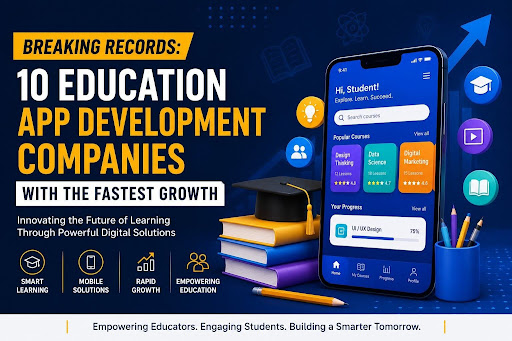
The education industry is evolving faster than ever, driven by digital transformation and the increasing demand for online learning platforms. From virtual classrooms and AI-powered tutoring systems to gamified learning applications, businesses and educational institutions are investing heavily in smart technology solutions. As the global eLearning market expands, several emerging companies are gaining recognition for their innovation, creativity, and rapid business growth.
Choosing the right education app development company is essential for organizations that want to build scalable, engaging, and future-ready learning platforms. The companies listed below are making a strong impact in the education technology industry through advanced solutions, user-focused designs, and innovative learning experiences.
1. Dev Technosys
Dev Technosys is one of the leading names in the education technology sector and continues to achieve rapid growth globally. The company specializes in creating advanced eLearning platforms, virtual classroom applications, school management systems, and AI-powered educational apps. Their solutions are designed to improve student engagement, simplify learning processes, and provide seamless digital experiences for educators and learners.
The company is widely recognized for integrating modern technologies like artificial intelligence, cloud computing, and data analytics into educational platforms. Their experienced development team focuses on scalability, security, and user-friendly interfaces, making their products suitable for startups, schools, universities, and enterprises.
In addition to delivering high-quality applications, Dev Technosys also offers customized education app development services tailored to unique business requirements. Their innovation-driven approach and commitment to client satisfaction have helped them become one of the fastest-growing companies in the edtech industry.
2. RipenApps
RipenApps is a fast-growing startup focused on building modern and interactive educational applications. The company has gained attention for creating learner-friendly mobile apps that support online tutoring, eLearning platforms, and digital classroom systems.
Their development strategy focuses on user engagement, intuitive navigation, and high-performing app architecture. RipenApps works closely with startups and small educational businesses to create cost-effective digital solutions that support long-term growth.
The company also emphasizes mobile-first learning experiences, ensuring that educational platforms remain accessible across multiple devices. Their innovative mindset and ability to deliver affordable yet high-quality applications continue to strengthen their reputation in the education technology market.
3. Techugo
Techugo has emerged as a rapidly growing company in the edtech sector by developing feature-rich educational applications for startups and small businesses. Their solutions include virtual learning platforms, video-based learning apps, and collaborative classroom systems.
The company is known for combining attractive UI/UX design with advanced mobile technology to create engaging learning experiences. Their applications often include gamification, AI recommendations, and real-time communication features that improve learner interaction.
Techugo’s focus on innovation and customer satisfaction has helped the company build a strong presence in the competitive education app market. Their ability to adapt to modern learning trends continues to drive their rapid growth.
4. OpenXcell
OpenXcell is becoming increasingly popular for its custom educational software and scalable mobile learning solutions. The company works with startups and educational organizations to create engaging applications designed for digital classrooms and remote learning environments.
Their expertise includes LMS development, online assessment systems, and mobile learning applications with cloud-based infrastructure. OpenXcell focuses on delivering secure and high-performance applications that provide smooth user experiences across multiple platforms.
The company’s dedication to innovation and customized development has contributed to its growing recognition in the global education technology industry. Their modern approach to app development continues to attract educational startups looking for scalable digital solutions.
5. Suffescom Solutions
Suffescom Solutions is a growing technology startup known for delivering AI-powered educational applications and interactive eLearning platforms. Their services include custom mobile apps, virtual learning systems, and cloud-based educational software.
The company focuses on building personalized learning experiences using advanced analytics and automation tools. Their applications are designed to improve engagement, simplify communication, and provide better learning outcomes for students and educators.
Suffescom Solutions has gained recognition for helping startups and small educational institutions adopt modern technology solutions. Their commitment to innovation and quality development services has fueled their rapid expansion in the edtech sector.
6. Peerbits
Peerbits is a rising company that develops modern educational platforms for startups and growing businesses. Their expertise includes mobile learning apps, virtual classrooms, and enterprise-level learning management systems.
The company focuses on user-centric development and scalable infrastructure to ensure smooth digital learning experiences. Their team also integrates advanced technologies such as AI and cloud computing to improve functionality and performance.
Peerbits has quickly established itself as a trusted technology partner for businesses looking to modernize educational processes. Their innovative approach and flexible development solutions contribute to their increasing popularity in the market.
7. MindInventory
MindInventory is a small but fast-growing company that develops engaging educational apps with modern functionality and creative designs. Their expertise includes eLearning systems, online tutoring platforms, and collaborative classroom applications.
The company places strong emphasis on UI/UX design to create smooth and interactive learning experiences. They also integrate emerging technologies such as AR/VR and artificial intelligence to make digital learning more immersive and engaging.
MindInventory works closely with startups and educational businesses to deliver customized applications tailored to their learning goals. Their focus on innovation continues to support their rapid growth in the edtech market.
8. AppSquadz
AppSquadz is an emerging startup specializing in mobile-based learning applications and educational streaming platforms. The company develops customized digital solutions for schools, training institutes, and startups entering the eLearning market.
Their applications are designed to support interactive learning through live video classes, quizzes, and performance tracking systems. AppSquadz also focuses on delivering lightweight and high-performing applications that provide smooth user experiences.
The company’s customer-focused approach and affordable development solutions have helped it gain recognition among growing educational businesses and startups.
9. SemiDot Infotech
SemiDot Infotech is a rapidly growing startup that develops innovative educational applications for businesses and institutions. Their expertise includes mobile learning apps, custom LMS platforms, and digital classroom management systems.
The company emphasizes creative app design, scalability, and secure cloud-based architecture to deliver reliable educational platforms. Their team also focuses on integrating modern technologies that improve collaboration and learner engagement.
SemiDot Infotech continues to expand in the education sector by helping startups launch innovative digital learning products that align with evolving educational trends.
Conclusion
The education technology industry is experiencing remarkable growth as digital learning becomes a global necessity. Startups and small-scale companies are now playing a major role in shaping the future of online education through innovation, creativity, and advanced technology solutions.
From industry leader Dev Technosys to emerging startups with unique development approaches, these companies are helping businesses create scalable and engaging learning platforms. Their rapid growth reflects the increasing demand for smart education app development solutions and the rising importance of modern education app development across schools, universities, and enterprises worldwide.


When parents first consider getting their child a science tutor, the instinct is usually to look for someone local. Someone who can sit at the kitchen table, work through problems on paper, and be physically present in the way that feels most like “real” teaching. Online tutoring tends to be the backup option — what you try when you can’t find the right person nearby, or when schedules make in-person sessions difficult to arrange.
That instinct is understandable. It’s also worth reconsidering for most families. Parents who start with online science tutoring out of necessity and end up preferring it out of choice are more common than the initial hesitation would suggest — and the reasons why tend to follow a consistent pattern.
The geography problem that online tutoring solves
The most immediate advantage of working with an online science tutor is one that parents often underestimate until they’ve spent a few weeks trying to find the right in-person match: geography no longer becomes a constraint. The best tutor for your child’s specific needs — the one who specialises in the exact topics your child is struggling with, who has a teaching style that matches how your child learns, who has availability that fits your family’s schedule — may not live within a reasonable distance.
In-person tutoring requires a compromise between quality and convenience that online tutoring doesn’t. A parent searching locally is choosing from a subset of available tutors. A parent searching online is choosing from all of them. For a subject like science, where the right specialist matters — a tutor with a physics background approaches electricity differently from one with a biology specialism — that expanded pool makes a meaningful difference to the quality of match.
What the research says about online learning
The concern that online tutoring is less effective than in-person instruction is one of the most persistent assumptions parents bring to the conversation — and one of the least supported by the evidence. Research into one-to-one online tutoring has shown outcomes comparable to, and in some cases better than, equivalent in-person sessions. The mechanism that makes tutoring effective — personalised attention, immediate feedback, the ability to pace learning around the individual student — translates well to an online format.
What changes online isn’t the quality of instruction. It’s the removal of the logistical friction that often makes consistent tutoring difficult to maintain. No travel time means sessions can fit into tighter windows. No scheduling around geography means rescheduling is easier when life intervenes. The consistency that matters most for academic progress — regular sessions, over a sustained period — is often easier to maintain online than in person.
Why science in particular benefits from the online format
Science as a subject has specific characteristics that make it well-suited to online tutoring in ways that aren’t immediately obvious. The digital tools available in an online session — shared whiteboards, interactive diagrams, the ability to pull up visual resources in real time — are often more versatile than what’s available at a kitchen table. A tutor explaining the structure of an atom or the mechanics of a chemical reaction has more to work with online than in person, and a student can annotate, highlight, and interact with material in ways that reinforce understanding rather than just passive listening.
Science is also a subject in which the gap between classroom instruction and individual understanding tends to open gradually and silently. A student who misses a foundational concept in one topic carries that gap into the next, and the next. By the time a parent notices the grade has dropped, several layers of misunderstanding have often stacked up. An online tutor who works through these systematically — identifying where the understanding broke down and rebuilding from there — can address this kind of compound confusion more efficiently than a classroom teacher managing thirty students can.
The comfort factor parents don’t anticipate
One of the more surprising findings that parents report after switching to online tutoring is how much more comfortable their children are in the format. For students who are self-conscious about asking questions in class — which describes many secondary school students, particularly in science — the online environment removes some of the social pressure that makes asking for help feel risky.
There’s no classroom audience. There’s no fear of asking something that sounds obvious. The one-to-one dynamic is the same as in-person tutoring, but the familiar setting of home — their own desk, their own screen — can make the interaction feel less exposing for students who find the in-person dynamic with a new adult uncomfortable at first. Some students who were initially resistant to the idea of tutoring in any form find the online version easier to engage with than either classroom learning or a stranger sitting at their kitchen table.
What to look for when choosing an online science tutor
The quality of the tutoring matters more than the format, so the criteria for choosing well are the same online as in person, with a few additional considerations. A tutor’s subject specialism matters in science more than in some other subjects: someone who studied biology at degree level brings a different depth to a GCSE chemistry question than a generalist tutor. Verified qualifications and student reviews give a more reliable signal of teaching quality than availability and location alone.
Not all private tutoring services are equal, and the platform through which you find a tutor matters as much as the tutor themselves. A platform that verifies qualifications, handles payment and scheduling in one place, and offers some form of protection on the first lesson removes the guesswork that comes with finding someone independently. Once the right tutor is in place, the first session tells you most of what you need to know: a tutor who starts by finding out where your child actually is — not where the syllabus says they should be — is almost always the one worth continuing with.
Online science tutoring works — consistently, reliably, and for a wider range of students than most parents expect before they try it. The hesitation that makes it feel like a compromise is, for most families, the only thing standing between their child and the right tutor.

Ransomware in 2025: Why Hiring a Data Security Firm for Incident Response Is No Longer Optional for US Companies

10 Student Progress Report Samples That Actually Help US Teachers Save Time (And What Makes Them Work)

How Clear Product Labels Support Better Customer Confidence

20 Latest Interior Design Trends | Types & Styles That You Must Know in 2026

7 Best Anti Detect Browsers in 2026 for Multi-Account Workflows

How to Use a Massage Ball for Muscle Knots and Trigger Points

Nancy Hallam: The Inspiring Life, Career, and Success Story Behind Ian Wright’s Wife

Johnny Carell: Inside the Life, Family, and Rising Success of Steve Carell’s Son

Who Is Maisie Mae Roffey? The Private Life, Family Story, and Quiet Success of Julie Walters’ Daughter

Draven Duncan: Tim Duncan’s Rising Star Son and His Inspiring Basketball Journey

Simon Dixon Biography: Lifestyle, Net Worth, Family, Career and Success Story

Who Is Mark Gero? Inside the Life, Art, and Quiet Legacy of an American Creative
Nancy Hallam: The Inspiring Life, Career, and Success Story Behind Ian Wright’s Wife
Johnny Carell: Inside the Life, Family, and Rising Success of Steve Carell’s Son
Who Is Maisie Mae Roffey? The Private Life, Family Story, and Quiet Success of Julie Walters’ Daughter
Draven Duncan: Tim Duncan’s Rising Star Son and His Inspiring Basketball Journey
Simon Dixon Biography: Lifestyle, Net Worth, Family, Career and Success Story
Who Is Mark Gero? Inside the Life, Art, and Quiet Legacy of an American Creative
-
Celebrity7 months ago
Nancy Hallam: The Inspiring Life, Career, and Success Story Behind Ian Wright’s Wife
-
Celebrity8 months ago
Johnny Carell: Inside the Life, Family, and Rising Success of Steve Carell’s Son
-
Celebrity7 months ago
Who Is Maisie Mae Roffey? The Private Life, Family Story, and Quiet Success of Julie Walters’ Daughter
-
Celebrity5 months ago
Draven Duncan: Tim Duncan’s Rising Star Son and His Inspiring Basketball Journey
-
Business6 months ago
Simon Dixon Biography: Lifestyle, Net Worth, Family, Career and Success Story
-
 Celebrity4 months ago
Who Is Mark Gero? Inside the Life, Art, and Quiet Legacy of an American Creative
-

 Celebrity4 months ago
Who Is Jane Shirley Smith? The Private Woman Behind Ted Turner’s Greatest Years
-

 Celebrity4 months ago
Who Is Linda Susan Agar? The Private Life, Legacy, and Story of Shirley Temple’s Eldest Daughter