
Business
10 Questions to Ask Before Hiring a 2D Logo Animation Service (Most Brands Skip Question 7)


When a company decides to animate its logo, the decision often moves faster than the thinking behind it. Someone sees a competitor’s animated identity in a product video or a social media header, and within a few weeks, there’s a brief sent out to a vendor. What gets skipped in that process is the kind of structured evaluation that would apply to any other production decision — one that protects quality, timeline, and brand consistency over the long term.
Logo animation is not a decorative add-on. It functions as a brand asset that appears across multiple touchpoints: video intros, digital advertising, presentation decks, email signatures, and platform profiles. A poorly executed or misaligned animation creates inconsistency across all of those channels simultaneously. Getting this decision right requires asking the right questions before any contract is signed or brief submitted.
This guide covers the ten questions that matter most — and explains why the answers reveal more than most buyers expect.
What the Right Questions Actually Reveal About a 2D Animation Provider
Most brands evaluate animation vendors the way they evaluate any creative supplier: portfolio, price, and turnaround time. Those factors matter, but they don’t tell you whether a provider can maintain brand fidelity, handle revision cycles professionally, or deliver files that actually work across every format you need. The questions below are designed to surface operational quality, not just aesthetic capability.
Before reaching that point, it’s worth understanding what the service category itself involves. When brands search for 2d logo animation services, they’re entering a market that ranges from freelance motion designers to full production studios, each with different capabilities, processes, and file delivery standards. Knowing the right questions shifts the conversation from surface-level portfolio review to a genuine assessment of fit.
Why Vendor Evaluation Needs a Structured Approach
Without structured questions, buyers tend to rely on visual impression alone. A showreel looks polished, so the vendor seems capable. But a showreel reflects past work under specific conditions — often for clients with more defined briefs, larger budgets, or simpler logos. What it doesn’t show is how a vendor handles ambiguity, feedback, or a complex brand system. Structured questions expose process and reliability, which are the two factors that determine whether a project delivers usable results or requires rework.
Question 1: Do You Have Experience Animating Logos Specifically, Not Just General Motion Graphics?
Logo animation is a distinct discipline within motion design. It requires an understanding of how static brand marks translate into time-based movement — how a wordmark reads when letterforms animate in sequence, or how a geometric symbol retains its proportional integrity when scaled through a motion arc. General motion graphics experience does not automatically transfer to logo work. Vendors who primarily produce explainer videos or social content animations may approach a logo brief with habits that distort the mark or reduce its legibility at small sizes.
What This Question Is Really Testing
A vendor who has worked extensively on logo animation will immediately be able to describe the specific constraints involved: maintaining brand color accuracy across color spaces, preserving stroke weight through scaling, and avoiding motion principles that flatten or stretch the logo beyond its intended geometry. If a vendor answers this question by pointing to a general reel rather than specific logo projects, that tells you something important about their depth in this area.
Question 2: How Do You Approach Brand Guidelines During the Animation Process?
Brand guidelines exist to maintain consistency across every application of a visual identity. An animation vendor who treats those guidelines as a starting point rather than a constraint introduces risk. Color shifts in motion (particularly when easing functions affect saturation), unintended font weight changes during kinetic text sequences, and logo elements appearing outside their approved clear space are all common problems when vendors prioritize creative expression over brand discipline.
The Practical Implication of This Answer
The best vendors ask to receive brand guidelines before they begin any concepting. They review the logo’s original file formats, understand the relationship between elements in the mark, and check whether the animation will be rendered in environments that might affect color accuracy. If a vendor doesn’t ask for your brand guidelines early in the conversation, that’s a signal worth noting.
Question 3: What File Formats Will You Deliver at the End of the Project?
This question is more complex than it appears. An animated logo needs to function across a range of environments: broadcast video, web embeds, social media headers, digital advertising, and potentially interactive applications. Each environment has different requirements for file format, compression, frame rate, and transparency support. A vendor who delivers only a single exported MP4 has not accounted for the full range of use cases a brand typically needs.
Understanding Format Dependencies
Transparent background versions (typically delivered as MOV with alpha channel or as a WebM file for web use) are necessary whenever the logo needs to sit over varying background colors or video footage. Lottie JSON files are increasingly required for web and app integration because they allow animation to render as lightweight code rather than video. GIF delivery is still relevant for email compatibility. A vendor who addresses these format needs without being prompted demonstrates operational maturity.
Question 4: How Many Revision Rounds Are Included, and What Is the Process for Requesting Changes?
Revision scope is one of the most common sources of friction in animation projects. The first draft of a logo animation rarely reflects exactly what a brand team envisioned, and internal stakeholder review almost always surfaces additional feedback. If revision terms aren’t clearly defined upfront, the project can stall, costs can escalate, or the relationship between client and vendor can deteriorate before the final file is delivered.
What Healthy Revision Terms Look Like
A well-structured engagement typically includes at least two formal revision rounds, with clear definitions of what constitutes a revision versus a change in scope. Vendors who handle feedback professionally will also ask for consolidated feedback rather than accepting scattered, incremental comments — which protects the project timeline and reduces the risk of conflicting direction from different internal reviewers.
Question 5: Will You Provide the Project Source Files?
Source file ownership is a detail that brands often overlook until they need to update their logo or adapt the animation for a new format. If the vendor retains the After Effects project files, Lottie source, or any editable assets, the brand is effectively locked into that vendor for all future modifications. Requesting source files at the outset — and having this confirmed in writing — ensures the brand retains full operational control of the asset.
Question 6: Can You Describe Your Quality Control Process Before Final Delivery?
Quality control in animation is not simply watching the finished file once. It involves checking the animation across multiple playback environments, reviewing color rendering on different display profiles, confirming that the exported file matches the approved preview, and verifying that loop points (if applicable) are seamless. Vendors who have a defined QC process before delivery reduce the likelihood of errors appearing after the project is considered closed.
Question 7: How Do You Handle Accessibility and Reduced Motion Preferences?
This is the question most brands skip — and it’s the one with the broadest operational implications. Animated content on digital platforms is subject to accessibility considerations that affect a meaningful portion of users. The Web Content Accessibility Guidelines address motion sensitivity directly, noting that animations triggered by interaction can cause discomfort or harm for users with vestibular disorders. When an animated logo is embedded in a web environment, best practice requires providing a static fallback or respecting the user’s reduced motion preference settings.
Why Brands Consistently Overlook This
Accessibility in motion design is still an emerging area of practice. Many vendors — and most brand teams — are not yet thinking about it as a standard deliverable requirement. But for brands whose digital presence is subject to accessibility compliance, this is not optional. Asking this question early identifies vendors who are working at a current professional standard, and it also prompts the conversation before rather than after the asset is built.
Question 8: What Is Your Typical Project Timeline from Brief to Final Delivery?
Timeline expectations need to be established clearly before work begins. Logo animation projects typically move through concept development, motion design, internal review, revisions, and final export — and each stage takes measurable time. Vendors who promise unusually fast turnarounds without understanding the scope of the brief are often underestimating the work involved or planning to deprioritize quality control. A realistic timeline discussion also surfaces whether the vendor has current capacity to take on the project.
Question 9: How Do You Handle Projects Where the Logo Has Multiple Variations or a Complex Brand System?
Many established brands don’t have a single logo — they have a primary mark, a stacked version, a horizontal version, a monochrome version, and potentially an icon-only version. Each variation may require its own animation treatment, or a single animation concept may need to be adapted across all versions. Vendors who haven’t worked within complex brand systems may not anticipate this scope and may not price or plan for it accordingly.
Operational Complexity in Multi-Variant Projects
When a brand needs consistent animation behavior across multiple logo variants, the technical execution becomes significantly more demanding. The motion principles need to feel unified across versions even when the visual structure of each variant is different. This requires both conceptual clarity and technical discipline — qualities that a vendor who primarily works on single-mark projects may not have developed.
Question 10: Do You Have References or Case Studies from Comparable Brand Projects?
Portfolio work is useful but incomplete as an evaluation tool. References and case studies provide context that a showreel cannot: how the vendor communicated during the project, how they handled feedback, whether they delivered within the agreed timeline, and whether the final asset actually performed as expected in deployment. Vendors who are confident in their process will offer references readily. Those who redirect to their portfolio without offering contact references are making the evaluation harder than it needs to be.
Bringing the Evaluation Together Before You Commit
The ten questions above aren’t a checklist to rush through. They’re a framework for a real conversation — one that separates vendors who produce animation from vendors who understand how animated brand assets function inside a live business operation. The distinction matters because the asset you’re commissioning will represent your brand across every channel that uses it, often for years.
A vendor’s answers to these questions will tell you whether they think about animation as a creative output or as a functional deliverable. The right provider understands both dimensions. They bring motion design craft to the work, and they also understand file standards, brand governance, revision discipline, and delivery requirements well enough to protect your team from problems that only appear after the invoice is paid.
Taking the time to ask these questions — particularly the ones most buyers skip — is the clearest way to ensure that the animation you commission serves its purpose consistently, across every context where your brand appears.



The most efficient ecommerce businesses in the US utilize reliable logistics systems to ensure orders reach customers accurately, affordably, and on time. Managing inventory, packing orders, shipping products, and handling returns can become increasingly complicated for growing online retail stores. These responsibilities can consume valuable time and resources that business owners could otherwise invest in marketing, product development, and customer retention. Leveraging outsourced third-party logistics (3PL) services becomes increasingly valuable. A 3PL provider helps ecommerce businesses manage essential supply chain operations, including warehousing, inventory management, order fulfilment, packaging, shipping coordination, and returns processing.
Top 4 Ecommerce Businesses That Need to Invest in Outsourced 3PL Logistics
Here are some examples of a few types of ecommerce businesses that can benefit significantly from outsourcing logistics services to 3PLs.
1. Fashion and Clothing Ecommerce Stores
Online clothing retailers must manage different sizes, colors, styles, and stock levels while ensuring that orders are shipped promptly. Storing products, locating individual items, packaging garments, and processing exchanges can become overwhelming when your ecommerce business starts gaining ground. Outsourced 3PL services help fashion retailers organize inventory, pick and pack orders, and coordinate deliveries. Some providers also offer branded packaging and returns processing, helping businesses deliver a consistent shopping experience.
2. Beauty, Skincare, and Cosmetics Brands
Beauty and skincare brands frequently sell multiple product variations, including moisturisers, serums, makeup, haircare products, and gift sets. Successful brands may receive hundreds or even thousands of orders during promotional campaigns, influencer collaborations, and holiday shopping periods. A qualified 3PL provider can help beauty brands track stock, fulfil orders efficiently, and coordinate shipping. Businesses should confirm that their logistics partner can meet any applicable product-specific storage and handling requirements.
3. Health, Wellness, and Personal Care Stores
Online stores selling personal care products, fitness accessories, non-prescription wellness goods, and everyday hygiene supplies often benefit from repeat purchases.
Outsourced 3PL services can help these businesses manage inventory, prepare recurring orders, and coordinate deliveries across different US regions. Efficient fulfilment is especially useful for stores offering subscription boxes or monthly product bundles.
Choosing the right logistics partner can make a significant difference in an ecommerce business’s ability to grow. Online retailers need reliable 3PL providers like Packageman that can manage order fulfilment, maintain accurate inventory records, coordinate shipping, and handle returns without creating unnecessary operational complications. Packageman offers efficient ecommerce fulfillment and 3PL logistics services designed to support growing online retailers across the United States.
4. Subscription Box and Product Bundle Businesses
Subscription ecommerce businesses deliver products to customers on a recurring schedule. Examples include monthly beauty boxes, coffee subscriptions, snack packages, hobby kits, and curated lifestyle collections.
Unlike ordinary ecommerce stores, subscription businesses must coordinate recurring fulfilment cycles and ensure that each box contains the correct products. An outsourced 3PL partner can manage inventory, assemble product bundles, prepare recurring shipments, and coordinate dispatch schedules.
Outsourced third-party logistics can help ecommerce businesses move beyond the limitations of handling every order themselves. Fashion stores, beauty brands, electronics retailers, wellness businesses, home decor shops, subscription box companies, and pet supply stores can all benefit from professional fulfillment support when their logistics demands begin to grow.
The key is choosing a 3PL provider whose capabilities, pricing, technology, and warehouse locations match the business’s needs.

Accessories play an important role in modern clothing trends. A well-chosen cap can add character to a simple outfit while providing practical coverage for outdoor activities. From relaxed weekend looks to contemporary streetwear, hats are a versatile accessory for people with different fashion preferences.
For clothing retailers and fashion businesses, offering a variety of cap styles can also help attract customers looking for both classic and modern designs.
Trucker Caps for a Casual Look
Trucker caps are a popular choice for people who appreciate relaxed, sporty fashion. Their distinctive construction and versatile designs make them suitable for everyday outfits. They can be worn with graphic T-shirts, denim jackets, hoodies, or casual shorts.
Retailers interested in expanding their accessory collections can explore wholesale Trucker Hats to find styles that suit different customer preferences. Offering a range of colors and designs can help businesses create a collection that works with various clothing trends.
Camouflage Caps for a Distinctive Style
Camouflage patterns provide a different look for people who want their accessories to stand out. Inspired by outdoor clothing, these patterns have also become a recognizable feature of casual and streetwear fashion.
Adding wholesale Camo Hats to a product collection can give retailers another option for customers who prefer bold prints and distinctive accessories. These caps can be paired with plain shirts, denim, cargo pants, and neutral-colored outerwear to create a coordinated appearance.
What to Consider When Selecting Caps
Choosing the right headwear involves more than following current trends. Product quality, comfort, and design all contribute to a satisfying purchase.
Here are a few factors worth considering:
- Comfortable materials: Select fabrics that feel good during regular use.
- Reliable construction: Examine stitching, panel structure, and overall finishing.
- Practical designs: Consider adjustable closures and suitable fits.
- Color variety: Offer classic shades alongside more eye-catching options.
- Customer preferences: Choose products that match the interests of your intended audience.
Building a Versatile Headwear Collection
For apparel businesses, a balanced selection of accessories can complement existing clothing products. Combining traditional designs with more distinctive patterns allows retailers to serve customers with different tastes.
Understanding seasonal demand, reviewing product quality, and monitoring fashion trends can help businesses make informed purchasing decisions. It is also useful to choose designs that coordinate easily with popular casual clothing.
Conclusion
Caps remain a practical and fashionable accessory for everyday wear. Trucker styles offer a relaxed, sporty appearance, while camouflage designs provide a more distinctive alternative. By focusing on comfort, quality, and variety, individuals and retailers can find headwear options that complement modern fashion and meet different needs.

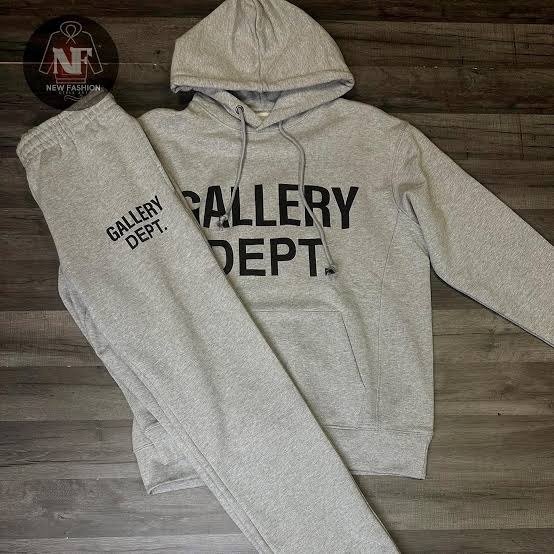
Two gray pieces laid out on a bed, forty euros apart, and a decision most of us make in about four seconds flat. Here’s the shape of it: a full tracksuit comes in at €100, while a hoodie bought by itself is €70 and joggers are another €70, which puts the same outfit at €140 if you pick it up a piece at a time. Looks settled, doesn’t it. It isn’t, quite, and the arithmetic deserves five minutes of your attention before you drop anything into a cart at Gallery Dept and get on with your evening.
The €40 gap, and what it’s actually buying
Forty euros is a t-shirt (€50) with a bit left over, or a trucker cap (€35) and a train ticket. As a saving it’s real, and I’m not going to pretend otherwise.
But it only counts if you wanted both halves to begin with. If the hoodie was the thing you came for and the joggers are just sort of there, you haven’t saved €40 — you’ve spent €30 more than you meant to, on trousers you feel lukewarm about. Plenty of sets live out their lives exactly like that, one half in rotation and the other half folded, which is a slightly sad way to spend a hundred euros.
How often does head-to-toe leave the house?
Be honest about this one, because the whole decision hangs off it. A matching set is at its best when you’re in motion: the 6 a.m. train out of Bologna, the queue at airport security, the first properly cold morning in November when it’s 8 °C outside, and you want one decision instead of four.
Other places, less so. Dinner. An office that isn’t fully relaxed about these things. The passeggiata through a small centro storico at nine in the evening, where everyone has visibly thought about their jacket. One print running top to bottom reads loud there, not because it looks bad but because it reads as a uniform, and uniforms get looked at.
- Travel days, where comfort beats everything else and you’re sitting still for hours anyway.
- Those damp mornings when getting dressed has to be over in ninety seconds.
- A weekend at home that might turn into a walk and a coffee, or might not.
- The gym bag, since the halves end up doing separate jobs on separate days.
Count those days in your own month. If the number comes out low, that €100 set is really a €100 hoodie with something extra attached.
Splitting it up, which is what happens anyway
Here’s where the honest answer lives. Almost nobody who owns a set wears it as a set most of the time. The sets on the Gallery Dept Tuta page carry one print across both halves — gray mélange Logo, the Paint Splatter gray, the navy Hollywood CA with its back print — and each half still stands up on its own the following morning.
The hoodie goes over jeans and nobody can tell it arrived with trousers. The joggers go under a plain cotton jersey tee (€50) and read as joggers, full stop. So you end up living in separates either way. You just paid €100 for them rather than €140, and agreed in advance that they’d match on the days you felt like it.
Which quietly changes the question you’re asking. It stops being set against separates and becomes something duller: two pieces that happen to match, against two pieces you chose one at a time and that probably won’t.
Two grays that aren’t the same gray
This is the bit that settles it for a lot of people. Much of this stuff gets its color as a finished piece, or a wash made to pull the tone back, so the shade shifts slightly from one item to the next. Buy a gray hoodie in March and gray joggers in July and there’s a fair chance you’ve got cousins rather than twins.
A set sidesteps that, since both halves were dyed as one item. And then there’s a duller reason on top of it. The sweatpants in the catalogue come in black (the Logan Dépt de la Galerie) and cream (the Sport Elegant DÉPT). Gray joggers on their own basically don’t exist here. So if gray mélange head to toe is the picture in your head, the €100 set is the only road to it.
| Pro Tip: When the color you want exists only as a set, buy the set and treat the second half as already discounted — roughly €30 for fleece joggers that cost €70 on their own. That’s the one case where the money and the wardrobe agree with each other. |
The numbers, laid out
| What you buy | Price | What you end up with |
| Full tracksuit, one print on both halves | €100 | A pair that matches, and two pieces that still work apart |
| Hoodie and joggers bought separately | €140 | Your own two colors, two prints, and no promise they sit together |
| Hoodie and a t-shirt | €120 | A layered outfit rather than a set — fleece on top, jersey underneath |
| Hoodie on its own | €70 | The piece that gets worn most, and nothing else to think about |
| Joggers on their own | €70 | Fine, as long as there’s already a top at home for them |
Read the last column before you read the price. The €140 row is the expensive one on paper and the roomier one in practice, because you picked both colors yourself. The €100 row is cheaper and narrower. The €120 row isn’t really competing with either — a hoodie and a tee is a different kind of day out, and it handles an April that can’t decide better than two heavy pieces do.
- If you’d genuinely wear both halves together a few times a month, the set wins twice over.
- Buying for the top and talking yourself into the bottom? Pay the €70 and stop there.
- And gray on gray leaves one road open, which is the €100 one.
Frequently Asked Questions
Is the full tracksuit really cheaper than buying both pieces?
Yes, by a clear margin — €100 against €140. The catch sits in the assumption, though, because that €40 only exists if the joggers were something you wanted anyway.
Can I wear the two halves apart?
That’s what most of us do. Neither piece announces that it showed up with a partner, and the top half usually ends up collecting far more wear than the bottom.
What about a hoodie and a t-shirt instead?
Different purpose entirely. €70 plus €50 gets you €120 of layering instead of a set, which suits a 15 °C afternoon better than fleece on fleece does.
Does it cost more to ship two items than one?
I can’t put a figure on it. Shipping options and costs show up at checkout and depend on where the parcel is going, so that’s the only place you’ll see a real number.
So count your head-to-toe days first and look at the prices second. Four or five such days a month and the set is the better hundred euros you’ll spend this autumn. One, and you want the hoodie and nothing after it. Either way, make the call before you’re standing in the cart with a card in your hand.

How to Choose a Second-Hand Car for Your Perth Commute

How to make an older commercial property work for a modern business

Why Your Beauty Clinic in Bali Matters for Filler Results

4 Ecommerce Businesses That Need to Invest in Outsourced 3PL Logistics Services

Fox Fur Coat or Fox Fur Jacket? A Guide to Wearing the Most Dramatic Fur

South Bay Beach Club: Your Guide to a Peaceful Beachfront Getaway

How to Ensure Your Home is Valued Correctly for a Quick Sale

Christopher Dare: The Untold Story of Engineer and Former Husband of Angela Rippon

The 15 Highest-Paid Rugby Players in the World

What Is Fanquer? The Digital Creator Platform Transforming Direct-to-Fan Engagement

Dr Jared Ross: Missouri Appeals Court Upholds Protection Order Over Graphic Torture and Murder Threats

Nancy Hallam: The Inspiring Life, Career, and Success Story Behind Ian Wright’s Wife
How to Ensure Your Home is Valued Correctly for a Quick Sale
Christopher Dare: The Untold Story of Engineer and Former Husband of Angela Rippon
The 15 Highest-Paid Rugby Players in the World
What Is Fanquer? The Digital Creator Platform Transforming Direct-to-Fan Engagement
Dr Jared Ross: Missouri Appeals Court Upholds Protection Order Over Graphic Torture and Murder Threats
Nancy Hallam: The Inspiring Life, Career, and Success Story Behind Ian Wright’s Wife
-
 Real Estate9 months ago
How to Ensure Your Home is Valued Correctly for a Quick Sale
-
Celebrity11 months ago
Christopher Dare: The Untold Story of Engineer and Former Husband of Angela Rippon
-
 Sports5 months ago
The 15 Highest-Paid Rugby Players in the World
-
 Technology5 months ago
What Is Fanquer? The Digital Creator Platform Transforming Direct-to-Fan Engagement
-
 Celebrity5 months ago
Dr Jared Ross: Missouri Appeals Court Upholds Protection Order Over Graphic Torture and Murder Threats
-
Celebrity12 months ago
Nancy Hallam: The Inspiring Life, Career, and Success Story Behind Ian Wright’s Wife
-

 Celebrity8 months ago
Who Is Azriel Crews? Inside the Life and Career of Terry Crews’ Daughter
-
 Celebrity11 months ago
Who Is Maisie Mae Roffey? The Private Life, Family Story, and Quiet Success of Julie Walters’ Daughter