
Business
10 Asphalt Cutting Tools Every US Paving Contractor Should Have on the Job Site


Paving contractors across the United States operate under a set of conditions that leave little room for equipment shortfalls. Whether the work involves utility access, road rehabilitation, parking lot repairs, or new surface preparation, the tools used to cut and grind asphalt directly affect the pace of the job, the quality of the finished surface, and the safety of the crew. A poorly cut edge or an inadequately prepared base can compromise a repair that was otherwise performed correctly. For most contractors, the problem is not a lack of awareness about what tools exist — it is understanding which tools are appropriate for which applications, and why having the right combination on site matters to consistent output.
The asphalt cutting category has grown considerably in recent years. Equipment has become more specialized, and the line between adequate and appropriate has narrowed on commercial and municipal contracts where surface tolerances are specified and inspected. The following list is not exhaustive, but it covers the tools that experienced paving contractors in the US consistently rely on across a range of job types.
1. Asphalt Grinders
Grinding is one of the most commonly required operations in asphalt work, particularly in maintenance and rehabilitation contexts. When a surface has developed irregularities — raised joints, rutting, or uneven patches — a grinder addresses those problems without requiring a full-depth removal. The tool works by mechanically abrading the asphalt surface down to a consistent level. Contractors who work on high-volume roads, airport aprons, or commercial parking structures are especially familiar with the application. For anyone evaluating options in this category, reviewing asphalt grinders by application type and cutting capacity helps clarify which machine matches the scale and depth requirements of a given project.
Walk-Behind vs. Ride-On Grinding Units
The size of the grinding unit should match the scale of the work area and the depth requirement. Walk-behind grinders are appropriate for confined areas, joint corrections, and localized patching preparation. Ride-on units cover more ground efficiently on large commercial or highway applications. Selecting the wrong unit for the job scope often results in either excessive wear on a smaller machine or operational inefficiency when a large unit is used in tight quarters. The cutting drum width and power output also determine how many passes are required to complete a given section, which directly affects labor hours and fuel consumption.
2. Cold Planers (Milling Machines)
Cold planers, often called milling machines, remove asphalt to a controlled depth across a wide path. Unlike grinding, milling is typically used when a significant layer of the surface needs to be removed before repaving. The machine uses a rotating drum embedded with carbide teeth to cut through the asphalt and eject the material for collection. Milling is standard practice in road resurfacing projects where the existing pavement profile needs to be corrected or where the overall elevation of the road must be maintained after a new lift is applied.
Depth Control and Surface Preparation Quality
One of the key operational concerns with cold planing is maintaining a consistent cut depth across the full width of the drum. Inconsistent depth leads to an uneven substrate, which can cause bonding failures in the new asphalt layer. Modern milling machines use grade and slope control systems to compensate for variations in the existing surface, but operators still need to monitor the machine closely in areas with significant subsurface irregularities. A well-milled surface creates a uniform, open-textured base that improves adhesion between existing pavement and the new overlay.
3. Walk-Behind Concrete and Asphalt Saws
Walk-behind saws are one of the most practical and widely used cutting tools on paving job sites. They make clean, straight cuts for patch demarcation, utility trenching, and joint formation. The cut quality matters because irregular or angled cut faces lead to weak edges that fail faster under traffic loading. A vertical cut face provides a proper bonding surface and contains the patch boundary precisely. These saws can use diamond or abrasive blades depending on the material composition, and blade selection is an important operational variable that affects both cut quality and equipment life.
Blade Selection and Operational Maintenance
Using an incorrect blade for the aggregate type or surface hardness accelerates wear and produces a rougher cut. Contractors who do mixed-surface work — cutting both asphalt and concrete in a single project — often maintain separate blades for each material to avoid premature degradation. Walk-behind saws also require consistent water supply during operation to manage heat at the blade and control dust. Maintaining the water delivery system is a routine but important task that affects both equipment performance and compliance with dust control regulations on regulated work sites.
4. Self-Propelled Ride-On Saws
For large-scale cutting operations — long utility corridors, wide joint cuts, or full-lane trenching — a ride-on saw significantly reduces operator fatigue and increases production rates. These machines carry larger blade capacities and deeper cutting ranges than walk-behind units, making them the appropriate choice when depth or distance requirements exceed what a smaller saw can handle in a reasonable time frame.
Production Rate vs. Mobilization Cost
Ride-on saws are heavy and require trailer transport to the job site, which adds mobilization cost. For shorter or more localized cuts, that overhead often outweighs the production benefit. Contractors typically reserve ride-on saws for jobs where the linear footage or depth requirement makes the mobilization cost proportional to the output. Poor planning around equipment selection for cutting operations is a common source of unnecessary cost overruns on mid-size contracts.
5. Hydraulic Breakers (Hoe Rams)
Where cutting precision is less critical and removal speed is the priority, hydraulic breakers attached to excavators are used to fracture asphalt before removal. This is particularly common in full-depth removal projects or situations where the pavement has already failed structurally. The breaker is not a precision tool, but it is efficient for high-volume material removal before a new base is established.
6. Plate Compactors with Scarifier Attachments
Scarifier attachments allow contractors to mill or score asphalt surfaces at a smaller scale, typically used for surface preparation in patch areas or to improve bonding between a new tack coat and an existing surface. This versatility makes them useful on residential and light commercial jobs where full milling equipment is not justified.
7. Core Drills
Core drilling is used to extract cylindrical samples for testing purposes or to create access points for underground utility work without opening a full trench. The tool uses a rotating diamond-tipped barrel to cut cleanly through the asphalt and base layers. Core samples taken from existing pavement are routinely analyzed to assess layer thickness, density, and material composition before rehabilitation planning begins. As noted in guidance from the Federal Highway Administration’s pavement program, accurate pavement condition data is foundational to effective maintenance decision-making.
8. Hand-Held Cut-Off Saws
Also called demo saws or cut-off machines, these are portable, operator-held tools used for small cuts, tight access areas, and detail work that larger equipment cannot reach. They accept both abrasive and diamond blades and run on gasoline or electric power. Their portability makes them a job site staple, but they are physically demanding to operate and are generally limited to shorter cuts or lower-depth applications.
Safety Protocols for Hand-Held Cutting Equipment
Hand-held saws carry higher operator risk than machine-mounted alternatives due to the direct physical contact required to guide the cut. Blade kickback, vibration-related fatigue, and exposure to silica dust are among the primary hazards. Contractors with robust safety programs require the use of appropriate personal protective equipment, enforce dry-cut restrictions in enclosed areas, and limit continuous operation time to reduce hand-arm vibration exposure. These requirements are not optional on federal or state-funded projects, where documentation of compliance may be required.
9. Angle Grinders with Diamond Cup Wheels
For surface corrections in very small areas — around utility frames, at transition points between materials, or along curb lines — angle grinders fitted with diamond cup wheels offer a level of precision that larger equipment cannot match. They are particularly useful for feathering edges or cleaning up cut lines after a primary saw pass. While they are low-output tools by any measure, they fill an important gap in edge and detail work.
10. Track-Mounted Cold Planers for Tight Access
Compact track-mounted cold planers bring milling capability into areas where standard wheel-based machines cannot operate — between barriers, in narrow lanes, or on confined commercial properties. They offer a narrower cutting width than full-size milling equipment but maintain the depth consistency and material ejection capability that makes milling effective as a surface preparation method. Contractors who work frequently in urban environments or on staged traffic control projects benefit most from having compact milling capacity available.
Equipment Versatility in Urban Paving Contracts
Urban and municipal contracts often require cutting and preparation work in environments where access is limited, traffic staging is complex, and surrounding infrastructure must be protected. Compact, track-mounted equipment reduces the footprint of operations and allows crews to work closer to structures, curbing, and existing utilities without requiring excessive manual work to compensate for equipment limitations. Investing in compact alternatives to standard cutting equipment often pays for itself in labor savings on these types of projects.
Closing Thoughts on Job Site Equipment Planning
No single tool addresses every asphalt cutting requirement, and most experienced paving contractors recognize this early in their careers. The real question is not which tools are the best in a general sense, but which tools are appropriate for the specific work mix a contractor consistently takes on. A firm that focuses on highway rehabilitation has different core equipment needs than one specializing in parking lot maintenance or urban utility work.
What these tools share is that they each address a specific part of the cutting and surface preparation process, and gaps in coverage tend to show up as either quality deficiencies or unnecessary cost. Borrowed or rented equipment can fill short-term needs, but contractors who depend on cutting operations as a regular part of their service offering typically find that owning the right tools reduces their exposure to scheduling risk, subcontractor dependency, and inconsistent surface outcomes.
Building out a job site toolkit around actual project demands — rather than around what happens to be available — is one of the more straightforward ways to improve both operational reliability and the quality of finished work. It is worth reviewing the full range of available cutting and grinding equipment periodically, particularly as tool technology and product availability continue to change in response to evolving contractor demands across the US paving industry.


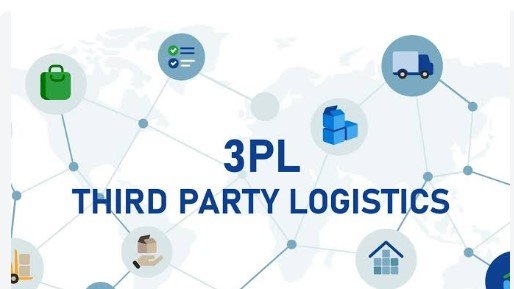
The most efficient ecommerce businesses in the US utilize reliable logistics systems to ensure orders reach customers accurately, affordably, and on time. Managing inventory, packing orders, shipping products, and handling returns can become increasingly complicated for growing online retail stores. These responsibilities can consume valuable time and resources that business owners could otherwise invest in marketing, product development, and customer retention. Leveraging outsourced third-party logistics (3PL) services becomes increasingly valuable. A 3PL provider helps ecommerce businesses manage essential supply chain operations, including warehousing, inventory management, order fulfilment, packaging, shipping coordination, and returns processing.
Top 4 Ecommerce Businesses That Need to Invest in Outsourced 3PL Logistics
Here are some examples of a few types of ecommerce businesses that can benefit significantly from outsourcing logistics services to 3PLs.
1. Fashion and Clothing Ecommerce Stores
Online clothing retailers must manage different sizes, colors, styles, and stock levels while ensuring that orders are shipped promptly. Storing products, locating individual items, packaging garments, and processing exchanges can become overwhelming when your ecommerce business starts gaining ground. Outsourced 3PL services help fashion retailers organize inventory, pick and pack orders, and coordinate deliveries. Some providers also offer branded packaging and returns processing, helping businesses deliver a consistent shopping experience.
2. Beauty, Skincare, and Cosmetics Brands
Beauty and skincare brands frequently sell multiple product variations, including moisturisers, serums, makeup, haircare products, and gift sets. Successful brands may receive hundreds or even thousands of orders during promotional campaigns, influencer collaborations, and holiday shopping periods. A qualified 3PL provider can help beauty brands track stock, fulfil orders efficiently, and coordinate shipping. Businesses should confirm that their logistics partner can meet any applicable product-specific storage and handling requirements.
3. Health, Wellness, and Personal Care Stores
Online stores selling personal care products, fitness accessories, non-prescription wellness goods, and everyday hygiene supplies often benefit from repeat purchases.
Outsourced 3PL services can help these businesses manage inventory, prepare recurring orders, and coordinate deliveries across different US regions. Efficient fulfilment is especially useful for stores offering subscription boxes or monthly product bundles.
Choosing the right logistics partner can make a significant difference in an ecommerce business’s ability to grow. Online retailers need reliable 3PL providers like Packageman that can manage order fulfilment, maintain accurate inventory records, coordinate shipping, and handle returns without creating unnecessary operational complications. Packageman offers efficient ecommerce fulfillment and 3PL logistics services designed to support growing online retailers across the United States.
4. Subscription Box and Product Bundle Businesses
Subscription ecommerce businesses deliver products to customers on a recurring schedule. Examples include monthly beauty boxes, coffee subscriptions, snack packages, hobby kits, and curated lifestyle collections.
Unlike ordinary ecommerce stores, subscription businesses must coordinate recurring fulfilment cycles and ensure that each box contains the correct products. An outsourced 3PL partner can manage inventory, assemble product bundles, prepare recurring shipments, and coordinate dispatch schedules.
Outsourced third-party logistics can help ecommerce businesses move beyond the limitations of handling every order themselves. Fashion stores, beauty brands, electronics retailers, wellness businesses, home decor shops, subscription box companies, and pet supply stores can all benefit from professional fulfillment support when their logistics demands begin to grow.
The key is choosing a 3PL provider whose capabilities, pricing, technology, and warehouse locations match the business’s needs.

Accessories play an important role in modern clothing trends. A well-chosen cap can add character to a simple outfit while providing practical coverage for outdoor activities. From relaxed weekend looks to contemporary streetwear, hats are a versatile accessory for people with different fashion preferences.
For clothing retailers and fashion businesses, offering a variety of cap styles can also help attract customers looking for both classic and modern designs.
Trucker Caps for a Casual Look
Trucker caps are a popular choice for people who appreciate relaxed, sporty fashion. Their distinctive construction and versatile designs make them suitable for everyday outfits. They can be worn with graphic T-shirts, denim jackets, hoodies, or casual shorts.
Retailers interested in expanding their accessory collections can explore wholesale Trucker Hats to find styles that suit different customer preferences. Offering a range of colors and designs can help businesses create a collection that works with various clothing trends.
Camouflage Caps for a Distinctive Style
Camouflage patterns provide a different look for people who want their accessories to stand out. Inspired by outdoor clothing, these patterns have also become a recognizable feature of casual and streetwear fashion.
Adding wholesale Camo Hats to a product collection can give retailers another option for customers who prefer bold prints and distinctive accessories. These caps can be paired with plain shirts, denim, cargo pants, and neutral-colored outerwear to create a coordinated appearance.
What to Consider When Selecting Caps
Choosing the right headwear involves more than following current trends. Product quality, comfort, and design all contribute to a satisfying purchase.
Here are a few factors worth considering:
- Comfortable materials: Select fabrics that feel good during regular use.
- Reliable construction: Examine stitching, panel structure, and overall finishing.
- Practical designs: Consider adjustable closures and suitable fits.
- Color variety: Offer classic shades alongside more eye-catching options.
- Customer preferences: Choose products that match the interests of your intended audience.
Building a Versatile Headwear Collection
For apparel businesses, a balanced selection of accessories can complement existing clothing products. Combining traditional designs with more distinctive patterns allows retailers to serve customers with different tastes.
Understanding seasonal demand, reviewing product quality, and monitoring fashion trends can help businesses make informed purchasing decisions. It is also useful to choose designs that coordinate easily with popular casual clothing.
Conclusion
Caps remain a practical and fashionable accessory for everyday wear. Trucker styles offer a relaxed, sporty appearance, while camouflage designs provide a more distinctive alternative. By focusing on comfort, quality, and variety, individuals and retailers can find headwear options that complement modern fashion and meet different needs.

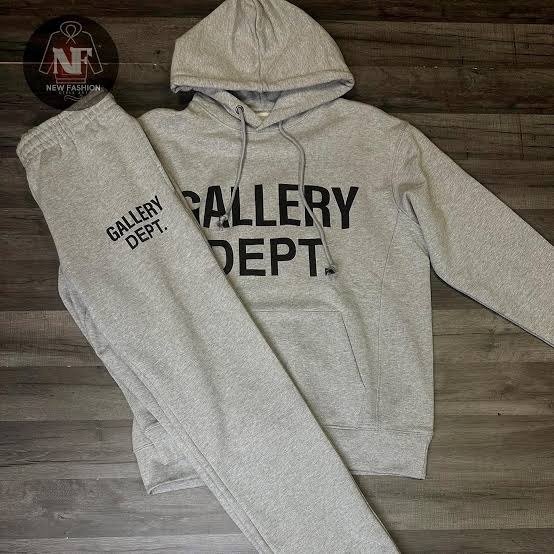
Two gray pieces laid out on a bed, forty euros apart, and a decision most of us make in about four seconds flat. Here’s the shape of it: a full tracksuit comes in at €100, while a hoodie bought by itself is €70 and joggers are another €70, which puts the same outfit at €140 if you pick it up a piece at a time. Looks settled, doesn’t it. It isn’t, quite, and the arithmetic deserves five minutes of your attention before you drop anything into a cart at Gallery Dept and get on with your evening.
The €40 gap, and what it’s actually buying
Forty euros is a t-shirt (€50) with a bit left over, or a trucker cap (€35) and a train ticket. As a saving it’s real, and I’m not going to pretend otherwise.
But it only counts if you wanted both halves to begin with. If the hoodie was the thing you came for and the joggers are just sort of there, you haven’t saved €40 — you’ve spent €30 more than you meant to, on trousers you feel lukewarm about. Plenty of sets live out their lives exactly like that, one half in rotation and the other half folded, which is a slightly sad way to spend a hundred euros.
How often does head-to-toe leave the house?
Be honest about this one, because the whole decision hangs off it. A matching set is at its best when you’re in motion: the 6 a.m. train out of Bologna, the queue at airport security, the first properly cold morning in November when it’s 8 °C outside, and you want one decision instead of four.
Other places, less so. Dinner. An office that isn’t fully relaxed about these things. The passeggiata through a small centro storico at nine in the evening, where everyone has visibly thought about their jacket. One print running top to bottom reads loud there, not because it looks bad but because it reads as a uniform, and uniforms get looked at.
- Travel days, where comfort beats everything else and you’re sitting still for hours anyway.
- Those damp mornings when getting dressed has to be over in ninety seconds.
- A weekend at home that might turn into a walk and a coffee, or might not.
- The gym bag, since the halves end up doing separate jobs on separate days.
Count those days in your own month. If the number comes out low, that €100 set is really a €100 hoodie with something extra attached.
Splitting it up, which is what happens anyway
Here’s where the honest answer lives. Almost nobody who owns a set wears it as a set most of the time. The sets on the Gallery Dept Tuta page carry one print across both halves — gray mélange Logo, the Paint Splatter gray, the navy Hollywood CA with its back print — and each half still stands up on its own the following morning.
The hoodie goes over jeans and nobody can tell it arrived with trousers. The joggers go under a plain cotton jersey tee (€50) and read as joggers, full stop. So you end up living in separates either way. You just paid €100 for them rather than €140, and agreed in advance that they’d match on the days you felt like it.
Which quietly changes the question you’re asking. It stops being set against separates and becomes something duller: two pieces that happen to match, against two pieces you chose one at a time and that probably won’t.
Two grays that aren’t the same gray
This is the bit that settles it for a lot of people. Much of this stuff gets its color as a finished piece, or a wash made to pull the tone back, so the shade shifts slightly from one item to the next. Buy a gray hoodie in March and gray joggers in July and there’s a fair chance you’ve got cousins rather than twins.
A set sidesteps that, since both halves were dyed as one item. And then there’s a duller reason on top of it. The sweatpants in the catalogue come in black (the Logan Dépt de la Galerie) and cream (the Sport Elegant DÉPT). Gray joggers on their own basically don’t exist here. So if gray mélange head to toe is the picture in your head, the €100 set is the only road to it.
| Pro Tip: When the color you want exists only as a set, buy the set and treat the second half as already discounted — roughly €30 for fleece joggers that cost €70 on their own. That’s the one case where the money and the wardrobe agree with each other. |
The numbers, laid out
| What you buy | Price | What you end up with |
| Full tracksuit, one print on both halves | €100 | A pair that matches, and two pieces that still work apart |
| Hoodie and joggers bought separately | €140 | Your own two colors, two prints, and no promise they sit together |
| Hoodie and a t-shirt | €120 | A layered outfit rather than a set — fleece on top, jersey underneath |
| Hoodie on its own | €70 | The piece that gets worn most, and nothing else to think about |
| Joggers on their own | €70 | Fine, as long as there’s already a top at home for them |
Read the last column before you read the price. The €140 row is the expensive one on paper and the roomier one in practice, because you picked both colors yourself. The €100 row is cheaper and narrower. The €120 row isn’t really competing with either — a hoodie and a tee is a different kind of day out, and it handles an April that can’t decide better than two heavy pieces do.
- If you’d genuinely wear both halves together a few times a month, the set wins twice over.
- Buying for the top and talking yourself into the bottom? Pay the €70 and stop there.
- And gray on gray leaves one road open, which is the €100 one.
Frequently Asked Questions
Is the full tracksuit really cheaper than buying both pieces?
Yes, by a clear margin — €100 against €140. The catch sits in the assumption, though, because that €40 only exists if the joggers were something you wanted anyway.
Can I wear the two halves apart?
That’s what most of us do. Neither piece announces that it showed up with a partner, and the top half usually ends up collecting far more wear than the bottom.
What about a hoodie and a t-shirt instead?
Different purpose entirely. €70 plus €50 gets you €120 of layering instead of a set, which suits a 15 °C afternoon better than fleece on fleece does.
Does it cost more to ship two items than one?
I can’t put a figure on it. Shipping options and costs show up at checkout and depend on where the parcel is going, so that’s the only place you’ll see a real number.
So count your head-to-toe days first and look at the prices second. Four or five such days a month and the set is the better hundred euros you’ll spend this autumn. One, and you want the hoodie and nothing after it. Either way, make the call before you’re standing in the cart with a card in your hand.

How to Choose a Second-Hand Car for Your Perth Commute

How to make an older commercial property work for a modern business

Why Your Beauty Clinic in Bali Matters for Filler Results

4 Ecommerce Businesses That Need to Invest in Outsourced 3PL Logistics Services

Fox Fur Coat or Fox Fur Jacket? A Guide to Wearing the Most Dramatic Fur

South Bay Beach Club: Your Guide to a Peaceful Beachfront Getaway

How to Ensure Your Home is Valued Correctly for a Quick Sale

Christopher Dare: The Untold Story of Engineer and Former Husband of Angela Rippon

The 15 Highest-Paid Rugby Players in the World

What Is Fanquer? The Digital Creator Platform Transforming Direct-to-Fan Engagement

Dr Jared Ross: Missouri Appeals Court Upholds Protection Order Over Graphic Torture and Murder Threats

Nancy Hallam: The Inspiring Life, Career, and Success Story Behind Ian Wright’s Wife
How to Ensure Your Home is Valued Correctly for a Quick Sale
Christopher Dare: The Untold Story of Engineer and Former Husband of Angela Rippon
The 15 Highest-Paid Rugby Players in the World
What Is Fanquer? The Digital Creator Platform Transforming Direct-to-Fan Engagement
Dr Jared Ross: Missouri Appeals Court Upholds Protection Order Over Graphic Torture and Murder Threats
Nancy Hallam: The Inspiring Life, Career, and Success Story Behind Ian Wright’s Wife
-
 Real Estate9 months ago
How to Ensure Your Home is Valued Correctly for a Quick Sale
-
Celebrity11 months ago
Christopher Dare: The Untold Story of Engineer and Former Husband of Angela Rippon
-
 Sports5 months ago
The 15 Highest-Paid Rugby Players in the World
-
 Technology5 months ago
What Is Fanquer? The Digital Creator Platform Transforming Direct-to-Fan Engagement
-
 Celebrity5 months ago
Dr Jared Ross: Missouri Appeals Court Upholds Protection Order Over Graphic Torture and Murder Threats
-
Celebrity12 months ago
Nancy Hallam: The Inspiring Life, Career, and Success Story Behind Ian Wright’s Wife
-

 Celebrity8 months ago
Who Is Azriel Crews? Inside the Life and Career of Terry Crews’ Daughter
-
 Celebrity11 months ago
Who Is Maisie Mae Roffey? The Private Life, Family Story, and Quiet Success of Julie Walters’ Daughter