
Blog
What to Gather Before Creating an Invoice: A Freelancer’s Checklist

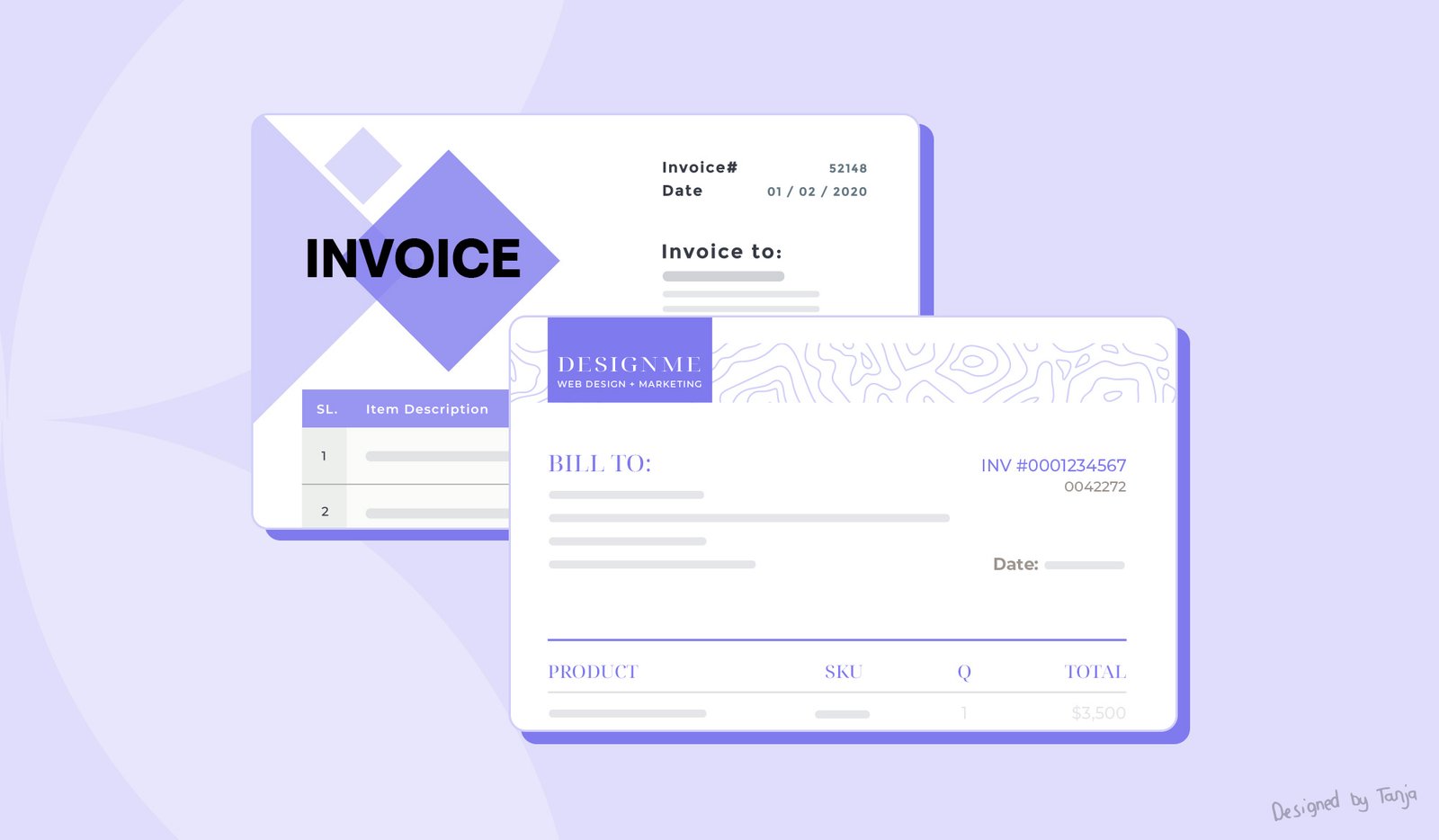
Many invoice problems begin before the invoice is written. A bill can be queried or returned unpaid because of a detail nobody collected: a missing purchase order number, a vague due date, a wrong billing name, or an hourly total nobody can reconstruct. Freelancers who gather that information once, at the start of a client relationship, turn every later invoice into a short copying exercise.
Much of the billing advice published on freelancing and entrepreneur blogs starts with the document – the template, the layout, the fields. The people who handle accounts receivable tend to start one step earlier, with the information the document will carry.
Disputes follow the same pattern. A client questions a line item, the freelancer searches old messages for the agreed rate, and the invoice waits unpaid until the exchange is resolved.
From the moment an invoice is sent, it sits in the seller’s accounts receivable until the money arrives. Everything gathered in advance shortens the time it spends there. An invoice should be payable on first receipt, without a single clarifying email.
Client details to collect first
Incorrect or missing client details can delay payment. The records to request are the client’s legal billing name, the billing address, and the name of the person who handles payables.
The legal billing name can differ from the brand a freelancer deals with day to day. A studio trading under one name may be registered under another, and the accounts department pays the registered one.
The billing contact matters as much as the address. An invoice sent to a general inbox, or to a project manager who has moved on, can sit unread for weeks, so it helps to ask who approves payments and address the invoice to that person.
Corporate clients often add requirements of their own. A purchase order number lets procurement teams match an invoice against approved spending, and invoices without one are commonly returned unpaid. Many larger companies also ask new vendors for a tax identification form or a vendor application before any payment can be released.
Some companies route all vendor billing through an online portal, and the freelancer needs an account there before the first invoice can be submitted. It is worth asking about portals early, since access can take days to arrange.
The time to ask is during onboarding, before the work starts. These questions read as routine administration at kickoff and as pressure once a payment is already late, so it helps to keep the answers in writing, even when the writing is an email thread.
Your own business details
An invoice also identifies the seller. A business or trading name and a contact address help a client recognise the bill, and freelancers benefit from settling those details before the first invoice goes out. Where a freelancer holds a tax registration number, including it can be relevant, though requirements differ by jurisdiction.
The name on the invoice should match the name on the contract and the name in the client’s vendor file, because a mismatch gives an accounts department a reason to query the bill.
Assembling these details into a reusable business profile – legal name, address, tax number, and a logo where one exists – saves time on every future invoice. Some freelancers keep their standard payment details in the same profile, so every invoice carries identical instructions.
Freelancers who bill under their own name still benefit from writing the profile down. The same block of text then appears on every document the business sends, and nothing gets retyped from memory.
The project record
Every invoice refers back to an agreement, and the scope of work or contract is that agreement on paper. It is the reference point for the amounts charged and the first document consulted when a client disputes a bill.
The details to copy onto the invoice are the project name, the purchase order number where one exists, and the deliverables being billed. A client who can match the invoice to their own records can process it without a clarifying email.
Terms agreed in the contract should also match what the invoice says. A client who spots a difference between the two documents may query the bill before processing it.
Rate structure decides what evidence the invoice needs. Hourly work requires complete time logs, and those logs should be finished before billing, because entries reconstructed from memory invite disputes. Keeping the log as the work happens helps too: a daily entry takes minutes and a month-end reconstruction takes hours.
Flat-fee projects need a different reference point: the approved deliverable or the completion date. Milestone billing ties each invoice to a finished phase, and a retainer bills a fixed recurring amount, so the invoice states the period it covers.
Work outside the original scope belongs on the invoice as its own line, documented with a change order the client approved in writing. This can prevent end-of-project disputes, because the extra charge was agreed before it was invoiced.
Payment terms and payment methods
Payment terms are settled at the agreement stage, before the invoice exists. The common options are net 15, net 30, and due on receipt, and ambiguous terms can leave clients unsure when the payment is due.
No single term works best for everyone, because the choice depends on the freelancer’s cash flow and the client’s payment cycle. The due date needs to be unambiguous, and a calendar date leaves no room for interpretation.
The late-fee policy belongs in the same conversation. Freelancers who agree an overdue policy with the client in advance and print it on the invoice have terms the client has already seen. The checklist should also cover an overdue contact procedure, so the follow-up after a missed payment introduces nothing the client has not already agreed to.
Payment methods round out the money details. Bank transfer, card payment, and online gateways such as PayPal or Stripe each call for different details on the document, and stating the accepted methods plainly means the client has no reason to ask.
Tax lines and invoice numbers
Whether an invoice needs a tax line depends on the seller’s location, the client’s location, and the rules of the jurisdiction, and sales tax, VAT, and GST all follow different thresholds. Settling this question before the first invoice avoids a bill issued with the wrong tax treatment, which often has to be cancelled and reissued, starting the wait for payment over.
Freelancers unsure of their obligations are typically pointed to a local accountant or the relevant tax authority. The answer varies by jurisdiction and by the type of service sold. Where a tax line applies, the jurisdiction may also call for the rate charged or a registration number on the invoice, so any applicable figures belong in the gathered records.
Invoice numbering looks minor until tax season. A system that never repeats a number – chronological, client-coded, and project-coded schemes all appear in practice – lets income be reconciled without guesswork.
The number also serves the client. A unique identifier lets their accounts team reference the bill in correspondence and lets the freelancer see which invoices in accounts receivable remain open.
From checklist to finished document
Once those records are gathered, the assembly step is short. A walkthrough on how to create an invoice covers the document field by field, whether the freelancer works from a template, a generator, or invoicing software.
The assembly step covers layout and field order – where the logo sits, how the line items are grouped, how the total is presented. Those choices are cosmetic, secondary to the accuracy of what the fields contain.
With the records already collected, the writer copies from them and the invoice takes minutes to produce.
A final review before sending
Before the invoice goes out, one slow read of the finished document catches errors. The billing name, the invoice number, the dates, the line items, and the maths on any tax line each get a pass, and the payment link gets opened once so the sender sees what the client will see.
Sending the invoice as a PDF keeps the layout fixed, and the document prints the way the sender intended.
The invoice then goes to the billing contact named during onboarding, with a copy kept on file. That copy becomes the record used to track accounts receivable, to follow up on overdue bills, and to reconcile income at tax time.
Follow-up itself gets easier with the paperwork in order. A reminder that cites the invoice number, the due date, and the stated late-fee policy reads as routine administration.
The gather-once habit
Freelancers who systematise this tend to keep one record per client: billing details, purchase order requirements, agreed terms, accepted payment methods, and any onboarding forms already submitted. The second invoice for that client draws entirely on the file, and producing it stops being a research task.
New clients get the same intake, a short set of questions asked before the work starts. The answers cost nothing at kickoff and become awkward to request once money is owed.
The checklist is short. It replaces the cycle of sending, correcting, and resending that stretches a ten-minute task across a month of waiting.


Most childcare decisions turn on timing, and the timing for an au pair search starts earlier than most parents expect. An au pair arrives through a J-1 visa program, so interviews and matching come first, and visa paperwork and travel follow. Because the process runs on its own calendar, a plan that works today still has to hold on the specific date you’ll need it. The signs below help you work out whether your current arrangement can do that.
Your parental leave has an end date on the calendar
Parental leave feels long at the beginning and short at the end, and the return-to-work date has a way of arriving before the childcare plan is settled. With an au pair, this date matters because matching takes real time. You interview candidates and agree on a match, and then visa processing and travel follow, and how long that takes varies from case to case. Ask your agency for current estimates early, because those numbers shape when your search needs to begin. Starting early gives you room to compare candidates without rushing, to take unhurried calls, and to prepare properly before your first day back at work. A slower search also lets you ask about infant experience in detail and check how each candidate answers. Families who start late often end up choosing quickly, and that is how mismatches happen. If your leave ends soon, you may not have a real choice left.
Your current arrangement has a visible expiry date
Some childcare plans work perfectly well and still come with an end you can see coming. A grandparent covering the early months may not be able to commit through the toddler years, and a nanny share can dissolve the moment the other family’s needs change. A daycare waitlist can also keep sliding month after month, which leaves you planning around a spot that may never open. Because the gap is predictable, you can plan for it, and the au pair timeline gives you room to do exactly that. A host family provides room and board plus a weekly stipend, and in exchange the au pair provides up to 45 hours of live-in childcare a week, and no more than 10 hours in a day. The families who feel the squeeze are usually the ones who wait for the gap to open before they react. When you can already see the next gap in coverage, start the search before it arrives.
Your baby isn’t doing well in group care
Daycare centers run on ratios, which means one provider’s attention is divided among several babies at the same time. That structure explains the pattern many parents notice: naps that follow the room’s schedule, not the baby’s, and feeds fitted into a busy classroom. The staff can be attentive and the pattern still appears, because it’s produced by the shared room and the fixed staffing. It leaves limited one-on-one time for feeding and soothing, and less dedicated time for the floor play that fills an infant’s waking hours. Some babies take to the group setting easily, while others seem to do better with a quieter day and one familiar face, and neither preference says anything about the quality of the center. An in-home caregiver reverses the ratio, so your baby’s naps and feeds happen on your baby’s own schedule, in a quiet house, with one person’s full attention. If you’re reading your baby’s daily reports and recognizing this pattern, the setting itself may be the problem.
Infant-qualified is a verified designation, and checking it takes time
Once in-home care starts looking like the answer, the next question is what infant-qualified actually means, because the term carries a specific regulatory definition. Under federal rules (22 CFR 62.31), an au pair placed with a family that has a child under two must have at least 200 hours of documented infant care experience. Go Au Pair’s own process adds that the hours must come from outside the au pair’s own family and confirms them through an Infant Verification form and childcare references, and the guide at goaupair.com walks through how that documentation works, so a candidate’s claimed background gets checked on paper before you commit to a match. Because verification adds steps to the process, it adds lead time as well, which is one more reason to start early. And if your baby will be under three months when care begins, plan around the program rule that a parent or another responsible adult stays at home during those early weeks.
Your work schedule doesn’t fit a center’s hours
Daycare centers keep fixed hours because their staffing is scheduled well in advance, and that structure can’t bend around a family whose work doesn’t run nine to five. Shift work, early starts, frequent travel, and on-call rotations all create hours that a center simply won’t cover. Centers also close on holidays and training days, which land on your calendar whether or not your employer recognizes them. An au pair lives in your home and works a schedule you set together week by week, within the standard program’s limits of 45 hours a week and 10 hours a day. A 5 a.m. start or a late evening becomes a conversation at your own kitchen table. That flexibility covers the odd weeks too, like a work trip that needs coverage starting at breakfast, as long as each day stays within 10 hours. If your calendar changes from week to week, a live-in schedule is the childcare structure that can change with it. For a family on rotating shifts, that difference decides whether childcare works at all.
The daily logistics are adding up
Center-based care comes with a daily routine wrapped around the care itself, and that routine costs more than it looks. There’s the morning drive to drop-off and the bag packed with bottles and pump parts. There’s the rushed pickup at the end of the day that cuts into your baby’s evening. Each piece takes twenty minutes here and thirty there, and because it repeats every workday, the total quietly becomes a second part-time job. With an au pair, care happens inside your home, so the commute and the packing disappear, and pickup stops being a race against a closing time. What you get back is time at both ends of the workday, which is usually where families feel the shortage most. When the logistics around childcare start costing almost as much energy as the workday itself, it may be time to change the setup.
You’ve priced a private nanny and paused
A private nanny gives you the same basic model as an au pair: one caregiver in your home, focused on your children. The reason families stall on it is cost, because a nanny charges an hourly rate that builds into a substantial annual salary. That figure often lands well past what the household budgeted for childcare. An au pair works on a different structure, where you pay a weekly stipend within program rules plus agency and program fees, and you also cover room, board and the household costs of hosting. Compare your actual nanny quote against that full set of au pair expenses, matched to the same coverage period, so you are weighing a year of care against a year of care. If you’ve run the numbers on a nanny and quietly closed the tab, the in-home model you wanted is still worth pricing out on its real terms. That comparison is often when the au pair option stops being abstract and starts looking like a real plan.
You want one caregiver who actually knows your baby
Babies run on routine, and a caregiver who knows your baby’s sleep cues and feeding schedule can keep the whole day steady. Daycare centers deal with constant staff turnover, which means the person soothing your baby in March may not be the person doing it in June. Each change resets the learning, and the routine gets rebuilt with someone new. An au pair placement runs for a year and can be extended beyond that, so the same person learns your baby’s rhythms and stays long enough for that knowledge to matter. The small signals get read correctly too, like the tired cry that means a nap is overdue, because one person has seen them a hundred times. Continuity makes your life easier as well, because you’re not re-explaining the routine to a new face every few months. If your current setup can’t deliver consistency, that’s a structural reason to look at a different model.
The cultural exchange comes with the care
The au pair program exists as a cultural exchange, which is why au pairs travel on J-1 visas and live as part of the household. For your child, a compatible match can mean regular exposure to a second language and a different way of doing things, included in the care you’re already paying for. Most parents wouldn’t buy a separate language program for a baby, and with an au pair they don’t have to, because the exchange element sits inside the same childcare budget. Host families often find the exchange runs both ways, where food and phrases from the au pair’s home country turn into part of the household’s ordinary week. If the idea of your child growing up hearing two languages appeals to you, that alone points toward an au pair. The cultural exchange is part of the same arrangement, not an add-on.
Each of these signs points the same way: the current arrangement has a structural limit, and an infant-qualified au pair may ease it, within the program’s cost, its hour limits and the adult-presence rule for newborns. Because matching and verification take weeks, the families who start early get the widest choice of candidates and the least rushed decisions. If your leave date, your budget, or your baby’s daily experience is already telling you something, the practical next step is to start looking at verified infant-qualified candidates. The search itself is straightforward once it begins: profiles, interviews, references, and a match that fits your household’s rhythm.

Ask what separates parent-led homeschooling from an online private school and most comparisons start with cost and flexibility. In one model the parent is the teacher, and in the other the parent hires the teaching. Timetables and workloads grow out of that daily split.
Parent-led homeschooling makes the parent the teacher
In a parent-led homeschool, an adult in the house plans the curriculum, chooses the materials, explains each new concept, sets the assignments, and marks the finished work. That means a substantial block of weekly hours for planning, teaching, marking, and record-keeping, before anyone counts the time spent sitting beside a child who is actually studying. The model suits families who want full control over what is taught and at what pace. It lets them align schooling with their own values, move quickly through easy material, and slow down where a child needs longer. Families get control, but they also take on the workload.
The strain tends to show up subject by subject. A parent who teaches reading and arithmetic with confidence may hesitate over higher-grade algebra or a second language. Hesitation at the kitchen table reads differently to a teenager than it does to a seven-year-old.
Comparison lists also rarely mention who corrects the child. In a parent-led homeschool, the person who marks the essay is the same person who makes dinner. A child who would accept a teacher’s corrections without comment may argue with a parent’s. Assignment by assignment, the parent chooses between pressing the point and protecting the evening. Over a school year, those small choices affect how much honest feedback the child receives. Families who notice this friction early often decide that marking is the first part of teaching to hand over.
An online private school employs the teachers
In an online private school, degree-qualified educators employed by the school do the teaching. Students attend timetabled live classes with a teacher, and recorded lessons let them replay an explanation when the first pass did not stick. The school marks assignments and returns them with comments. Report cards arrive on the school’s schedule, and the parent follows progress through an online portal where grades and teacher feedback appear as work is completed. Curriculum decisions center on the pathway chosen at enrollment, since the school follows a set program of study, often a British or American pathway, with a sequence and an endpoint already in place.
Readers weighing online schooling can consult https://cambrilearn.com/ as one resource while comparing how different schools organize the teaching side of the arrangement.
In this arrangement, the school teaches and the home supports.
What the parent still does in an online school
Enrolling in an online school doesn’t remove the adult from the room. Someone still sets the daily schedule, makes sure the child logs in on time, keeps younger students on task, and notices when motivation drops. Schools often call this person the learning coach, and the role is real enough that timetables assume it. Supervision remains a daily job, but the demands are different.
Explaining a difficult concept takes subject knowledge and preparation, while keeping a child on schedule takes consistency and patience. The second is tiring, but it does not require a parent to relearn algebra at ten in the evening, and it leaves academic feedback in the hands of someone the child argues with less. Parents in this model still help with organization and raise concerns with teachers when grades slip. That keeps them close to the work without making them responsible for it.
Choosing between the two models
The choice usually turns on the family’s actual week: how many hours an adult can give to teaching, how far that adult’s subject confidence stretches, how much outside structure the child needs, and how settled the family’s location is. If those conditions point toward home teaching, the parent-led model gives the family full control over the child’s education.
Certain circumstances push toward the school-led model. Families who relocate for work, travel for long stretches, live far from a suitable school, or build the week around competitive athletics need a structure that continues regardless of geography. That structure provides consistency: the same teachers, the same timetable, and the same expectations carry over from one posting, time zone, or training camp to the next. A move then changes the family’s address without interrupting the child’s coursework. A parent teaching alone can offer that continuity only by rebuilding the routine at every stop, while an enrolled school holds it in place on its own.
Parent-led homeschooling works if an adult at home has the hours and the subject confidence for the grades ahead, and if the family wants curriculum control strongly enough to trade away outside structure. An online private school fits if the teaching needs to come from someone with subject training, or if the family’s schedule makes a fixed school unworkable. It is also the right choice when marked work and report cards should arrive without the parent producing them, or when the child simply works better with the parent supporting and someone else teaching.


The construction industry is constantly evolving with new technologies that improve project accuracy, efficiency, and collaboration. One of the most significant advancements is Building Information Modeling (BIM), which has changed how architects, engineers, contractors, and construction professionals plan and execute projects. Traditional Computer-Aided Design (CAD) drawings have been widely used for years, but modern construction projects increasingly require intelligent 3D models and detailed project information. This is where CAD to BIM Services play an important role.
By converting traditional 2D CAD drawings into intelligent 3D BIM models, construction professionals can improve project visualization, reduce design errors, and manage building information more effectively. Let’s explore how this technology benefits the construction industry.
What Are CAD to BIM Services?
CAD to BIM conversion is the process of transforming traditional 2D or 3D CAD drawings into intelligent Building Information Modeling (BIM) models. Unlike conventional CAD drawings, BIM models contain detailed information about building components, including walls, doors, windows, structural elements, mechanical systems, and electrical installations.
These models provide more than just visual representations. They include essential data that helps professionals understand how different building components interact throughout the project lifecycle.
Professional CAD to BIM Services help architects, engineers, and contractors convert existing design documents into accurate digital models. These models can be used for design development, construction planning, coordination, and facility management.
Why Is BIM Important in Modern Construction?
Building projects involve multiple professionals working together, making communication and coordination essential. Traditional 2D drawings can sometimes create misunderstandings because different teams may interpret designs differently.
BIM provides a centralized digital environment where project participants can access coordinated building information. This improves communication and allows teams to identify potential problems before construction begins.
Modern BIM Services support better decision-making by providing accurate building information, realistic visualizations, and improved project coordination. They also help construction companies manage resources, timelines, and budgets more effectively.
Key Benefits of CAD to BIM Conversion
Converting CAD drawings into BIM models offers several advantages for construction projects.
1. Improved Design Accuracy
One of the biggest advantages of CAD to BIM conversion is improved design accuracy. Intelligent 3D models provide detailed information about building components and their dimensions.
Architects and engineers can identify design inconsistencies and potential conflicts before construction starts. This reduces the possibility of expensive corrections during the construction phase.
2. Better Project Visualization
Traditional CAD drawings mainly provide 2D representations, which can be difficult for some stakeholders to understand.
BIM models offer detailed 3D visualizations that allow project teams and clients to explore building designs from different angles. This makes it easier to understand architectural layouts, structural elements, and building systems.
3. Enhanced Collaboration
Construction projects require coordination between architects, structural engineers, mechanical engineers, electrical engineers, and contractors.
BIM creates a shared digital environment where different teams can access relevant project information. This improves communication, reduces misunderstandings, and helps professionals work toward common project objectives.
4. Reduced Construction Costs
Design errors, material waste, and unexpected project changes can significantly increase construction expenses.
BIM models help identify potential issues during the design stage, allowing teams to resolve them before they become costly problems. Accurate project information also supports better material estimation and resource planning.
5. Efficient Project Management
BIM technology supports construction planning by providing detailed information about building components and project requirements.
When integrated with scheduling and cost management tools, BIM can support 4D scheduling and 5D cost estimation. These capabilities help construction professionals monitor project progress and manage financial resources.
Different Types of BIM Services
BIM technology offers several solutions depending on project requirements and industry needs. Some commonly used services include:
• Architectural BIM Modeling: Creates detailed digital representations of architectural elements, including walls, doors, windows, floors, and roofs.
• Structural BIM Modeling: Develops accurate models of structural components such as beams, columns, foundations, and reinforcement.
• MEP BIM Modeling: Covers mechanical, electrical, and plumbing systems to improve coordination between building services.
• BIM Coordination: Identifies clashes and design conflicts between different building systems before construction begins.
• Scan to BIM: Converts laser-scanned building data or point clouds into intelligent BIM models.
• CAD to BIM Conversion: Transforms existing CAD drawings into detailed and information-rich BIM models.
These solutions help construction professionals manage different project stages while maintaining accuracy and consistency.
The Role of CAD to BIM Services in Renovation Projects
Renovation and refurbishment projects often involve older buildings with incomplete or outdated construction documentation. In these situations, existing CAD drawings may not accurately represent the current building conditions.
Converting available drawings into BIM models provides a more organized digital representation of the building. When combined with site surveys or laser scanning, this process can help professionals identify existing conditions and plan renovation work more effectively.
Accurate BIM models also support future maintenance, building upgrades, and facility management activities.
Choosing the Right BIM Service Provider
Selecting an experienced BIM service provider is essential for achieving reliable project results. Before choosing a company, consider its technical expertise, industry experience, software capabilities, and previous project portfolio.
A professional provider should understand architectural, structural, and MEP requirements while following relevant BIM standards and project specifications.
It is also important to evaluate communication practices, delivery timelines, modeling accuracy, and quality control procedures. Working with the right team can help ensure that BIM deliverables meet project expectations.
Conclusion
The transition from traditional CAD drawings to intelligent digital models is changing the way construction projects are designed, coordinated, and managed. CAD to BIM Services help professionals transform existing drawings into detailed 3D models, improving accuracy, visualization, and collaboration.
As construction projects become more complex, the demand for reliable BIM Services continues to grow. From architectural modeling and structural coordination to MEP integration and renovation planning, BIM technology provides valuable solutions for modern construction challenges.
Businesses that adopt these technologies can improve project workflows, minimize design conflicts, and make more informed decisions throughout the building lifecycle.

Virtual Jewelry Try-On Guide: Definition, Technology & How-To

Signs It Is Time to Start Looking for an Infant-Qualified Au Pair

Parent-Led Homeschooling or Online Private School: Who Handles the Teaching?

What to Gather Before Creating an Invoice: A Freelancer’s Checklist

Buying a Listed Building: What You Need to Know Before You Commit

Arm Lift, Thigh Lift and Butt Lift Prices: Body Shaping After Weight Loss

How to Ensure Your Home is Valued Correctly for a Quick Sale

Christopher Dare: The Untold Story of Engineer and Former Husband of Angela Rippon

The 15 Highest-Paid Rugby Players in the World

What Is Fanquer? The Digital Creator Platform Transforming Direct-to-Fan Engagement

Dr Jared Ross: Missouri Appeals Court Upholds Protection Order Over Graphic Torture and Murder Threats

Who Is Azriel Crews? Inside the Life and Career of Terry Crews’ Daughter
How to Ensure Your Home is Valued Correctly for a Quick Sale
Christopher Dare: The Untold Story of Engineer and Former Husband of Angela Rippon
The 15 Highest-Paid Rugby Players in the World
What Is Fanquer? The Digital Creator Platform Transforming Direct-to-Fan Engagement
Dr Jared Ross: Missouri Appeals Court Upholds Protection Order Over Graphic Torture and Murder Threats
Who Is Azriel Crews? Inside the Life and Career of Terry Crews’ Daughter
-
 Real Estate10 months ago
How to Ensure Your Home is Valued Correctly for a Quick Sale
-
Celebrity1 year ago
Christopher Dare: The Untold Story of Engineer and Former Husband of Angela Rippon
-
 Sports6 months ago
The 15 Highest-Paid Rugby Players in the World
-
 Technology6 months ago
What Is Fanquer? The Digital Creator Platform Transforming Direct-to-Fan Engagement
-
 Celebrity6 months ago
Dr Jared Ross: Missouri Appeals Court Upholds Protection Order Over Graphic Torture and Murder Threats
-
 Celebrity9 months ago
Who Is Azriel Crews? Inside the Life and Career of Terry Crews’ Daughter
-
 Celebrity1 year ago
Nancy Hallam: The Inspiring Life, Career, and Success Story Behind Ian Wright’s Wife
-
 Celebrity1 year ago
Who Is Maisie Mae Roffey? The Private Life, Family Story, and Quiet Success of Julie Walters’ Daughter