
Business
Design Ideas to Give Meeting Rooms a More Professional Feel

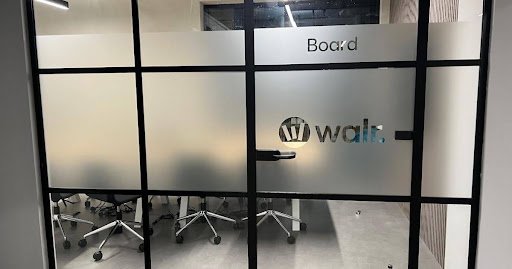
Most meeting rooms look unfinished, and clients notice it as soon as they sit down. Bare walls, clear glass with no privacy, mismatched chairs, and a tangle of cables under the table tell visitors the room was an afterthought. Staff feel it too, especially when a confidential call takes place in full view of the open-plan floor.
A professional meeting room doesn’t need a full refit. A few well-planned changes to the glass, walls, lighting, and furniture can make the space feel calm, private, and on-brand. The ideas below work for small huddle rooms and large boardrooms alike.
What to Include When Designing a Professional Meeting Room
Here are six design ideas that can make any meeting room look polished, private, and ready for clients:
1. Add Privacy to Glass Walls
Glass partitions keep an office bright, but they leave meeting rooms exposed. People walking past can see screens, notes, and the faces of everyone at the table, which makes sensitive discussions uncomfortable. It also distracts the people inside, who catch every movement in the corridor.
A patterned window film gives the room privacy while still letting daylight through. Gradient designs that fade from frosted to clear work well, as do geometric shapes and fine textures. Aim to cover the band between seated and standing eye level, and leave the top of the glass clear so the room doesn’t feel boxed in.
2. Use Lines for a Clean, Structured Look
Simple shapes often look more professional than busy artwork. Horizontal window film lines give glass walls a crisp, architectural finish that suits most interiors. Stripes in varying widths can offer partial screening and look modern without drawing too much attention.
Lines also do a practical job. Placed at the right heights, they can act as the manifestation markings required on glazed partitions, so one design covers both style and safety. Keep the spacing and widths consistent across every room, and the whole floor will look planned rather than pieced together.
3. Carry Your Brand Through the Glass
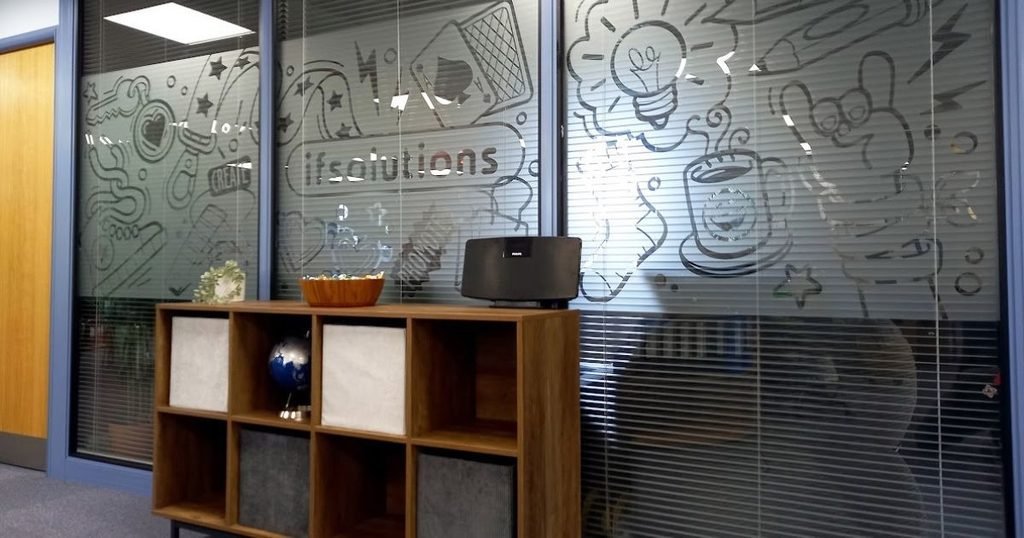
A meeting room is often where clients form their opinion of a business, so it should feel like part of your company. A glass film pattern built from your logo, brand shapes, or a cropped section of your icon ties the room to your identity without adding clutter.
Tone-on-tone frosting keeps the effect subtle and polished. You can also work the room name into the same design, so the branding, privacy, and signage sit together in one tidy layer. Ask your supplier for a mock-up on a photo of the actual partition before you sign off the artwork.
4. Give the Walls a Purpose
Empty walls make a room feel cold, but covering every surface makes it feel crowded. Pick one feature wall and give it a clear job. A large brand graphic, a short mission statement, or an illustration linked to your work gives the room character and a natural focal point.
Other walls can stay practical. Acoustic panels in brand colours reduce echo on video calls, and a whiteboard wall gives teams space to plan without wheeling in a flip chart. Keep colours and fonts consistent with the rest of the office.
5. Get the Small Details Right
Visitors notice the finishing touches more than most businesses expect. A smart room with poor details still feels rushed.
Details that make a difference:
- Cable management under and through the table
- Matching chairs set at a comfortable height
- Dimmable lighting for presentations and calls
- A room name and capacity sign by the door
- A clock placed where everyone can see it
Each one takes little effort, but together they make the room feel cared for and ready to use.
6. Name Rooms with Care
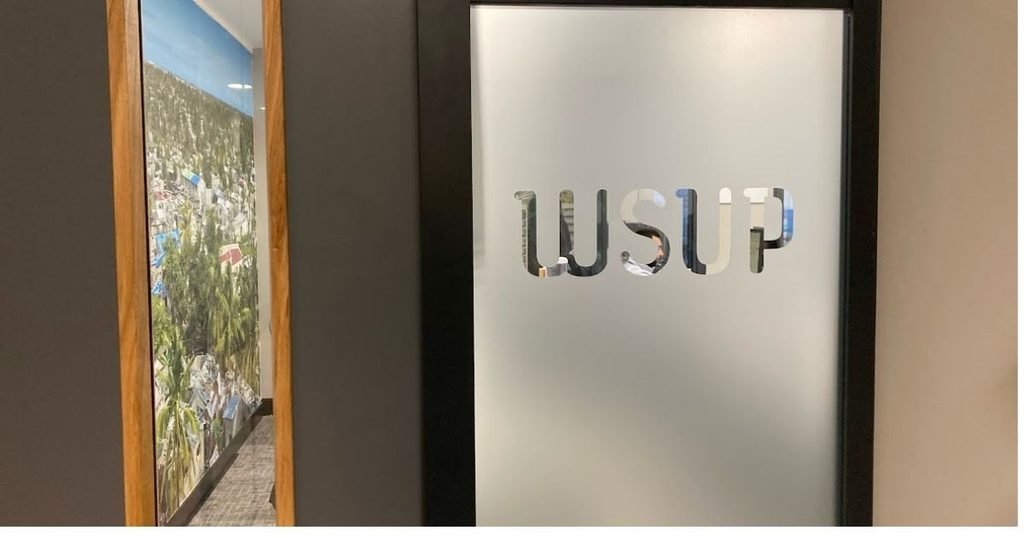
Room numbers work, but names give meeting rooms personality and make bookings easier to remember. Many businesses name rooms after local landmarks, company values, or milestones in their history. Choose a theme that fits your brand and apply it across every room on the floor.
Use removable vinyl for room names, since teams grow and spaces get repurposed. That way you can update a sign in minutes instead of replacing a fixed panel.
Creating Meeting Rooms That Reflect Your Business
A professional meeting room comes down to planning rather than budget. Privacy on the glass, a clear brand presence, purposeful walls, and well-chosen details all work together to make the space feel calm and credible. Clients see a business that pays attention, and staff get a room they’re happy to use.
Start by walking through each meeting room as a first-time visitor would. Note what you can see from the corridor, where the eye lands when you sit down, and which details feel unfinished. Then work with a signage supplier who understands your brand, so every room on the floor looks consistent and ready for business.

Business
Beyond the City Streets: Why Off-Road Electric Scooters Are Gaining Attention Among Adventure Riders


For years, electric scooters were mainly associated with short urban trips on smooth pavement. That perception is shifting. A growing number of riders are looking beyond city streets and seeking machines that can handle gravel paths, light trails, uneven private land and mixed surfaces. The result is rising interest in models built specifically for more demanding conditions.
Adventure-minded riders, weekend explorers and people with access to private land are increasingly evaluating off-road electric scooters as practical tools rather than pure novelty. These machines differ from standard commuting scooters in frame strength, tyre design, suspension and motor torque. Understanding those differences helps explain why the category is attracting attention.
What Sets Off-Road Models Apart
Commuter scooters prioritise low weight, easy folding and efficiency on flat surfaces. Off-road designs accept extra weight in exchange for stability when the ground becomes irregular.
Typical differences include:
- Wider pneumatic tyres with deeper tread for grip on loose surfaces
- Dual suspension to absorb impacts from roots, ruts and small obstacles
- Higher-torque motors that maintain momentum on soft ground or moderate inclines
- Greater ground clearance to reduce the chance of the deck catching
- Sturdier frames designed for higher stresses
These features expand the range of surfaces a rider can comfortably travel on private land without turning the scooter into a full off-road motorcycle.
Why Interest Is Growing
Hybrid working patterns have given more people free time for outdoor activity at weekends. Converted rail trails, private estates, farm tracks and countryside paths offer accessible riding where permission is granted. Battery and motor technology has also improved enough that modern off-road scooters no longer feel like underpowered compromises.
Riders who have experienced limited traction or harsh feedback on a standard scooter when the surface turns to gravel or wet leaves often begin looking for better-equipped alternatives. The appeal is reliable, enjoyable travel across mixed private terrain rather than extreme sport.
Realistic Use Cases
Off-road electric scooters suit:
- Private trails or estate paths with landowner permission
- Packed gravel, hard-packed dirt or light forest tracks
- Mixed surfaces that combine short pavement sections with rougher stretches
- Weekend recreational rides where comfort and control matter more than minimum weight
They are less suitable as primary daily commuters when frequent carrying onto public transport or very light storage is the priority. The added weight that improves trail performance reduces portability compared with slim city models.
Important Legal Context in the UK
In the United Kingdom, privately owned electric scooters may only be ridden on private land with the landowner’s permission. They are not permitted on public roads, pavements, cycle lanes or public parks under current rules. Anyone considering an off-road model should confirm access rights for the specific locations they plan to ride.
Features Worth Prioritising
Tyres
Pneumatic tyres with a pronounced tread pattern provide better shock absorption and traction than solid rubber. Regular pressure checks are necessary.
Suspension
Front and rear suspension reduces vibration and helps keep both wheels in contact with uneven ground, improving control and comfort.
Motor and battery
Higher torque supports progress on soft or inclined surfaces. Real-world range is lower than smooth-tarmac claims because rough terrain consumes more energy. Plan with a realistic buffer.
Braking and water resistance
Combined mechanical and electronic braking offers progressive stopping power. An IP54 rating or higher provides useful protection against light rain and spray.
Build quality
Heavier construction is a trade-off for durability. Checking frame joints and component quality remains important for reliability.
Practical Considerations
Match the machine to intended terrain and frequency of use. Maintenance expectations are higher than with pure city models because mud, water and debris increase wear. Cleaning after dirty rides and checking tyre pressures extends component life. A helmet and secure storage form part of responsible ownership.
Conclusion
The growing attention paid to off-road capable machines reflects a desire for versatile personal transport that extends beyond polished city streets. For riders with access to suitable private land, these scooters open mixed-surface routes that standard commuting models handle poorly. Success depends on realistic expectations, attention to legal access rules, and selection of genuine all-terrain features. When those elements align, off-road electric scooters can deliver a more capable and enjoyable experience for adventure-oriented riders seeking to explore beyond the pavement.
FAQ
Are off-road electric scooters legal on UK public roads?
No. Privately owned electric scooters may only be ridden on private land with the landowner’s permission. Public roads, pavements and cycle lanes remain off-limits.
What tyre type works best on gravel or light trails?
Pneumatic tyres with a deep, knobbly tread generally provide the best combination of grip and shock absorption.
Do these scooters require more maintenance?
Yes, moderately. Mud, water and debris increase wear. Regular cleaning and tyre-pressure checks help maintain performance.
How much range can I expect on rough terrain?
Manufacturer figures are usually measured on smooth surfaces. Real-world range on mixed or soft ground is often 20–40 % lower.
Is dual suspension necessary?
For anything beyond the mildest uneven surfaces, dual suspension significantly improves comfort and control.
Who benefits most from an off-road model?
Riders who regularly travel on private trails, gravel paths or mixed surfaces and who prioritise stability and grip over minimum weight.


Choosing an employment law firm is an important step when you face a workplace issue or need legal advice for your business. You may need help with a staff dispute, dismissal, redundancy, or an employment contract.
Finding the right legal help can make it easier to understand your rights and make good choices. Each firm may offer different services, levels of experience, and ways to support its clients, so it is worth taking time to compare your options.
You may find it hard to compare legal fees, experience, and services when you have little knowledge of employment law. A careful choice can help you get clear advice, understand your options, and manage legal costs with greater confidence.
In this guide, you will find key points to consider before hiring a firm. These tips will help you compare your options and find legal support that fits your needs and budget.
1. Check Employment Law Experience and Expertise
Employment law covers many workplace issues, so look for a firm with strong experience in this area. A firm that focuses on employment law may have a better grasp of workplace rules, common disputes, and the legal steps that apply to your case.
When comparing an employment law firm, look at the services it provides for both employers and employees. Check whether its solicitors can help with workplace disputes, unfair dismissal, redundancy, disciplinary procedures, settlement agreements, and employment contracts, as these areas can show whether the firm has the right skills to support your needs.
If you run a business, you may need advice on staff disputes, contracts, or fair dismissal procedures. As an employee, you may need help with unfair dismissal, workplace discrimination, or a settlement agreement, so look for a solicitor who understands your type of case.
It is also worth checking the training and work experience of the solicitor who may handle your case. Ask about similar cases they have handled and whether they know the laws that apply in England and Wales.
2. Match Legal Services to Your Needs
Before you hire a firm, check whether it handles the type of legal issue you face. Employment law firms offer different services, so their areas of work should match your needs and the kind of help you expect.
For example, employers may need help with employment contracts, staff handbooks, workplace policies, disciplinary procedures, and redundancy plans. They may also need legal support when dealing with an employment tribunal claim.
Employees may need advice on unfair dismissal, discrimination, pay disputes, or settlement agreements. If your case involves more than one issue, a firm with a wider range of services may be able to support you through each stage.
Take time to check the firm’s service pages and ask questions about any area that is unclear. Find out whether its solicitors can guide you through the full process and explain what support you can expect.
3. Look for Clear Communication and Personal Support
Legal issues can be difficult to handle when you are not aware of your rights or the next course of action. Your solicitor is expected to describe your choices in plain language, address your queries, and assist you in comprehending what is likely to occur further.
Before you decide, you should enquire who will be working on your case and whether you will have a single point of contact. Determine how the company disseminates information, responds to calls, and replies to emails, since frequent communication will keep you informed.
You should also check how you can meet your solicitor and discuss private matters. Some firms may provide face-to-face meetings, phone calls, or online meetings; thus, select a mode of contact that suits you and makes it easy to receive assistance.
4. Compare Legal Fees and Payment Terms
Legal costs are an important part of your choice, so ask about fees before you agree to work with a firm. Some solicitors charge by the hour, while others may offer fixed fees for certain services, depending on the type and size of your case.
Ask for a clear cost estimate and check what the price includes. You should also ask whether there are extra charges for letters, meetings, court work, or other services, as these costs can affect your total bill.
If your case goes to an employment tribunal, find out how the fees may change as the case moves forward. Ask when payments are due and whether the firm offers payment options, then compare the full cost and level of service to understand what you get for your money.
5. Check Reputation and Professional Recognition
A firm’s reputation can give you useful clues about its work and service. Start by looking at client reviews on trusted review sites, with a focus on comments about legal advice, response times, case updates, and the way solicitors treat their clients.
You can also check whether the firm has received legal awards or industry recognition. For example, Legal 500 lists law firms and lawyers based on research and feedback from clients and legal professionals, which can help you learn more about a firm’s standing.
Professional checks are also worth your time. In England and Wales, you can use the Solicitors Regulation Authority (SRA) website to check a solicitor or law firm and confirm that it is approved by the legal regulator.
6. Ask About Case Strategy and Possible Outcomes
Before you make your final choice, ask how the solicitor plans to handle your case. A good solicitor should take time to understand your situation, review the facts, and explain the legal options that may be open to you.
You should also ask about the possible results, risks, and time involved. For example, an unfair dismissal claim may involve early talks with your employer, a settlement, or an employment tribunal claim, and your solicitor should explain what each option may mean for you.
Find out what steps you may need to take and how long each stage could last, while keeping in mind that case times can vary. A reliable solicitor will give you an honest view of your case, explain possible risks, and help you understand what to expect.
Bottom Line
Choosing an employment law firm takes more than comparing prices or looking at online reviews. You should consider its legal experience, range of services, communication, reputation, and plan for your case.
Take time to ask questions and compare a few firms before making your choice. Make sure you understand the fees, the support you can expect, and the next steps.
The right legal help can make it easier to understand your options, protect your interests, and deal with workplace matters with greater confidence.

Sustainability is becoming an increasingly important consideration for organisations of all sizes. Businesses are looking for practical ways to reduce their environmental impact, manage resources more effectively and demonstrate their commitment to responsible operations.
Installing commercial solar panels can support these aims by allowing businesses to generate renewable electricity directly from their premises. Rather than relying entirely on electricity supplied through the grid, organisations can use solar generation to meet part of their own energy requirements.
However, solar power can contribute to more than just electricity generation. When included within a wider sustainability strategy, it can help businesses review their energy consumption, make informed investment decisions and work towards longer-term environmental objectives.
Reducing Reliance on Grid Electricity
One of the most direct ways solar panels can support business sustainability is by reducing the amount of electricity that needs to be imported from the grid.
Solar panels generate electricity from daylight without burning fuel during operation. The electricity produced can be used to power lighting, computers, machinery, heating systems and other electrical equipment, depending on the needs of the premises.
The amount of grid electricity replaced will depend on the size of the installation, its generation profile and how much electricity the business consumes while the panels are producing power.
By generating some of its own electricity, a business can reduce its reliance on external energy supplies and take a more active role in managing its energy requirements.
Supporting Carbon Reduction Objectives
Many businesses have environmental targets that include reducing their carbon footprint. Electricity consumption can contribute to an organisation’s overall emissions, so generating renewable electricity on-site may help support carbon reduction plans.
The emissions benefit depends on how much grid electricity is displaced and the carbon intensity of the electricity that would otherwise have been used.
For businesses reporting their environmental performance, it is important to use appropriate emissions factors and accurate electricity consumption data. Solar generation figures can help inform these calculations, but they should be considered alongside the organisation’s wider energy use and other sources of emissions.
Solar panels are therefore best viewed as one part of a broader carbon reduction strategy rather than a complete solution on their own.
Making Better Use of Existing Business Premises
Sustainability improvements do not always require businesses to acquire additional land or expand their facilities.
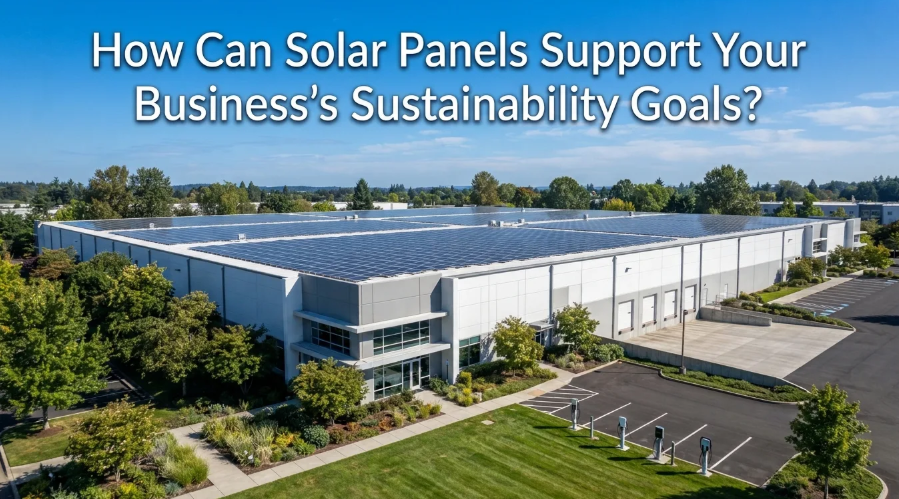
Many commercial buildings have large roof areas that may be suitable for solar installations. Warehouses, factories, offices and distribution centres can sometimes use these existing spaces to generate renewable electricity.
Making use of suitable roof space can allow businesses to introduce renewable energy generation without significantly changing how the premises operate.
However, the building must be assessed to establish whether the roof is structurally suitable and whether factors such as shading, orientation and available space will support effective generation.
A professional assessment can help determine whether the property is appropriate for solar installation.
Encouraging More Responsible Energy Consumption
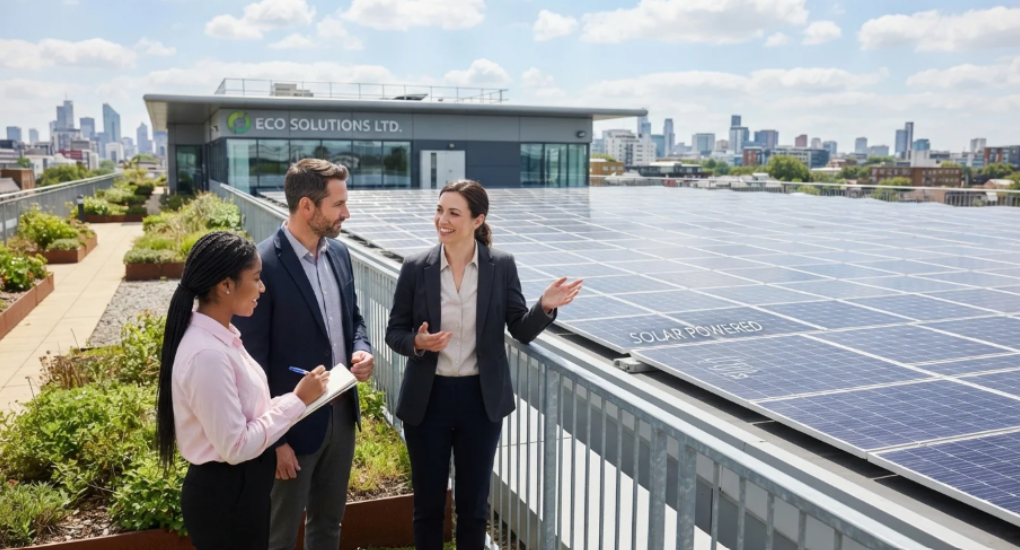
Installing solar panels can encourage businesses to take a closer look at how and when they use electricity.
Once an organisation begins monitoring its own generation, it may become more aware of its consumption patterns and opportunities to improve energy efficiency.
For example, a business might identify opportunities to operate certain machinery during periods of higher solar generation or review the use of lighting and equipment outside normal working hours.
These changes can complement the installation by helping the organisation use energy more effectively.
It is worth remembering that generating renewable electricity and reducing unnecessary consumption are two different but complementary approaches. A well-planned sustainability strategy should consider both.
Supporting Wider Renewable Energy Investments
Solar panels can also work alongside other technologies to support a business’s wider environmental objectives.
For example, battery storage can allow surplus solar electricity to be stored for later use. This may help businesses make better use of their generation when electricity demand does not coincide with daylight hours.
Electric vehicle charging is another area where solar power may be useful. Businesses with compatible charging equipment can potentially use some of their solar generation to charge company vehicles or employee electric vehicles.
Energy monitoring systems can provide additional information about electricity generation, consumption and storage.
The suitability of these technologies will depend on the organisation’s operations, budget and energy requirements, but considering how they work together can help businesses develop a more coordinated approach.
Demonstrating Environmental Responsibility
Customers, employees, suppliers and other stakeholders may take an interest in how a business manages its environmental responsibilities.
Investing in renewable electricity generation can demonstrate that an organisation is taking practical steps to address its energy use and environmental impact.
For businesses that publish sustainability reports or communicate environmental progress, solar installations can provide measurable information about renewable electricity generation.
However, environmental claims should be accurate and supported by evidence. Businesses should avoid suggesting that installing solar panels makes their operations entirely carbon-neutral or eliminates their environmental impact.
Clear reporting about what the system generates, how much electricity is used on-site and what emissions reductions can reasonably be attributed to it can help build credibility.
Considering Sustainability Alongside Business Costs
Environmental improvements also need to make financial sense for the organisation.
Although installing solar panels involves an initial investment, generating electricity on-site may reduce the amount a business needs to purchase from its supplier. This can help support the financial case for a sustainability project.
When assessing the potential benefits, businesses should consider installation costs, expected electricity generation, energy consumption patterns, maintenance requirements and any available export arrangements.
It is also important to understand the expected payback period and how the system fits into wider investment plans.
A detailed financial assessment can help businesses balance their environmental ambitions with practical operating requirements.
Setting Realistic Sustainability Targets
Solar panels are most useful when they form part of a clear and measurable sustainability plan.
Before installation, businesses should establish their current electricity consumption and identify what they want the system to achieve. This might include generating a certain proportion of annual electricity demand, reducing grid imports or supporting an emissions reduction target.
Once the system is operational, monitoring data can help track progress and identify areas where further improvements may be possible.
Targets should be realistic and reviewed regularly, taking account of changes in business operations, electricity consumption and system performance.
Combining solar generation with energy efficiency improvements, responsible purchasing and other environmental initiatives can help organisations make steady progress towards their wider objectives.
The Bottom Line
Solar panels can play a useful role in helping businesses work towards their sustainability goals. By generating renewable electricity on-site, organisations may reduce their reliance on grid electricity, support carbon reduction objectives and make better use of existing commercial premises.
They can also encourage more informed energy management and work alongside technologies such as battery storage and electric vehicle charging.
For the best results, businesses should consider solar power as part of a wider sustainability strategy. By setting realistic targets, monitoring performance and making informed decisions about energy consumption, organisations can take practical steps towards more responsible and efficient operations.
todaysmagazine.co.uk

Design Ideas to Give Meeting Rooms a More Professional Feel

Beyond the City Streets: Why Off-Road Electric Scooters Are Gaining Attention Among Adventure Riders

What To Look for When Choosing an Employment Law Firm

How Can Solar Panels Support Your Business’s Sustainability Goals?

Virtual Jewelry Try-On Guide: Definition, Technology & How-To

Signs It Is Time to Start Looking for an Infant-Qualified Au Pair

How to Ensure Your Home is Valued Correctly for a Quick Sale

Christopher Dare: The Untold Story of Engineer and Former Husband of Angela Rippon

The 15 Highest-Paid Rugby Players in the World

What Is Fanquer? The Digital Creator Platform Transforming Direct-to-Fan Engagement

Dr Jared Ross: Missouri Appeals Court Upholds Protection Order Over Graphic Torture and Murder Threats

Who Is Azriel Crews? Inside the Life and Career of Terry Crews’ Daughter
How to Ensure Your Home is Valued Correctly for a Quick Sale
Christopher Dare: The Untold Story of Engineer and Former Husband of Angela Rippon
The 15 Highest-Paid Rugby Players in the World
What Is Fanquer? The Digital Creator Platform Transforming Direct-to-Fan Engagement
Dr Jared Ross: Missouri Appeals Court Upholds Protection Order Over Graphic Torture and Murder Threats
Who Is Azriel Crews? Inside the Life and Career of Terry Crews’ Daughter
-
 Real Estate10 months ago
How to Ensure Your Home is Valued Correctly for a Quick Sale
-
Celebrity1 year ago
Christopher Dare: The Untold Story of Engineer and Former Husband of Angela Rippon
-
 Sports7 months ago
The 15 Highest-Paid Rugby Players in the World
-
 Technology6 months ago
What Is Fanquer? The Digital Creator Platform Transforming Direct-to-Fan Engagement
-
 Celebrity6 months ago
Dr Jared Ross: Missouri Appeals Court Upholds Protection Order Over Graphic Torture and Murder Threats
-
 Celebrity9 months ago
Who Is Azriel Crews? Inside the Life and Career of Terry Crews’ Daughter
-
 Celebrity1 year ago
Nancy Hallam: The Inspiring Life, Career, and Success Story Behind Ian Wright’s Wife
-
 Celebrity1 year ago
Who Is Maisie Mae Roffey? The Private Life, Family Story, and Quiet Success of Julie Walters’ Daughter