
Ai & Tools
How to Make AI-Designed Viral Games Using an AI Game Maker Tool

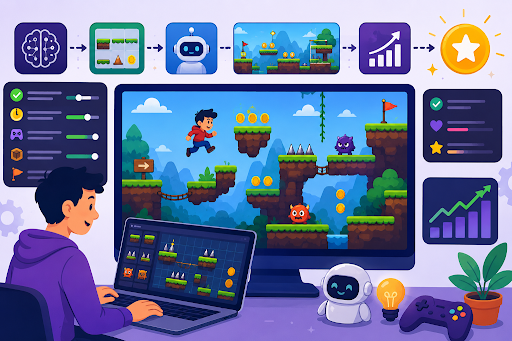
How to Make Viral Games Using AI Tools
Artificial intelligence is becoming an important tool in modern game development, especially for developers building viral games that require large numbers of levels. A good game builder can quickly generate layouts, place obstacles, and create multiple stages within minutes, letting developers focus on gameplay mechanics and player experience. However, AI-generated levels often come out feeling too mechanical. Platforms line up perfectly, enemies spawn at predictable intervals, and collectibles are arranged in exact patterns. While these levels function properly, they often lack the natural flow and creativity players expect. For viral games, where engagement and replayability are critical, level design needs to feel dynamic and interesting. By guiding AI generation with thoughtful design choices, developers can transform mechanical layouts into levels that feel natural and enjoyable.
Why AI-Generated Levels in Viral Games Often Feel Artificial
AI level generation systems typically rely on patterns and consistency to keep gameplay balanced. When developers give simple instructions like generate platforms, enemies, and collectibles, the AI tends to organize these elements in symmetrical, evenly spaced layouts. This results in levels where platforms sit at identical distances, enemies follow repeated patterns, and obstacles are distributed predictably. Although this keeps levels playable, it also strips away the unpredictability that makes gameplay exciting. In viral games, players often decide within the first few seconds whether they’ll keep playing. If the level structure feels repetitive or robotic, the experience can quickly become boring. To create engaging levels, developers need to guide AI tools with instructions that introduce variation and purposeful design.
Planning the Flow of Gameplay Before Generating Levels
One effective way to improve AI-generated levels is to plan the player’s journey before using generation tools. Each level should guide the player through a clear progression that gradually increases challenge and excitement. In many successful viral games, levels begin with a simple introduction that lets players understand the basic mechanics. As the level continues, obstacles become slightly more demanding, requiring quicker reactions or more precise movements. Toward the end, the level often builds toward a rewarding moment, such as a satisfying jump or a final obstacle that feels exciting to overcome. By describing this progression in the generation prompt, developers can help the AI produce levels that feel structured and intentional instead of random collections of platforms and enemies.
Creating Natural Variation in Platform Spacing
Perfect spacing between platforms is one of the most common signs that a level was AI-generated. Real environments rarely follow strict patterns, and well-designed game levels often include irregular distances between obstacles. In viral games, this variation helps maintain player attention and creates a more dynamic rhythm of movement. Developers can encourage this by specifying uneven platform spacing, slight height differences, and occasional longer jumps that challenge the player. Including sections with fewer obstacles can also provide short moments of relief between more intense areas. These small variations make a level feel less predictable and more engaging, which encourages players to keep progressing.
Using Clusters Instead of Even Distribution
Another way to create more natural AI-designed levels is to use clusters of objects rather than spreading everything out evenly. AI tools frequently place collectibles and enemies at equal intervals, which can quickly start to feel repetitive. In natural level design, objects often appear in groups that create moments of tension or reward. For example, several coins might appear above a difficult jump, encouraging players to take a risk to collect them. A group of enemies might guard a valuable item, forcing the player to decide whether to avoid the area or confront the challenge. These clustered arrangements create meaningful decisions during gameplay and make levels feel more purposeful.
Adding Environmental Context to Levels
Levels become more engaging when the environment supports the gameplay. Even in simple viral games, environmental elements can make a level feel more believable and connected. Instead of placing platforms randomly in open space, developers can describe terrain features that naturally influence level structure. Broken bridges can create gaps that players must jump across, rocky surfaces can lead to uneven platform heights, and cave passages can narrow the playable area to increase tension. These environmental cues help players understand the layout and provide visual storytelling that makes the level feel more immersive.
Balancing Rhythm and Pacing
Effective level design often relies on rhythm, alternating between faster and slower gameplay sections. AI-generated levels sometimes maintain a constant pace, which can make the experience feel repetitive over time. In well-designed viral games, the beginning of a level usually lets players move comfortably while learning the layout. The middle portion introduces more obstacles or tighter spaces, requiring faster reactions and greater precision. Near the end, the level may present its most intense challenge before concluding with a satisfying finish. This gradual change in pacing keeps players engaged and prevents fatigue, making the overall experience more enjoyable.
Testing Levels in Full Sequences
Even when individual levels appear well designed, problems often become visible when multiple levels are played in sequence. Patterns such as repeated layouts or similar enemy placements can reduce the sense of progression in viral games. Testing several levels back to back helps developers identify where gameplay begins to feel repetitive. During testing, it’s useful to observe how long players spend on each level and which sections cause frustration or boredom. Feedback from testers can reveal which parts feel natural and which sections need improvement. Using this information, developers can adjust AI prompts or regenerate specific sections to introduce more variation.
Seeing These Principles in a Finished Game
Pixel Bazooka Blast is a useful example of how varied pacing, clustered objects, and environmental detail come together in a finished level. Rather than feeling like a flat, evenly spaced layout, the game builds moments of tension and release that keep players moving forward. Looking at how a finished game balances these elements can give developers a clearer reference point when refining their own AI-generated levels.
Conclusion
AI tools offer powerful opportunities for developers creating viral games because they allow large numbers of levels to be generated quickly. However, without careful guidance, AI-generated designs can come out too structured and predictable. By focusing on level flow, introducing natural variation, clustering objects, adding environmental context, and balancing gameplay rhythm, developers can significantly improve the quality of AI-generated levels. Combining these design principles with AI generation lets developers maintain efficiency while still creating gameplay experiences that feel engaging, natural, and enjoyable for players.



Artificial intelligence is moving beyond experimentation and becoming part of everyday digital life in the UK. One particularly interesting development is the growth of paid AI subscriptions. A study published by the University of Warwick’s CAGE Research Centre on 5 November 2026, involving researchers from the University of Warwick and Imperial Business School, estimates that UK consumer spending on AI products has reached more than £1 billion annually. Around one in twenty UK adults now pays for an AI tool, with subscription numbers approximately doubling each year.
The research also identifies ChatGPT as the leading platform in UK consumer AI subscription spending, reflecting its established role in the rapidly developing AI market.
So why are more people exploring paid AI tools, and how can ChatGPT fit into everyday routines? Here are some of the key trends and practical uses worth understanding.
1. AI Subscriptions Are Becoming Part of the UK’s Digital Lifestyle
For years, people have paid for digital services such as music streaming, video platforms, cloud storage, and productivity software. AI subscriptions are now becoming another part of this landscape.
The latest UK research highlights how quickly consumer interest in paid AI products has developed. More people are recognising that conversational AI can support a variety of activities, from handling everyday writing tasks to exploring complex subjects and organising information.
This shift is particularly relevant for people whose work involves research, communication, planning, and creative problem-solving. Rather than using AI only occasionally, regular users are exploring how it can become a consistent part of their daily routines.
ChatGPT has played an important role in this development. Its conversational interface makes it accessible to people with different levels of technical experience, allowing users to ask questions, develop ideas, and work through tasks using natural language.
For readers exploring their access options, ChatGPT accounts provide a starting point for discovering ways to incorporate ChatGPT into their digital routines.
2. Why ChatGPT Is Popular Among UK Professionals
One major reason for ChatGPT’s popularity is its versatility. Instead of being designed around a single task, it can support different stages of a typical working day.
For professionals, this might mean preparing a meeting agenda in the morning, organising research notes during the afternoon, and drafting a presentation outline before the end of the day.
Some practical examples include:
- Email writing: Develop clear professional messages, adjust tone, and organise important information.
- Research support: Explore unfamiliar subjects, generate research questions, and summarise background information.
- Project planning: Break larger objectives into smaller tasks and create structured schedules.
- Content development: Brainstorm article topics, prepare outlines, and refine written drafts.
- Learning new skills: Request explanations, practical examples, and guided exercises.
These applications help explain why AI tools are attracting attention across different professional sectors.
The UK Government’s 2026 AI Adoption Survey also found that one-third of UK businesses were using at least one AI technology, compared with 16% in 2025. Among organisations using or planning to use AI, large language model-based applications were particularly prominent.
This suggests that conversational AI is becoming an increasingly familiar part of modern business workflows.
3. ChatGPT Plus and the Growing Interest in Premium AI Features
As people become more familiar with ChatGPT, some begin exploring the additional capabilities available through paid subscription options.
ChatGPT Plus is particularly relevant to users who want to make AI a more regular part of their work or personal projects. Depending on the features currently available, users can explore capabilities such as working with files, analysing information, generating images, and using advanced tools to support more involved tasks.
For example, a student might use ChatGPT to organise information from study materials, while a marketing professional could use it to develop campaign ideas and structure content plans.
A freelancer may also find it useful when preparing client proposals, brainstorming creative concepts, or organising research for different projects.
People researching ChatGPT Plus cheap options may also want to compare the available access choices and consider which features best match their needs.
The most useful approach is to identify the tasks you perform regularly and explore how different AI capabilities can support them.
4. Students Are Finding New Ways to Learn with ChatGPT
Education is another area where ChatGPT is attracting considerable attention.
Instead of simply searching for a definition, students can use conversational AI to explore a subject through follow-up questions and practical examples. This creates a more interactive learning experience.
For example, someone studying economics could ask ChatGPT to explain inflation using everyday examples. A language learner could practise conversations, explore vocabulary, or request explanations of grammatical structures.
Students can also use it to:
- Create revision schedules for upcoming examinations.
- Generate practice questions for different subjects.
- Break complicated concepts into smaller explanations.
- Organise research topics before starting an assignment.
- Create flashcard-style questions for revision.
The key is to use AI as a learning companion. Students should develop their own understanding, check important information, and follow their institution’s academic guidelines when using AI for coursework.
5. ChatGPT Is Also Changing How People Discover Information
Another interesting development in the UK is the growing relationship between AI and news consumption.
According to Ofcom’s News Report 2026, one in five UK adults now uses AI tools such as ChatGPT to keep up with the latest news. ChatGPT was the most popular AI tool for this purpose, used by 13% of adults.
This reflects a broader change in how people explore information online. Rather than relying exclusively on traditional search results, users can ask conversational questions, request summaries, and explore different aspects of a topic.
For example, someone following a major technology announcement might ask ChatGPT to explain the key developments, clarify unfamiliar terminology, or organise the main points into a simple overview.
This conversational approach makes it easier to explore subjects from different angles and discover questions worth investigating further.
For important news and factual information, consulting original reporting and authoritative sources remains a useful part of the research process.
6. How to Get More Value from ChatGPT Every Day
Getting useful results from ChatGPT is not simply about asking more questions. The way a prompt is structured can make a significant difference.
A practical prompt should explain the context, describe the task, and specify the expected format.
For example, rather than writing:
“Help me plan my week.”
Try:
“Create a five-day work schedule for a marketing professional. Include time for research, writing, meetings, and reviewing campaign performance. Present the result as a clear daily timetable.”
The second request gives ChatGPT a better understanding of the task and the type of response required.
You can also improve results through follow-up instructions. Ask ChatGPT to simplify an explanation, provide additional examples, reorganise information, or adapt the tone for a particular audience.
Over time, developing a collection of useful prompts for recurring activities can make AI assistance a more natural part of your routine.
Final Thoughts
The growth of AI subscriptions in the UK reflects a wider change in how people use digital technology. ChatGPT is no longer simply a tool for experimenting with artificial intelligence; it is becoming part of everyday activities across work, education, research, and personal productivity.
As more people explore its capabilities, understanding how to use ChatGPT effectively can become a valuable digital skill.
Whether you are interested in improving your professional workflow, making learning more interactive, or finding new ways to organise daily tasks, ChatGPT offers plenty of possibilities. The next step is to identify where AI can make the biggest difference to your routine and start exploring its capabilities.


A marketing manager who wants better research briefs and a developer who wants to build an AI application may both search for an “AI course.” They are unlikely to need the same classroom. One needs a reliable way to use current tools; the other may need Python, algorithms and considerable practice.
That difference makes the course description more useful than a headline promising a career transformation. The OECD’s 2026 report on AI and skills points to the importance of training as AI changes workplace tasks. Before enrolling, a professional can ask three questions: What will the learner produce, how much time can they commit, and will they use the skills in their current work?
The courses below are an editorial selection, not a ranking by enrollment. Providers do not publish comparable, current learner figures for every program.
Practical AI courses for everyday work
1. Heicoders Academy, Generative AI Course for Automation and Productivity
For someone who wants to move beyond asking a chatbot occasional questions, Heicoders Academy offers a course centered on prompting, AI agents and automation workflows. The Singapore-based technology training provider describes a six week program with hands-on work, including the design of processes that use AI tools.
An operations professional might bring a recurring task, such as sorting incoming requests, and examine where an AI step belongs and where a colleague should review the result. The course’s practical emphasis makes it relevant to that goal. It also requires a larger time commitment than a short introductory lesson, which matters to anyone seeking only a basic overview.
2. Google AI Essentials
Google AI Essentials approaches the subject through familiar office tasks. Its material introduces generative AI and prompting, with an emphasis on applying tools to daily work rather than learning to build models. A professional who drafts emails, organizes ideas or prepares summaries can test the lessons against tasks already on the calendar.
That immediate application is the attraction of an introductory course. It is less suited to someone whose next goal is developing an AI product or working through the mathematics behind machine learning. Such a learner will need a more technical next step.
3. AI for Everyone, from DeepLearning.AI
Andrew Ng’s AI for Everyone is aimed at people who need to understand what AI can do within an organization. It covers terminology, the limits of AI, opportunities for projects and the experience of working with an AI team. The emphasis is on informed participation rather than writing code.
A department manager asked to evaluate a proposed AI initiative could use that foundation to ask clearer questions about the problem and the data involved. The course provides a way into strategic conversations, though a manager ready to configure an automation would need additional practice with specific tools.
4. Microsoft Learn, Enhance Business Workflows with AI
Microsoft’s learning path focuses on using Copilot across common business activities, including drafting content, examining data and managing collaborative work. Its setting is recognizable to employees who spend much of the day in documents, spreadsheets and meetings.
For a team already using Microsoft applications, that context may make it easier to turn a lesson into a small experiment at work. A learner should still distinguish completing the training from having access to every feature shown: workplace permissions and software plans determine what can be used afterward.
5. IBM Generative AI Fundamentals Specialization
IBM’s Generative AI Fundamentals Specialization takes learners through several courses and includes labs using generative AI tools. The broader structure gives someone time to connect basic concepts with examples of how systems are used, rather than concentrating on a single prompt or application.
It may appeal to a professional who wants a structured foundation before choosing a particular workplace use. As with any program featuring named tools, the lasting lesson is how to assess a use case and its output. Interfaces and product names can change faster than the principles behind a careful evaluation.
Courses for business decisions and deeper study
6. AWS Generative AI for Executives
AWS Generative AI for Executives is a four hour classroom course on the concepts and business considerations behind generative AI. Its intended audience is a leader who needs to discuss opportunities and organizational choices without first becoming a developer.
A director reviewing proposals from several teams may find that focus useful. Four hours can establish a shared vocabulary and prompt better questions, but it is not enough time to design, test and govern a complete AI system. The next step would be to examine a specific project with the people responsible for delivering it.
7. Wharton’s AI for Business Specialization
The University of Pennsylvania’s Wharton School offers an AI for Business Specialization that examines AI, machine learning and data through business applications. Its topics include ethical use, governance, people management and marketing, giving learners more than a tour of the latest generative AI interface.
That scope is relevant to a manager deciding how an AI proposal might affect customers or employees. Some examples concern broader machine learning practices, so a prospective learner interested only in this month’s productivity tools should review the syllabus carefully before committing to a longer program.
8. Vanderbilt’s Prompt Engineering for ChatGPT
Vanderbilt’s Prompt Engineering for ChatGPT focuses on patterns for giving language models clearer instructions. It begins with basic prompting and moves toward more involved approaches, without requiring a programming background.
The course suits someone who already uses a chatbot but finds that results vary from one attempt to the next. Better instructions can make a task easier to repeat. They cannot, however, supply missing facts or guarantee a correct answer, so source checking remains part of the workflow.
9. Harvard’s CS50 Introduction to Artificial Intelligence with Python
Harvard’s CS50 Introduction to Artificial Intelligence with Python takes a technical route through AI concepts and programming projects. It is designed for learners prepared to work with Python and understand how intelligent systems are built, rather than simply use an assistant at work.
A software professional considering AI development may welcome that depth. Someone looking for immediate help with presentations or customer emails would face a substantial detour. The course makes sense when learning to build and reason about systems is itself the objective.
Choosing a course that reaches the job
A course is most useful when its exercises resemble work the learner can actually do afterward. The World Economic Forum’s Future of Jobs Report 2025 identifies AI and big data among skills expected to grow in importance, alongside human skills such as analytical thinking. That combination suggests a practical test: can the learner explain an AI output, spot a weak conclusion and decide what to do with it?
The NIST AI Risk Management Framework also offers a useful reference for professionals whose course projects may eventually affect real decisions. An appealing demonstration is a start. The lasting value comes when someone can apply the method to a recurring task and recognize when the result needs correction.
FAQ
Which AI course is suitable for someone without coding experience?
Several entries focus on business use or everyday tools. The learner should check the stated prerequisites and examine a sample exercise before enrolling.
Is a longer course necessarily more useful?
No. Duration matters when it gives a learner enough time to practise the specific skill they need. A short introduction may be sufficient for understanding terms and asking better questions.
Should a course focus on one AI tool?
That depends on the job. Tool-specific instruction can be immediately useful, while broader concepts may remain useful when an interface changes.
How can a professional judge whether the training worked?
They can apply one lesson to a real task, check the output against the original material and see whether the process becomes clearer or more reliable.


Photography has always offered a way to preserve meaningful moments, from family gatherings to memorable travel experiences. However, modern digital tools have expanded what people can do with those images. A photograph no longer has to remain a realistic record of a scene. It can also become a creative interpretation shaped by color, texture, and artistic expression.
One style attracting interest among digital creators is Impressionism. Recognized for its expressive brushstrokes, changing light, and emphasis on atmosphere, this artistic movement provides inspiration for transforming everyday photographs into something more personal. Today, image editing technology makes it possible to explore painterly effects without formal art training.
As visual content becomes increasingly important in digital communication, understanding the relationship between photography and traditional art can help individuals create distinctive images while preserving the memories and ideas behind their original photographs.
Understanding Impressionism in the Digital Age
Impressionism developed during the nineteenth century when artists began moving away from highly detailed, traditional compositions. Instead, they explored how light, color, and movement could communicate the feeling of a particular moment.
These principles translate naturally into digital photography. A landscape can become more atmospheric through softer edges and expressive colors, while a street scene can emphasize reflections, changing light, and movement rather than individual details.
Modern editing technology allows creators to experiment with these characteristics using existing photographs. For example, a photo to impressionist painting transformation can introduce painterly textures and color variations while maintaining the original image as a reference.
The objective is not simply to make a photograph look different. It is to explore how artistic interpretation can change its mood and visual character while keeping its central subject meaningful.
Selecting Photographs That Suit Artistic Transformation
The original photograph has a significant influence on the finished artwork. Images with clear subjects, balanced lighting, and recognizable shapes generally provide a useful foundation for artistic experimentation.
Natural landscapes are particularly suitable because they contain varied colors, shadows, and textures. Gardens, beaches, mountain views, and urban streets offer opportunities to reinterpret familiar surroundings through expressive visual treatments.
Portraits require a slightly different approach. Facial expressions, distinctive features, and body language often carry the emotional value of an image. A strong artistic effect should complement these details rather than obscure them.
Before editing, consider which elements matter most. In a travel photograph, the surrounding atmosphere may be the main attraction. In a family portrait, recognizable faces may deserve greater attention. Understanding this distinction helps creators choose an artistic direction that supports the photograph’s original purpose.
Balancing Color, Light, and Texture
Color is central to impressionist artwork because it helps communicate atmosphere without relying entirely on precise outlines. Warm tones can suggest sunlight and comfort, while cooler shades may create a quieter or more reflective mood.
Texture also influences the final result. Visible brush-like marks can give a digital image a more expressive appearance, but excessive detail may distract from the main subject. Similarly, overly strong colors can make a natural scene feel artificial.
A balanced approach considers these elements together. Softening the background while retaining the subject’s defining features can create visual depth. Adjusting contrast may also help important details remain visible without removing the painterly character.
Creators should evaluate the entire composition rather than focusing exclusively on individual effects. A successful artistic interpretation feels cohesive, with color, texture, and lighting working together to communicate a clear visual idea.
Practical Uses for Impressionist-Style Images
Painterly photographs can serve many purposes beyond personal experimentation. Homeowners may use transformed landscapes as decorative artwork, while families can create distinctive keepsakes from meaningful portraits. Pet photographs and vacation memories can also become more personal through artistic reinterpretation.
Digital creators may incorporate these images into blog illustrations, social media graphics, presentation covers, and creative portfolios. When the visual treatment matches the subject and audience, it can help content feel more distinctive without requiring complicated design work.
Consistency becomes especially important when creating a collection. Using similar color palettes and levels of texture can help multiple images feel connected, particularly when they are displayed together.
Before printing or publishing an image, check its resolution, composition, and important details. An artwork that looks attractive on a small screen may reveal weaknesses when enlarged. Reviewing the final file at its intended display size helps ensure that the creative result remains effective.
Conclusion
The combination of traditional artistic principles and modern photography demonstrates how technology can expand creative possibilities. Impressionism offers a particularly useful approach because it emphasizes atmosphere, light, color, and movement rather than strict photographic realism.
However, achieving a compelling result requires more than applying a visual effect. The choice of source photograph, the balance of texture and color, and the preservation of meaningful details all influence the finished image. Thoughtful decisions help ensure that artistic changes enhance the original subject instead of distracting from it.
As digital editing tools continue to develop, more people can experiment with artistic styles regardless of their painting experience. This accessibility creates opportunities for personal expression, visual storytelling, and more distinctive digital content.
Ultimately, the value of an impressionist-inspired photograph lies in its ability to present a familiar moment from a different perspective. By combining creative experimentation with careful visual judgment, photographers can turn ordinary images into expressive artwork that remains meaningful over time.

Who Pays for Your Injuries After an Uber Accident in Richmond?

What to Consider When Ordering Packaging Samples

How Powder Coating Gets Its Tough Finish: A Beginner’s Guide

7 Benefits of Using an Online Meeting Notetaker for Modern Business Teams

All I Need in This Life of Syn – Syna World, Central Cee und Streetwear-Kultur

The Metadata and Cataloging Layer Most Enterprises Forget When Preparing Data for AI

How to Ensure Your Home is Valued Correctly for a Quick Sale

Christopher Dare: The Untold Story of Engineer and Former Husband of Angela Rippon

The 15 Highest-Paid Rugby Players in the World

What Is Fanquer? The Digital Creator Platform Transforming Direct-to-Fan Engagement

Dr Jared Ross: Missouri Appeals Court Upholds Protection Order Over Graphic Torture and Murder Threats

Who Is Azriel Crews? Inside the Life and Career of Terry Crews’ Daughter
How to Ensure Your Home is Valued Correctly for a Quick Sale
Christopher Dare: The Untold Story of Engineer and Former Husband of Angela Rippon
The 15 Highest-Paid Rugby Players in the World
What Is Fanquer? The Digital Creator Platform Transforming Direct-to-Fan Engagement
Dr Jared Ross: Missouri Appeals Court Upholds Protection Order Over Graphic Torture and Murder Threats
Who Is Azriel Crews? Inside the Life and Career of Terry Crews’ Daughter
-
 Real Estate10 months ago
How to Ensure Your Home is Valued Correctly for a Quick Sale
-
Celebrity12 months ago
Christopher Dare: The Untold Story of Engineer and Former Husband of Angela Rippon
-
 Sports6 months ago
The 15 Highest-Paid Rugby Players in the World
-
 Technology6 months ago
What Is Fanquer? The Digital Creator Platform Transforming Direct-to-Fan Engagement
-
 Celebrity6 months ago
Dr Jared Ross: Missouri Appeals Court Upholds Protection Order Over Graphic Torture and Murder Threats
-
 Celebrity9 months ago
Who Is Azriel Crews? Inside the Life and Career of Terry Crews’ Daughter
-
 Celebrity1 year ago
Nancy Hallam: The Inspiring Life, Career, and Success Story Behind Ian Wright’s Wife
-
 Celebrity1 year ago
Who Is Maisie Mae Roffey? The Private Life, Family Story, and Quiet Success of Julie Walters’ Daughter