
Business
Ecommerce Payment Processing: The Best Practices Every Merchant Needs to Follow in 2026


Checkout flows that worked fine two years ago are quietly costing merchants money today. Consumer expectations have moved fast, fraud has gotten smarter, and the compliance environment has tightened. Merchants who treat eCommerce payment processing as a background function are falling behind those who treat it as a growth tool.
Here’s what actually matters in 2026.
Checkout Friction Is Costing More Than You Think
Customers don’t explain why they leave — they just go. And in most cases, a slow or complicated checkout is the reason.
Kill the Long Checkout Form
The standard multi-step card form is losing to faster alternatives. Digital wallets like Apple Pay and Google Pay let customers complete a purchase in under ten seconds. Placing these wallet buttons directly on product pages — not just the cart — captures buyers before hesitation sets in.
A few quick wins worth prioritizing:
- Enable one-click payments via digital wallets on product detail pages
- Allow guest checkout without forcing account registration
- Use Payment Account Reference (PAR) tokens to link guest sessions to loyalty profiles after purchase
None of these requires a full platform overhaul. Most modern eCommerce payment processing solutions can implement these changes to make a noticeable difference in conversion within weeks.
Send Better Data With Every Transaction
Every authorization request carries data — device ID, IP address, billing details — and issuers use that data to decide whether to approve the transaction. Incomplete payloads increase the decline risk.
ISO 20022 compliance is part of this. Missing required data fields now cause hard declines that simply didn’t happen before. Treating payment data quality as a technical checkbox rather than a revenue issue is a mistake that shows up in authorization rates.
The Infrastructure Practices That Separate Growing Merchants
Getting the checkout experience right is only half the picture. What happens behind the scenes matters just as much.
One Gateway Is a Single Point of Failure
Relying on a single payment gateway means one outage or routing gap can take down an entire checkout. Payment orchestration platforms (POPs) run multiple acquirers simultaneously — if one fails, transactions reroute automatically.
The smarter eCommerce payment processing services also use machine learning to send each transaction to whichever processor has the best approval odds at that moment. It’s not a dramatic change to implement, but the cumulative effect on authorization rates is real.
Switch From Card Numbers to Network Tokens
Storing raw Primary Account Numbers (PANs) for recurring billing is becoming both a security risk and a performance problem. Network tokens — issued directly by Visa or Mastercard — are tied to a specific merchant context and consistently outperform PANs on authorization rates.
Account updater services complete the picture by automatically refreshing stored credentials when cards expire. For subscription businesses, this directly reduces involuntary churn caused by outdated card data. Mastercard has publicly committed to 100% eCommerce tokenization by 2030 — the direction is set.
Offer More Ways to Pay
Card-only checkouts are leaving revenue behind. The payment methods worth adding in 2026:
- Digital wallets — now the second most accepted global payment method.
- Account-to-account (A2A) payments — lower eCommerce payment processing fees and faster settlement, particularly popular in European markets
- Buy Now Pay Later (BNPL) — still growing, but only through providers that comply with current EU and UK regulations
- Stablecoins — worth evaluating for cross-border transactions; PayPal, Fiserv, and Stripe have all released fiat-pegged products
The right mix depends on where customers are located and what transaction types dominate. Not every option fits every merchant.
Fraud and Compliance: What Changed and What’s Coming
Security requirements tightened in 2026, and enforcement caught up with the rules faster than most expected.
Fraud Prevention Needs to Move Earlier
Traditional fraud tools catch problems after a transaction is submitted. Modern AI-native systems use e-сommerce fraud prevention behavioral signals and adaptive scoring to flag risk before processing begins. The goal isn’t just catching more fraud — it’s doing so without blocking legitimate customers.
Visa’s Acquirer Monitoring Program (VAMP) adds a compliance layer here. VAMP tracks dispute ratios and enumeration attack rates, and fines are being passed from acquirers to merchants. Staying within VAMP thresholds requires ongoing monitoring, not a quarterly review.
Compliance Deadlines Are Real
The eCommerce payment processing compliance landscape in 2026 includes a few items that can’t be deferred:
- PCI DSS 4.0 — stricter requirements around skimming protections and multi-factor authentication are now active
- eIDAS 2.0 (EU) — merchants selling in the EEA will need to accept EUDI Wallets for Strong Customer Authentication by 2027
- Passkey authentication — faster and more phishing-resistant than passwords; gaining ground as a standard for returning customer logins
3D Secure deserves a separate mention. Merchants who once viewed 3DS as a friction problem are finding that frictionless flows and smart exemption logic can make it conversion-neutral or better. It’s worth revisiting if the last implementation was several years ago.
AI Agents Are Already Buying Things
Agentic commerce — where AI systems complete purchases on behalf of users — is moving from concept to reality. Protocols are actively being developed by Visa, IBM, and Google to handle machine-to-machine transactions, though questions around liability for agent-initiated orders haven’t been fully resolved yet.
Effective eCommerce payment processing solutions will need to handle these automated transactions as reliably as human ones. Merchants who adapt early will have an advantage when this scales.
Final Thoughts
The merchants who treat eCommerce payment processing as something to configure once and revisit rarely are leaving real money behind. Authorization rates, fraud losses, and checkout abandonment all move with the quality of the payment stack.
The practices covered here — faster checkout, better data, smarter routing, tokenization, fraud prediction, and compliance readiness — aren’t advanced moves reserved for enterprise retailers. They’re the foundation of any online business that wants to grow in 2026 and beyond.



Do you seek precision, efficiency, and movement freedom in your work? This sander provides you with the dependability and efficiency needed for woodworking projects, surface refinishing, or prepping materials before painting. Indeed, its cordless and well-engineered design made this one of the most popular for anyone in need of a dependable Milwaukee orbital sander capable of performing reliably in almost any application.
Cordless Technology for Modern Workspaces
One of the best things about this tool is that it is a cordless one, so you can easily move around without too many wires or where power outlets are placed. That versatility is particularly useful on job sites where outlets may be few and far between. The M18 battery platform that powers the tool stays cool, so you can get to work. Milwaukee Orbital Sander M18 Mobility And Performance. The Milwaukee orbital sander M18 has excellent mobility combined with performance ideal for indoor and outdoor projects, especially applications where freedom of movement is important.
High-Performance Motor and Sanding Efficiency
Powering the Milwaukee M18BOS125-0 is a robust motor that provides some decent sanding capability. It uses random orbital action to deliver smooth finishes and minimize the swirl marks for professional results. It can be said to be a versatile tool, having the possibility of working on wood, metal, and plastic, among other materials. The orbital sander Milwaukee concentrated on the steady power output, which means that the sensor will adjust and work securely even from a substantial workload; this avoids compromising the quality affected by doing venture quick.
Ergonomic Design and User Comfort
Comfort is a key factor when you are the one using sanding tools for hours. Alongside its vibration-reducing performance, Milwaukee M18BOS125-0 also features an ergonomic design that improves control and makes it easy to use. Also, being a durable construction further helps to minimize user fatigue, allowing for prolonged working periods without feeling discomfort. The Milwaukee orbital sander has been thoughtfully designed so it is comfortable to use, an important consideration for professionals who spend hours on the job site.
Precision Job with Variable Speed Control
Adapts speed to the material and task. It provides a greater level of precision and flexibility in delivering the end product, as you can meet different requirements across surfaces. It operates at a maximum of 11000 orbits per minute, so you can set it for slower use if working on soft materials and faster for aggressive deletion. This enhanced control improves tool performance and produces consistent results no matter which application is being used.
Advanced Dust Collection System
Dust management is another key aspect of sanding that can affect visibility and health. It also has an efficient dust collector, which collects the waste produced while operating. It reduces the number of additional code cleanups required and helps to maintain a clean workspace. Their orbital sander, Milwaukee, minimizes airborne debris, creating a more comfortable working environment and allowing you to see what you’re doing for improved results.
Durability and Build Quality
Milwaukee builds tools that are built to last, and this sander is no exception. Heavy-duty construction gives durable, high-quality material the longevity for heavy professional use. Designed for rock-solid durability, built to survive the harshest conditions. Milwaukee orbital sanders are built to deliver reliable performance and durability, ensuring good value for money, whether you are a professional or DIY enthusiast.
Versatility Across Applications
The Milwaukee M18BOS125-0 is suitable for sanding wood or preparing metal for finishing. This flexibility has caused this device to be an essential tool in the toolbox for many fields, and logging in automotive. Having a Milwaukee orbital sander M18 can be quite useful as it provides versatility in
Battery Compatibility and Runtime Efficiency
As an M18 system tool, it works with the entire line-up of Milwaukee M18 batteries. Nice to have interchangeable battery packs that offer users varying runtimes for any task. Provided large-capacity batteries so that the working time does not stop. Thanks to the orbital sander, Milwaukee’s energy management capabilities, users can efficiently complete projects without needing to stop and recharge.
Ease of Use and Maintenance
Milwaukee M18BOS125-0 Breaker. Even easier to use. Rip it up, the control is intuitive enough to be described as easy, even for first-timers. Maintenance is also straightforward, as parts are generally exposed and can be cleaned or changed. This also means the Milwaukee orbital sander is easy to maintain in its original form and has a longer work life for years.
The Professional Performance in a Portable Tool
The Milwaukee M18BOS125-0 is a small tool, but with the hands its heavy hitter. Power, precision, and portability are fantastic in one laptop without losing any comfortable experience. This feature, combined with the flexibility and compact nature of the Milwaukee orbital sander M18, makes it a perfect tool for professional or DIY users requiring high-quality results, but don’t need the bulk that larger tools offer.
Safety Features and User Protection
Power tools come with risks to safety, and the Milwaukee M18BOS125-0 is designed in such a way to be as helpful in protecting the user. Dust To Dust: A Controlled Grip And Less Vibration Kept Your Hands From Getting In The Way. Though the Dust Collection System Keeps It Out Of Your Lungs, it gives much safety that lets the users focus on their work without being hurt.
Cost-Effectiveness and Value
The Milwaukee M18BOS125-0 is a tool you are investing | in. Its durability, performance, and versatility also mean it’s rarely replaced, which over time can save big bucks. These options suggest that the Milwaukee orbital sander is a good investment, even more so if you’re already in the tool may use M18 battery system.
Comparison with Corded Sanders
The Milwaukee M18BOS125-0, as a cordless sander, offers greater freedom and versatility than similar mains-powered (also known as corded) sanders. While plug-in tools provide all-day power and do not require recharge, they cannot compare to the cordless models’ excellent mobility and ease of use. The Milwaukee orbital sander M18 presents an engineering feat of usability by filling this void with a power line to supply the need for all active sanders.
Why Professionals Prefer Milwaukee
One of the most iconic company brands producing quality and reliable tools is Milwaukee. The Product – M18BOS125-0. This denotes the use of state-of-the-art technology with consumer-oriented design, and that is what the product discussed here, M18BOS125-0, has to offer. Hard-working tools make a nice addition to any toolbox, good value, and durable, sturdy!
Final Thoughts
In fact, it was a sander meant for extreme users: Milwaukee M18BOS125-0 18V Li-ion Cordless Random Orbital Sander. It also means a cordless design, high-performance motor, ergonomic features, and long-lasting performance appropriate for a wide variety of different applications. This Milwaukee orbital sander is ideal for both professional tradesmen and DIYers, giving you the power and dependability you need to get results.— Shop Now
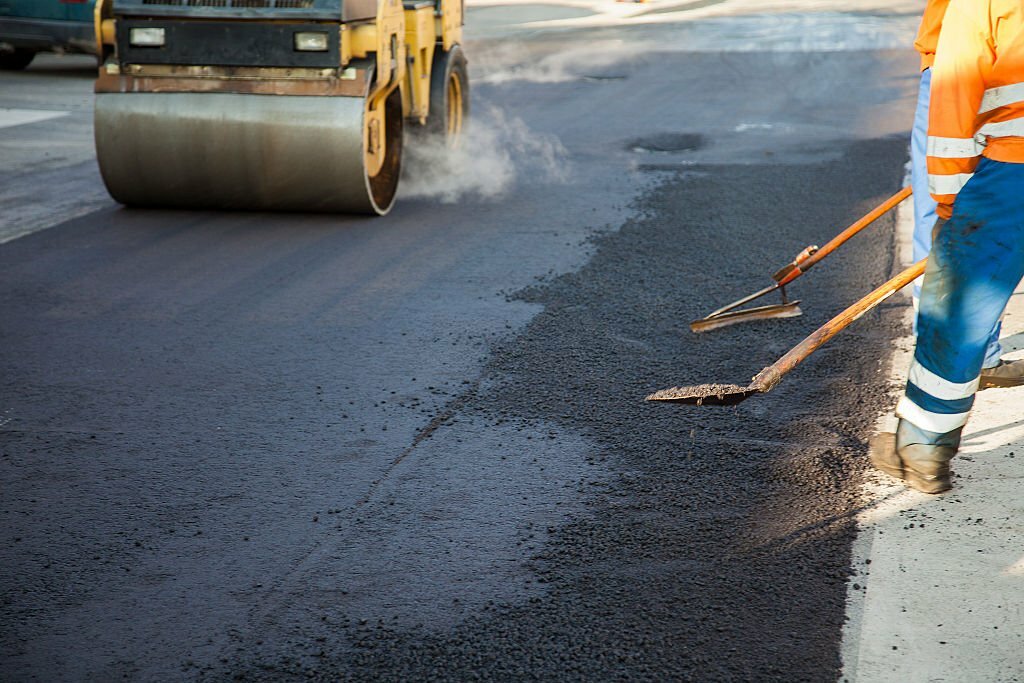
Asphalt is everywhere. Look outside, and you will likely see a road, driveway, or parking lot made from this dark, smooth material. It serves as the foundation of modern infrastructure, providing a safe and reliable surface for vehicles and pedestrians alike. But what makes asphalt paving such a popular choice for both residential and commercial properties?
Many property owners default to concrete or gravel without realizing the immense benefits that asphalt brings to the table. From initial cost savings to rapid installation times, this material offers a unique combination of strength and flexibility. If your driveway is crumbling or your commercial parking lot needs a facelift, understanding the ins and outs of the paving process can help you make an informed decision.
This guide will walk you through the specific advantages of asphalt, how the installation process actually works, and the best ways to maintain your newly paved surfaces. By the time you finish reading, you will know exactly how to protect your investment and keep your property looking pristine for decades to come.
Why Choose Asphalt Paving for Your Property?
Selecting the right material for a driveway or parking lot is a major decision. Asphalt consistently ranks as a top choice for several key reasons.
Outstanding Cost-Effectiveness
Budget is a primary concern for any home improvement or commercial project. Asphalt is generally much cheaper to install than concrete. The materials cost less to produce, and the labor required for installation is significantly lower. This makes it an incredibly attractive option for large surface areas like commercial parking lots or long residential driveways.
Flexibility and Durability
Unlike rigid materials that crack easily under pressure, asphalt is inherently flexible. This flexibility allows it to withstand the natural expansion and contraction caused by seasonal temperature changes. When the ground freezes and thaws, asphalt can adapt slightly without sustaining major structural damage. This resilience makes it especially useful in regions that experience harsh winter weather.
Quick Installation and Usability
Time is money, especially for commercial properties that cannot afford to shut down their parking lots for weeks. Asphalt paving is a remarkably fast process. A standard driveway can often be prepped and paved in just one or two days. Furthermore, the curing time is incredibly short. You can typically drive on a new asphalt surface within 48 to 72 hours, whereas concrete can take up to a week before it is safe for heavy vehicle traffic.
The Paving Process Explained
Understanding how a paving crew operates can help you prepare for your upcoming project. A high-quality result requires careful preparation and execution across several distinct phases.
Demolition and Removal
The first step in any repaving project is removing the old, damaged surface. Crews use heavy machinery to tear up the existing asphalt, concrete, or pavers. The debris is then hauled away. Fortunately, old asphalt is highly recyclable, and most contractors will take the material to a recycling plant where it can be repurposed for future construction projects.
Grading and Sloping
Water is the biggest enemy of any paved surface. If water pools on your driveway, it will eventually seep into the sub-base and cause severe damage. To prevent this, contractors will grade the area to ensure water runs off the sides or toward appropriate drainage systems. Proper sloping is critical for the long-term health of the pavement.
Preparing the Sub-Base
You cannot build a strong house on a weak foundation, and the same logic applies to paving. The sub-base provides a stable surface that supports the new asphalt. Contractors will lay down a layer of crushed rock and use heavy rollers to compact it tightly. This step prevents the ground from shifting under the weight of heavy vehicles.
Applying the Binder and Surface Course
Once the sub-base is solid, the crew applies the binder layer. This consists of large aggregate mixed with oil, providing the structural strength of the new pavement. Finally, the top layer of fresh asphalt is poured and smoothed out. This top layer uses smaller aggregate, which creates the clean, smooth, and attractive finish that homeowners love.
Essential Maintenance Tips for Long-Lasting Asphalt
An asphalt surface can last upwards of 20 years if cared for properly. Ignoring basic maintenance will significantly shorten its lifespan.
Regular Cleaning and Clearing
Keep your driveway free of debris, leaves, and standing water. Use a push broom to sweep away dirt and a hose to wash away chemical spills. Motor oil and gasoline can slowly dissolve the chemical bonds in asphalt, leading to soft spots and eventual deterioration.
The Importance of Sealcoating
Sealcoating is one of the best things you can do to protect your pavement. A sealcoat acts as a protective barrier against water penetration, UV rays, and chemical spills. Most experts recommend applying a fresh sealcoat every two to three years. This simple step keeps the asphalt looking brand new and prevents minor surface wear from turning into major structural damage.
Fixing Cracks and Potholes
Do not ignore small cracks. Water will enter these crevices, freeze during the winter, and expand, tearing the asphalt apart from the inside. Fill small cracks with a specialized sealant as soon as you notice them. If a pothole develops, have a professional patch it immediately before it compromises the surrounding pavement.
Finding the Right Professionals for the Job
The longevity of your pavement relies entirely on the skill of the contractors you hire. Poor installation will lead to immediate drainage issues, premature cracking, and a surface that needs replacing in just a few years.
It is vital to hire a company with a proven track record of excellence. For instance, businesses and homeowners rely on experienced teams like Depasquale Brothers Paving LLC to handle their installations. Working with seasoned professionals ensures that every step, from the initial grading to the final compaction, is executed flawlessly. Always look for contractors who are fully licensed, insured, and willing to explain their process to you in detail.
Frequently Asked Questions About Asphalt
How long does an asphalt driveway typically last?
With proper installation and consistent maintenance, an asphalt driveway can easily last between 15 and 20 years. Regular sealcoating and prompt crack repair are the keys to extending its lifespan.
When is the best time of year to pave?
Spring and summer are the ideal seasons for paving. Asphalt requires warm ambient temperatures to remain pliable while the crew works. If the air is too cold, the material cools rapidly and cannot be compacted properly.
Can I pave over my existing concrete driveway?
While it is technically possible to pave over concrete, it is rarely recommended. Concrete has expansion joints that will eventually reflect through the new asphalt layer, causing cracks. The best approach is a complete removal of the old concrete to ensure a stable and properly graded sub-base.
Ready to Upgrade Your Surfaces?
Asphalt paving enhances the curb appeal of your home while creating a safe, welcoming environment for commercial customers. Understanding the installation process and committing to simple routine maintenance allows you to maximize your property’s value and ensure long-lasting performance.
Take the time to evaluate your current driveways and parking lots. If you notice severe cracking, large potholes, or drainage issues, it might be time to call in the professionals. Start gathering quotes from reputable contractors today, and take the first step toward a smoother, stronger surface.


International commerce has never been more accessible. A company based in London can partner with a supplier in Vietnam, onboard a client in Brazil, and invest in a joint venture in the Middle East — all in the same quarter. But this ease of connection comes with a critical challenge: how do you know who you are really doing business with? Behind every company name, registration number, and corporate logo sits a web of shareholders, holding entities, and individuals whose identities and intentions may not be immediately obvious.
This is the question at the heart of the global movement toward ownership transparency. Governments, regulators, and international bodies are converging on a shared conviction: the people who ultimately control and profit from businesses should be identifiable, and that information should be available to those who need it. For companies navigating this landscape, understanding how to access and use ownership information is becoming as important as understanding the markets they operate in.
What Is Driving the Transparency Movement
The push for ownership transparency has been building for over a decade, but it has accelerated sharply in recent years. Major data leaks — most notably the Panama Papers and the Pandora Papers — exposed the extent to which anonymous corporate structures were being used to launder money, evade taxes, and circumvent international sanctions. The public outcry that followed gave regulators the political mandate to act, and they have done so with increasing urgency.
The Financial Action Task Force has strengthened its recommendations around beneficial ownership disclosure. The European Union has rolled out successive Anti-Money Laundering Directives requiring member states to maintain registers of beneficial owners. The United States has passed the Corporate Transparency Act. Across Asia, Africa, and Latin America, similar initiatives are taking shape. Yet the availability and depth of ownership data varies enormously from one country to the next, creating a patchwork that businesses must learn to navigate.
The Gap Between Policy and Practice
While the direction of travel is clear — more transparency, more disclosure, more accountability — the implementation reality is uneven. Some countries have established public registers where anyone can look up the beneficial owners of a company. Others have created registers that are accessible only to law enforcement or regulated entities. A significant number have passed beneficial ownership legislation but have not yet built the infrastructure to enforce it.
For companies conducting cross-border due diligence, this inconsistency is a practical problem. A compliance team might be able to identify the full ownership chain of a company registered in the United Kingdom within minutes, but face significant obstacles when trying to obtain equivalent information about an entity in a jurisdiction with weaker disclosure requirements. The risk is that due diligence becomes uneven — thorough in some markets and superficial in others — which undermines the entire purpose of the exercise.
Why Businesses Should Care Beyond Compliance
It is tempting to view ownership transparency as a purely regulatory concern — something that compliance departments deal with while the rest of the business gets on with revenue generation. But that perspective misses the broader strategic value. Knowing who controls the companies in your supply chain, your customer base, and your partnership network is fundamental to managing risk and making informed decisions.
Consider a manufacturing company evaluating a new supplier. Surface-level checks confirm that the supplier is registered and operational. But a deeper look at the ownership structure reveals that the entity is controlled by an individual who is connected to a company currently under investigation for sanctions violations. Without access to ownership information, this connection remains invisible until it becomes a crisis. With it, the risk can be identified and managed proactively.
Investment and M&A Applications
Ownership data plays an equally important role in investment and corporate development. Private equity firms conducting due diligence on acquisition targets need to understand the full ownership structure before committing capital. Hidden shareholders, undisclosed related-party transactions, and complex holding arrangements can all affect valuation, deal structure, and post-acquisition integration.
Venture capital investors use ownership information to verify cap tables, confirm that founders hold the stakes they claim, and identify any existing investors whose rights or preferences could affect future funding rounds. Public market investors analyse ownership concentration to assess governance quality — a company where a single individual controls a majority of voting rights presents a very different risk profile from one with diversified institutional ownership.
Technology as the Enabler
The fragmentation of ownership data across hundreds of national registries makes technology essential for any organisation that needs to access this information at scale. Modern platforms aggregate data from official government sources worldwide, normalise it into consistent formats, and deliver it through APIs that can be integrated into compliance workflows, risk dashboards, and due diligence processes. The most effective platforms maintain direct connections to registries, ensuring that the data returned reflects the current state of affairs rather than a cached snapshot from weeks or months ago.
For compliance teams, these platforms transform what was once a laborious, jurisdiction-by-jurisdiction research process into a streamlined workflow. A single query can return a company’s shareholders, directors, and beneficial ownership chain in a standardised format, regardless of where the entity is incorporated. This consistency makes it possible to apply uniform due diligence standards across an entire portfolio of business relationships.
Continuous Monitoring and the Evolving Standard
Point-in-time ownership checks are necessary but not sufficient. Ownership structures change — shares are transferred, new holding entities are created, directors are replaced, and individuals appear on or are removed from sanctions lists. A verification result from six months ago may no longer reflect reality. This is why the most mature compliance programmes incorporate continuous monitoring, using automated systems to track changes in the ownership profiles of verified entities and generate alerts when material developments occur.
The regulatory expectation around ongoing monitoring is growing. Regulators are moving beyond the assumption that a one-time check at onboarding is adequate, and are increasingly expecting companies to demonstrate that they maintain current, accurate records of the ownership structures within their business ecosystem. Organisations that invest in this capability now will be ahead of the curve as these expectations become formalised into law.
Looking Ahead
The trend toward global ownership transparency is irreversible. The remaining questions are about pace and implementation — how quickly different jurisdictions will build effective registers, how widely access will be granted, and how well the private sector will adapt to the new expectations. For businesses, the strategic calculus is straightforward: those that invest in the ability to access and act on ownership information today will be better protected, better informed, and better positioned to earn the trust of regulators, partners, and the public in the years ahead.

Best Cold Email & Outreach Tools 2026: WarmySender vs Top Competitors Guide

How Ecommerce Websites Help Businesses Increase Online Sales

Custom Software Development for E-commerce: Boost Your Sales

Faucet Repair, Common Problems, and Long-Term Maintenance for Smooth Water Flow

Heavy-Duty Driveway Paver Installation Services Built for Maximum Strength, Smooth Vehicle Movement, and Elegant Property Entrances

Complete Guide to Modern Window Installation Techniques for Long-Term Performance

Nancy Hallam: The Inspiring Life, Career, and Success Story Behind Ian Wright’s Wife

Johnny Carell: Inside the Life, Family, and Rising Success of Steve Carell’s Son

Who Is Maisie Mae Roffey? The Private Life, Family Story, and Quiet Success of Julie Walters’ Daughter

Enclomimed 25 (Enclomiphene) – Effective PCT Protocol

Who Is Cameron Kade Hickenbottom? Shawn Michaels’ Son and His Independent Creative Legacy

Simon Dixon Biography: Lifestyle, Net Worth, Family, Career and Success Story
Nancy Hallam: The Inspiring Life, Career, and Success Story Behind Ian Wright’s Wife
Johnny Carell: Inside the Life, Family, and Rising Success of Steve Carell’s Son
Who Is Maisie Mae Roffey? The Private Life, Family Story, and Quiet Success of Julie Walters’ Daughter
Enclomimed 25 (Enclomiphene) – Effective PCT Protocol
Who Is Cameron Kade Hickenbottom? Shawn Michaels’ Son and His Independent Creative Legacy
Simon Dixon Biography: Lifestyle, Net Worth, Family, Career and Success Story
-
Celebrity6 months ago
Nancy Hallam: The Inspiring Life, Career, and Success Story Behind Ian Wright’s Wife
-
Celebrity7 months ago
Johnny Carell: Inside the Life, Family, and Rising Success of Steve Carell’s Son
-
Celebrity6 months ago
Who Is Maisie Mae Roffey? The Private Life, Family Story, and Quiet Success of Julie Walters’ Daughter
-
 Health4 months ago
Enclomimed 25 (Enclomiphene) – Effective PCT Protocol
-
Celebrity5 months ago
Who Is Cameron Kade Hickenbottom? Shawn Michaels’ Son and His Independent Creative Legacy
-
Business5 months ago
Simon Dixon Biography: Lifestyle, Net Worth, Family, Career and Success Story
-

 Celebrity4 months ago
Who Is Mark Gero? Inside the Life, Art, and Quiet Legacy of an American Creative
-
 Celebrity5 months ago
Draven Duncan: Tim Duncan’s Rising Star Son and His Inspiring Basketball Journey