
Fashion
Lab-Grown vs Natural Diamonds: How to Choose an Engagement Ring

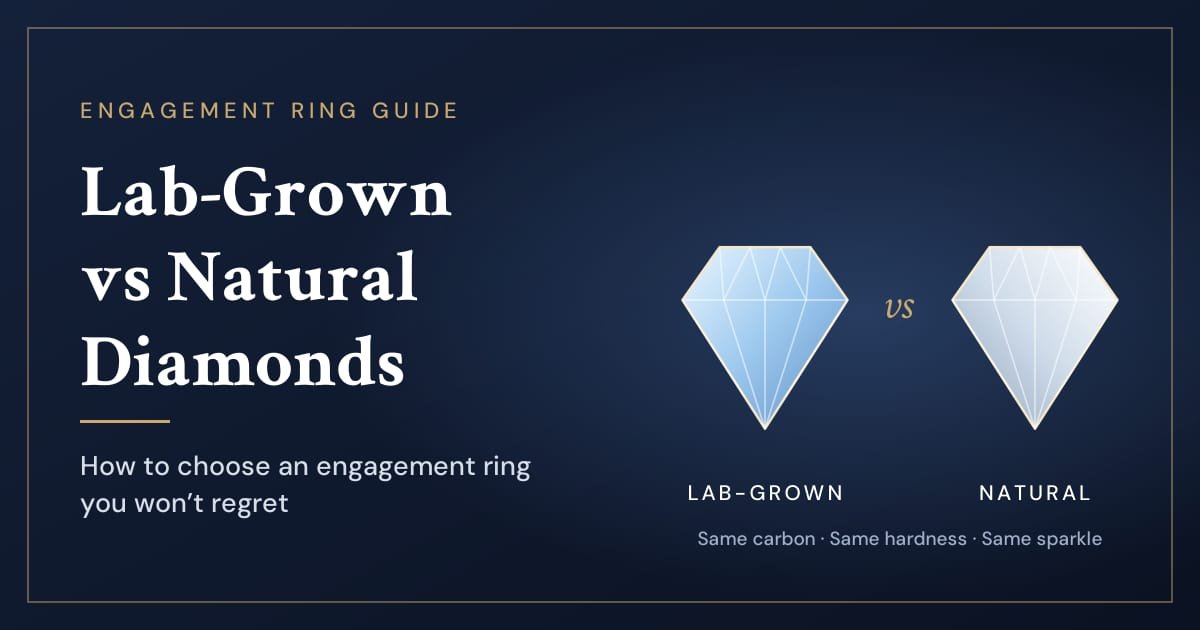
Lab-Grown vs Natural Diamonds: How to Choose an Engagement Ring You Won’t Regret
Quick answer: lab-grown and natural diamonds are both real diamonds. They share the same chemical make-up, hardness and sparkle, and you cannot tell them apart just by looking. The differences are where they formed, how rare they are, what they cost and how they hold value. Choose lab-grown if you want the largest, highest-quality stone for your budget; choose natural if rarity and long-term value matter most to you.
Few purchases carry as much emotional weight as an engagement ring, and the diamond is usually the biggest decision inside it. Ten years ago the choice was simple, because almost every diamond in a jeweller’s window came out of the ground. Today, lab-grown diamonds sit alongside natural stones in many high-street and independent jewellers, and couples are often unsure which one they should be buying.
This guide explains the differences in plain terms, so you can make the choice that suits your budget, your values and the ring you actually want to wear.
What is a lab-grown diamond?
A lab-grown diamond is a real diamond made of pure carbon, grown in a controlled environment rather than mined. Laboratories recreate the intense heat and pressure that form diamonds deep in the earth, or build the crystal layer by layer from carbon-rich gas. The result is a diamond with the same crystal structure as a mined stone.
It is important not to confuse lab-grown diamonds with simulants such as cubic zirconia or moissanite. Simulants only look like diamonds; they are different materials with different hardness and sparkle. A lab-grown diamond is not an imitation. It is a diamond.
What is a natural diamond?
A natural diamond formed deep underground over hundreds of millions, sometimes billions, of years before volcanic activity carried it closer to the surface, where it was mined. Every natural diamond is a piece of geological history, and that finite supply is a large part of why natural diamonds cost more.
Lab-grown vs natural diamonds at a glance
| Lab-grown diamond | Natural diamond | |
| Material | Pure carbon – a real diamond | Pure carbon – a real diamond |
| Hardness | 10 on the Mohs scale | 10 on the Mohs scale |
| Appearance | Identical without magnification | Identical without magnification |
| Origin | Grown in a laboratory over weeks | Formed in the earth over millions of years |
| Rarity | Can be produced to order | Finite supply |
| Price for the same size and quality | Significantly lower | Higher |
| Resale value | Limited resale market | Holds value better over time |
Do lab-grown diamonds look different?
No. A well-cut lab-grown diamond and a well-cut natural diamond of the same grade look the same without magnification, and even an experienced jeweller needs specialist equipment to tell them apart. What makes a diamond beautiful is its cut, colour and clarity, not its origin. A poorly cut natural diamond will look duller than a well-cut lab-grown one, and the reverse is also true.
That is why the most useful question is not “lab or natural?” but “what quality can I get for my budget?”
How much cheaper are lab-grown diamonds?
Lab-grown diamonds cost significantly less than natural diamonds of the same size and quality, and the gap has widened as production has grown. In practice, this means a couple with a fixed budget can usually choose a larger lab-grown stone, a whiter colour grade, a cleaner clarity grade, or all three.
The exact price of any diamond still depends on the four Cs – cut, colour, clarity and carat weight – plus the metal and setting. If you want to see how those factors combine, this guide to how much a 1 carat diamond ring costs breaks down prices by shape, quality and diamond type.
Are lab-grown diamonds as durable as natural diamonds?
Yes. Both score 10 on the Mohs hardness scale, the highest of any natural material, so a lab-grown diamond is just as suitable for an engagement ring you will wear every day. It will not cloud, fade or change colour over time. Durability depends far more on the setting – how securely the claws or bezel hold the stone – than on whether the diamond was mined or grown.
Which holds its value better?
Natural diamonds generally hold more of their value over time, because supply is limited. Lab-grown diamonds have a much smaller resale market, and their prices have fallen as production has expanded. If you see your ring partly as a store of value, or plan to pass it down as an heirloom with investment in mind, natural is the safer choice.
For most couples, though, an engagement ring is something to wear and love rather than to sell. If that describes you, resale value may matter less than getting the ring you really want today.
Are lab-grown diamonds certified?
They should be. Reputable lab-grown diamonds are graded by independent laboratories in the same way as natural stones, with a report confirming the cut, colour, clarity and carat weight and stating that the diamond is laboratory-grown. Always ask to see the grading report before you buy, whichever type you choose.
Which is more ethical or sustainable?
This is a nuanced question. Lab-grown diamonds avoid mining, but growing them uses a substantial amount of energy, so their footprint depends on how that energy is produced. Many natural diamonds are now traced through supply-chain programmes designed to keep conflict stones out of the market. If ethics are a priority, ask your jeweller specific questions about origin and production rather than relying on a label.
How to decide: a simple checklist
- Set your budget first. Decide what you want to spend before you fall in love with a stone.
- Choose your shape. Round, oval, emerald, pear and others all change the look and the price.
- Prioritise cut. A well-cut diamond sparkles more than a larger, poorly cut one.
- Decide what matters more: size and quality, or rarity and resale. Size and quality point to lab-grown; rarity and resale point to natural.
- Compare in person. Ask a jeweller to show you a lab-grown and a natural diamond side by side under the same lighting.
- Check the paperwork. Insist on an independent grading report and a clear warranty.
If you would like to compare styles before you visit a jeweller, browsing a range of lab-grown diamond engagement rings is a quick way to see how different shapes, metals and settings look together.
The bottom line
There is no wrong answer. Lab-grown and natural diamonds are both real, both durable and both beautiful. Lab-grown gives you more diamond for your money; natural gives you rarity and stronger long-term value. Decide which of those matters more to you, insist on a well-cut stone with a proper grading report, and you will end up with a ring you are proud to wear for a lifetime.
Frequently asked questions
Are lab-grown diamonds real diamonds? Yes. Lab-grown diamonds are made of pure carbon with the same crystal structure, hardness and optical properties as mined diamonds. Only their origin is different.
Can a jeweller tell a lab-grown diamond from a natural one? Not by eye. Identifying a lab-grown diamond requires specialist testing equipment, which is why an independent grading report matters.
Is a lab-grown diamond engagement ring a good choice? For most couples, yes. It is just as durable and beautiful as a natural diamond and costs significantly less for the same size and quality. Choose natural if rarity and resale value are priorities.
Do lab-grown diamonds get cloudy over time? No. A lab-grown diamond does not cloud or change colour. Any loss of sparkle comes from everyday dirt, which a professional clean removes.
Which diamond shape looks biggest for its carat weight? Elongated shapes such as oval, marquise and pear tend to look larger than a round diamond of the same carat weight, because more of the stone’s surface faces upward.
About the author
This guide was written by the jewellery team at TJ Gold & Diamond, a jewellery manufacturer that designs and handcrafts lab-grown and natural diamond engagement rings in its own workshop in East Tāmaki, Auckland, with a showroom in Houston, Texas.

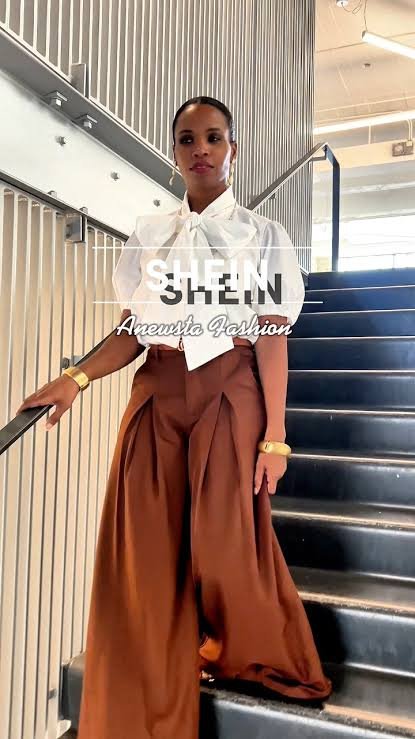
Fashion is all about finding pieces that make you feel confident, comfortable, and stylish. Whether you are getting ready for work, meeting friends for brunch, or planning a casual day out, having versatile clothing in your wardrobe makes putting together outfits much easier. This season, women’s fashion is embracing elegant textures, beautiful prints, feminine details, and comfortable designs that can easily transition from one occasion to another.
For anyone looking to refresh their wardrobe without spending too much, SHEIN offers a variety of fashionable options worth exploring. From sophisticated blouses to cosy sweaters and romantic tops, there are plenty of styles to suit different tastes. Here are four attractive fashion finds that can bring something special to your everyday outfits.
1. Balvessa Black High Neck Velvet and Chiffon Patchwork Blouse
A classic black blouse is one of those wardrobe essentials that never goes out of style. The Balvessa Black High Neck Velvet and Chiffon Patchwork Long Sleeve Women’s Commuter Blouse offers an elegant combination of textures, making it a lovely choice for women who appreciate sophisticated fashion.
Its high-neck design creates a polished appearance, while the velvet and chiffon patchwork adds visual interest. The long sleeves also make it suitable for cooler days, especially when you want an outfit that looks stylish without requiring too many accessories.
This blouse can be paired with tailored trousers for a professional office look or worn with a fitted skirt for an evening occasion. For a more relaxed outfit, combine it with straight-leg jeans and ankle boots. Its versatile black colour makes styling particularly easy.
Promotional Price: £11.49, reduced from £14.49, offering a 20% saving.
2. MISSGUIDED Textured Fringe Trim V-Neck Crop Blouse
If you enjoy experimenting with modern fashion and statement details, the MISSGUIDED Textured Fringe Trim V-Neck Long Sleeve Crop Blouse is another interesting option.
Designed by MISSGUIDED, this blouse features a flattering V-neckline, textured fringe trim, and an eye-catching ruffle front detail. The bell cuffs add a fashionable finishing touch, giving the overall design a feminine and contemporary feel.
The cropped silhouette makes it particularly suitable for pairing with high-waisted jeans, tailored trousers, or fashionable skirts. You can wear it with wide-leg pants and heels for a stylish evening outfit or choose denim and trainers for a more casual appearance.
The combination of fringe detailing and bell sleeves makes this blouse a great choice for anyone who wants something different from ordinary everyday tops.
Promotional Price: £19.56, reduced from £34.30, representing a 42% discount.
3. Abstract Ink Painting Print Turtleneck Sweater
When temperatures start dropping, comfortable sweaters become an important part of everyday dressing. The Women’s Beautiful Abstract Ink Painting Print Sweater combines warmth with an artistic design, making it a stylish addition to an autumn and winter wardrobe.
Featuring an attractive abstract ink painting print, this long-sleeve pullover brings a creative touch to a classic turtleneck silhouette. Its soft and comfortable design makes it suitable for different occasions, whether you are spending the day at the office, going shopping, or enjoying a relaxed outing with friends.
One of the best things about printed sweaters is how easily they can become the centre of an outfit. Pair this design with simple black trousers or neutral-coloured jeans to let the pattern stand out. You can also layer it underneath a long coat when the weather becomes colder.
For women who prefer practical clothing that still looks fashionable, this sweater offers an appealing balance between everyday comfort and elegant styling.
Promotional Price: £18.21, reduced from £23.49, giving shoppers a 22% saving.
4. LUMIGAL Apricot Brushed Ribbed Patchwork Lace Top
Feminine details are continuing to make their mark in women’s fashion, and the LUMIGAL Apricot Brushed Ribbed Patchwork Sheer Floral Lace V-Neck Top is a beautiful example.
Its soft apricot shade creates a warm and delicate appearance, while the floral lace patchwork adds a romantic touch. The V-neckline and lantern sleeves give the design an elegant shape, making it suitable for brunch dates, tea parties, casual gatherings, and other daytime occasions.
The brushed ribbed texture adds another interesting element, helping the top stand out from basic wardrobe staples. It can be styled with cream trousers, a neutral skirt, or classic denim for an effortlessly attractive outfit.
For a more polished appearance, add delicate jewellery and a small handbag. Alternatively, pair it with simple jeans and comfortable flats for an easy everyday look.
This top is particularly appealing to women who enjoy soft colours and romantic fashion without choosing overly complicated designs.
Promotional Price: £10.49, reduced from £12.99, offering a 19% discount.
Refresh Your Wardrobe with Affordable SHEIN Fashion
Updating your wardrobe does not have to mean spending a fortune. Choosing a few versatile pieces with attractive details can make a noticeable difference to your everyday style. From the sophisticated Balvessa black blouse and fashionable MISSGUIDED crop top to the artistic printed sweater and romantic LUMIGAL lace design, these selections offer different ways to express your personality.
The best approach is to choose clothing that matches your lifestyle and can be styled in several ways. A statement blouse can transform simple trousers, while a printed sweater can make a basic winter outfit feel more interesting.
Explore the latest women’s fashion collections at SHEIN to discover more clothing inspiration, seasonal styles, and affordable wardrobe updates. With the promotional prices featured above, this is a great opportunity to explore new looks while making the most of available savings.
Remember to check the latest product prices, available sizes, colours, and shipping details before placing your order, as promotional offers and availability may change.

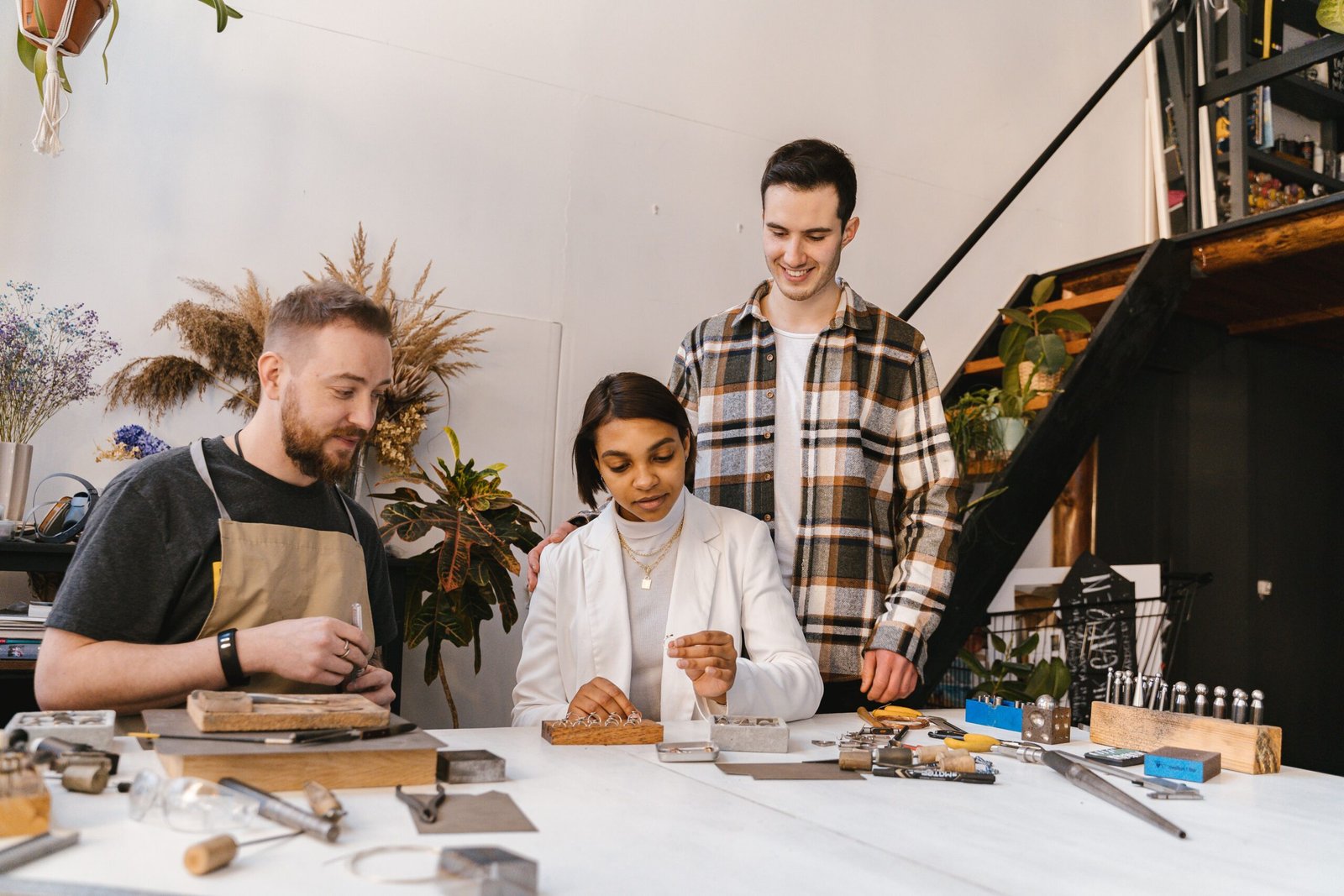
Every school on this list runs at least one course that asks for no portfolio and no previous bench experience, and says so on its own website. Nobody is expected to arrive knowing how to saw a sheet of silver, light a torch or file the inside of a ring.
What some of them still ask for has little to do with jewellery, whether that is a school-leaving certificate, an age limit, a practical selection or a language. The details come from the schools’ own pages and change from year to year, so dates and conditions are worth checking before anyone books.
Where a complete beginner can start
1. City Lit, London
City Lit is an adult education college in central London, with jewellery workshops in Keeley Street, Covent Garden. The quickest way in is a taster called Try it out: jewellery making, while Beginners’ jewellery I runs over six Sundays and includes a piece of the student’s own design. The college also offers a year-long beginners’ course starting in September, covering soldering, annealing, etching and stone setting. Places are booked online, with reduced rates on many courses.
2. Vanilla Ink, Glasgow
Vanilla Ink is a jewellery school and studio complex in Bridgeton, in Glasgow’s East End, where more than thirty jewellers have their workspaces. The usual first step is Make a Silver Ring, a two-hour class for complete beginners in which students saw, shape, solder and finish a ring and take it home the same day. Weekend courses follow by level, and the only conditions are practical ones, since students must be at least 16 and the school asks for good eyesight and hand dexterity.
3. Accademia delle Arti Orafe, Rome
Some beginners would rather go abroad for their first serious course than take a weekend class near home, and Rome is one of the cities they choose. Jewellery has been made there for centuries, and the bench training on offer today sits somewhere between the short classes of the British colleges and the multi-year state programmes further down this list. The Accademia delle Arti Orafe, a jewelry school in Rome founded in 1983 by the master jeweller Salvatore Gerardi, follows its students individually and also runs its courses in intensive form for those who come from other countries.
Its high jewellery course takes complete beginners and adds up to 300 hours of bench practice, over seven or eight months or as an intensive of two to three months, in English or Italian.
4. West Dean College, West Sussex
West Dean College of Arts and Conservation, outside Chichester, runs a long calendar of short courses alongside its degrees, and every listing carries a level from Beginners to Advanced. Festive Jewellery in Silver, from 27 to 29 November 2026, is open to all levels, and places are booked directly with the college, course by course.
5. GIA, Carlsbad, California
The Gemological Institute of America is best known for gemmology, but at its Carlsbad campus it also teaches bench work in the Graduate Jeweler diploma. The programme takes about six months of full-time study and opens with Bench Basics, which starts from workshop safety, measuring and sawing. Admission asks for a high school diploma or its equivalent, a minimum age of 18 and good written English, while previous jewellery experience is not required.
6. École Boulle, Paris
The Paris school of applied arts teaches jewellery towards the CAP, the French national certificate in the craft. Students who already hold the baccalauréat can take a one-year CAP in jewellery that starts from the basic techniques and includes a work placement. Applicants sit a dexterity test in May, the CAP has an upper age limit of 25, and lessons are in French.
7. Staatliche Zeichenakademie, Hanau
The Zeichenakademie in Hanau, a short train ride from Frankfurt, has taught design in metal for more than 250 years and trains jewellers from scratch over three and a half years, in German. Since grades say little about manual ability, every applicant goes through its own selection. The main deadline for the next intake is 16 February 2027, and tuition is free, although students pay for their tools and materials.
Frequently Asked Questions (FAQ)
What does bench work mean in jewellery making?
It is the hands-on making of a piece at the jeweller’s bench, from sawing and shaping metal to soldering, setting stones and polishing, and it is where beginner courses spend most of their hours.
How long does it take to learn jewellery making from scratch?
A taster takes a few hours or a weekend and is enough to find out whether the work suits. Training for a career takes from around six months of full-time study to three and a half years in a German state school.
Is it too late to start jewellery making as an adult?
Rarely, although some state programmes set an upper limit, as the French CAP does at 25. Adult colleges such as City Lit are built around grown-up learners, and short courses can be fitted around a job.


The word “devoted” carries interesting weight. It implies consistency — not a single exceptional choice, but a sustained commitment that shapes daily behavior. The person devoted to quality is not the one who occasionally splurges on something extraordinary and then returns to default mediocrity; they are the one whose ordinary days are structured around considered choices that prioritize excellence. Silk fits this devotion perfectly. It is not an occasional luxury — it is a daily material expression of the belief that ordinary life deserves extraordinary materials. And the consistency of this belief, accumulated over years, produces something qualitatively different: not just a nicer wardrobe, but a genuinely richer daily

experience.
The Slow Build of a Quality-Devoted Life
Quality devotion is built incrementally. It begins with one discovery — the first time you experience something genuinely excellent and realize that the difference between excellent and merely adequate is immediate, physical, and real. For many silk converts, this discovery happens through a single piece: a silk blouse received as a gift, a silk pillowcase recommended by someone with excellent taste, a silk scarf purchased on impulse that turns out to change the way you think about what fabric can feel like.
From this initial discovery, the logic of quality devotion extends progressively. If silk pillowcases make this much difference to how I sleep and how my hair looks in the morning, what else would benefit from the same upgrade? The answer, consistently, is: more than expected. The daywear wardrobe improves dramatically. The morning ritual is transformed by a silk robe. The evening wind-down is elevated by silk pajamas. Each addition compounds the previous ones — a cumulative quality of daily life that is qualitatively different from the baseline most people accept without questioning.
The Philosophy Behind the Devotion
At its core, quality devotion is a philosophy about the value of daily life. The person devoted to quality does not believe that comfort, beauty, and sensory pleasure are luxuries to be deferred to special occasions or earned through exceptional achievement. They believe that every ordinary day is worth inhabiting beautifully — that Tuesday morning is as worthy of a silk blouse as Saturday evening, that the bedroom you sleep in every night deserves materials as beautiful as the dining room you use for guests. This is not self-indulgence; it is a mature recognition that the quality of daily life matters, and that material choices are one of the most direct variables available for improving it.
Silk as a Living Practice
Unlike many quality commitments — to fine wine, to restaurant meals, to travel experiences — silk quality is a living practice rather than an occasional event. The silk pillowcase is present every single night. The silk blouse worn to work is present throughout every wearing hour. The silk robe encountered first thing every morning is present at the day’s most formative moment. These daily encounters accumulate into an experience of quality that is not occasional but continuous — a persistent background quality of sensory experience that shapes the entire texture of daily life.
This continuity is silk’s distinguishing characteristic as a quality commitment. The finest restaurant meal in the world is experienced for two hours; a silk pillowcase is experienced for eight hours every night for years. The total sensory experience of excellent silk, accumulated over a year of nightly use, dwarfs the total sensory experience of any occasional luxury. The economics, the experience, and the philosophy all point in the same direction: invest in quality that is present every day.
Building Your Silk Devotion
The practical expression of silk devotion is a wardrobe and home textile collection built over time with consistent quality standards. Each piece chosen at grade 6A mulberry silk quality, at appropriate momme weight for its application, and for its relevance to the actual daily contexts of the wearer’s life. Each piece cared for with the attention that genuine quality deserves — hand washed, air dried, stored properly — so that it rewards this devotion with years of continued excellence.
This is not a project with an endpoint. A quality-devoted silk wardrobe is always slightly incomplete — always offering opportunities for the next considered addition, the next upgrade from something adequate to something truly excellent. The ongoing nature of this project is a feature, not a limitation: it means that the practice of quality devotion remains a living part of daily engagement with material life rather than a completed task.
Where the Devotion Leads
People who live with silk consistently, over years, describe something that sounds like what philosophers call eudaimonia — not a peak experience or a moment of happiness, but a sustained sense of flourishing, of living well and in alignment with one’s values. The silk wardrobe that has been built deliberately and used daily becomes a tangible expression of the person one has chosen to be: quality-conscious, beauty-appreciating, attentive to the sensory texture of daily life.
Beginning or deepening this devotion starts with one excellent piece from a retailer whose quality standards match your own.The Silk Avenue offers grade 6A mulberry silk across every domain of daily silk use — wardrobe, bedding, accessories — with the quality transparency that genuine devotion deserves. The committed life, in silk, begins now.

Extend or Move? Why More Londoners Are Building Instead of Buying

Lab-Grown vs Natural Diamonds: How to Choose an Engagement Ring

The Latest Women’s Fashion Trends to Shop at SHEIN

What is Brand Identity? Complete Guide for Beginners

Recovery and wellness in Bangkok: from ice baths to longevity clinics

Boiler Servicing in London: Why Skipping It Could Cost You Thousands

How to Ensure Your Home is Valued Correctly for a Quick Sale

Christopher Dare: The Untold Story of Engineer and Former Husband of Angela Rippon

The 15 Highest-Paid Rugby Players in the World

What Is Fanquer? The Digital Creator Platform Transforming Direct-to-Fan Engagement

Dr Jared Ross: Missouri Appeals Court Upholds Protection Order Over Graphic Torture and Murder Threats

Who Is Azriel Crews? Inside the Life and Career of Terry Crews’ Daughter
How to Ensure Your Home is Valued Correctly for a Quick Sale
Christopher Dare: The Untold Story of Engineer and Former Husband of Angela Rippon
The 15 Highest-Paid Rugby Players in the World
What Is Fanquer? The Digital Creator Platform Transforming Direct-to-Fan Engagement
Dr Jared Ross: Missouri Appeals Court Upholds Protection Order Over Graphic Torture and Murder Threats
Who Is Azriel Crews? Inside the Life and Career of Terry Crews’ Daughter
-
 Real Estate10 months ago
How to Ensure Your Home is Valued Correctly for a Quick Sale
-
Celebrity12 months ago
Christopher Dare: The Untold Story of Engineer and Former Husband of Angela Rippon
-
 Sports6 months ago
The 15 Highest-Paid Rugby Players in the World
-
 Technology6 months ago
What Is Fanquer? The Digital Creator Platform Transforming Direct-to-Fan Engagement
-
 Celebrity6 months ago
Dr Jared Ross: Missouri Appeals Court Upholds Protection Order Over Graphic Torture and Murder Threats
-
 Celebrity9 months ago
Who Is Azriel Crews? Inside the Life and Career of Terry Crews’ Daughter
-
 Celebrity1 year ago
Nancy Hallam: The Inspiring Life, Career, and Success Story Behind Ian Wright’s Wife
-
 Celebrity1 year ago
Who Is Maisie Mae Roffey? The Private Life, Family Story, and Quiet Success of Julie Walters’ Daughter