
Technology
What Makes an Electric Scooter Truly Capable? Understanding the Technology Behind All-Terrain Performance


Walk into any online marketplace in 2026 and search for an off-road electric scooter. You will be presented with hundreds of options dozens of brands, dozens of models, all claiming chunky tyres, powerful motors, and the ability to handle any surface you care to throw at them. The marketing language is consistent and enthusiastic. The actual performance, once the scooter arrives and meets real terrain, is frequently neither.
The gap between a machine that looks capable and a machine that genuinely is capable is not subtle. It is the difference between a rider who discovers what their scooter can do and one who discovers what it cannot. It is the difference between a vehicle that handles a gravel track with confidence and one that transmits every stone directly into the rider’s wrists. It is the difference between a suspension system that absorbs the impact of a Lincolnshire bridleway and one that simply softens the landing slightly before folding under repeated stress.
Understanding what actually makes an electric scooter capable what the engineering decisions are that separate a genuinely all-terrain machine from a cosmetically rugged commuter is increasingly important as the UK’s off-road riding community grows. The UK electric scooter market generated £874.8 million in revenue in 2025 and is projected to reach £1.8 billion by 2033, growing at a compound annual rate of 9.3 percent. Within that growth, the performance and off-road segment is expanding fastest driven by a generation of riders who have exhausted what entry-level machines offer and want something built for real conditions.
This article breaks down the technology behind genuine all-terrain capability motor systems, suspension architecture, tyre engineering, braking technology, frame construction, electrical systems, and rider ergonomics component by component, with the detail required to evaluate any scooter seriously. For riders who want to go further into the subject and explore the fastest-growing category in British personal electric mobility, the in-depth guide to off-road electric scooters at iScooter UK covers the current landscape with comparable depth.
Why Most Scooters Fail Off-Road
Before examining what genuine capability looks like, it is worth being specific about why standard commuter scooters fail on all-terrain use because the failure modes are instructive about what matters.
A standard commuter scooter is optimised for a specific use case: smooth, dry, urban tarmac, with short journeys, at moderate speeds, for a rider of average weight. Everything about its design reflects those parameters. The tyres are narrow, solid, and low-profile because they create minimal rolling resistance on smooth surfaces. The suspension, if present at all, is a single front spring calibrated for pavement irregularities, not gravel or loose dirt. The motor is sized for flat urban acceleration, not sustained torque under load on a gradient. The frame is optimised for weight and portability, not the repeated lateral and vertical stress of off-road riding.
Take that machine onto a gravel path, a woodland trail, or the compacted dirt of a country bridleway, and the design parameters stop working in your favour. Narrow solid tyres lose traction on loose surfaces and transmit every surface irregularity directly to the rider. Underpowered suspension or no rear suspension at all allows the rear wheel to bounce off the terrain rather than staying in contact with it, reducing control exactly when control is most needed. A motor without sufficient torque bogs down on inclines, draws excessive current, and generates heat that shortens battery life. A frame not designed for the load begins to flex, introducing unpredictability at speed.
None of this is a design flaw. It is a consequence of optimising for the wrong use case. The problem arises when machines designed for urban use are marketed as capable of terrain they were never engineered to handle.
The Motor: Torque Over Top Speed
The most commonly misunderstood specification in the electric scooter market is motor power. Manufacturers frequently lead with peak power figures the maximum output achievable for a brief period rather than continuous rated power, which is what the motor can sustain indefinitely. These numbers diverge significantly at higher performance levels, and peak power is what marketing departments prefer to quote.
For all-terrain use, the metric that matters most is not peak power or top speed. It is torque the rotational force that determines how effectively the motor drives the wheel against resistance. Torque determines hill-climbing capability, acceleration from low speeds, and performance under load. On a gravel trail with a 15 percent gradient, carrying a heavier rider, a motor’s torque output is tested in a way that smooth tarmac never reveals.
Hub Motors vs Mid-Drive Motors
The motor placement significantly affects the riding characteristics of any electric scooter.
Hub motors positioned inside the wheel hub are the most common configuration, found across virtually all price points and segments. They are mechanically simple, require minimal maintenance, and are cost-effective to manufacture. In a dual-hub configuration, with independent motors in each wheel, they provide excellent traction on loose surfaces because each wheel can be driven independently.
The limitation of hub motors for off-road use is torque density and heat management. Hub motors are less thermally efficient than mid-drive systems, and in demanding off-road conditions sustained uphill riding, heavy rider weight, loose surfaces requiring constant power modulation they can overheat and derate, reducing output precisely when full power is most needed. Better-engineered hub motors address this through improved heat dissipation design and thermal management within the motor controller.
Mid-drive motors positioned at the centre of the frame, driving the wheel through a shaft or chain are the preferred configuration in high-performance electric bikes and are beginning to appear in premium electric scooter designs. They provide better weight distribution, more consistent torque delivery, and significantly better thermal management than hub motors of equivalent power. The mechanical advantage of driving through the frame rather than directly at the hub means that mid-drive motors deliver usable torque more efficiently at lower electrical load.
For most riders on most all-terrain scooters available in the UK market in 2026, dual hub motors represent the current practical standard offering the combination of independent wheel drive, reasonable torque output, and mechanical simplicity that the category demands.
Dual Motors and Independent Traction Control
The distinction between single-motor and dual-motor configurations is significant for all-terrain performance, and it goes beyond the simple addition of a second motor’s power output.
A single-motor scooter drives one wheel typically the rear. On loose or uneven surfaces, when the driven wheel loses traction, the motor has no compensatory mechanism. The wheel spins, traction is lost, and the rider experiences the characteristic lurch of wheelspin on a slippery surface.
A dual-motor configuration independent motors in each wheel allows the motor controller to manage torque delivery to each wheel separately. When the rear wheel begins to slip, the front motor maintains drive and traction. When the front wheel encounters an obstacle, the rear motor continues to propel the scooter forward. On cambered surfaces, in corners on loose ground, or on terrain where one wheel consistently encounters different grip conditions than the other, the dual-motor advantage is consistent and meaningful.
The best dual-motor systems in 2026 incorporate traction control algorithms within the motor controller software that continuously monitors wheel speed differential and adjusts power distribution between front and rear motors to maintain optimal traction. High-end all-terrain scooters featuring dual 1,600W motors with combined peak outputs of 4,900W or more implement this kind of intelligent traction management as standard. For UK riders, dual 2,400W motors with 4,800W combined peak power represent a compelling performance point that delivers genuinely confident all-terrain capability without the extreme weight of the highest-specification machines.
Suspension Architecture: Keeping Both Wheels on the Ground
If the motor system determines how a scooter performs when it is being driven, the suspension system determines how it performs when it is being ridden. And on all-terrain surfaces, suspension is the most critical factor separating a capable machine from an uncomfortable one.
The fundamental purpose of suspension is not, as commonly understood, to make the ride more comfortable. It is to keep the wheels in contact with the ground. A wheel that has bounced into the air due to inadequate suspension is not driving the scooter, not steering the scooter, and not braking the scooter. In the fraction of a second between a wheel leaving the ground and returning to it, rider control over the vehicle is suspended. On smooth tarmac, this moment is too brief to matter. On rough terrain at meaningful speeds, it is the difference between a controlled ride and a dangerous one.
Spring Types: Coil, Oil, Hydraulic
Coil springs are the most basic suspension component a compressed metal spring that resists compression force and rebounds elastically when the compression force is removed. Coil springs are inexpensive, durable, and mechanically simple. For light off-road use gravel paths, compacted dirt, mild bumps a well-specified coil spring provides adequate performance. The limitation is rebound control: a coil spring releases its stored energy at a rate determined solely by its spring constant. On repeated or rapid compression cycles sustained rough terrain this uncontrolled rebound causes the wheel to bounce rather than tracking the ground.
Oil-spring hybrid systems add a hydraulic damper element alongside the coil spring, controlling the rebound speed and preventing the bouncing that characterises undamped springs on rough terrain. The hydraulic element absorbs energy during rebound, slowing the extension rate and keeping the wheel in better contact with the ground surface. This is the configuration found on mid-range all-terrain scooters and represents a significant capability step from coil-only systems.
Full hydraulic suspension where the spring function is replaced by compressed gas or oil under high pressure, with the damping controlled by oil flow through calibrated valves provides the most sophisticated and controllable suspension behaviour available. The rebound speed, compression damping, and spring rate can be tuned (in adjustable systems) to match the specific terrain and rider weight. Hydraulic suspension reduces bouncing by controlling how fast the suspension returns to its natural position, preventing the wheel from leaving the ground at speed. High-performance models use aggressive dual hydraulic suspension tuned for loose terrain and higher speeds.
The best all-terrain scooters in 2026 combine full hydraulic suspension front and rear, with independently calibrated damping on each end of the scooter, to provide the most terrain-responsive and rider-protective suspension behaviour available in this vehicle class.
Front and Rear Suspension: Why Both Matter
Many mid-market scooters marketed as off-road capable feature front suspension only. Rear suspension adds weight, mechanical complexity, and cost and on smooth surfaces, it is genuinely less necessary. But on all-terrain use, a scooter with front suspension only is delivering only half the solution.
The rear wheel on a typical standing electric scooter carries the majority of the rider’s weight and all the motor’s drive force. It is the wheel most heavily loaded, most directly involved in propulsion, and most likely to be stressed by rough surface impacts. A rear suspension system keeps the driven wheel in contact with the ground during terrain irregularities, maintains traction under power, and absorbs the vertical load spikes that would otherwise be transmitted directly up through the deck to the rider’s feet and legs.
For extended off-road riding where terrain irregularities are continuous rather than occasional the absence of rear suspension is felt as cumulative fatigue. Riders on front-only suspended scooters report significantly more leg and back fatigue on rough surfaces than those on fully suspended machines covering equivalent distances. This is not just a comfort consideration. It is a control and safety consideration, because a fatigued rider with reduced proprioceptive awareness of the terrain beneath them is a less safe rider.
Tyre Engineering: The Interface Between Scooter and Ground
Every performance advantage delivered by a powerful motor and sophisticated suspension system is ultimately dependent on the quality of the connection between the tyre and the ground. Tyre choice is not a secondary specification it is the variable that most directly determines whether a scooter’s other capabilities can be deployed.
Tyre Size: Width, Diameter, and Contact Patch
Wider tyres provide a larger contact patch the area of tyre surface in direct contact with the ground at any moment. A larger contact patch distributes the scooter’s weight across more surface area, reducing the unit pressure on any particular point and improving grip on loose or soft surfaces. This is why off-road vehicles of all types use wider tyres than their on-road equivalents.
Diameter affects how the tyre handles obstacles. A larger diameter wheel rolls over a bump with less deceleration than a smaller diameter wheel encountering the same obstacle the geometry of the rolling contact is more forgiving. For all-terrain use, 10-inch to 11-inch diameter tyres with widths of 3 inches or more represent the current performance standard. Smaller tyres the 6.5-inch to 8-inch units found on commuter scooters deflect off surface irregularities rather than rolling over them, transmitting impact to the rider and reducing forward momentum.
Pneumatic, Solid, and Honeycomb Tyres
Pneumatic (air-filled) tyres provide the best performance on all-terrain surfaces. The compressed air inside the tyre acts as a natural suspension element, deforming around surface irregularities and absorbing impact energy before it reaches the wheel rim. Pneumatic tyres also allow tread patterns to be optimised for specific surfaces knobby patterns provide exceptional grip on loose dirt and mud by digging into the surface, while intermediate patterns balance on-road rolling efficiency with off-road grip.
The disadvantage of pneumatic tyres is puncture vulnerability. A thorn, sharp stone, or piece of glass can deflate a pneumatic tyre on any ride, leaving the rider stranded or riding on a dangerously compromised tyre. For all-terrain use, tubeless pneumatic tyres which use a sealant that plugs small punctures automatically reduce this risk significantly. High-performance 2026 all-terrain scooters increasingly use self-sealing tubeless tyres as standard.
Honeycomb tyres use a geometric internal structure of hexagonal cells to provide cushioning without air. They are puncture-proof by design and require no inflation maintenance. The cushioning they provide is less effective than a well-specified pneumatic tyre, but better than solid rubber. For riders whose all-terrain use involves surfaces with significant puncture risk construction sites, stony paths, agricultural land honeycomb tyres offer the best compromise between off-road capability and operational reliability.
Solid rubber tyres are appropriate for smooth surfaces and light off-road use. On serious all-terrain surfaces, they transmit too much impact to the rider and provide inadequate grip on loose surfaces.
Tread Patterns
The tread pattern on a pneumatic all-terrain tyre is not decorative. It determines how water, loose material, and mud are evacuated from the contact patch during riding which directly affects wet grip and off-road traction.
A deeply lugged knobby tread provides maximum grip on loose dirt, mud, and soft ground by penetrating the surface rather than skimming it. The spaces between lugs allow material to be expelled from the contact patch as the tyre rotates, maintaining grip even in muddy conditions. The trade-off is rolling resistance and noise on harder surfaces.
An intermediate or hybrid tread pattern with moderate lugs on the outer shoulder and a more closely packed centre rib balances on-road rolling efficiency with sufficient off-road grip for mixed-surface riding. This is the most appropriate choice for UK all-terrain riders whose routes combine tarmac access roads with gravel, compacted dirt, and occasional grass.
Braking Technology: Stopping Is Not Optional
The ability to stop a high-performance scooter quickly and reliably on variable terrain is not a secondary consideration it is the foundational safety requirement around which all other performance is organised. A scooter that can accelerate to 40 mph is only as safe as its ability to return to zero mph with equal control.
Mechanical vs Hydraulic Disc Brakes
Mechanical disc brakes use a cable actuated by the brake lever to clamp a caliper against a rotor attached to the wheel. They are reliable, widely available, and easily serviced. For moderate-speed, moderate-load all-terrain use, a well-adjusted mechanical disc provides adequate braking performance.
The limitation of mechanical disc brakes is leverage and feel. Cable stretch, lever travel, and the mechanics of cable actuation mean that mechanical systems require more lever force to generate the same braking torque as hydraulic systems, and they provide less progressive, consistent feel across the braking range. In wet conditions, contamination of the cable housing can further compromise actuation consistency.
Hydraulic disc brakes replace the mechanical cable with a sealed fluid circuit. Brake lever input is transmitted through hydraulic pressure to the caliper a system that is self-compensating for fluid temperature and pad wear, provides consistent actuation force across the full range of lever travel, and delivers significantly more progressive and controllable braking feel. Hydraulic braking has been shown to reduce stopping distances by up to 40 percent compared to mechanical systems on comparable scooters a performance gap with direct safety implications at higher speeds.
Four-piston hydraulic brakes with four independently actuated caliper pistons rather than the standard two increase the clamping force available and improve heat dissipation under repeated hard braking. They have become the standard on high-end all-terrain scooters in 2026, where sustained high-speed off-road riding generates braking loads that basic two-piston designs struggle to manage consistently.
Rotor Size and Braking Force
The diameter of the brake rotor affects braking performance through leverage. A larger rotor provides more mechanical leverage for the caliper to exert clamping force, resulting in greater braking torque with the same caliper specification. It also dissipates heat more effectively over a larger surface area, reducing brake fade under heavy use. Performance all-terrain scooters use rotors of 160mm diameter as standard, with some high-performance models using 180mm or 203mm rotors front and rear.
Electronic Braking and Regenerative Systems
Most modern electric scooters combine mechanical brakes with an electronic braking function using the motor as a generator during deceleration, converting kinetic energy into electrical energy returned to the battery. Electronic braking provides smooth, progressive deceleration at moderate speeds without wearing mechanical components, and extends battery range through energy recovery. At higher speeds, on steep descents, or in emergency stopping situations, mechanical brakes provide the primary stopping force; electronic braking is the supplement that improves efficiency and modulates deceleration at lower intensities.
Frame Construction: The Structure That Makes Everything Possible
The frame is the structural foundation on which every other component’s performance depends. A suspension system attached to a flexing frame cannot perform correctly. A motor delivering full torque to a wheel on a frame that is not rigid enough to transfer that force efficiently wastes energy and compromises handling. A rider standing on a deck that flexes under load has reduced feedback from the terrain and diminished control.
Materials and Their Trade-offs
Aluminium alloy specifically 6061-T6 and 7075 grades is the standard frame material for quality all-terrain scooters. Aluminium provides an excellent strength-to-weight ratio, good fatigue resistance under cyclic loading (the repeated stress of off-road riding), and sufficient stiffness for effective energy transfer. The best frames in 2026 use aerospace-grade aluminium alloys that provide structural performance approaching steel at significantly lower weight.
Aviation-grade aluminium a broader category covering the highest-specification alloys used in aerospace applications is increasingly cited as the frame material of choice for premium all-terrain models. The specific advantage over standard alloy is improved yield strength, which determines how much stress the frame can absorb before permanent deformation occurs. On all-terrain surfaces where impact loads are high and unpredictable, the additional yield strength margin of aviation-grade aluminium provides a meaningful safety and durability advantage.
Reinforced steel provides greater raw strength than aluminium at the cost of weight. Some all-terrain scooter designs use steel reinforcement at specific high-stress points the steering column junction, the frame fold point, the wheel attachment areas while using aluminium for the broader frame structure. This hybrid approach optimises the weight-to-strength balance at each point in the structure.
Frame Geometry and Riding Position
The geometry of the frame the wheelbase, the height of the deck, the angle and height of the handlebars directly affects the riding dynamics of the scooter. A longer wheelbase provides greater straight-line stability at speed but requires more space for turning. A lower deck lowers the rider’s centre of gravity, improving stability on cambered surfaces and in cornering. Wider handlebars provide greater leverage for steering and improved rider feel of the scooter’s behaviour.
Dual-stem handlebar designs where the handlebar column splits into two independent stems attached to the frame at separate points provide a genuine structural advantage over single-stem designs. The doubled attachment distributes steering forces across two fixing points, reducing stress concentration and improving steering precision. On rough terrain where lateral forces on the handlebars are constant, the structural benefit of a dual-stem design is measurable in reduced flex and more accurate, responsive steering.
Electrical Systems: Battery, BMS, and Controller
The electrical system battery, battery management system, and motor controller determines the power delivery characteristics, thermal behaviour, and long-term reliability of any electric scooter. For all-terrain use, these components face significantly higher demands than on smooth urban surfaces, and the quality of their design and implementation directly affects both performance and safety.
Battery Voltage and Capacity
Higher voltage systems 48V, 52V, 60V, 72V allow higher power delivery at lower current, reducing electrical losses and heat generation in the motor and wiring. A 72V system delivering 3,000W of power draws approximately 42 amps; a 36V system delivering the same power draws approximately 83 amps. The lower current requirement of the higher voltage system means less heat in wires and connectors, more efficient energy transfer, and better sustained performance under load.
Battery capacity measured in ampere-hours (Ah) or watt-hours (Wh) determines range. Larger capacity batteries in 40Ah or above configurations can provide real-world ranges of 80 miles or more on high-performance all-terrain scooters. For most UK all-terrain riders, 18Ah to 25Ah at 52V to 60V represents the practical sweet spot providing 40 to 60 miles of real-world range with a charge time of 6 to 10 hours from a standard socket.
Battery Management Systems
The BMS is the electronic circuit responsible for monitoring and managing the health, safety, and performance of the battery pack. Functions include cell balancing ensuring all cells in the battery remain at equal charge level thermal management, overcharge and discharge protection, and state-of-charge estimation. A sophisticated BMS is the difference between a battery that delivers consistent performance across its full charge range and lasts its rated cycle count, and one that degrades prematurely and behaves unpredictably.
For all-terrain use in UK weather conditions, thermal management is particularly important. Lithium battery performance degrades in cold conditions, with capacity reduction of 20 to 30 percent common at temperatures below 5°C. A BMS with active thermal management maintains battery temperature within the optimal operating range, preserving capacity and output consistency through the UK’s frequently cold riding seasons.
Motor Controllers
The motor controller the electronic device that converts the rider’s throttle input into motor drive current determines the power delivery characteristics, traction management behaviour, and regenerative braking function of the scooter. A high-quality motor controller provides smooth, linear power delivery that the rider can modulate precisely; a low-quality controller delivers sudden, jerky power application that is uncomfortable on rough terrain and can destabilise the scooter at the moment of maximum vulnerability.
Field-Oriented Control (FOC) the most sophisticated motor control algorithm widely available in 2026 provides the smoothest possible power delivery by continuously calculating and adjusting the motor’s magnetic field orientation relative to the rotor position. FOC controllers deliver power delivery that closely resembles the response of a well-tuned internal combustion engine: immediate, progressive, and precisely controlled from the moment the throttle is applied.
Weather Resistance: A UK-Specific Requirement
No discussion of all-terrain electric scooter capability is complete without specific reference to weather resistance and in the UK context, this deserves particular emphasis. British all-terrain riding happens in British weather, which means rain, mud, morning dew, and the generalised damp that characterises riding in most seasons outside of peak summer.
IP (Ingress Protection) ratings define the degree to which an electrical device resists the intrusion of solid particles and water. For outdoor riding in UK conditions, the minimum practically useful IP rating for an electric scooter’s electrical components is IP54 protection against dust ingress and water splashing from any direction. IPX5 and IPX6 ratings indicate resistance to low-pressure water jets and high-pressure water jets respectively more relevant for riders who regularly ride in heavy rain or through water crossings.
For the battery specifically the single most expensive and safety-critical component in any electric scooter the IPX7 rating, indicating submersion protection to one metre for 30 minutes, is the appropriate standard for serious all-terrain use in the UK. A battery enclosure that admits water under heavy rain or through a wheel spray is not a battery enclosure adequate for year-round British outdoor riding.
Sealed bearings in the wheel hubs, waterproof connectors throughout the electrical system, and conformal coating on circuit boards are the additional weather-resistance measures that distinguish a scooter built for genuine year-round outdoor use from one tolerant only of occasional light rain.
Putting It Together: What to Look For
Armed with this understanding of the component-level technology, evaluating any all-terrain electric scooter becomes considerably more tractable. The specification questions worth asking, in order of importance:
Motor: Dual hub motors? What is the continuous rated power of each? What is the combined peak torque? Does the controller implement traction control between front and rear motors?
Suspension: Front and rear independent suspension? What type coil, oil-spring hybrid, or full hydraulic? Are the dampers adjustable for rider weight?
Tyres: Diameter and width? Pneumatic (air) or honeycomb? Tread pattern appropriate to intended terrain? Tubeless if pneumatic?
Brakes: Hydraulic disc both front and rear? What rotor diameter? Two-piston or four-piston calipers? Is EBS (electronic braking system) integrated as a supplement?
Battery: Voltage and capacity (Wh)? What IP rating is the battery enclosure? Is the BMS thermally managed? What is the real-world range estimate at 75 to 80 percent of stated range?
Frame: Aluminium alloy grade? Dual-stem or single-stem handlebar column? What is the maximum rated load?
Weather resistance: Whole-scooter IP rating? Battery IP rating specifically? Are connectors sealed?
A scooter that answers these questions with strong specifications across all seven categories is a scooter that has been engineered for genuine all-terrain capability. One that excels on motor specifications while offering basic coil suspension, solid tyres, and mechanical brakes is a scooter that has been engineered for a marketing sheet.
The difference is what you feel the first time the tarmac ends.
Conclusion: Capability Is Engineering, Not Marketing
The most capable all-terrain electric scooters in 2026 are remarkable machines the product of engineering decisions made at every component level that compound into a riding experience qualitatively different from anything available five years ago. Hydraulic suspension systems borrowed from mountain motorcycles. Four-piston hydraulic brakes stopping distances 40 percent shorter than mechanical equivalents. Dual motor systems with intelligent traction control. 72V battery systems with active thermal management. Self-sealing tubeless tyres with deep-lug patterns optimised for loose terrain.
None of these capabilities advertise themselves effectively in a product listing. They are visible only to the rider who understands what they are looking at and only fully revealed on the terrain they were designed for.
For UK riders ready to move beyond the cosmetically rugged and into the genuinely capable, the starting point is understanding the technology. The next step is finding a source that takes the engineering as seriously as the performance it enables. For a comprehensive guide to the UK’s fastest-growing category of personal electric transport, the detailed resource on off-road electric scooters at iScooter provides the depth this subject deserves.
The terrain does not care what the brochure says. The engineering does.



An evening at home can lose its shape when everyone starts choosing at once. One person searches for a film, another changes applications and somebody else discovers that the remote batteries are low. A useful weekend viewing plan handles a few practical questions earlier, then leaves the evening free to feel relaxed. You need an agreed choice and a workable setup, not a timetable for enjoying yourself.
Agree on the kind of evening
Start with the people who will actually be watching. Decide whether the plan is a film, a scheduled programme or a short episode before another activity. Ask about the available time and any language or subtitle needs. Those answers narrow the choice much more effectively than opening every application together.
Keep one alternative ready. The second choice should be something people would willingly watch, not an excuse to avoid checking the first. If the evening depends entirely on a particular title or event, treat confirmation of that access as an essential step rather than a detail to investigate after everyone arrives.
Ask everyone to put unnecessary distractions aside when appropriate, while keeping remotes and any needed accessibility tools within easy reach.
Confirm the title with the viewing service
Identify the exact programme, release year or edition. A familiar name may refer to more than one production. Check the required audio language and any relevant timing information as well. A recommendation from a friend explains why you might enjoy something; it does not establish where or how it is available.
When researching Pro Max 4K, bring those specifics to the enquiry. Keep the answer close to your shortlist so you can distinguish a confirmed detail from an assumption. Do not make a promise to guests based only on a broad service description, a logo or a remembered conversation about another programme.
Open the intended player before the evening starts
Check that you know which application is used for viewing and which account arrangement it belongs to. A player, television and subscription are different parts of the setup. Their names can sound related without having the same developer or support route.
Try the normal route from the television’s starting screen to the intended application. Keep the process simple enough that another household member can repeat it. If an update or account question appears, address it through the relevant official route in advance. Avoid turning the start of the evening into an improvised installation session using instructions for a different device.
Make comfort part of the preparation
Sit in the places people will use and check whether dialogue and subtitles are easy to follow. Adjust ordinary settings carefully rather than assuming more volume or different equipment is the answer. A clear view of the screen and a comfortable listening level often matter more than a long list of features.
Notice practical interruptions too. Put the remote within reach, check any batteries or charging needs and make sure a lamp is not reflected across an important part of the picture. Keep cables out of normal walking routes using arrangements suitable for the room. These are small preparations that do not require a new entertainment system.
Discuss overlapping viewing needs
The main television may not be the only screen in use. If another person expects to watch separately, check the account’s actual simultaneous-viewing conditions. Having an application on two devices does not establish that both can be used together under the same arrangement.
Describe the expected situation clearly when asking. Keep account limits separate from the number of devices in the house or the number of profiles shown by a player. An occasional overlap still deserves a clear answer. Planning around the actual rule is easier than discovering a conflict midway through a programme that two people were both looking forward to watching.
Choose the subscription for ordinary weekends too
Consult the Pro Max 4K pricing page for the designated subscription information and confirm the current terms. Check the period, currency, renewal process and relevant account conditions. Keep any separate player licence or hardware cost outside the viewing price so the total remains understandable.
Think beyond one special evening. A purchase that depends on a single programme should be evaluated differently from a service that fits your household’s regular habits. Save the offer details you actually considered. A clear record helps you compare the arrangement later without relying on a headline price detached from its original conditions.
Keep business account questions separate
Supplying accounts to customers is a different activity from planning an evening for your household. It can involve commercial terms, administrative permissions and ongoing support work. Do not assume that a reseller package is simply a larger version of a personal viewing account.
If that business route interests you, use the Pro Max 4K reseller information for a separate enquiry. Confirm its actual rules before making commitments to other people. An account category also does not settle questions about public screenings or the use of programme footage. Explain your intended use accurately rather than treating a product label as permission for every situation.
Leave room for a change of plan
Even careful preparation cannot guarantee that everyone will want the same thing when the evening arrives. Keep the alternative choice available and agree that changing the plan does not require a lengthy argument. Sometimes a shorter programme is a better fit than the film selected earlier in the week.
If a technical problem appears, record the symptom and choose a sensible stopping point for troubleshooting. Repeatedly changing unrelated settings can make the setup harder to understand. The point of the evening is time together, not proving that a particular application or device can be made to work at any cost.
Keep the helpful parts for next time
Afterwards, note which preparations made the evening easier. Perhaps confirming subtitles helped, or a simpler route to the player prevented confusion. Keep those improvements in a short household note without including credentials or private account information. Leave out changes that added work without making a noticeable difference.
A good routine becomes less visible with use. People know where to sit, which remote to choose and how the viewing decision was made. That leaves more room for conversation and the programme itself. The most useful preparation is the kind you barely need to think about when the next weekend comes around.
Technology
Resilient Urban Infrastructure: Maximizing Energy Efficiency with Solar LED Street Lighting in Extreme Climates

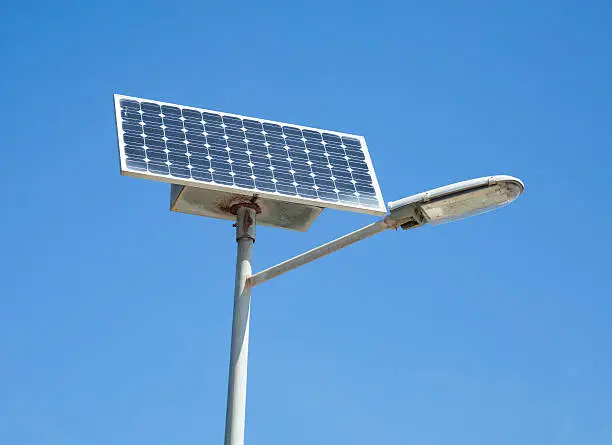
Rapid urbanization across arid, tropical, and desert environments is pushing conventional municipal infrastructure to its operational limits. Municipalities in high-irradiance zones—most notably across the Middle East and North Africa (MENA)—face the dual challenge of expanding urban corridors while curbing peak electrical grid demand.
In municipal utilities, roadway and public realm illumination can account for up to 40% of a city’s total municipal energy budget. Under sustained ambient temperatures exceeding 50°C, legacy grid-tied infrastructure suffers from transmission degradation, cable thermal stress, and elevated failure rates.
Transitioning to decentralized, off-grid solid-state lighting has therefore shifted from a simple sustainability goal to a primary requirement for municipal operational resilience and energy security.
The Evolution of Smart Urban Lighting
Historically, municipal lighting systems relied on high-pressure sodium (HPS) or metal halide (MH) luminaires tied directly into centralized distribution networks. These legacy installations require continuous alternating current (AC) supply, deep underground cable networks, and step-down transformer stations.
As municipalities rapidly expand, reliance on traditional grid-tied infrastructure is becoming economically and logistically unviable. Urban planners are now prioritizing off-grid, high-efficiency lighting systems that offer both energy independence and extreme durability. Specifically in high-demand regions like the Middle East, advanced solar street light systems from global manufacturers like WOSEN illustrate how integrating thermal-resistant housings with high-capacity batteries can deliver reliable, continuous illumination even in the harshest climates.
By decoupling municipal lighting from centralized grids, civil engineers can accelerate suburban development while shielding city centers from rolling blackouts and localized line surges.
Energy Security and Grid Independence
Modern municipal planning prioritizes decentralized infrastructure to protect public transit corridors and arterial roadways during regional power disruptions:
- Complete Grid Independence: Autonomous solar LED installations generate and store direct current (DC) energy locally, bypassing the 8% to 15% electrical transmission and inversion losses inherent to central grid distribution.
- Peak Shaving and Load Shedding Protection: Streetlights operate during peak evening demand hours. Off-grid systems remove thousands of megawatts from the municipal grid precisely when domestic cooling systems drive demand to critical thresholds.
- Continuous Operational Readiness: Integrated lithium-based energy storage ensures municipal roadways remain fully illuminated during grid blackouts, sandstorms, or emergency power curtailments, safeguarding public transit arteries.
- Integration with Master Planning: Modern civil developers incorporate stand-alone luminaires directly into long-termresilient urban infrastructure and city planning programs to systematically lower municipal carbon liabilities.
Engineering for Extreme Climates: Key Specifications
Deploying solar LED luminaires in desert and hyper-arid climates introduces extreme environmental stressors that quickly degrade standard commercial-grade luminaires. Ambient temperatures routinely surpass 50°C (122°F), with ground-level solar radiation driving surface temperatures on metal fixture housings well beyond 80°C (176°F).
Engineering high-reliability luminaires for these operational conditions requires purpose-built thermal architectures, specialized battery chemistries, and robust environmental seals.
Thermal Management in High-Temperature Environments
Excessive junction temperature is the primary driver of catastrophic LED failure and rapid lumen depreciation. For every 10°C increase in diode operating temperature above its design threshold, semiconductor life expectancy drops by roughly 50%.
Industrial-grade solar streetlights engineered for desert climates use specialized thermal management techniques to maintain long-term optical output:
- Die-Cast Aluminum Heat Sinks: Heavy-gauge die-cast aluminum alloys (such as ADC12 or A380) deliver superior thermal conductivity. Multi-fin aerodynamic heat sinks maximize passive convection currents, preventing heat accumulation behind the LED circuit board.
- Junction Temperature Regulation: Advanced passive thermal management keeps diode junction temperatures safely below $75 even under peak solar exposure, ensuring the fixture preserves its rated luminous output.
- Lithium Iron Phosphate (LiFePO4) Battery Chemistries: Unlike conventional Lithium Nickel Manganese Cobalt (NMC) cells that suffer thermal runaway risks above 60°C, high-grade LiFePO4 batteries operate reliably up to 65°C to 70°C. They offer a deep-cycle lifespan of 3,000 to 5,000 cycles at 80% Depth of Discharge (DoD).
- Underground or Shaded Battery Compartments: Fixture architects house energy storage cells in double-walled, ventilated chambers beneath the photovoltaic panel or sub-surface at the pole base to isolate them from direct solar radiation.
IP Ratings and Dust/Sand Resistance
Severe weather events—such as haboobs, high-velocity sandstorms, and coastal saltwater humidity—threaten delicate electronic drivers, optical arrays, and photovoltaic surfaces:
- Ingress Protection (IP65 and IP66): Fixtures must feature certified IP65 or IP66 ingress protection, using silicone gaskets and precision-machined joints to completely block micro-fine silica dust and pressurized moisture.
- Mechanical Shock and Impact Resistance: Optics and housings must achieve IK08 to IK10 mechanical impact ratings to withstand the scouring effect of continuous windborne sand and mechanical impacts during transport.
- Electrostatic and Hydrophobic Glass Coatings: High-efficiency monocrystalline photovoltaic panels incorporate self-cleaning, anti-soiling surface treatments. These coatings minimize particulate adhesion, reducing solar efficiency drops between maintenance cleanings.
- Breathable Pressure Equalization Valves: Specialized ePTFE vent membranes allow pressure equalization inside the optical chamber during rapid desert day-to-night temperature swings, preventing internal condensation.
Total Cost of Ownership (TCO) and Lifecycle ROI
Capital allocation for municipal infrastructure requires rigorous evaluation of total expenditure over the system’s operational lifecycle. While solar LED luminaires carry a higher initial unit cost than simple grid-tied fixtures, eliminating civil engineering works yields a significantly lower Total Cost of Ownership (TCO).
Trenching Costs vs. Plug-and-Play Installation
The civil works required to deploy traditional grid-connected streetlights represent the single largest expense in municipal roadway illumination:
- Civil Groundworks Elimination: Trenching, backfilling, running PVC conduits, and pulling copper cabling in hard, rocky, or sandy soils costs between $40 and $120 per linear meter. Autonomous solar luminaires completely eliminate these expenses.
- No Transformer or Switchgear CapEx: Eliminating step-down substations, distribution switchgear, and complex trenching permits cuts initial infrastructure deployment timelines by up to 70%.
- Rapid Deployment Cycles: Plug-and-play modular solar poles require only a concrete foundation pad or earth anchor, allowing engineering crews to install and commission 20 to 30 poles per day per team.
- Zero Utility Invoicing: Eliminating monthly kilowatt-hour utility charges provides immediate operating budget relief, shielding municipalities from rising regional fuel tariffs.
Integrating Smart Grids and IoT Capabilities
Modern urban planning treats streetlights as distributed nodes within broader smart city architectures. Rather than operating on static dawn-to-dusk timers, intelligent solar luminaires adjust power consumption in real time based on environmental demand and energy reserves.
Centralized lighting management platforms communicate with field units through low-power wireless mesh protocols—such as LoRaWAN, Zigbee, or NB-IoT—enabling remote adjustments across entire city networks.
Adaptive Dimming and Remote Diagnostics
Dynamic power management optimizes energy reserves, ensuring continuous illumination even through extended periods of sandstorms or overcast weather:
- PIR and Microwave Motion Profiling: Integrated microwave radar sensors detect oncoming vehicles and pedestrians from up to 15 meters away. Luminaires run at an energy-saving 20% to 30% standby mode when streets are empty, ramping to 100% full illumination within milliseconds of detected motion.
- Multi-Stage Programmable Night Schedules: Lighting output adjusts automatically throughout the night (e.g., 100% during evening rush hours, 50% between midnight and 4:00 AM, and 70% during morning commutes) to preserve battery health.
- Proactive Remote Diagnostics: Centralized IoT dashboards monitor battery voltage, photovoltaic current, diode temperatures, and charging efficiency in real time, automatically dispatching maintenance crews before failures occur.
- Deepening Sustainability Mandates: Transitioning to smart-controlled, stand-alone solar street lighting acts as an immediate driver for accelerated renewable energy adoption across public infrastructure portfolios.
The integration of advanced energy management technology into municipal infrastructure is no longer an optional upgrade, but a fundamental requirement for modern city planning. According to the International Energy Agency (IEA), the deployment of smart lighting grids and energy-efficient infrastructure is projected to drastically reduce municipal electricity demand globally, playing a critical role in achieving international net-zero emission targets by 2050.
Conclusion
Maximizing urban resilience in extreme climates requires replacing fragile, centralized infrastructure with durable, self-contained systems.
High-performance solar LED street lighting eliminates the heavy capital expenditures of civil trenching, insulates municipal budgets from volatile utility rates, and guarantees continuous illumination in high-temperature, sand-swept environments.
For municipal engineers, urban planners, and infrastructure developers, deploying solid-state, solar-powered illumination establishes a reliable foundation for sustainable, climate-resilient cities.


A website redesign is rarely just a cosmetic facelift. At its core, an effective overhaul is a strategic realignment that connects your brand’s digital presence to measurable business goals. Whether your site looks dated, struggles to convert visitors, or fails to support new service offerings, jumping straight into wireframes and color palettes is a recipe for missed deadlines, scope creep, and underwhelming results.
Before committing resources or bringing in an outside partner, taking time to establish foundational clarity will protect your budget and ensure meaningful outcomes. Here are eight critical steps to get right before starting your website redesign.
1. Define Clear, Measurable Business Objectives
“We want a fresh look” is an aesthetic preference, not a business strategy. Start by clarifying what problem the redesign must solve. Are you looking to increase demo requests, improve checkout conversion rates, lower bounce rates on product pages, or establish credibility in an enterprise market?
Set quantifiable benchmarks using the SMART framework (Specific, Measurable, Achievable, Relevant, and Time-bound). For example, aim to “increase qualified inbound leads by 25% within six months of launch” rather than “generate more interest.” Clear targets keep stakeholders aligned and provide design teams with a north star for user experience decisions.
2. Run a Comprehensive Audit of What Already Works
A common mistake during a overhaul is discarding valuable assets alongside outdated design elements. Before modifying a single page, run an exhaustive content, performance, and SEO audit.
Identify your top-performing organic landing pages, high-converting blog posts, and core user pathways using Google Analytics and Search Console. You will want to document:
- High-traffic URLs: These require preservation or strict 301 redirection.
- Top converting offers: Messaging and layouts that currently drive sales.
- Content gaps: Outdated product specifications, dead links, or weak calls-to-action that need revision or removal.
Understanding your existing baseline ensures you improve upon your strengths rather than accidentally deleting your best revenue drivers.
3. Build Detailed Audience Personas and User Journeys
Your new site should not be built for your internal executive team; it must serve your prospective customers. Re-examine your target personas: What specific challenges bring them to your site? What objections prevent them from reaching out? What information do they need to see before making a buying decision?
Map out primary user pathways for each key persona. A prospective enterprise client evaluating compliance certifications has very different navigation needs than an individual consumer looking for pricing tiers. Designing user flows before finalizing layouts ensures navigation is intuitive and frictionless.
4. Decide on Content Strategy and Platform Architecture
Content dictates design, not the other way around. Creating intricate page templates only to realize your team lacks the copy, photography, or case studies to fill them causes severe development bottlenecks.
Outline your content requirements early:
- Copywriting: Will messaging be refreshed internally or drafted by professional copywriters?
- Assets: Do you need original product photography, custom video explainers, or updated customer testimonials?
- CMS Requirements: Does your team need an intuitive, no-code visual builder, a robust platform like WordPress or Webflow, or a headless architecture capable of scaling across multiple digital touchpoints?
5. Prioritize Technical SEO and Redirection Planning
A redesigned site that launches to plummeting organic search traffic is an all-too-common disaster. Technical search engine optimization (SEO) must be baked into the project scope from day one, not treated as an afterthought during QA testing.
Create an exhaustive URL inventory of your existing site. Any page that changes location, structure, or hierarchy must have a mapped, permanent 301 redirect ready at launch. In addition, establish requirements for clean URL structures, mobile responsiveness, semantic HTML markup, Core Web Vitals performance, and schema metadata.
6. Map Technical Integrations and Tech Stack Compatibility
Modern websites do not operate in a vacuum. They interface with CRM systems, marketing automation platforms, email service providers, analytics suites, payment gateways, and custom customer portals.
Document every single third-party script, tool, and integration currently active on your site. Confirm whether these tools need to carry over to the new build, whether API endpoints are up to date, and whether any outdated plugins can be retired to improve overall site load times and security.
7. Determine Budget, Resources, and Partner Requirements
Assess your internal bandwidth realistically. A redesign requires substantial cross-departmental coordination, review cycles, and project management. Determine whether your in-house marketing and engineering teams have the specialized capacity to handle discovery, UI/UX design, custom frontend development, and quality assurance.
If internal resources are constrained, partnering with an experienced web design agency can provide the necessary multidisciplinary talent—spanning brand strategy, technical development, and conversion rate optimization—to deliver the project smoothly and on schedule.
8. Establish a Realistic Timeline and Launch Plan
Quality website redesigns take time. From initial brand discovery, information architecture, and UI prototypes to full-stack development, cross-browser QA testing, and team training, mid-to-large redesigns often span three to six months.
Build buffer into your schedule for feedback consolidation and user testing. Establish clear sign-off milestones so phases are formally approved before development begins, minimizing expensive late-stage revisions.
Final Thoughts
A successful website redesign is built long before the first wireframe is drafted. By defining precise goals, auditing your data, understanding your audience, and building a sound technical plan, you transform a potentially stressful overhaul into a structured, high-ROI business investment.

Posters Deserve Better: What a Professional Picture Framer Can Do for Your Prints

Plastic Surgery Abroad: How To Prepare For Your First Consultation – A Practical Guide

7 jewellery schools that take complete beginners

9 Most Popular AI Courses Professionals Are Choosing This Year, and What Sets Them Apart

Football Statistics That Matter When Analysing an Upcoming Match

Understanding Homecare Services: A Guide for Bromley Families

How to Ensure Your Home is Valued Correctly for a Quick Sale

Christopher Dare: The Untold Story of Engineer and Former Husband of Angela Rippon

The 15 Highest-Paid Rugby Players in the World

What Is Fanquer? The Digital Creator Platform Transforming Direct-to-Fan Engagement

Dr Jared Ross: Missouri Appeals Court Upholds Protection Order Over Graphic Torture and Murder Threats

Nancy Hallam: The Inspiring Life, Career, and Success Story Behind Ian Wright’s Wife
How to Ensure Your Home is Valued Correctly for a Quick Sale
Christopher Dare: The Untold Story of Engineer and Former Husband of Angela Rippon
The 15 Highest-Paid Rugby Players in the World
What Is Fanquer? The Digital Creator Platform Transforming Direct-to-Fan Engagement
Dr Jared Ross: Missouri Appeals Court Upholds Protection Order Over Graphic Torture and Murder Threats
Nancy Hallam: The Inspiring Life, Career, and Success Story Behind Ian Wright’s Wife
-
 Real Estate9 months ago
How to Ensure Your Home is Valued Correctly for a Quick Sale
-
Celebrity12 months ago
Christopher Dare: The Untold Story of Engineer and Former Husband of Angela Rippon
-
 Sports6 months ago
The 15 Highest-Paid Rugby Players in the World
-
 Technology6 months ago
What Is Fanquer? The Digital Creator Platform Transforming Direct-to-Fan Engagement
-
 Celebrity5 months ago
Dr Jared Ross: Missouri Appeals Court Upholds Protection Order Over Graphic Torture and Murder Threats
-
Celebrity1 year ago
Nancy Hallam: The Inspiring Life, Career, and Success Story Behind Ian Wright’s Wife
-

 Celebrity8 months ago
Who Is Azriel Crews? Inside the Life and Career of Terry Crews’ Daughter
-
 Celebrity12 months ago
Who Is Maisie Mae Roffey? The Private Life, Family Story, and Quiet Success of Julie Walters’ Daughter