
Entertainment
How to Qualify for a DSCR Loan in New York: A Step-by-Step Guide for 2025


Real estate investment in New York operates under conditions that most other markets do not face. Property values are high, rental demand is strong, and competition for income-producing assets moves quickly. For investors who own or are acquiring rental properties, the challenge is often not finding the right deal — it is securing financing that reflects how those properties actually perform rather than how the borrower earns personal income.
Traditional mortgage underwriting was built around W-2 employees and tax returns. For investors who hold multiple properties, operate through LLCs, or reduce taxable income through depreciation and business deductions, that model creates friction. Income looks lower on paper than it is in practice. Loan approvals stall. Opportunities close before financing can be arranged.
Debt Service Coverage Ratio loans — commonly called DSCR loans — address this directly. They evaluate the property’s income against its debt obligations rather than the borrower’s personal financial profile. In a high-cost, high-yield market like New York, this distinction matters considerably. Understanding how these loans work, what lenders require, and how to position a property for approval gives investors a cleaner path through the qualification process.
What a DSCR Loan Actually Measures
A DSCR loan is a type of investment property financing in which the lender’s primary qualification criterion is the income generated by the property being financed. The Debt Service Coverage Ratio itself is a simple calculation: the property’s gross rental income divided by its total monthly debt obligations, including principal, interest, taxes, insurance, and association dues where applicable. A ratio above 1.0 indicates the property earns more than it costs to carry. A ratio below 1.0 means it does not cover its own expenses.
For investors exploring a dscr loan new york, this framework is particularly useful because New York rental properties — especially in boroughs like Brooklyn, Queens, and the Bronx — often generate rents that are high enough to meet or exceed coverage requirements even when acquisition prices are elevated.
Why the Ratio Threshold Matters More Than the Number Itself
Different lenders set different minimum DSCR thresholds, and understanding what those thresholds represent is more useful than chasing a specific number. A lender requiring a 1.25 ratio is building a buffer: even if rents drop modestly or vacancies occur, the property can still cover its obligations. A lender allowing a ratio of 1.0 or slightly below is accepting more risk and typically compensates by adjusting the interest rate or requiring a larger down payment.
In New York, where operating costs — including property taxes and insurance — tend to run higher than in other states, investors should model their ratios conservatively before approaching lenders. A property that appears to cover its costs on a basic rent-versus-mortgage comparison may fall below acceptable thresholds once taxes and insurance are factored into the calculation.
How Lenders Verify Income on Investment Properties
Because the borrower’s personal income is not the primary focus, lenders rely on property-level documentation to assess cash flow. This typically includes a current lease agreement if the property is already tenant-occupied, or a market rent appraisal if it is vacant or being acquired. The rent figure used in underwriting is usually the lower of the actual lease amount or the appraiser’s estimate of market rent, which protects the lender from situations where above-market leases inflate the coverage calculation.
The Role of the Appraisal in DSCR Underwriting
In DSCR lending, the appraisal serves a dual purpose. It establishes the property’s market value — which determines the loan-to-value ratio and the amount the lender will finance — and it provides an independent assessment of what the property should reasonably earn as a rental. Lenders treat the appraiser’s rent schedule as an objective check on income claims, which is why inflated lease agreements or informal rental arrangements can complicate the process.
For properties in New York City, appraisers must navigate a rental market where the difference between stabilized, rent-controlled, and market-rate units affects how income is calculated. Investors should be aware that a building with below-market rents due to regulatory constraints may not appraise for rental income at current market rates, and this affects the coverage ratio the lender will see.
Short-Term Rental Income and How It Is Treated
Some investors in New York have historically relied on short-term rental platforms to generate income above long-term lease rates. Local regulations have significantly restricted this activity, particularly within New York City, where Local Law 18 has imposed strict licensing requirements on short-term rentals. As a result, most DSCR lenders will not accept projected short-term rental income as qualifying income for New York City properties unless the investor can demonstrate lawful compliance and sustained historical earnings. Long-term lease income remains the cleaner and more reliable basis for qualification.
Borrower Requirements That Still Apply
While DSCR loans reduce the emphasis on personal income verification, they are not entirely personal-credit-agnostic. Lenders still evaluate the borrower’s credit profile, liquidity, and experience as indicators of overall risk. These requirements vary by lender, but they are consistent enough across the market to represent meaningful preparation steps for any investor approaching this product.
Credit Score and Financial Reserves
Most DSCR lenders require a minimum credit score, typically in the mid-to-upper 600s at minimum, with better pricing available to borrowers above 700 or 740. The credit score does not replace the property income calculation — it sits alongside it as a secondary risk indicator. Lenders are also attentive to how much liquidity the borrower retains after closing. Reserves held in accessible accounts demonstrate that the borrower can manage the property through a vacancy or repair period without defaulting on the loan.
For investors who hold multiple properties, lenders may review the overall portfolio’s performance rather than each property in isolation. A borrower with several well-performing properties may receive more flexibility on a new acquisition than a first-time investor with no rental track record.
Entity Structure and Ownership
Many real estate investors operate through limited liability companies or other business entities for liability protection and tax planning purposes. DSCR loans are generally available to borrowers who hold properties through LLCs, which is one of the reasons the product is popular among active investors. However, lenders may require the borrower to personally guarantee the loan even when the LLC is the titled owner. This is standard practice in non-QM lending and does not typically complicate the process, but investors should confirm the lender’s requirements before structuring a purchase.
Preparing a Property for Qualification
Qualifying for a DSCR loan is as much about how the property is presented as it is about meeting minimum thresholds. Lenders work from documentation, and the quality and completeness of that documentation affect how quickly underwriting proceeds and whether conditions arise that slow down closing.
Lease Documentation and Rent Rolls
For occupied properties, the lease should be current, signed, and reflect actual rental terms. Month-to-month agreements can raise questions about income stability, so investors acquiring properties with informal tenancy arrangements should understand how this may affect the lender’s income assessment. For multi-unit properties, a complete rent roll — listing each unit, its current rent, lease term, and occupancy status — is standard underwriting documentation and should be prepared accurately before the loan application is submitted.
Property Condition and Insurance
Lenders will not finance properties in significant disrepair, and the appraisal will flag condition issues that affect value or habitability. In New York, where older building stock is common, investors should anticipate that properties with deferred maintenance, open permits, or code violations may require remediation before financing can be approved. Insurance costs in New York have increased in recent years, and the annual premium will factor into the debt service calculation, so obtaining a current insurance quote before running the DSCR numbers gives a more accurate picture of where the ratio will land.
The Application and Closing Process
DSCR loans are offered by non-QM lenders, private lenders, and some portfolio lenders rather than conventional banks. The application process is generally faster than traditional mortgage underwriting because there is no income tax return review or employment verification involved, but investors should still expect a thorough review of property documentation, title, and the appraisal. According to the Consumer Financial Protection Bureau, non-QM loans fall outside the standard qualified mortgage framework, which means lenders have more flexibility in how they structure terms — but also that rates and fees may differ from conventional products.
Closing timelines can range from a few weeks to over a month depending on the complexity of the transaction, the lender’s pipeline, and how quickly third-party services like appraisals and title work are completed. Investors working on time-sensitive acquisitions should confirm realistic closing expectations with the lender before going under contract.
Closing Thoughts
DSCR lending has become a practical and widely used financing tool for real estate investors who do not fit the conventional mortgage profile — not because it is a workaround, but because it evaluates investment properties on the basis that actually matters: their ability to generate income. In New York, where the rental market is deep and the barriers to entry are high, understanding this product in detail gives investors a meaningful advantage.
Qualification is not guaranteed by a strong rental market alone. It requires accurate income documentation, a property that carries its own costs, reasonable personal credit, and a lender who understands the local market conditions that affect how New York properties perform. Investors who take time to prepare their documentation, model their ratios conservatively, and understand the lender’s requirements before applying will move through the process with fewer complications and a clearer outcome.
The fundamentals of a dscr loan new york qualification process are straightforward. What determines success is preparation — knowing what the lender needs, ensuring the property can support the numbers, and approaching the process with the same discipline applied to the investment decision itself.


Florida’s business environment is active and varied. From construction firms in Tampa to wholesale distributors in Miami, businesses across the state regularly face situations where capital is needed to keep operations moving — whether that means covering payroll during a slow season, purchasing equipment before a large contract begins, or expanding into a second location. In most of these cases, the decision to borrow isn’t impulsive. It comes after careful consideration of timing, cost, and whether the business can meet the obligations a loan creates.
A business term loan is one of the most straightforward financing structures available to established companies. The borrower receives a lump sum and repays it over a fixed period with a set interest rate. The predictability of this structure is part of its appeal — monthly payments are consistent, the repayment timeline is defined, and the funds can be applied to a wide range of business uses. But qualifying for one in 2025 requires more than a solid idea. Lenders evaluate specific financial indicators, and understanding those indicators ahead of time makes the application process more efficient and less stressful.
Understanding What Lenders Actually Evaluate
When a Florida business applies for a term loan, the lender is essentially trying to answer one question: can this business reliably repay what it borrows? Everything in the underwriting process connects back to that question. Before gathering documents or selecting a lender, it helps to understand the categories lenders use to assess repayment capacity, because they directly shape which businesses get approved and on what terms.
For anyone starting to research this process, a structured Business Term Loan Lender Florida guide can help clarify what documentation lenders typically require and how local lenders approach underwriting for different industries. Having that context early prevents avoidable gaps in applications.
Lenders generally evaluate five core areas when reviewing a business term loan application in Florida. These are not independent checkboxes — they interact with each other. A business with strong revenue but poor documentation may fare worse than a business with moderate revenue and clean financials.
• Credit profile, including both the business credit history and the personal credit of the principal owners
• Time in business, which signals operational stability and market endurance
• Annual revenue and consistency of cash flow, not just total income
• Existing debt obligations and how they affect the business’s debt service capacity
• The purpose of the loan and whether it aligns with the type of term loan being offered
Why Cash Flow Consistency Matters More Than Revenue Volume
A business might generate substantial annual revenue, but if that revenue arrives unevenly — concentrated in two months with very little the rest of the year — a lender sees higher repayment risk. Term loans require regular payments regardless of when revenue comes in. Lenders look at bank statements over the past twelve to twenty-four months to assess whether cash flow is reliable enough to support consistent monthly payments.
This is particularly relevant for Florida businesses in industries like landscaping, tourism, hospitality, and construction, where seasonal variation is built into the revenue cycle. These businesses can still qualify, but they may need to demonstrate how they manage cash during slower periods or whether they hold reserves that cover loan payments through off-peak months.
The Role of Debt Service Coverage in Approval Decisions
Lenders calculate what is called a debt service coverage ratio, which compares the business’s net operating income to its total debt obligations. This ratio tells a lender whether the business earns enough after expenses to cover the new loan payment on top of existing debt. A ratio that falls below a lender’s threshold typically results in a reduced loan amount or a denial — not because the business is failing, but because adding more debt would stretch repayment capacity too thin.
Understanding this ratio before applying helps business owners decide how much to request and whether timing the application to a stronger revenue period would improve the outcome.
Preparing Financial Documentation Before You Apply
One of the most common reasons a term loan application is delayed or denied is incomplete documentation. Lenders in Florida — whether they are community banks, credit unions, or licensed commercial lenders — follow similar documentation standards. Having materials organized and current before submitting an application reduces back-and-forth and signals to the lender that the business is operationally organized.
The documents typically required for a business term loan application include the following:
• Two to three years of business tax returns, showing income, expenses, and net profit
• Recent profit and loss statements, ideally prepared by an accountant or generated from accounting software
• Business bank statements covering the past twelve to twenty-four months
• A current balance sheet that reflects assets, liabilities, and owner equity
• Business licenses and registration documents confirming the entity is legally operating in Florida
• Personal tax returns for all principal owners with significant ownership stakes
When Financial Statements Are Incomplete or Informal
Many small businesses in Florida operate with informal bookkeeping — expenses tracked in spreadsheets, income reported through a mix of deposits and manual records. This isn’t disqualifying by itself, but it creates friction in the application process. Lenders need to verify the numbers they’re working with, and informal records are harder to cross-reference against tax returns or bank statements.
If a business’s financial records are not formalized, the most productive step before applying is working with an accountant to prepare reconciled statements. This takes time, but it directly improves the clarity and credibility of the application. It also tends to reveal financial patterns the business owner may not have clearly seen before — which is independently useful for planning.
Credit Requirements and How to Address Common Issues
Credit history is one of the first things lenders review because it establishes a pattern of how the business and its owners have handled past obligations. For a business term loan in Florida, lenders typically look at both the business credit profile and the personal credit scores of the primary owners. The specific thresholds vary by lender type, but the general principle holds: a stronger credit history creates more favorable terms.
According to the U.S. Small Business Administration, establishing and maintaining a separate business credit profile is an important step for any company seeking financing, as it allows lenders to evaluate the business independently from the owner’s personal financial history.
Addressing Low Credit Scores Before Applying
A low personal or business credit score doesn’t automatically end the conversation with a business term loan lender in Florida, but it does change the terms available. Businesses with weaker credit may face higher interest rates, shorter repayment periods, or collateral requirements. Understanding this ahead of time helps business owners decide whether it makes more sense to apply now or spend several months improving their credit profile before doing so.
Common factors that reduce business credit scores include late payments on existing credit lines, high credit utilization relative to available limits, and errors in the credit report that haven’t been disputed. Each of these is addressable, but the timeline for improvement varies. Late payment history, for example, takes longer to overcome than a high utilization ratio, which can improve within a single billing cycle after paying down balances.
Choosing the Right Type of Lender for Your Business Profile
Florida businesses applying for term loans have access to several categories of lenders, and the right choice depends on the business’s financial profile and how quickly capital is needed. Traditional banks typically offer the most competitive interest rates, but they also apply the most rigorous underwriting standards. A business with strong financials, an established credit history, and at least two years of operating history is well-positioned for a bank loan.
Community development financial institutions and licensed commercial lenders often work with businesses that don’t meet traditional bank standards but still have solid fundamentals. These lenders may accept slightly lower credit scores or shorter operating histories in exchange for other compensating factors, such as collateral or demonstrated revenue growth. For a business that is relatively new or still building its credit profile, these lenders can be a more practical starting point than a national bank.
SBA-Backed Term Loans as a Middle Option
The U.S. Small Business Administration guarantees certain term loans made by approved lenders, which reduces the lender’s risk and often results in better terms for the borrower. SBA loan programs are available to Florida businesses that meet eligibility requirements related to size, use of funds, and financial standing. The application process tends to be more involved than a standard bank loan, but the terms — particularly the repayment period — can make a significant difference in monthly payment amounts.
Businesses considering SBA-backed financing should factor in the additional time the application process requires, as these loans typically take longer to close than conventional term loans.
What Happens After You Submit an Application
Once an application is submitted, the lender enters a review period during which the underwriting team verifies the documentation, confirms the business’s financial ratios, and assesses whether the loan purpose aligns with the lender’s guidelines. For a business term loan lender in Florida, this process can take anywhere from a few business days to several weeks depending on the lender type and the complexity of the application.
During this period, lenders may request additional documentation or clarification. Responding to these requests promptly keeps the process moving. Delays in follow-up often extend the timeline more than the initial review itself.
Understanding the Terms Before Signing
When a lender issues a loan offer, the terms document outlines the interest rate, repayment schedule, any fees associated with the loan, and the conditions under which the rate or terms could change. Business owners should review this carefully and, where possible, have an attorney or financial advisor review it as well. The monthly payment amount should be mapped against the business’s current cash flow to confirm that repayment is sustainable under normal operating conditions, not just in the best-case scenario.
A business term loan lender in Florida is required to disclose the annual percentage rate and all material fees. Understanding the total cost of the loan — not just the monthly payment — supports better long-term financial planning.
Closing Thoughts
Qualifying for a business term loan in Florida in 2025 is a process grounded in documentation, financial consistency, and honest self-assessment. Lenders are not looking for perfection — they are looking for clarity. A business that understands its own financial position, has organized its records, and approaches the process with realistic expectations is far more likely to reach a successful outcome than one that applies without preparation.
The businesses that run into the most difficulty are typically those that underestimate the importance of cash flow documentation or apply for more than their current debt service capacity can support. Both of these issues are manageable with advance planning. Taking the time to review financial statements, address credit issues, and understand the lender’s criteria before submitting an application is time well spent. For Florida business owners who are serious about growth and operational continuity, a well-structured term loan — applied for at the right time and for the right amount — can be a stable and practical tool.


Meticulous planning is the muse of every successful residential construction project. From small home renovations to large residential developments, contractors need reliable price quotes before starting work. is a critical requirement in residential construction because even small calculation errors can lead to material waste, labor costs, and financial overruns
Framing is one of the most important steps in a building project because it forms the structural foundation for everything domestic. A small error in measurements or fabric size can affect every piece that follows. Therefore, having some kind of in-depth assessment helps contractors make confident choices.
At this point, modern contractors are looking beyond traditional calculations and adopting professional answers that increase accuracy and efficiency. Leveraging superior pedigree, designated aviation and corporate knowledge, expert evaluation assistance has been a valuable investment.
Whether you’re building custom homes, residential communities, or remodeling current homes, accurate framing calculations can save your revenue and improve business efficiency. It is in this that special guessing solutions could make a big difference.
Why accurate framing estimates matter in residential construction
Residential framing requires careful attention as it includes many components, including lumber, labor, fasteners, screening, structural requirements, and a wrong estimate can create unnecessary expense and delay in the entire process.
Many contractors still rely on manual calculations or rudimentary software, which can increase the chances of missing important information. Professional frame estimating services help contractors put together accurate quantity bills, payment forecasts, and fabric inventories before production begins.
These deals allow contractors to understand the full scope of framing costs and keep them away from unexpected financial issues. Instead of building assumptions, contractors can draw with a few reports based primarily on challenge drawings, specs, and modern market conditions.
Accurate frame estimates provide several benefits:
- Better Manage the Mission Budget
- Reduced clothing waste and unusable purchases
- More competitive and realistic tenders
- Improved scheduling and resource planning
- The delay in creation is reduced due to the absence of elements.
By investing in accurate estimates, residential contractors can increase their project effectiveness while maintaining higher profit margins.
How Commercial Frame Assessment Services Support Contractors
The construction business is becoming increasingly competitive, and contractors need every advantage to maintain profitability as well as win the business. Professional appraisers review architectural drawings, blueprints, and building records to decide on actual framing requirements.
| Framing Component | Estimated Quantity | Cost Factors Considered | Why It Matters |
| Wall Framing | Based on blueprint measurements | Lumber type, wall height, labor hours | Determines the main structural framework of the home |
| Floor Framing | Depends on floor area and design | Joists, beams, subfloor materials | Ensures proper support and stability |
| Roof Framing | Based on roof design and size | Trusses, rafters, pitch, installation complexity | Helps prevent structural issues and material shortages |
| Structural Beams & Columns | According to engineering plans | Material specifications and load requirements | Supports the overall strength of the building |
| Hardware & Fasteners | Based on framing requirements | Nails, connectors, brackets, anchors | Improves durability and safety |
| Labor Requirements | Project complexity and crew size | Installation time and local labor rates | Helps create a realistic project budget |
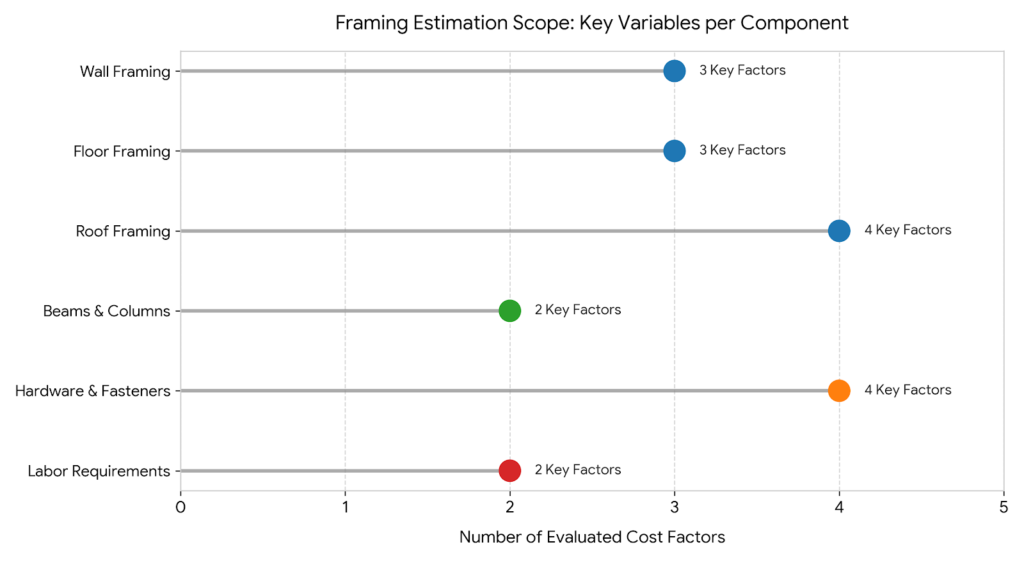
These estimates generally include detailed calculations of partitions, floors, ceilings, beams, columns, and various structural elements. This level of detail helps contractors prepare accurate quotes and talk virtually with clients.
In addition, experienced appraisers take into account nearby manufacturing practices, building codes, and fabric requirements. Their knowledge helps reduce errors that often occur when contractors evaluate companies without specialized knowledge.
A professional framework assessment usually depends on:
- Wood mass calculation
- Structural framing measurements
- Labor Cost Projections
- Issues of physical waste.
- Hardware and accessory requirements
- Comprehensive Review of Payment Distribution
Another significant benefit is time savings. Instead of spending hours reviewing drawings and disclosing calculations, contractors can conscientiously meet with crews, secure jobs, and strengthen customer relationships.
The Role of Technology in Modern Building Assessment
Technology has changed the way residential work is intentionally managed. Digital tools now allow appraisers to generate highly specific reports faster and with greater accuracy compared to conventional methods.
Building information modeling (BIM), digital startup software, and cloud-based holistic estimating platforms help companies test complex designs and detect capacity and demand issues before production begins.
For jobs with multiple structures and special coordination, MEP BIM services can also guide higher construction schedules by integrating mechanical, electrical, and plumbing designs with structural requirements. This coordination reduces conflicts between specialized design groups and improves standard workflows for companies.

The modern generation of speculation offers benefits that include:
- Faster Model Evaluation
- More accurate amount of flight
- Improved challenge collaboration
- Better Visualization of Creation Information
- The steep price reduced the chance of error
As residential construction becomes more complex, combining professional expertise with an advanced era helps contractors stay competitive.
Read More: https://estimators.us/how-much-does-lvp-flooring-costs/
Assessment of worker challenges in public statements
Even experienced contractors may have trouble preparing the framework of estimates. Residential jobs often involve detailed design, optimized capacity, and variable material costs to make the calculations more challenging.
One of the most common hard data issues is incomplete information. Missing drawings, questionable specifications, or layout changes can create inaccurate estimates and surprise costs later.
Another task is to account for physical waste. Wood and framing materials often require additional volume due to cutting, turning, and installation requirements. Without proper calculation, contractors can also underestimate what they really want.
Some common heuristic demanding situations are:
- Misinterpretation of the blueprint
- If competency requirements are not met
- Ignoring state-of-the-art content payment changes
- Poor adherence to challenge therapies
Underestimating Waste and Surplus Materials
Professional estimating assistance helps overcome the demanding locations by providing proper estimation and documentation before construction begins.
How Framework Assessments Improve Bids for Residential Projects
Winning manufacturing tenders takes more than delivering floor rates. Contractors need estimates that can be aggressive even as still protect their profitability.
A special framing estimate allows contractors to understand exactly how much the plot work will cost. This information allows them to create discreet offers that appeal to customers without sacrificing margins.
Accurate estimates also enhance communication between contractors, architects, suppliers, and homeowners. All concerned can fully understand the required fees and mission requirements.
The benefits of proper frame rating at some point in the bid are:
- Increased likelihood of meaningful work taking place
- More transparently protect discussions
- Excellent vendor negotiations
- Improving Economic Building Plans
- Stronger Employee Recognition
When contractors issue expert and credible quotes, they demonstrate trust and expertise, creating opportunities for long-term business activity.
Why residential contractors should provide framing estimates
Procurement estimates have ended up being a viable answer for many residential contractors. Instead of hiring a full-time appraiser, you can reach out to skilled experts when you need help.
This technique reduces overhead by providing access to specialized expertise. This is especially useful for small and medium-sized contractors who need accurate estimates without making heavy investments in software or additional manpower.
Outsourced estimating teams can also cope with projects of varying size and complexity by submitting prepared reports that contractors can use for bidding and planning.
The main benefits of outsourcing are:
- Operating costs are reduced
- Faster task turnaround instances
- Access to Experienced Appraisers
- Improved bid accuracy
- More time to be recognized in the acts of creation
By deciding to assist with reliability assessments, contractors can improve productivity and make smarter business choices.

Final Thoughts
The fulfillment of residential production depends heavily on proper preparation of plans and cost management. Framing is one of the most important layers of any construction project, and accurate estimates ensure that contractors have the right materials, effort, and budget from the start.
Using expert evaluation responses, contractors can reduce risk, increase bid confidence, and additionally manage companies properly. In these days aggressive construction market, accurate estimates are not just useful-they are an essential component of meaningful design and cost-effective measures.
Frequently Asked Questions
1. What are framing rating services?
The framing estimating service provides detailed calculations of required steps, labor costs, and charges for the framing level of residential construction work. It helps contractors prepare accurate budgets and quotes.
2. Why do residential contractors want framing estimates?
Contractors want estimates framed to avoid cost overruns, reduce fabric waste, and take into account the complete economic requirements for the project before construction begins offevolved.
3. What data is needed to frame assessments?
Appraisers will often assemble detailed framing calculations from architectural drawings, structural plans, task specifications, and other building records.
4. Can framework outsourcing save retail contractors’ time?
Yes, outsourcing allows contractors to get professional estimates without spending hours reviewing blueprints and pretending they are routine calculations.
5. How accurate are the expert frame ratings?
Business estimates are incredibly accurate because they are created using specific flights, business briefs, up-to-date pricing data, and superior estimating equipment.
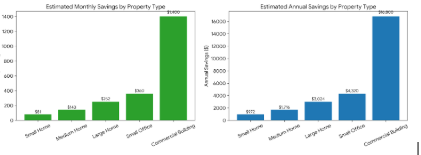
Utility payments continue to climb 12 months after 12 months, placing an ever-growing pressure on both family budgets and operational overhead for agencies. Taking control of your monthly energy intake calls for a strategic method that goes beyond simply turning off unused lighting fixtures. By adopting current performance solutions, property owners can significantly decrease their overhead whilst growing ordinary comfort and structural value. Investing in high-performance energy enhancements establishes a sustainable foundation that protects your financial future against unpredictable utility fee hikes.
Unlocking Long-Term Utility Savings
Transitioning to renewable clean energy gives instantaneous relief from fluctuating electrical rates while delivering long-term safety. Partnering with an authorized Solar Installation Company in Richmond permits neighborhood property owners to custom-design structures tailor-made to their specific consumption patterns. These tailor-made modern-day systems maximize day by day sunlight harvesting to generate substantial savings from the first actual billing cycle.
- Customized Energy Audits: Precision opinions pinpoint precise consumption patterns and spotlight high-ROI upgrade possibilities.
- Immediate Overhead Reduction: Offsetting grid reliance at once shrinks routine monthly energy costs.
Enhanced Property Equity: Modern, clean energy infrastructure continuously boosts the market value of real estate assets.
| Property Type | Average Monthly Bill | Estimated Savings (%) | Monthly Savings Formula | Monthly Savings | Annual Savings |
| Small Home | $180 | 45% | $180 × 0.45 | $81 | $972 |
| Medium Home | $260 | 55% | $260 × 0.55 | $143 | $1,716 |
| Large Home | $420 | 60% | $420 × 0.60 | $252 | $3,024 |
| Small Office | $900 | 40% | $900 × 0.40 | $360 | $4,320 |
| Commercial Building | $2,800 | 50% | $2,800 × 0.50 | $1,400 | $16,800 |
Key Takeaways
- Residential Efficiency: Larger homes yield the highest percentage return (60%), saving over $3,000 annually.
- Commercial Scale: Even with a lower efficiency percentage (50%), larger facility bills generate massive cash flow returns ($16,800/year).
Commercial Infrastructure Optimization
Both residential properties and commercial centers require specialized technical oversight during machine design and deployment. Engaging professional Solar Installation Services Richmond guarantees that each panel, inverter, and wiring connection meets stringent local protection requirements. Proper device alignment and expert device calibration maximize daily output, ensuring maximum monetary return on your solar energy investment.
- Seamless Grid Integration: Certified technicians control all complex electrical hookups and municipal permitting.
- Optimal Panel Placement: Advanced web page modeling ensures maximum sun radiance exposure at some point of the entire yr.
- Comprehensive Equipment Warranties: High-tier components come backed by long-term protection plans for ultimate peace of mind.
Commercial organizations face unique operational demands that require strong, high-capability energy management solutions. Upgrading commercial HVAC systems, smart controls, and rooftop energy structures extensively lowers organisation working fees. Businesses that modernize their power setup gain a significant competitive advantage via decreased overhead and improved sustainability credentials.

Smart Residential Renovations
Homeowners trying to eliminate electric invoice uncertainty can benefit immensely from working with a committed Residential Solar Panel Installer Maryland to assess rooftop feasibility. Modern residential setups combine seamlessly with existing home circuitry, providing dependable power production without disruption to day-to-day routines. Investing in home strength technology transforms an ongoing application rate into a wealth-building asset.
- Tailored System Capacity: Systems are sized mainly to match family power needs and future growth plans.
- Battery Storage Readiness: Integrated battery solutions offer backup power at some stage in extreme weather and grid outages.
- Minimal Ongoing Maintenance: Durable stable-state technology ensures a long time of problem-unfastened strength generation.

Maximizing Return on Investment
Achieving the very best feasible savings from electricity retrofits calls for ongoing monitoring and system performance maintenance. Smart metering tools supply assets owners real-time visibility into their energy production and consumption habits. By monitoring device output and retaining point health, you make sure steady high-level performance and extended payback periods.
| System Size | Estimated Installation Cost | Annual Energy Savings | Payback Period Calculation | Estimated Payback Period |
| 5 kW | $12,000 | $1,800 | $12,000 ÷ $1,800 | 6.7 Years |
| 8 kW | $18,500 | $2,900 | $18,500 ÷ $2,900 | 6.4 Years |
| 10 kW | $22,000 | $3,600 | $22,000 ÷ $3,600 | 6.1 Years |
| 15 kW Commercial | $34,000 | $5,900 | $34,000 ÷ $5,900 | 5.8 Years |
| 25 kW Commercial | $54,000 | $9,600 | $54,000 ÷ $9,600 | 5.6 Years |
Key Takeaways
- Scale Efficiency: Larger systems deliver faster break-even times due to lower relative equipment and installation costs per kilowatt.
- Commercial Performance: The 25 kW Commercial system recovers its initial outlay the fastest (5.6 years), yielding $9,600 in ongoing annual utility relief after break-even.
- Residential Sweet Spot: The 10 kW system provides the shortest payback window (6.1 years) among residential configurations while delivering substantial yearly savings ($3,600/year).
- Real-Time Analytics: Digital dashboards permit you to monitor electricity technology and electricity utilization immediately from any device.
- Proactive System Maintenance: Scheduled regular inspections keep hardware working at peak baseline efficiency.
- Accelerated Financial Payback: Optimized systems shorten the time frame required to attain full capital payback.
Final Thoughts
Taking full management of your month-to-month utility spending is one of the easiest methods to secure lasting financial freedom and asset value. Upgrading your building’s energy infrastructure with modern clean technologies converts passive expenses into long-term financial savings. Start comparing your own home’s capacity today to experience instantaneous comfort and lifelong economic benefits.
Frequently Asked Questions
1. How many tons can I expect to save month-to-month after an energy improvement?
Savings depend upon system size, neighborhood software fees, and overall consumption, but most property owners see a reduction of forty% to 80% on their ordinary month-to-month energy bills.
2. Are there economic incentives available for residential and commercial upgrades?
Yes, federal tax credits, state-level rebates, and program business enterprise incentives can drastically reduce the internet prematurely price of qualifying equipment and installation.
3. How long does an average solar panel or energy retrofit installation take?
While the initial site audit and permitting process may take some weeks, the physical setup commonly takes just 1 to 3 days relying on project size.
4. Will strength upgrades boost the resale value of my property?
Yes, studies constantly display that homes prepared with modern, low-cost power systems sell faster and at higher valuation rates than non-upgraded homes.
5. What maintenance is needed to keep my power machine walking correctly?
Most smooth energy structures require minimal upkeep—typically just periodic visual inspections and low cleaning to clean dust or particles from panels.

From 2D Ideas to Real Objects: How Hi3D Makes AI-Powered 3D Creation Easier for Everyone

Top 7 On-Site Technical Services Companies in the US That Actually Deliver Results

10 Ways a Custom Printed Room Divider Can Transform a Small US Apartment (Without Renovating)

The 10-Point Checklist for Hiring a Hotel Management Firm in Atlanta (Before You Sign Anything)

How to Qualify for a DSCR Loan in New York: A Step-by-Step Guide for 2025

How to Qualify for a Business Term Loan in Florida: A Step-by-Step Guide for 2025

The 15 Highest-Paid Rugby Players in the World

Christopher Dare: The Untold Story of Engineer and Former Husband of Angela Rippon

How to Ensure Your Home is Valued Correctly for a Quick Sale

Nancy Hallam: The Inspiring Life, Career, and Success Story Behind Ian Wright’s Wife

Who Is Maisie Mae Roffey? The Private Life, Family Story, and Quiet Success of Julie Walters’ Daughter

What Is Fanquer? The Digital Creator Platform Transforming Direct-to-Fan Engagement
The 15 Highest-Paid Rugby Players in the World
Christopher Dare: The Untold Story of Engineer and Former Husband of Angela Rippon
How to Ensure Your Home is Valued Correctly for a Quick Sale
Nancy Hallam: The Inspiring Life, Career, and Success Story Behind Ian Wright’s Wife
Who Is Maisie Mae Roffey? The Private Life, Family Story, and Quiet Success of Julie Walters’ Daughter
What Is Fanquer? The Digital Creator Platform Transforming Direct-to-Fan Engagement
-
 Sports3 months ago
The 15 Highest-Paid Rugby Players in the World
-
Celebrity8 months ago
Christopher Dare: The Untold Story of Engineer and Former Husband of Angela Rippon
-
 Real Estate6 months ago
How to Ensure Your Home is Valued Correctly for a Quick Sale
-
Celebrity9 months ago
Nancy Hallam: The Inspiring Life, Career, and Success Story Behind Ian Wright’s Wife
-
Celebrity9 months ago
Who Is Maisie Mae Roffey? The Private Life, Family Story, and Quiet Success of Julie Walters’ Daughter
-
 Technology2 months ago
What Is Fanquer? The Digital Creator Platform Transforming Direct-to-Fan Engagement
-

 Health7 months ago
Enclomimed 25 (Enclomiphene) – Effective PCT Protocol
-
 Business8 months ago
Simon Dixon Biography: Lifestyle, Net Worth, Family, Career and Success Story