
Entertainment
From FDA to TGA: A Step-by-Step Guide to Australia Medical Device Labeling for US Companies in 2025

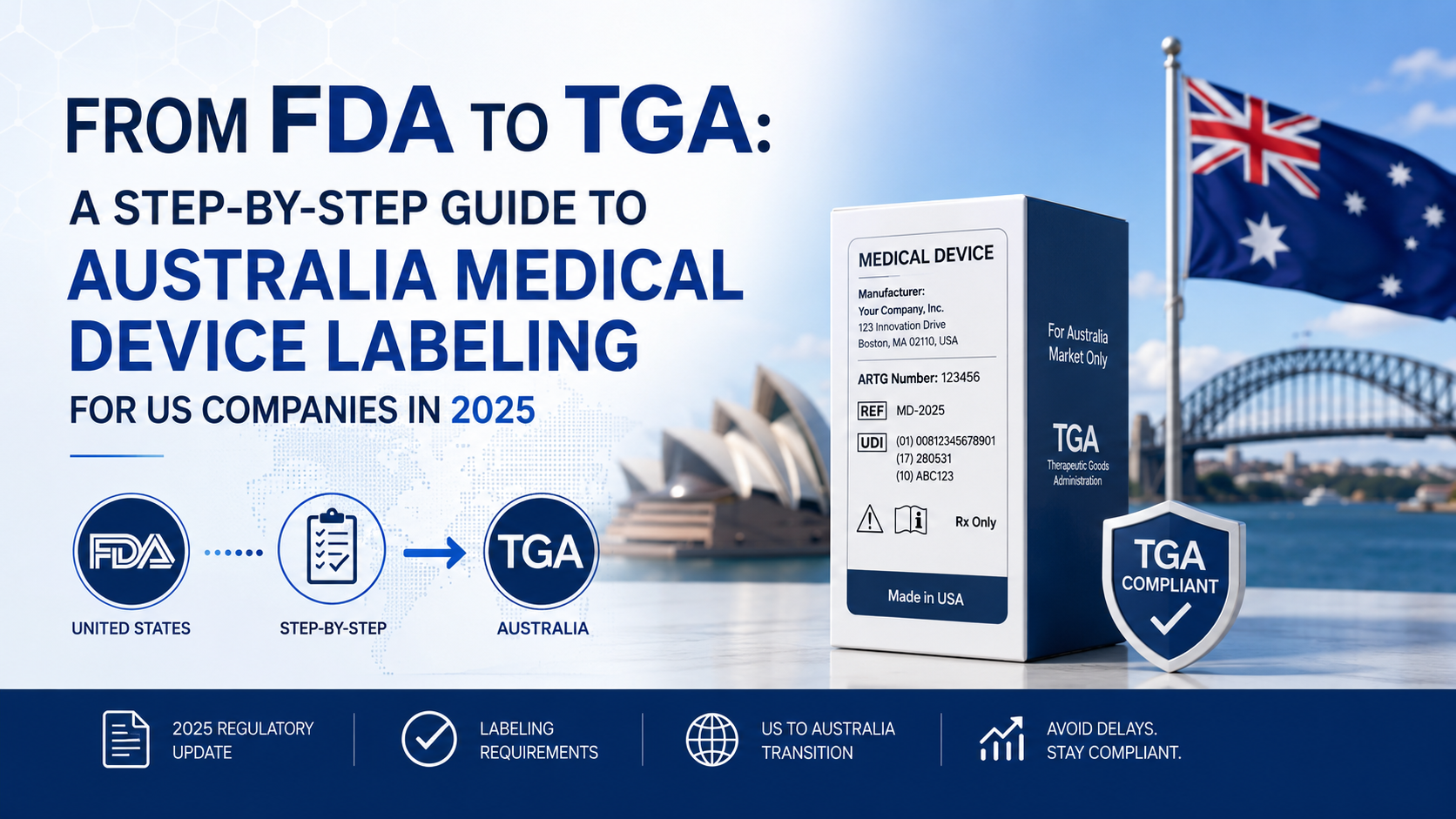
For US medical device manufacturers looking to enter the Australian market, the transition from FDA compliance to TGA requirements is rarely straightforward. The two systems share some common logic around device classification and safety documentation, but they diverge meaningfully when it comes to labeling. What satisfies the FDA on a product label does not automatically satisfy the Therapeutic Goods Administration, and that gap has caused real operational delays for companies that assumed one approval framework would carry over to the other.
In 2025, the TGA continues to apply its own distinct labeling standards under the Therapeutic Goods (Medical Devices) Regulations 2002, and those standards carry legal weight. A device that enters the Australian market with non-compliant labeling is not simply flagged for correction — it can be subject to recall, removal from the Australian Register of Therapeutic Goods (ARTG), or enforcement action. For US companies already managing complex product pipelines, these are not abstract risks. They are schedule and cost risks with direct consequences.
This guide works through the core labeling requirements US companies need to understand before submitting to the TGA, where FDA-trained teams commonly miss requirements, and how to build a labeling process that holds up under Australian regulatory scrutiny.
Understanding the TGA Framework for Medical Device Labeling
The TGA operates under the Australian regulatory system for therapeutic goods, which is distinct from both the FDA framework and the European CE marking system, even though Australia has progressively aligned some of its classification structures with international standards. When a US company begins the process of australia medical device labeling, the starting point is not adapting existing FDA labeling but rather building label content against Australian requirements from the ground up — using existing documentation as a reference, not a template.
The TGA’s labeling requirements are primarily set out in Schedule 1 of the Therapeutic Goods (Medical Devices) Regulations 2002, which specifies mandatory information elements for labels across different device classes. These requirements apply to the physical label on the device and its packaging, as well as to any instructions for use (IFU) that accompany the product. The TGA also references ISO 15223-1, the international standard for symbols used in medical device labeling, which means Australian labels can use globally recognized symbols — but only where those symbols are explicitly permitted and properly applied.
What US manufacturers often underestimate is that the TGA audits label content during the ARTG inclusion process. This means labeling errors are not caught at customs or during post-market surveillance — they surface during the application itself and can stall registration entirely.
How the TGA Classifies Devices and Why It Changes Your Label Requirements
Device classification under the TGA follows a tiered model — Class I, Class IIa, Class IIb, and Class III — with active implantable devices forming a separate category. Classification determines not just the pathway to registration but the depth of labeling documentation required. Higher-class devices carry more stringent IFU requirements, more detailed intended purpose statements, and in some cases, additional warnings that are not part of equivalent FDA labeling.
A Class III device, for example, requires the sponsor to ensure that the IFU contains a detailed description of contraindications, side effects, and residual risks that goes beyond what would typically appear on a US label for a PMA-approved device. The TGA expects this information to be written in plain English accessible to an Australian clinical audience, which creates a drafting challenge for teams accustomed to FDA-specific language conventions.
Companies that map their FDA device class directly to a TGA class without reviewing the actual classification criteria risk placing their product in the wrong tier, which can result in either under-documenting the label or creating unnecessary compliance obligations. TGA classification is based on intended purpose, body contact, duration of use, and whether the device is active or passive — and the Australian interpretation of these criteria does not always align with FDA reasoning for the same product.
Mandatory Label Elements Under Australian Regulations
Australian medical device labels must include specific information regardless of device class, and the omission of even a single mandatory element is sufficient grounds for a non-compliant determination. The required elements are not suggestions or best practices — they are prescribed content that the TGA checks against during assessment.
For most devices entering the Australian market, the label must include the name of the device, the name and address of the Australian sponsor (not the US manufacturer), the ARTG inclusion number once registration is granted, the batch or lot number, the date of manufacture or expiry where relevant, single-use or reuse indicators, and sterility status if applicable. Each of these elements has specific formatting and placement implications.
The Sponsor Requirement and What It Means for US Manufacturers
One of the most operationally significant differences between FDA and TGA labeling is the requirement to display the Australian sponsor’s details — not the manufacturer’s US address — as the primary contact on the label. Under Australian regulations, the sponsor is the legal entity responsible for the device in the Australian market. This is typically a local distributor, a subsidiary, or a registered Australian representative.
For US companies that manage global labeling centrally, this requirement creates a structural challenge. It is not sufficient to add the sponsor’s address as a secondary line. The label must present the sponsor as the primary responsible entity, which often requires a labeling variant specific to Australia. Companies using global label templates with FDA-compliant format may need to restructure their label hierarchy entirely for Australian distribution, including updating digital files, print specifications, and packaging artwork in their document control systems.
This is a persistent source of labeling errors for US manufacturers entering the Australian market for the first time — the assumption that adding a sponsor’s address to an existing label satisfies the requirement. The TGA’s reading of this obligation is stricter than that, and applications submitted with manufacturer-forward labeling are regularly returned for revision.
Language, Symbols, and Readability Standards
Australian medical device labeling must be in English, and the language used must be clear and appropriate for the intended user. The TGA does not prescribe a specific reading level, but it does expect that clinical users and, where relevant, patients can interpret the label without specialized training beyond what is expected for the device’s intended use context.
Symbols may be used in place of text where they are drawn from ISO 15223-1 or another recognized standard, but companies must verify that each symbol is used in the context for which it was standardized. Substituting an FDA-recognized symbol that has no ISO equivalent is not permitted without accompanying explanatory text. This distinction matters for companies that have relied heavily on symbol-based labeling for multilingual markets — the Australian approach requires explicit validation of each symbol’s source and context.
Instructions for Use: Where Most Compliance Gaps Occur
The IFU is often where australian medical device labeling requirements create the most work for US companies. The FDA does not require an IFU for all device classes, and even where one is required, the specific content structure differs from what the TGA expects. Australian regulations require the IFU to be a standalone document that addresses intended purpose, contraindications, warnings, precautions, method of use, and residual risks in a format that can be used independently of the device label itself.
Many US manufacturers provide IFU content that satisfies FDA expectations but does not meet the TGA’s structural requirements. Common gaps include insufficient residual risk disclosure, missing warnings relevant to the Australian clinical environment, and intended purpose statements that are written around US cleared indications rather than TGA-registered intended purposes. These are not minor editorial differences — they reflect the different regulatory logic of the two systems, and the TGA will identify them during technical file review.
Adapting Intended Purpose Statements for TGA Submission
The intended purpose statement in the IFU must reflect exactly what the device is registered to do under the ARTG. This means the IFU should be finalized in conjunction with the registration application, not before it. US companies that draft IFU documents prior to engaging with the TGA application process often find themselves revising the intended purpose section after the TGA defines the scope of registration, which creates version control issues if labeling has already moved into production.
The intended purpose also determines which warnings and contraindications are required in the IFU. If the TGA registers the device for a narrower intended purpose than the FDA cleared indication, the IFU must reflect that narrower scope. Carrying over broad intended purpose language from a 510(k) or PMA without TGA-specific review is one of the most common errors in the early stages of australian medical device labeling compliance work.
Building a Labeling Process That Works Across Both Jurisdictions
US companies that attempt to manage TGA labeling as an afterthought to their FDA compliance process consistently encounter more revision cycles and longer timelines than those who build a parallel labeling workflow from the start. The practical implication is that australian medical device labeling should be treated as its own workstream within the product’s regulatory submission plan, not as a localization task appended to the FDA process.
This means assigning regulatory ownership of TGA labeling to someone with direct knowledge of Australian requirements, maintaining a separate label master for the Australian market within the document control system, and reviewing the label against Schedule 1 requirements before the ARTG application is submitted rather than after. It also means building the sponsor relationship early enough that the sponsor’s details can be confirmed and incorporated into labeling artwork before print production begins.
Companies that have successfully managed both FDA and TGA labeling compliance tend to treat them as distinct regulatory artifacts that happen to describe the same product — rather than as variations of a single document. That mindset shift is practical, not philosophical. It reduces revision cycles, supports cleaner TGA applications, and creates a more defensible compliance record if the TGA conducts a post-market audit.
Conclusion
Entering the Australian medical device market requires more than adapting existing documentation to a new geography. The TGA’s labeling requirements are specific, independently enforced, and do not default to FDA compliance as an acceptable baseline. For US companies in 2025, the path to compliant australian medical device labeling runs through a careful reading of the Australian regulations, a structured labeling process that treats TGA requirements as primary rather than derivative, and early engagement with both the sponsor and the TGA application timeline.
The companies that manage this transition most effectively are not necessarily those with the largest regulatory teams. They are the ones that build accurate process assumptions early — understanding that the FDA and TGA ask different questions, expect different documentation structures, and hold sponsors to different standards of label content. Getting that understanding in place before an application is submitted is not just good practice. In a market where non-compliant labeling can delay or derail registration entirely, it is the most direct way to protect a market entry timeline.



In the realm of industrial safety and regulatory adherence, compliance plates play a crucial role. Compliance Plates Australia offers comprehensive engineering solutions designed to ensure that machinery, equipment, and installations across Australia meet stringent regulatory requirements. These innovative solutions are tailored to both standard and custom compliance plate needs, providing organisations with reliable and durable identification systems.
Understanding Compliance Plates
Compliance plates are essential markers affixed to equipment and installations, conveying critical information such as manufacturing details, safety data, load ratings, and certification status. These plates facilitate compliance with Australian safety standards and assist in maintenance, servicing, and inspections.
The Importance of Compliance Plates in Australian Industry
Industries ranging from construction, mining, manufacturing, to infrastructure depend heavily on compliance plates. They verify that the equipment meets legal safety standards and provide traceability for quality control. Failure to comply can result in significant legal penalties and operational risks, making the role of compliant and clear signage indispensable.
Innovations in Design and Materials
Compliance Plates Australia utilises cutting-edge materials that enhance durability and resistance to harsh environmental conditions. Their plates are manufactured from aluminium, stainless steel, and specialised plastics, each selected according to the specific application requirements. This innovation ensures longevity and readability, even in extreme weather or corrosive environments.
Advanced printing technologies such as laser etching and UV printing are employed to produce permanent, high-resolution inscriptions. These methods prevent fading, scratching, or peeling, thereby guaranteeing the compliance plates remain legible throughout their lifespan.
Custom Engineering Solutions for Diverse Applications
Standard compliance plates often require adaptation to suit unique industrial equipment or machinery. Compliance Plates Australia excel in delivering custom engineering solutions. Their expert team collaborates with clients to develop bespoke plates that conform to exact specifications, including size, shape, content, and attachment methods.
This bespoke approach ensures that every compliance plate not only meets legislative requirements but integrates seamlessly with the equipment’s design and operational environment.
Integration of Compliance Plates into Asset Management
Beyond identification, compliance plates can be incorporated into broader asset management systems. By combining physical plates with digital documentation, organisations gain enhanced control over equipment maintenance and lifecycle tracking. Compliance Plates Australia supports clients in implementing these systems, improving compliance verification and operational efficiency.
Ensuring Regulatory Compliance in Australia
The Australian regulatory landscape mandates strict adherence to safety standards, which vary across states and industry sectors. Compliance Plates Australia stays abreast of these constantly evolving regulations. Their engineering solutions ensure that all compliance plates are manufactured and installed in accordance with the latest legislative frameworks, thus protecting businesses from non-compliance risks.
Consultation and Technical Support
Providing engineering solutions transcends mere production; it includes expert consultation and ongoing technical support. The team at Compliance Plates Australia offers clients valuable guidance on plate selection, placement, and maintenance, ensuring maximum effectiveness and compliance.
Applications Across Industries
Compliance Plates Australia’s solutions cater to a broad spectrum of industries. In construction, they develop durable plates that withstand physical impacts and weather extremes. The mining sector benefits from plates resistant to chemical exposure and abrasion. In manufacturing, they supply precision-engraved markers for machinery safety and performance specifications.
Each industry’s needs are carefully studied to deliver plates that are fit for purpose, ensuring safety and regulatory conformance across all operational environments.
Technological Advances Supporting Compliance
In recent years, technological advances have enhanced the functionality of compliance plates. Features such as QR codes and RFID tags are being integrated to allow real-time data access and tracking. Compliance Plates Australia is at the forefront of these innovations, offering options that enable businesses to harness digital solutions for enhanced operational control.
Environmental Considerations
Environmental sustainability is a significant consideration in modern engineering. Compliance Plates Australia employs eco-friendly materials and processes wherever feasible. The longevity of the plates themselves contributes to reduced waste and resource consumption, aligning with broader corporate social responsibility objectives.
Ordering and Delivery Process
The company’s streamlined ordering process ensures efficient turnaround times. Clients can provide specifications through an easy-to-use interface, and the expert team manages design, production, and delivery. This systematic approach reduces downtime, optimising operational continuity for businesses.
Training and Education Services
Understanding the importance of compliance plate usage, Compliance Plates Australia also offers training services. These sessions educate staff on the correct installation, inspection, and maintenance of plates, further reinforcing workplace safety and adherence to regulatory standards.
Global Standards and Local Expertise
While compliance plates must meet Australian standards, many organisations operate internationally. Compliance Plates Australia’s engineering solutions consider global best practices, enabling clients to maintain comprehensive compliance across border operations without compromising local requirements.
Future Trends in Compliance Plates
Looking forward, innovation in smart technologies and materials will continue to shape the compliance plate landscape. Customisable digital solutions and increased integration with asset management systems represent key trends. Compliance Plates Australia is committed to pioneering these developments, providing clients with future-ready engineering solutions.
Conclusion
Compliance Plates Australia exemplifies industry leadership in the provision of engineering solutions for compliance plates. Their innovative designs, materials expertise, and customised services ensure that Australian businesses can meet and exceed safety and regulatory standards. By choosing Compliance Plates Australia, organisations invest in reliability, compliance, and operational excellence.


Starting a career in customer service or a call center can be a practical choice for people who enjoy communicating with others, solving problems, and working in a fast moving environment. These jobs are available in many industries, from retail and banking to travel, technology, healthcare, and online businesses.
If you’re thinking about this career path, you might be wondering where to start, what skills employers want, and how to find the right position. The good news is that you don’t always need years of experience to get started. With the right approach, you can find an entry level role and build useful skills along the way.
Understanding Customer Service and Call Center Careers
Customer service jobs are mainly about helping customers. That might mean answering questions, handling complaints, explaining products, checking orders, or helping someone solve a technical issue.
Call center positions often involve speaking with customers over the phone, although many modern companies also use email, live chat, and social media support. Some roles are focused on incoming calls, while others involve contacting customers about products, services, surveys, or appointments.
The work can be different from one company to another. A customer service representative at an online store may spend most of the day helping with orders and returns. Someone working for a telecommunications company could be dealing with billing questions or technical problems.
Before you begin your search, think about what type of work sounds comfortable for you. Do you prefer helping people with problems? Are you comfortable talking on the phone? Would you rather communicate through chat or email? These simple questions can help narrow down your options.
Skills Employers Usually Look For
You don’t necessarily need a university degree for many customer service or call center positions. Employers often pay close attention to communication skills, patience, reliability, and your ability to stay calm when dealing with difficult situations.
Clear communication is especially important. Customers want simple answers, not complicated explanations. You should be able to listen carefully and explain information in a way that’s easy to understand.
Basic computer skills can also make a big difference. Many representatives use customer relationship management systems, ticketing platforms, spreadsheets, email software, and internal databases throughout the day.
Another useful skill is problem solving. Customers may not always explain an issue clearly, so you’ll need to ask the right questions and figure out what they actually need.
Language skills can also open additional opportunities. Companies that serve international customers may look for people who can communicate confidently in more than one language.
How to Start Your Job Search
Once you’ve decided what kind of position you want, it’s time to start searching. Online job platforms can be a useful place to find customer service and call center openings. You can search using terms such as customer service representative, call center agent, customer support specialist, technical support representative, or help desk associate.
When you’re ready to หางาน, don’t simply apply to every position you see. Read the job description carefully. Check the required skills, working hours, location, salary information, and experience requirements.
If a position looks suitable, prepare your application before you สมัครงาน. Your resume should clearly show your communication skills, previous work experience, computer knowledge, and any experience involving customers.
Even if you’ve never worked in a call center before, you may have transferable experience. Retail work, hospitality, sales, reception, administration, and even volunteer activities can demonstrate useful communication and problem solving abilities.
Preparing for a Customer Service Interview
Getting an interview is only the first step. Preparation can make you feel much more confident.
Customer service interviews often include questions about how you would handle difficult customers or stressful situations. For example, an interviewer might ask what you’d do if a customer became angry about a delayed order.
A good answer should show patience and professionalism. Explain that you’d listen carefully, understand the customer’s concern, check the available information, and offer an appropriate solution based on company policy.
You may also be asked about teamwork, handling multiple tasks, or meeting performance targets. Think about real situations from your previous experience that demonstrate these abilities.
For some call center jobs, employers may also test your speaking skills, typing speed, computer knowledge, or language ability.
Building a Long Term Career
A customer support activity does not necessarily be the final vacation spot of your career. It can be a starting point.
After gaining revel in, you might circulate into senior customer support, fine assurance, schooling, team management, income, account control, or operations. Some people sooner or later pass into management positions after developing robust expertise of the commercial enterprise.
The key’s to maintain getting to know. Pay attention to customer comments, improve your communique, study the company’s systems, and grow to be cushty coping with one-of-a-kind forms of situations.
Customer carriers can educate you about abilities which can be useful almost everywhere. You discover ways to talk, manage stress, clear up issues, paintings with a team, and apprehend what customers genuinely need.
Finding the Right Opportunity
Not every name center or customer service role will be the same, so take it slow when evaluating possibilities. Look past the activity title and keep in mind the organization’s painting environment, time table, training, blessings, growth opportunities, and obligations.
If you are simply starting, an access degree function can come up with valuable revel in and help you find out what sort of career fits you.
The vital aspect is to hold your search centered and practical. Update your resume, enhance your communication talents, prepare for interviews, and preserve applying to roles that fit your skills. With consistency and a willingness to examine, customer service and call center work can come to be the beginning of a far larger career.


Listicles about “AI video from image” sell a miracle: drop a JPEG, collect a hit. The honest version is duller and more useful. A still is raw material. Motion is a decision about what is allowed to move. The platforms reward a change in the first two seconds. They do not reward a bottle that grows a second label.
If everything in the frame is swimming, nothing is the product. That is why a lot of “viral” generates die in the camera roll. Not because the model is weak. Because nobody named the subject before the pixels started sliding.
The still is already the edit
Most folders are not empty. They are full of packshots, a holiday that never became a Reel, a screenshot of an app that marketing liked in March. Repurposing that pile is the real job. Making a brand-new cinematic universe is the hobby.
Before anything animates, look at the file the way a merchandiser would. A wire across the pack. Last intern’s watermark. A stranger in a doorway. Animate any of that and you have animated the mistake. AI inpaint is the unglamorous pass: brush only the lie, leave the rest as shot. JPG, PNG, or WEBP. A tight mask. Two references if you are swapping a sign and you actually have the replacement. Free exports may watermark; paid ones can come clean. You still need rights to the original.
Do this first. Motion will not hide a logo you meant to delete. It will make it dance.
Timing is the trick. Identity is the test.

Short feeds punish a slow hello. A push-in, a hold, a light that finds the label — that is often enough. Complexity is how you lose the object. One focal point. Motion that serves it. If the background is more interesting than the SKU, you have made a travel film by accident.
People who live on Reels already know the first beat is a crop, not a plot. The mistake is asking the generator to invent a second room so the clip “feels bigger.” Bigger is how the colour of the cap changes. Keep the room you photographed. Spend the seconds on the thing you sell.
Seedance 2.5 is the model lane for a kit-locked beat: text plus pictures, sometimes a scrap of video or audio, about four to thirty seconds, typically 1080p on a hosted generator — not a 4K poster. You write seconds, not vibes. “0–5s the same still; 5–14s a slow push on the same cap; 14–22s hold for a caption I will type — no extra hands, no second bottle.” If second eighteen grows a necklace, the folder is wrong. Fix the kit. Do not prompt “more viral.”
Iteration still wins over one precious render. Change one variable: crop, duration, or the negative (“no extra table”). Post the take you watched. Count what happened. Do not publish a virality forecast you did not measure.
A marketer’s version of the same test is uglier and better. Take last season’s approved packshot, not a prettier table the model invented. Run two lengths. Watch them next to the product page. If they disagree, the page wins. That is repurposing. “Make it scroll-stopping” is how the shade name drifts.
What this is not

It is not a face-swap toy and not a promise that the algorithm owes you a spike. It is not a substitute for the photograph you do not own. Credits are studio time you did not book.
The useful shift is the one the listicles bury under “top tools.” Images stopped being endpoints. They became assets you can spend twice — if the subject survives the spend. Clean the frame. Time the motion. Keep the object. The feed can decide the rest.

Why Your Headphones Pick Up the Whole Office on Calls

Transform Your Skin with RF Microneedling: Discover the Benefits at Elite Body Contouring

Revolutionizing Precision: The Advantages of Fiber Optic Laser Cutting with Macro Weld

Stunning Spring Carnival Dresses to Elevate Your Style This Season

Top Cricket Equipment Essentials Every School Should Have

Innovative Architects in Sydney: Designing Your Dream Space with Shore Architects

How to Ensure Your Home is Valued Correctly for a Quick Sale

Christopher Dare: The Untold Story of Engineer and Former Husband of Angela Rippon

The 15 Highest-Paid Rugby Players in the World

What Is Fanquer? The Digital Creator Platform Transforming Direct-to-Fan Engagement

Dr Jared Ross: Missouri Appeals Court Upholds Protection Order Over Graphic Torture and Murder Threats

Nancy Hallam: The Inspiring Life, Career, and Success Story Behind Ian Wright’s Wife
How to Ensure Your Home is Valued Correctly for a Quick Sale
Christopher Dare: The Untold Story of Engineer and Former Husband of Angela Rippon
The 15 Highest-Paid Rugby Players in the World
What Is Fanquer? The Digital Creator Platform Transforming Direct-to-Fan Engagement
Dr Jared Ross: Missouri Appeals Court Upholds Protection Order Over Graphic Torture and Murder Threats
Nancy Hallam: The Inspiring Life, Career, and Success Story Behind Ian Wright’s Wife
-
 Real Estate9 months ago
How to Ensure Your Home is Valued Correctly for a Quick Sale
-
Celebrity11 months ago
Christopher Dare: The Untold Story of Engineer and Former Husband of Angela Rippon
-
 Sports5 months ago
The 15 Highest-Paid Rugby Players in the World
-
 Technology5 months ago
What Is Fanquer? The Digital Creator Platform Transforming Direct-to-Fan Engagement
-
 Celebrity5 months ago
Dr Jared Ross: Missouri Appeals Court Upholds Protection Order Over Graphic Torture and Murder Threats
-
Celebrity12 months ago
Nancy Hallam: The Inspiring Life, Career, and Success Story Behind Ian Wright’s Wife
-

 Celebrity8 months ago
Who Is Azriel Crews? Inside the Life and Career of Terry Crews’ Daughter
-
 Celebrity11 months ago
Who Is Maisie Mae Roffey? The Private Life, Family Story, and Quiet Success of Julie Walters’ Daughter