
Blog
How to Choose the Right Charity or Community Cause to Support?


Giving money to a good cause sounds simple enough. Then comes the part that is actually a little harder: figuring out where that money should go. There are so many charities, fundraising pages and community projects asking for support. Some are well known. Some are very small. Some have a clear purpose, while others make big promises without really explaining much.
So before donating, it helps to take a step back. The goal is not to find some perfect organisation. That probably does not exist. It is more about finding a cause that makes sense, fits the budget, and has enough information available to show where the money is going.
Start with What Actually Matters
A good place to start is the cause itself. Think about the issues that genuinely matter. It could be education, healthcare, poverty, environmental work, food support or something happening in the local community. There is no right answer here.
Some people would rather help something close to home because they can actually see the difference. Others prefer larger organisations because they have the resources to work across different countries and communities.
Community spaces are worth considering too. A building used for worship might also be a place where people meet, study, organise events, receive support or simply have somewhere to go. That makes the reason behind a donation slightly different from simply giving money to an organisation. The contribution may help keep something useful going for an entire community.
Look Beyond the Name
Once a cause has caught your attention, look at the organisation behind it. A familiar name does not automatically mean it is the right choice. And a small organisation is not automatically less trustworthy either.
For charities operating in England and Wales, the Charity Commission’s register is a useful place to start. It provides information about a charity’s purpose, trustees, registration and financial reporting. The Charity Commission charity register can be searched by charity name, number or location. It is a fairly simple check, but it can tell you quite a lot before any money changes hands.
Then look at the organisation’s own website. What has it actually been doing recently? Are there project updates? Are the goals explained properly? Is there information about the people or communities being helped? Those details matter more than a page full of impressive-sounding statements.

Pay Attention to the Money
Financial information can sound boring, but it is one of the things worth checking. Look for annual reports, accounts and a basic explanation of where donations are going. Larger charities normally have more detailed financial information available, while smaller groups may provide less.
The Charity Commission’s guidance on annual reports explains that these reports should give people a better understanding of what a charity does and the public benefit it provides.
That does not mean every penny needs to go directly to a project. Charities still have bills. They need people to run programmes, manage finances, communicate with donors and keep things organised. Those costs are not necessarily a problem.
The bigger question is whether the spending makes sense. A charity paying for proper accounting, staff or technology is not automatically wasting donations. Sometimes those things are exactly what allow the actual work to happen.
Be Careful with Online Donations
Donating online is convenient. It can also make it very easy to act before checking anything. A donation request that arrives through a social media message or an unexpected email deserves a little extra attention. Check the organisation’s name. Look for its official website. Make sure the payment page actually belongs to the organisation or a recognised fundraising platform. The Fundraising Regulator also recommends checking an organisation before donating and being careful when an appeal asks for personal or financial information.
There is another simple rule worth remembering: do not let someone else’s urgency become your financial emergency. A genuine cause can still be important tomorrow. Take a few minutes. Check the details. Ask questions if something does not look right.
Decide What Kind of Help Makes Sense
Not every contribution has to look the same. Some people prefer monthly donations because they are easier to plan around. Others give when a particular project comes up. And sometimes volunteering time is more useful than giving money.
The important thing is understanding what the contribution is actually supporting. For example, a mosque donation may be connected to a larger community project rather than being simply a one-time payment towards a building. The same idea applies to donations supporting schools, food programmes, shelters, healthcare projects and other community facilities.
Knowing the purpose makes the decision much easier. It also gives donors something concrete to look back on later. Instead of wondering where the money went, there is a clear project or purpose attached to it.
Do Not Automatically Ignore Smaller Organisations
Big charities are easier to find. They have larger websites, more social media activity and usually bigger fundraising campaigns. But bigger does not always mean better. A smaller organisation may be working with one neighbourhood or a particular group of people and understand those needs much more closely.
The downside is that smaller groups may not have the same resources for marketing, reporting or maintaining a polished website. That alone should not make them suspicious. Ask a few basic questions instead. Who runs the project? What will the money pay for? Is there a way to see progress? Are updates provided? If those questions get clear answers, that tells you much more than how professional the website looks.
Keep Giving Realistic
There is also no point setting a charitable giving target that makes everyday finances difficult. Work out what can comfortably be given after rent, bills, food, savings and other commitments are covered. From there, decide whether a regular contribution or occasional donations work better.
It can also help to divide giving between different causes if there is more than one area worth supporting. Most importantly, do not make every donation decision based purely on emotion. Emotion can make a cause feel urgent. Research helps make sure the money actually goes somewhere useful. A few minutes spent checking an organisation, understanding its work and looking at how donations are handled can make a fairly simple decision much more responsible.








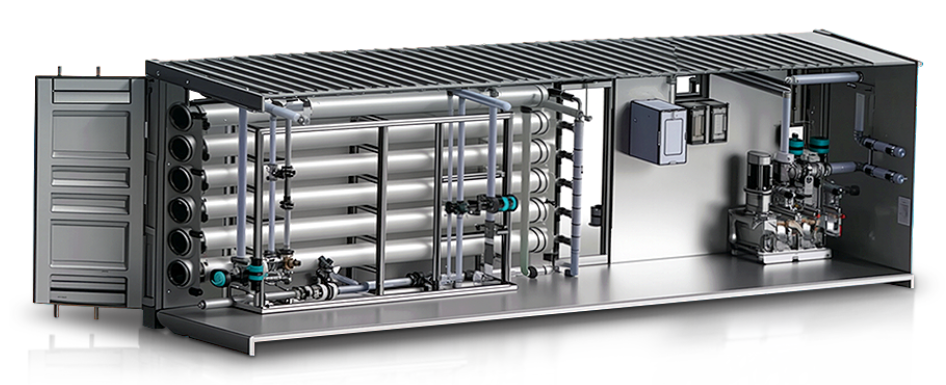
A plant is not always available for a water treatment project due to storage space, time, or infrastructure. There may be limited utilities at a remote industrial site. Treatment for a temporary project can be for a few years only. Even if a facility is already in operation, increased capacity may be needed without extensive construction.
That’s where containerized water treatment systems come in handy. All treatment stages can be added to a standard shipping container instead of constructing them on-site. It may be a combination of filtration, ultrafiltration (UF), reverse osmosis (RO), biological treatment, disinfection, or other treatment processes depending on the application.
There are two decisions to be made, however: one is whether the format is appropriate for the project, and the second is whether the supplier can provide the treatment process that is suitable for the water source and end product. and end product. The range of QILEE’s containerized systems covers drinking water, purified water, high purity water, process water, wastewater and reclaimed water.
Why Are Containerized Water Treatment Systems Important?
But the benefit of containerization is not just decreased space. It alters the means of carrying out a treatment project.
Major civil engineering work must be completed prior to equipment installation in a conventional plant. A containerized system has many treatment elements in a defined area.
Faster Installation
Many of the assembly components can be completed prior to final assembly. Then the container can be moved to the job site and connected to necessary utilities.
QILEE’s containerized systems feature integrated configurations for easy installation and deployment. It has standard 20-foot, 40-foot, and 40-foot high-cube containers. for its wastewater systems.
Preparations for the site still need to be made, which involve installing foundations, power lines, drainage, connections, and access for maintenance.
Better Use of Space
A containerized system provides a space that a designer can use to arrange the treatment process. This can be helpful when land space is restricted or if there is little space in an existing facility.
Decentralized treatment can also be accomplished in the format.
Easier Relocation
This treatment system, designed to fit into a standard shipping container, can be moved to different project sites. This is helpful when working on a project remotely.
What Actually Makes a Containerized System Effective?
A treatment system is not effective without a container. It’s the inside that tells the story.
The treatment process should start with the incoming water. Different treatment stages are needed for surface water, brackish water, industrial wastewater, and domestic sewage.
Treatment for purified water can be screening, coagulation, flotation, sedimentation, filtration and disinfection. Where greater separation is desired, UF or RO can be used, and if high-purity water is required, RO-EDI can be used.
With wastewater, it’s a different story. Biological treatment can result in a reduction of organic pollutants. and membrane processes can result in solid/liquid separation. Two different A/O + MBR wastewater configurations are available from QILEE, based on the respective treatment requirements.
The treatment train is the important factor – not the container size.
What Should Buyers Check Before Choosing a System?
There are several questions that are answered by a good specification before choosing the appropriate equipment:
| What to check | Why it matters |
| Raw-water quality | Determines contaminants and necessary treatment units |
| Required flow | Determines system capacity |
| Final water quality | Determines the filtration, membrane filtration, or biological filtration/polishing requirements. |
| Site conditions | Impacts on placement, utilities, drainage, and access. |
| Control requirements | Determines monitoring and automation needs |
| Future demand | Supports the expansion or modification of a process or procedure |
| Maintenance | Provides adequate facility for servicing equipment |
QILEE’s process water system includes multimedia filtration, UF, RO and mixed bed deionization for high quality process and boiler feed water. This is far from a simple drinking-water system or a biological wastewater treatment plant.
The rule of the game is to begin with the water and the necessary result and then select the treatment process.
Why Does System Integration Matter?
In addition, the individual parts of the containerized plant must function in concert.
Pumps, valves, membranes, chemical dosers, sensors and treatment units need to be in the proper sequence. Even good components can have poor performance when they are integrated into the overall plant.
At remote locations automation can be particularly valuable. Containerized solutions from QILEE can be controlled by PLC and HMI and through GPRS, 4G and IoT technologies, depending on the setup.
This can provide more detailed insight into the system’s state and minimize unnecessary operator action. It is important to have convenient access to a compact system for inspection, cleaning and replacement.
What Should You Look for in a Containerized Water Treatment Supplier?
With containerization now determined as the appropriate format, the supplier is a key consideration.
A good supplier should be able to link up:
- Analyzing raw water and process selection.
- Use of different treatment equipment and membranes.
- Applying various treatment equipment and membranes.
- To prepare the container layout and integrate equipment into the container.
- Automation and monitoring
- Manufacturing, construction, and testing
- Installation and commissioning
- Any future changes or additions of capacity
This is important in the event of changing water quality or project needs. A supplier that can only offer a standard container could find itself in trouble if the water requirements of the feed or the treatment need shift.
Why Choose QILEE for Containerized Water Treatment?
The biggest selling point of QILEE is the variety in treatment setups that can be achieved in its containerized method. It encompasses purified water, high purity water, process water, drinking water, wastewater, and water reuse.
Various technologies could be used in combination, depending on the application, such as UF, RO, RO-EDI, biological treatment, and MBR. Its industrial wastewater configurations are also able to integrate processes like MBR, DAF with chemical dosing, TMBR, NF and RO.
Integration is also an issue. The containerized process-water systems of QILEE can integrate treatment equipment, controls, chemical storage and supporting utilities into the container system. This enables the project to be seen as a whole treatment system rather than a number of individual pieces.
This helps to focus on the need for water treatment and the operation of the water-treatment system.
Conclusion
Containerized water treatment systems are more than just space-saving solutions. They can help reduce on-site construction, ease transportation, and facilitate the deployment process.
However, the container is just a structure. Whether it can solve the water-quality problem depends on the treatment process within it. The selection, integration, automation, and maintenance of the process are thus as important as the container.
This also goes to explain why the supplier is important. QILEE’s container solutions provide flexibility so that various treatment technologies and configurations can be employed for both drinking water and process water applications, as well as high purity water, wastewater, and reuse applications.
The question to ask is not just, “Will it fit into a container? The question is, “Can the system be designed around our water, site, and operating needs?” This is where it is absolutely crucial to select the right system and a company.

Managing money sounds simple enough. Spend less than you earn, save what is left and try not to get into unnecessary debt. In reality, it rarely works that neatly. Rent changes. Grocery bills go up. A car needs repairing at exactly the wrong time. An annual payment suddenly appears that was completely forgotten about. Even a few small expenses can start adding up without being noticed. That is why a useful financial plan needs to be practical, not perfect.
Start with Where the Money Actually Goes
The first step is fairly basic, but it is also the part most often skipped: look at the real numbers. Start with monthly income and then list the regular costs. Housing, electricity, transport, groceries, insurance, loan repayments and other essentials should be easy enough to identify.
The harder part is everything else. Coffee runs, takeaway meals, online subscriptions, shopping and small purchases can easily disappear into the background. None of these expenses necessarily needs to be cut out. The point is simply to know how much they are actually costing. It is much easier to make sensible decisions when the numbers are visible.
Don’t Treat Every Expense the Same
A budget does not have to mean saying no to everything enjoyable. Some expenses are necessary. Others are flexible. If money becomes tighter one month, there is a big difference between reducing restaurant visits and being unable to pay the electricity bill. Keeping these categories separate makes difficult months easier to manage.
It can also help to review subscriptions and recurring payments every few months. A service that was useful six months ago might now be barely used. Ten or fifteen pounds here and there may not seem important, but several unnecessary payments can become a decent amount over a year. Sometimes the easiest saving is simply stopping money from leaving the account for things that are no longer needed.

Leave Some Money for Things That Go Wrong
Unexpected costs are not really unexpected. Something will eventually need replacing, repairing or paying for earlier than planned. An emergency fund is there for exactly this reason. It could be a broken washing machine, an urgent trip, a car problem or a temporary drop in income. Without some savings available, even an ordinary problem can create financial pressure or lead to unnecessary borrowing. A small emergency fund can help reduce that risk.
There is no need to build a huge emergency fund overnight. Starting with a realistic amount each month is more useful than setting a target that is impossible to maintain. Over time, even modest contributions can create a useful buffer.
Remember the Expenses That Don’t Come Every Month
Monthly budgets often look fine because they only include monthly bills. Then the annual expenses arrive. Insurance renewals, car costs, school expenses, holidays, memberships and larger household purchases can all create pressure when they have not been considered beforehand. One simple way around this is to take an annual cost and spread it across the year.
For example, if something is likely to cost £1,200 annually, putting aside around £100 each month makes the eventual payment much less painful. The same thinking can apply to charitable commitments and other financial responsibilities. For Muslim households, this may include setting money aside for zakat as part of wider annual financial planning. It does not have to sit in a completely separate financial system. It can simply be included when working out what money needs to be available during the year.
Look at Debt Honestly
Debt can make a financial plan look better on paper than it really is. If a large part of monthly income is already committed to repayments, there is less room for saving, emergencies or future plans.
Start by listing all debts and repayment commitments. This gives a clearer view of what is owed and how each payment affects the monthly budget. This gives a much clearer idea of what is actually being paid over time. Interest-based borrowing should be approached with care, especially for Muslim households seeking to manage money in line with Islamic principles. Reducing existing debt can also free up more income for essential needs, savings and charitable responsibilities. And taking on new debt to pay for everyday spending should be treated carefully. It may solve the immediate problem, but the repayment still has to come from a future month’s income.
Give Savings a Specific Job
“Save more money” is a reasonable goal, but it is not a very useful plan. It helps to know what the money is actually for. An emergency fund will have a different purpose from a house deposit. Retirement savings are different again. So are education costs, travel or replacing a car.
Separate goals make it easier to decide how much needs to be saved and how quickly. They also make progress more obvious. Watching a specific savings target move from £500 to £1,000 feels very different from simply seeing money sitting in an account with no particular purpose.
Check the Plan Every Few Months
There is no point creating a detailed budget and never looking at it again. Financial circumstances change. Income changes. Bills change. Household priorities change too. A quick review every few months can be enough to catch problems early. Look at actual spending, check whether savings are still realistic, review debt and think about any larger expenses coming up. The goal is not to track every single purchase forever. It is to have a reasonable idea of where the money is going and whether it is still supporting the things that matter.
Good financial planning is really about creating some breathing room. It makes everyday spending easier to understand, gives future goals a better chance and reduces the chance that one unexpected bill completely throws everything off. It will never make money management completely predictable. Nothing can do that. But a decent plan can make the unpredictable much easier to handle.
Blog
Visiting Sydney for the First Time? Here’s Why a Harbour Dinner Cruise Should Be on Your Itinerary

Your first visit to Sydney usually comes with one challenge: fitting everything into a few short days. Between exploring the Sydney Opera House and Harbour Bridge, wandering through waterfront precincts, discovering local neighbourhoods, visiting museums and galleries, catching a ferry across the harbour or spending time at one of the city’s famous beaches, the days fill up quickly. Most visitors spend hours on their feet, moving from one attraction to the next, trying to experience as much of the city as possible.
That’s exactly why a Sydney Harbour dinner cruise deserves a place on your itinerary. Rather than being another attraction to tick off, it’s the perfect way to slow the pace after a busy day. As the city lights begin to sparkle, you can settle in with dinner, enjoy uninterrupted harbour views and watch Sydney’s iconic landmarks drift past from the water. It’s an experience that feels less like sightseeing and more like the reward for a day well spent.
Here are three reasons why a first-time Sydney visitor should consider a dinner cruise and where it fits best in the itinerary.

Reason One: You Get to See the Icons From a Whole Different Angle
Most first-timers plan their sightseeing around finding the best lookout for that classic Sydney tourist attraction photo with the Opera House or the Harbour Bridge in the background. And that’s definitely worth doing. Seeing them up close from the shore is a memory in itself. But very few visitors think to look at the harbour as a viewpoint in its own right, which means they miss one of the best perspectives the city has to offer.
And therein lies the appeal of a night cruise. Besides looking at the water from the land, you’re also looking at the land from the water. Everything you see from a footpath during the day or an aerial shot in brochures suddenly looks completely different. Add a proper meal and a drink to that view, and it’s a perfect ending for a rather tiresome day.
Over the course of the evening, a dinner cruise on Sydney Harbour gives you open-water views of both the Opera House and the Harbour Bridge, lit up at night. Seeing both from the same seat, in the same golden hour of a Sydney evening, isn’t something you can easily recreate on a walking itinerary.
Reason Two: Your Feet Get a Break, Without You Missing Out
A lot of tourists who visit Sydney for the first time don’t plan enough for how much walking a single day in Sydney actually involves. Distances between the big attractions always look shorter on a map than they feel in real life, and it’s easy to underestimate what you’ll end up covering.
Spend a day covering the CBD, the harbour foreshore, and a couple of the inner suburbs, and the kilometres add up fast. By evening, you are running on sore feet and short patience. With shopping for souvenirs and coffee stops in between, you are officially tired.
A few hours on a harbour dinner cruise gives your legs a well-deserved break, while still counting as one of the best things you did all day. You get to sit down, eat well and take in the city lights and its star attractions from a very comfortable seat on a luxury boat.

Reason Three: Sightseeing and Dinner: A Time-Saving Combo
Fitting a good dinner into an already packed day is a hectic task. You want the food to be genuinely good, the setting to feel right, and the experience ideally near your next stop.
A harbour dinner cruise takes that problem off your plate entirely. Dinner is served while the boat glides past the landmarks you’d otherwise have to set aside separate time to get the night view of. You don’t have to choose between a nice meal and an evening view when you can have both, at the same table, at the same time.
For anyone trying to make the most of a short trip, that’s two things sorted in one experience. If you’re a laid-back traveller who does not have a detailed itinerary, a harbour dinner cruise still gives you the experience of a nighttime Sydney sightseeing tour. One cruise booking covers the view, the food, and a good chunk of your evening plans, with barely any extra planning required.
When to Book It Into Your Trip
The easiest time to slot in a harbour dinner cruise is after your first full day of exploring the city on foot. By then, you’ve already seen the Opera House and Harbour Bridge up close, so viewing them again from the water gives you a completely fresh take on places.
Alternatively, if you’ve planned several busy days of walking, shopping and sightseeing, schedule the cruise midway through your stay as a chance to recharge. The slower pace makes it feel like a mini break without taking time away from your itinerary.
Whichever night you pick, book in advance, especially if you’re travelling on a weekend or during peak season. And before you confirm, it’s worth checking the cruise duration, what’s included with dinner, and the operator’s weather policy, so you know exactly what you’re walking (or rather, sailing) into.
One Booking, and Your Evening’s Sorted
Your first trip to Sydney is going to be exciting and busy. Every day gets filled up with places to see, photos to take, and things to squeeze in before you fly home.
A harbour dinner cruise gives you something different from all of that. It’s not about rushing to another attraction or cramming more into an already full schedule. It’s a chance to slow down for an evening without feeling guilty, take in some of the world’s best harbour views, enjoy a proper meal, and watch Sydney light up after dark. After a full day of exploring, there’s not much that beats it!
Author Bio – Amanda Clark
A Sydney-based travel writer who loves chasing experiences that defy expectations – especially when great food and entertainment are part of the mix. From unforgettable hits to unexpected flops, I share real stories to keep the adventure honest and fun for everyone!

THE FUTURE OF SPACE OPTIMIZATION: HOW MOBILE STORAGE SOLUTIONS ARE REVOLUTIONIZING URBAN LIVING

How HubSpot Integration Services Connect Your Business Tools

How to Choose the Right Charity or Community Cause to Support?

What Makes Containerized Water Treatment Systems Essential, and Why Choose QILEE?

How to Build a More Responsible Personal Finance Plan?

The Ultimate Guide to Single Wall Cups: Benefits and Uses

The 15 Highest-Paid Rugby Players in the World

Christopher Dare: The Untold Story of Engineer and Former Husband of Angela Rippon

How to Ensure Your Home is Valued Correctly for a Quick Sale

What Is Fanquer? The Digital Creator Platform Transforming Direct-to-Fan Engagement

Nancy Hallam: The Inspiring Life, Career, and Success Story Behind Ian Wright’s Wife

Enclomimed 25 (Enclomiphene) – Effective PCT Protocol
The 15 Highest-Paid Rugby Players in the World
Christopher Dare: The Untold Story of Engineer and Former Husband of Angela Rippon
How to Ensure Your Home is Valued Correctly for a Quick Sale
What Is Fanquer? The Digital Creator Platform Transforming Direct-to-Fan Engagement
Nancy Hallam: The Inspiring Life, Career, and Success Story Behind Ian Wright’s Wife
Enclomimed 25 (Enclomiphene) – Effective PCT Protocol
-
 Sports3 months ago
The 15 Highest-Paid Rugby Players in the World
-
Celebrity9 months ago
Christopher Dare: The Untold Story of Engineer and Former Husband of Angela Rippon
-
 Real Estate7 months ago
How to Ensure Your Home is Valued Correctly for a Quick Sale
-
 Technology3 months ago
What Is Fanquer? The Digital Creator Platform Transforming Direct-to-Fan Engagement
-
Celebrity10 months ago
Nancy Hallam: The Inspiring Life, Career, and Success Story Behind Ian Wright’s Wife
-
 Health7 months ago
Enclomimed 25 (Enclomiphene) – Effective PCT Protocol
-
 Celebrity9 months ago
Who Is Maisie Mae Roffey? The Private Life, Family Story, and Quiet Success of Julie Walters’ Daughter
-
 Business9 months ago
Simon Dixon Biography: Lifestyle, Net Worth, Family, Career and Success Story