
Technology
How eCommerce Brands Can Scale Content Using Wan AI

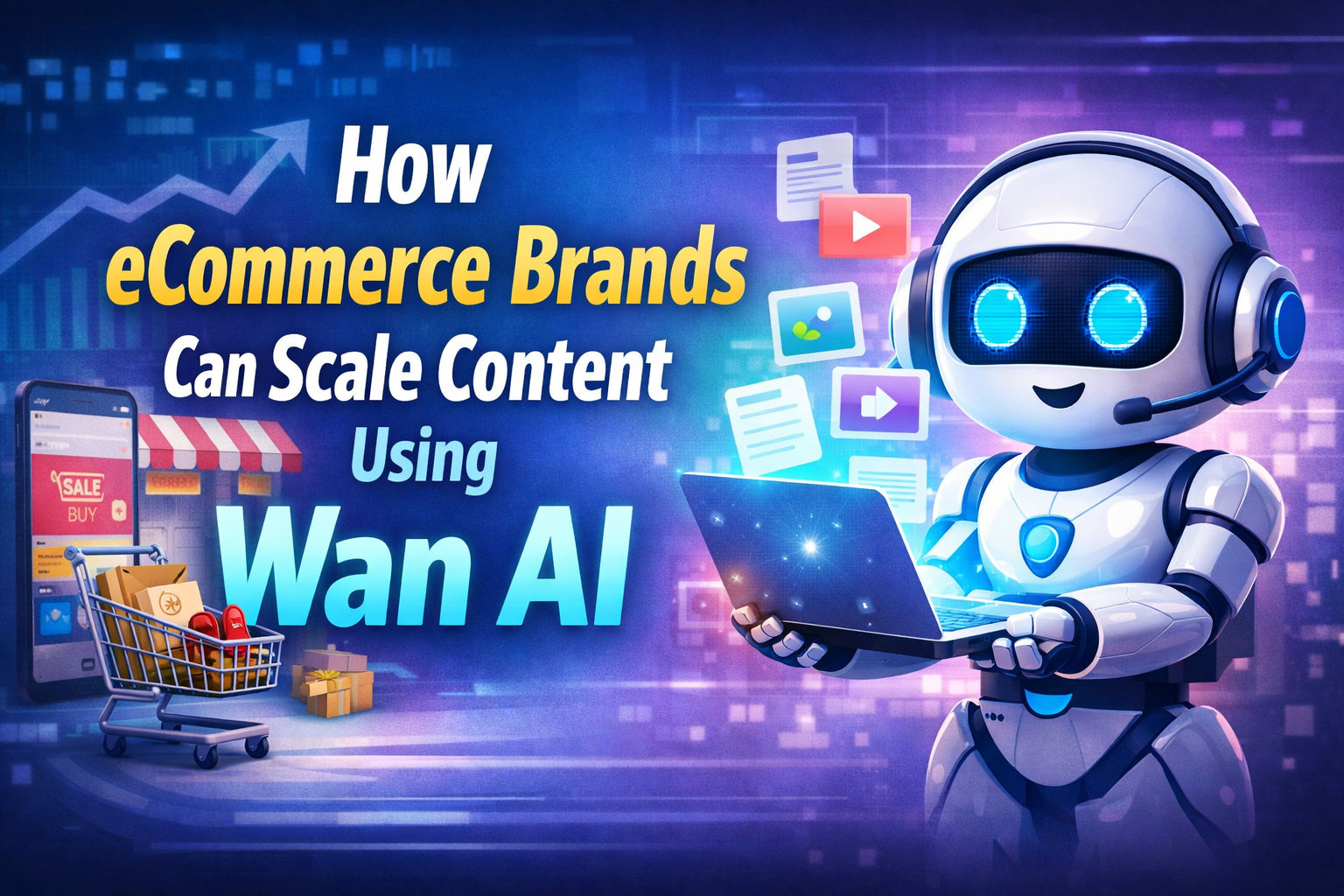
The pressure to produce high-quality, engaging content at scale has never been greater for eCommerce brands. With constantly shifting consumer preferences, seasonal campaigns, and platform-specific requirements, content creation can quickly become overwhelming. Traditional workflows often struggle to keep up with the demand for speed, consistency, and personalization.
This is where wan ai begins to reshape the content landscape. When combined with tools like invideo, brands can streamline production and generate videos faster using advanced AI capabilities. By enabling quick creation of short-form, high-quality videos with synced audio and multi-shot storytelling, AI-driven systems are changing how eCommerce teams approach creative output.
Instead of relying on manual editing or large production teams, businesses are increasingly turning to automation to scale efficiently. AI is not just about speed—it also enhances creativity, allowing brands to experiment, iterate, and optimize content like never before.
The Growing Need for Scalable Content in eCommerce
Rising Content Demands Across Platforms
Modern eCommerce brands operate across multiple digital channels—social media, marketplaces, email campaigns, and websites. Each platform requires unique content formats, tones, and durations. A single product launch may require dozens of creative variations tailored for different audiences.
This growing demand creates a bottleneck. Teams often spend more time producing content than strategizing or analyzing performance. As a result, scaling content becomes less about creativity and more about operational efficiency.
Short Attention Spans and Visual-First Consumption
Consumers today prefer quick, visually engaging content. Short-form videos, product demos, and bite-sized storytelling dominate digital platforms. Static images and long descriptions are no longer enough to capture attention.
To remain competitive, brands must produce dynamic content consistently. However, doing so manually is time-consuming and resource-intensive, making scalability a key challenge.
The Cost of Traditional Production
Traditional video production involves scripting, shooting, editing, and post-production. This process can take days or even weeks for a single asset. For eCommerce brands that need frequent updates, this model is neither sustainable nor cost-effective.
AI-powered solutions address this gap by automating repetitive tasks and accelerating production timelines.
How Wan AI Transforms Content Creation Workflows
The integration of wan ai into content workflows introduces a new level of efficiency and flexibility. When paired with platforms like invideo, it enables brands to generate videos faster using WAN 2.5 and Wan 2.6 AI capabilities. These systems support up to 15-second videos in 1080p at 24fps, offering multi-shot storytelling and synced audio with improved prompt accuracy.
Automating Video Production
AI-driven systems can convert simple inputs—like product descriptions or campaign ideas—into fully structured video content. This eliminates the need for complex editing processes and reduces reliance on large creative teams.
By automating production, brands can focus on strategy and storytelling rather than execution.
Enabling Multi-Variant Content at Scale
One of the biggest advantages of AI is the ability to generate multiple variations of the same content. For example, a single product video can be adapted for different audiences, platforms, or campaigns.
This allows brands to test different approaches, optimize performance, and maximize reach without significantly increasing workload.
Improving Speed Without Compromising Quality
Speed is critical in eCommerce, especially during seasonal campaigns or flash sales. AI tools enable rapid content creation while maintaining visual and narrative quality.
With features like synced audio and structured storytelling, brands can produce professional-grade videos in a fraction of the time.
Leveraging AI for Personalized Customer Experiences
Dynamic Content for Different Audiences
Personalization is a key driver of engagement in eCommerce. AI enables brands to create tailored content for different customer segments based on behavior, preferences, and demographics.
Instead of a one-size-fits-all approach, brands can deliver highly relevant content that resonates with individual users.
Real-Time Adaptation
AI systems can analyze performance data and adjust content strategies in real time. This allows brands to refine messaging, visuals, and formats based on what works best.
As a result, content becomes more effective and aligned with audience expectations.
Enhancing Product Storytelling
AI-generated videos can highlight product features, benefits, and use cases in a visually engaging way. This improves the overall shopping experience and helps customers make informed decisions.
Better storytelling leads to higher engagement and increased conversions.
Streamlining Campaign Execution with AI
Faster Turnaround for Campaigns
Campaign timelines in eCommerce are often tight. AI tools enable quick turnaround, allowing brands to launch campaigns faster and respond to market trends more effectively.
This agility is crucial in a competitive landscape where timing can make or break a campaign.
Consistent Branding Across Assets
Maintaining consistency across multiple pieces of content can be challenging. AI helps standardize visual elements, tone, and messaging, ensuring a cohesive brand identity.
Consistency builds trust and strengthens brand recognition.
Reducing Operational Bottlenecks
By automating repetitive tasks, AI reduces the workload on creative teams. This minimizes bottlenecks and allows teams to focus on high-impact activities like strategy and innovation.
Efficiency gains translate into better resource utilization and improved productivity.
The Role of an AI Video Generator App in Scaling Content
An AI video generator app plays a crucial role in enabling scalable content production. These tools simplify the process of creating videos by handling tasks such as scene generation, transitions, and audio synchronization.
Instead of starting from scratch, brands can quickly generate content that aligns with their goals and audience preferences. This not only saves time but also ensures a steady flow of fresh content.
Additionally, AI-powered apps allow for easy updates and modifications, making it simple to adapt content for different campaigns or platforms. This flexibility is essential for maintaining relevance in a fast-paced digital environment.
Overcoming Challenges in AI-Driven Content Creation
Balancing Automation and Creativity
While AI offers significant advantages, it is important to maintain a balance between automation and human creativity. AI can handle execution, but strategic direction and storytelling still require human input.
Brands should use AI as a tool to enhance creativity, not replace it.
Ensuring Content Authenticity
Authenticity is critical in building trust with customers. Over-reliance on automated content can sometimes lead to generic outputs.
To avoid this, brands should refine AI-generated content and ensure it aligns with their unique voice and values.
Managing Data and Insights
AI systems rely on data to function effectively. Brands must ensure they have access to accurate and relevant data to maximize the benefits of AI.
Proper data management leads to better insights and more effective content strategies.
Best Practices for Scaling Content with Wan AI
Start with Clear Objectives
Before implementing AI, brands should define their goals. Whether it’s increasing engagement, improving conversion rates, or expanding reach, clear objectives guide the content strategy.
Focus on High-Impact Content
Not all content needs to be scaled. Brands should prioritize high-impact formats such as product videos, ads, and social media content.
This ensures that resources are allocated effectively.
Continuously Test and Optimize
AI enables rapid experimentation. Brands should take advantage of this by testing different variations and analyzing performance.
Continuous optimization leads to better results over time.
Integrate AI into Existing Workflows
Rather than replacing existing processes entirely, brands should integrate AI into their current workflows. This allows for a smoother transition and better adoption across teams.
The Future of Content Scaling in eCommerce
The role of AI in content creation will continue to evolve. As technology advances, we can expect even greater levels of automation, personalization, and efficiency.
For eCommerce brands, this means new opportunities to connect with customers and stand out in a crowded market. The ability to produce high-quality content at scale will become a key competitive advantage.
AI will also enable more sophisticated storytelling, allowing brands to create immersive and engaging experiences for their audiences.
Conclusion
Scaling content in eCommerce is no longer optional—it is a necessity. As consumer expectations grow and competition intensifies, brands must find ways to produce more content without compromising quality.
AI-powered solutions, particularly those driven by wan ai, offer a practical and effective way to meet this demand. By automating production, enabling personalization, and improving efficiency, AI transforms how brands approach content creation.
When used strategically, these tools empower eCommerce businesses to stay agile, creative, and competitive in an ever-changing digital landscape.






Building a recognisable brand identity matters more than ever right now. Customers are bombarded with advertising from every direction, every single day, so cutting through that noise is genuinely difficult. Custom apparel is one of those approaches that doesn’t always get the credit it deserves. A well-placed logo on a t-shirt, or a thoughtfully designed clothing, can do a surprising amount of heavy lifting when it comes to getting your brand in front of people.
But it goes beyond simple promotion. Branded clothing can build real emotional connections, lift team morale, and give people a genuine sense of belonging. Here, we’ll look at how custom apparel, personalised hoodies in particular, can strengthen your brand identity and why it’s worth considering as part of your wider strategy.
The Power of Branding Through Clothing
Clothing is about as visible as branding gets. When someone wears your brand, they carry it into spaces and situations you’d never be able to reach through traditional advertising alone. A team in personalised hoodies at an event, a loyal customer wearing your gear on a Saturday morning – that’s continuous, organic exposure.
There’s also something inherently personal about clothing. People feel a connection to brands whose items they actually want to wear, because what we put on reflects who we are. Hoodies, in particular, are the kind of thing people reach for again and again. The more often your brand is seen in everyday life, the more familiar it becomes – and familiarity breeds both recognition and trust.
Strengthening Your Brand with Personalised Hoodies
Personalised hoodies are a particularly strong vehicle for brand identity. They’re practical, widely loved, and offer plenty of space for creative design. Logos, slogans, graphics – there’s real room to work with.
That said, good design is about more than slapping a logo on the chest. It should reflect what your brand actually stands for. A tech company might lean into clean, minimal aesthetics. A lifestyle brand might go bolder, with colour and energy that speaks to its audience. Getting that right matters, because people are only going to wear something they genuinely like.
When the apparel is well-made and genuinely appealing, people wear it willingly – and that’s when it really starts working for you. Organic, everyday visibility in the real world and across social media is hard to manufacture, but good branded clothing can generate it naturally.
Custom Apparel as a Tool for Brand Recognition
Recognition is everything when it comes to building a lasting business. The more familiar your brand feels, the more instinctively people will turn to you when they need what you offer. Custom clothing contributes to that in a consistent, low-effort way.
Unlike a digital ad that can be skipped or scrolled past, a hoodie with your logo on it goes wherever the wearer goes – the high street, the gym, the school run. It’s not intrusive, but it is persistent. That steady, repeated exposure quietly does its job over time.
There’s a word-of-mouth element to it as well. Someone wearing your branded clothing sparks curiosity. People ask questions. The wearer shares their experience. That kind of authentic, person-to-person recommendation is genuinely valuable, and it costs you nothing beyond the initial investment in the garment.
Building a Cohesive Team Identity
Custom apparel isn’t only useful externally. Inside a business, it can play a real role in shaping culture. When employees wear the same branded clothing, for example, personalised hoodies, there’s a sense of shared identity that quietly reinforces team spirit.
It’s not about being corporate or formal. It’s more that wearing the same thing signals that you’re all in it together. It creates a visual shorthand for belonging. When a team looks cohesive and feels cohesive, that tends to show in how they work and how they come across to the people they interact with. It’s a small thing, perhaps, but it carries more weight than you might expect.
Custom Apparel for Customer Loyalty and Engagement
Branded clothing also works well as part of a loyalty or rewards programme. Giving away personalised hoodies as thank-yous for repeat custom, or as prizes in a competition, makes customers feel genuinely appreciated rather than just targeted. That distinction matters.
When someone receives a piece of clothing they actually want to wear, it creates a feeling of being part of something – an inner circle of sorts. That emotional connection is what turns one-time buyers into loyal regulars. It’s much harder to replicate through a discount code.
Social media adds another layer here. A simple competition where customers share a post or tag your brand for the chance to win branded merchandise can generate real engagement and reach people you’d otherwise never come across. It’s low-cost and, done well, genuinely effective.
Custom Apparel for Events and Promotions
Events are an obvious opportunity to make custom apparel work hard. Whether you’re at a trade show, a local fair, or an industry conference, having your team in well-designed branded clothing makes you immediately identifiable in what can be a very crowded space.
Giving away hoodies as event merchandise leaves a lasting impression in a way that a flyer simply doesn’t. People take them home, wear them, and your brand travels with them. Every time that hoodie gets worn after the event, it’s another touchpoint – another quiet reminder that your business exists and is worth paying attention to.
The Quiet Power of Custom Apparel
Custom apparel, and personalised hoodies in particular, is a genuinely versatile tool for building brand identity. Used well, it increases visibility, deepens customer relationships, and creates a stronger sense of internal culture – all at the same time.
In a landscape where everyone is competing for attention, branded clothing keeps your name out there in an unobtrusive, human way. With thoughtful design and decent quality, it builds the kind of slow-burn recognition that more expensive campaigns often fail to achieve. It’s not glamorous, but it works.


In fact, most owners of websites would like to know how one day their website could be strong enough in terms of regular visitors, meaningful engagement, and high conversions so that they could see it thriving. Despite the attempts of many websites, low traffic is still a very common challenge and one that is leaving quite a lot of the potential for business growth untapped. Fortunately, with the right strategies even the poorly performing websites can be turned into digital assets which the audiences will want and will give you tangible results.
Table of Contents
Identifying Weak Points in Website Performance
It is very important to get through step one right and that is improving a site with low traffic by analyzing what exactly is holding it back. A poor navigation system, a slow loading time, and not having the website optimized for mobiles are some of the things that are usually blamed. A comprehensive audit can identify these issues and give the business the green light to make a few improvements that will lead to an amazing user experience and that in turn will entice visitors to stay longer.
Content That Speaks to Your Audience
Content that your customers love and are ready to engage with is the basis of every high performance website. One way to identify with your audience and industry is to get backlinks from trusted and reputable websites. Titles are a key element of a blog post and if your target reader sees value, they will not only come
Leveraging SEO for Visibility
Search engine optimization (SEO) is your main weapon in the online competition. If you place the right keywords in your text in a natural way, optimize meta descriptions and do internal linking, these are few of the elements that can lead to better ranking. Use such things as ahrefs使用指南 to help yourself in discovering what your competitors are doing, where are the backlink opportunities and what is happening in terms of keywords. With the use of these, you will be able to steadily make your way onto the first page of search results and draw in the traffic that is actually interested in your business.
Building Authority Through Backlinks
One way to identify with your audience and industry is to get backlinks from trusted and reputable websites. Backlinks are earned when you create guest posts on other blogs, start partnerships or launch online PR campaigns. When a certain website has lots of trustworthy links leading to it, it majorly enhances its image and search ability.
Enhancing Engagement with Interactive Features
Websites with only text and images are becoming less attractive. Nowadays, people are greatly influenced by the interaction level of a webpage and may base their decisions largely on that. The introduction of engaging elements through poll/quiz elements and “live chat” features creates an immediate effect of increasing user engagement. The features provide users with a better experience while they collect data about user preferences and behaviors.
Harnessing Social Media Integration
In fact social media channels have the capability to take people to your site. Putting share buttons on your pages, offering content through various social channels, responding to community posts these are all examples of how social media can bring fresh visitors to you. If you maintain your message and image consistent, your social media channels will be in complete agreement with your other digital marketing efforts.
Sustaining Growth Through Analytics
One of the best means to be a step ahead is probably monitoring on a regular basis. With analytics tools, businesses are not only able to keep track of their best performing pages, but also highlight visitor exit points and grasp the principal elements that lead to conversion. Having this knowledge with them, businesses are able to make decisions that rest on data in order to grow their company not only on a one time basis but also constantly as a target.
Elevating Your Digital Presence
To give your website a boost when it comes to traffic and performance requires a series of steps that include hard work, planning, and flexibility to changing conditions. In case you are wondering how to build your digital presence, you want to have a nice balance between a great user experience, SEO, and even channels through which your company can attract people in creative ways. For a small business owner, this is a big deal. Ideally, a website attracts visitors but it should also be able to convert them into loyal customers. And that’s where the whole chain of one activity leading to another actually works to generate model success!

The analytics profession has transformed more dramatically in the past two years than in the previous decade. Organizations no longer seek professionals who simply query databases and build dashboards—they want analysts capable of leveraging intelligent automation to accelerate insights. Data Analytics Training Online programs have responded by integrating generative AI modules into their curricula, preparing learners for a workplace where traditional skills alone no longer suffice.
The Shift in Employer Expectations
Generative AI adoption has reached a tipping point across industries. According to McKinsey’s 2024 survey, 78% of organizations now use AI in at least one business function, up from 55% just one year earlier. More specifically, 71% regularly use generative AI in their operations compared to only 33% in 2023—representing a dramatic 115% increase in adoption.
For data professionals, this shift carries significant implications. Employers increasingly expect analysts to work alongside AI tools rather than compete against them. The World Economic Forum’s Future of Jobs Report 2025 found that 87% of companies surveyed expect AI and big data skills to increase in importance by 2030. Data analysts and scientists appeared high on the list of roles with growing demand across industries.
How Training Programs Have Evolved
Modern online programs now dedicate substantial portions to generative AI integration. Learners encounter practical applications that extend far beyond theoretical concepts:
| Traditional Skills | Generative AI Enhancements |
| Manual data cleaning | AI-assisted data preparation and validation |
| Static report creation | Automated narrative generation from datasets |
| Basic visualization | Natural language querying of dashboards |
| SQL query writing | AI-powered query optimization and suggestion |
| Spreadsheet analysis | Intelligent pattern recognition and anomaly detection |
Professionals pursuing Data Analytics Certification in Toronto find these enhanced curricula particularly valuable. The city’s diverse economy—spanning finance, healthcare, technology, and government—demands analysts comfortable with emerging tools across various industry contexts.
Canadian Market Demand and Compensation
The Canadian analytics job market reflects this technological evolution. According to Glassdoor data from February 2026, data analysts in Canada earn an average of CAD $70,091 annually, with top earners reaching CAD $109,312. Senior analysts with AI competencies command even higher compensation.
| Experience Level | Annual Salary (CAD) |
| Entry Level | $54,384 – $65,000 |
| Mid-Career (4-9 years) | $65,000 – $88,000 |
| Senior (10+ years) | $88,000 – $140,000 |
| AI-Enhanced Skills | $100,000 – $166,000+ |
Toronto-based analysts typically earn above the national average, reflecting both higher demand and cost-of-living adjustments. Companies across Canadian financial services, retail, and telecommunications actively seek professionals who combine traditional analytical foundations with generative AI capabilities.
Practical Skills Covered in Updated Programs
Training programs integrating generative AI focus on immediately applicable competencies:
Prompt Engineering for Analytics: Effective interaction with AI tools requires structured communication. Learners discover how to craft prompts that generate accurate SQL queries, meaningful visualizations, and insightful interpretations from raw data.
AI-Assisted Data Storytelling: Generative AI excels at transforming numerical findings into compelling narratives. Programs teach learners to guide AI in creating executive summaries, stakeholder presentations, and actionable recommendations.
Quality Assurance and Validation: AI-generated outputs require human oversight. Training emphasizes critical evaluation of AI suggestions, identifying hallucinations, and maintaining data integrity throughout analytical workflows.
Tool Integration: From Microsoft Copilot in Power BI to AI features in Tableau and Python libraries, learners gain hands-on experience with generative AI capabilities embedded in industry-standard platforms.
The Productivity Advantage
Research from the St. Louis Federal Reserve found that for the entire U.S. workforce aged 18 to 64, the share of work hours spent using generative AI increased from 4.1% in November 2024 to 5.7% by August 2025. Industries with higher AI-related time savings experienced measurably higher productivity growth.
For data professionals specifically, early adopters report significant efficiency gains. Tasks that previously consumed hours—writing documentation, generating initial analyses, and debugging code—now complete in minutes with AI assistance. This productivity advantage translates directly into career advancement and compensation growth.
Preparing for Tomorrow’s Requirements
Deloitte’s State of AI in Enterprise report revealed that worker access to AI rose by 50% in 2025, with expectations for further scaling remaining high. Companies with 40% or more AI projects in production are expected to double within six months.
For aspiring analysts, this trajectory is clear: generative AI proficiency is becoming table stakes rather than a differentiator. Training programs recognizing this shift equip learners with capabilities that remain relevant as the profession continues evolving.
Final Words
Generative AI has fundamentally altered what organizations expect from data professionals. Programs that ignore this reality leave graduates underprepared for modern workplace demands. By integrating AI applications into core curricula, forward-thinking training providers ensure learners possess both foundational analytical skills and emerging competencies that employers actively seek. The professionals who embrace this evolution will find themselves positioned for sustained career growth in an increasingly AI-augmented business landscape.

When Occasional Joint Pain Becomes a Serious Problem

How 10 Gram Gold Bars Fit Into a Strategic Investment Plan

Who is Clinton Eastwood Sr.? The Untold Story of Clint Eastwood’s Father and His Success Journey

Who Is Justin Fonda? All You Need To Know About Bridget Fonda’s brother

Who Is Frances Ford Seymour? All About Jane Fonda’s Mother

Who Is Thomas Ray Gosling? All About The Life Of Ryan Gosling’s Father

Enclomimed 25 (Enclomiphene) – Effective PCT Protocol

Roy Hodges: Biography, Lifestyle, Net Worth, Family & Success Story (2025)

Who Is Maisie Mae Roffey? The Private Life, Family Story, and Quiet Success of Julie Walters’ Daughter

Nancy Hallam: The Inspiring Life, Career, and Success Story Behind Ian Wright’s Wife

Who Is Daniel Clifton Pratt? Inside the Life, Family Values, and Legacy Behind Chris Pratt’s Father

Johnny Carell: Inside the Life, Family, and Rising Success of Steve Carell’s Son
Enclomimed 25 (Enclomiphene) – Effective PCT Protocol
Roy Hodges: Biography, Lifestyle, Net Worth, Family & Success Story (2025)
Who Is Maisie Mae Roffey? The Private Life, Family Story, and Quiet Success of Julie Walters’ Daughter
Nancy Hallam: The Inspiring Life, Career, and Success Story Behind Ian Wright’s Wife
Who Is Daniel Clifton Pratt? Inside the Life, Family Values, and Legacy Behind Chris Pratt’s Father
Johnny Carell: Inside the Life, Family, and Rising Success of Steve Carell’s Son
-
 Health2 months ago
Enclomimed 25 (Enclomiphene) – Effective PCT Protocol
-
Celebrity4 months ago
Roy Hodges: Biography, Lifestyle, Net Worth, Family & Success Story (2025)
-
Celebrity5 months ago
Who Is Maisie Mae Roffey? The Private Life, Family Story, and Quiet Success of Julie Walters’ Daughter
-
Celebrity5 months ago
Nancy Hallam: The Inspiring Life, Career, and Success Story Behind Ian Wright’s Wife
-
Celebrity3 months ago
Who Is Daniel Clifton Pratt? Inside the Life, Family Values, and Legacy Behind Chris Pratt’s Father
-
Celebrity6 months ago
Johnny Carell: Inside the Life, Family, and Rising Success of Steve Carell’s Son
-
 Celebrity4 months ago
Meet Nancy Strang: The Inspiring Life, Success Story, and Legacy of Louis Theroux’s Wife
-
 Celebrity3 months ago
Draven Duncan: Tim Duncan’s Rising Star Son and His Inspiring Basketball Journey