
Health
Why Anxiety Relief Plays a Critical Role in Pelvic Floor Muscle Relaxation

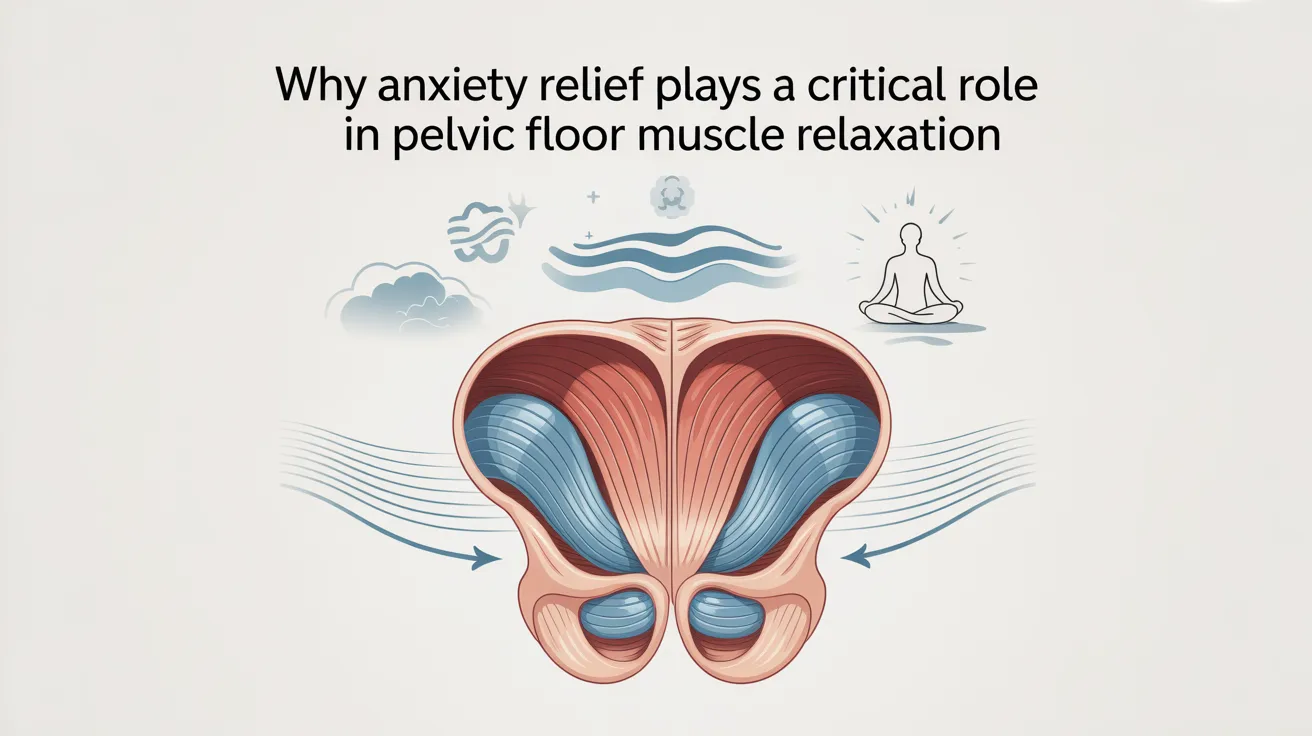
Persistent pelvic tension often feels mysterious to people experiencing it. A sense of tightness, pressure, discomfort during sitting, or pain during intimate activity may appear without a clear physical injury. Many individuals search for structural explanations such as muscle strain or posture imbalance. The deeper driver frequently lies in the nervous system rather than the muscle tissue itself.
Anxiety places the body into a protective state that prepares muscles for perceived danger. Muscles across the body subtly tighten, including those deep inside the pelvis. Over time, repeated stress responses condition the pelvic floor to remain contracted even during rest. This state contributes to what clinicians describe as a Hypertonic Pelvic Floor a condition where muscles remain shortened and unable to fully relax.
Calming anxiety interrupts that neurological loop. When the brain perceives safety, the autonomic nervous system shifts toward a restorative mode. Muscles soften, breathing deepens, and circulation improves throughout the pelvis. This change directly influences pelvic floor tone and can gradually reduce symptoms that once seemed purely physical.
The Neurological Connection Between Anxiety and Pelvic Floor Tightness
Muscle tension does not occur in isolation. The pelvic floor functions within a complex communication network between the brain, spinal cord, and surrounding organs. Emotional stress travels along this network in ways that many people underestimate.
Heightened anxiety stimulates the sympathetic branch of the autonomic nervous system. This response evolved as a survival mechanism that primes the body for rapid action. Heart rate increases, breathing becomes shallow, and muscles brace for movement. The pelvic floor participates in this response because it supports core stabilization and protective reflexes.
Chronic activation keeps muscles guarded long after the stressor disappears. When this occurs repeatedly, the pelvic floor gradually adapts to a shortened resting state. The tissue remains strong but loses flexibility and responsiveness. Pelvic physiotherapists frequently observe this pattern in individuals dealing with persistent stress or unresolved anxiety.
A calmer mental state signals the parasympathetic system to take control. Blood flow increases, muscle fibers lengthen, and internal organs function more comfortably. This neurological shift forms the biological foundation behind anxiety reduction strategies for pelvic floor relief.
How the Stress Response Alters Pelvic Floor Muscle Tone
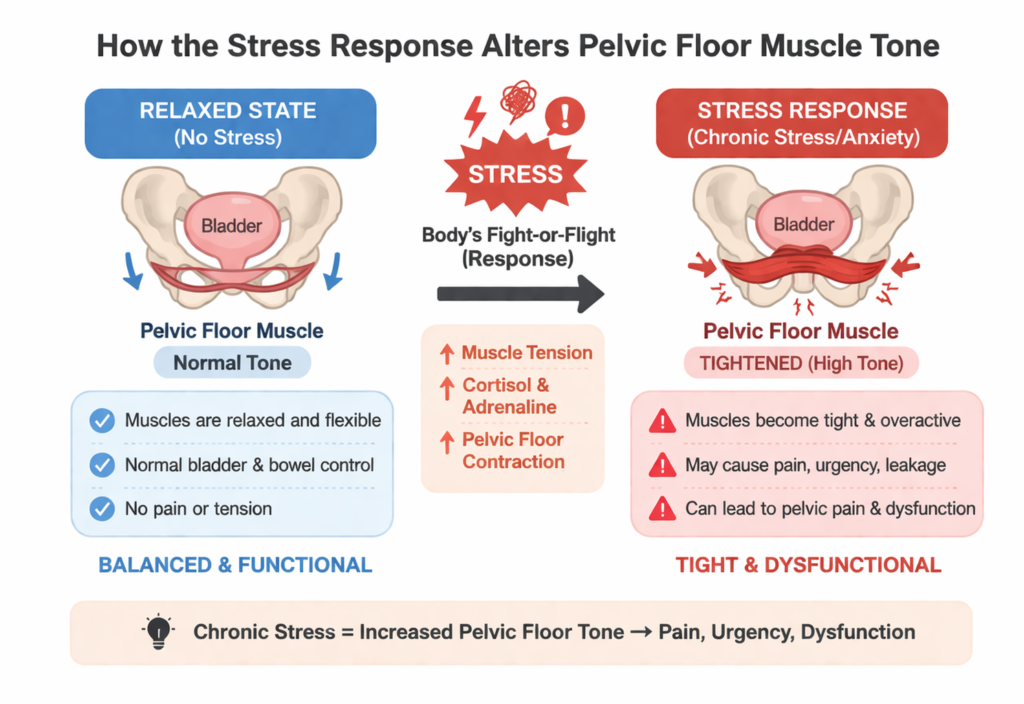
Stress influences the body in layered ways. Pelvic muscles respond not only to mechanical load but also to emotional signals processed by the brain. Even subtle psychological tension can produce physical guarding.
During moments of anxiety, breathing often becomes shallow and chest driven. The diaphragm stops moving through its full range. The pelvic floor works in harmony with the diaphragm during each breath. When breathing remains restricted, pelvic muscles lose their natural rhythm and remain partially contracted.
A prolonged stress response also heightens sensitivity within pelvic nerves. Small sensations that once passed unnoticed begin to feel uncomfortable or painful. Tight muscles compress surrounding nerves and blood vessels, intensifying this feedback loop.
Therapeutic approaches that quiet the nervous system often restore the breathing pattern first. As the diaphragm resumes deeper movement, the pelvic floor begins to synchronize again. This coordination gradually reduces excessive tension.
The Brain-Pelvis Communication Pathway
Neuroscientists describe the pelvic region as highly responsive to emotional states. Several brain areas responsible for threat perception also influence pelvic muscle activity. Signals travel through the spinal cord to activate or relax muscles based on perceived safety.
The brain cannot easily distinguish between physical danger and emotional stress. Work pressure, social worries, or internalized tension may trigger the same muscular reaction as physical threat. Pelvic muscles brace instinctively.
Therapeutic relaxation practices help retrain this communication pathway. When the brain experiences repeated signals of safety, the pelvic floor receives permission to release. Over time, muscle tone becomes more adaptable rather than rigidly guarded.
Why Chronic Anxiety Can Lead to Hypertonic Pelvic Floor Dysfunction
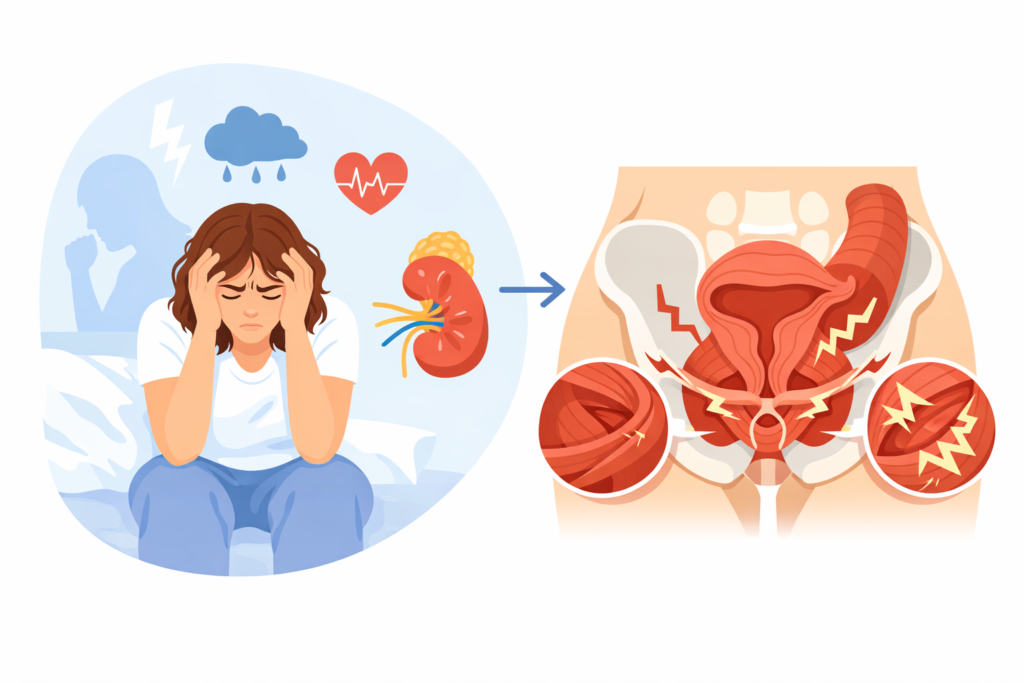
Pelvic physiotherapists often encounter patients who unknowingly hold tension deep in their bodies. Many describe a constant need to clench the abdomen or brace their hips during stressful moments. The pelvic floor becomes part of this habitual pattern.
A Hypertonic Pelvic Floor develops when muscles remain contracted longer than their natural cycle allows. Unlike weakness, which involves reduced strength, hypertonicity involves excessive tension and shortened muscle fibers.
Individuals experiencing this pattern may notice pelvic pain, urinary urgency, constipation, or discomfort during intimacy. These symptoms can feel confusing since the muscles themselves are not injured. They simply lack the ability to lengthen fully.
Chronic anxiety accelerates this pattern. Repeated stress keeps the body in a state of vigilance. The pelvic floor adapts by tightening as a protective reflex, similar to how shoulders tense during pressure. When anxiety persists for months or years, the pelvic floor begins to interpret tension as its default state.
Muscle Guarding and Emotional Stress
Guarding describes the subconscious tightening of muscles to protect vulnerable areas. Many people experience guarding in the jaw, shoulders, or lower back. The pelvic floor responds in the same way, although it remains less visible.
Emotional stress encourages subtle clenching in the lower abdomen and pelvic region. Some individuals hold tension while sitting at a desk. Others clench during intense concentration or emotional strain.
This repeated contraction prevents full relaxation between movements. Over time the muscles shorten and lose elasticity. Pelvic floor therapy frequently focuses on restoring the ability to release rather than strengthening muscles further.
Reducing anxiety removes the constant signal that encourages guarding. Once the brain stops anticipating threat, the pelvic floor gradually releases its defensive posture.
Breathing Patterns and Pelvic Muscle Pressure
Breathing influences internal pressure within the abdomen and pelvis. During relaxed breathing, the diaphragm moves downward while the pelvic floor gently lengthens. During exhalation the pelvic floor recoils upward.
Anxiety disrupts this rhythm. Chest breathing limits diaphragmatic motion and increases pressure in the upper body. The pelvic floor responds by tightening to stabilize the core.
Therapists often notice that individuals with Hypertonic Pelvic Floor symptoms demonstrate restricted breathing patterns. Encouraging slow diaphragmatic breathing restores the natural relationship between the diaphragm and pelvic muscles.
Calmer breathing reduces the internal pressure that maintains pelvic tension. Over time the muscles regain their ability to relax during inhalation.
Psychological Stress and the Pelvic Pain Cycle
Pain rarely exists as a purely physical sensation. The brain interprets pain through emotional and psychological filters. Stress amplifies these signals and increases sensitivity throughout the nervous system.
People experiencing pelvic tension frequently develop anxiety about the symptoms themselves. Worry about discomfort during sitting, urination, or intimacy creates additional stress. This emotional response reinforces muscular guarding.
The body then enters a feedback cycle. Pain increases anxiety, anxiety tightens muscles, and tighter muscles intensify pain. Breaking this cycle requires addressing both the physical and psychological components.
Relaxation techniques calm the nervous system and reduce fear signals sent to pelvic muscles. As anxiety decreases, muscle tone softens and pain sensitivity often diminishes.
How Anxiety Heightens Pain Perception
The brain contains networks that evaluate sensory information before labeling it as pain. Stress hormones influence these networks and make them more reactive.
When anxiety remains elevated, the brain becomes vigilant toward bodily sensations. Small signals from pelvic muscles may feel magnified. This heightened perception encourages protective muscle tightening.
Calming the nervous system reduces this amplification effect. The brain becomes less reactive to minor sensations. Pelvic muscles can relax without constant monitoring from the nervous system.
Emotional Regulation and Muscle Release
Emotions affect muscle tone throughout the body. Fear and worry trigger contraction, while calm emotional states allow muscles to soften.
Practices that support emotional regulation often produce noticeable physical changes. Slow breathing, mindfulness, and body awareness techniques teach the brain to interpret sensations without alarm.
The pelvic floor responds to these shifts with gradual relaxation. Patients working with pelvic health specialists frequently report reduced tightness when anxiety management becomes part of their treatment plan.
Practical Strategies That Calm Anxiety and Relax the Pelvic Floor
Grounding practices reconnect attention to the present moment. They interrupt cycles of worry that stimulate the stress response. As mental focus settles, breathing slows and muscles release.
Body awareness exercises also play an important role. Many individuals are unaware of how often they clench their pelvic muscles throughout the day. Mindful attention helps retrain the body to recognize and release tension patterns.
One technique that therapists frequently recommend involves the 5-4-3-2-1 Grounding exercise. This practice guides attention through sensory awareness and reduces anxious thought loops. As the nervous system quiets, pelvic muscles often respond by relaxing.
The Role of the 5-4-3-2-1 Grounding Method in Muscle Relaxation
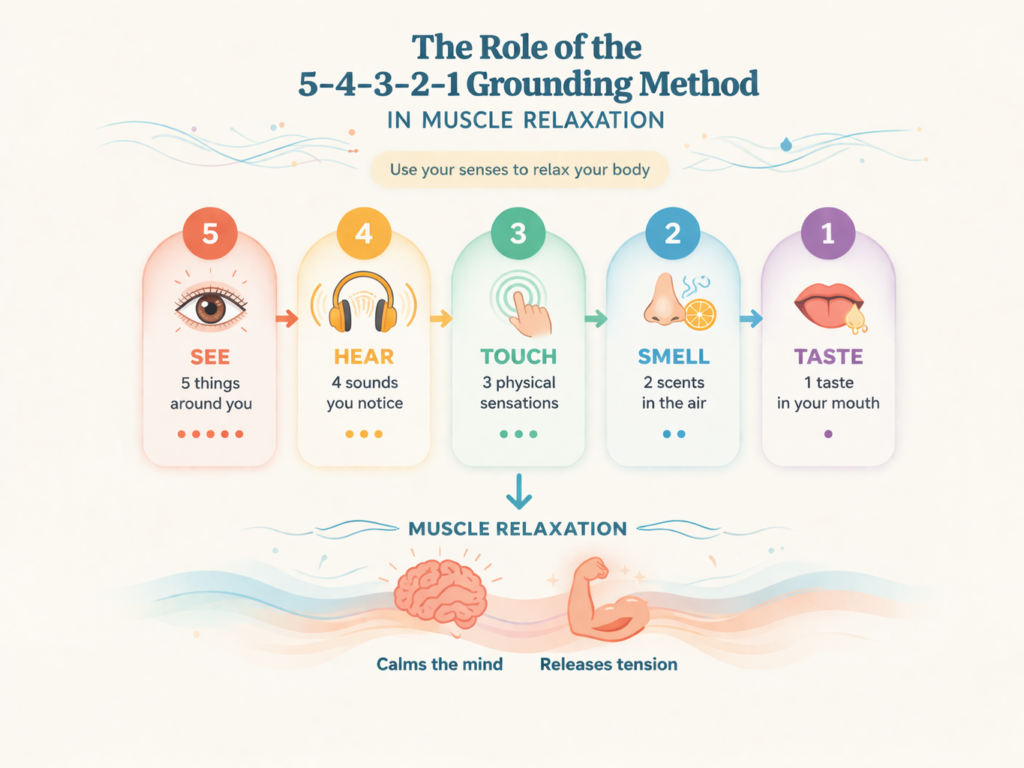
The 5-4-3-2-1 Grounding technique shifts attention away from internal worry and toward external sensory cues. The brain begins focusing on what is seen, touched, heard, smelled, and tasted in the immediate environment.
This sensory orientation interrupts the stress response cycle. Heart rate slows and breathing becomes deeper. Muscles throughout the body soften as the brain recognizes a safe environment.
Pelvic physiotherapists often integrate this practice into relaxation routines. When anxiety settles, the pelvic floor releases subtle tension that previously went unnoticed.
Repeating the 5-4-3-2-1 Grounding method regularly conditions the nervous system to recover from stress more quickly. Over time, pelvic muscles spend less time in a guarded state.
Integrating Breathwork With Pelvic Floor Awareness
Breathwork provides a bridge between mental calm and physical relaxation. Slow diaphragmatic breathing activates the parasympathetic nervous system, the branch responsible for rest and recovery.
As inhalation deepens, the diaphragm descends and the pelvic floor gently lengthens. Exhalation allows the muscles to recoil upward without force. This rhythmic motion restores mobility within the pelvic region.
Combining breathwork with grounding practices strengthens the relaxation response. Anxiety gradually loses its hold on muscle tone.
With consistent practice, individuals often regain the ability to relax pelvic muscles voluntarily. This shift supports recovery from persistent tension patterns.
Clinical Observations From Pelvic Health Specialists
Pelvic health clinicians frequently encounter patients whose symptoms fluctuate with stress levels. Days filled with emotional pressure often coincide with increased pelvic discomfort. Periods of relaxation tend to reduce symptoms noticeably.
Therapists emphasize that muscle tension does not always originate from weakness or injury. The nervous system plays a significant role in regulating pelvic tone. Addressing anxiety therefore becomes part of many treatment plans.
Clinical experience also shows that individuals who learn relaxation techniques early often recover more quickly from pelvic tension. Nervous system regulation allows physical therapies to work more effectively.
These observations highlight the interconnected nature of emotional and physical health. The pelvic floor responds dynamically to changes in mental state.
Behavioral Patterns That Reinforce Pelvic Tightness
Daily habits influence pelvic muscle tone more than many people realize. Long hours of sitting, frequent abdominal bracing, and shallow breathing contribute to ongoing tension.
Stressful work environments encourage unconscious clenching of the lower abdomen and hips. Over time this pattern spreads to the pelvic floor.
Clinicians encourage patients to pause periodically during the day and notice their breathing and muscle tension. Gentle awareness interrupts automatic clenching.
These small behavioral shifts complement therapeutic exercises and support long term pelvic relaxation.
Restoring Muscle Flexibility Through Nervous System Regulation
Muscle fibers regain flexibility when the nervous system allows them to lengthen. Treatments that calm anxiety create favorable conditions for this process.
Pelvic floor therapy often combines manual techniques with breathing exercises and relaxation training. Each component supports the others.
When anxiety decreases, the pelvic floor becomes more responsive to physical therapy. Muscles that once resisted stretching gradually regain mobility and comfort.
Physiological Effects of Anxiety Reduction on Pelvic Function
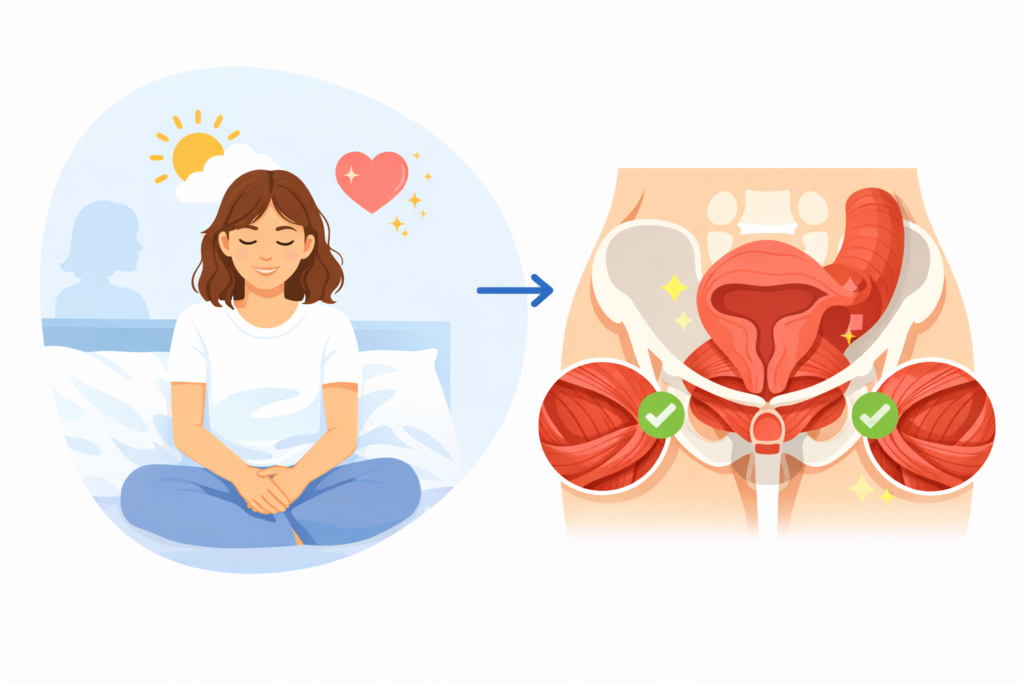
The body undergoes measurable physiological changes during relaxation. These changes extend directly to pelvic structures and influence muscle tone.
Blood flow increases as stress hormones decline. Improved circulation nourishes muscle tissue and reduces inflammatory signals. Pelvic organs function more smoothly within this environment.
The digestive and urinary systems also benefit from parasympathetic activation. Many pelvic symptoms involve these systems, which share nerve pathways with pelvic muscles.
The following table illustrates how anxiety levels influence pelvic function.
| Anxiety Level | Nervous System State | Pelvic Muscle Response | Physical Sensation | Functional Outcome |
| High stress | Sympathetic activation | Persistent contraction | Pressure and discomfort | Restricted muscle movement |
| Moderate stress | Mixed nervous activity | Partial tension | Mild tightness | Limited relaxation ability |
| Reduced anxiety | Parasympathetic engagement | Gradual muscle release | Warmth and ease | Improved flexibility |
| Calm state | Restorative nervous system | Balanced tone | Comfort and mobility | Healthy pelvic function |
| Sustained calm | Nervous system resilience | Responsive muscle tone | Stable relaxation | Long term pelvic health |
This physiological shift explains why calming anxiety often produces noticeable improvements in pelvic comfort. Muscles function best when the nervous system supports relaxation rather than constant vigilance.
Frequently Asked Questions
Can anxiety alone cause pelvic floor tightness?
Yes. Anxiety activates the body’s stress response, which increases muscle tension throughout the body. The pelvic floor participates in this protective reaction. Chronic anxiety can lead to persistent contraction patterns associated with Hypertonic Pelvic Floor symptoms.
How quickly can anxiety reduction affect pelvic floor tension?
Changes sometimes appear within minutes during relaxation exercises. Long standing tension patterns usually require repeated nervous system regulation over weeks or months. Consistency plays a major role in restoring balanced muscle tone.
Does the 5-4-3-2-1 grounding technique directly relax pelvic muscles?
The 5-4-3-2-1 Grounding exercise reduces mental stress and activates calming neural pathways. When the brain shifts into a safer state, muscles throughout the body respond by releasing tension, including those within the pelvic floor.
Is pelvic floor strengthening helpful for tight muscles?
Strengthening alone may worsen symptoms when muscles are already excessively tight. Pelvic therapists usually focus on relaxation, breathing coordination, and gentle mobility exercises when treating Hypertonic Pelvic Floor conditions.
Why does pelvic pain worsen during stressful periods?
Stress hormones increase nerve sensitivity and muscle guarding. Pelvic muscles may tighten unconsciously during anxious moments, intensifying discomfort or pressure sensations.
Can grounding exercises be combined with pelvic floor therapy?
Yes. Techniques such as the 5-4-3-2-1 Grounding practice often complement physical therapy. Calming the nervous system allows manual treatments and breathing exercises to work more effectively.
Closing Perspective
Pelvic floor tension rarely exists as an isolated muscular issue. The nervous system constantly monitors emotional signals and adjusts muscle tone in response. Anxiety encourages protective contraction, while calm mental states permit muscles to lengthen and function naturally.
Relief often begins when attention shifts from forcing muscles to relax toward calming the nervous system itself. Practices that reduce anxiety gradually retrain the body to release habitual tension patterns. As this shift unfolds, the pelvic floor regains its natural rhythm of contraction and relaxation, restoring comfort and mobility throughout the pelvic region.


Companies are getting much better at recognising mental health challenges, and providing support for their staff. However, there’s always room for improvement.
Let’s discuss how approaches to employee mental health have evolved over the years, what workplaces can do to comply with legal obligations, and how employees can learn to put themselves first.
Overview: Mental Health in the Workplace
As mental health becomes a natural part of conversations in the UK, it’s slowly making its way into the world of business.
Gone are the days when you would never mention your emotions at work, for fear of being seen as unprofessional or out of control. In many workplaces, it’s now socially and professionally acceptable to discuss things like stress, burnout, and the impact of work-life boundaries.
When the topic of mental health is normalised, employees feel safe being themselves at work, and reaching out for help when they need it.
Why are Workplace Attitudes to Mental Health Shifting?
Workplace culture reflects society at large, and in recent years, we’ve seen a huge shift in mental health discourse. Attitudes have evolved in a positive way, leading to:
- More open conversations
- Empathy for people with mental health conditions
- Reduced stigma
- Increased support for mental health issues
It’s likely that the global pandemic accelerated some of these changes, as many of us were forced to let go of an unhealthy work-life balance, and some realised they could be just as productive in their roles without working extremely long hours or commuting an hour to and from the office.
Another key reason for the attitude shift is the legal focus on employer responsibility.
Example: sexual harassment
The Equality Act 2010 gave a clearer definition of sexual harassment and legal guidance for employees who wanted to make a claim. This Act emphasised that employers would be liable if harassment occurred.
In 2023, the Worker Protection Act was introduced, and this led to even greater accountability for employers. As well as being responsible for harassment occurring, they are now responsible for taking reasonable steps to prevent it in the first place.
Employers have a duty of care to protect their employees’ mental health, and preventing sexual harassment is just one example of this.
As employers are legally obligated to prioritise mental health, it’s creating workplace cultures that embrace this issue, through:
- Formal mental health support
- Informal discussions about mental health
- External workshops and training on mental health
- Flexible working policies that benefit people who struggle with their mental health
Common Mental Health Challenges in the Workplace
When we talk about workplace mental health challenges, what are we referring to?
Firstly, many people in the workplace are diagnosed with a mental health condition, such as:
- Generalised anxiety disorder
- Social anxiety disorder
- OCD
- PTSD
- Depression
- Bipolar disorder
- Borderline personality disorder
Other conditions, such as physical or neurodevelopmental diagnoses, can also have a significant impact on mental health. These include:
- Autism
- ADHD
- Heart conditions
- Diabetes
- Autoimmune diseases
Let’s not make the mistake of thinking workplace mental health only matters when a diagnosis is involved. There are many other challenges employees face on a regular basis, that can make it harder to show up every day. For example:
- Impostor syndrome
- Low motivation
- High sensitivity
- Stress
- People pleasing tendencies
- Decision paralysis
Even simply mentioning these challenges can reduce stigma and help employees feel connected to their work community.
For example, just a few years ago, impostor syndrome wasn’t widely recognised. People who felt inadequate at work may have blamed themselves, and believed they were feeling something unique.
Now, it’s commonplace to refer to impostor syndrome, and it’s encouraged countless employees to be open about their insecurities. In the past, they may have felt that their impostor syndrome was stemming from genuine incompetence, but now, they know that it’s a well-known phenomenon that can affect any of us, even highly successful people.
Practical Steps Employers Can Take to Improving Workplace Mental Health
1. Providing training
All staff should receive mental health training, so they know when to reach out for support, and when to help someone who’s struggling.
2. Offering professional support
Many companies offer professional services such as counselling or therapy. It’s a great incentive for employees, and can reduce stress within the workplace.
3. Keeping the conversation open
It’s important to stay open about mental health, so that each member of staff would feel comfortable opening up about any issues.
4. Adapting policies
Conversation only goes so far. Adapting policies is where true change starts. Review your policies to ensure they account for mental health struggles.
For example, do your policies on working hours, sick leave and bereavement leave reflect a genuine care for your employees? Are you encouraging staff to use all of their annual leave, or allowing them to carry it over to the next year, instead of subtly incentivising overworking?
Tips for Looking After Yourself as an Employee
Your company could have the most understanding managers, and the most flexible work policies, but if you aren’t prepared to put your mental health first, you’re still risking burnout.
Think about how you can take care of your mental health in small ways each day, such as:
- Having a reliable morning routine
- Socialising in your breaks
- Taking regular time away from screens
- Only working the hours you’re scheduled to work
- Making the most of digital mental health resources
Why Companies Benefit From Prioritising Mental Health
When businesses invest in mental health, the benefits are not only felt by employees, but by the organisation as a whole.
It often leads to:
- Greater employee satisfaction
- Reduced absenteeism
- Healthier workforce
- Increased productivity
Employees who feel valued as individuals are more likely to turn up every day, work hard, and invest in their wellbeing. All in response to their employer prioritising it.
As the approach to workplace mental health continues to evolve, it’s crucial for organisations to stay ahead of the game, and show jobseekers that their culture aligns with modern attitudes.
When Company Support Isn’t Enough
If an employee is battling a severe mental health issue, changing policies and opening up conversations may not be sufficient. They may need to seek professional help, even beyond any counselling they already receive via the organisation.
Addiction is a prime example of this. An employee who is deep in substance addiction can’t heal overnight; they may need to go to inpatient drug or alcohol rehab to begin their recovery journey.
Employers can still play a crucial role in this, by spotting signs of deteriorating mental health in their staff, scheduling regular check-ins, and being flexible when it comes to someone taking time off work for treatment.
Remember that the employee’s health always has to come first, both legally and morally. The most supportive workplaces don’t just do the bare minimum. They look at how they can protect their employees’ wellbeing at all costs.
Someone getting a home detox may insist they can return to work days after, but as an employer, you should be considering whether they feel under pressure to return, and whether they’re in a healthy state to return.
Conclusion
Expectations are higher than ever for employers. The modern approach to workplace mental health values open conversations, adequate support, and flexibility.
However, it’s a shared responsibility between employers and employees. Staff should also be implementing strategies into their daily work routine to prevent challenges from arising.
With our top tips, a healthy balance can be achieved.
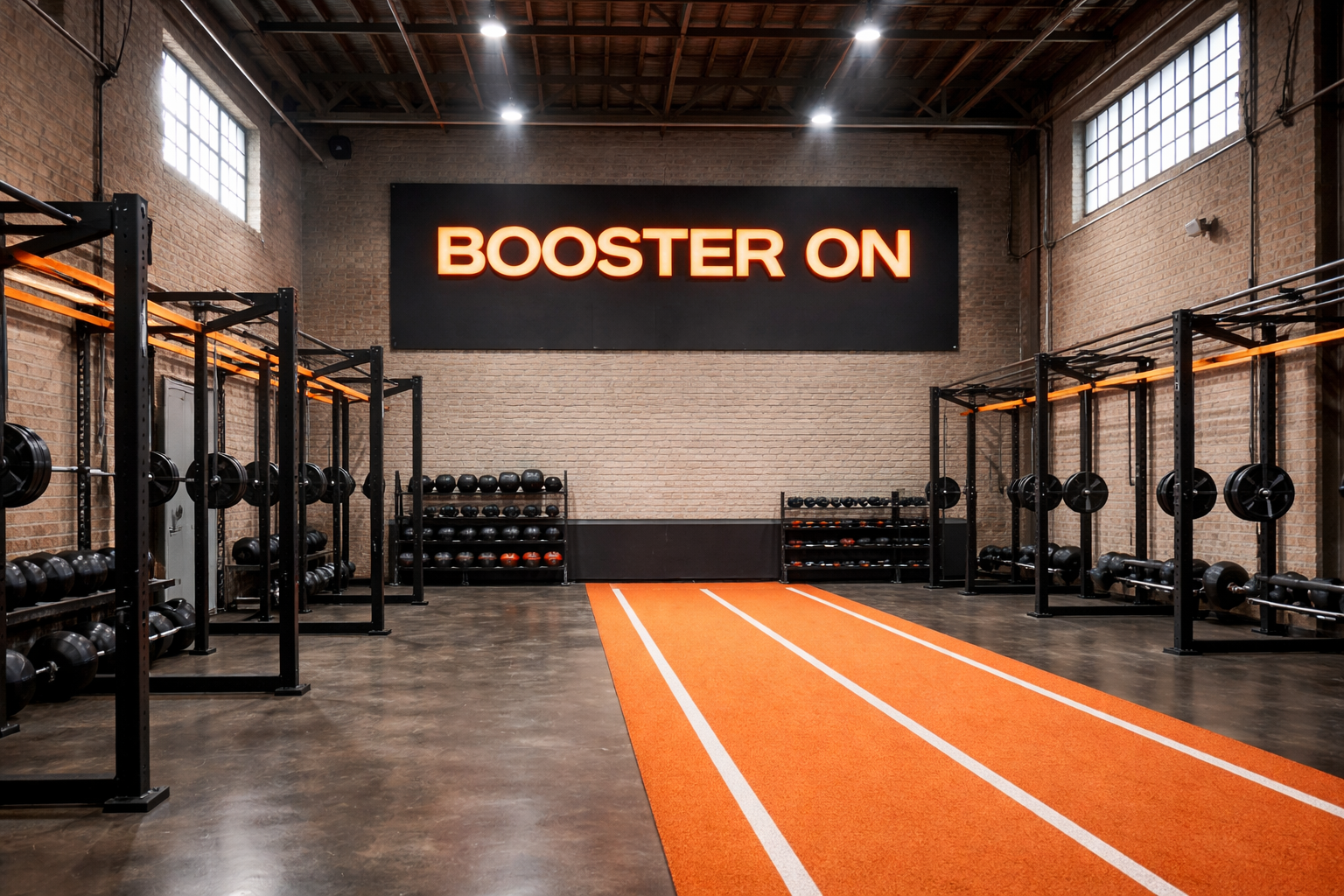
Booster On Fitness is not just another gym. It is a performance-driven training environment built for people who want more than average results. Located in Wichita, Kansas, this facility combines advanced technology, functional strength training, and a strong local community culture. From its massive warehouse layout to its innovative Booster Band system, Booster On is designed to push limits, track effort, and create a powerful fitness experience that stands out in the Kansas fitness scene.
Ignite the Output: The Booster On Philosophy
At Booster On Fitness, the motto “Ignite the Output” is more than just a phrase. It represents a complete mindset. This gym is built around the idea that effort matters more than appearance. Instead of focusing only on how much weight you lift, Booster On emphasizes how hard you push yourself during every session.
The philosophy removes the concept of average performance. Members are encouraged to give their best every time they step onto the floor. Whether someone is new to fitness or highly experienced, the goal remains the same. Improve effort, track progress, and stay consistent.
This creates a motivating environment where people challenge themselves. Instead of comparing bodies or numbers, members focus on personal improvement. The result is a culture that supports growth, discipline, and long-term success.
The Kinetic Floor: 15,000 Sq. Ft. of Pure Potential
Booster On Fitness is housed inside a converted grain-processing warehouse at 8802 W. Ironwood Street in Wichita. The building features 30-foot ceilings and an open layout that gives the gym a spacious and powerful atmosphere.
The Kinetic Floor covers 15,000 square feet of training space. This large area allows members to move freely and train without feeling crowded. The design blends industrial style with modern fitness equipment, creating a unique environment that feels both raw and high-tech.
Every section of the gym is carefully planned. There are dedicated areas for strength training, cardio, mobility work, and group sessions. The open-air feel makes workouts more energizing, especially during intense sessions.
This space is not just about size. It is about possibility. Members can explore different training styles and build routines that suit their personal goals.
Real-Time Gains: Meet the Booster Band™ Technology
One of the most unique features of Booster On Fitness is its proprietary Booster Band technology. Every member wears a sleek neon-orange wristband that tracks effort during workouts.
As soon as you enter the gym, your performance is connected to the Booster Board. This is a massive 20-foot LED screen that displays real-time Power Scores. Instead of showing weight or reps, it shows effort percentage. This changes how people view progress.
The system encourages members to focus on intensity rather than comparison. It highlights how hard someone is working, not how much they can lift. This creates a more inclusive and motivating environment.
The smart racks take this technology even further. Squat racks are equipped with laser sensors that monitor bar speed. If your form slips or your movement slows down, the system responds instantly. It vibrates to signal that you need to increase intensity or correct your technique.
This real-time feedback helps members train smarter. It reduces the risk of injury and improves overall performance.
From the Heartland: Functional Strength for the Modern Pioneer
Booster On Fitness embraces its Kansas roots through the Blue Collar section. This part of the gym is dedicated to functional strength training that reflects the physical demands of local industries.
Here, members train with equipment like weighted tractor tires, heavy chains, sleds, and sandbags. These tools are designed to mimic real-world tasks found in farming, construction, and aviation work.
This style of training builds practical strength. It improves endurance, grip, balance, and overall body control. Instead of focusing only on machines, members engage in movements that prepare them for everyday challenges.
The Blue Collar section also adds character to the gym. It reflects the hardworking spirit of the community and gives members a sense of connection to their environment.
The Nitro Bar: Fuel Up at Wichita’s Only Infusion Station
Nutrition plays a key role in performance, and Booster On takes it seriously with its Nitro Bar. This is not a typical juice station. It is a nitrogen infusion hub designed to deliver energy in a smoother and more effective way.
Members can enjoy cold-brew coffee and pre-workout drinks infused with nitrogen. This process creates a creamy texture and a more balanced energy boost without the harsh crash that often comes with traditional drinks.
The beverages are served in reusable aluminum containers called fuel cells. This adds a modern and sustainable touch to the experience.
The Nitro Bar is more than a convenience. It is part of the overall performance system. Proper fueling helps members train harder, recover faster, and stay consistent.
The Prairie Tundra: Science-Backed Recovery and Cryotherapy
Recovery is just as important as training, and Booster On offers advanced solutions through the Prairie Tundra. This recovery zone combines science and comfort to help members perform at their best.
The highlight is the cryotherapy chambers that reach temperatures as low as negative 160 degrees Fahrenheit. These sessions help reduce muscle soreness, improve circulation, and speed up recovery after intense workouts.
There is also an outdoor turf area used for Sunlight Sprints during the summer. This allows members to train in natural light while improving endurance and speed.
The Prairie Tundra creates a balanced fitness approach. It ensures that members do not just train hard but also recover properly.
Engineered for Intensity: Our Performance Mechanics
At Booster On Fitness, trainers are not called trainers. They are known as Performance Mechanics. This reflects their role in fine-tuning the human body for better performance.
Performance Mechanics focus on movement, technique, and efficiency. They help members improve form, increase strength, and avoid injuries. Their approach is personalized and results-driven.
Each session is designed to address individual needs. Whether someone wants to build muscle, lose weight, or improve athletic performance, the mechanics provide guidance and structure.
This level of coaching sets Booster On apart. It ensures that members are not just working out but training with purpose.
24/7 Access: The Forge Never Sleeps
Booster On Fitness operates around the clock. Members can access the gym 24 hours a day using a secure key-fob system.
This is especially useful for people with busy schedules or non-traditional work hours. Late-shift workers, early risers, and weekend trainers all benefit from this flexibility.
The gym maintains a safe and well-lit environment at all times. Members can train whenever it suits them without compromising quality or security.
This nonstop access reinforces the idea that progress does not follow a fixed schedule. The forge is always open for those ready to work.
Friday Night Lights: Where the Community Hits the PR
One of the most exciting aspects of Booster On Fitness is its monthly Friday Night Lights event. This is where the gym transforms into a high-energy community gathering.
The lights are turned off, and UV blacklights take over. Music is played by a resident DJ, creating an electric atmosphere. Members come together to attempt personal records and support each other.
These events are not just about lifting heavier weights. They are about community, motivation, and shared achievement. Everyone celebrates progress, no matter the level.
Friday Night Lights strengthens the bond between members. It turns fitness into a social and inspiring experience.
Claim Your Spark: Membership Tiers Built for Progress
Booster On Fitness offers two main membership tiers designed to suit different needs and goals.
The Kinetic membership provides basic access. Members can use the gym 24 hours a day and receive a Booster Band to track their performance. This option is ideal for those who want flexibility and access to advanced technology.
The Supercharged membership takes things further. It includes access to the Recovery Lab, unlimited Nitro beverages, and a monthly one-on-one session with a Performance Mechanic. This tier is designed for individuals who want a complete fitness experience.
Both options focus on progress. Members can choose the level that matches their commitment and upgrade as they grow.
FAQs
What is Booster On Fitness known for
Booster On Fitness is known for its advanced technology, including the Booster Band and real-time performance tracking system.
Where is Booster On Fitness located
It is located at 8802 W. Ironwood Street in Wichita, Kansas.
What is the Booster Band
The Booster Band is a wearable device that tracks effort and displays performance on the gym’s LED board.
What makes the gym unique
The gym combines technology, functional training, and community events to create a high-performance environment.
What is the Nitro Bar
The Nitro Bar serves nitrogen-infused drinks like cold brew and pre-workout beverages.
What is the Prairie Tundra
It is a recovery zone featuring cryotherapy chambers and outdoor training space.
Who are Performance Mechanics
They are expert coaches who help members improve technique, strength, and overall performance.
Does the gym offer 24 hour access
Yes, members can access the gym at any time using a secure key-fob system.
What is Friday Night Lights
It is a monthly event where members gather under blacklights to attempt personal records and train together.
What membership options are available
The gym offers Kinetic and Supercharged memberships, each with different features and benefits.
Health
Guaba (Ice Cream Bean): 12 Intresting Fact and a Complete Guide to Inga edulis, Benefits, Uses, and Growing Tips


Guaba, scientifically known as Inga edulis, is a fascinating tropical fruit native to the Amazon region. Often called the “ice cream bean,” it is loved for its soft, white, cotton-like pulp that tastes surprisingly similar to vanilla ice cream. This unique flavor and texture make guaba one of the most enjoyable natural treats found in tropical forests.
Unlike many fruits, guaba grows inside long green pods rather than round or oval shapes. People in Latin America commonly eat it fresh as a snack, while others use it in desserts and traditional drinks. Beyond its taste, guaba also plays an important role in agriculture and environmental sustainability.
Botanical Profile: Understanding Inga edulis
Inga edulis belongs to the legume family, which means it is related to beans and peas. The tree is fast-growing and can reach impressive heights of up to 30 meters. It thrives in tropical climates and is commonly found in Central and South America.
The tree produces elongated pods filled with large seeds covered in sweet pulp. As a nitrogen-fixing plant, it improves soil quality by adding essential nutrients, making it highly valuable for farmers.
Why is it Called the “Ice Cream Bean”?
The nickname “ice cream bean” comes from the fruit’s taste and texture. The white pulp has a soft, airy consistency and a sweet flavor that resembles vanilla ice cream. Many people describe it as a mix of vanilla, cream, and a hint of cinnamon, making it a naturally delicious treat without any added sugar.
2. Origin and Cultural Significance in Latin America
Guaba has deep roots in Latin American culture, especially in regions close to the Amazon rainforest. It has been used for generations as both food and medicine.
Native Roots in the Amazon Rainforest
The guaba tree is native to the Amazon basin, one of the most biodiverse ecosystems on Earth. It grows naturally in warm, humid environments and has spread throughout countries like Peru, Ecuador, Colombia, and Brazil.
Because of its adaptability, guaba is now widely cultivated across tropical regions.
Traditional Uses by Indigenous Communities
Indigenous communities have long valued guaba for its nutritional and medicinal properties. The fruit is eaten fresh, while the leaves and bark are often used in traditional remedies.
In some cultures, guaba is also used to make a fermented beverage known as cachiri. This drink holds cultural importance and is often prepared during gatherings and celebrations.
3. Physical Characteristics: From Giant Pods to Cottony Pulp
Guaba stands out among fruits due to its unusual appearance and structure.
Identifying the Tree and Its Unique Foliage
The guaba tree has a broad canopy with large, compound leaves. Its branches spread widely, creating shade underneath. This makes it a popular choice for agroforestry systems.
The tree produces flowers that are long and white, often resembling soft brushes.
Inside the Pod: The Texture and Appearance of the Fruit
The fruit grows in long, green pods that can exceed one foot in length. Inside the pod are large black seeds surrounded by fluffy white pulp.
This pulp is the edible part and is what gives guaba its unique appeal. The seeds themselves are usually not eaten raw but can be prepared in other ways.
4. The Flavor Profile: A Natural Vanilla Treat
One of the biggest reasons people love guaba is its flavor.
Descriptive Tasting Notes: Vanilla, Cinnamon, and Cream
Guaba pulp tastes sweet and creamy, often compared to vanilla ice cream. Some people also notice subtle hints of cinnamon and floral notes.
The texture is light and airy, almost like cotton candy, but with more moisture and richness.
Comparing Guaba to Other Tropical Fruits
Unlike mangoes or pineapples, which are juicy and tangy, guaba offers a mild and creamy sweetness. It is less acidic and more dessert-like in nature.
This makes it a favorite among those who prefer gentle, smooth flavors over sharp or sour tastes.
5. Nutritional Benefits: Is Guaba Good for You?
Guaba is not only tasty but also provides several health benefits.
Essential Vitamins and Minerals
The fruit contains vitamins A, B, and C, which are important for maintaining good health. These vitamins support immune function, skin health, and energy production.
It also provides small amounts of minerals that help with overall body function.
Dietary Fiber and Antioxidant Content
Guaba is a source of dietary fiber, which aids digestion and supports gut health. The fruit also contains antioxidants that help protect the body from damage caused by free radicals.
In traditional medicine, guaba has been used to treat digestive issues such as diarrhea.
6. How to Eat Guaba: A Guide for Beginners
Eating guaba is simple, but it may be unfamiliar to those who have never seen it before.
The Art of Cracking the Pod
To eat guaba, you start by opening the long green pod. This can be done by gently splitting it along its natural seam.
Inside, you will find the white pulp wrapped around large seeds. The pulp can be easily pulled away and eaten fresh.
Creative Culinary Uses: Desserts and Beverages
While most people enjoy guaba raw, it can also be used in creative ways. The pulp can be added to desserts, smoothies, or even ice cream recipes.
In some regions, it is fermented to create traditional drinks like cachiri.
7. Guaba vs. Guava: Clearing the Common Confusion
Many people confuse guaba with guava because of their similar names.
Key Botanical Differences
Guaba (Inga edulis) is a legume that grows in pods, while guava (Psidium guajava) is a round or pear-shaped fruit.
Guava has firm flesh with small seeds and is rich in vitamin C, often containing more than an orange.
How to Tell Them Apart at the Market
Guaba appears as long green pods, whereas guava looks like a typical fruit with smooth or slightly rough skin.
In South Asia, guava is commonly known as amrood, which is very different from guaba in both taste and appearance.
8. Ecological Superpowers: Why Farmers Love Guaba Trees
Guaba trees are not just valuable for their fruit. They also offer major environmental benefits.
Nitrogen Fixation: Fertilizing the Soil Naturally
As a nitrogen-fixing plant, guaba improves soil fertility by adding nitrogen back into the ground. This reduces the need for chemical fertilizers.
Erosion Control and Soil Restoration
The tree’s root system helps prevent soil erosion. It is often planted in degraded areas to restore soil health and support sustainable farming.
9. Guaba in Agroforestry: The Perfect Shade Tree
Guaba plays an important role in agroforestry systems.
Protecting Coffee and Cacao Crops
Farmers use guaba trees to provide shade for crops like coffee and cacao. This helps protect the plants from excessive sunlight and improves growing conditions.
Rapid Growth and Biomass Production
Guaba trees grow quickly and produce a large amount of biomass. This makes them ideal for improving soil and supporting other crops.
10. Growing Your Own Guaba Tree: Tips for Success
If you live in a tropical or subtropical region, you can grow your own guaba tree.
Ideal Climate and Soil Conditions
Guaba thrives in warm climates with plenty of rainfall. It prefers well-drained soil but can adapt to different conditions.
Understanding Recalcitrant Seeds and Germination
The seeds of guaba are recalcitrant, meaning they cannot be dried or stored for long periods. They need to be planted soon after harvesting to ensure successful germination.
11. Sustainable Farming: The Role of Inga Alley Cropping
Guaba is a key part of sustainable farming methods.
Alternatives to Slash-and-Burn Agriculture
Inga alley cropping is a system where guaba trees are planted alongside crops. This method replaces harmful slash-and-burn practices.
Benefits for Smallholder Farmers
This approach improves soil fertility, increases crop yields, and provides additional food sources. It is especially helpful for small-scale farmers in tropical regions.
12. Foraging and Future Prospects for the Ice Cream Bean
Guaba is gaining attention beyond its native regions.
Where to Find Guaba Around the World
While it is most common in Latin America, guaba can also be found in tropical areas of Asia and Africa. It is sometimes sold in local markets or grown in home gardens.
The Potential for Commercial Cultivation
Due to its unique taste and environmental benefits, guaba has strong potential for wider cultivation. As more people discover the fruit, it could become a popular addition to global markets.
FAQs About Guaba
What does guaba taste like?
Guaba tastes sweet and creamy, often compared to vanilla ice cream with hints of cinnamon.
Is guaba the same as guava?
No, guaba and guava are different fruits. Guaba grows in pods, while guava is round or pear-shaped.
Can you eat guaba seeds?
The seeds are usually not eaten raw but can be cooked or roasted to make them edible.
Is guaba healthy?
Yes, guaba contains vitamins, fiber, and antioxidants that support overall health.
Where does guaba grow?
Guaba grows mainly in tropical regions, especially in Central and South America.
How do you open a guaba pod?
You can split the pod along its seam to reveal the white pulp inside.
What is guaba used for?
It is eaten fresh, used in desserts, and sometimes fermented into traditional drinks.
Can guaba be grown at home?
Yes, if you live in a warm climate, you can grow it from fresh seeds.
Why is guaba important for farmers?
It improves soil fertility and provides shade for crops like coffee and cacao.
Is guaba becoming popular worldwide?
Yes, its unique flavor and environmental benefits are attracting global interest.

AI Audiobook Generator: The Free Tool Turning Any Text into Professional Audio

When Occasional Joint Pain Becomes a Serious Problem

How 10 Gram Gold Bars Fit Into a Strategic Investment Plan

Who is Clinton Eastwood Sr.? The Untold Story of Clint Eastwood’s Father and His Success Journey

Who Is Justin Fonda? All You Need To Know About Bridget Fonda’s brother

Who Is Frances Ford Seymour? All About Jane Fonda’s Mother

Enclomimed 25 (Enclomiphene) – Effective PCT Protocol

Roy Hodges: Biography, Lifestyle, Net Worth, Family & Success Story (2025)

Who Is Maisie Mae Roffey? The Private Life, Family Story, and Quiet Success of Julie Walters’ Daughter

Nancy Hallam: The Inspiring Life, Career, and Success Story Behind Ian Wright’s Wife

Who Is Daniel Clifton Pratt? Inside the Life, Family Values, and Legacy Behind Chris Pratt’s Father

Johnny Carell: Inside the Life, Family, and Rising Success of Steve Carell’s Son
Enclomimed 25 (Enclomiphene) – Effective PCT Protocol
Roy Hodges: Biography, Lifestyle, Net Worth, Family & Success Story (2025)
Who Is Maisie Mae Roffey? The Private Life, Family Story, and Quiet Success of Julie Walters’ Daughter
Nancy Hallam: The Inspiring Life, Career, and Success Story Behind Ian Wright’s Wife
Who Is Daniel Clifton Pratt? Inside the Life, Family Values, and Legacy Behind Chris Pratt’s Father
Johnny Carell: Inside the Life, Family, and Rising Success of Steve Carell’s Son
-
 Health2 months ago
Enclomimed 25 (Enclomiphene) – Effective PCT Protocol
-
Celebrity4 months ago
Roy Hodges: Biography, Lifestyle, Net Worth, Family & Success Story (2025)
-
Celebrity5 months ago
Who Is Maisie Mae Roffey? The Private Life, Family Story, and Quiet Success of Julie Walters’ Daughter
-
Celebrity5 months ago
Nancy Hallam: The Inspiring Life, Career, and Success Story Behind Ian Wright’s Wife
-
Celebrity3 months ago
Who Is Daniel Clifton Pratt? Inside the Life, Family Values, and Legacy Behind Chris Pratt’s Father
-
Celebrity6 months ago
Johnny Carell: Inside the Life, Family, and Rising Success of Steve Carell’s Son
-
 Celebrity4 months ago
Meet Nancy Strang: The Inspiring Life, Success Story, and Legacy of Louis Theroux’s Wife
-
 Celebrity3 months ago
Draven Duncan: Tim Duncan’s Rising Star Son and His Inspiring Basketball Journey